
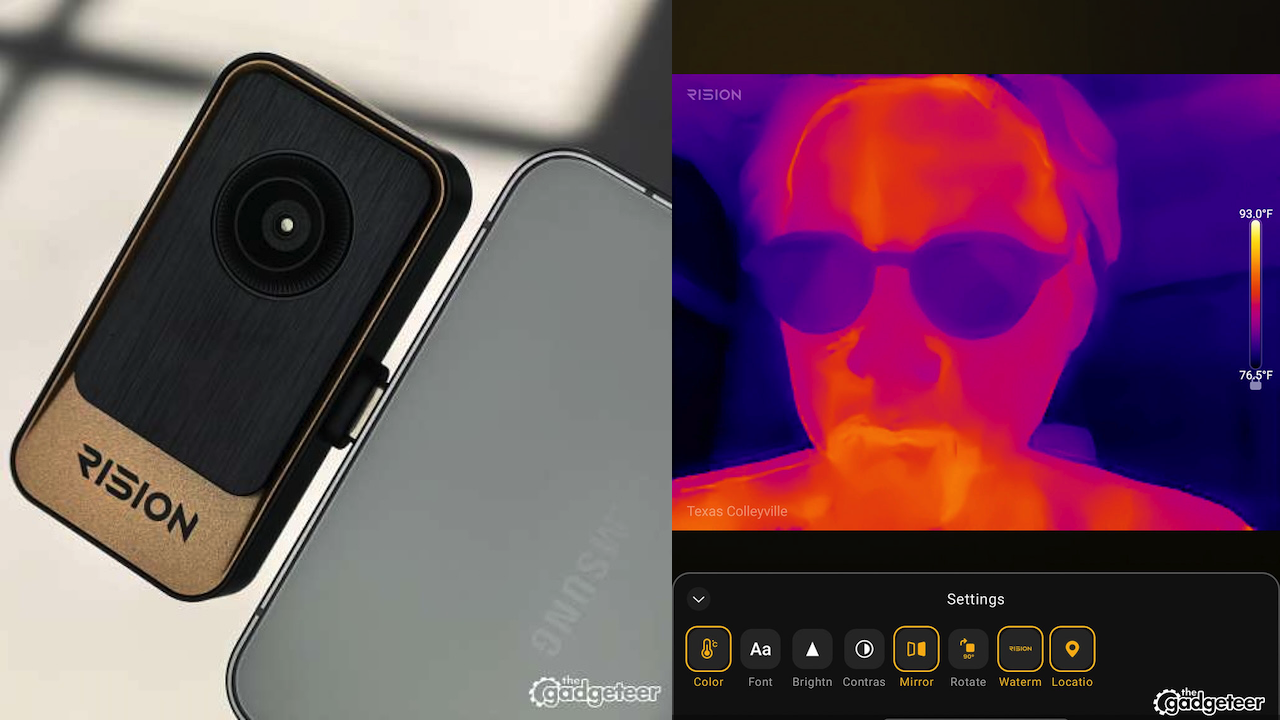
 When I pointed the RISION Magic at my laptop for my August review, the keyboard and palm rest stopped looking like one uniform surface. Warmer areas stood out immediately. The useful part wasn’t a dramatic color palette. It was having a better idea of where to look next.
Choosing a thermal camera starts with how you’ll use it. A tiny USB-C attachment makes sense if your phone is already part of the job. A wireless camera lets you move the lens without moving the screen. A standalone model keeps your phone out of the setup entirely. These five cameras cover those different approaches, with the RISION Magic and Magic Pro offering two entry points into the same app.
RISION Magic for occasional checks with your phone
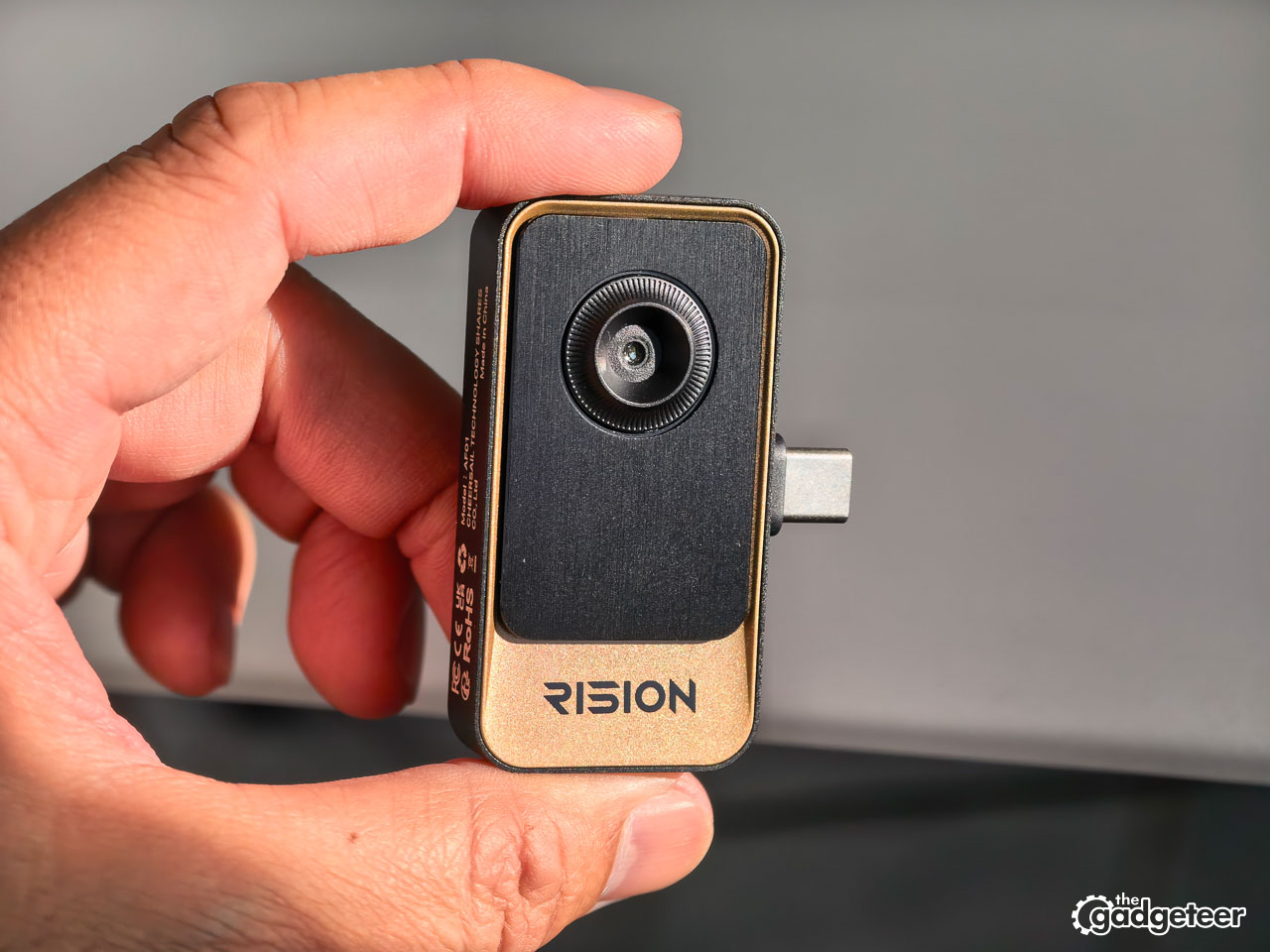
The standard Magic is the least expensive camera here at RISION’s current $119 price. Its native thermal sensor is 160 x 120, with QuadIR processing producing images up to 320 x 240. The distinction is useful when comparing cameras: the larger processed image doesn’t turn it into a native 320 x 240 sensor. RISION specifies a 25Hz refresh rate and compatibility with supported USB-C Android, iOS, and Windows devices.
In my August Magic review, changing palettes and saving an image were easy to figure out. The app’s readings sit on the live view, which helped me compare areas of the laptop. Turning several readings on also made the screen busy. I switched palettes depending on the scene, including grayscale when I wanted a calmer view.
At a manufacturer-listed 24 grams, it’s a small addition to a tool bag. It takes power from the connected device, so there’s no camera battery to keep charged. The tradeoff is that your phone supplies the screen, connection, and power. For occasional temperature checks, that arrangement keeps the hardware simple. A temperature pattern still gives you a starting point for investigation, rather than a diagnosis of what’s wrong.
RISION Magic Smartphone Thermal Camera
Price and availability: $119, regularly $139; RISION listed US and UK stock on September 20, 2026.
Where to buy: RISION Magic at RISION
RISION Magic Pro for more native resolution in the same format
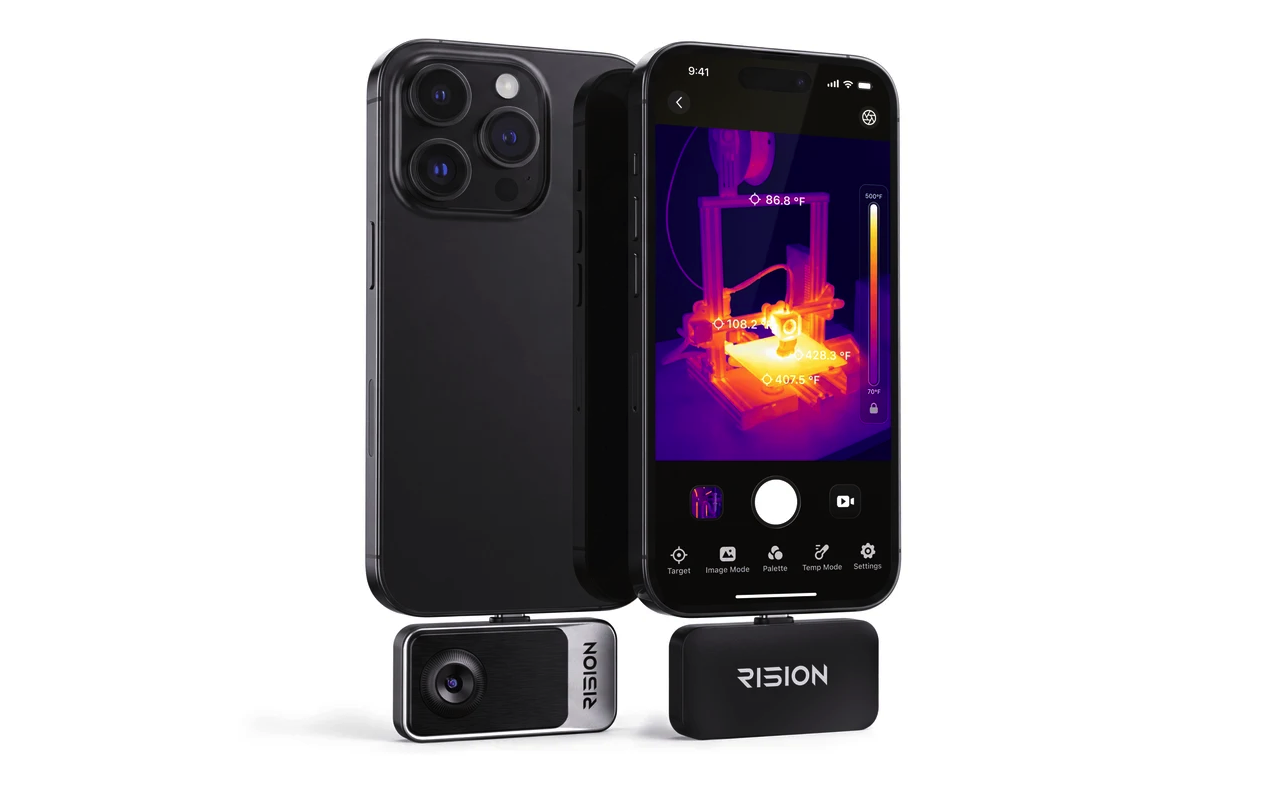
The Magic Pro keeps RISION’s small USB-C approach while moving to a native 256 x 192 sensor. That’s 49,152 native thermal pixels compared with the standard Magic’s 19,200. Its processed output reaches 512 x 384. RISION lists the same 24-gram weight, 60 x 42 x 10 mm dimensions, and 25Hz refresh rate for both models, so the resolution increase doesn’t require a larger camera body.
The Pro is the model to consider if you want more native image detail while staying with RISION View. It doesn’t make sense to pay extra expecting a completely different software system: RISION lists measurement tools, image and video capture, and PDF reporting across the series. Nor does the extra pixel count establish better temperature accuracy. Both product pages give the same stated accuracy specification of ±2°C or ±2% of the reading.
The purchase process is currently the bigger distinction. As of September 20, the US offer is a $10 coupon that unlocks $90 off the listed $299 camera and an extra year of warranty. The camera is a separate purchase. RISION says coupon emails arrive September 27 or 28, with camera orders opening September 28. Paying for the coupon now won’t put a camera in your hands today.
RISION Magic Pro early bird coupon
Price and status: $10 for the US-only coupon, not the camera. One coupon applies to one camera; RISION says unused coupons are automatically canceled and the $10 refunded after the stated 14-day validity period.
Offer details: Read RISION’s Magic Pro coupon terms
TOPDON TC002C Duo for documenting thermal checks
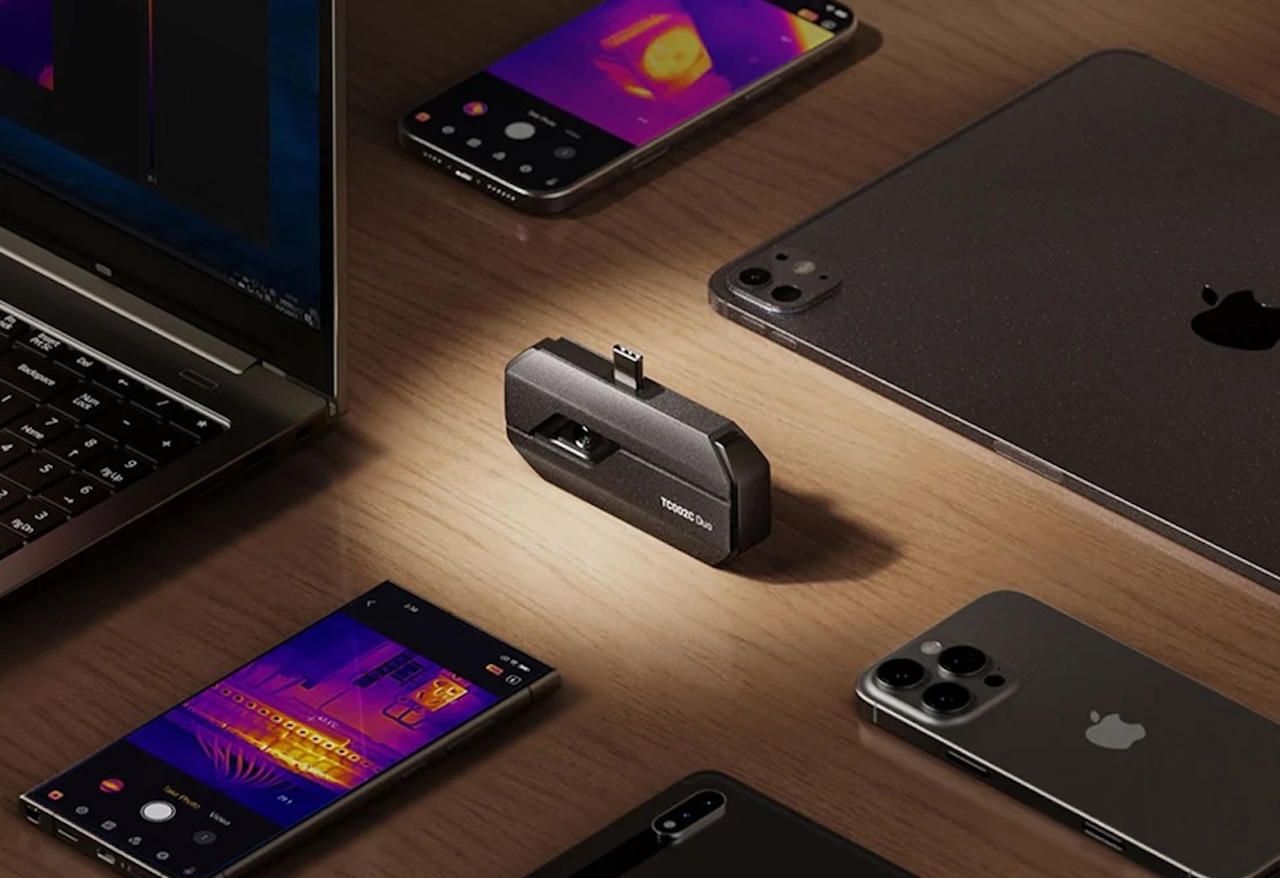
The TC002C Duo gives you another USB-C option with native 256 x 192 thermal resolution, processed 512 x 384 output, and a manufacturer-listed 25Hz refresh rate. Those figures put it alongside the Magic Pro on these particular specifications. They don’t establish identical image quality. TOPDON lists iOS, Android, and Windows support, and includes a USB-C extension cable so the camera doesn’t always have to sit directly against your device.
Its strongest supporting evidence here is Julie Strietelmeier’s July 2025 review. Julie found setup straightforward and didn’t need to create an account to use the app. She particularly liked Dual Light, which places a normal camera image over the thermal view. That gave her a way to remember which object she was measuring when looking back at an image.
For someone documenting gadgets or keeping a record of home checks, that context is useful. The Duo also draws power from the connected device, keeping another battery off your charging list. At $299, it’s a substantial step up from the standard Magic, so the reason to consider it is its own documented workflow and higher native resolution, rather than an assumption that every phone attachment does the same thing.
TOPDON TC002C Duo
Price and availability: $299, available from TOPDON USA as of September 20, 2026.
Where to buy: TC002C Duo at TOPDON USA
FLIR Edge Pro for moving the camera away from the screen
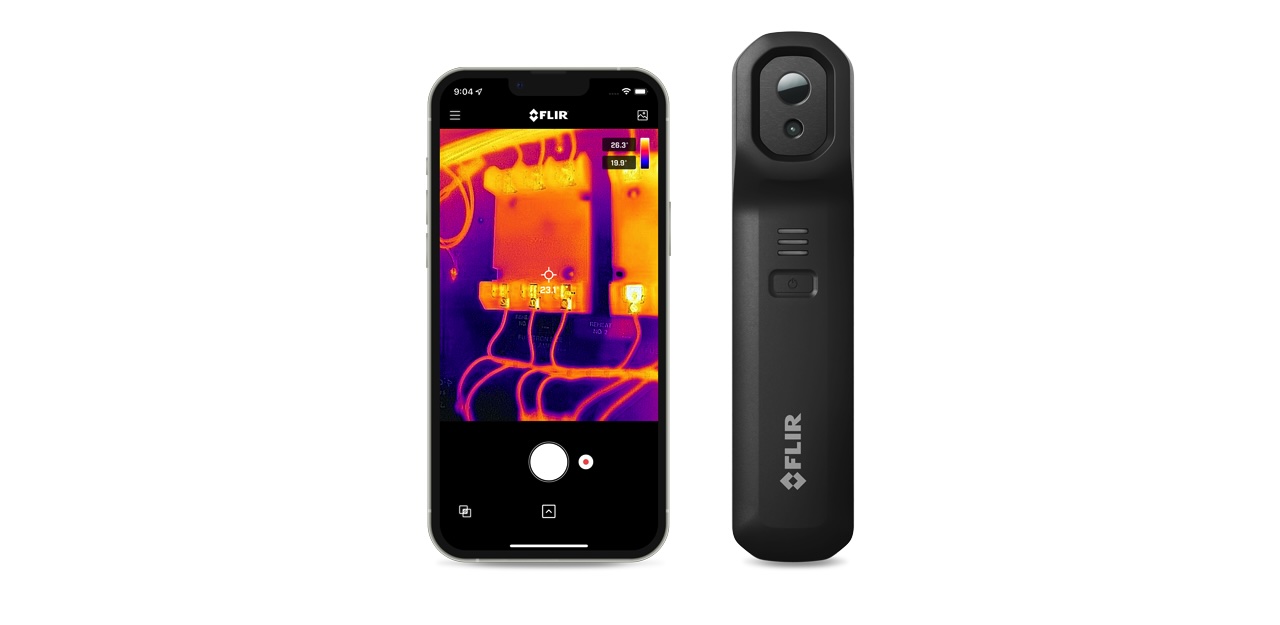
FLIR’s Edge Pro, previously called the One Edge Pro, connects wirelessly to an iOS or Android device. FLIR specifies operation up to five meters from the phone or tablet. You can place the camera where you need the view while keeping the screen somewhere you can see it, or clip the camera onto the device for one-handed use. That’s the practical reason to spend more on this design.
FLIR lists native 160 x 120 thermal resolution and processed 480 x 360 output, plus MSX, which adds details from the visible camera to the thermal image. Its native pixel count matches the standard Magic, while its 8.7Hz frame rate is lower than the 25Hz specified for the RISION models and TOPDON Duo. The $529 price buys a different way to position the camera, rather than a higher native thermal resolution than those wired alternatives.
Wireless operation also means a separate battery. FLIR rates it for approximately two and a half hours, with USB-C charging. Its current product page lists iOS 17 or later and Android 13 or later, and links to a device compatibility checker. If your inspection regularly puts the lens somewhere awkward, that freedom is compelling. If the camera can stay attached to your phone, the cheaper wired designs keep the setup smaller and remove that extra charging job.
FLIR Edge Pro
Listed price: $529 on FLIR’s US product page on September 20, 2026; check the linked device compatibility information before ordering.
Product and purchase details: FLIR Edge Pro at FLIR
TOPDON TC004 Mini for a tool that leaves your phone free
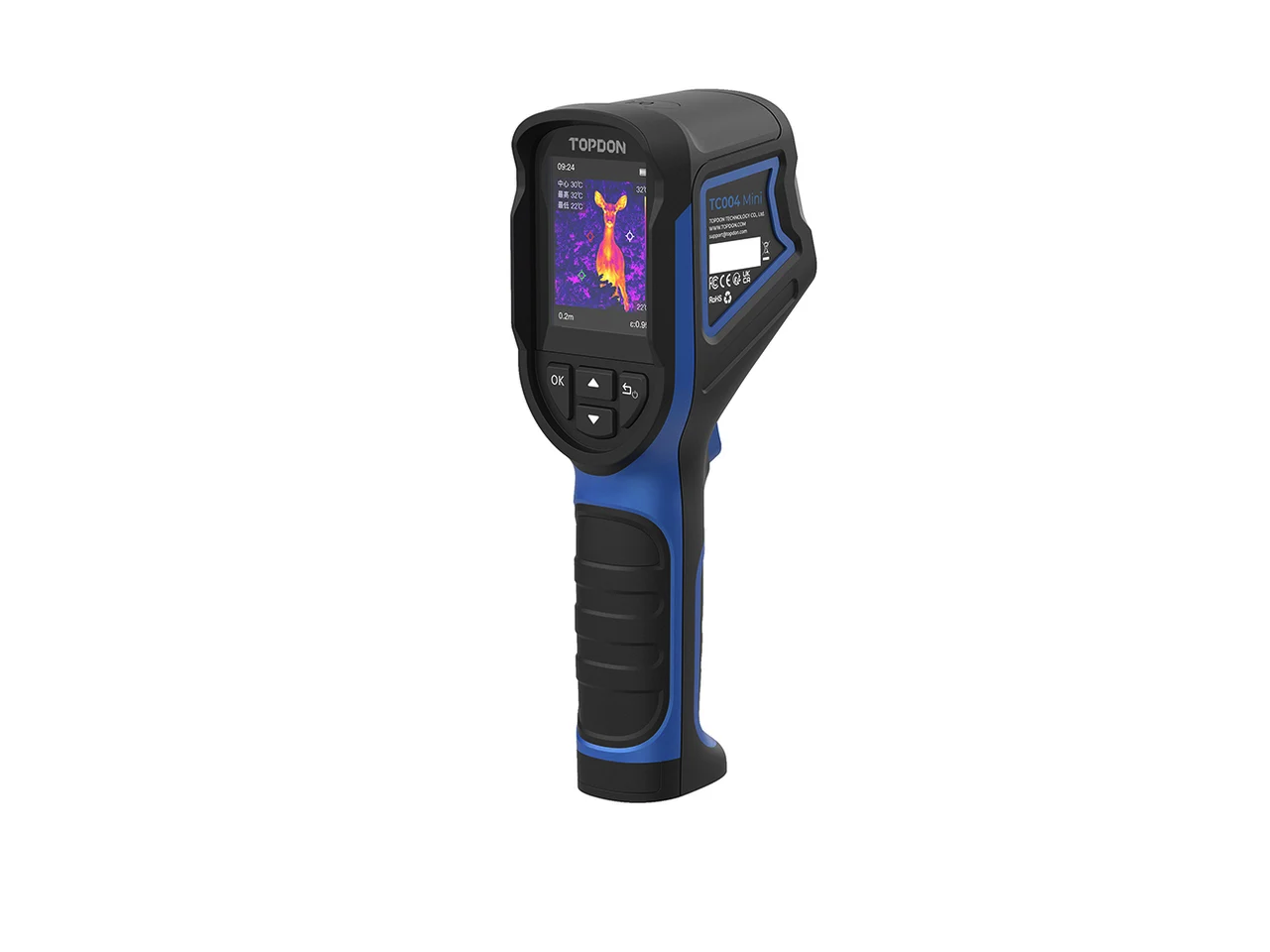
The TC004 Mini has its own 2.4-inch screen and battery. You can hand it to someone without also handing over your phone, and you don’t need a mobile app to see the thermal image. TOPDON specifies a native 128 x 128 sensor, processed 240 x 240 images, and a 25Hz refresh rate. It’s a lower native resolution than the phone attachments above, in exchange for an all-in-one tool.
In Mike Dixon’s July 2025 review, he used it to view his 3D printer’s heated bed and found the button placement comfortable. His practical complaint was the USB-C port flap, which he found difficult to open without a tool. That’s useful context for a camera whose photos transfer to a computer over USB.
The Mini’s 512MB storage is for still images; TOPDON says it doesn’t record video. The company rates battery life at up to 15 hours. For quick checks around a workshop, keeping your phone free can be more useful than having a larger app interface. For recording a thermal walkthrough, the lack of video is a reason to choose something else.
TOPDON TC004 Mini
Listed price: $159, regularly $199, at TOPDON USA on September 20, 2026.
Learn more: Read Mike’s TC004 Mini review or check the current TOPDON USA listing.
Start with where the screen needs to be
For occasional checks with a compatible phone, the standard Magic is the least costly starting point in this group, and my earlier experience gives it a practical foundation beyond the specification sheet. The Magic Pro and TC002C Duo add native resolution within the wired approach. The Pro’s coupon schedule and the Duo’s current retail offer make timing part of that choice.
The Edge Pro earns its place when the lens and screen need to move separately. The TC004 Mini earns its place when the phone shouldn’t be involved at all. Pick that working arrangement first, then compare resolution, recording, and price within it. A camera that’s convenient to reach for has a better chance of helping with the next puzzling warm spot.
