

AI assistants can write emails, summarize documents, and answer questions, but using one still usually means pulling out your phone, opening an app, and telling it what you need.
Price: $179
Where to Buy: Persona
Persona thinks that interface should be easier. The company has introduced the Persona Band, a $179 screenless AI wristband that gives you voice access to its Persona assistant. Instead of displaying notifications or competing with an Apple Watch, the Band is designed as a direct line to software that could send messages, make calls, book appointments, place orders, and manage your calendar.
It is an ambitious idea, but there is an important caveat: the Persona Band is currently a preorder product scheduled to ship in December 2026. Until production hardware reaches independent reviewers, there is no way to know whether the experience works as advertised.
A screenless AI wearable
Persona has deliberately kept the hardware simple. The Band weighs 27 grams and uses an aluminum unibody rather than a conventional smartwatch display. It includes two microphones, a speaker, and an ambient LED ring intended to show whether the assistant heard you and where your request is in the process.
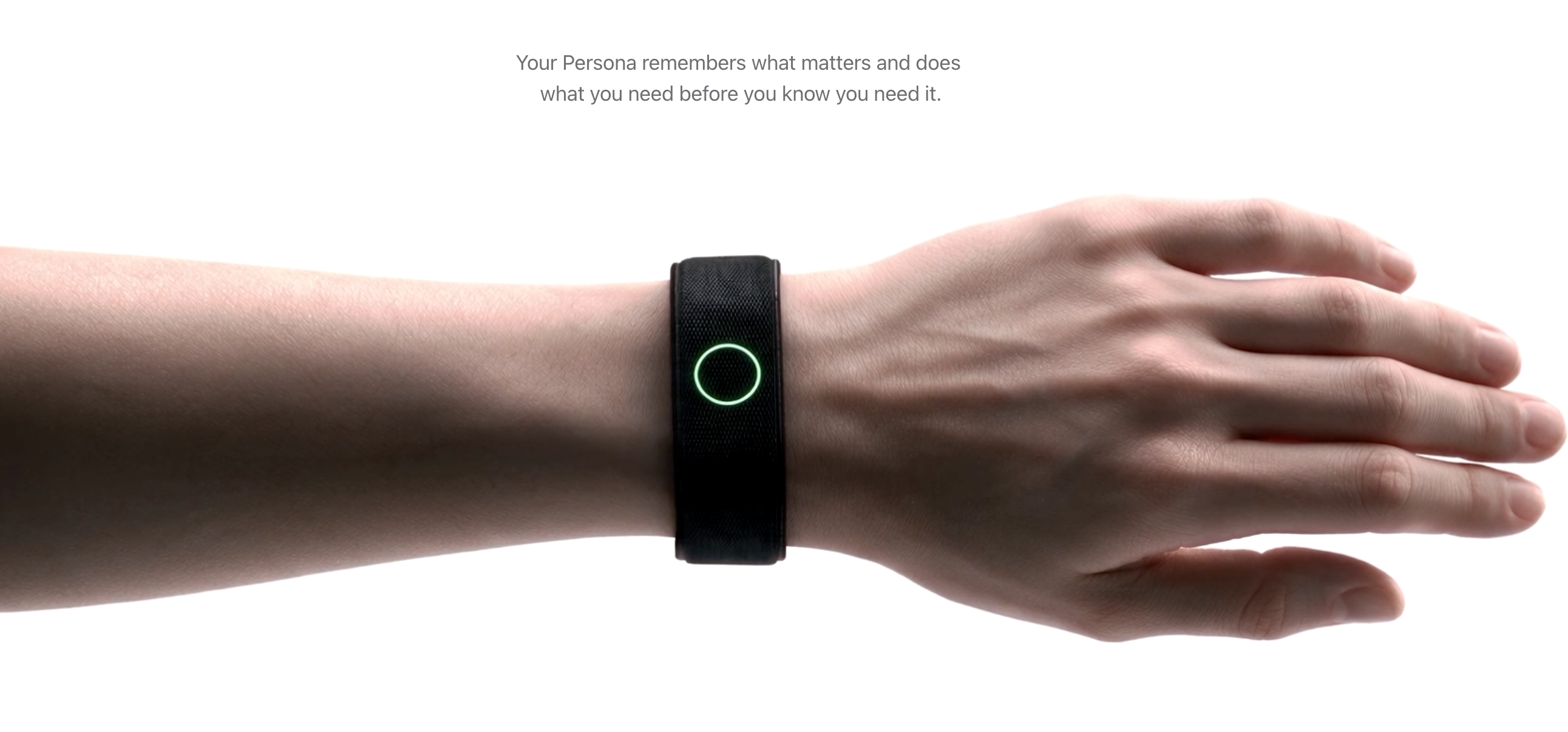 Persona says there is no wake word and no app to open before speaking to the Band. The company also claims its microphones can hear a whisper from across a room, while optional paired headphones can keep responses private.
Those are promising ideas, but they remain manufacturer claims. Microphone performance, speaker quality, Bluetooth reliability, and voice recognition in noisy environments will need independent testing once production units are available.
The screenless approach itself makes sense for what Persona is trying to do. This is not another tiny computer competing for attention on your wrist. The Band is essentially a physical shortcut to an AI assistant working across connected services.
The real test is action
Persona is not positioning its assistant as another chatbot that simply tells you what to do. It wants to complete the task.
Persona says its software can work with services including Gmail, Google Calendar, Notion, Slack, Uber, DoorDash, Microsoft Teams, and others. Depending on the permissions you grant, the assistant can read and draft communications, manage calendars, make phone calls, interact with websites, and complete bookings or purchases.
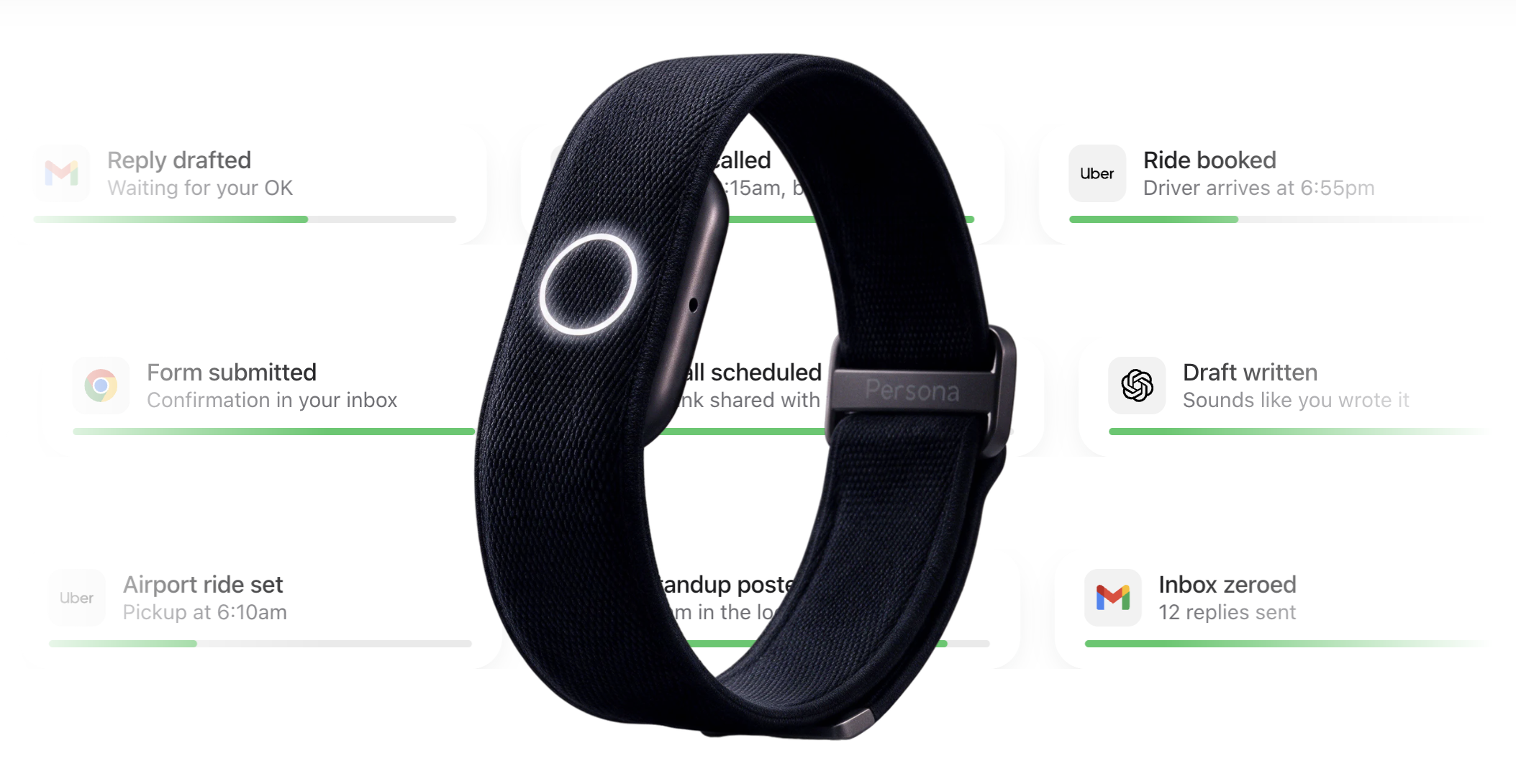 That makes the Band more interesting than its hardware specs alone suggest. Imagine remembering during a walk that you need to reschedule an appointment. Rather than pulling out your phone, finding the number, and making the call yourself, Persona’s pitch is that you tell the wristband what needs to happen and let the assistant handle the process.
The distance between that demonstration and a dependable consumer product is substantial, though. AI agents can misunderstand instructions, run into websites they cannot navigate, or make mistakes during multi-step tasks. Persona’s terms acknowledge that the assistant may contact the wrong person, generate incorrect information, or carry out an unintended transaction.
That is a much higher-stakes failure than getting a bad chatbot answer.
Battery life and price
The hardware specifications are straightforward. Persona claims the Band will last up to three days per charge and fully recharge in 30 minutes via USB-C. The company also says it includes enough local storage for two days of use without a phone.
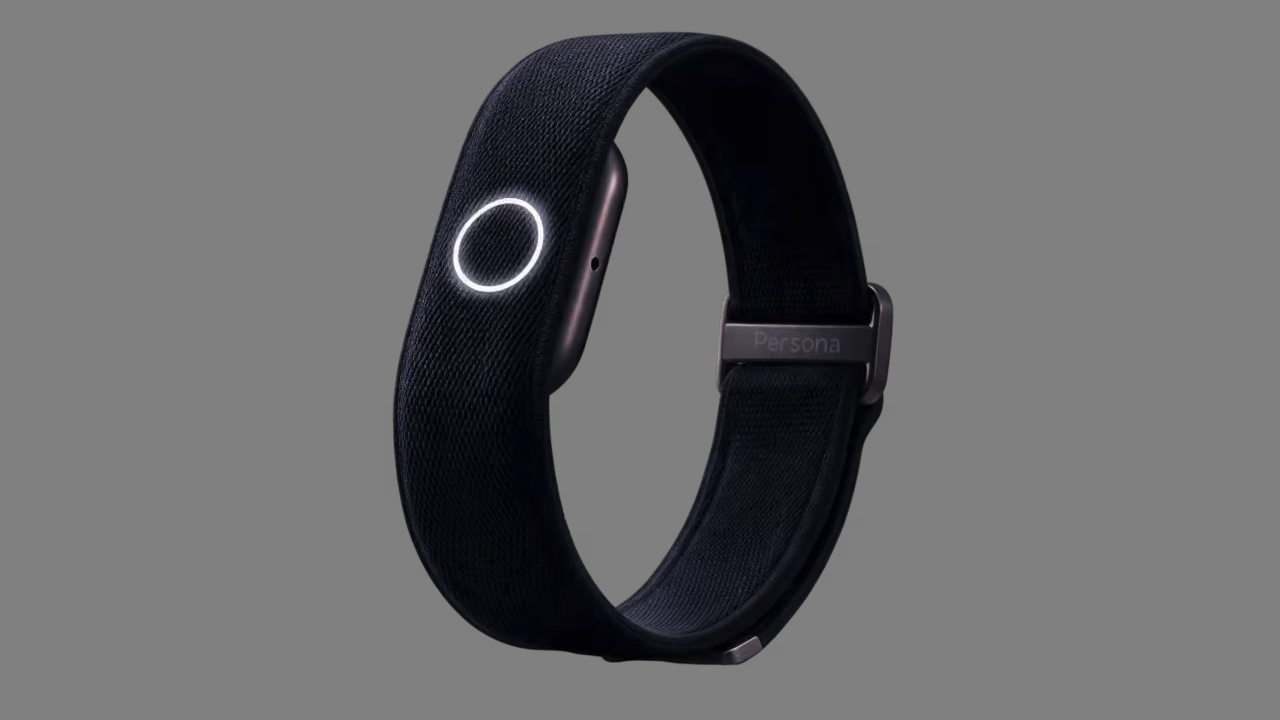 The Band has a magnetic closure and an instant-mute function for its microphones. Persona describes it as water-resistant, although its current specifications do not list a conventional IP water-resistance rating.
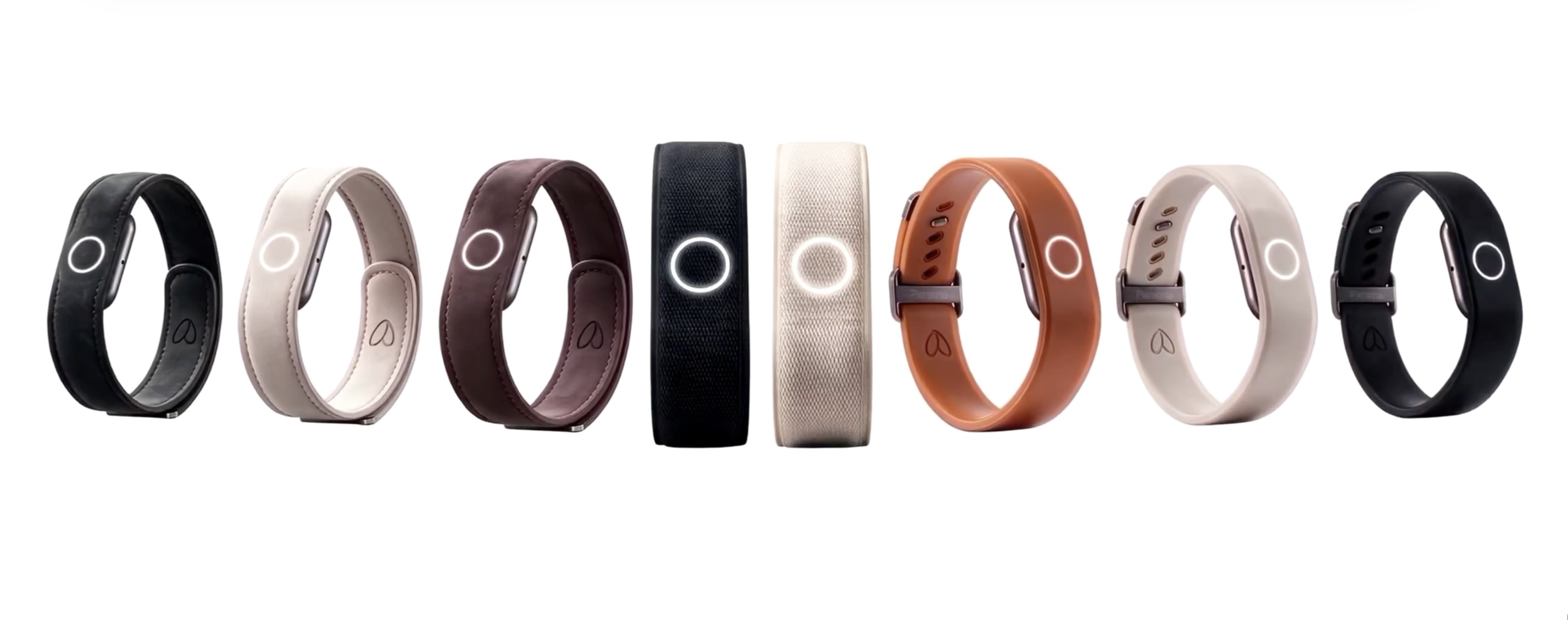
The $179 preorder price is a $40 discount from Persona’s stated $219 regular price. A black knit strap, charging dock, and USB-C cable are included. Persona also advertises free U.S. shipping, a one-year warranty, and December 2026 delivery.
As with its battery and audio claims, those specifications should be treated as manufacturer-provided figures until finished units can be independently tested.
Privacy is the bigger issue
A more capable assistant needs more access, and that is where Persona’s pitch gets complicated.
Users can authorize Persona to access email, calendars, messages, contacts, files, browser sessions, calls, and other connected services. If purchase features are enabled, it may also process payment and transaction data needed to complete orders.
Persona says it builds persistent memory from conversations, connected accounts, and past tasks. That can include preferences, relationships, commitments, summaries, embeddings, and other potentially sensitive inferences.
The company says it does not sell personal information or train its general-purpose AI models on connected content. It also cites SOC 2 Type I certification and AES-256 encryption.
The caveat is its use of third-party AI providers. Persona’s policy says those providers may use data for model or service improvement, including training, unless restrictions apply.
So the question is bigger than whether you are comfortable wearing microphones on your wrist. You may be giving an AI system access to communicate with people, navigate accounts, and spend money for you.
Who is it for?
The Persona Band is not a smartwatch replacement. It has no display, fitness features, maps, or conventional notifications.
Instead, it is for people who want hands-free access to an AI assistant without constantly reaching for a phone. The wristband is simple by design; Persona’s software is meant to do the work in the background.
At $179, it is an intriguing concept. If it can reliably turn quick voice requests into completed tasks, the Band could make AI assistance feel more natural than another app on your phone.
Price: $179
Where to Buy: Persona
That remains a big if. The Band has not shipped, its claims have not been independently tested, and its AI may be trusted with calls, messages, account access, and transactions. Persona does not need to prove it can make a wristband, it needs to prove its AI can act reliably and responsibly
