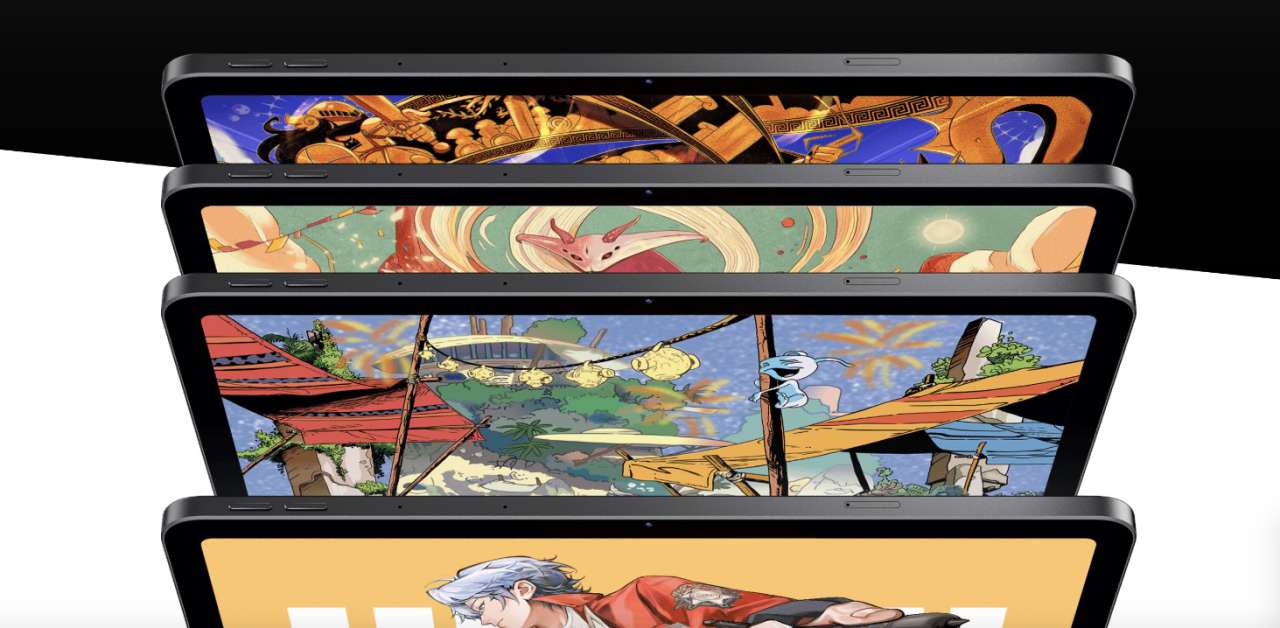
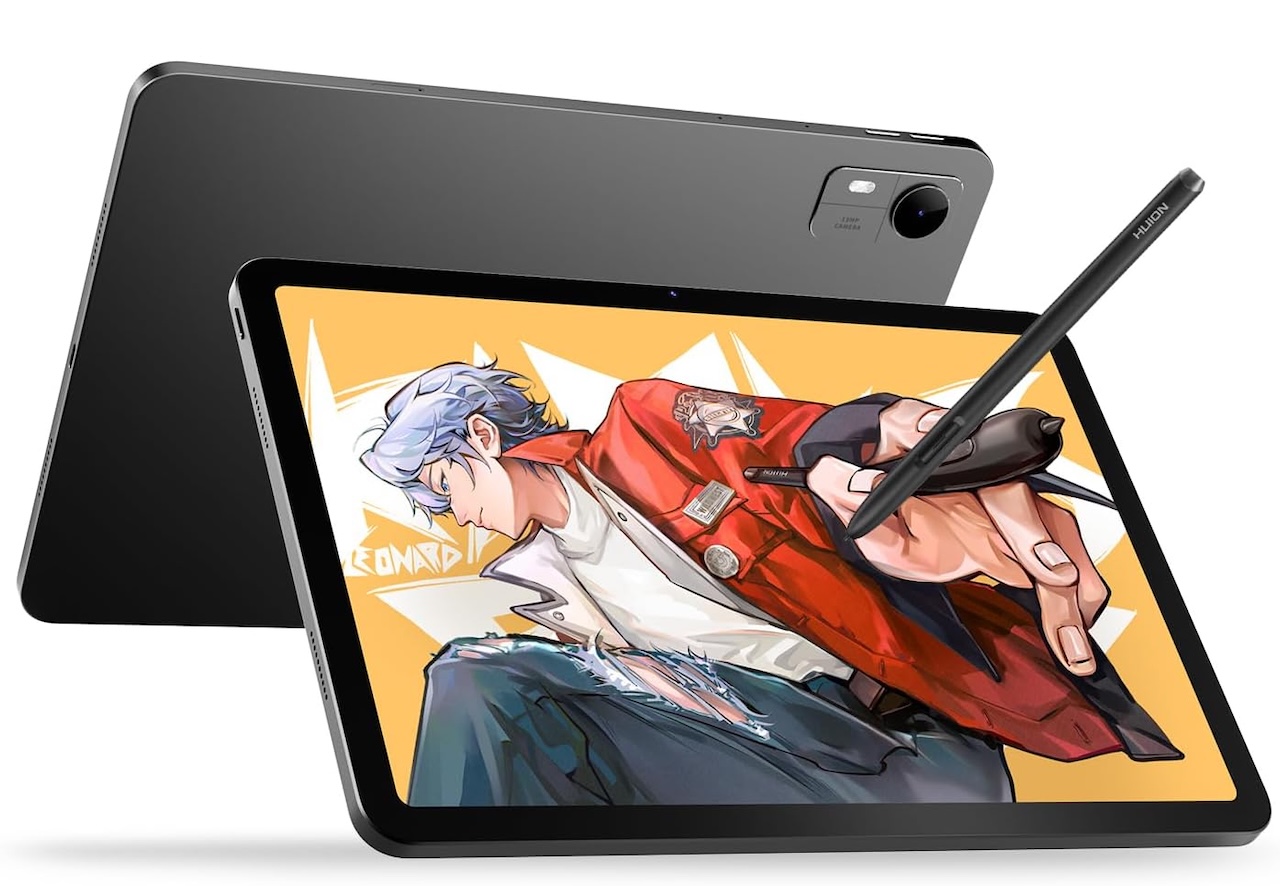
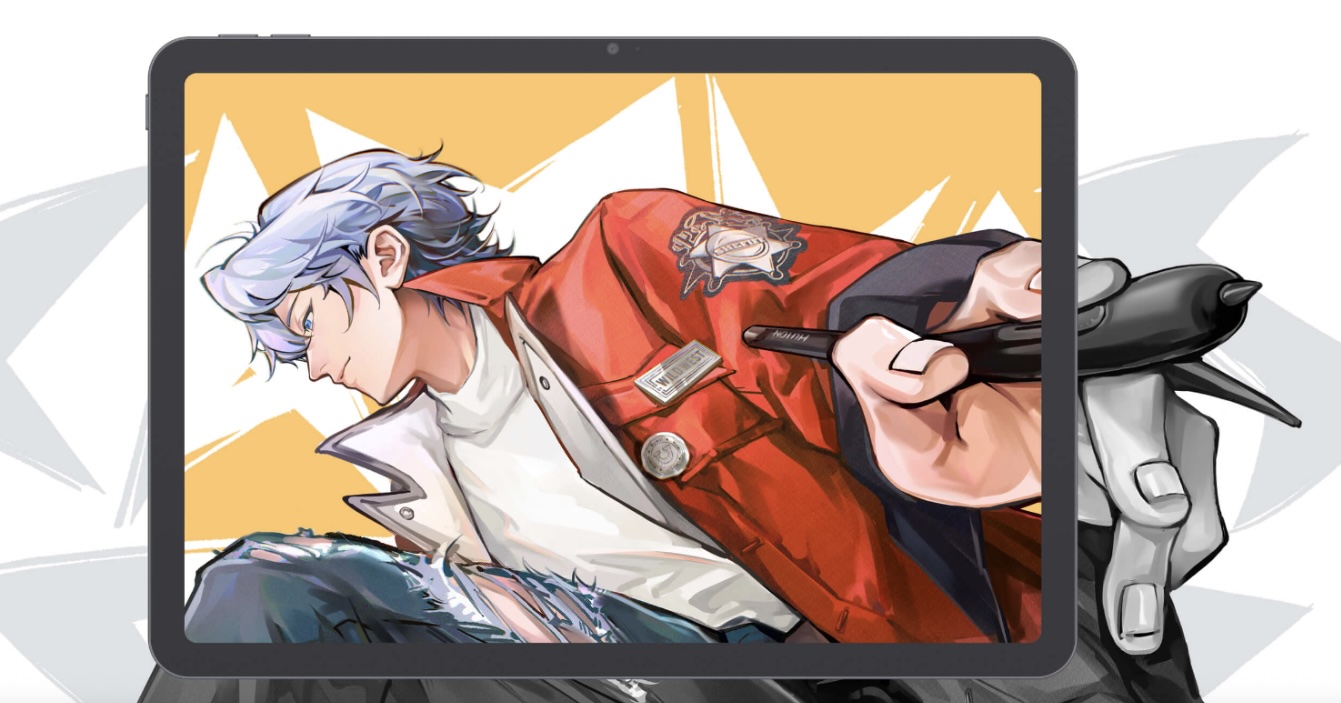
Most Android tablets treat the stylus as an optional extra. The Huion Kamvas Pad 12 starts with the pen, then builds the rest of the tablet around it. The $499 device runs Android 16, includes a battery-free EMR stylus, and uses a 12.2-inch, 3:2 display designed to feel more like a portable sketchbook than a stretched entertainment screen.
Price: $499
Where to Buy: Amazon
That focus makes the Kamvas Pad 12 interesting even before anyone tests its drawing performance. It also creates a very specific buying question: Is this a better self-contained art tool than a general-purpose tablet, or is it too specialized for the price?
A Drawing Tablet That Doesn’t Need a Computer
The key distinction is right in the operating system. The Kamvas Pad 12 is a standalone Android tablet, not a conventional pen display that must remain connected to a PC or Mac. It has Google Play access, 8GB of memory, 256GB of internal storage, and a microSD slot that Huion says supports cards up to 1TB.
Huion says the tablet comes with creative apps including HiPaint, Clip Studio Paint, ibisPaint X, MediBang Paint, and its own note app. Buyers should still verify the current app bundle and any included memberships or trial benefits before purchase, because those offers may vary by region or promotion. Adobe, Clip Studio, and other subscription costs also still belong in the ownership calculation.
The MediaTek Genio 720 processor should be suitable for mainstream Android drawing and note-taking, but a specification sheet cannot tell us how the tablet handles a large layered canvas, prolonged export, or rapid switching between creative apps. Those are review questions, not facts to infer from the chip name.
The 3:2 Display Is the Real Ergonomic Decision
A 12.2-inch screen sounds ordinary until you notice the 3:2 aspect ratio. It provides more vertical working room than the wider panels used by many Android tablets, which can leave more space for a canvas after an art app places toolbars around it. The fully laminated 2400 by 1600 LCD runs at 90Hz and has a nano-etched anti-glare surface.
Huion lists 350 nits of brightness, a 1000:1 contrast ratio, 8-bit color, and 99 percent sRGB color-gamut volume. It also says each unit receives factory calibration to a Delta E below 1.8 and includes its own calibration report. Those are manufacturer specifications, not independent measurements. A future review needs to check brightness uniformity, white point, color accuracy, glare, grain, and whether the etched surface reduces perceived sharpness.
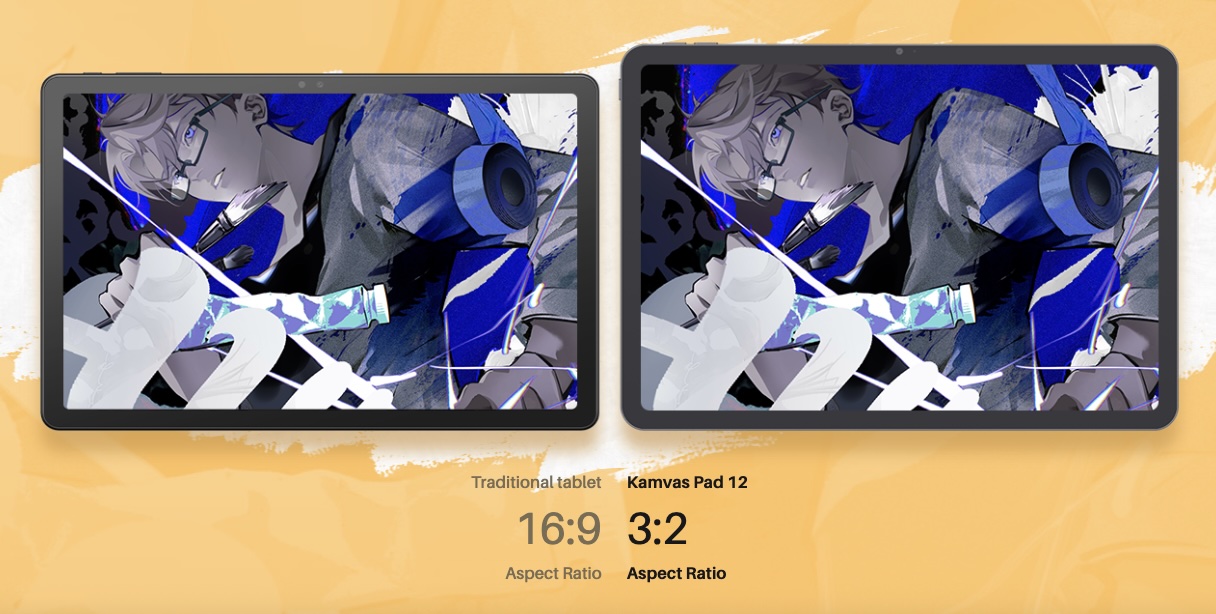
The display uses 10-point capacitive touch, so it still works like a normal Android tablet. Huion also includes a drawing glove, while case and stand bundle contents should be confirmed on the applicable store listing before ordering. At 7.8mm thick and 665g, it is reasonably portable for a large drawing surface, though a case, cable, and charger will add to the travel weight.
Huion’s Pen Avoids One Common Annoyance
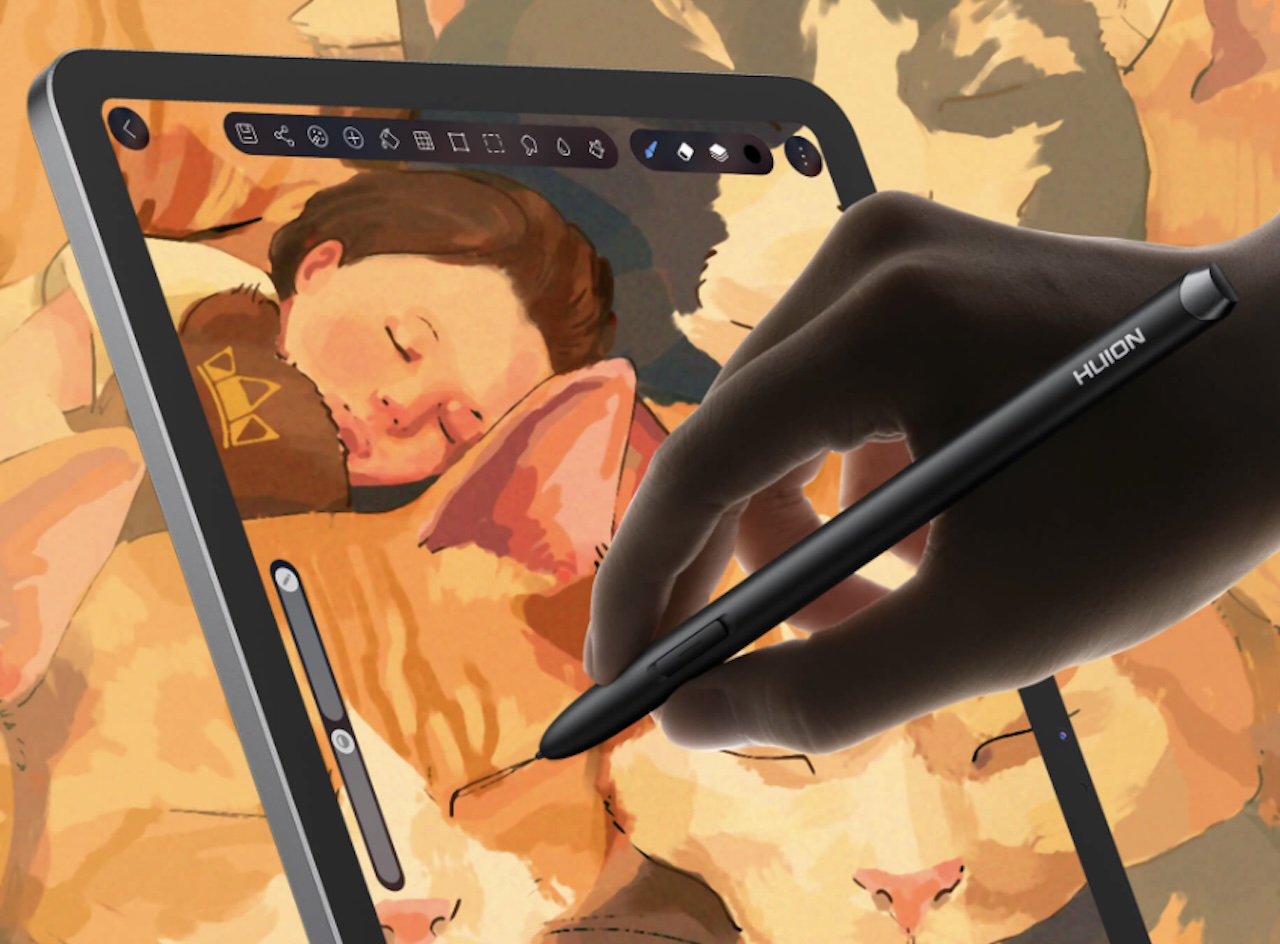
The included PW600C uses Huion’s battery-free EMR technology, so there is no stylus battery to charge or pair. Huion claims 16,384 pressure levels, tilt recognition up to 60 degrees, a 2g initial activation force, and accuracy of plus or minus 0.3mm in the center and 0.6mm near the corners. The company also supplies 10 replacement felt nibs and a nib remover.
Those numbers are useful for identifying the hardware, but they do not prove a good drawing experience. Cursor offset, diagonal-line wobble, pressure consistency, palm rejection, edge behavior, and the feel of the nib on the etched glass all require hands-on testing. Button customization is also app-dependent, so buyers should not assume the pen button will be configurable in every Android art app.
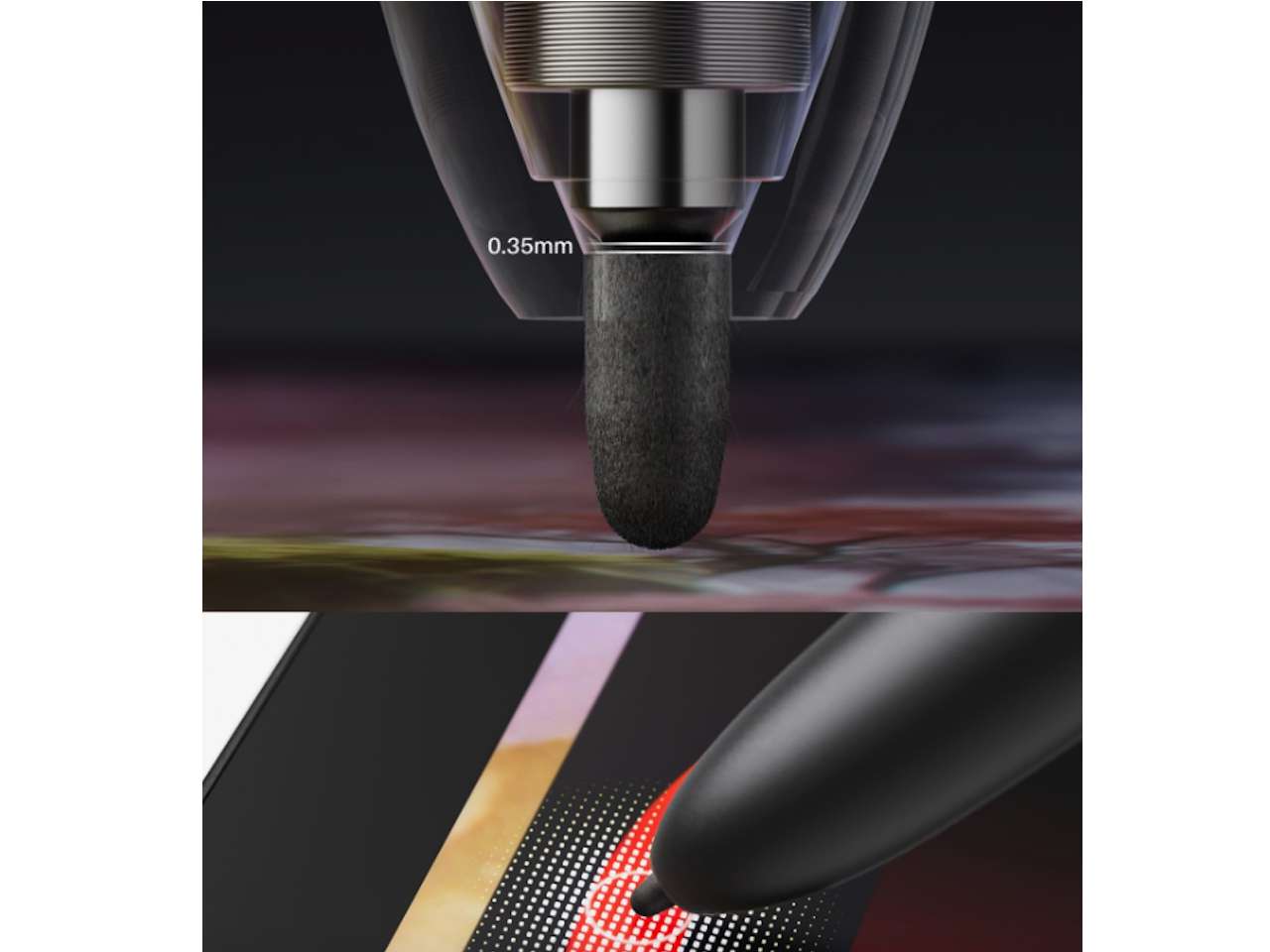
This is also where the Kamvas Pad 12 differs from an iPad and Apple Pencil combination. The Huion pen never needs charging, and microSD expansion is available. The iPad ecosystem, meanwhile, has a deeper selection of tablet-optimized creative software, including Procreate, which is not available on Android. The better choice depends less on one pressure-level number than on the apps and file workflow a buyer actually uses.
The Missing Promises Matter Too
Huion lists an 8,000mAh battery and claims up to eight hours of use at 50 percent brightness. It supports 18W charging, and the company estimates about three hours for a full charge. A USB-C cable is in the box, but a wall charger is not.
The official documentation describes the USB-C port for charging and file transfer. It does not advertise video output or a wired pen-display mode. Buyers should therefore treat the Kamvas Pad 12 as a standalone Android drawing tablet and not assume it can replace a conventional Kamvas display attached to a computer.
Long-term software support is another open question. Huion’s FAQ explains how system updates arrive, but it does not state how many Android version upgrades or years of security updates the Pad 12 will receive. That is a meaningful omission on a $499 tablet, especially for anyone hoping to keep it through several years of creative work.
The rest of the hardware is straightforward: dual-band Wi-Fi, Bluetooth 5.4, four speakers, an 8MP front camera, and a 13MP rear camera. This is a Wi-Fi tablet with no cellular configuration listed by Huion.
Who Should Consider It?
The Kamvas Pad 12 makes the most sense for an artist or student who wants one self-contained drawing device and values a battery-free pen, a roomy 3:2 canvas, and removable storage. It is less convincing as a do-everything tablet for someone whose priority is premium media playback, cellular connectivity, or the widest possible creative-app library.
At $499, Huion is asking buyers to choose specialization over brand familiarity. The company has assembled a thoughtful paper-on-screen package, but the final verdict depends on the parts a launch sheet cannot settle: pen behavior, sustained performance, battery life, display accuracy, and software longevity.
Price: $499
Where to Buy: Amazon
For now, the safest conclusion is also the useful one. The Huion Kamvas Pad 12 is a genuine standalone Android art tablet with unusually complete drawing hardware. It should not be called an iPad replacement, a professional workstation, or a conventional wired pen display until testing shows what it can actually replace.