Buying a budget pocket knife used to mean accepting obvious compromises. Today, the problem is almost the opposite. Affordable EDC knives can come with button locks, crossbar locks, flippers, bearings, multiple deployment methods, elaborate handle machining, and an expanding selection of blade steels.
Price: $44.90
Where to Buy: Amazon
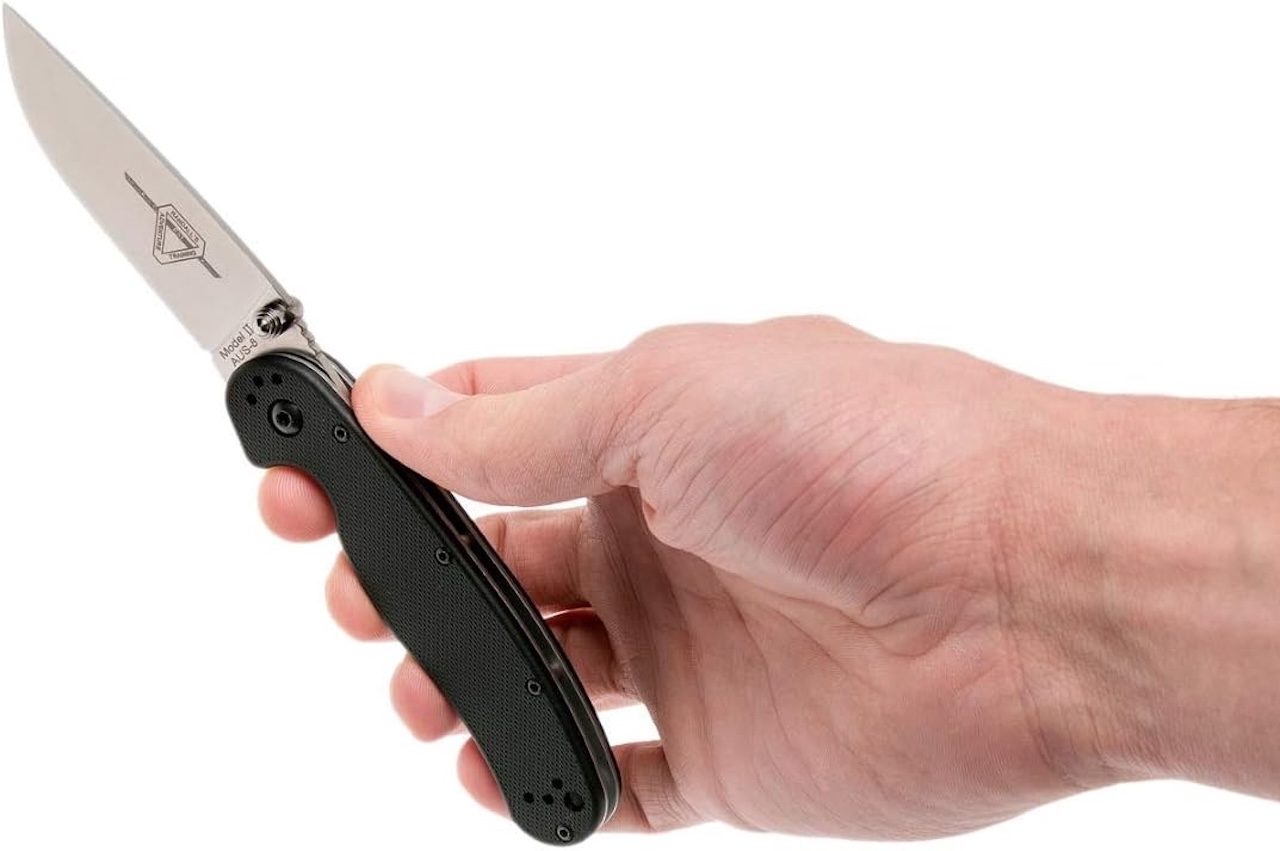
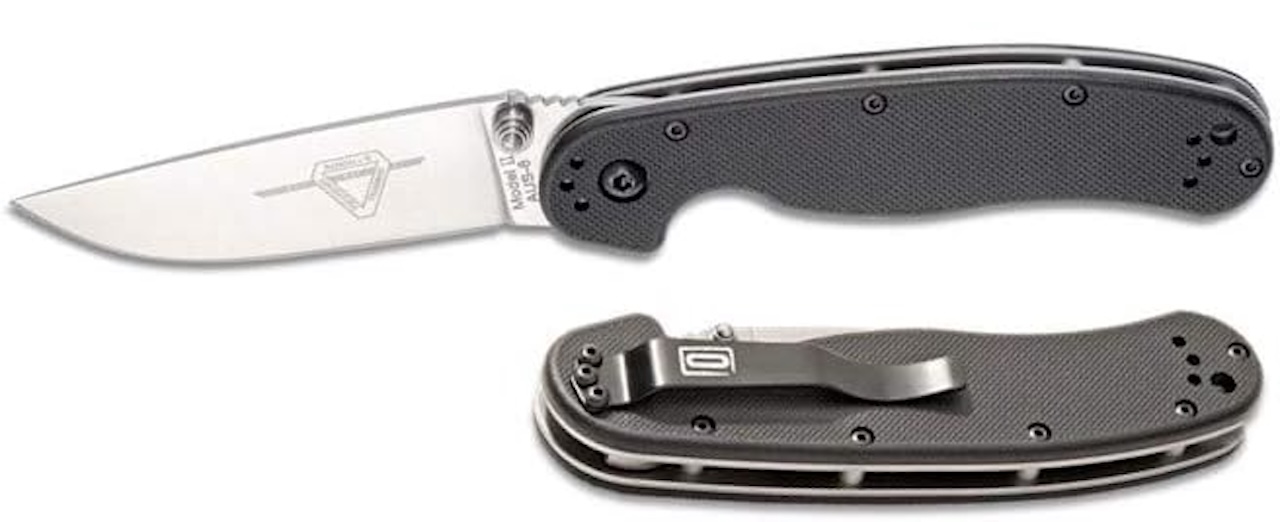
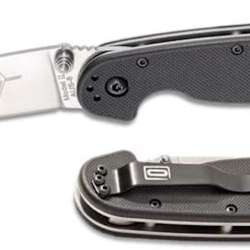
That makes the Ontario RAT II look remarkably simple. The classic version linked here combines a 3-inch AUS-8 drop-point blade, dual thumb studs, a liner lock, nylon handle scales, and a four-position pocket clip.
There is no flipper, assisted mechanism, button lock, or premium handle material. The question is whether that simplicity has become a weakness or whether it is precisely why the RAT II still makes sense.
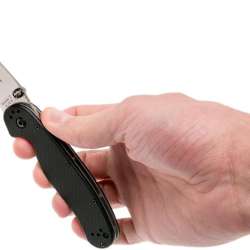
The size may be the RAT II’s best feature
The RAT II is the smaller counterpart to the RAT Model 1. Published specifications put it at approximately 7 inches overall, 4 inches closed, and 2.75 ounces, with a 3-inch blade.
Those dimensions create a useful balance for everyday carry. The blade is large enough for common jobs such as opening packages, cutting cord, and handling light cardboard, while the knife remains compact enough that carrying it doesn’t require dedicating much pocket space to it.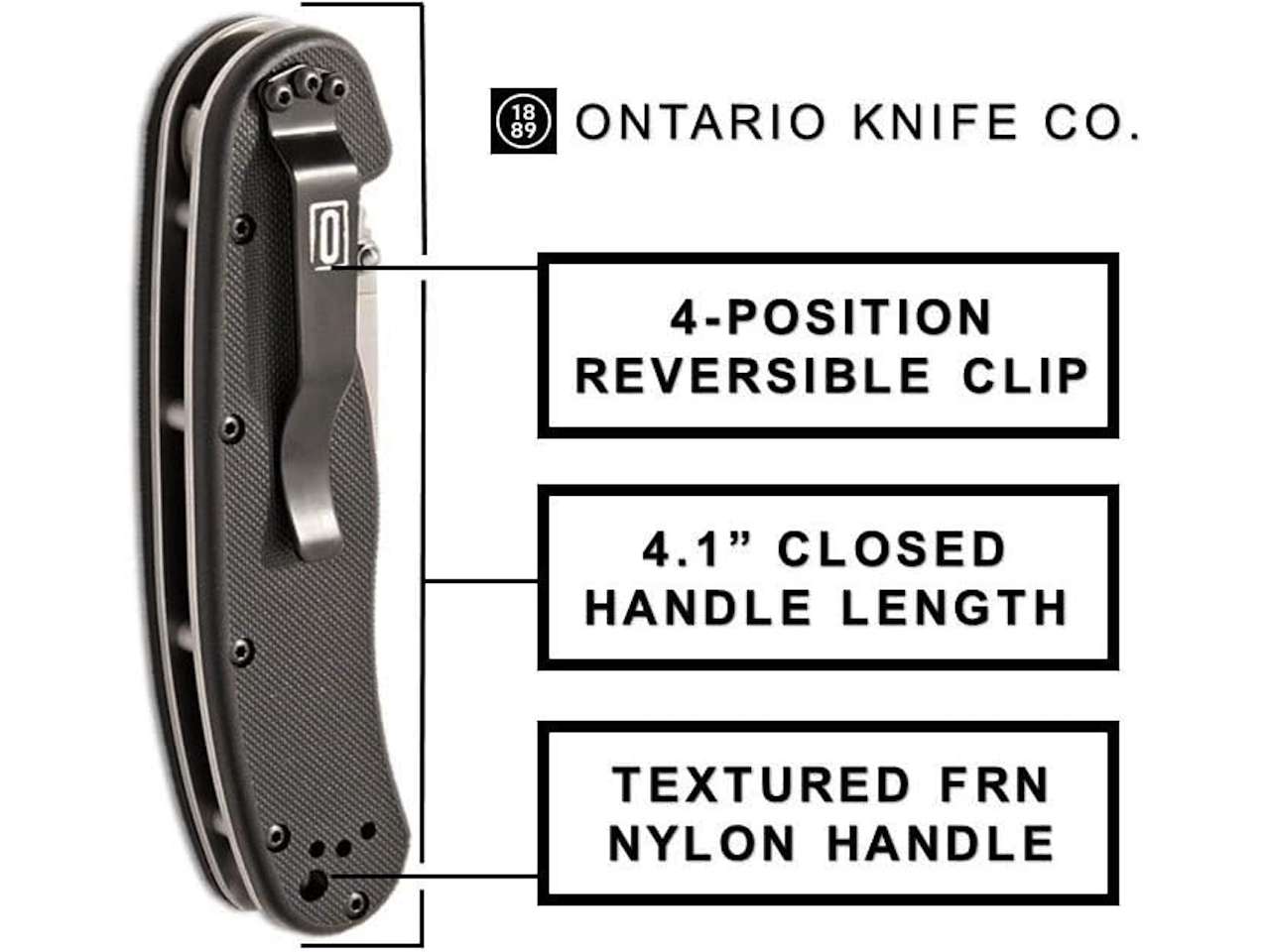
Long-term owner reports frequently identify size, weight, and ease of carry as strengths, although some people with larger hands find the RAT II a little too small. Those experiences are subjective, but they highlight the tradeoff built into its dimensions.
If you want something more hand-filling, the larger RAT Model 1 may make more sense. If portability matters more, the RAT II gives you a useful 3-inch blade without turning your pocket knife into another bulky piece of gear.
AUS-8 is the obvious compromise
The linked RAT II uses AUS-8 stainless steel, the clearest sign of its age. AUS-8 was common on affordable knives when the RAT II launched, but today’s budget market offers more steel options. D2 versions of the RAT II have also been sold, so buyers who prefer this design are not necessarily limited to AUS-8.
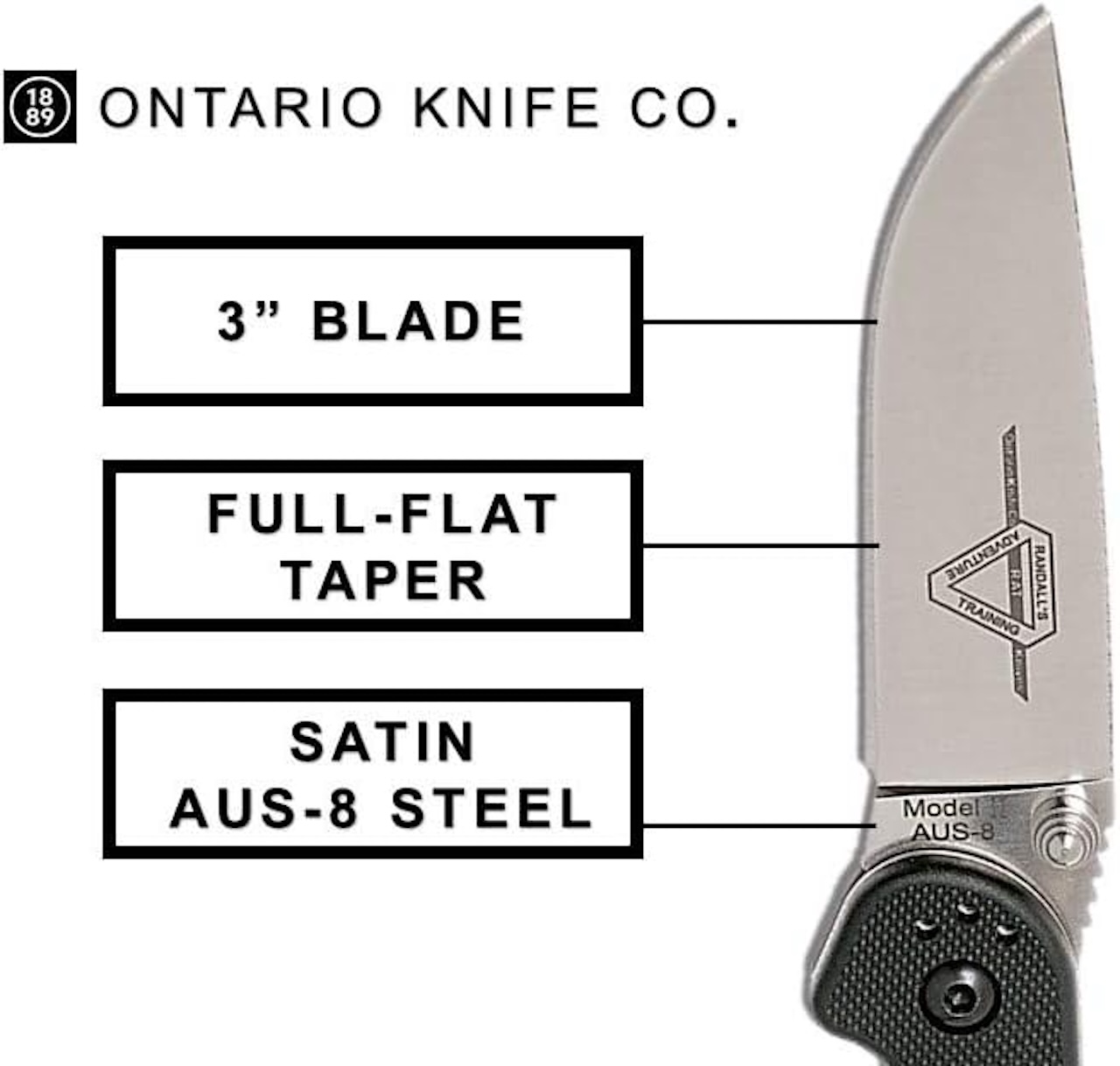 Its appeal is practicality, not maximum edge retention: AUS-8 is relatively easy to sharpen, though it will generally need touch-ups more often than newer alternatives. Reviews of the AUS-8 RAT II report gradual edge dulling through cardboard and everyday cutting, but those experiences are not controlled tests or a universal measure of edge life.
The choice comes down to use. If you regularly cut abrasive materials, prioritize stronger edge retention; for packages, cord, and occasional utility work, easy sharpening may matter more.
The blade geometry matters as much as the steel name
Focusing exclusively on AUS-8 misses another important part of the RAT II. Its 3-inch drop-point blade uses a full-flat grind, giving it geometry intended for general-purpose slicing.
That matters because the steel name printed on a blade doesn’t determine cutting performance by itself. Edge geometry, sharpening, heat treatment, blade thickness, and the material being cut all influence how a knife performs.
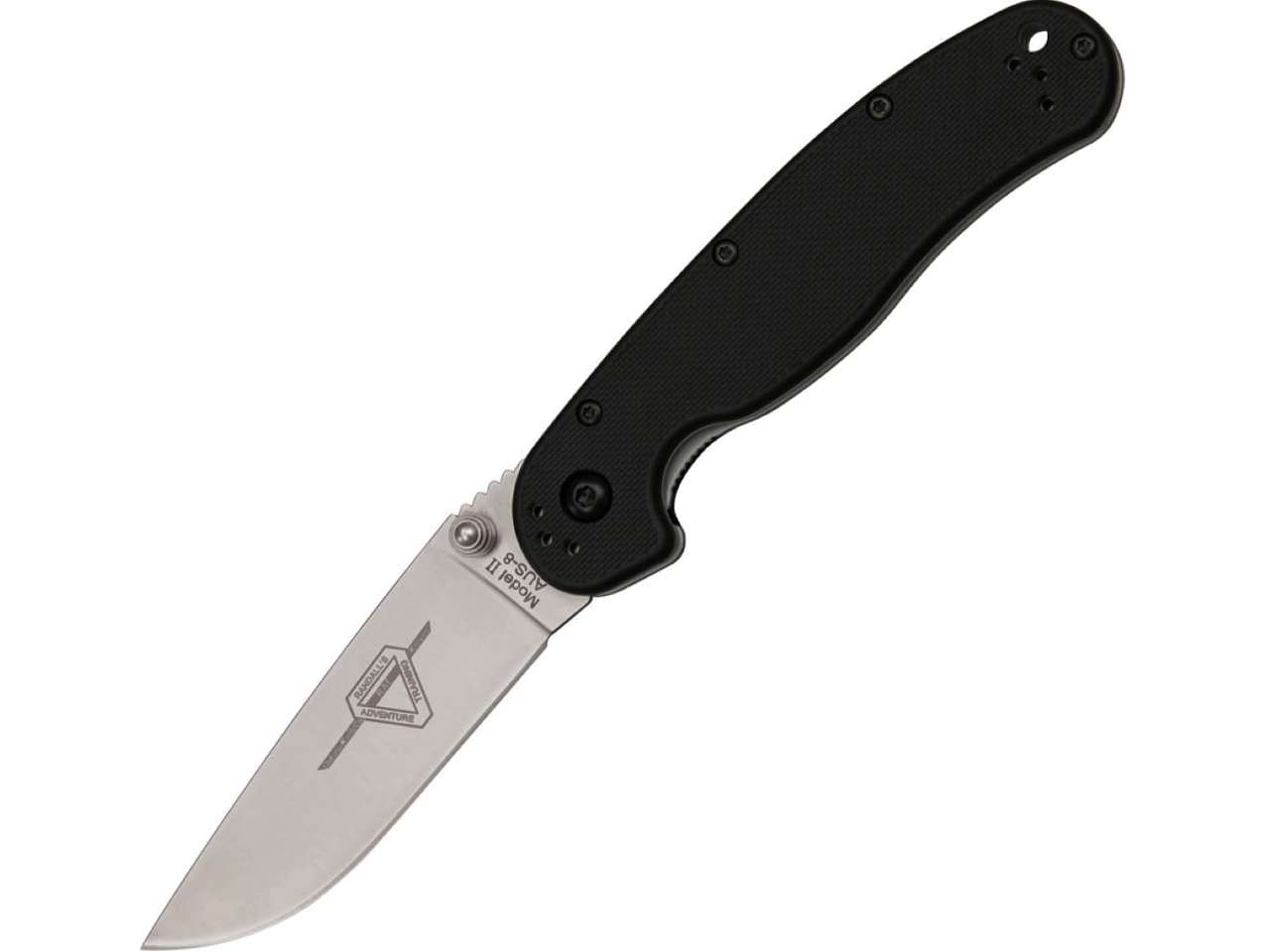 Years of reviews and owner feedback support the RAT II’s reputation as a capable cutter, though it will not automatically outperform every knife with newer steel. It means the basic blade design remains practical even if AUS-8 no longer looks particularly exciting on a specification sheet.
That distinction is important in a market where specifications can become part of the sales pitch. A newer steel or more complicated mechanism may be worthwhile, but neither automatically makes a knife better for the jobs you actually perform.
Thumb studs and a liner lock keep operation straightforward
The RAT II uses dual thumb studs for manual opening and a liner lock to secure the blade, with no assisted-opening mechanism involved.
That setup is conventional beside today’s button- and crossbar-lock folders. Those alternatives can let you disengage the lock without placing a thumb in the blade’s closing path, while a liner lock requires you to move the lock bar aside before folding the blade shut.
For many owners, that familiarity is the point. The RAT II’s manual action and lockup have earned positive feedback over years of use, though action and adjustment can vary from knife to knife.
Its four-position pocket clip adds more versatility than the basic construction suggests, supporting left- or right-handed, tip-up or tip-down carry rather than forcing a single factory orientation.
Nylon handles prioritize function over appearance
The RAT II uses nylon handle scales over steel liners. Buyers looking for titanium, aluminum, carbon fiber, or aggressively machined G10 won’t find much visual drama here.
 That doesn’t mean the handle is uncomfortable. Numerous owners and reviewers praise the RAT II’s ergonomics, particularly considering its compact dimensions.
The same dimensions inevitably create a compromise. A smaller handle is easier to carry but provides less room for larger hands, which helps explain why some owners find the RAT II ideal while others prefer the larger RAT Model 1.
That is more useful than simply labeling the handle ergonomic. The RAT II has a strong reputation for comfort, but hand size and grip preference ultimately determine whether its proportions work for you.
Who should buy the Ontario RAT II?
The Ontario RAT II is not compelling because it has more features than newer budget knives. It works because it covers the essentials without unnecessary extras.
You get a compact manual folder with a 3-inch AUS-8 blade, full-flat grind, dual thumb studs, liner lock, four-position pocket clip, and roughly 2.75-ounce weight, plus years of owner experience behind the design.
 There are valid reasons to choose something newer: shoppers focused on edge retention may prefer a different steel, while anyone used to crossbar or button locks may find the liner lock dated rather than refreshingly simple.
But if you want a compact, easy-to-carry knife for everyday cutting and do not need the latest EDC mechanism, the RAT II remains an easy choice to understand.
Best for: EDC users who prioritize compact size, straightforward manual operation, easy maintenance, and flexible pocket carry over newer locks or premium blade steel.
Price: $44.90
Where to Buy: Amazon
The RAT II does not prove that newer EDC features do not matter. It proves a knife can remain useful without having all of them.