Most earbuds sound fine for twenty minutes. Put them in at a desk, play a familiar track, take one call, and it’s easy to convince yourself you’ve heard enough. Then you take them through an airport, use them while you’re trying to get work done, and spend hours in an aircraft cabin. That’s when a tiny fit issue becomes annoying, the cabin starts pushing the volume up, and battery becomes a concern at exactly the wrong moment.
I took the HUAWEI FreeBuds Neo from Dallas to London. They made the cabin quieter, stayed comfortable, sounded lively with music, and moved easily between calls, podcasts, YouTube videos, and work. More importantly, they didn’t make me babysit them. I expected a competent pair of compact ANC earbuds. I didn’t expect to get off the flight thinking about how little they’d demanded from me.
That’s the compliment.
Neo is HUAWEI’s multimedia pair, not the cheap middle option
The FreeBuds family has a clear split. The SE line is there for basic wireless listening. FreeBuds i is the practical, everyday-music option. The flagship Pro models sit at the top with the brand’s most ambitious audio package. Neo has a more specific job than simply being “midrange.” It’s the multimedia pair, built for the person who wants more character, deeper control, proper ANC, and better on-the-go behavior without moving all the way into the Pro tier.
That framing fits what I experienced. The Neo aren’t trying to win an audiophile arms race or beat an AirPods Pro at Apple-only conveniences. They’re trying to be the earbuds that can handle an airport, a work call, a YouTube break, a workout notification, and a long flight without making me switch to another pair.
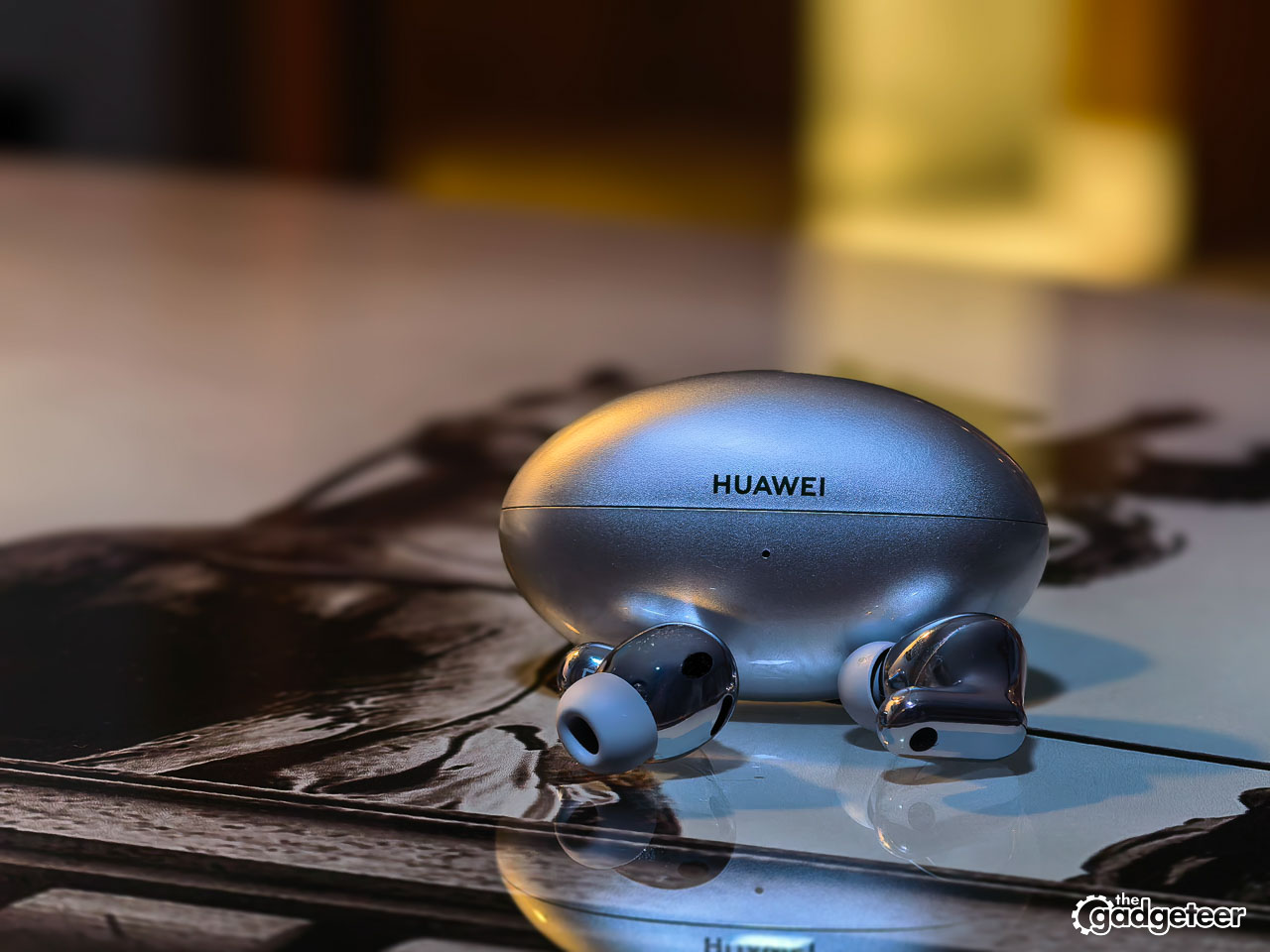
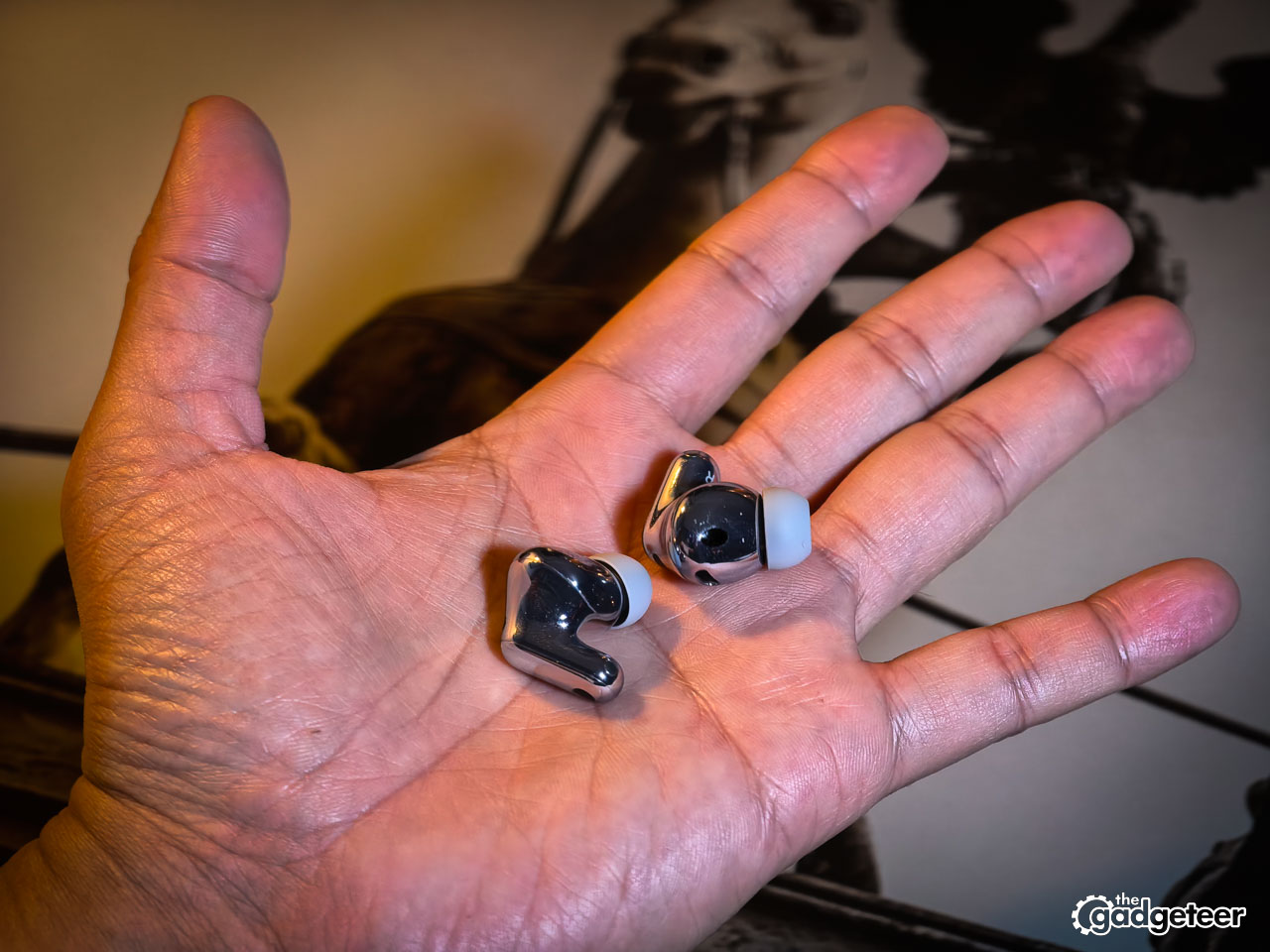
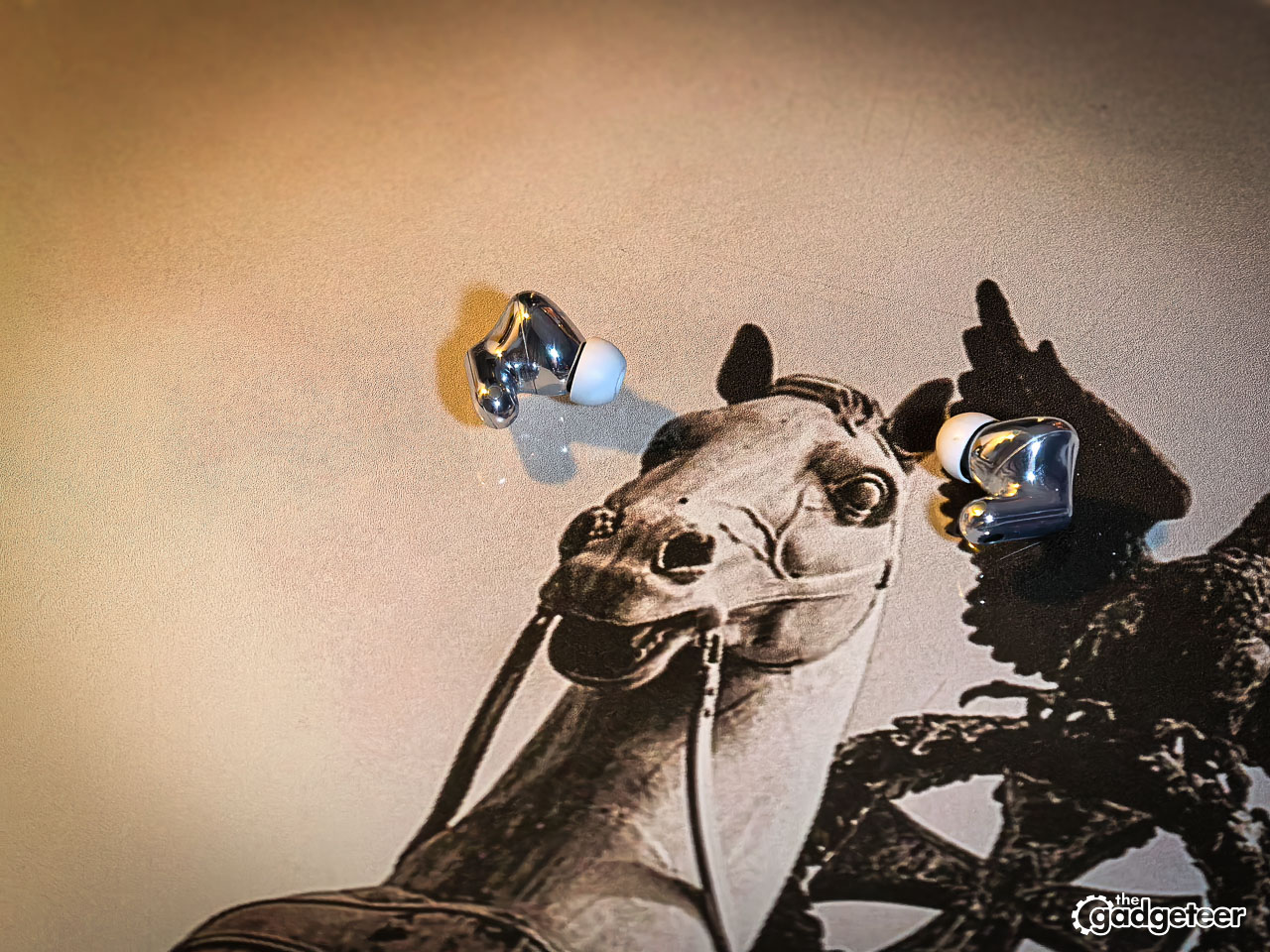
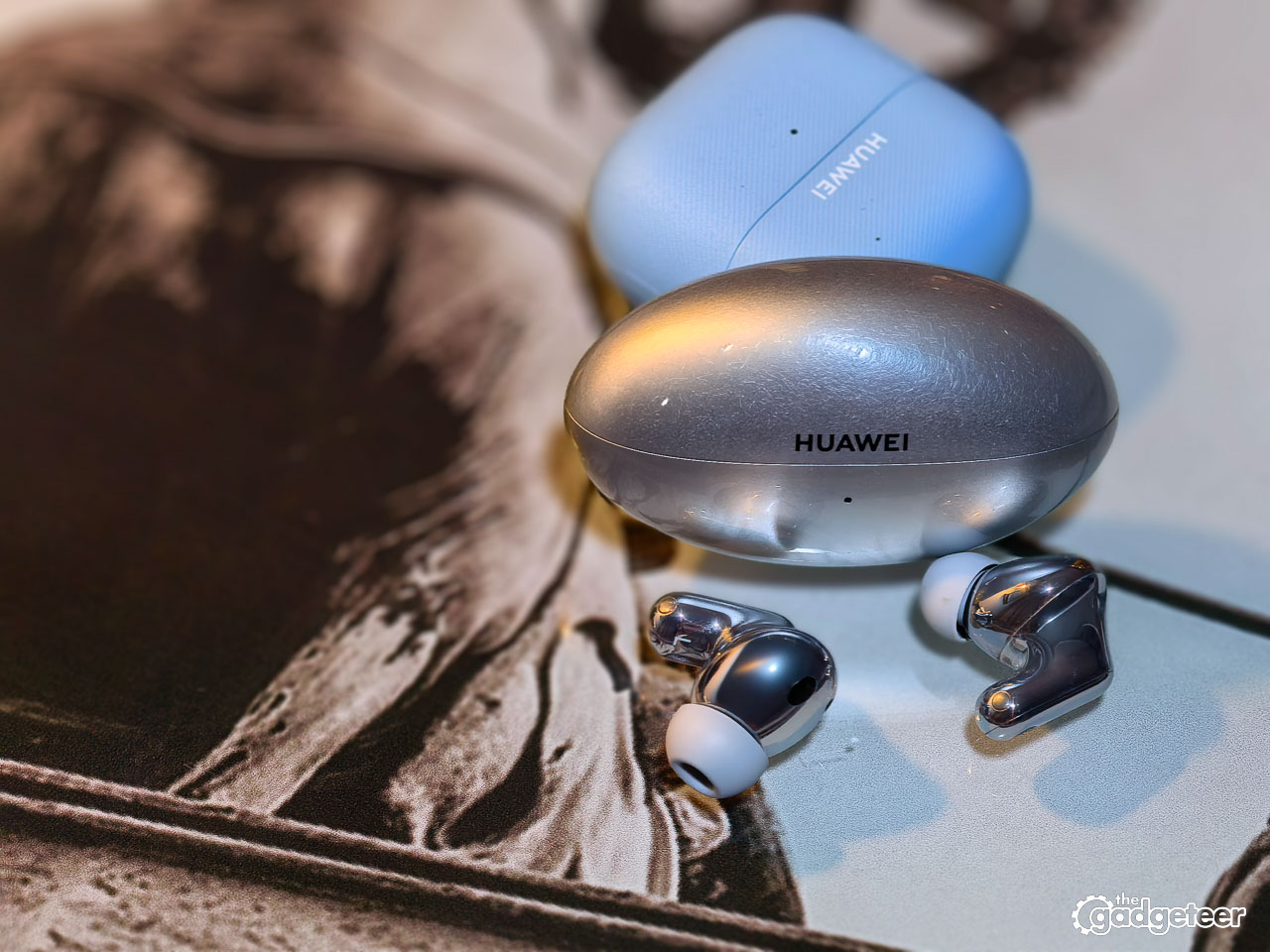
The short hybrid stem and compact, streamlined case make that intent obvious. They look less generic than a standard long-stem design, but they don’t turn the earbuds into fashion objects that are annoying to carry. The launch colors are silver, pink, green, white, and black. The silver finish has a smooth, pebble-like look that works better in person than it does in a product render.
I stopped fighting the cabin
I don’t expect earbuds to turn an aircraft into a quiet room. Anyone promising that is selling a fantasy. I want the steady low-end rumble pushed far enough back that quiet dialogue stays audible, music can live at a sane volume, and the cabin doesn’t get to dictate the entire experience.
The Neo got there. The engine drone didn’t vanish, but it lost its grip. I could watch a movie without riding the volume button. I could listen to music without blasting it just to get the vocals over the plane. I could work without that constant hiss and rumble taking up the middle of my concentration.
That result comes from more than a generic ANC mode. The Neo use a dual-channel acoustic path that combines a C-shaped tube and air vent to cut the mid-to-high-frequency noise that can still leak through after the low rumble is reduced. Their third-generation processing chip and adaptive ANC system keep cancellation consistent as the environment changes. The official ANC rating is an average full-frequency depth of 30 dB across 300 Hz to 3 kHz, the band that carries plenty of voices, mechanical noise, and public-space clutter.
The useful part isn’t the number. It’s that the system didn’t feel like it was fighting my ears. I could leave the Neo in for hours without the strange pressure sensation that some ANC earbuds create. That’s why they worked so well on the flight.
There’s also an awareness mode that lowers the audio when I speak, then restores ANC afterward. That’s exactly the kind of feature that earns its place outside an airplane. When I’m walking through a terminal, ordering coffee, or dealing with someone at a hotel desk, I don’t want to rip an earbud out every time the world needs my attention.
The sound has energy without faking it
The technical story is much more serious than I expected from a compact pair in this position. The listed hardware includes a professional audio DAC rated at a -113 dBV noise floor, lossless transmission up to 2.3 Mbps at 48 kHz and 24-bit, and 990 kbps LDAC support. A dual-path turbo driver and triple adaptive EQ then adjust for equal loudness, fit, and the ear canal.
None of that hardware earns its place if the listening falls flat. It didn’t.
I went back to the same listening references I use in my other earbud reviews: Explosions In The Sky’s “Wilderness” for layered guitars and atmosphere, Crosby, Stills, Nash & Young’s “Helplessly Hoping” for close vocal harmonies, Darkside’s “Paper Trails” for bass control, Pharoah Sanders’ “You’ve Got To Have Freedom” for the upper range, and Hans Zimmer’s “Time” for space and scale. The Neo came across as full and lively without relying on a fake bass boost or a sharp treble spike to make the first thirty seconds feel exciting.
“Wilderness” makes lesser earbuds fall apart. The overlapping guitars, drums, and atmosphere start competing for the same small space. The Neo held the layers apart and kept the bassline defined, so the track built naturally instead of turning into a wash.
“Helplessly Hoping” was where I started paying attention. On weaker earbuds, its close harmonies collapse into one smeared image in the center. Here, each voice held its place while the song still felt like one performance. The Neo didn’t dissect the recording into tiny pieces. They gave the music room to breathe.
The turbo driver and new acoustic structure also explain the bass behavior. The light, rigid diaphragm, pressure-relief structure, and dual-airflow design control how quickly the driver starts and stops. “Paper Trails” made that easy to hear. Its bassline had real weight and physical momentum, then got out of the way before it swallowed the midrange. Busy passages didn’t turn into a soft lump, and I kept reaching for the next track instead of reaching for an EQ.
The top end held together too. Pharoah Sanders’ “You’ve Got To Have Freedom” can turn piercing when earbuds overplay the saxophone and cymbals. The Neo kept the brightness and energy without making the track abrasive. I’m not pretending these are custom-fit audiophile monitors. They’re not. But for a compact pair that lives in a pocket and gets thrown into a travel bag, they sound far more grown up than they look.
Spatial audio is also available for gaming. I wouldn’t buy the Neo solely for that feature, but Hans Zimmer’s “Time” showed why the broader spatial presentation fits the multimedia positioning. The track opened up beyond a narrow in-ear image without losing its central piano and percussion. These aren’t earbuds that want to live in one lane. They’re meant to move from music to video to a game without suddenly sounding like the compromise in the setup.
Podcasts and YouTube videos were a breeze. Speech remained clear at normal volume, so I could go from a song to a call, a podcast, or a video without stopping to play amateur sound engineer in an app.
The fit is why I kept them in
I’ve liked the sound of plenty of earbuds that eventually made my ears say no. Comfort isn’t a footnote when you’re somewhere between Dallas and London with several more hours in your seat.
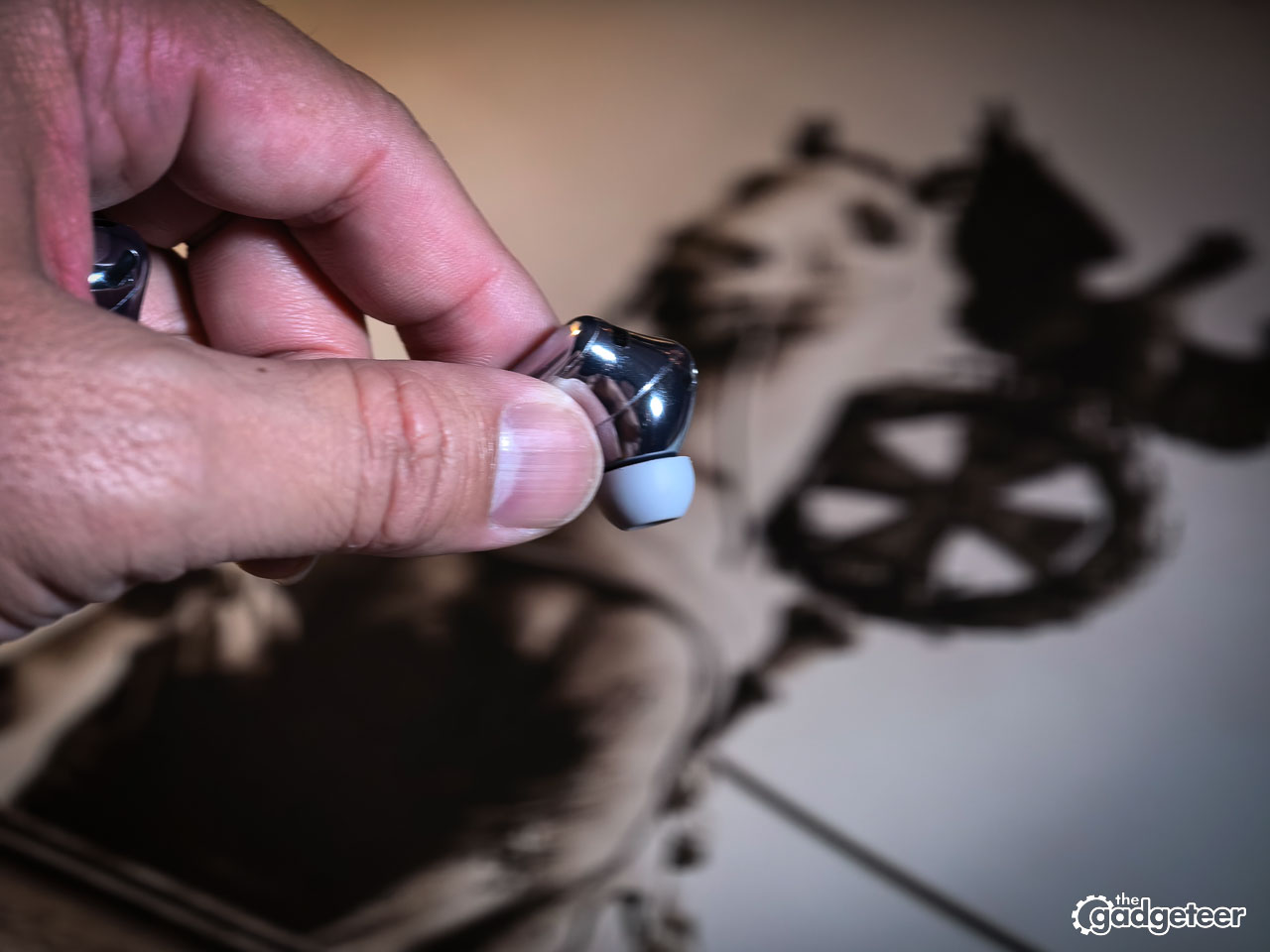
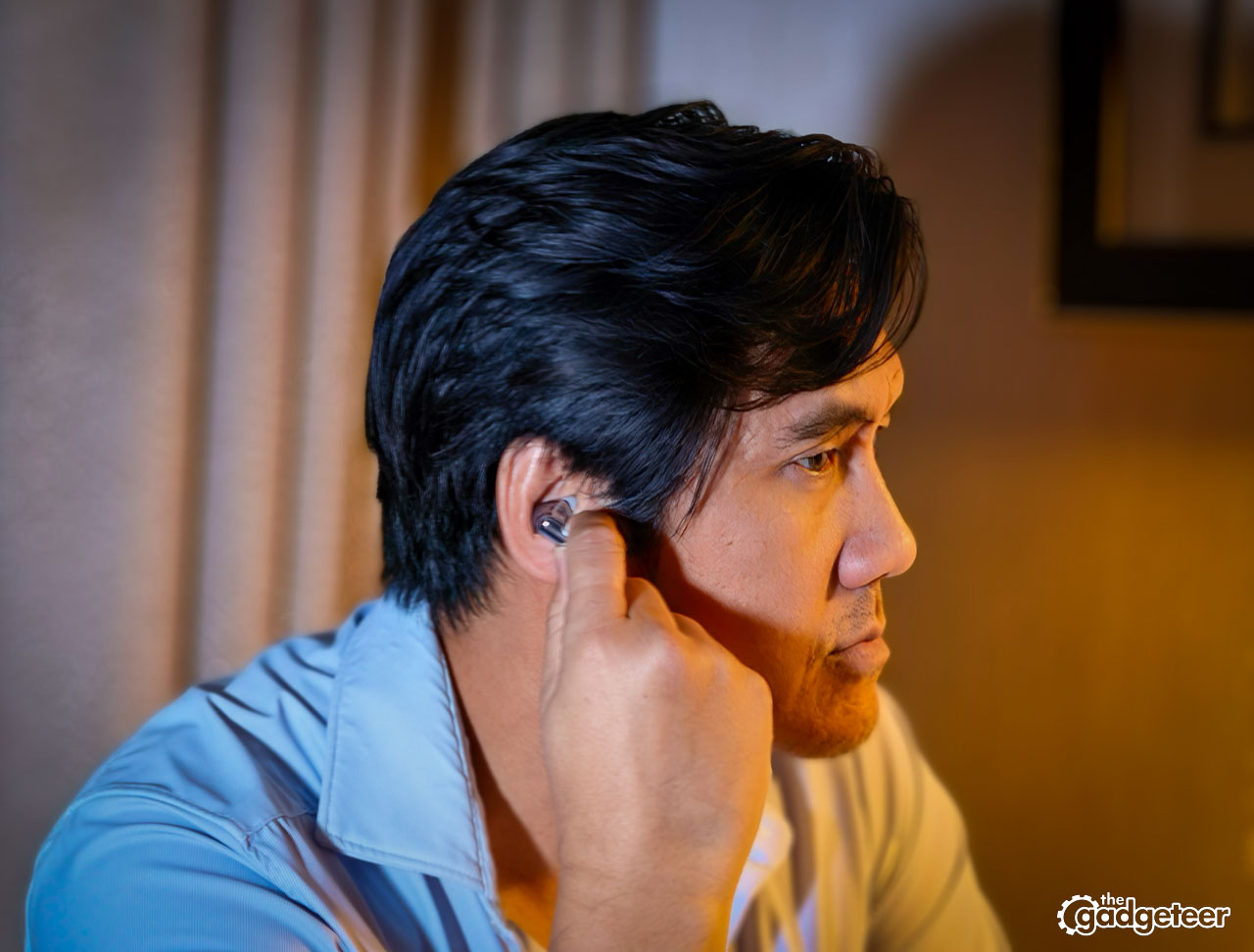
The FreeBuds Neo stayed comfortable through long listening stretches at my desk, through the airport, and across the flight. They didn’t need constant readjustment. I didn’t pull one out just to give my ears a break. I didn’t catch myself checking their position in a black phone screen every half hour.
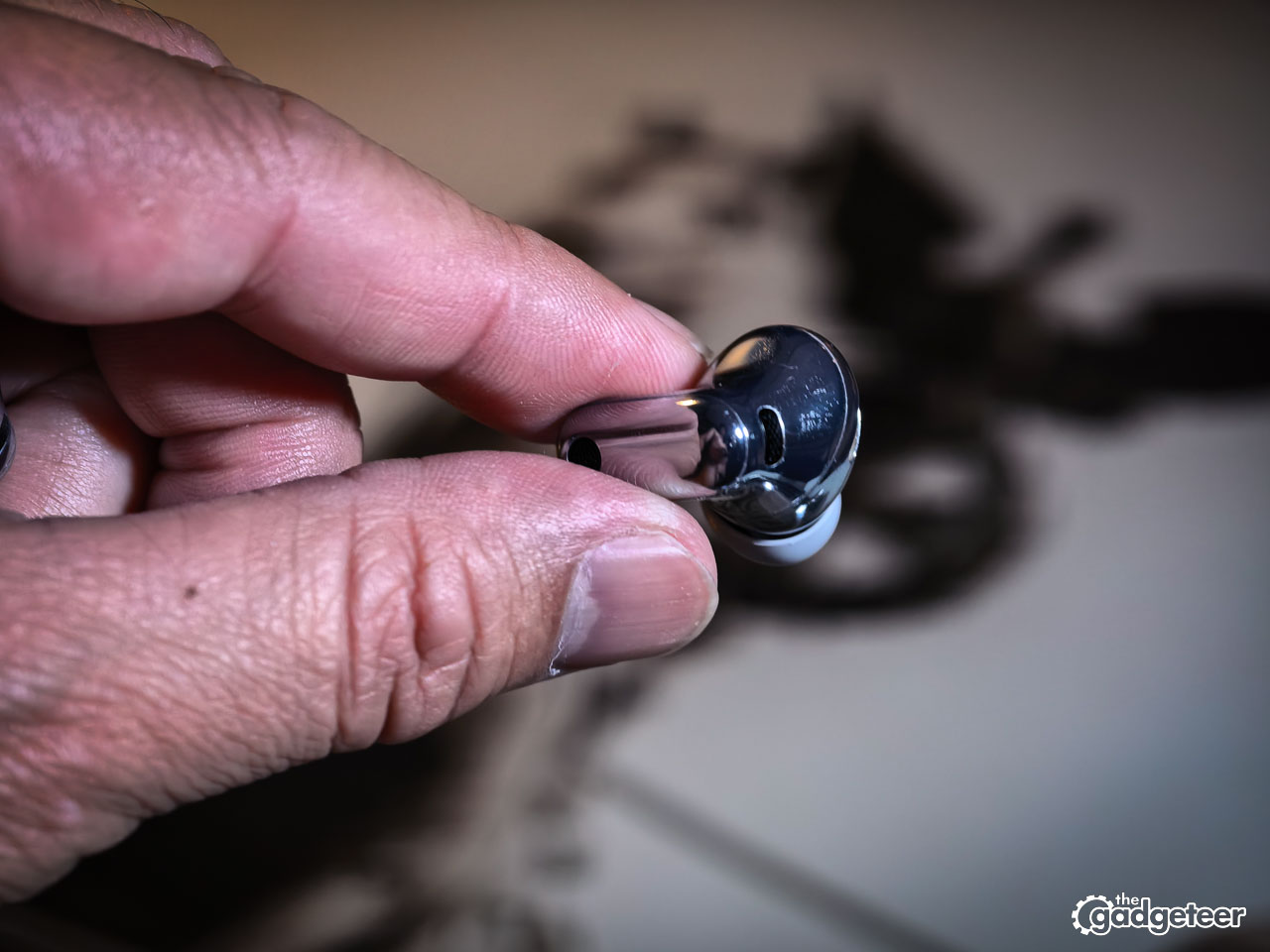
That secure fit isn’t an accident. The Neo shape draws on ear-shape data and in-ear structural research, spreading pressure across the contact area instead of concentrating it in one sore spot. They stayed in place without creating the tight, stuffed feeling that can make in-ear earbuds unbearable after a long session.
The compact shape earns its place here too. The buds don’t feel oversized in the ear, and the shorter stem keeps the whole thing from looking or feeling like it’s hanging off the side of my head. The case is small enough to vanish into a pocket, which sounds boring until you’ve got a phone, passport, charger, and boarding pass fighting for the same space.
Built for moving, not just sitting still
The three-microphone and VPU pickup system targets more than quiet indoor calls. Its official rating covers call noise up to 95 dB and wind noise up to 7 m/s, which directly fits metro platforms, busy streets, runs, rides, hikes, and loud bars.
That’s a big on-the-go distinction. I used the Neo for normal calls and for calls with enough background noise to expose an overaggressive microphone setup. My voice came through clearly without the thin, chopped-up character that can make earbuds sound as if they’re trying too hard to clean up the world. I didn’t have to start every call by asking whether the other person could hear me.
The gesture controls are just as useful when I’m on the move. Single, double, and triple taps, plus swipes, cover the everyday commands, while head-movement controls give me another way to handle calls when my hands are busy. That could have been a novelty feature. It works because it solves a very ordinary problem: I’m carrying luggage, running, cooking, or holding a bag, and I don’t want to pull out my phone just to deal with a call.
The controls settled into the background quickly. I could handle playback and ANC changes without opening my phone, but I wasn’t accidentally changing tracks every time I touched an earbud. That’s exactly where touch controls should land.
The watch connection is more useful than it sounds
This is one of the biggest reasons the Neo make sense for people who are already using HUAWEI devices. They pair automatically with a HUAWEI phone, while other phone owners can use HUAWEI Audio Connect. Once they’re paired to a supported HUAWEI watch, the watch can take over the jobs I’d normally reach for my phone to do.
I can check each earbud’s battery, control ANC, change EQ, adjust volume, ring a lost earbud, and use Find Earphones from the wrist. I can also hear workout notifications while music is playing from the phone, which sounds small until you’re trying to stay in a workout without looking down at a screen every few minutes.
The Neo also support dual-device connections and broader cross-ecosystem coverage. They don’t force a one-phone lifestyle, which is important for anyone who moves between a work device, a personal phone, travel, and home. I like that the extra HUAWEI integration is genuinely useful if I’ve got the compatible gear, but the earbuds don’t become dead weight if I don’t.
Battery stayed in the background, where it belongs
Battery only gets my attention when it fails.
It didn’t go wrong here. I used the FreeBuds Neo for work, travel, calls, music, podcasts, YouTube videos, and a long-haul flight without watching the percentage indicator like it owed me money. I didn’t plan a charging stop. I didn’t stop using them because I was worried about the next leg of the day.
The official battery rating is up to 10 hours from the earbuds with ANC off, up to 6.5 hours with it on, and up to 38 hours with the case. My experience confirms the useful part: the Neo kept up. The case is compact, easy to carry, and easy to use. That’s all I need from a pair of travel earbuds.
Who should buy the FreeBuds Neo
The HUAWEI FreeBuds Neo are for people who want one versatile pair of earbuds for commuting, travel, calls, video, music, workouts, and ANC without having to fuss over them. They occupy the multimedia middle ground in HUAWEI’s lineup: more capable and engaging than the entry-level option, but less specialized and expensive than the flagship Pro models.
Apple users who rely on seamless switching, Find My integration, and the familiar AirPods Pro experience may still prefer Apple’s ecosystem. And listeners seeking a custom-fit audiophile experience or the deepest specialist controls will find more suitable options elsewhere. The Neo have a simpler job: they’re the pair I can throw in my bag without a second thought, then keep in until I forget I’m on a plane.
They did their job.