
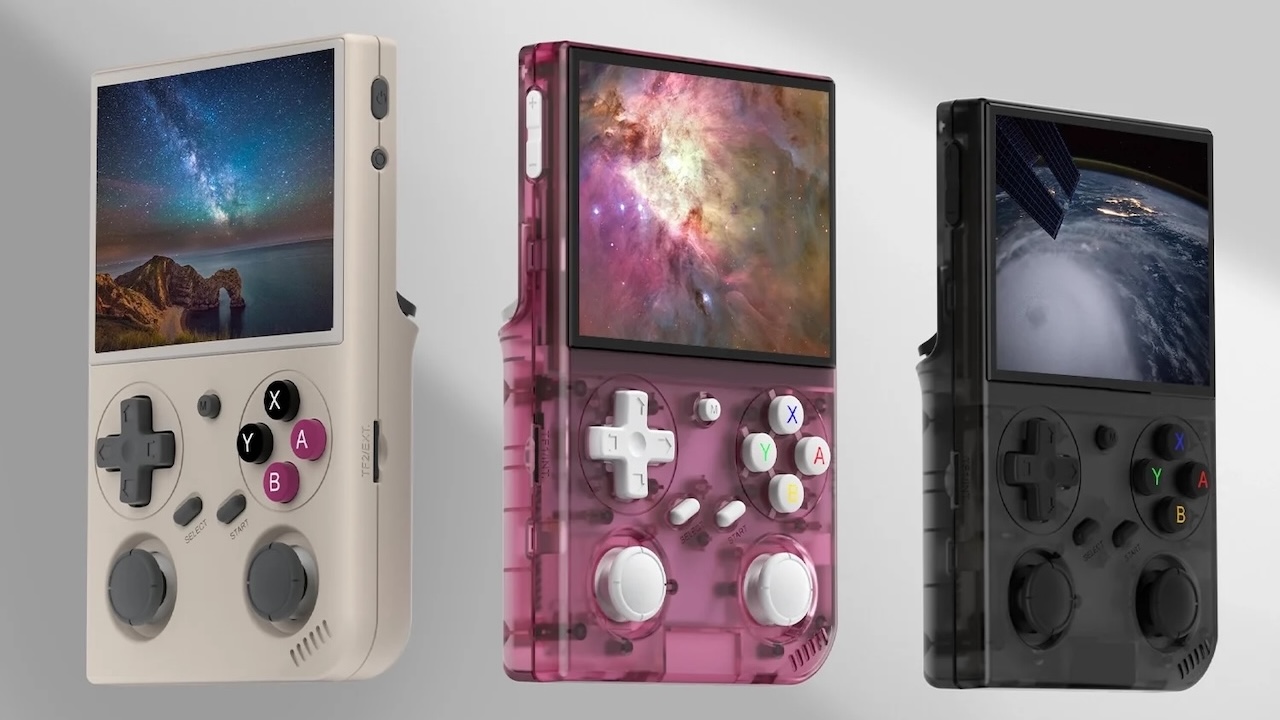
Retro handhelds have become powerful enough that it’s surprisingly easy to buy more machine than you need. If most of your library consists of older games, paying substantially more for Android, a faster processor, a high-resolution widescreen display, and more memory may not improve the games you actually intend to play.
Price: $37.99
Where to Buy: ANBERNIC
The ANBERNIC RG 35 takes the opposite approach. Listed at $37.99, this vertical Linux handheld combines a 3.5-inch 640 × 480 IPS display with an RK3326 processor, 1GB of RAM, dual analog sticks, dual microSD card slots, vibration, and a 3200mAh battery.
Those specifications aren’t ambitious in 2026, but at less than $40, they don’t necessarily need to be.
A 640 × 480 Screen Makes Sense at This Size
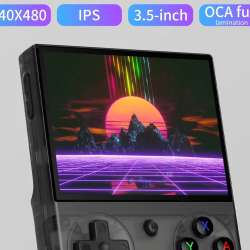
The RG 35 has a 3.5-inch, 640 × 480 IPS display with OCA full lamination. That is modest by modern handheld standards, but this is not a device for Android games or high-resolution PC streaming.
Its 4:3 aspect ratio better fits many older console and arcade games, where extra pixels can simply mean unused screen space or borders. The handheld is also compact at 128 × 81 × 22 mm and approximately 191 grams, with a vertical layout that puts the D-pad and face buttons above two analog sticks.
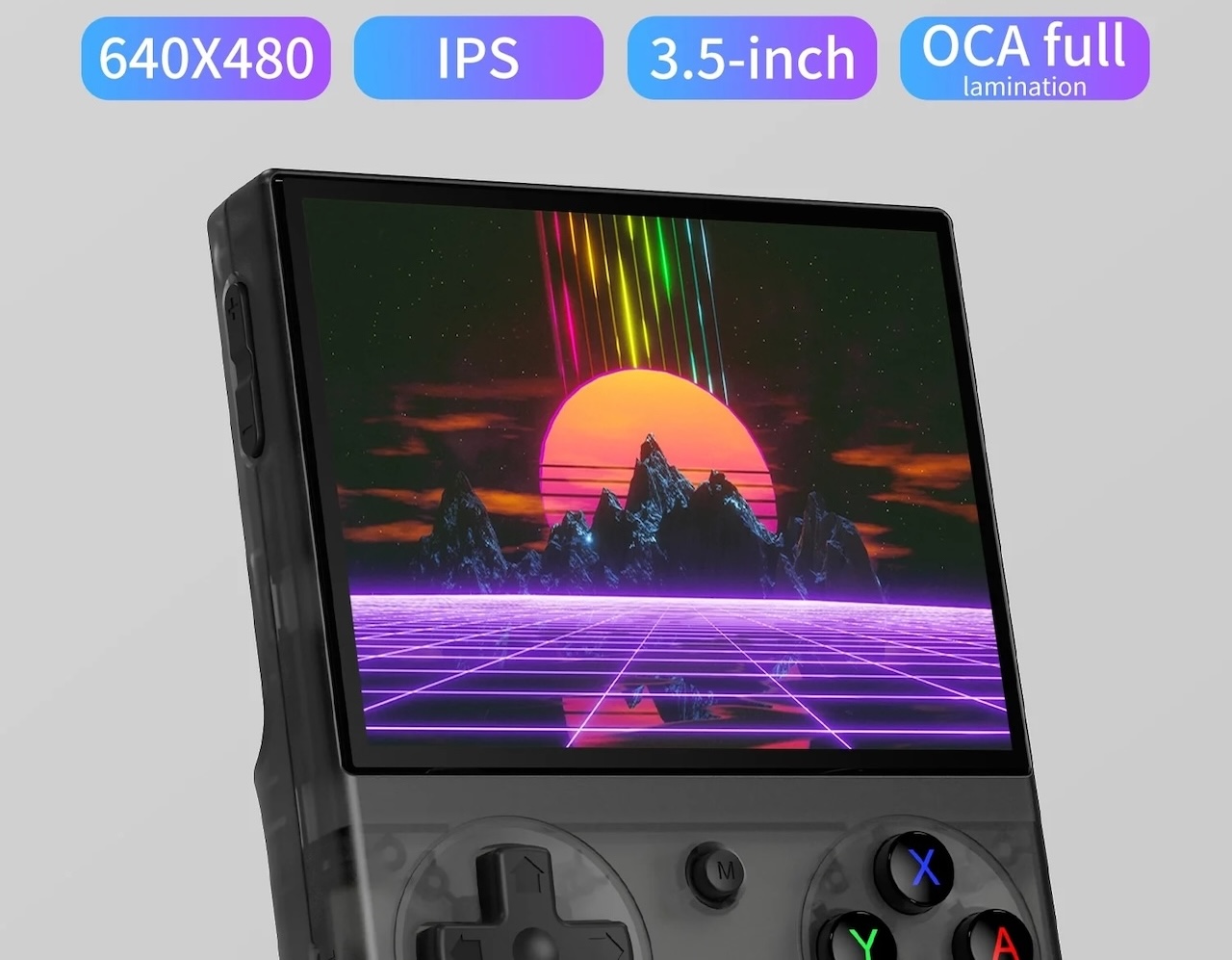
ANBERNIC calls it comfortable, but that remains a hands-on question. Its small, vertical form and low-mounted sticks could affect comfort during longer sessions, so dimensions alone cannot confirm how well the layout works.
The RK3326 Sets Expectations
The RG 35 uses a Rockchip RK3326 quad-core processor clocked up to 1.5 GHz, Mali-G31 MP2 graphics, and 1 GB of RAM. It is older hardware, and the specification sheet makes clear that ANBERNIC is targeting affordability rather than high-end emulation.
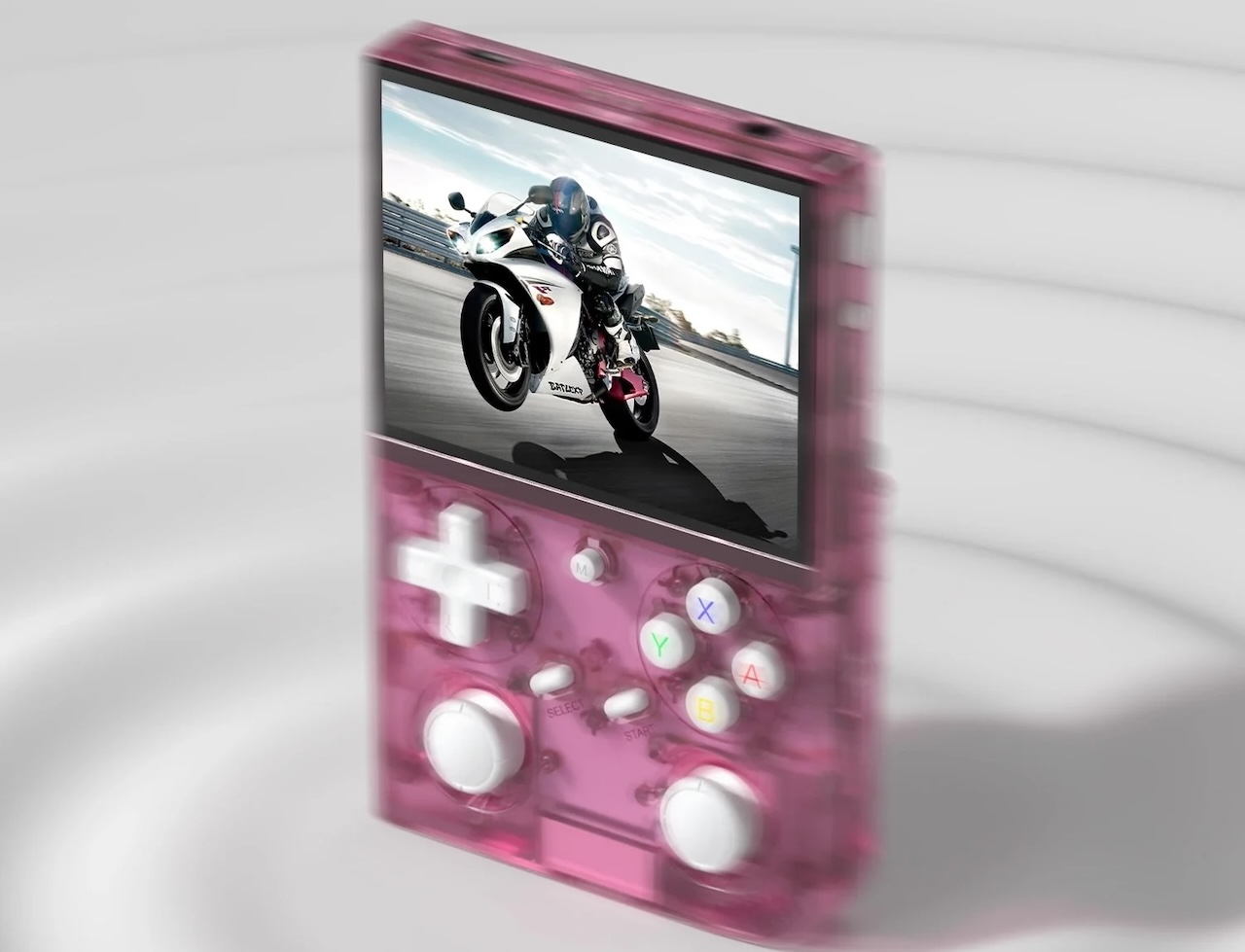 ANBERNIC says the device supports ported games and more than 20 game formats. That signals its intended software compatibility, but not consistent performance across every supported game or platform.
Emulation performance can vary by system, individual game, emulator configuration, and software maturity, especially on limited hardware. Until independent testing is available, treat ANBERNIC’s compatibility list as a guide rather than a promise of smooth play across every format.
Dual sticks give you more ways to play
The RG 35 includes a D-pad, four face buttons, shoulder controls, two analog sticks, and vibration feedback. That’s a fairly complete control layout for a handheld selling for less than $40.
Having dual sticks gives it more flexibility than a bare-bones device designed primarily around D-pad games. Ports and games from later platforms can benefit from analog input, even if the processor ultimately determines how demanding the software can become.
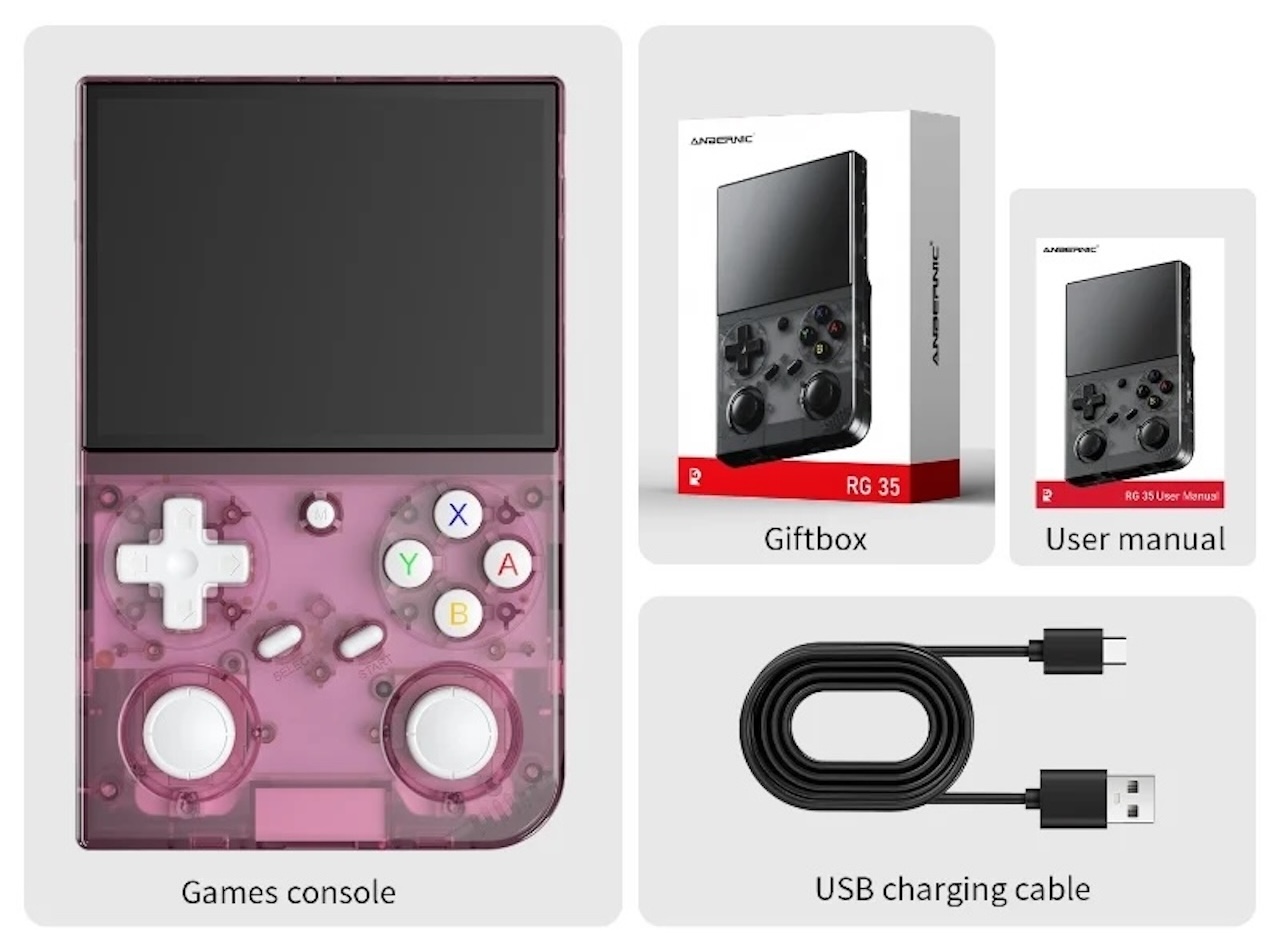
What the specification sheet doesn’t tell us is how good those controls actually feel. ANBERNIC makes no Hall-effect claim for the sticks, nor does its product page provide measurements for dead zones, stick tension, button travel, or input latency.
The control layout looks capable on paper. Its quality still needs to be established through hands-on testing.
No built-in Wi-Fi is one of the obvious compromises
One omission separates the RG 35 from better-connected handhelds: Wi-Fi isn’t built in.
ANBERNIC says the device supports an external Wi-Fi module for online multiplayer, so networking is possible but requires additional hardware. The RG 35 also supports wired controllers, vibration, a 3.5mm headphone jack, and USB-C-to-USB-C charging.
For someone who primarily wants an offline retro handheld, external Wi-Fi may be a reasonable compromise at this price. If you regularly use network features, however, connecting an extra accessory is clearly less convenient than having wireless connectivity built into the device.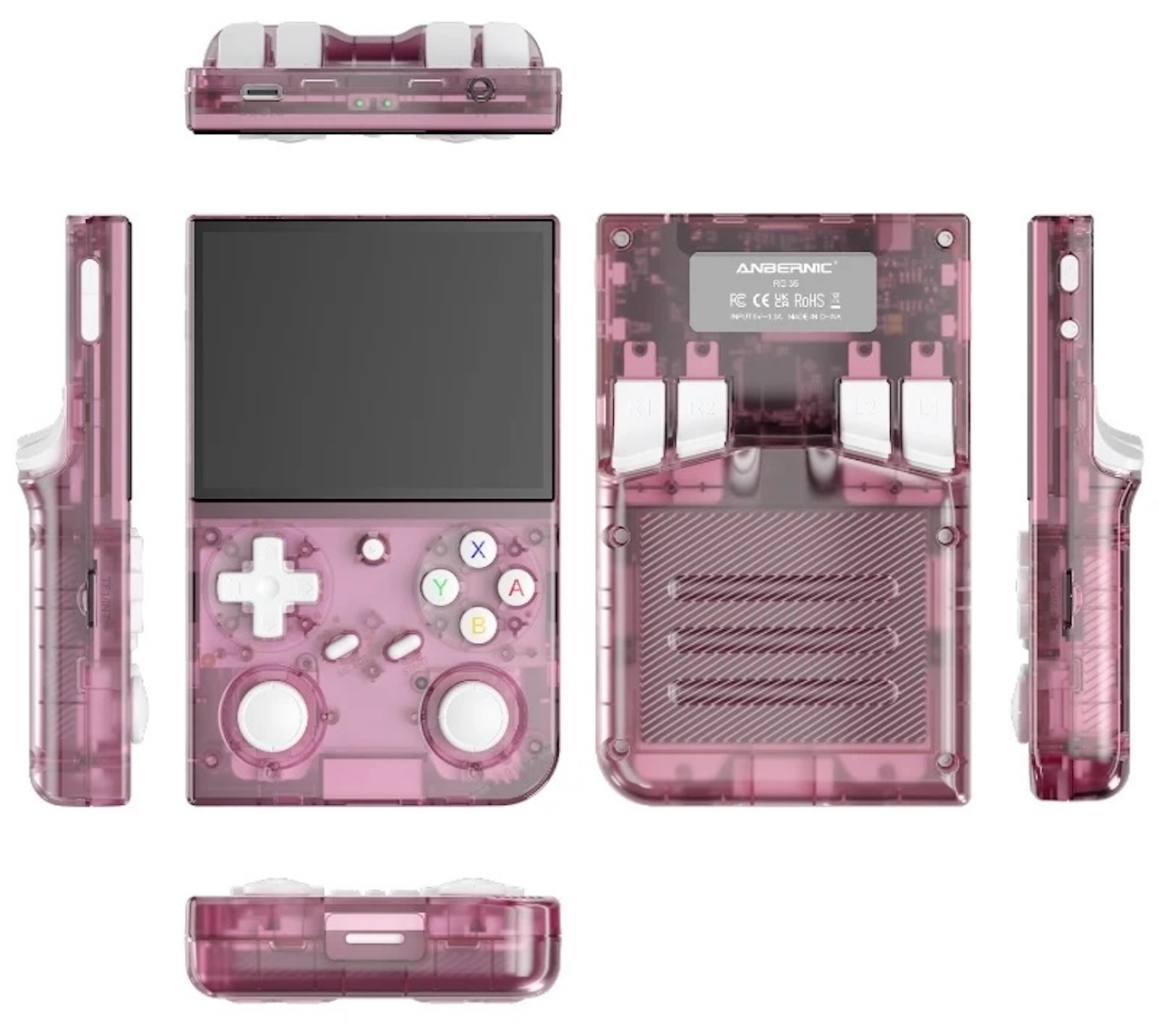
The RG 35 runs a 64-bit Linux operating system, keeping its focus on dedicated handheld gaming rather than the broader app ecosystem available from Android. Whether that’s a limitation or an advantage depends on what you expect a $38 handheld to do.
Dual card slots leave room to expand
ANBERNIC sells the RG 35 in a 32GB configuration and lists the device as having 32GB of memory. It also provides two TF/microSD card slots with support for expansion up to 256GB.
The product page doesn’t clearly explain how the included 32GB is implemented, so it’s better not to assume that capacity is internal flash storage or a bundled card without further confirmation.
What is clear is that the two card slots give owners room to expand storage later. That’s useful on a budget handheld where keeping the base configuration inexpensive is part of the appeal.

Seven hours is ANBERNIC’s number
Power comes from a 3,200mAh lithium-polymer battery, with ANBERNIC advertising up to seven hours of battery life.
That figure should be treated as a manufacturer claim rather than an expectation for every game. Screen brightness, processor load, vibration, audio volume, and other variables can all affect how quickly the battery drains.
The RG 35 supports USB-C-to-USB-C charging, which at least makes topping it up straightforward. Until independent battery testing becomes available, however, seven hours tells us what ANBERNIC says the handheld can achieve rather than what every owner will experience.
Buyer Fit: Cheap Is the RG 35’s Most Important Specification
The ANBERNIC RG 35 currently costs $37.99, and almost every other specification makes more sense when viewed through that number.
You get a laminated 3.5-inch 640 × 480 IPS display, RK3326 processor, 1GB of RAM, dual analog sticks, dual microSD slots, vibration, a headphone jack, Linux, and a 3,200mAh battery in a 191-gram handheld. You don’t get built-in Wi-Fi, modern processing hardware, or enough independent testing yet to confidently define its upper emulation limits.
That makes the RG 35 a poor fit for someone shopping primarily for demanding emulation or an all-purpose Android gaming device. There are more powerful handhelds for those jobs if you’re willing to spend more.

Price: $37.99
Where to Buy: ANBERNIC
For someone who wants a small dedicated retro handheld and would rather keep the purchase around $40, the calculation changes. The RG 35 does not need to prove that inexpensive hardware can do everything. It only needs to show that, for the older games you actually want to play, spending more would not make enough difference to matter



Gadgeteer Comment Policy - Please read before commenting
It’s been long rumored Anbernic made the battlexp G350. This is exactly a battlexp G350 with Anbernic branding. It seems like Anbernic just decided to lift the mask on their behind the scenes manufacturing of the G350.