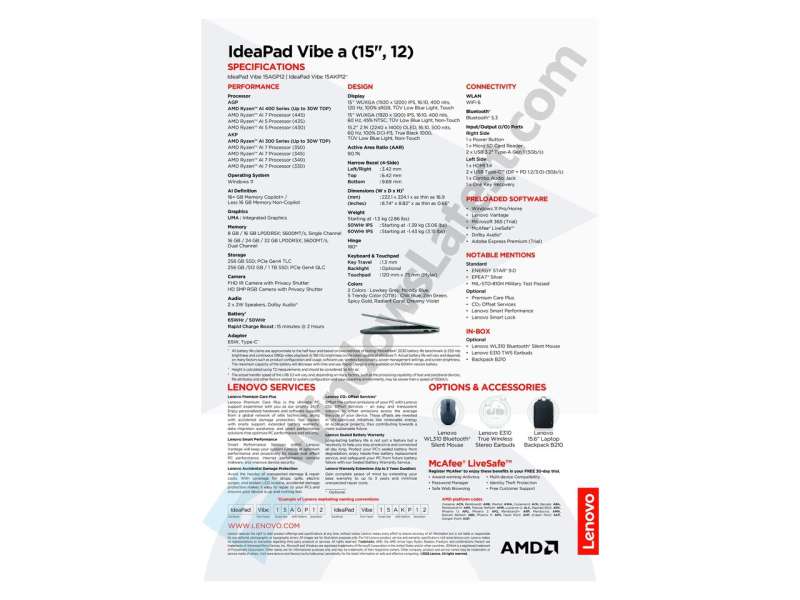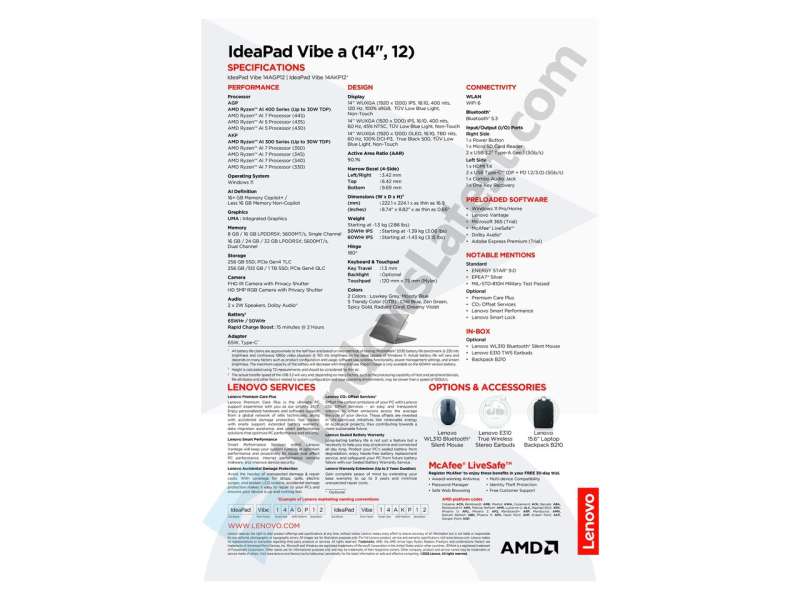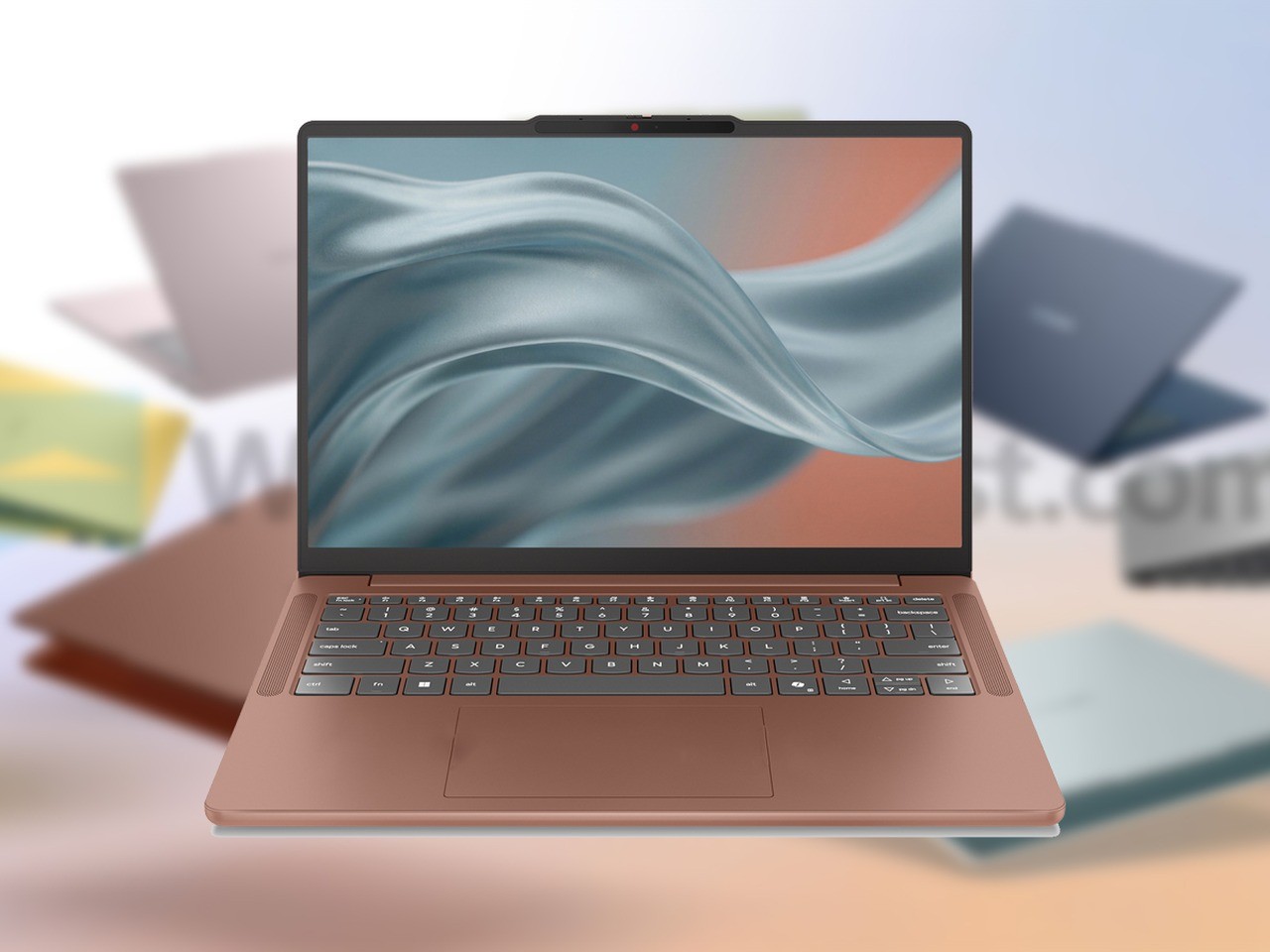
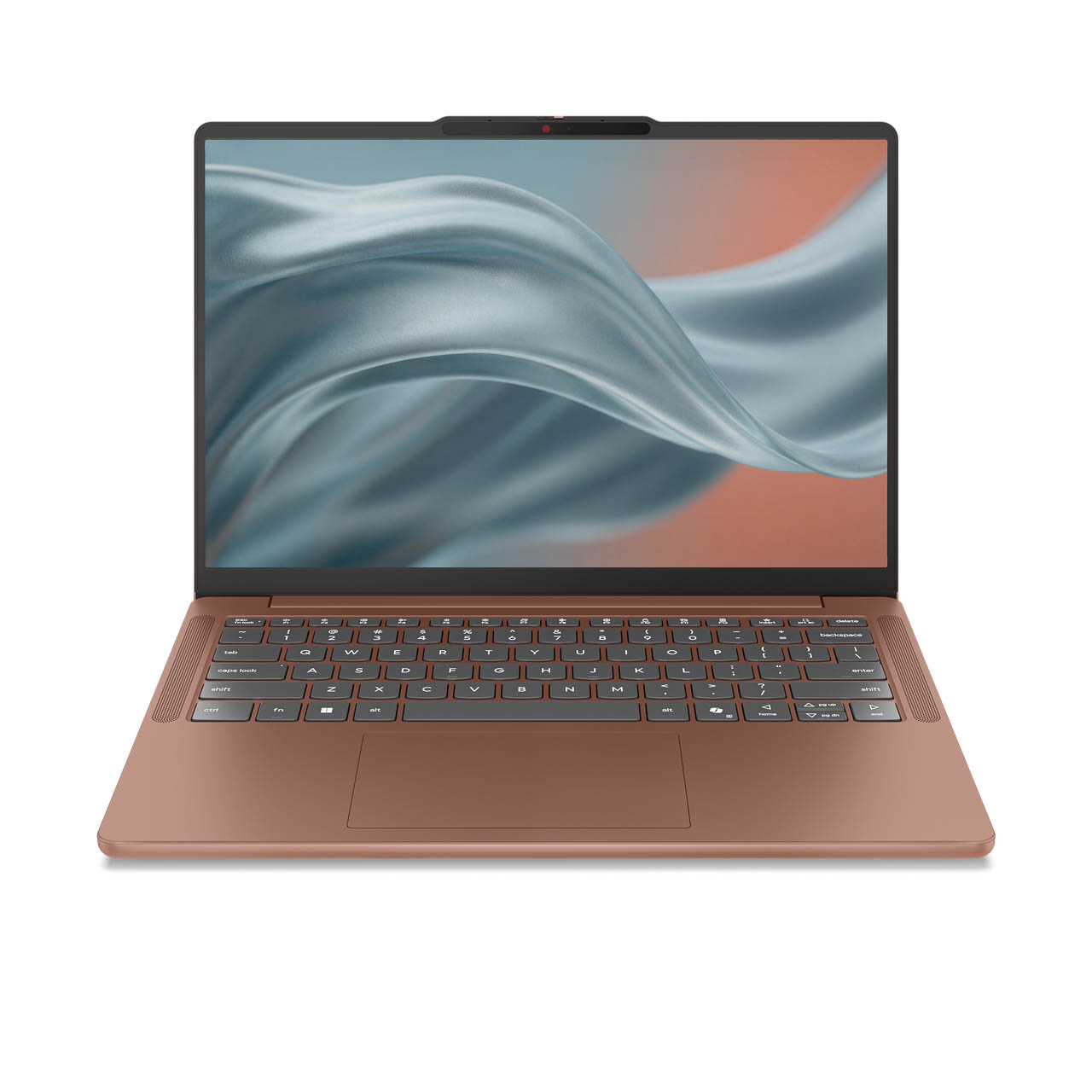
The Lenovo IdeaPad Vibe is a colorful, budget-minded laptop family in 14-inch and 15.3-inch sizes, built on AMD Ryzen AI chips and sold in seven finishes from Chill Blue to Spicy Gold. Lenovo’s own spec sheets for the shipping models are now public, so the picture is clearer than it was when the first leaked sheets showed up. The memory you pick at checkout decides more about this laptop than any other spec.
16GB is still the one to watch.
What the IdeaPad Vibe is and how the lineup splits
Lenovo sells the Vibe in four versions. The 14AKP12 and 15AKP12 use AMD’s Ryzen AI 5 330, a four-core, eight-thread chip at up to 4.5GHz with Radeon 820M graphics. The 14AGP12 and 15AGP12 step up to the Ryzen AI 400 series, either the four-core Ryzen AI 5 430 or the six-core, 12-thread Ryzen AI 7 445 at up to 4.6GHz, both with Radeon 840M graphics.
Every chip gets the same NPU.
That NPU is rated up to 50 TOPS, which is comfortably past the 40 TOPS Microsoft asks for in a Copilot+ PC. The Ryzen AI 7 445 is the pick for anyone who keeps 30 browser tabs and a video call open at once, while the Ryzen AI 5 330 suits schoolwork, email and streaming. The 14-inch model starts at 1.28kg, light enough for a school bag.
| 14AKP12 | 14-inch, Ryzen AI 5 330, Radeon 820M, up to 32GB DDR5-5600 |
| 14AGP12 | 14-inch, Ryzen AI 5 430 or AI 7 445, Radeon 840M, up to 16GB DDR5-5600 |
| 15AKP12 | 15.3-inch, Ryzen AI 5 330, Radeon 820M, up to 32GB DDR5-5600 |
| 15AGP12 | 15.3-inch, Ryzen AI 5 430 or AI 7 445, Radeon 840M, up to 32GB DDR5-5600 |
| All models | NPU up to 50 TOPS, two SODIMM slots, two M.2 2242 PCIe 4.0 slots, 50Wh or 65Wh battery |
Size changes more than the screen. The 14-inch model measures 313.6 by 222.3mm and weighs 1.28 to 1.43kg depending on battery and panel, while the 15.3-inch version grows to 343.6 by 239.7mm and 1.42 to 1.60kg. Both are 14.9 to 15.8mm thick with an aluminum base, or 16.8mm with the plastic one. The bigger model earns its extra 150 grams or so with a number pad and the sharper OLED option.
Why the 16GB model is the one to buy
Here’s the rule that shapes the whole lineup: Lenovo’s own spec sheet says a Copilot+ PC needs at least 16GB of RAM, 256GB of storage and an NPU above 40 TOPS. The 8GB Vibe has the same 50 TOPS NPU as every other model, but Lenovo lists it as an “AI PC” instead of a Copilot+ PC because it falls short on memory. That means it misses the Copilot+ features Windows saves for qualifying machines.
Same chip, fewer features. Ouch.
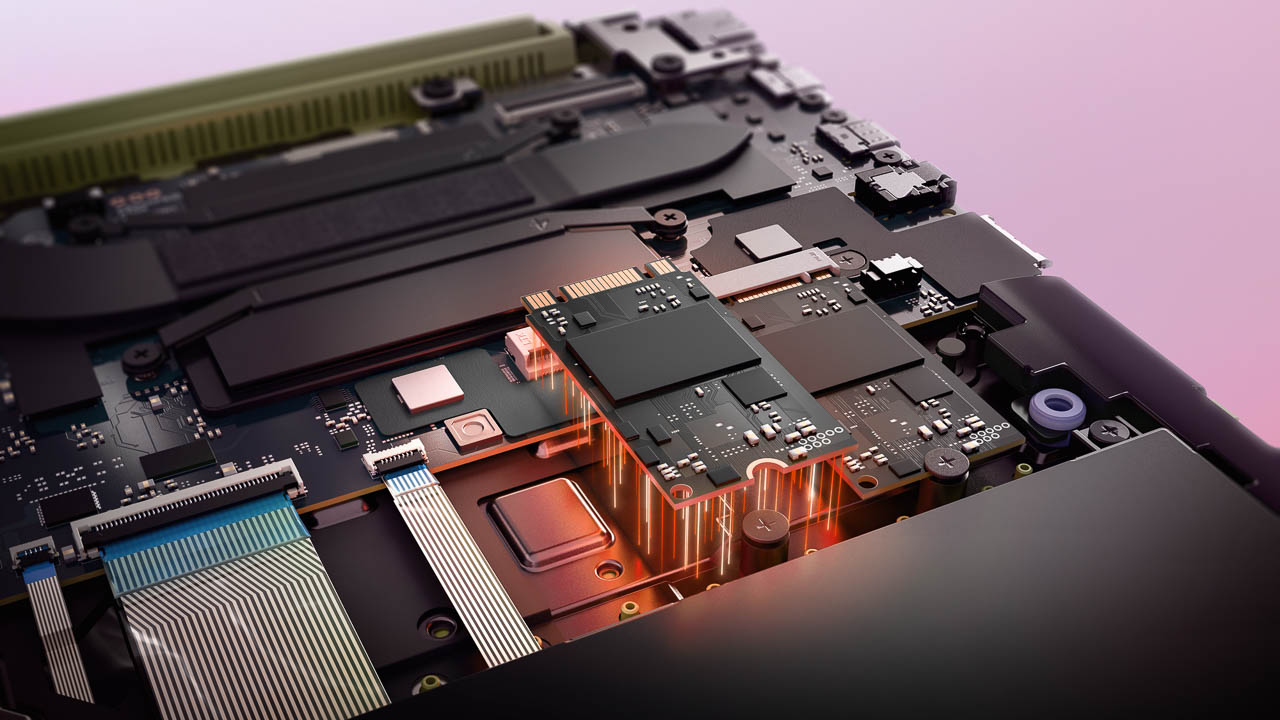
The good news is a change from the early leak. The leaked sheets pointed to soldered LPDDR5X memory, but Lenovo’s shipping spec sheets list two DDR5-5600 SODIMM slots, dual-channel capable, with up to 32GB on most models and 16GB on the 14AGP12. A single 8GB stick also runs in single-channel mode, which leaves the integrated graphics short on bandwidth.
Storage follows the same friendly design, with two M.2 2242 PCIe 4.0 slots. Lenovo ships one SSD at 256GB, 512GB or 1TB and leaves the second slot empty for you. I’d still buy 16GB from the start rather than plan a weekend upgrade, since it unlocks Copilot+ and dual-channel memory on day one.
What the screens and colors mean in daily use
The 14-inch Vibe offers three 1920×1200 panels: a basic 60Hz IPS at 400 nits and 45% NTSC, a 120Hz IPS at 400 nits with full sRGB, and a glossy 60Hz OLED with 100% DCI-P3. The 15.3-inch model adds a 2160×1352 OLED at 500 nits and 120Hz, plus a 120Hz IPS option with 10-point touch on the Ryzen AI 400 version.
Skip the 45% NTSC panel.
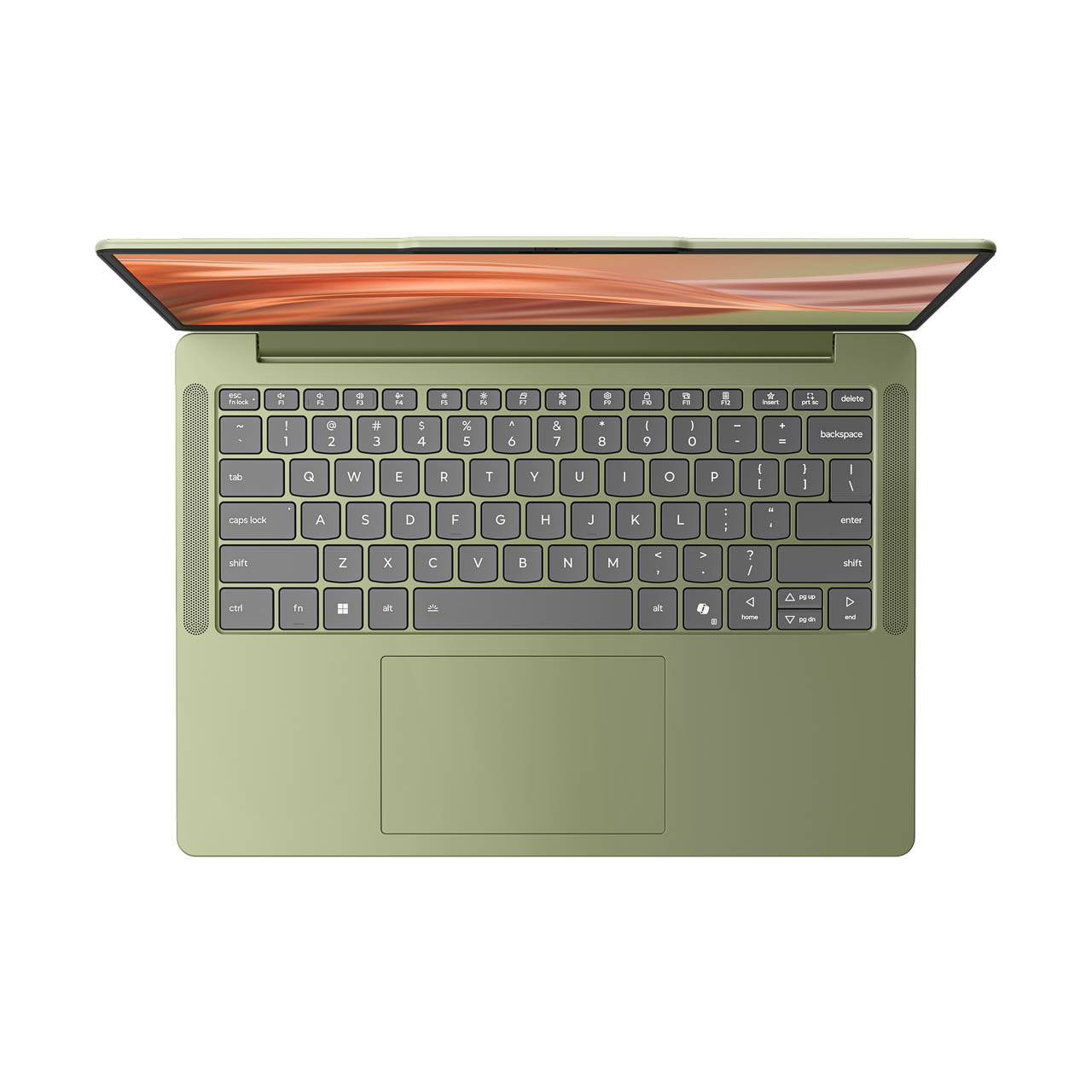
That basic screen washes out photos and makes color work a guessing game, so the 120Hz sRGB IPS is the sensible middle and the OLED is the treat. The colors are the fun part: Chill Blue, Dreamy Violet, Lowkey Grey, Moody Blue, Radiant Coral, Spicy Gold and Zen Green, with an aluminum lid on every model and either an aluminum or plastic base. Lenovo even sells a color-matched 350 Bluetooth Silent Mouse, because apparently my gray mouse was ruining the vibe.
The keyboard has 1.3mm of travel with an optional backlight, the 15.3-inch model adds a number pad, and the touchpad measures 120 by 75mm on both sizes. Two 2W speakers tuned with Dolby Audio handle sound, which is fine for lectures and YouTube and less fine for a movie night without headphones.
What the ports, battery and camera give you
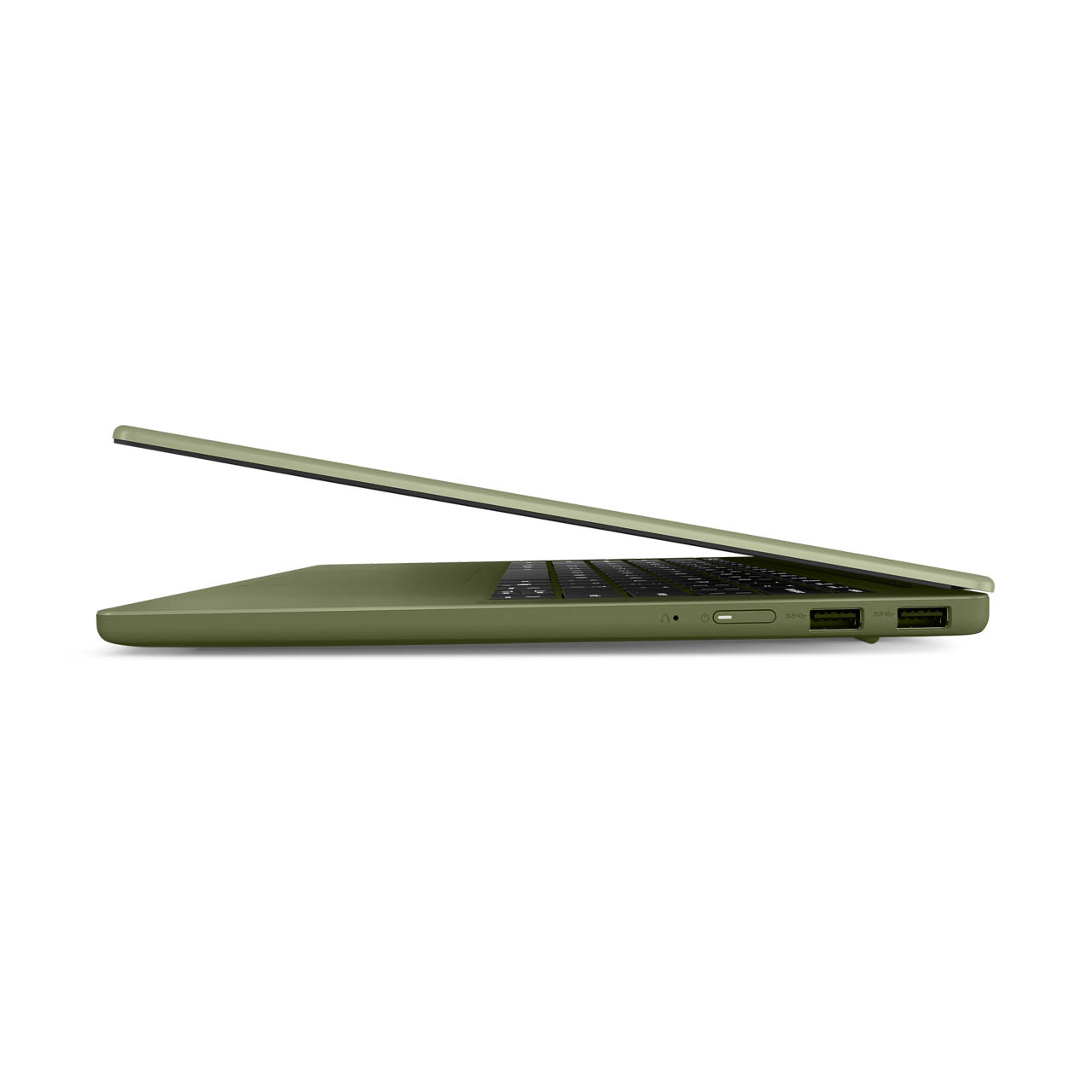
Both sizes share the same port layout: two 5Gbps USB-A ports, two 5Gbps USB-C ports with power delivery and DisplayPort 1.2, HDMI 1.4, a microSD reader and a 3.5mm combo jack. The HDMI port tops out at 4K and 30Hz, so plug a 4K monitor into USB-C instead, where it runs at 60Hz.
That’s a full set for the price class.
Battery choices are 50Wh or 65Wh. On the 14-inch model, Lenovo rates them at 10 and 13 hours on MobileMark 30, or 17.7 and 23 hours of local 1080p video; the 15.3-inch model drops to 9.5 and 12.4 hours on MobileMark 30. Rapid Charge Boost adds two hours of use from a 15-minute top-up on the 65W USB-C charger, and the 5MP webcam has a privacy shutter, with an IR option for Windows Hello. Wireless is Wi-Fi 6 with Bluetooth 5.3 or Wi-Fi 7 with Bluetooth 5.4, and the chassis passed 21 MIL-STD-810H tests.
We’d point students and first-laptop buyers at the 14-inch Vibe with 16GB, the Ryzen AI 5 330 or AI 5 430, the 120Hz sRGB screen and the 65Wh battery. Lenovo’s spec sheets don’t list US prices, so compare the 8GB and 16GB versions side by side at checkout. If the gap is small, skip the 8GB model, since it gives up Copilot+ and dual-channel memory to save a few dollars.
Leaked specification sheets
The 14-inch and 15-inch sheets that surfaced before launch are below for reference, and they’re a useful record of how much a product can change between a leak and a store shelf. Memory changed the most. The shipping models swap soldered LPDDR5X for SODIMM slots.