
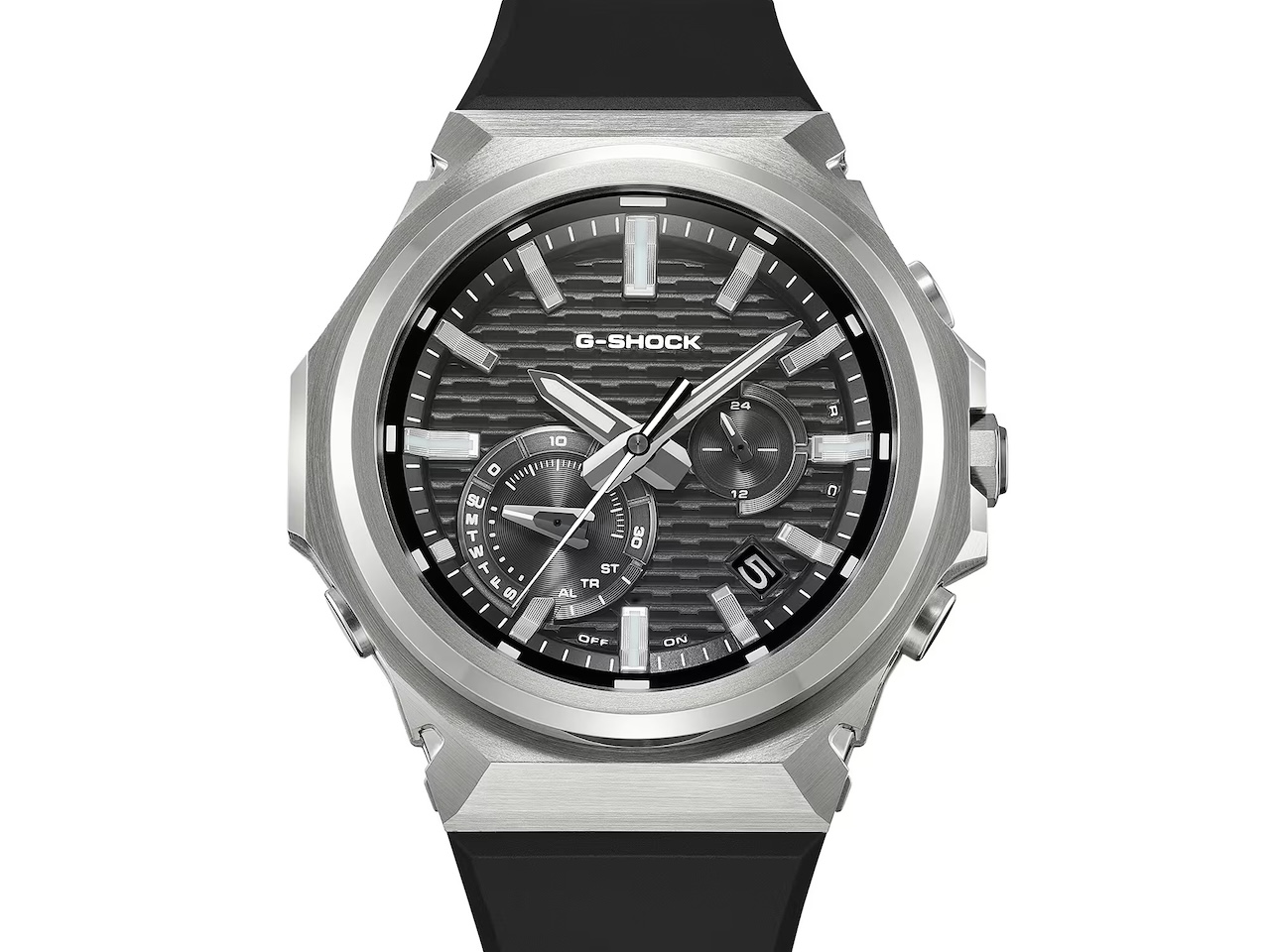
Ask anyone who wears a metal Casio G-Steel daily what they love about it, and the bracelet comes up fast. Ask what wears on them by the end of the day, and the same bracelet answers again. Full steel construction looks the part, and you feel every gram of it by the time dinner rolls around.
Price: ¥60,500 (about $384)
Where to Buy: Casio Japan | Casio US 1,2
Casio has been listening. The G-Shock G-Steel GST-B1000-1A and GST-B1000-2A swap the solid stainless bracelet for a bio-based resin band and drop from 118 grams to 58, while keeping the same 46.9 x 44.2 x 11.6 mm case, Tough Solar charging, and Bluetooth phone link that define the line. Both colorways launch first in Japan at ¥60,500, about $384, with wider availability still unconfirmed.
A Lighter G-Steel by the Numbers
Fifty-eight grams is the headline, and the math behind it is simple. The metal-band GST-B1000D models weigh 118 grams on their solid stainless bracelet, so the resin swap cuts the total nearly in half. On your wrist, that gap reads less like a spec and more like forgetting the watch is there.
The case of the new Casio G-Steel itself doesn’t change. Both new models measure 46.9 mm lug to lug, 44.2 mm across, and 11.6 mm thick, slim for anything carrying 200-meter water resistance and a solar cell inside. The thin profile was already the line’s calling card, and the resin band finally brings the weight in line with it.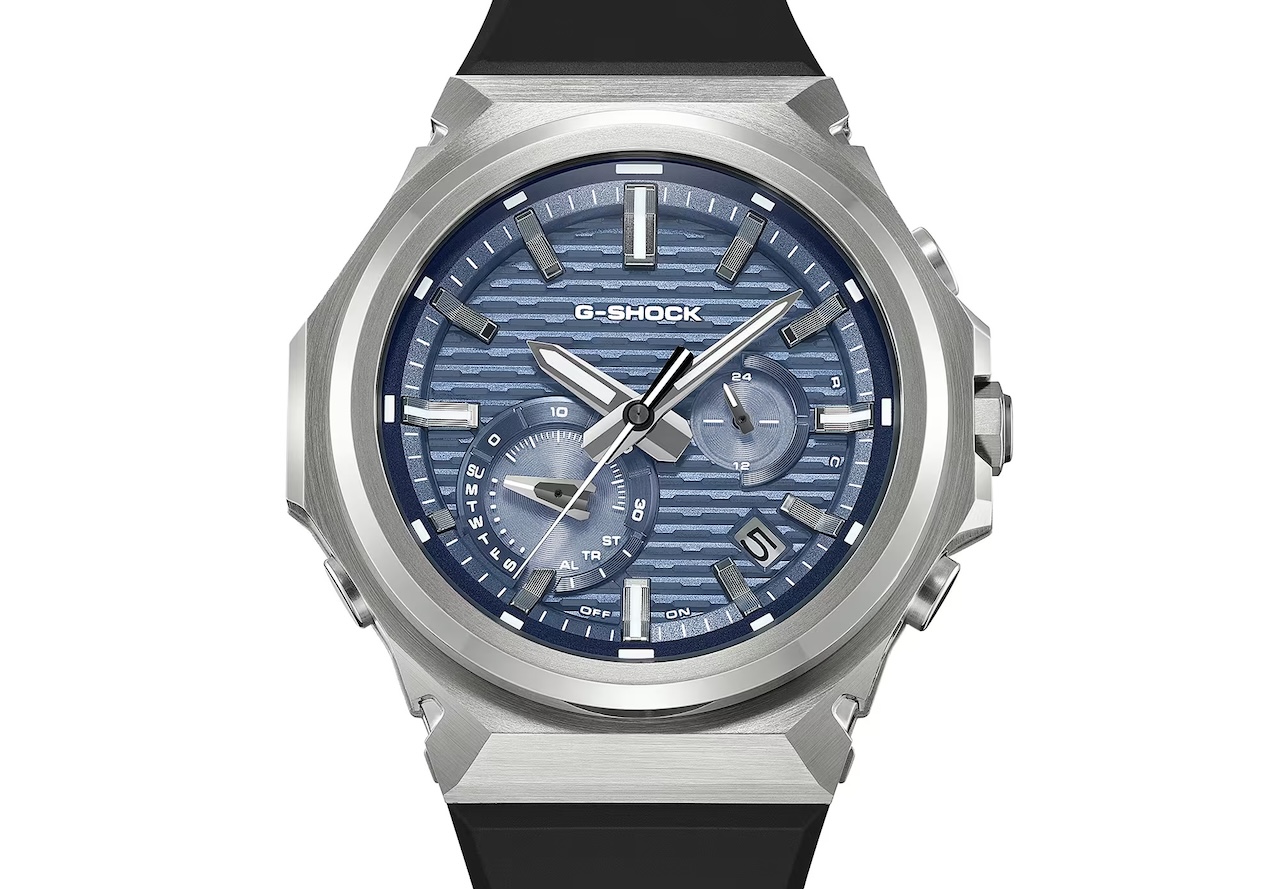
If you’ve worn a resin square G-Shock, you already know what 58 grams feels like. It’s the class of watch you sleep in without thinking about it, and the one you reach for on a hot day when steel starts to feel like a cuff. That’s the experience Casio is selling here, minus the digital face.
What Stays G-Shock
The toughness checklist carries over untouched. Shock Resistant construction, a Carbon Core Guard case, 200-meter water resistance, and mineral glass all stay. The module sits inside a carbon-fiber-reinforced resin inner case, and urethane components in the lugs absorb impact right where the band meets the case, which is where drops tend to hit.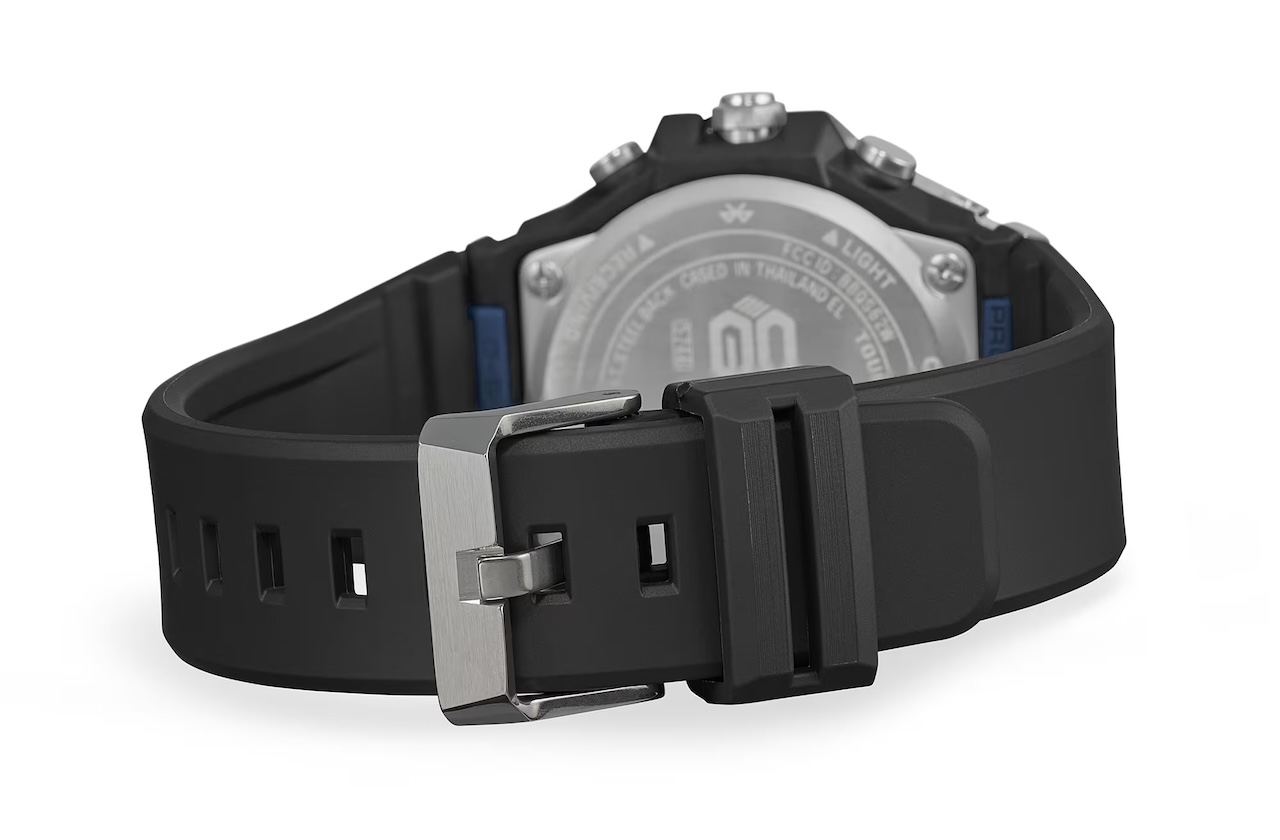
The bezel is still stainless steel, so the watch keeps its metal face where it counts. Casio’s design notes describe the crown and buttons as deliberately low-profile, shaped to avoid snagging without giving up shock resistance or operability. Nothing about the resin swap reads as a downgrade on paper.
Light-Powered and Phone-Linked
Tough Solar means the dial itself is the charger. Light hits the face and tops up the CTL920 rechargeable cell, so battery changes aren’t part of the ownership story.
The Bluetooth link pairs with the CASIO WATCHES app. From there you get automatic time adjustment, simplified watch settings, a time and place log, and phone finder. Frequent flyers will appreciate the auto-adjust most; the watch quietly syncs to local time without a button press.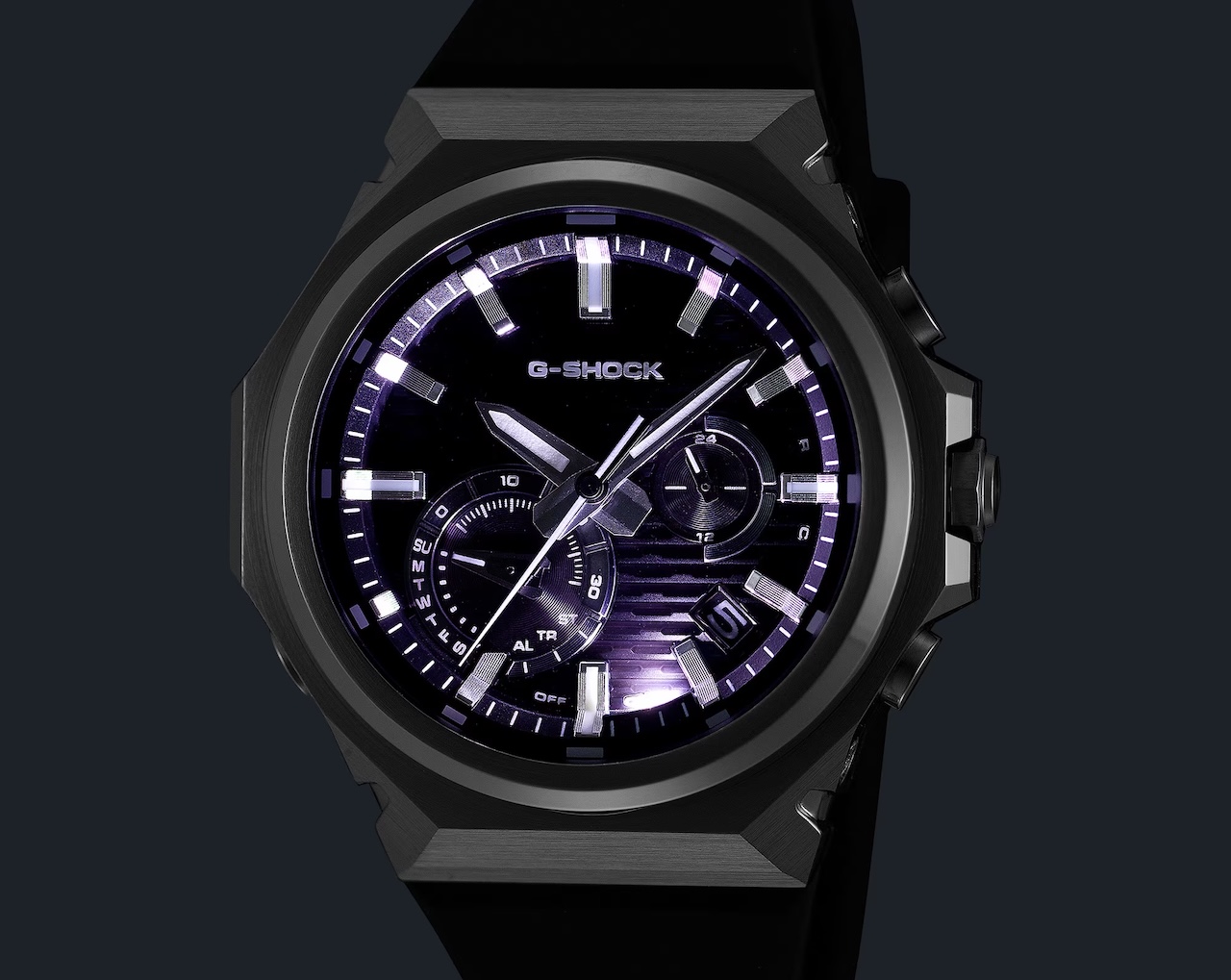
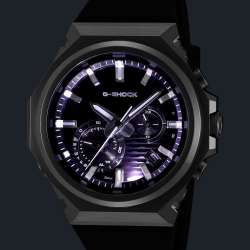
Casio rates the 5748 module inside at ±15 seconds a month before any phone sync enters the picture. The function set covers a stopwatch, a countdown timer, and a daily alarm, and a Super Illuminator LED handles low light. One manual quirk worth knowing: switching the LED duration from 1.5 to 3 seconds runs through the app, not the watch itself.
No charging cable. No battery appointments. That’s the whole pitch.
The 1983 Design Cues
Casio didn’t hide the homage. The brick-pattern dial texture and octagonal bezel trace back to the DW-5000C, the original G-Shock from 1983, and red, blue, and yellow accents on the dial nod to that first model’s color scheme.
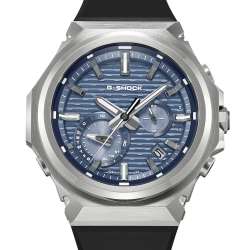
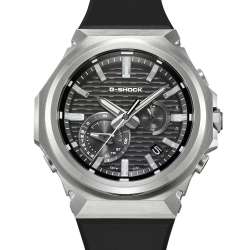
The two new colorways split cleanly. The GST-B1000-1A goes black dial on black resin, while the GST-B1000-2A pairs a blue dial with a matching band, and both keep the brushed steel bezel. If the metal-band versions read as dress-casual, these read as weekend.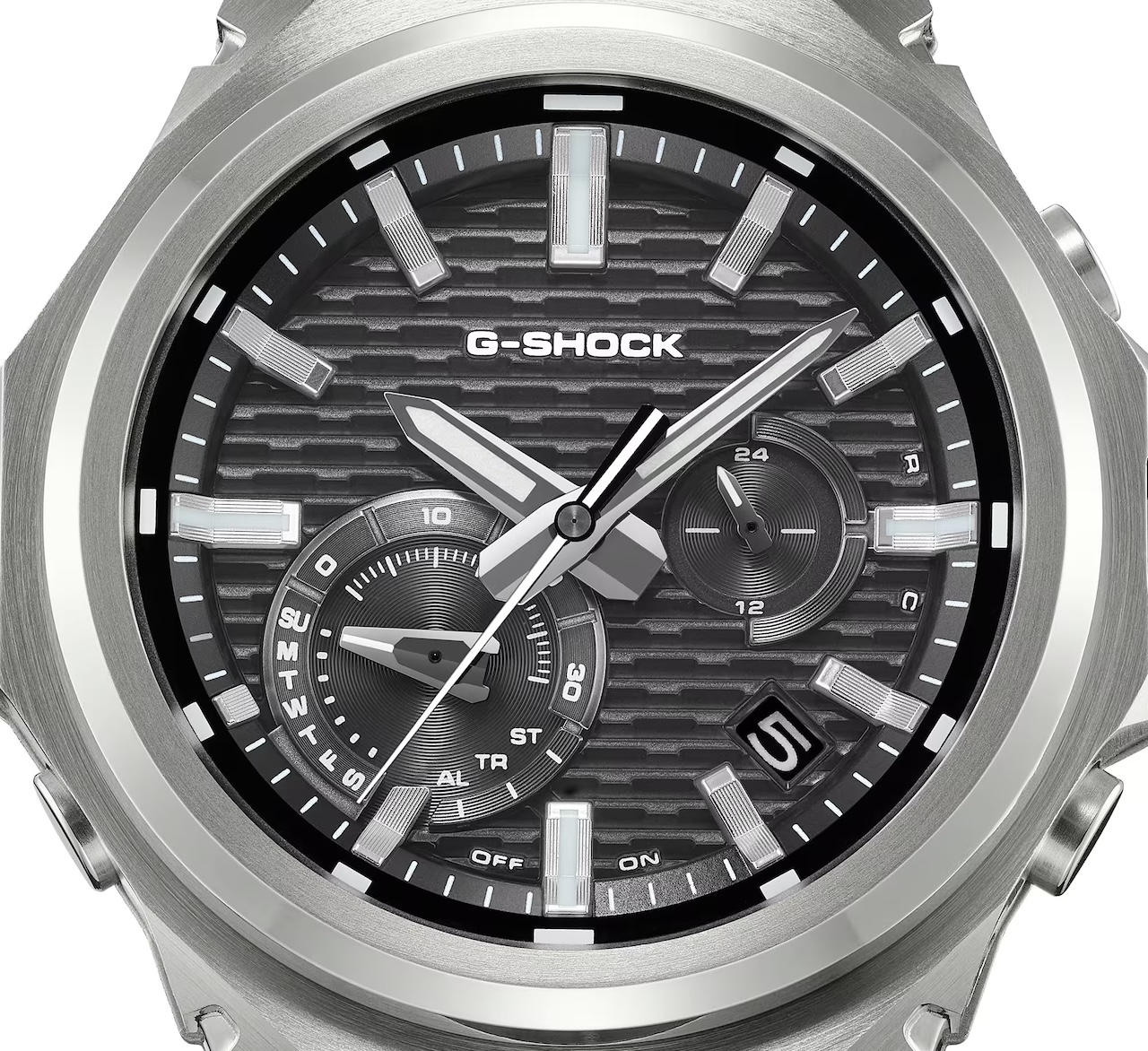
We’ve been on a Casio run lately, from the GWR-B3000 that repairs its own accuracy to the latest Casio release roundup. The resin G-Steel fits the same pattern: familiar G-Shock DNA, reworked for the wrist you actually have.
Price and Availability
Japan gets both models first at ¥60,500, which converts to roughly $384 at current rates. For context, the metal-band GST-B1000D-1A and D-2A list at $440 in the US and are already on Amazon. The resin pair undercuts the metal ones on price while beating them on weight.
Casio hasn’t announced US or European dates for the resin models yet. The metal-band versions followed a similar Japan-first pattern last fall and reached US shelves within weeks, so a wider rollout is a reasonable expectation rather than a confirmed one.
Who Should Wait on This One
If you want the full metal look, nothing here changes your mind. The GST-B1000D models exist for exactly that wrist, bracelet and all, at $440.
If you’ve talked yourself out of a G-Steel before because 118 grams felt like too much watch, these two are the ones to track. You give up the bracelet’s shine and keep everything that makes the line work: solar charging, phone sync, 200 meters of water resistance, and the Carbon Core Guard build. Our G-Shock buyer’s guide covers the rest of the family if you’re still comparing.
Price: ¥60,500 (about $384)
Where to Buy: Casio Japan | Casio US 1,2
The thing to watch now is the US listing. Once the GST-B1000-1A and GST-B1000-2A land stateside with a dollar price, the resin G-Steel becomes a very easy watch to shortlist.
