
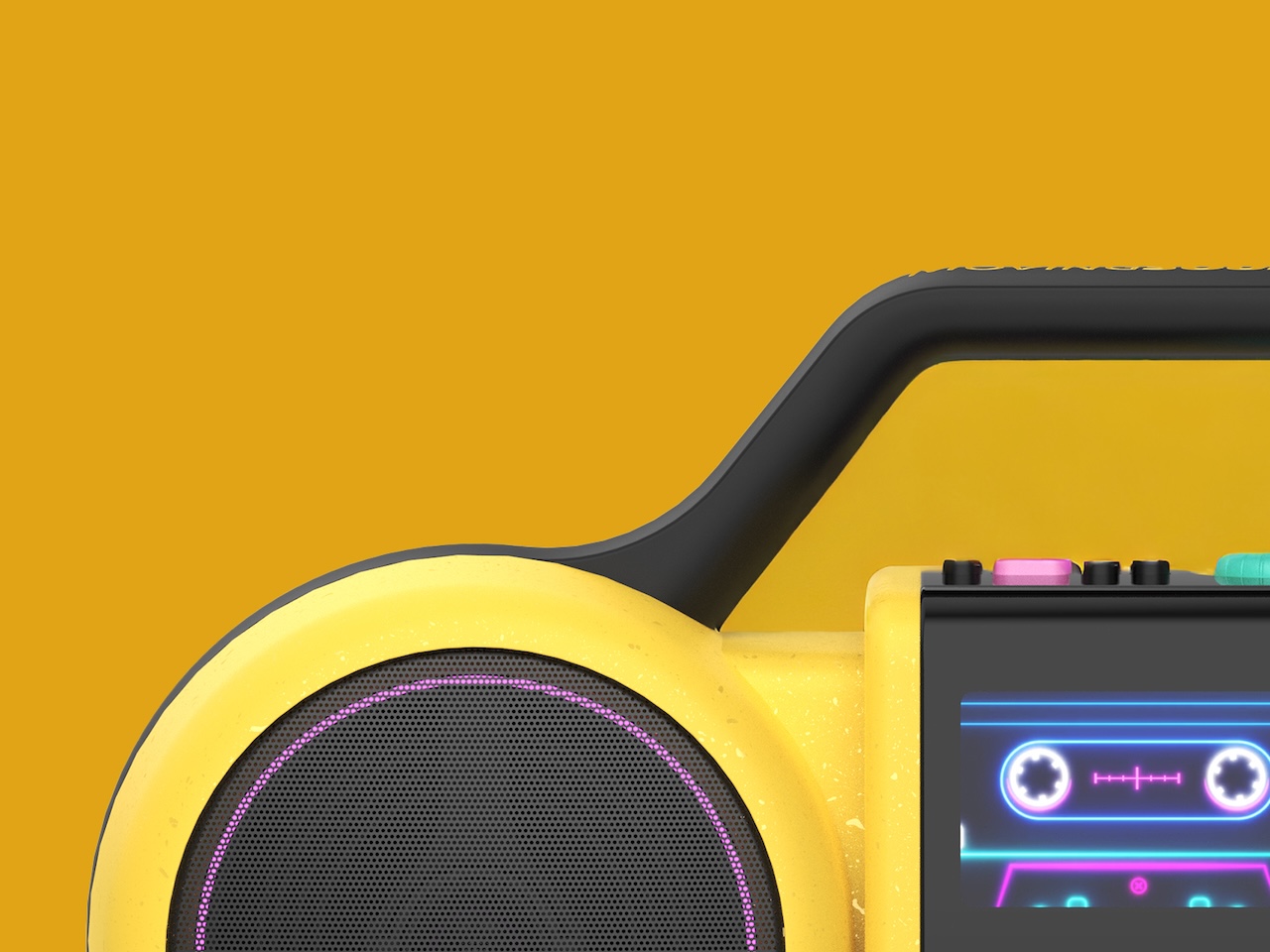
Philips spent a century building audio hardware, and somewhere along the way it forgot how to make the stuff look fun. The Moving Sound line that defined portable audio in the 1980s traded in bold yellow plastic, chunky buttons, and the kind of unapologetic personality that made a boombox feel like a statement piece. Then minimalism happened, and every speaker on the market started looking like it was designed to disappear into a shelf. Philips is now betting the pendulum has swung back far enough to justify a full revival, and the new Moving Sound collection suggests the company didn’t just crack open the archives for color swatches. It rebuilt four new products around a design language that most brands would be too cautious to touch.
Price: From €35 ($40)
Where to Buy: Philips
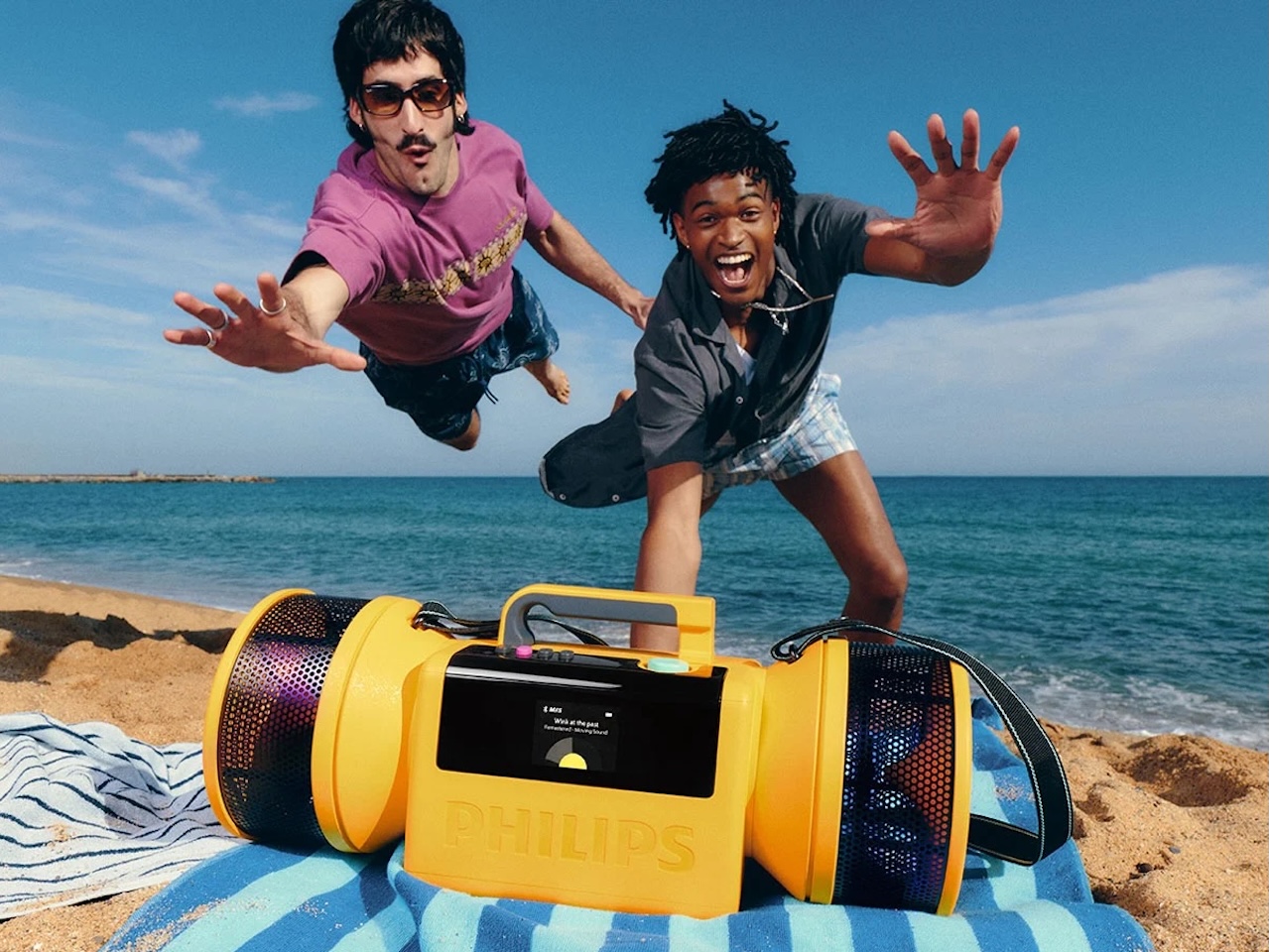
The collection spans two portable Bluetooth speakers, a pair of on-ear headphones, and true wireless earbuds, all dressed in the same signature yellow-and-neon-pink palette that made the originals impossible to ignore. Every product ships in black for anyone who prefers their nostalgia more subdued, but the yellow is clearly the point. Philips is targeting Q2 2026 across the full range, which puts these products in the market right as summer festival season kicks off.
The Tube gets the boombox energy right
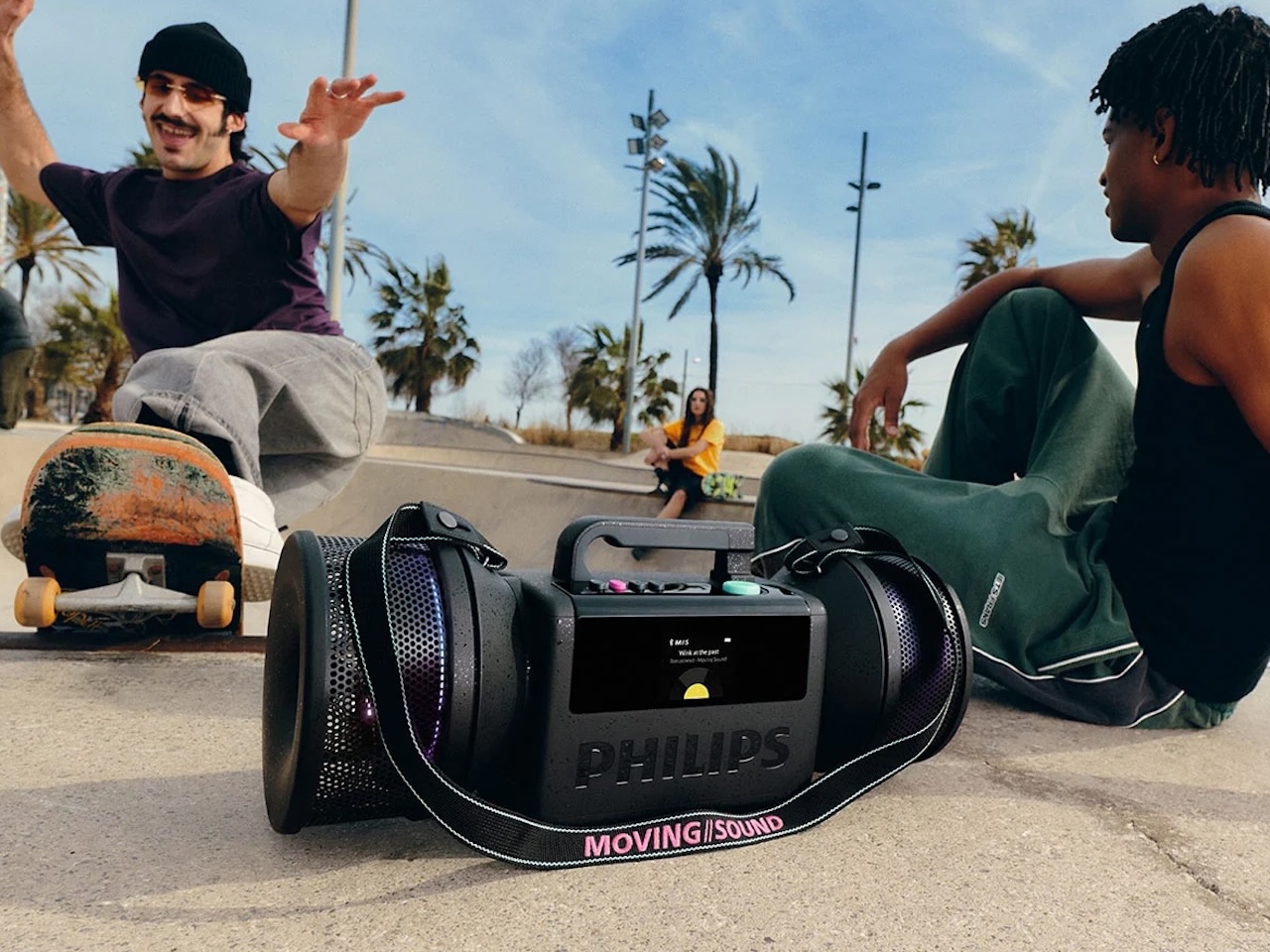
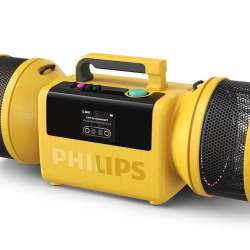
The flagship is The Tube, designated MS80, and it occupies the space where a modern boombox should live. Philips packed 140 watts into a chassis measuring roughly 51 by 20 by 16.5 centimeters, driving sound through two five-inch woofers, two tweeters, and a pair of passive radiators. That driver configuration delivers actual stereo separation from a single unit, something most portable speakers in this size class still can’t pull off convincingly. An IP67 rating handles full dust and water resistance, so it can survive a pool deck or a muddy festival field without anyone reaching for a case.
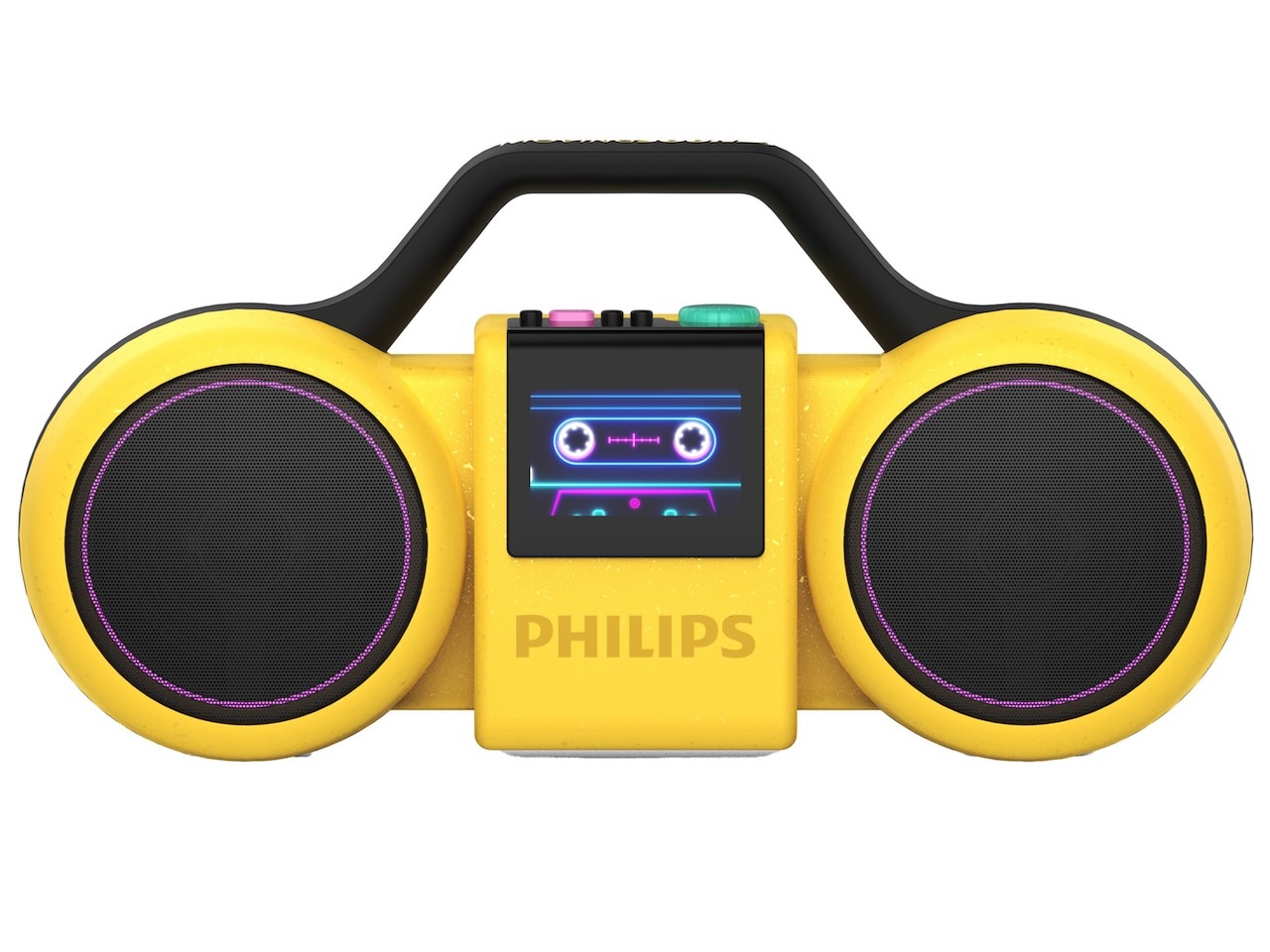
The color display embedded in the front panel is the detail that sells the retro commitment. It runs a looping cassette tape animation while music plays, and while that sounds gimmicky in description, it works as a visual anchor tying the product to its heritage without requiring explanation.
Bluetooth 6.0 handles the wireless connection, Auracast support lets multiple listeners tap into the same stream, and the battery runs for a claimed 24 hours. At €350 (roughly $402), The Tube sits in competitive territory against party speakers from JBL and Marshall, but none of those competitors offer this level of visual identity. It also doubles as a power bank for charging phones on the go.
The Roller shrinks the footprint without losing the character
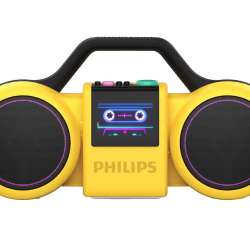
The Roller, model MS60, compresses the same design philosophy into a more portable package at 38 by 20 by 12 centimeters. Power output drops to 60 watts through a stereo acoustic architecture with a dedicated woofer, tweeter, and passive radiator, and a Bass+ tuning feature lets listeners push the low end harder when the setting calls for it. The same IP67 rating carries over from its larger sibling.
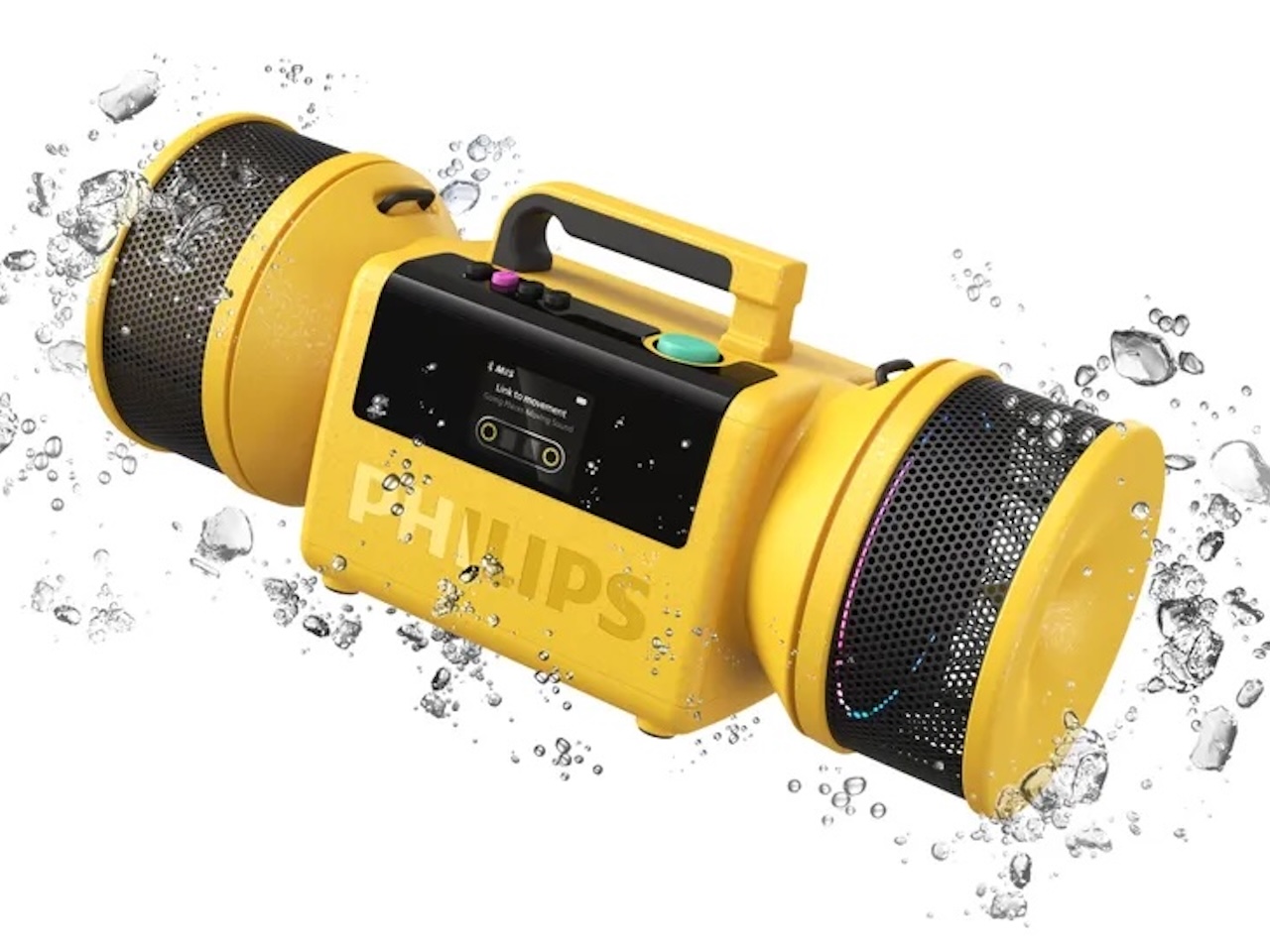
Philips kept the color display and cassette animation here as well, maintaining visual identity across both sizes. The carry handle is built into the frame, and the 24-hour battery life matches The Tube despite the lower power draw. At €180 (approximately $208), The Roller lands where portable speaker competition is fierce, but the retro design language gives it a differentiation angle that spec sheets alone can’t replicate. Like The Tube, it supports Auracast and works as a power bank.
The Buds steal the show at the lowest price
The most surprising entry might be The Buds, tagged MS3, because these Philips earbuds pack genuine feature depth into a true wireless package priced at just €80 (around $92). The spec sheet reads like something from a product twice the cost: hybrid active noise cancellation powered by six microphones, spatial audio, multipoint connectivity, and Auracast support. Three dedicated AI microphones handle voice calls, while a separate six-mic array manages noise cancellation, treating call quality as a first-class feature rather than an afterthought.
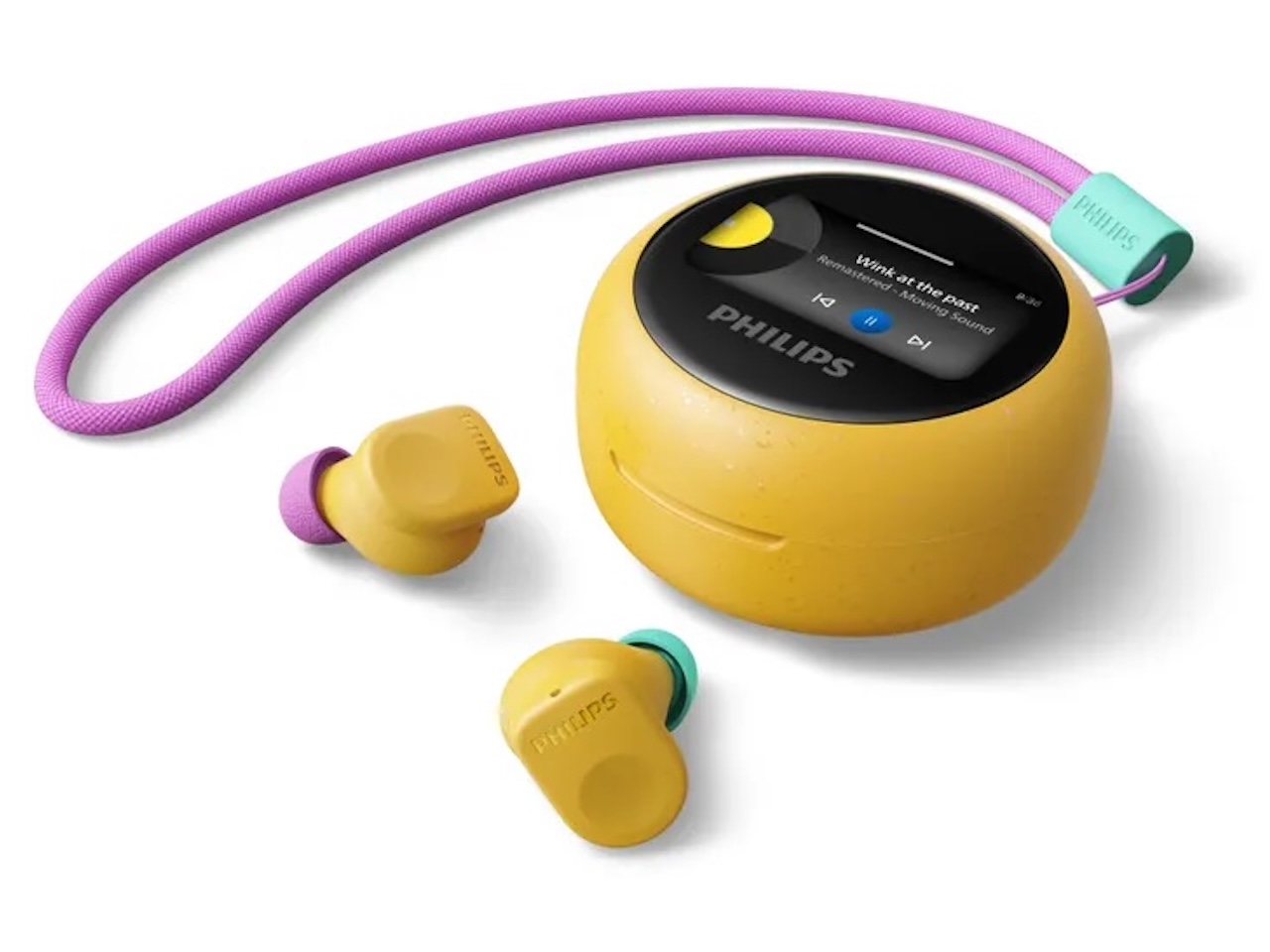
Battery life stretches to 42 hours total with the charging case when ANC is off, and a 10-minute quick charge delivers two hours of playback for those moments when planning ahead wasn’t an option. The earbuds carry an IP54 rating for sweat and splash resistance. The charging case is oversized and round, topped with a color display showing the now-playing track and the same cassette animation that runs on the speakers. The yellow, teal, and neon pink color blocking turns the case into something people will actually want to leave on a desk rather than hide in a pocket.
The Ringo Duo leans all the way into nostalgia
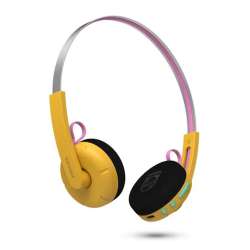
Philips rounded out the collection with The Ringo Duo, model MS1, on-ear headphones that look like they fell out of a time machine. The lightweight frame and adjustable headband recall the kind of headphones that shipped with portable cassette players in the late 1980s, and Philips leaned into that reference hard enough to make the aesthetic feel intentional rather than derivative. Updated with wireless Bluetooth and a USB-C wired option, the Ringo Duo runs 40mm drivers and promises 26 hours of battery life.
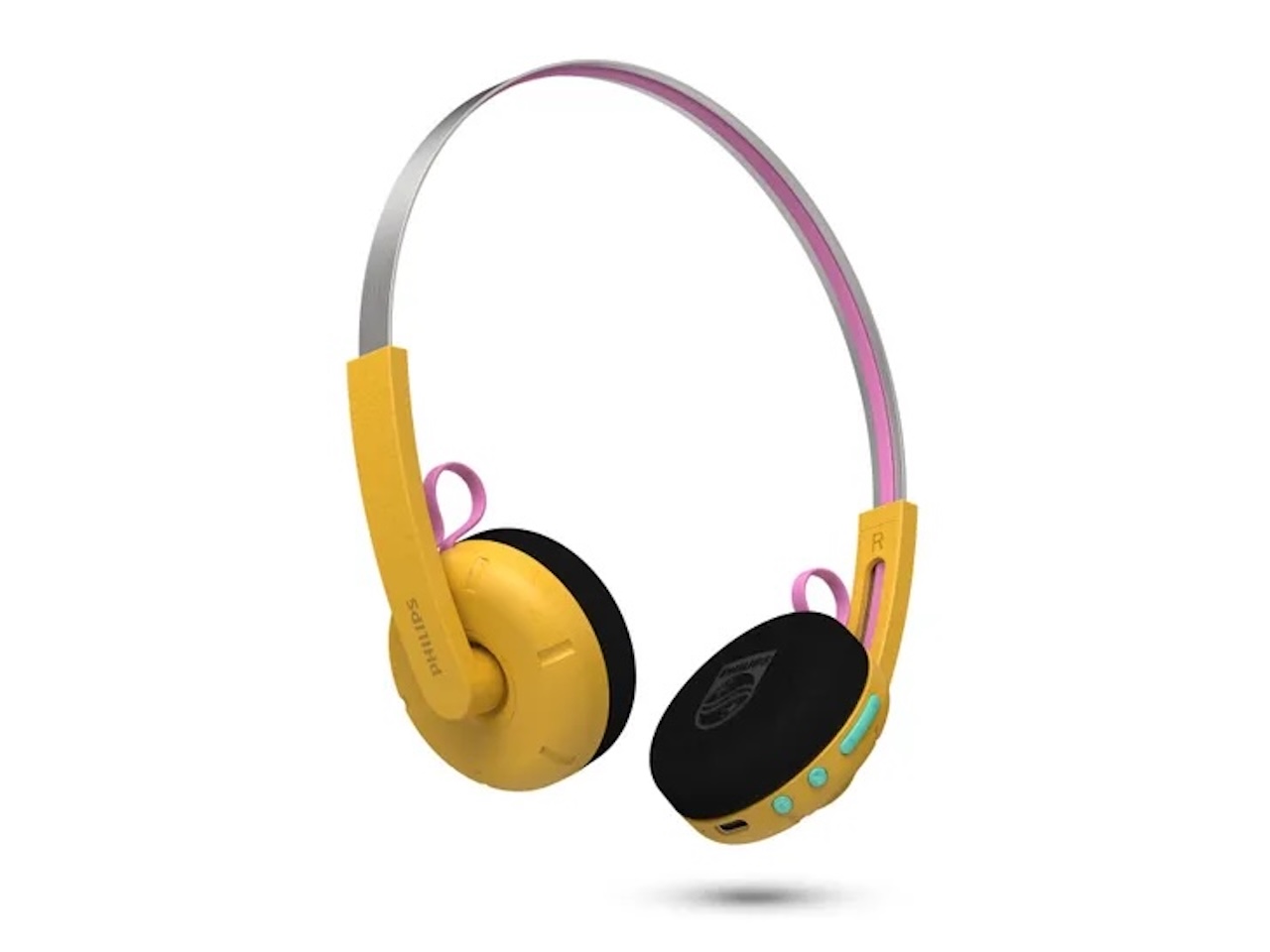
A built-in AI microphone handles calls with background noise reduction, and the adjustable headband ships with three sets of detachable ear cushions. At €35 (roughly $40), these exist to put the Moving Sound identity on someone’s head for less than the cost of a casual dinner.

Pricing and availability
All four Moving Sound products launch in Q2 2026. The Tube (MS80) at €350, The Roller (MS60) at €180, The Buds (MS3) at €80, and The Ringo Duo (MS1) at €35. Each product comes in yellow with neon pink accents or black. Regional pricing outside Europe hasn’t been confirmed yet.
Price: From €35 ($40)
Where to Buy: Philips
The sustainability angle
Philips built replaceable batteries into the speakers, directly addressing one of the biggest complaints about portable audio hardware: the product becoming e-waste once the internal cell degrades. The entire lineup uses RCS-certified recycled plastics, and the packaging is FSC-certified and plastic-free. For a retro Bluetooth speaker lineup leaning this hard on throwback appeal, the decision to engineer for longevity adds real substance beneath the surface.



NetumScan Book & Document Camera, Multi-Language OCR and English Article Recognition by AI Technology, Real-time Projection, Video Recording, Foldable & Portable, Capture, Windows/MAC/Linux- NS-800NC
(as of March 18, 2026 21:47 GMT -05:00 - More infoProduct prices and availability are accurate as of the date/time indicated and are subject to change. Any price and availability information displayed on [relevant Amazon Site(s), as applicable] at the time of purchase will apply to the purchase of this product.)
