

When a company abandons its most popular product, the safe assumption is that something broke. Jabra didn’t quietly step back. It torched the entire consumer earbud line in 2024, canceled the Elite series that built its name, and told millions of customers to find alternatives. From the outside, it looked like surrender. It wasn’t.
Price: $463, $649
Where to Buy: Jabra
“Why is Jabra discontinued?” became one of the most searched questions in audio last year. Forums filled with confusion. Tech outlets ran headlines that read like obituaries. The reaction tracked, because the Elite 75t and Elite 85t weren’t earbuds people tolerated at a price point. They were products people chose over Sony and Apple. Losing them stung in a way most brand exits don’t.
So the real question is: where did decades of consumer audio R & D actually go?
The answer walked in wearing a suit. Meet the Jabra Evolve3, an enterprise headset that takes everything Jabra learned building earbuds and redirects it toward office workers. Once you see what’s inside, the whole exit strategy starts to click.
What it is
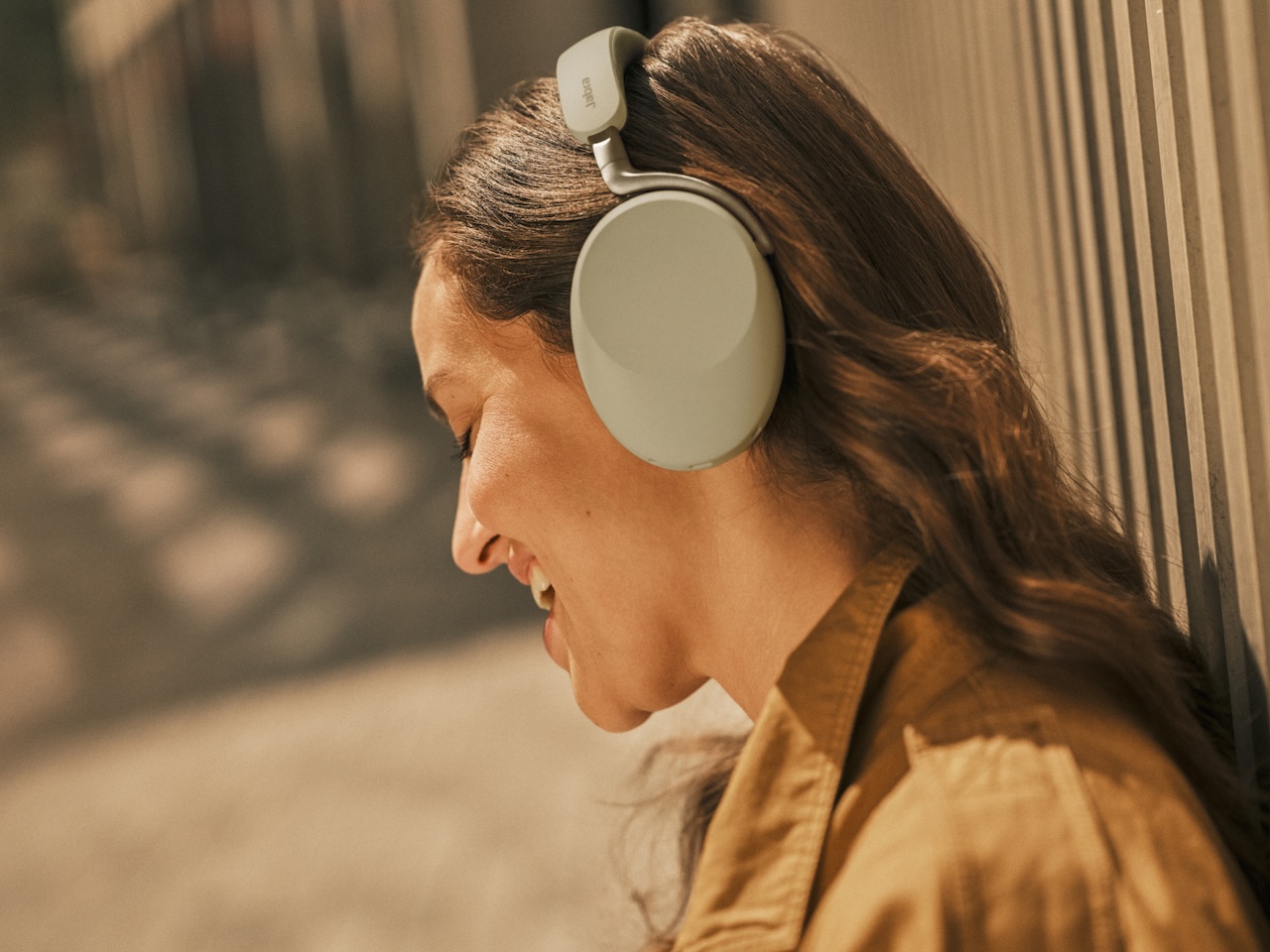
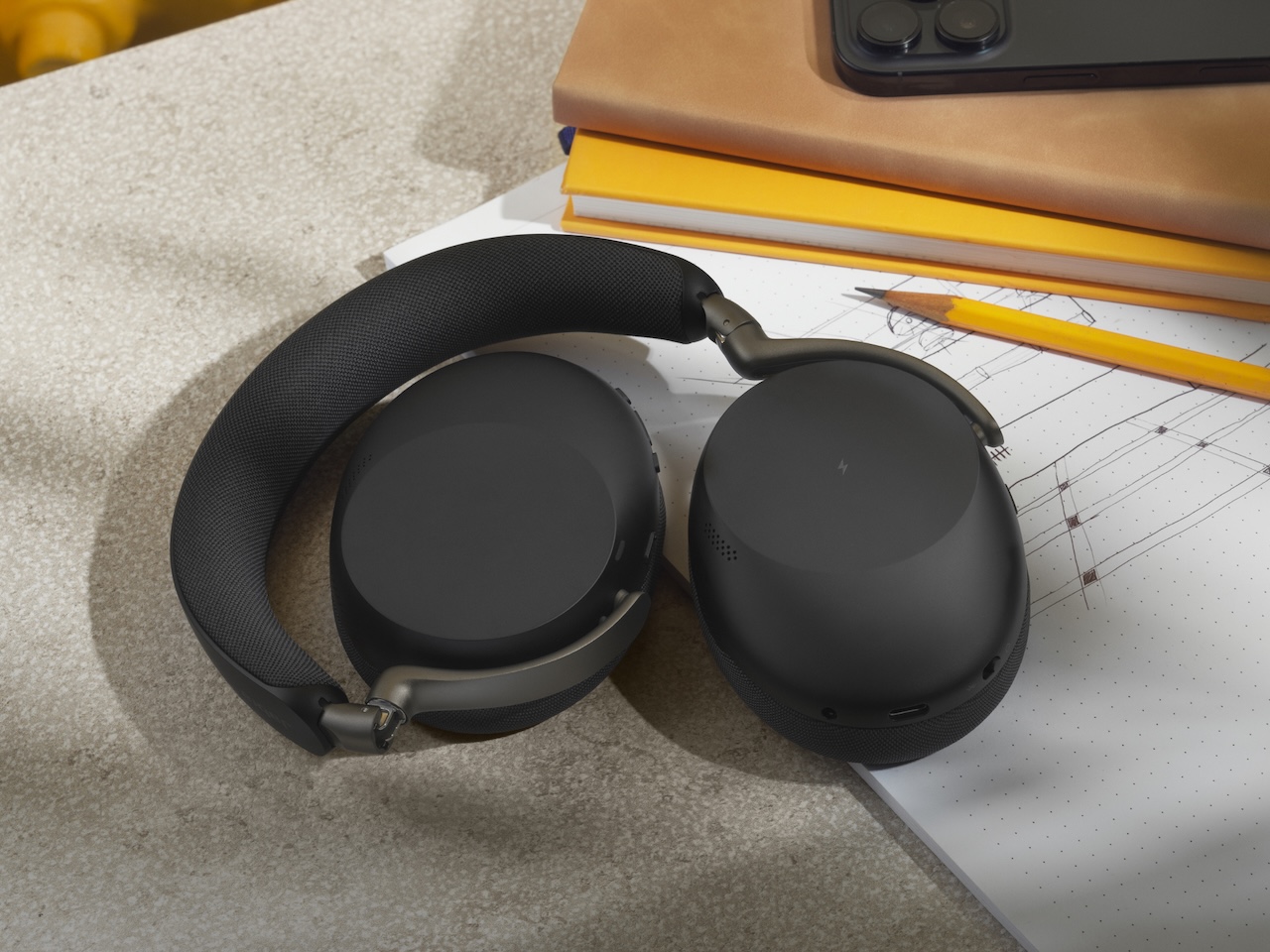
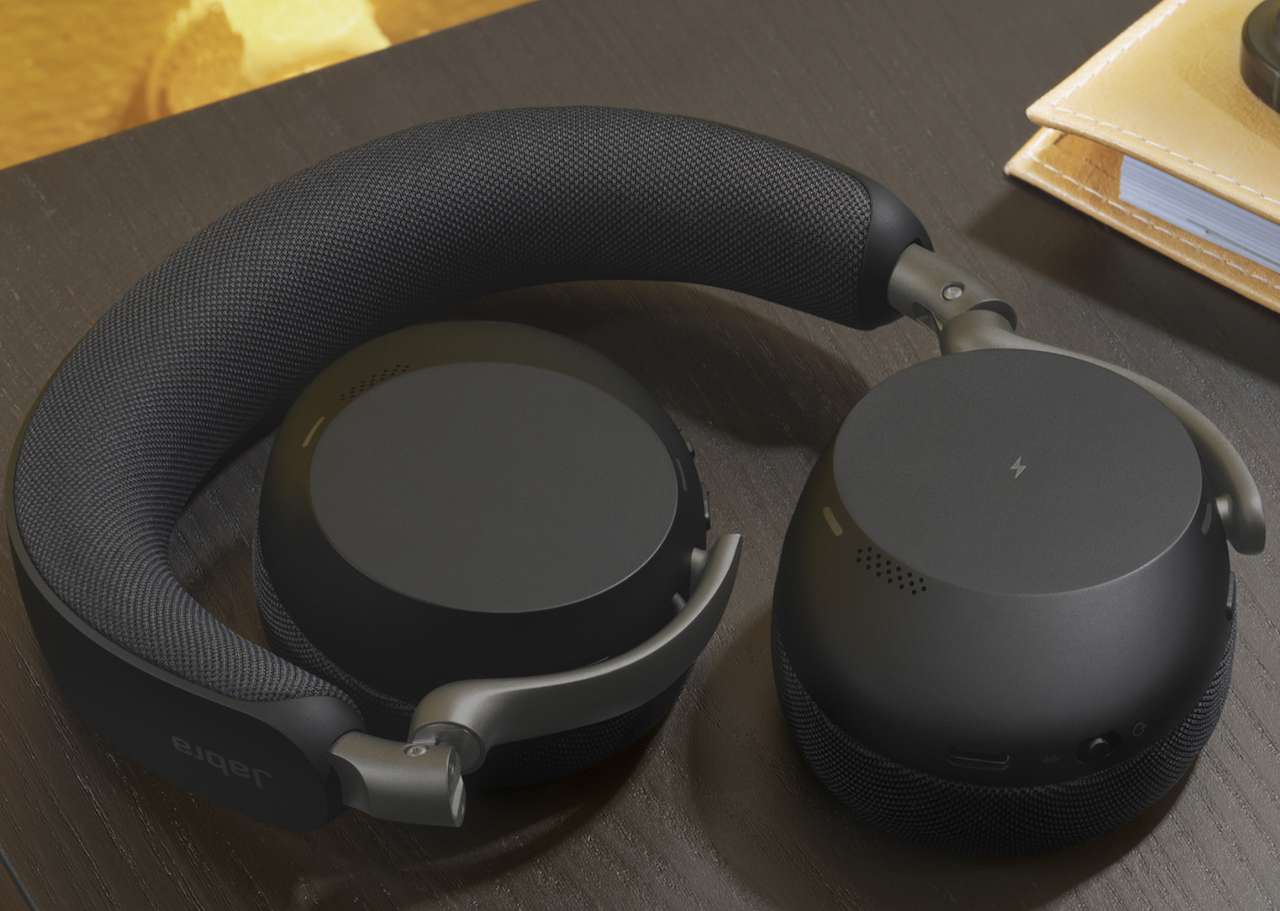
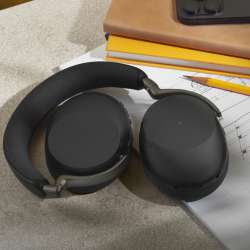
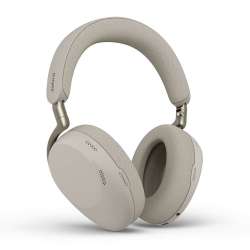
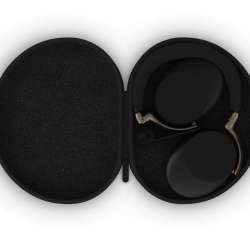
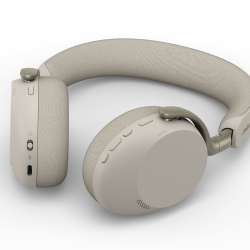
We covered the Evolve3 announcement when Jabra first revealed the boomless design. The Evolve3 ships in two versions. The Evolve3 85 is an over-ear wireless headset at $649. The Evolve3 75 is a lighter on-ear model at $463. Both include adaptive ANC, HearThrough transparency mode, dual connectivity through Bluetooth and USB dongle, and certification for Microsoft Teams, Zoom, and Google Meet. If you’ve handled any recent flagship from Sony or Bose, the physical form factor will feel recognizable. The matte finish and stripped-back branding give it a quieter, more office-appropriate presence that doesn’t scream “gaming headset.”
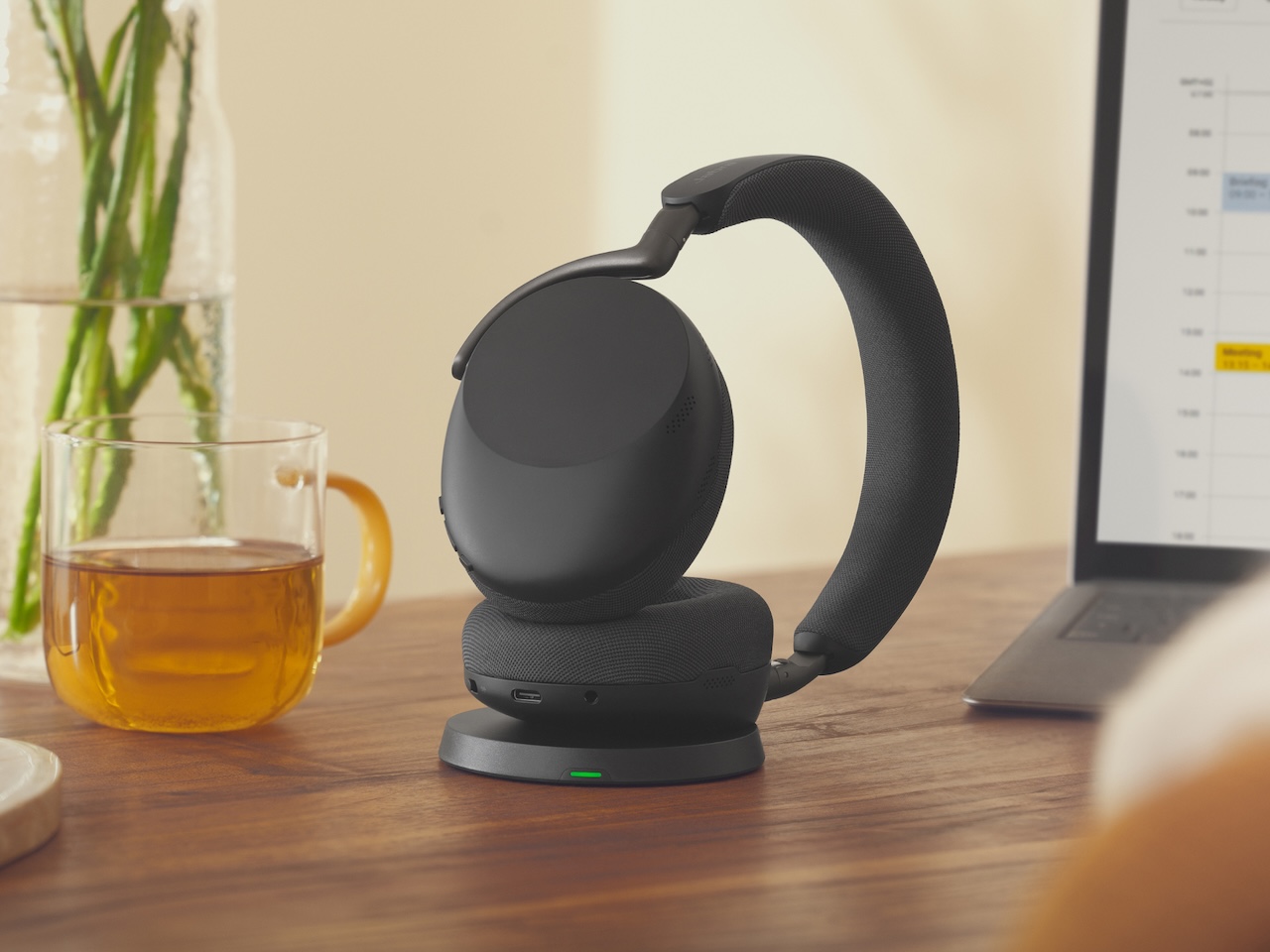
The real story is Jabra ClearVoice, a boomless microphone system powered by a deep neural network. No boom arm. No dangling stick mic. The AI handles voice isolation in real time, pulling your words out of coffee shop noise, open-office chatter, and keyboard clatter the way a studio mic separates signal from interference. That’s a bold promise for anyone who’s tried boomless headsets before and heard colleagues complain about every background sound bleeding through.
What separates ClearVoice from typical noise suppression is where the tech came from. Jabra’s parent company, GN Group, is one of the world’s largest hearing aid manufacturers. GN Hearing makes ReSound hearing aids, devices built on extremely sophisticated AI that processes human speech in chaotic sound environments. Jabra says the Evolve3 draws directly on GN’s group-wide capabilities, making it the first headset where hearing-aid-adjacent signal processing, consumer earbud engineering, and enterprise design converge in one shell. That combination didn’t exist in Jabra’s lineup before now.
What changed from the Evolve2
If you’ve used any previous Jabra Evolve headset, the Evolve3 represents the biggest generational jump the line has seen. The Evolve2 85 relied on a traditional boom arm for call clarity. The Evolve3 drops it entirely in favor of the ClearVoice boomless system. That’s not a minor tweak. It’s a fundamentally different approach to voice pickup, and it’s the change most enterprise buyers will notice on day one.
Beyond the mic, battery life roughly doubles what the Evolve2 delivered. ANC gets the adaptive treatment instead of fixed profiles. UC certification now covers Teams, Zoom, and Google Meet natively. If you’re weighing the Jabra Evolve2 against the Evolve3 and wondering whether the upgrade justifies the cost, the short answer is that almost nothing carried over unchanged except the brand name and the over-ear silhouette.
120 hours of battery and a $649 reality check
The spec that stops you mid-scroll is battery life. The Evolve3 85 claims up to 120 hours of music playback with ANC off. For comparison, Sony’s WH-1000XM5 manages about 40 hours under the same conditions. The Evolve3 triples that. Talk time lands at 25 hours, enough to survive a full work week of calls on a single charge without reaching for a cable.
Whether those numbers survive real-world testing is another matter. Press release battery claims rarely make it through a reviewer’s desk without shrinking. But the engineering margin here is wide enough that even a meaningful drop would leave the Evolve3 comfortably ahead of the field.
$649 for a headset looks aggressive until you understand how enterprise audio purchases actually work. Companies buy headsets in bulk. IT departments spec them for entire floors. The person wearing the Evolve3 usually isn’t the person paying for it. In that economy, $649 with Teams certification and fleet management tools is standard operating procedure.
The feature set reads like a consumer flagship that put on a blazer. Adaptive ANC that responds to your environment in real time. AI-powered voice isolation trained on hearing-aid research. A battery rating that makes competitors look like they need a nap. All of it packaged for procurement managers, but perfectly usable by anyone who works from home and cares about call quality.
At $463, the Evolve3 75 offers the same ClearVoice mic system and adaptive ANC in a lighter on-ear design. The trade-offs are battery life (120 hours vs 110 hours) and the on-ear fit, which typically gives up some passive noise isolation. For longer sessions in warm rooms, the 75 might actually be the smarter pick.
Both models ship in black from March 1, 2026, with a warm gray option following in April.
Who should skip this
If your headset mostly handles commute playlists and podcasts, the Evolve3 isn’t built for that life. The price, certifications, and fleet management tools all point toward a product designed for desks and conference calls. You’ll find better options at half the cost for pure listening.
If you don’t spend meaningful time on voice calls, the ClearVoice mic system won’t matter enough to justify what you’re paying. That’s a lot of hearing-aid-grade engineering sitting unused while you queue up Spotify on the train.
Who this is for
The primary buyer is straightforward: a company outfitting remote or hybrid workers with certified headsets that perform on calls. The Evolve3 checks every box IT departments care about, and the boomless design removes the one thing employees consistently hate about enterprise headsets.
There’s a less obvious buyer Jabra doesn’t market to as directly. If you loved the Elite 85t and you’ve been searching for a way back into the Jabra ecosystem, the Evolve3 85 is the closest path available. The audio DNA is intact. The ANC pedigree carries over. The hearing-aid signal processing that made Jabra earbuds sound cleaner than pricier competitors lives inside this headset now.


Price: $463, $649
Where to Buy: Jabra
Jabra didn’t kill its consumer line to retreat. It consolidated everything into one product category where margins run wider and competition runs thinner. Every mic algorithm and battery optimization that made the Elite series worth recommending got funneled into the Evolve3.
Pyle Premium Direct Injection Audio Box - 2.36" x 4.09" Passive DI Unit Hum Eliminator w/ Input Attenuator to Connect Guitar & Bass, 1/4'' Impedance Transformer Connector to Balanced & Unbalanced XLR
(as of April 10, 2026 18:34 GMT -05:00 - More infoProduct prices and availability are accurate as of the date/time indicated and are subject to change. Any price and availability information displayed on [relevant Amazon Site(s), as applicable] at the time of purchase will apply to the purchase of this product.)
