
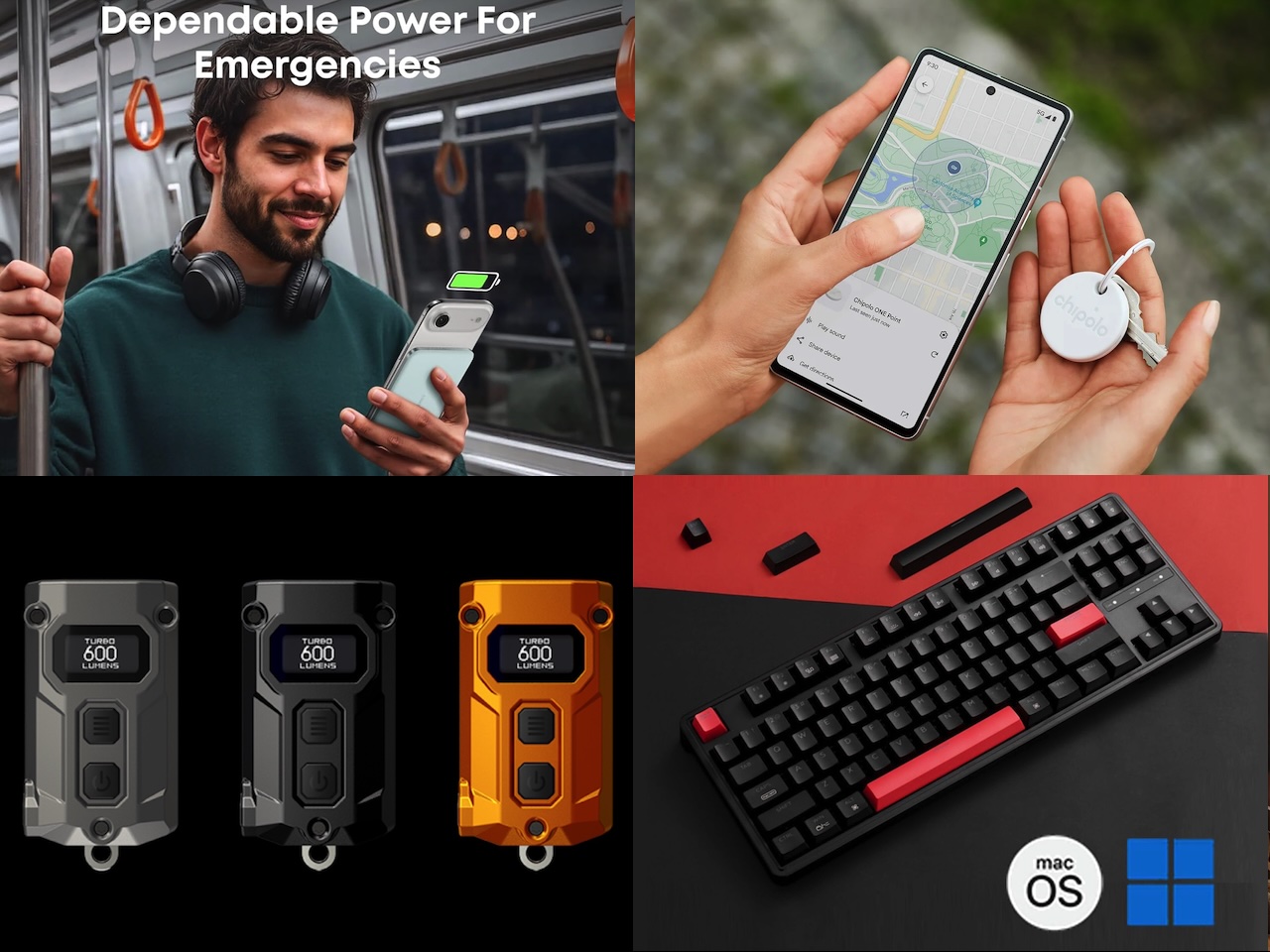
Something shifted in the sub-$100 gadget space this year, and it’s not the usual incremental creep of slightly better versions of last year’s budget picks. The products landing in this price range now have features that sat firmly in the $200-plus tier barely two years ago: full smart TV platforms inside pocket projectors, hot-swappable mechanical keyboards for less than a decent lunch, cross-platform trackers that don’t force you to pick a phone ecosystem before you buy.
CES 2026 sped things up, though the show alone doesn’t explain the compression. A surprising number of announced products shipped fast and priced low, breaking the “available later this year” pattern that follows most January showcases. You can feel it when you unbox a $30 security camera that shoots color footage after dark, or plug in a $37 keyboard that sounds like it should cost twice as much. Component costs dropped, manufacturing scaled, and the savings actually reached the sticker price instead of padding margins.
We pulled six picks from the current crop. Every one costs under $100, and most sit well below $50.
Chipolo One Point
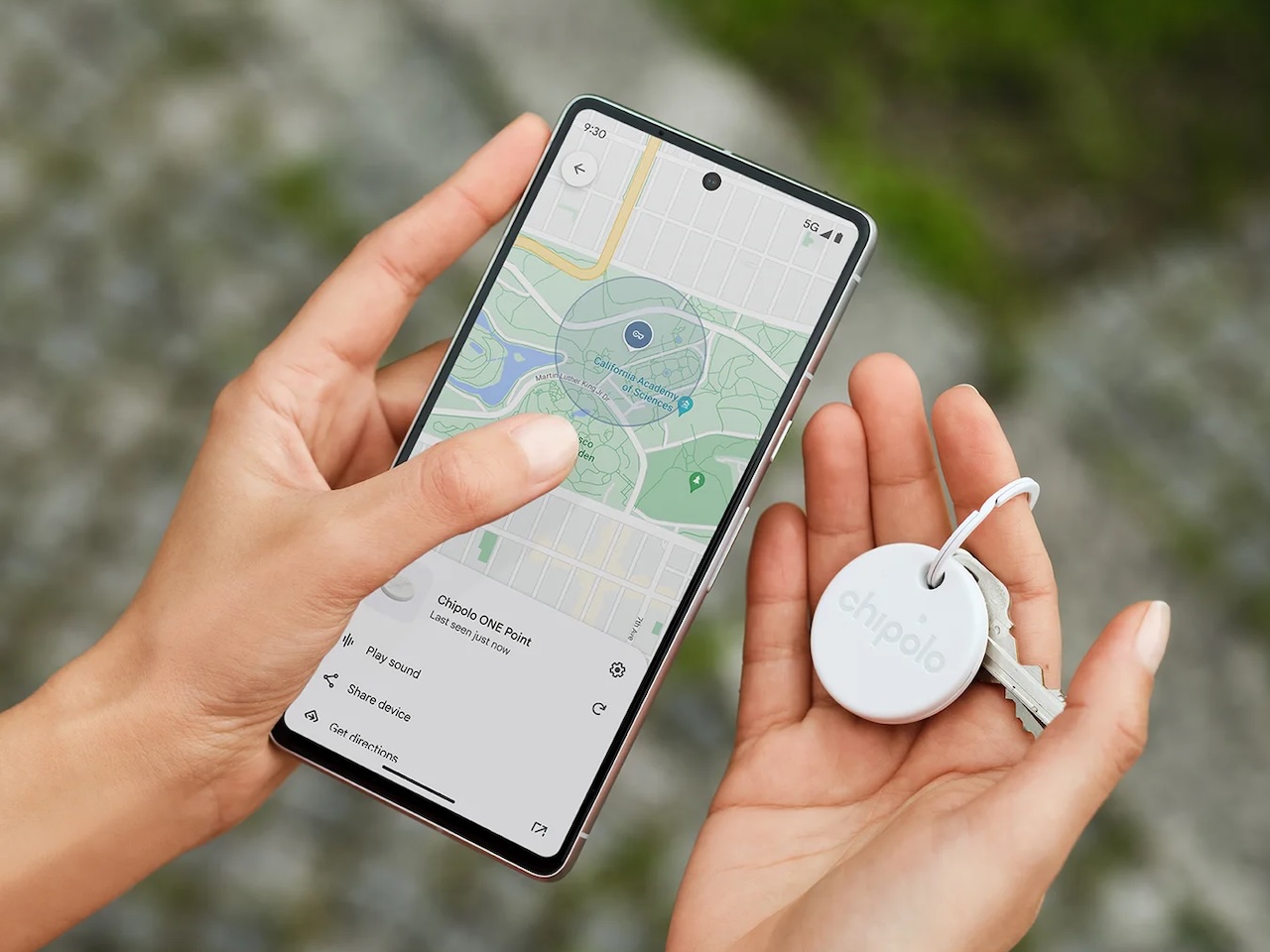 Chipolo’s One Point hit ZDNET’s most-purchased gadgets list for January 2026, and the story isn’t the tracker itself. It’s what the tracker doesn’t force you to choose. One Point works with Apple’s Find My network and Google’s Find My Device, which means a household split between iPhones and Android phones can run one set of trackers without compromise. The disc clips onto keys, bags, or luggage tags with a simple loop. Battery life runs about a year on a replaceable CR2032 that costs roughly $3 to swap. You aren’t charging another device or downloading a proprietary app. You clip it on and forget it exists until you need it.
At about half the price of an AirTag and with broader phone support, the value case builds itself the moment you start buying multiples. One for the keys, one tucked inside a suitcase, one clipped to a kid’s jacket zipper. At $29 each, that impulse math holds even when you’re grabbing three or four at once. Tracking accuracy won’t match an AirTag inside Apple’s dense network on a packed city block, but the gap narrows fast in urban areas where both networks overlap. For someone who misplaces things often enough to care but not often enough to invest in a premium tracking ecosystem, One Point fills a price-to-utility sweet spot that didn’t exist twelve months ago.
Price: $29
Where to Buy: Amazon
Nitecore TINI 3
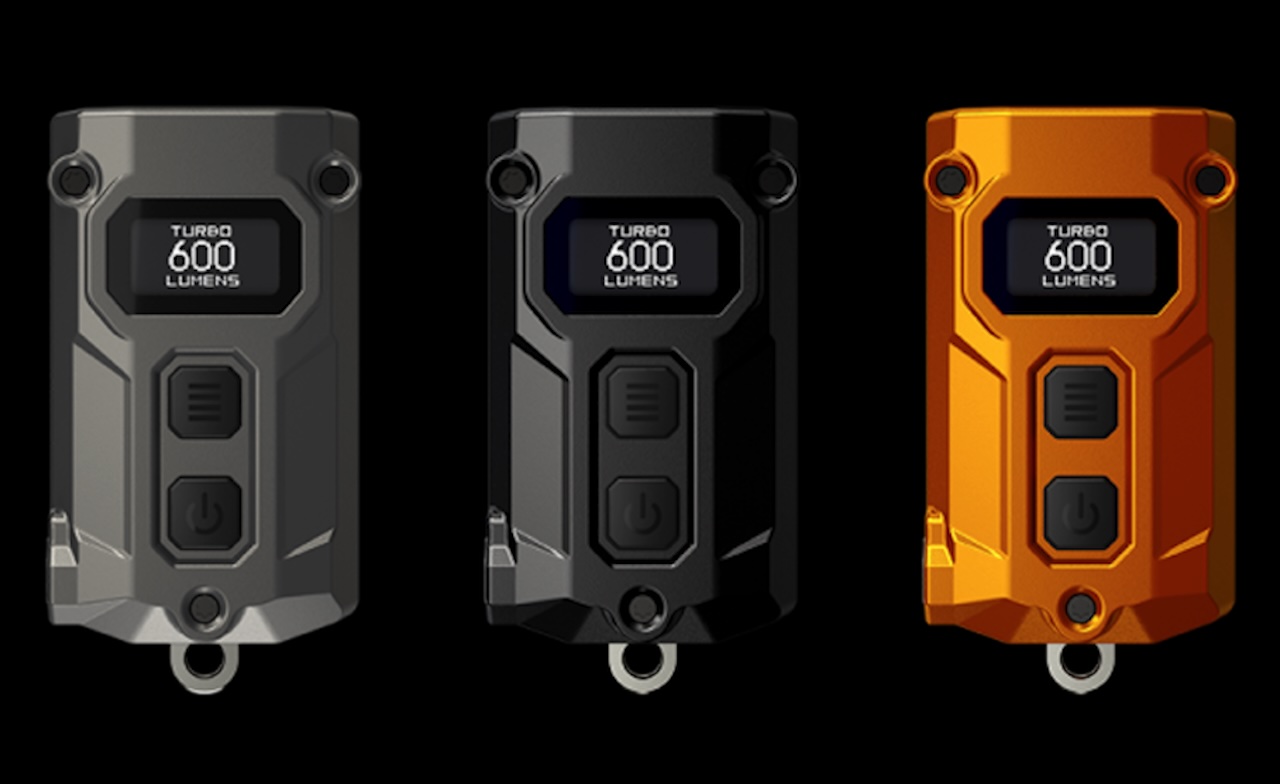 The Nitecore TINI 3 showed up in HiConsumption’s roundup of the best EDC gadgets under $50, and it’s earned that placement through sheer output relative to size. This thing is barely larger than a car key fob. The aluminum housing has a matte finish that feels deliberate in the hand, with enough heft to signal quality without adding noticeable drag to a keychain. Around $40, it sits in the “nice gift you’d also buy for yourself” range.
Multiple brightness levels cover more ground than most keychain lights. The lowest setting finds a keyhole or reads a menu in a dim restaurant. Crank it to full output, and you’re lighting up a parking garage. Beam spread runs wider than you’d expect, covering your full walking path instead of spotlighting one point on the ground. A middle mode handles dog walks and campsite trips without blinding anyone coming toward you. If you’ve been relying on your phone flashlight, the jump in quality hits right away. Color temperature leans neutral instead of blue-white, so nighttime use feels easier on the eyes. USB-C charging means one cable for everything.
It’s the kind of purchase that quietly converts people. Most folks who carry a keychain light started with a cheap one and upgraded once they realized how often they reached for it. The TINI 3 is the version that ends the search.
The carrying clip holds firm without adding bulk, and the button mechanism has enough resistance to prevent accidental pocket activation. That detail matters more than it sounds, because nothing drains a keychain light faster than discovering it’s been running inside your jeans for four hours. Between the clip design, the activation feel, and memory mode that recalls your last brightness setting on power-up, the small choices add up to a tool that feels considered rather than assembled from a parts list. You notice the thought in the details before you read the spec sheet, and that kind of craftsmanship is a strong signal for anything you plan to carry daily.
Price: $39.95
Where to Buy: Amazon
Anker Nano Power Bank
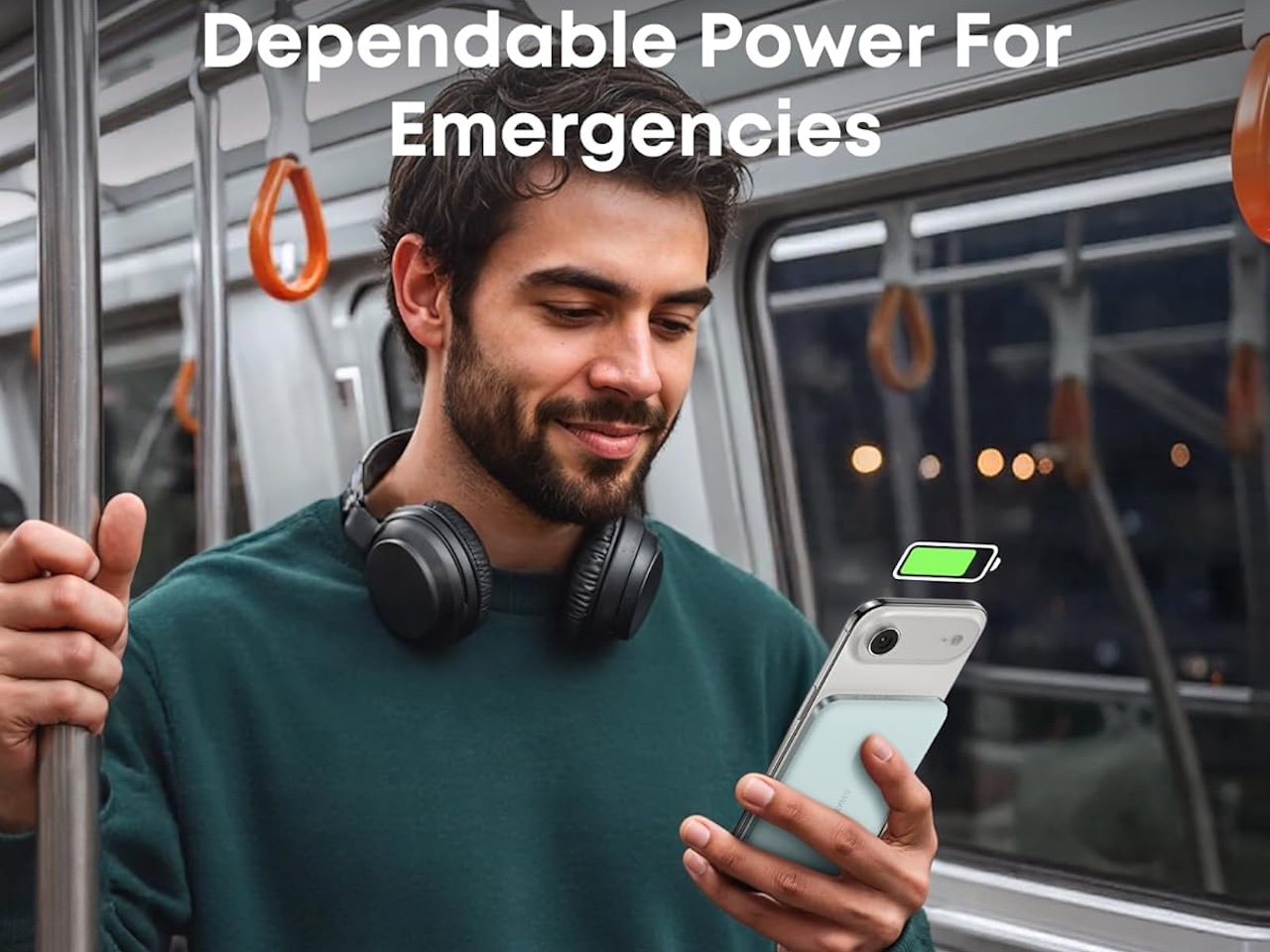 Anker’s Nano Power Bank shows up on every budget EDC list for a reason that has more to do with form factor than raw capacity. At roughly $55, it’s small enough and light enough that you’ll actually toss it in a bag or clip it on before heading out. The best power bank ever made doesn’t help if it’s sitting in a drawer because you decided it was too bulky to bother packing.
A built-in connector removes the cable problem entirely. That one design choice separates the Nano from dozens of competitors. No cord to remember. Pull it out, plug in, keep moving. The matte plastic housing won’t collect fingerprints, and a small LED shows remaining charge without a button press. Capacity sits at one full charge by design. This isn’t for multi-day hikes. It’s for airport layovers at 5% or afternoons when GPS has been draining your battery since lunch. At $55, it counts as impulse and earns that impulse back within a week.
Anker has been quietly refining this category for years, and the Nano represents the convergence point where size, price, and charging speed stop requiring tradeoffs. You’ll find larger capacities at the same price, but nothing this compact charges this fast while fitting invisibly into a front pocket.
Price: $54.99
Where to Buy: Amazon
TP-Link Tapo C120
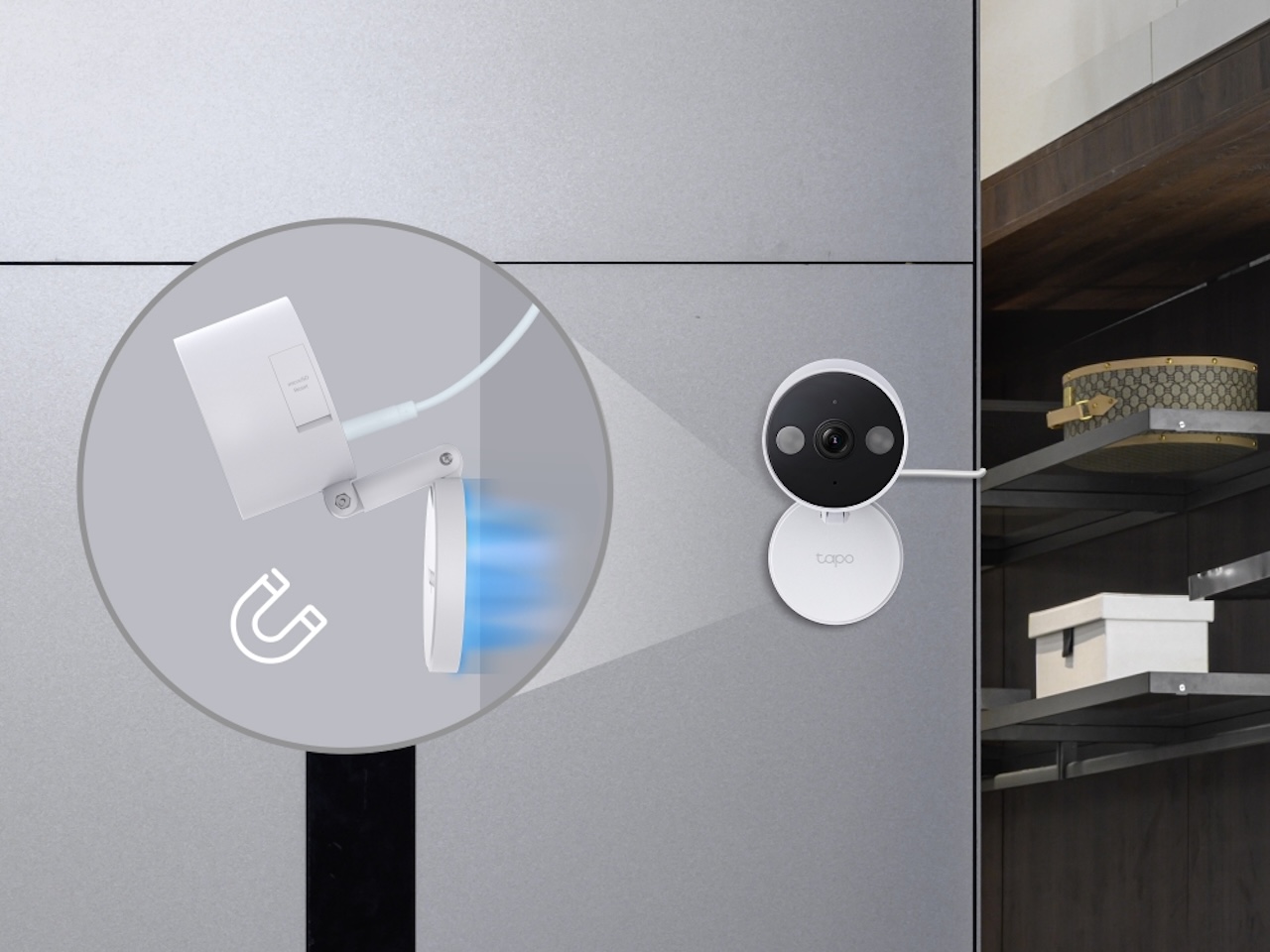 TP-Link’s Tapo C120 made PCMag’s best tech under $50 list, and at around $30, it solves a problem that budget security cameras have historically failed at: producing footage you can actually use after dark. Color night vision separates the C120 from the wave of grainy, green-tinted cameras that flooded online retailers over the past couple of years. Once the sun drops, the image stays clear enough to identify faces and read license plates in a driveway, which is the baseline most people need and rarely get at this price. Compare the footage side by side with cameras in the $80 to $100 range, and the gap has narrowed enough to make the premium harder to justify.
A microSD slot handles local storage, so you aren’t paying a monthly cloud fee to watch your own footage. Slide in a card and the camera loops recordings at zero ongoing cost. Over a year, the $3 to $10 per month that cloud cameras charge adds up to more than the C120 itself. Weather-resistant housing, two-way audio for talking to delivery drivers, and customizable motion zones round out the feature set. The app lags on older phones, and the sensor struggles in very low light without the IR illuminator. Real tradeoffs exist. But at $35.99, you can grab three cameras for the price of one premium unit, cover every angle, and still come out ahead. That scalability is a genuine advantage expensive cameras can’t match.
Price: $35.99
Where to Buy: Amazon
Keychron C3 Pro
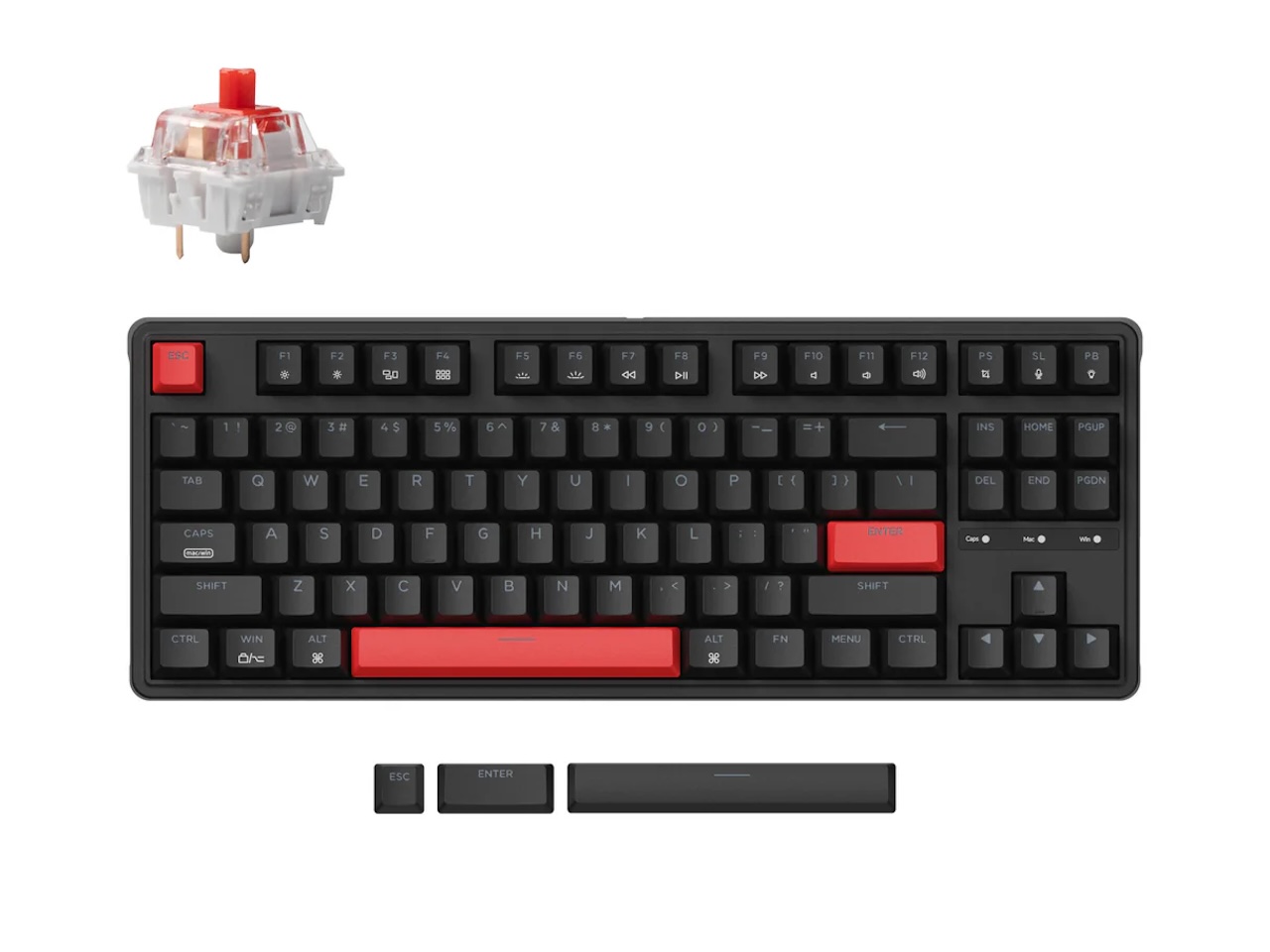 Mechanical keyboards usually start around $120 and climb fast. The Keychron C3 Pro, featured on PCMag’s budget tech roundup, lands with Gateron switches that feel balanced and responsive from the first keystroke. The travel is deeper than membrane, the feedback is physical, and the sound sits in that satisfying range without annoying a shared workspace. If you’ve tried a mechanical board at a store and thought “I get it,” this is the one that brings it home for less than a restaurant tab.
Hot-swappable sockets push it past entry-level territory. Pop out the stock switches, drop in silent reds or box whites, and the board’s personality changes completely. QMK and VIA firmware let you remap every key. The aluminum frame feels closer to boards in the $70 to $80 range, with zero flex or rattle on a desk. At $49.99, the C3 Pro doesn’t feel like a stepping stone you’ll outgrow. It feels like a keyboard you could type on for years, and the hot-swap design means every future upgrade happens without replacing the board itself.
Price: $49.99
Where to Buy: Amazon
iFixit Mako Driver Kit
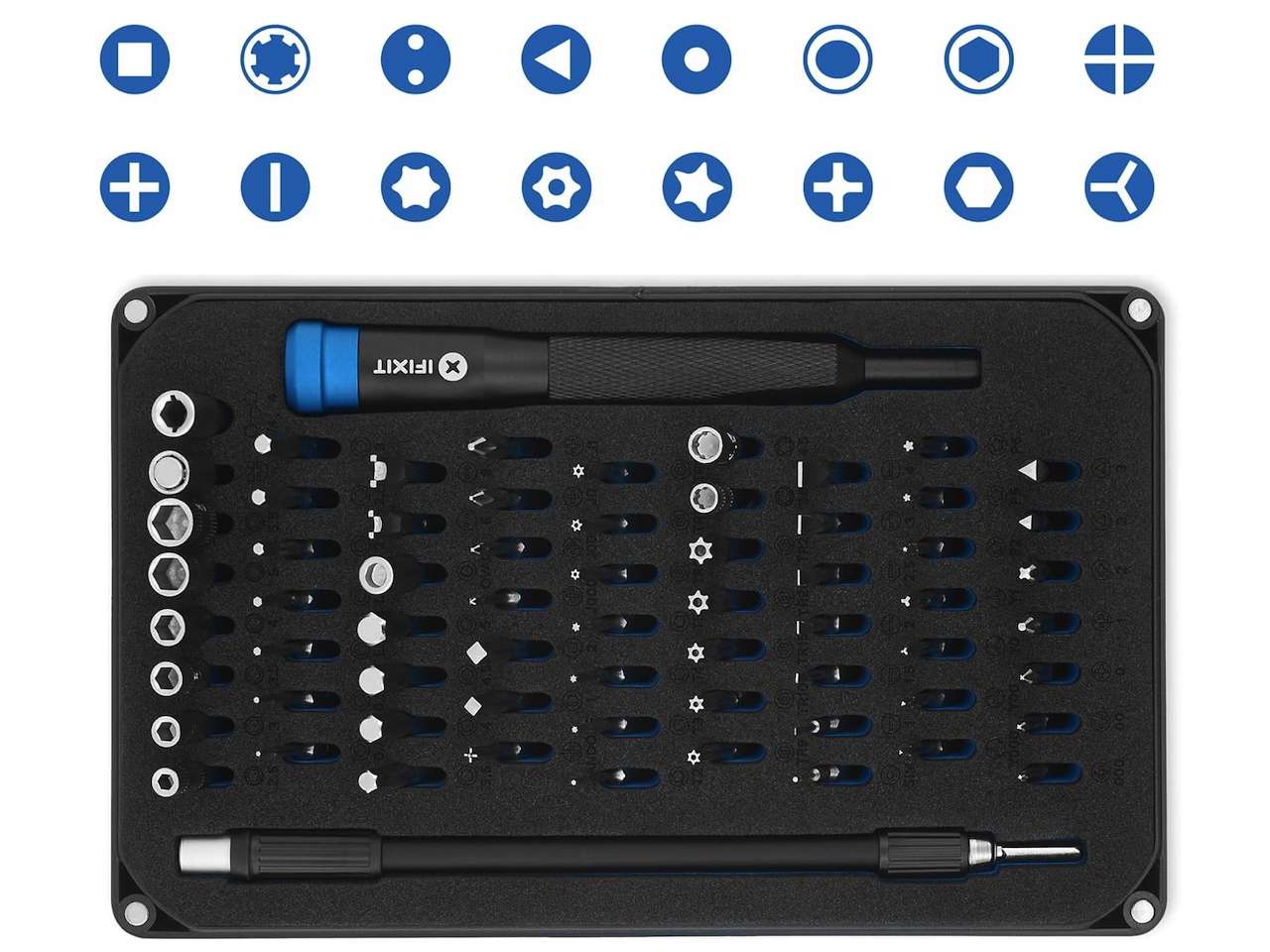 The iFixit Mako Driver Kit holds a 4.9-star average across nearly 3,000 reviews, and at $39.95 you get 64 precision bits covering torx, Phillips, pentalobe, tri-point, and nearly every other fastener hiding inside your electronics or game console. The swivel-top handle lets you apply rotational pressure with one finger while the grip stays firm. A magnetic bit holder keeps each tip seated until you pull it free. Cheap sets can’t replicate that certainty, the kind where you know the bit won’t slip and the screw won’t strip because the tool gave out first. Inside the hinged case, every bit sits in a labeled slot organized by type, which eliminates the dig-through-a-pile ritual that haunts anyone who’s opened a phone with a budget kit.
iFixit built its brand on right-to-repair advocacy, and the Mako is the physical version of that philosophy. The bit selection covers Apple’s proprietary pentalobe screws, so iPhones and MacBooks open up without a specialty retailer trip. Every self-repair you handle instead of paying a technician is a return on that original $39.95, and over a year of routine fixes the savings compound quietly, making this one of the highest-return purchases on the entire list.
Price: $39.95
Where to Buy: Amazon
The math has changed
What connects these seven picks isn’t the number on the receipt. It’s the moment you start using one and realize the distance between “budget” and “premium” shrank while you weren’t paying attention.
Hot-swappable mechanical switches for $49. Color night vision in a $35 camera. Line those specs up against their prices and try explaining them to someone browsing stores in 2022. The conversation breaks down before the second product.
Brands haven’t found different corners to cut. They’ve solved the engineering and supply chain constraints that made these features expensive, and this time the savings reached the price tag instead of padding margins. The result is a tier of products that would have qualified as mid-range two years ago, now sitting comfortably in impulse-buy territory.
If something on this list caught your attention, every pick is available now through major retailers. At these prices, grabbing two or three doesn’t trigger the kind of internal negotiation that follows a $300 impulse purchase. The worst-case scenario is a $29 tracker you forget about until the day you actually lose your keys. The best case is a pocket projector that turns every hotel room into a private theater. Either way, you’re not sweating the receipt.

2-Pack LED Video Light Kit, NiceVeedi Studio Light, 2800-6500K Dimmable Photography Lighting Kit with Tripod Stand&Phone Holder, 73" Stream Light for Video Recording, Game Streaming, YouTube
(as of April 8, 2026 11:19 GMT -05:00 - More infoProduct prices and availability are accurate as of the date/time indicated and are subject to change. Any price and availability information displayed on [relevant Amazon Site(s), as applicable] at the time of purchase will apply to the purchase of this product.)
