
Your TV’s built-in speakers can’t handle Super Bowl audio. Thin screens don’t have room for drivers that can reproduce crowd noise, commentary, and stadium sound at the same time. What sounds fine when you’re watching alone turns into a mess when your living room fills with 20 people all trying to hear what the announcers just said.
Super Bowl LX starts February 8th, which gives you a few days to fix the audio situation before kickoff. These aren’t long-term research projects, these are immediate fixes for TV audio, projection size, or shared listening that work without professional installation or multi-hour setup processes. Prices range from under $100 to nearly $4,000 depending on what you’re trying to solve. If you’re still using whatever speakers came with your TV, February 8th is going to expose every limitation of that setup. Audio problems become obvious when 15 people are talking over the broadcast and nobody can hear the commentary clearly. The window to fix this closes fast, and shipping delays compound if you wait until the week before kickoff.
Sony S100F Soundbar: $98
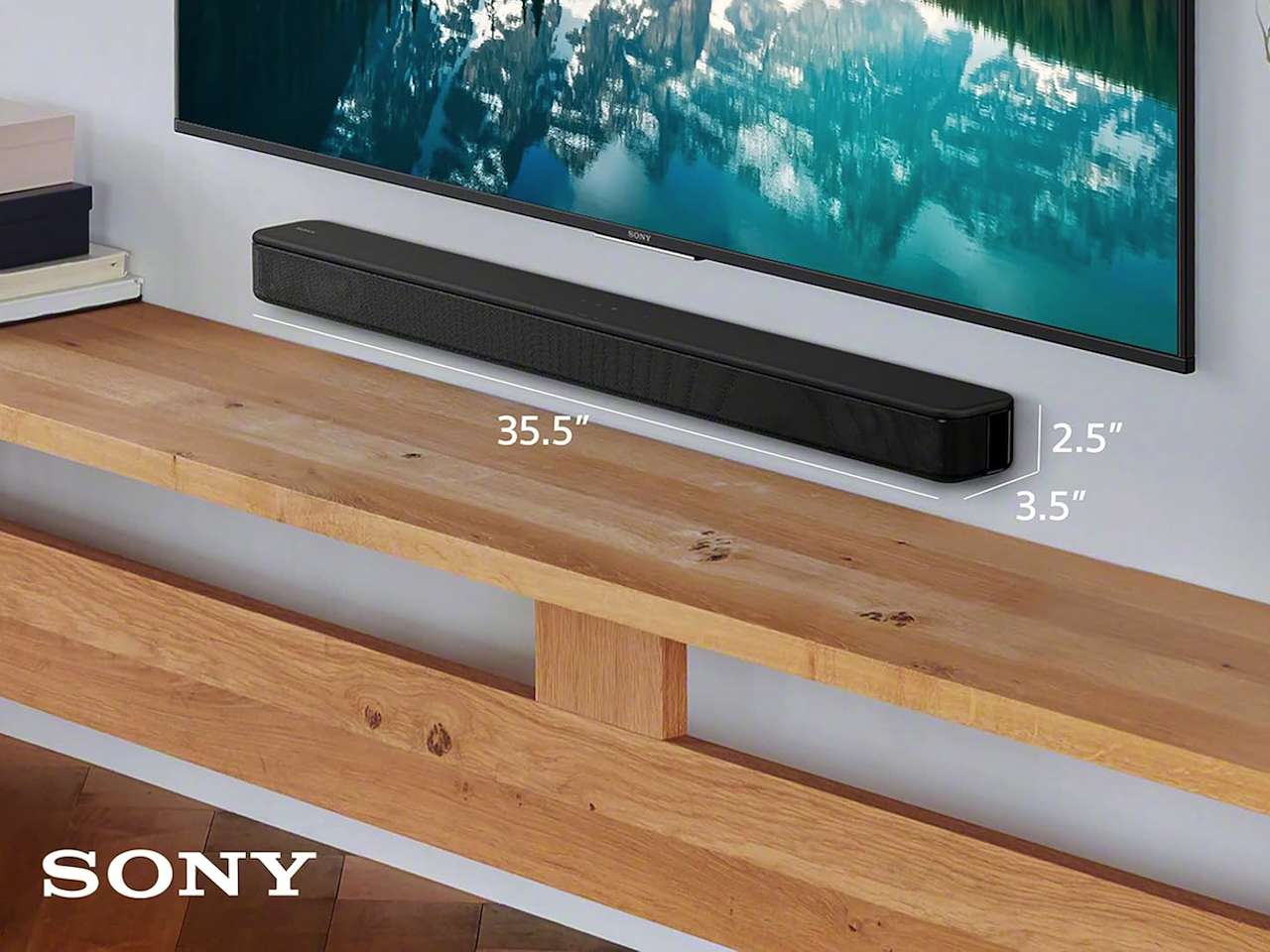
Sony’s S100F is compact and affordable. It’s 2.5 inches tall and connects via HDMI ARC or optical cable.
Sony’s S100F is a 2.0-channel soundbar listed at $98 on Amazon, down from its $160 list price. Voice Enhancement mode boosts center channel audio so dialogue stays clear when crowd noise gets loud. Bass reflex design adds low-end weight that built-in TV speakers can’t produce. If your TV supports HDMI ARC, the soundbar powers on and off with the TV while your existing remote controls both. Bluetooth streaming works for music and podcasts beyond game day. Physical buttons on top provide manual control when the remote disappears. Setup takes under five minutes from unboxing to sound.
At 2.5-inches tall, it fits on crowded TV stands without blocking the screen or IR sensor. The price puts this at wireless earbud territory for something that actually fixes muddy dialogue and weak bass. Sony ships fast through Amazon, which matters with a two-week window.
At $98 you’re getting functional voice clarity and enough bass to make stadium hits feel physical instead of flat. This isn’t built for audiophiles or wall-shaking output, it’s built to make TV dialogue audible during a party where 15 people are talking over the broadcast anyway. The form factor is compact enough that it doesn’t require furniture rearrangement or drilling holes in walls for mounting brackets. Voice Enhancement mode works well enough that you can actually hear what announcers are saying instead of straining to catch every third word. The price is low enough that it makes sense as a short-term fix even if you’re planning a bigger upgrade later. Sony built this to solve one specific problem, which is dialogue clarity in crowded rooms, and it solves that problem better than you’d expect at this price point.
Price: $98
Where to Buy: Amazon
Polk Signa S4: $379
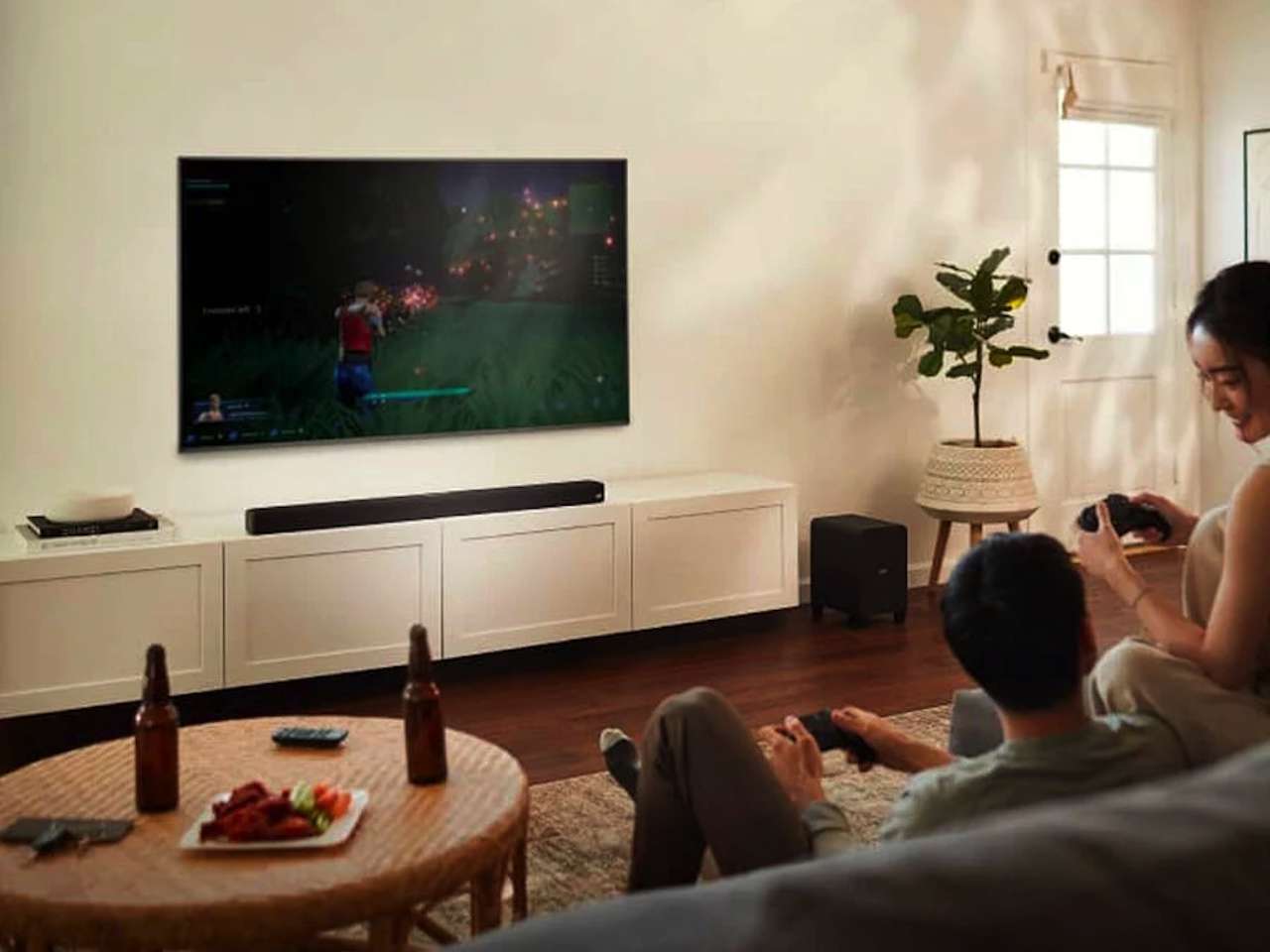
Polk’s Signa S4 is a soundbar plus wireless subwoofer system with Dolby Atmos support, listed at $360. The soundbar handles height and directional audio by bouncing sound off your ceiling. The wireless subwoofer handles low-frequency rumble that makes crowd noise and big plays feel immersive instead of compressed. Polk’s VoiceAdjust tech lets you adjust dialogue volume separately from background sound, so you’re not riding the volume button every time the broadcast cuts between quiet studio segments and loud stadium audio.
The subwoofer connects wirelessly and can go anywhere in the room without visible cables. Setup happens automatically when you power both units on. Dolby Atmos creates the feeling of height and width using ceiling reflections, so explosions in commercials and crowd roar during big moments feel more dimensional than standard stereo. The separate subwoofer adds physical impact to bass frequencies that soundbars alone can’t reproduce convincingly. The wireless connection stays stable without dropouts or latency issues. Physical controls on the soundbar handle volume and input switching. The compact profile fits under most TVs without blocking IR sensors.
You feel the difference during kickoffs and big hits, which matters when the point is to create an event atmosphere in your living room. At $360 you’re getting Dolby Atmos capability plus a real subwoofer, which typically costs more from brands like Sonos or Samsung. The wireless subwoofer placement flexibility helps when you’re working around existing furniture and don’t want cables running across the floor. The VoiceAdjust control is accessible via remote, so you can tweak dialogue levels mid-game without digging through on-screen menus while everyone’s watching.
Price: $379
Where to Buy: Polk
TCL C1 Projector: $199
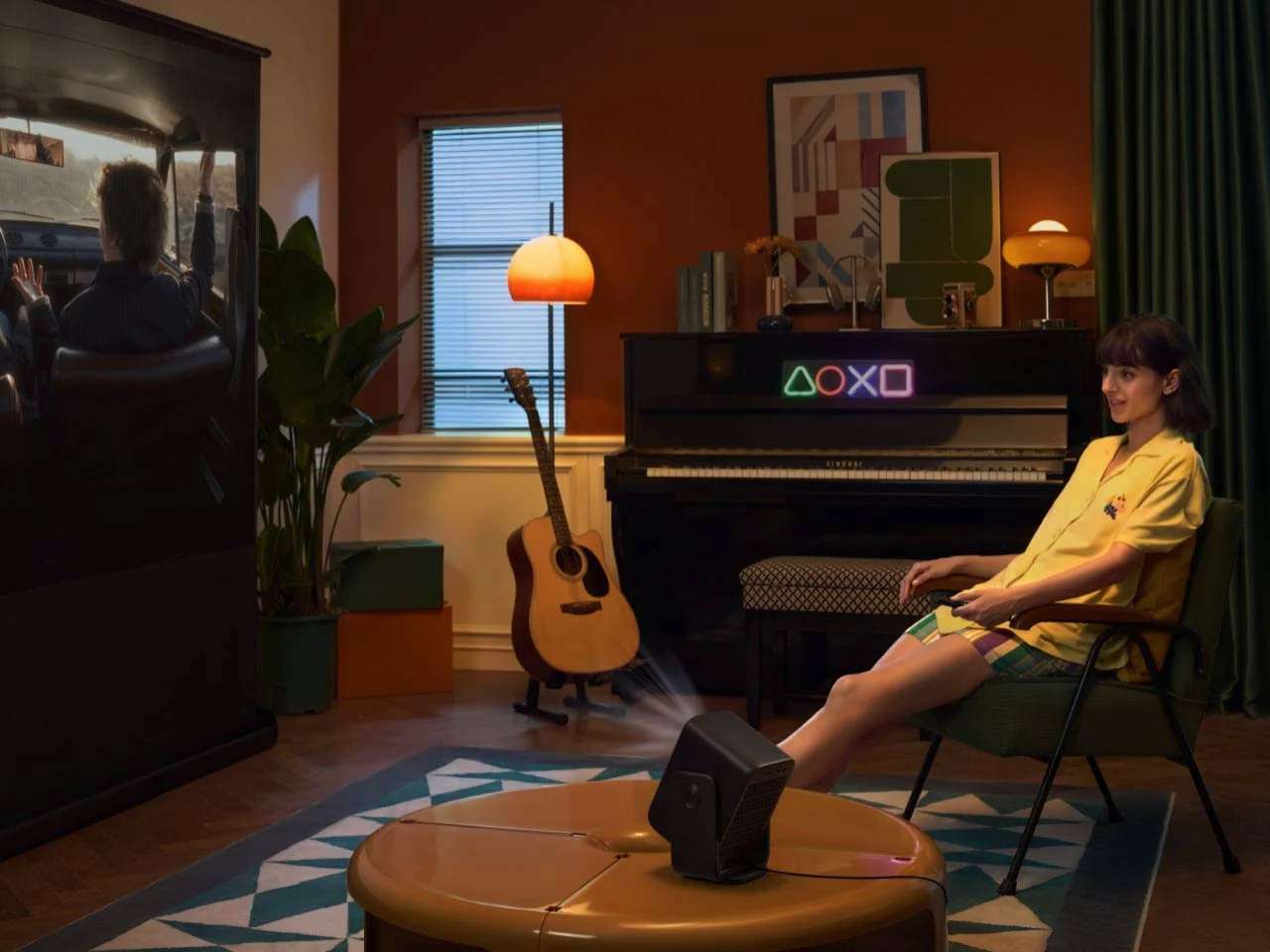
TCL’s C1 throws a 120-inch image at $199, making it the cheapest way to go big-screen without buying a TV that won’t fit through your door. It’s a 1080p projector with built-in Google TV, a two-hour battery, and 230 ISO lumens of brightness that needs a dark room or nighttime viewing to work properly.
If you’ve got blackout curtains or watch at night, colors stay bright and contrast holds up better than you’d expect at this price point. Auto-focus and keystone correction handle setup automatically, so you can point it at a wall, let it adjust itself, and you’re watching on a screen bigger than most apartments within seconds. Google TV integration means Netflix, YouTube TV, and major streaming apps work without external dongles or unstable add-on software.
The two-hour battery of the TCL C1 Projector makes this portable enough to move room to room or take outside for tailgate setups without hunting for outlets. Built-in audio exists but you’ll want to pair a Bluetooth speaker or connect to a soundbar for anything resembling good sound. The HDMI input handles game consoles if halftime gets boring and someone wants to play Madden. Physical controls are basic but functional. The compact form factor fits in a backpack without dedicated compartments.
TCL rates the LED source at 30,000 hours, which translates to over 20 years of four-hour daily viewing before the lamp dies. At $199, the value proposition is hard to argue with if you want screen size that makes the game feel bigger than it would on a 55-inch TV.
For dark-room Super Bowl viewing where you want a massive screen without spending TV-level money, it works better than the price suggests. The auto-focus system works fast enough that you can reposition the projector mid-game without waiting through long calibration sequences. Portability matters if you’re hosting at different locations or want to set up outside when weather permits. The 120-inch projection creates a theater feel that standard TVs can’t match, and at this price you’re not sacrificing much to get that scale. This isn’t competing with $2,000 projectors on image quality, but it’s competing on convenience and immediate impact, and it wins that comparison easily.
Price: $199 US / £249.99 UK
Where to buy: TCL
Valerion VisionMaster Max: $3,999
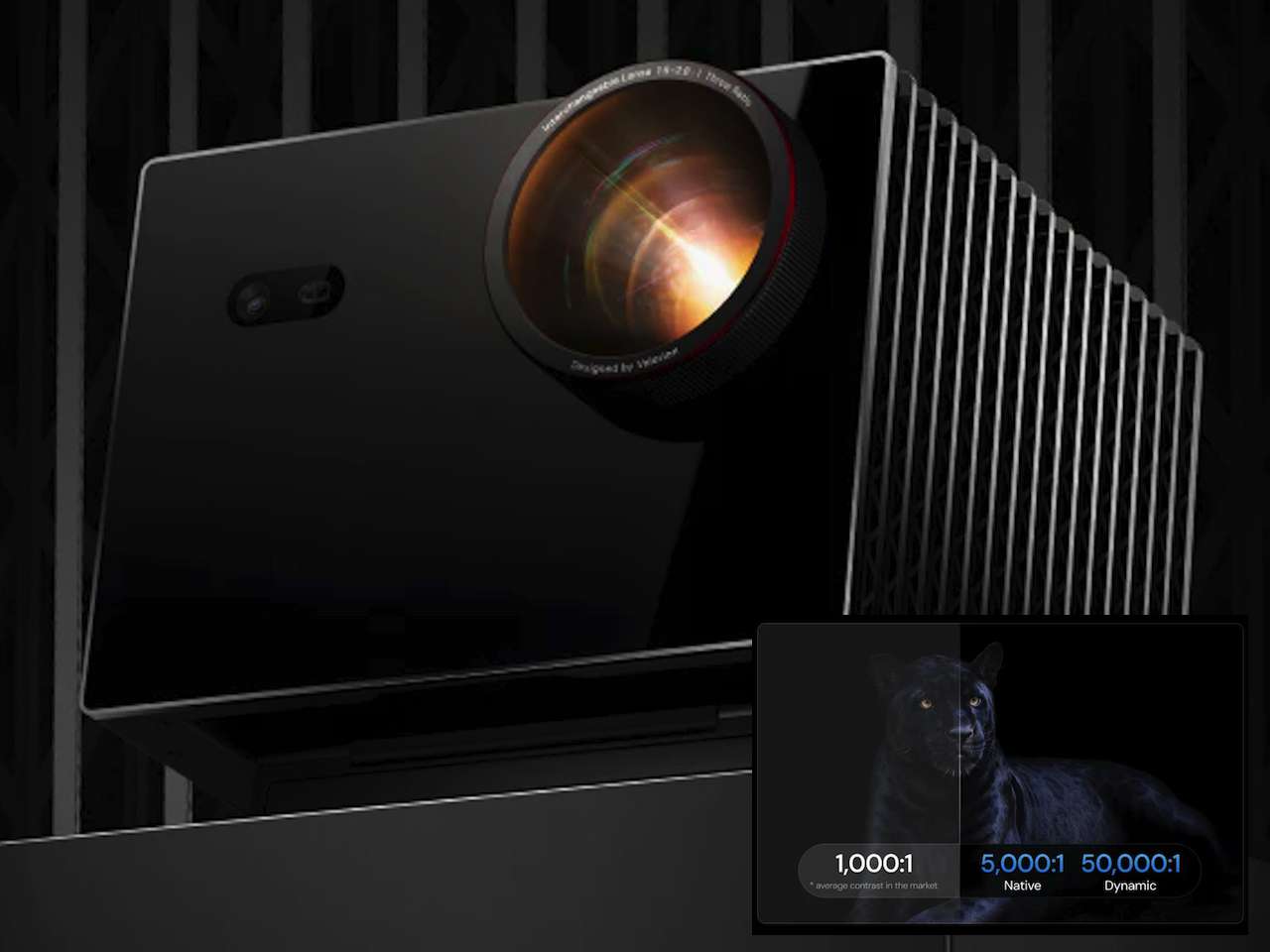
The Valerion VisionMaster Max is an RGB triple laser projector with Google TV, priced at $3,999 street price or $4,999 at full retail. The pitch centers on contrast that doesn’t collapse when room light comes in. Most budget projectors turn dark scenes gray the moment ambient light hits the screen. The RGB triple laser light source delivers better color accuracy and deeper blacks than single-laser models that sacrifice shadow detail to hit higher brightness specs. This isn’t a ceiling-mounted theater piece, it’s a compact unit designed to sit on a media console next to your soundbar. If you want projection without dedicating a whole room to it, that flexibility has real value for people without spare rooms to convert into home theaters. Google TV integration means you stream directly without external boxes cluttering your setup.
Price: $3,999
Where to Buy: Valerion
Samsung Music Studio 5 and 7: $249 and $499
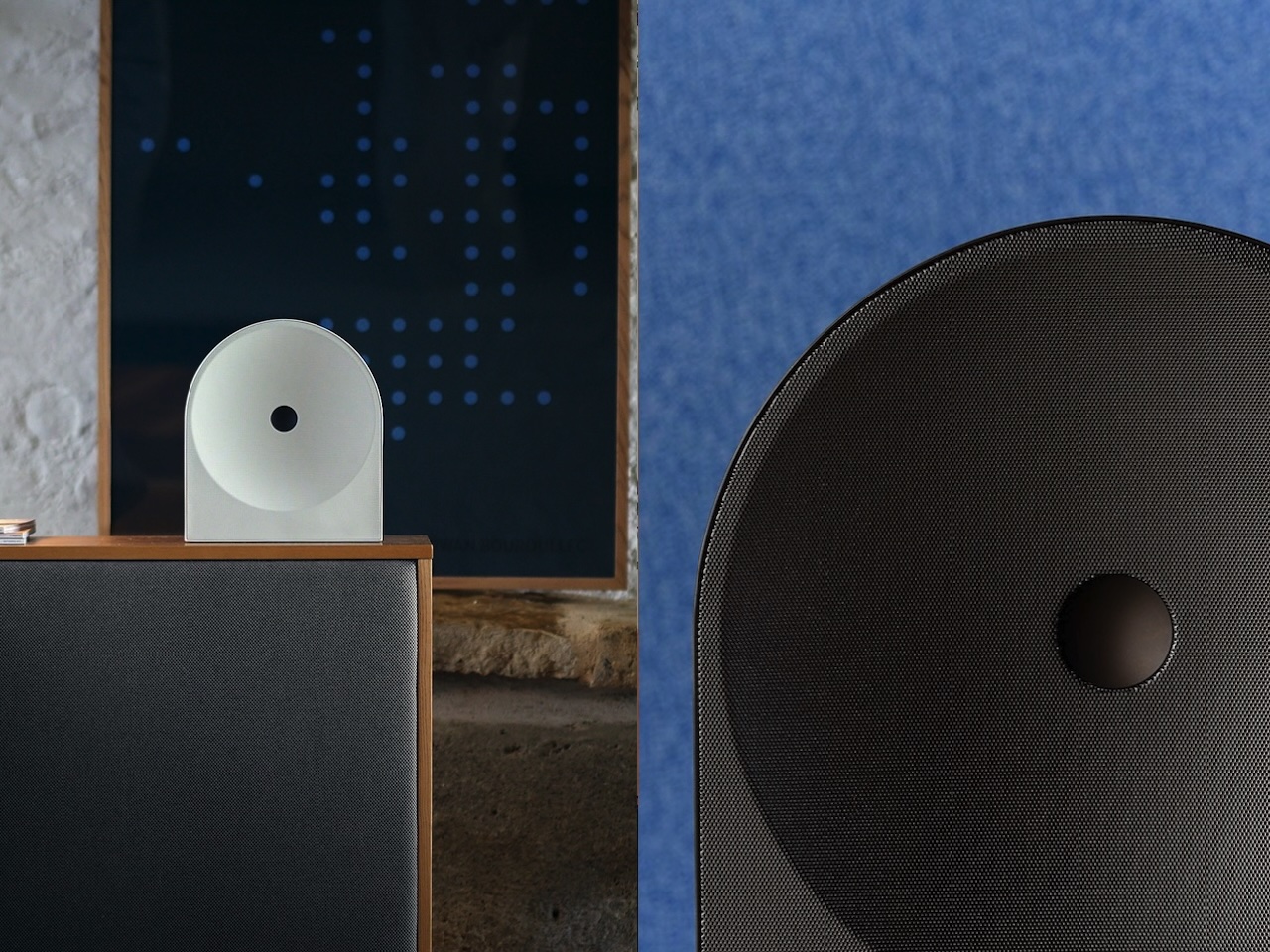
Samsung’s Music Studio line consists of two speakers designed to look like furniture instead of tech gear, with the compact cubic Music Studio 5 at $249 and the larger rounder Music Studio 7 at $499, both hiding drivers behind a central sculptural opening shaped by French designer Erwan Bouroullec.
If you’ve got a Samsung TV, the Samsung Music Studio 5 and Studio 7 sync via Q-Symphony to create multi-direction sound without visible surround speakers filling your space. The aesthetic matters if you’re tired of black rectangles dominating your room. These sit on shelves and blend into decor instead of announcing their presence as audio equipment. The collaboration with Bouroullec brings design credibility that typical tech products don’t attempt.
The Music Studio 5 offers 2.1-channel audio with hi-res support up to 24-bit/96kHz and AI Dynamic Bass Control, while the Music Studio 7 steps up to 3.1.1 channels with Dolby Atmos support and a tweeter reaching 35kHz for Hi-Res Audio certification. Compatibility extends beyond Samsung through AirPlay 2, Google Cast, Spotify Connect, and Tidal Connect, so you can use these with non-Samsung devices without losing functions. Physical controls are minimal, with most adjustments handled through the SmartThings app. The matte fabric finish resists fingerprints better than glossy plastic alternatives. Sound dispersion from the sculptural opening creates wider staging than front-firing designs.
Expected availability falls in late Q1 or early Q2 2026, so timing might be tight for Super Bowl Sunday depending on when Samsung actually ships units to stores. At $249 for the Studio 5 and $499 for the Studio 7, these target people who care how speakers look as much as how they sound, which is a real consideration when your living room serves multiple purposes beyond just TV viewing. The pricing reflects the design collaboration and premium materials used in construction. Q-Symphony with Samsung TVs creates spatial effects that typical soundbars can’t match without adding rear speakers. The vertical spread from the Studio 7’s Dolby Atmos setup makes crowd noise feel like it’s coming from stadium dimensions instead of compressed into a horizontal plane. Sound staging feels wider and taller than what you’d get from traditional horizontal soundbars alone. Hi-Res Audio certification means these handle music streaming at quality levels that justify their use beyond just TV audio. If you’re building a setup that works for game day and daily music listening, the crossover functionality makes sense in ways that dedicated soundbars don’t. Design integration matters when visible tech disrupts the aesthetic you’re trying to maintain.
Price: Music Studio 5: $249 | Music Studio 7: $499
Where to Buy: Samsung
Sennheiser RS 275: $299.95

The SennheiservRS 275 is a wireless TV headphone and transmitter bundle priced at $299.95, built specifically for TV audio using Auracast over Bluetooth with the LC3 codec to keep the signal stable when you move around. The HDR 275 headphones are engineered to feel light during long viewing sessions, with padding that doesn’t create hotspots during multi-hour game broadcasts, while battery life hits 50 hours so you’re not dealing with low battery warnings when the game reaches the fourth quarter. The BTA1 transmitter connects via optical, 3.5mm, or HDMI ARC, covering older TVs and newer sets that route audio through ARC, with setup that’s straightforward without pairing menus or Bluetooth discovery modes that confuse less technical users. Physical buttons for volume and mode controls are tactile and easy to find without looking, which matters when you’re adjusting levels in a dark room without wanting to miss a play.
Sound quality is what you’d expect from Sennheiser, with clear dialogue reproduction and enough bass response to make the game feel present rather than thin. The frequency balance favors dialogue intelligibility over exaggerated bass, which is the right call for TV content where understanding what’s being said matters more than feeling every explosion in commercials. Driver quality is noticeable compared to cheaper wireless TV headphones that compress audio and flatten dynamic range.
The soundstage feels natural without artificial widening effects. Treble stays clear at high volumes without harshness. Low-end response handles crowd rumble and impact sounds without muddiness. The closed-back design prevents sound leakage, so you’re not broadcasting the game audio to everyone around you. Dynamic range stays intact across volume levels, which matters when broadcasts swing between quiet commentary and explosive crowd reactions.
The closed-back design isolates outside noise effectively without creating the sensation that you’re listening inside a vacuum. Comfort holds up through extended wear, which matters during games that stretch past three hours with overtime and commercial breaks. This solves the exact scenario where one person wants full volume game audio and another person in the same room wants silence or different content entirely.
If you’ve dealt with cheaper TV headphones that drop signal every time you move or sound compressed, the jump to Sennheiser’s execution is noticeable. The wireless technology is stable enough that you can move freely around your space without dropouts, and the 50-hour battery means you’re not constantly charging between uses. For shared living situations where audio preferences conflict, this solves the problem without requiring anyone to compromise on their viewing experience. The transmitter is small enough to hide behind your TV or sit on a shelf without adding visible clutter to your setup.
Price: P299.95 (bundle) / P$129.95)
Where to Buy: Sennheiser
Who This Is For
This list targets anyone hosting a Super Bowl party who’s still using built-in TV speakers and knows the audio situation isn’t good enough. It’s for people who want dialogue they can actually hear without cranking volume to levels that bother neighbors. It’s for viewers who’ve been curious about projection but didn’t want to spend thousands to find out if they’d actually use it. These products solve immediate problems without requiring professional installation. Audio upgrades make the biggest difference when rooms fill with guests. Projection scales the experience beyond what standard TVs offer.
You’ve only got a few days. None of these need professional installation or acoustic engineering knowledge. Setup maxes at ten minutes, and the improvements over whatever your TV’s currently doing are immediately noticeable.

INIU Mini Portable Charger, Small 45W PD Power Bank, 10000mAh USB C in&Out Fast Charging Pocket Size Battery Pack, Travel Essentials Powerbank for iPhone 17 16 15 14 Pro Air, Xiaomi, Samsung S24 etc
(as of March 20, 2026 10:23 GMT -05:00 - More infoProduct prices and availability are accurate as of the date/time indicated and are subject to change. Any price and availability information displayed on [relevant Amazon Site(s), as applicable] at the time of purchase will apply to the purchase of this product.)
