
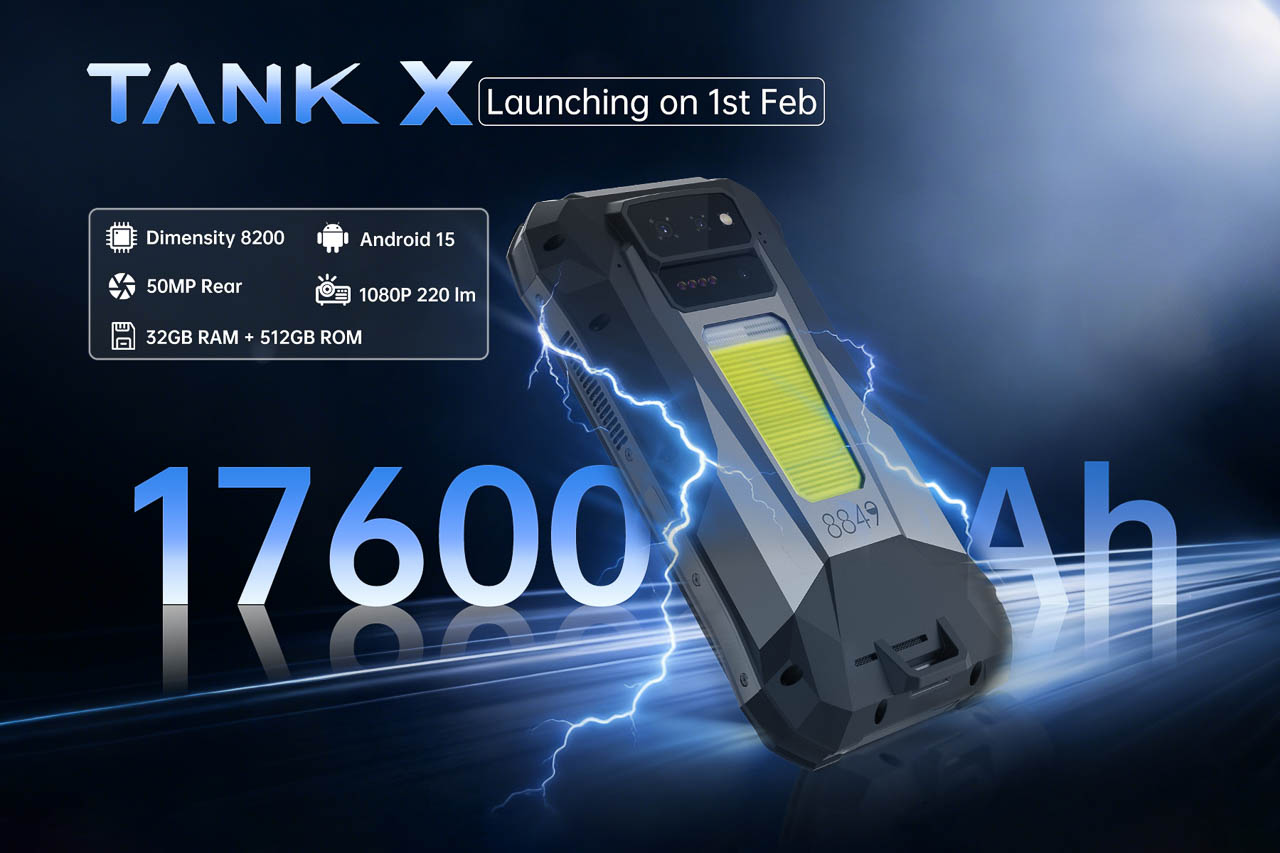
NEWS – Most rugged phones promise durability and deliver compromise. Thicker bezels, slower processors, camera systems that exist to check a marketing box. The 8849 Tank X takes a different approach entirely: it’s an expedition tool that happens to run Android 15, built around systems that actually matter when you’re miles from civilization. Night vision with dedicated infrared hardware. A 1080p projector with laser autofocus. A 17,600mAh dual cell battery architecture that can power your other devices for days. This isn’t feature creep. It’s purpose built density for people who need capability, not lifestyle accessories.
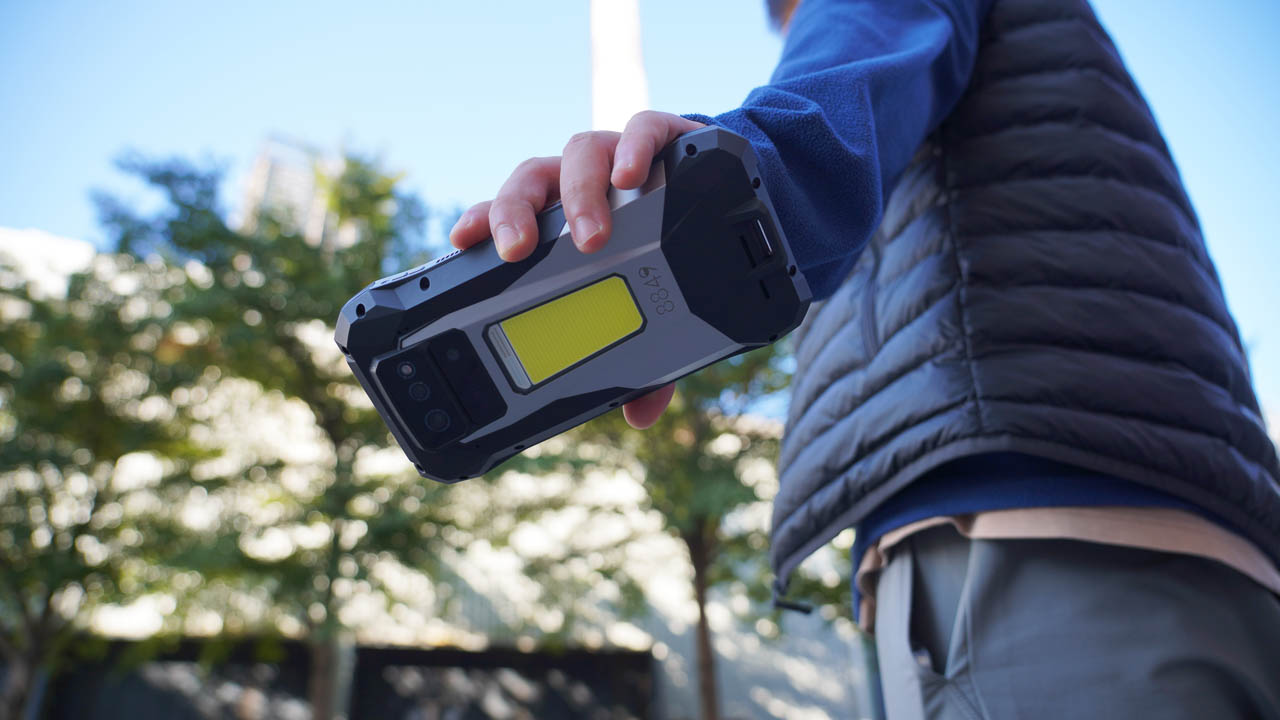
The spec sheet reads like equipment manifest rather than smartphone comparison. At 180.5 × 91.8 × 31.9mm and 750 grams, the Tank X doesn’t pretend to be something you’ll forget is in your pocket. That weight comes from somewhere meaningful: a half board double sided mainboard layout, dedicated FPCs for the projector, flashlight, camping lamp, sensors, and antenna systems, plus two 8800mAh cells sitting in a board to board configuration. The internal architecture exists to support real hardware, not to chase thin bezels. You feel the engineering density the moment you pick it up, and that’s exactly the point.
What makes this device worth examining isn’t any single feature. It’s the integration philosophy underneath everything. 8849 built the Tank X around the assumption that you might actually use a projector at a remote campsite, that you’d want to see in complete darkness without alerting wildlife, that your phone might need to become a 10W power bank for your headlamp batteries. These aren’t afterthoughts bolted onto a standard smartphone platform. They’re the reason this platform exists.
Display Basics
The 6.78 inch LCD runs at 1080 × 2460 resolution with a 120Hz refresh rate and up to 580 nits peak brightness. It’s not an OLED panel, and it doesn’t chase flagship display specs. What it provides is readable outdoor visibility and smooth scrolling for navigation and camera preview. The center punch hole keeps the front clean, and the screen’s size works well for projection preview and map review.
Night Vision: Hardware, Not Software Mode Stacking
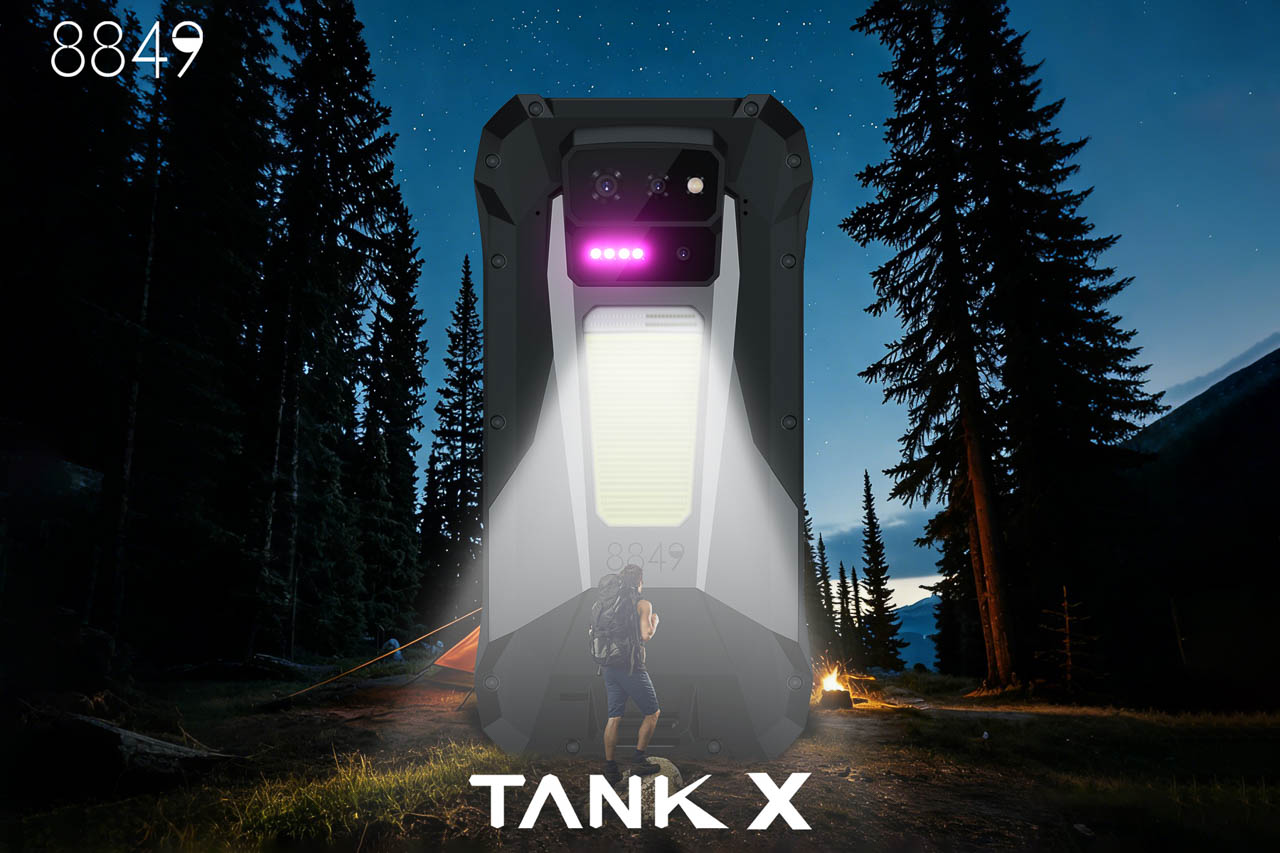
Here’s what makes the 64MP night vision camera worth examining: it’s not computational trickery. Four dedicated infrared LEDs sit in the rear camera housing, throwing invisible light into pitch black environments so the OV64B1B sensor can actually see. No ambient light required. Standard night modes crank ISO and hope for the best, which means they fail the moment true darkness shows up. This is different. Actual IR imaging hardware, capturing usable photos and video when there’s nothing for a conventional sensor to work with.
This approach is widely used in dedicated infrared imaging systems. IR illumination creates its own light source, invisible to the human eye, independent of ambient conditions. Now that capability lives in a phone you’re already carrying. Want to document wildlife without blinding it? Navigate a trail without announcing your position? Check on property after dark without switching on every light? All possible. The approach isn’t new. The integration is.
Autofocus on the night vision sensor matters more than it might seem at first glance. Fixed focus IR cameras work fine for stationary subjects at predictable distances, but anything moving requires the system to track. The Tank X maintains AF capability even in IR mode, which suggests 8849 designed this for actual field use rather than static capture scenarios. Combined with the 50MP IMX766 main sensor and 8MP 3X telephoto, you’ve got a camera array that covers daylight, low light, and no light situations with dedicated hardware for each.
The rear flash system reinforces this serious approach: dual color temperature LEDs at 1.5A max output for visible light situations, plus those four IR LEDs for invisible illumination. Most phones treat flash as an afterthought. Here it’s part of a coherent lighting and imaging system designed around real world conditions.
The Projector Is a First Class System
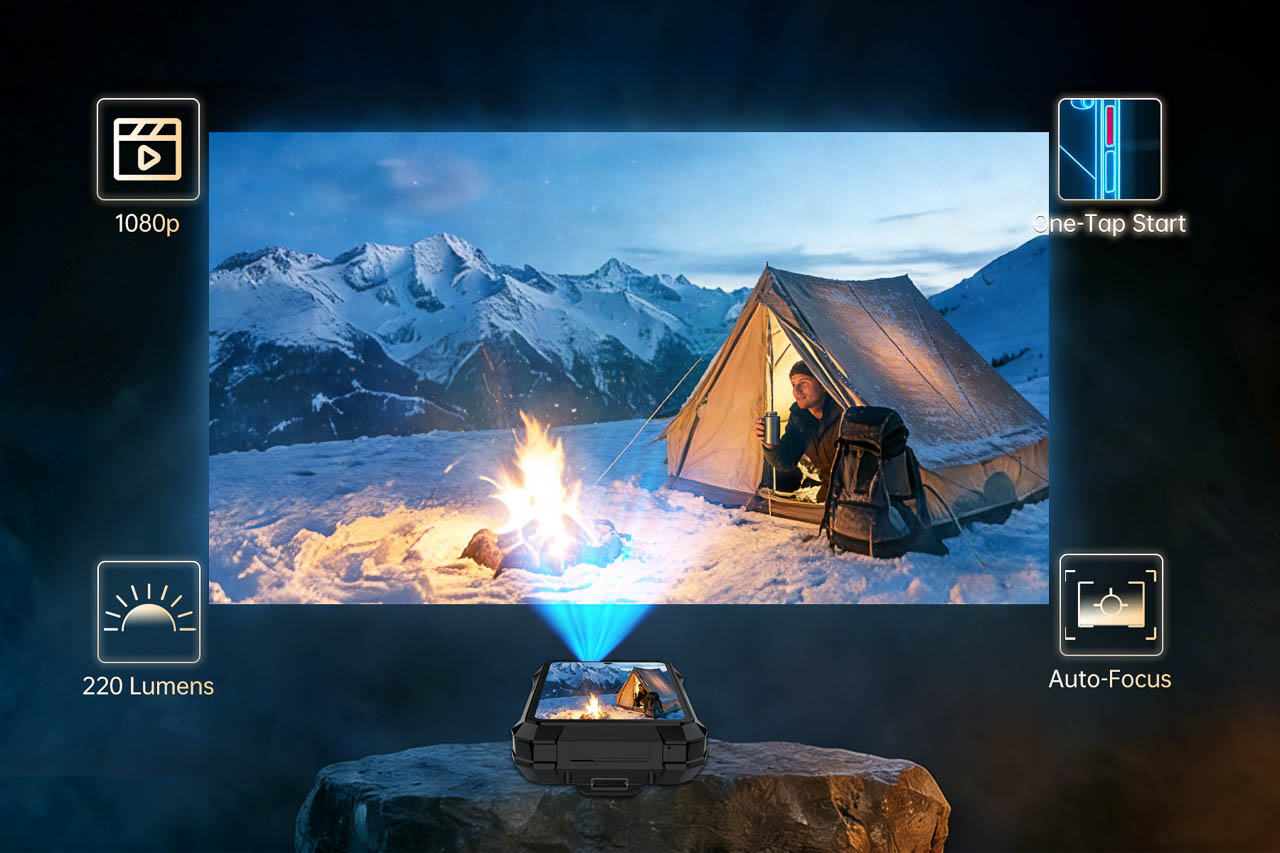
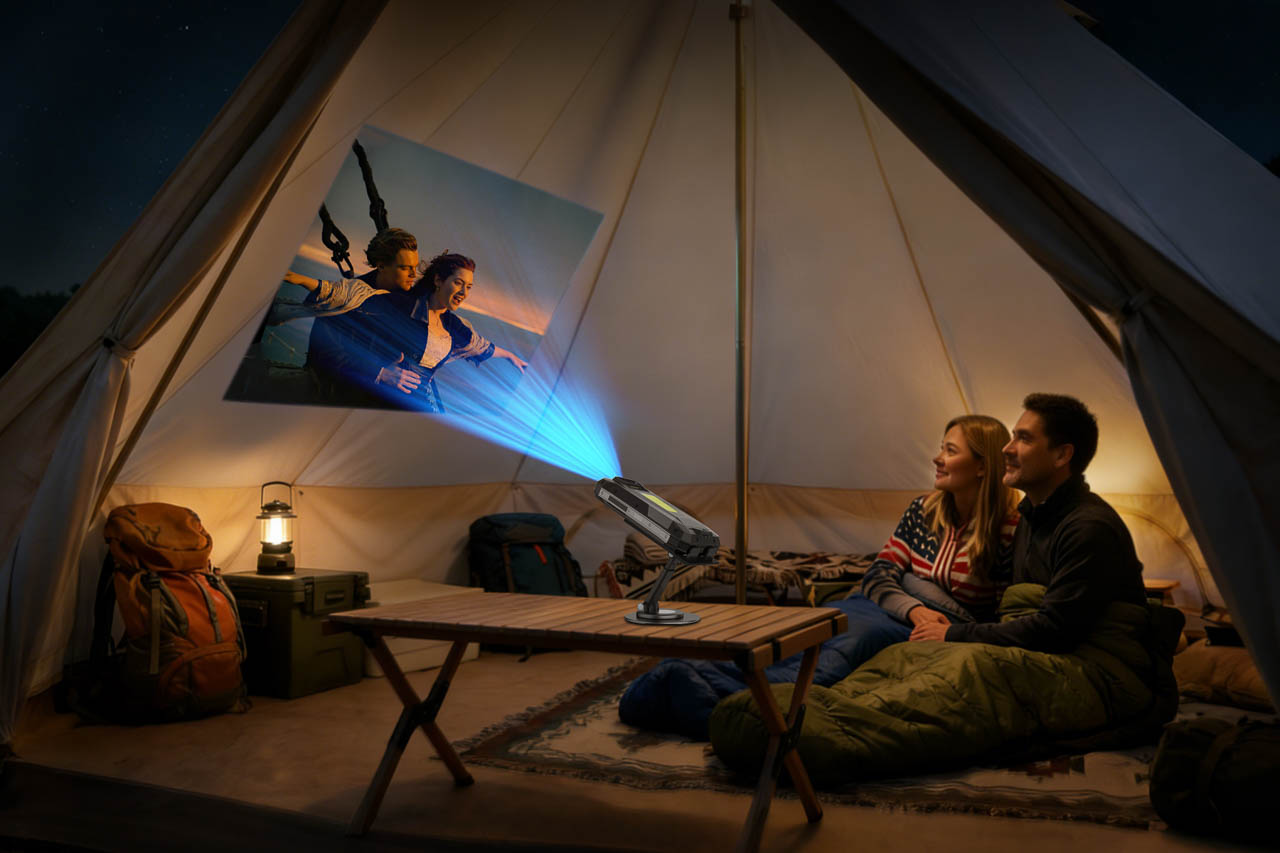
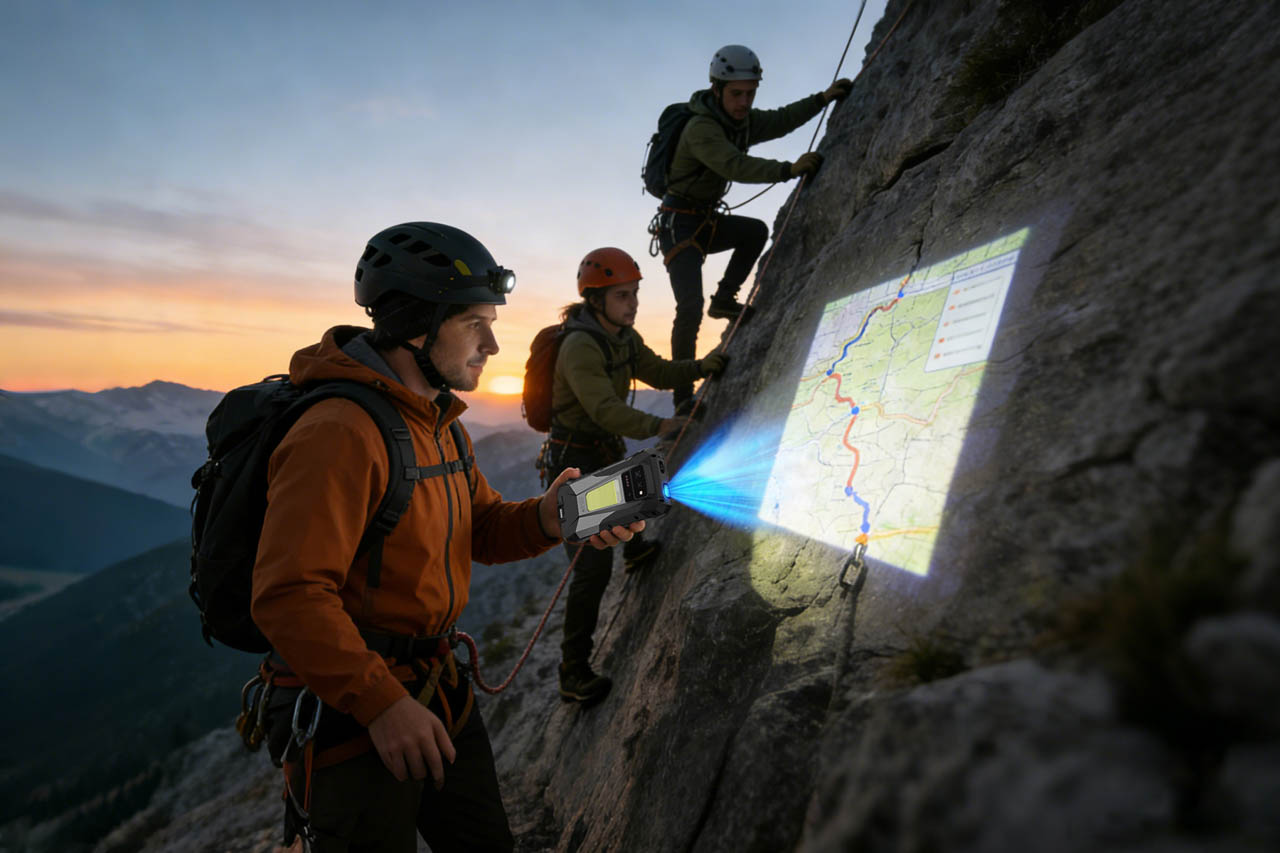
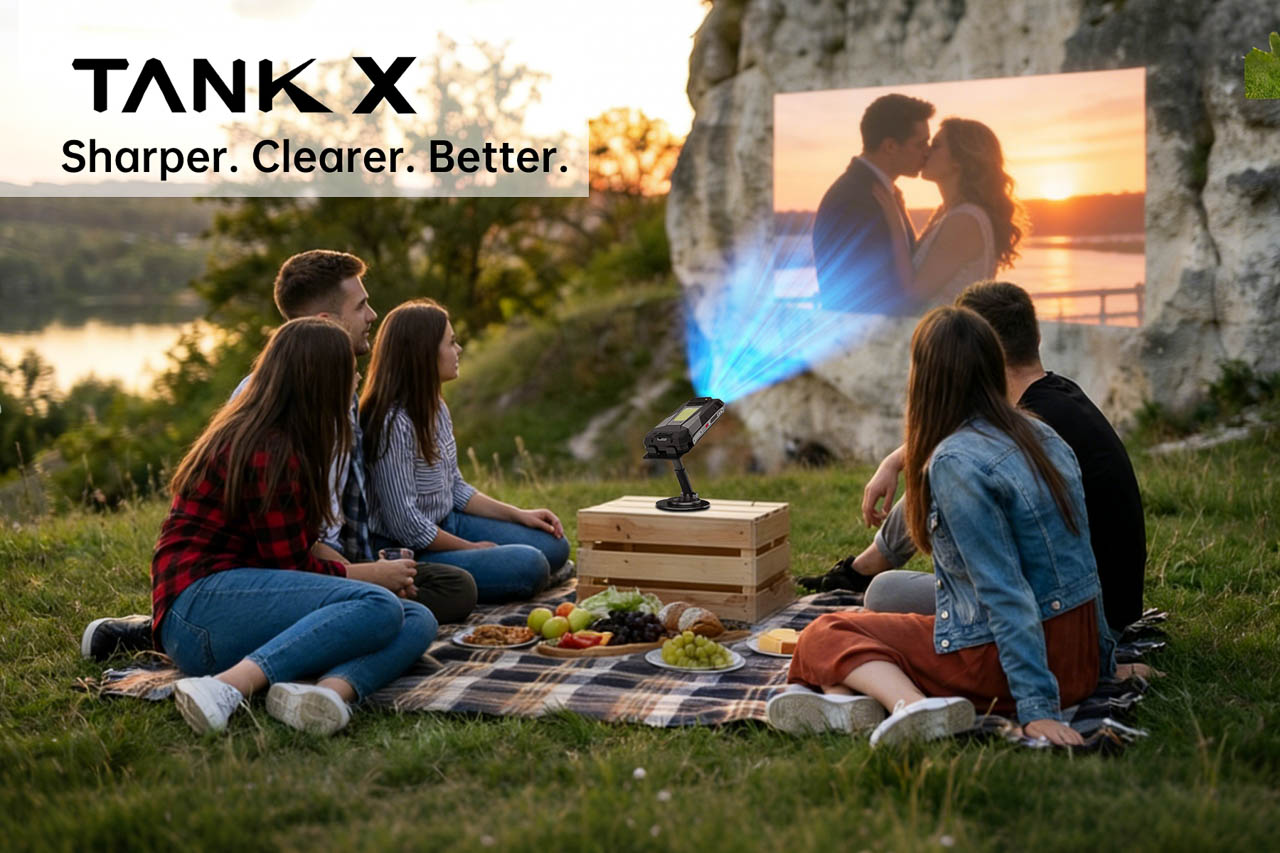
1080p DLP projection. 220 lumens. Laser autofocus. Sounds like spec sheet padding until you actually use it. One button press. Point at a tent wall, a vehicle panel, whatever surface you’ve got. The laser handles focus calibration from 0.5 to 3.0 meters automatically, no manual adjustment, no hunting for sharpness in the dark. Dedicated FPC routing means 8849 designed this as a real system, not a gimmick bolted onto a spare port.
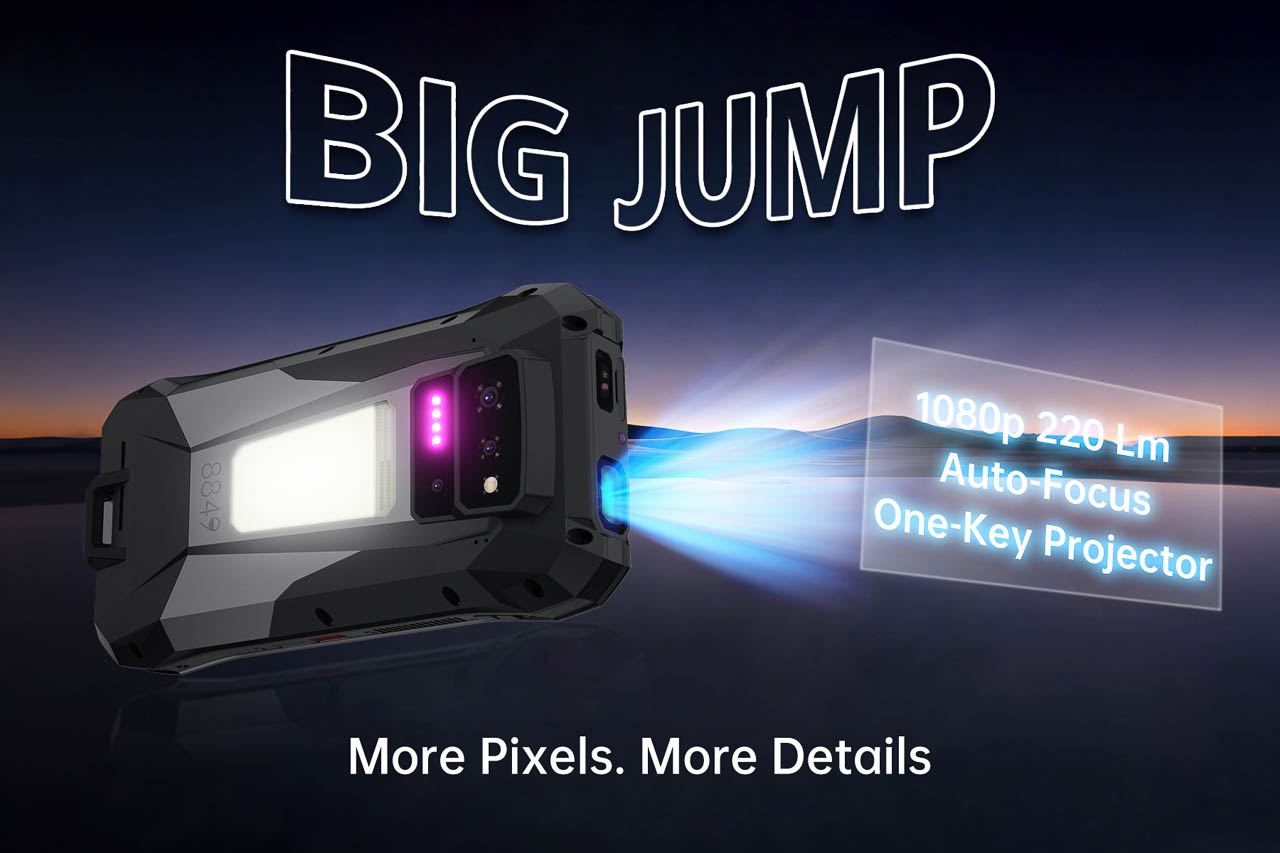
220 lumens won’t fill a conference room. That’s not the point. At night, a meter from a light colored surface, you get readable maps, briefing slides, movie playback, emergency signaling. One less device to pack. One less battery to track. One less charger to forget. The integration matters more than the raw output spec because it means the capability is always there, not sitting in a bag you decided not to bring.
17,600mAh Isn’t Just Capacity, It’s Architecture
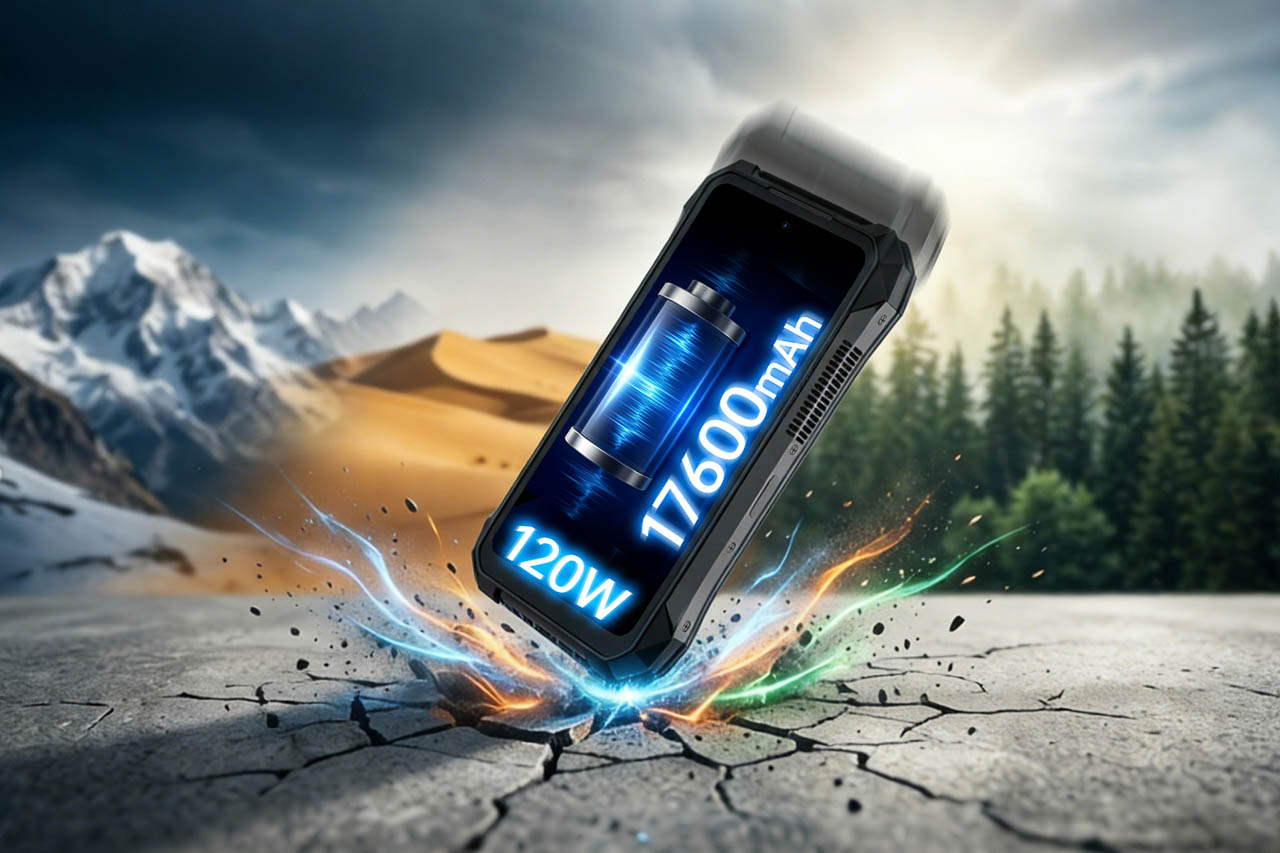
Two cells. 8,800mAh each. Board to board configuration. 68.11Wh total at 7.74V nominal. That’s laptop battery territory crammed into a handheld device, and the dual cell architecture isn’t just about raw capacity. It’s about sustained output. Running a projector while capturing IR video while maintaining GPS lock requires power delivery that doesn’t sag. The Tank X is built to handle that load.
Obvious question: how long does a 17,600mAh battery take to fill? 120W wired charging makes it manageable, assuming you’ve got the right brick. More useful in the field: 10W reverse charging over Type C. Five volts at two amps. Not fast, but enough to keep a headlamp alive, top off a GPS unit, maintain an action camera through another day of shooting. When grid power is a week away, that flexibility changes everything.
The decision to skip wireless charging makes sense once you look at the back panel. A 1,200 lumen camping light module sits where wireless charging coils would normally go. You can have a proper field lantern or Qi charging, not both, and 8849 made the obvious call for the use case. Wireless also adds weight, complexity, and another failure point for marginal convenience in a device designed for environments where you’re unlikely to have a charging pad anyway. The coulomb counter for accurate capacity tracking and the lack of wireless reverse charging similarly reflect priorities: know exactly what power you have, deliver it efficiently through cables, don’t waste engineering resources on features that conflict with the use case.
What this battery system enables is multi day operation with heavy feature use. Running the projector, capturing IR footage, using the camping light, maintaining GPS tracking, all the high draw functions that would flatten a standard smartphone in hours. The Tank X treats battery capacity as mission critical infrastructure rather than a spec to compare against competitors.
Lighting Systems That Actually Work in the Field
1,200 lumens from the camping light. Not subtle. Dedicated FPC, single group output, proper lighting tool rather than repurposed flash. That’s standalone lantern territory, the kind of output you’d normally pack as a separate device. Basecamp illumination, emergency signaling, work lighting when visibility drops. One less thing to charge. One less thing to lose.
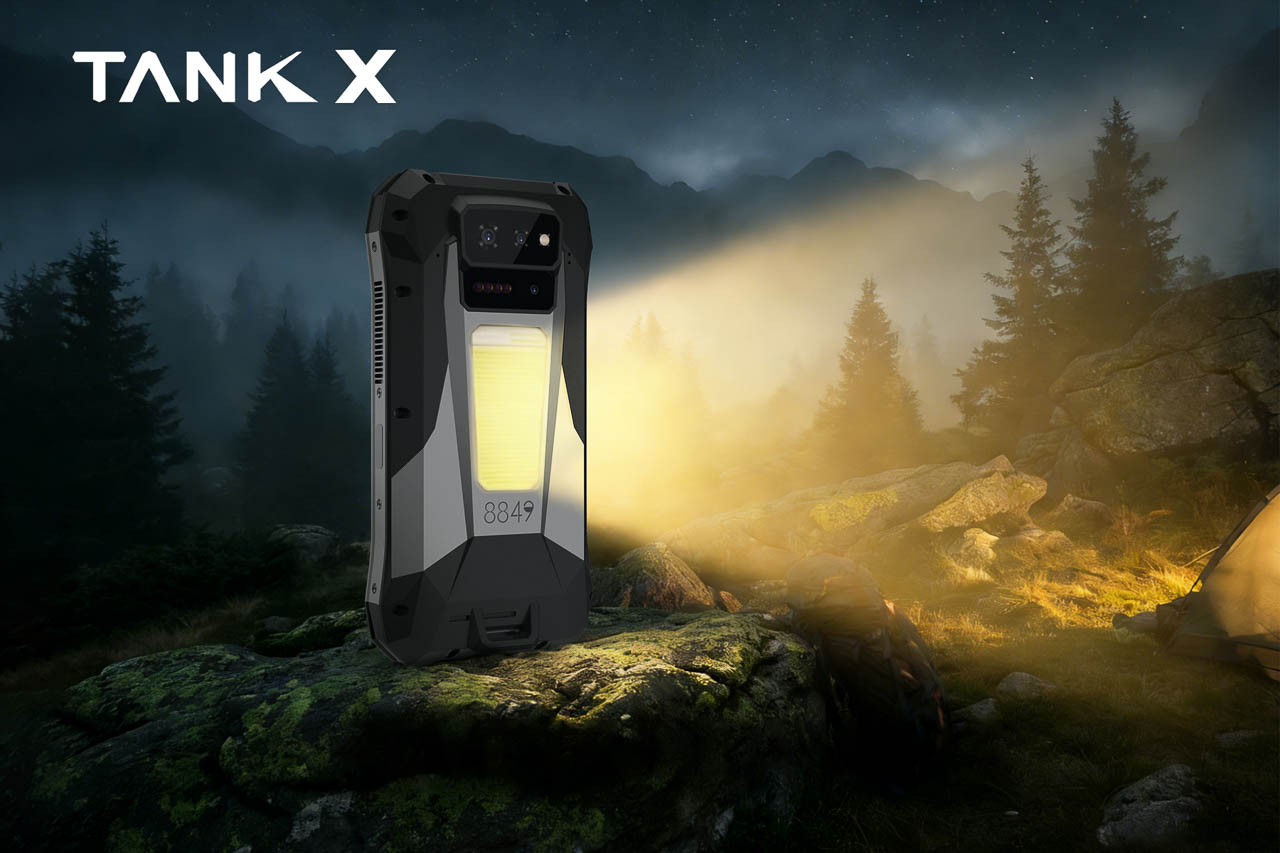
The RGB warning lights with four channel independent control add a dimension that feels genuinely thought through. Warning lights matter for roadside emergencies, trail marking, distress signaling, and coordinating in low visibility situations. Four channel control means you can run patterns, alternate colors, or maintain steady signals depending on the application. This isn’t decorative RGB lighting; it’s functional safety hardware with enough flexibility to adapt to whatever situation requires visual alerting.
Both lighting systems connect to the broader power architecture, drawing from that 17,600mAh reserve. Running the camping light for hours doesn’t become an anxiety inducing battery calculation when you’ve got laptop level capacity to work with.
Platform Performance Supports the Mission
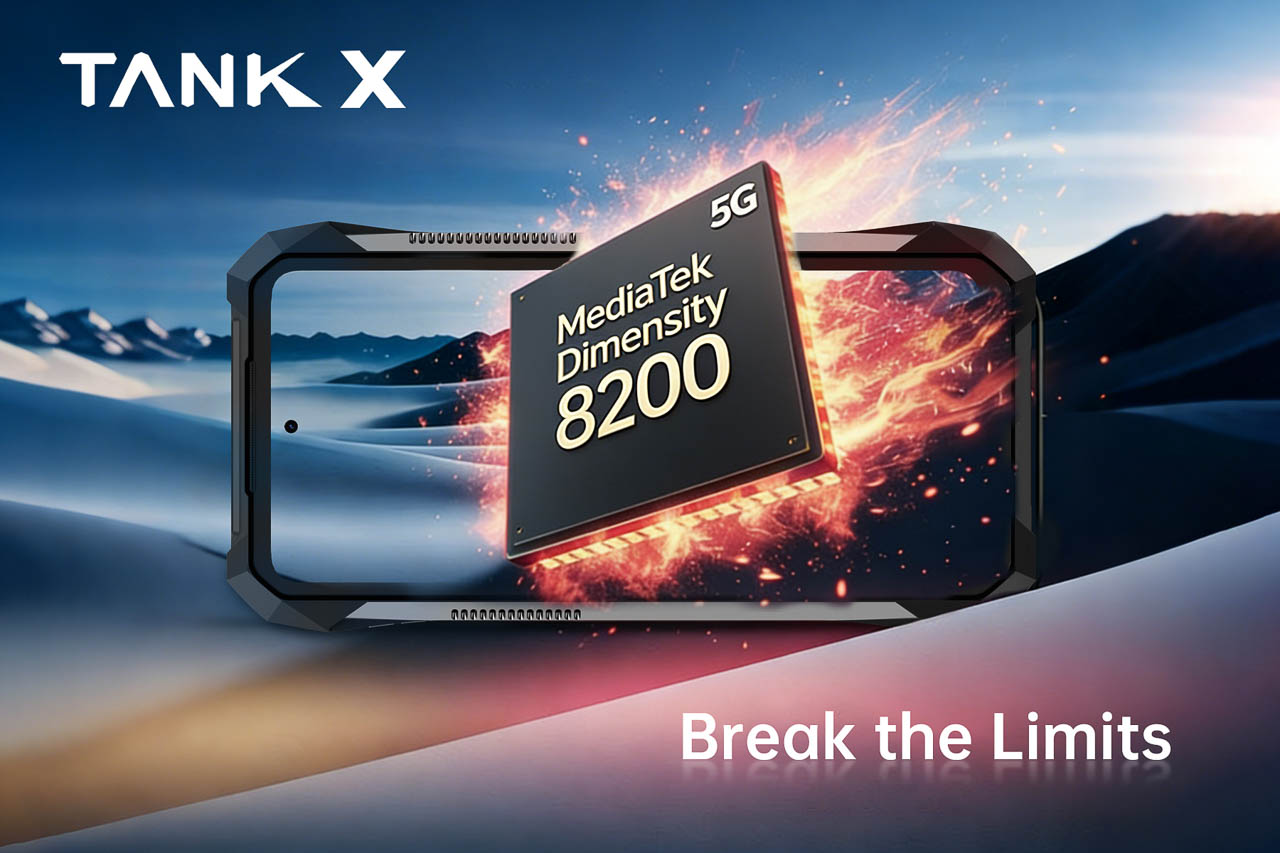
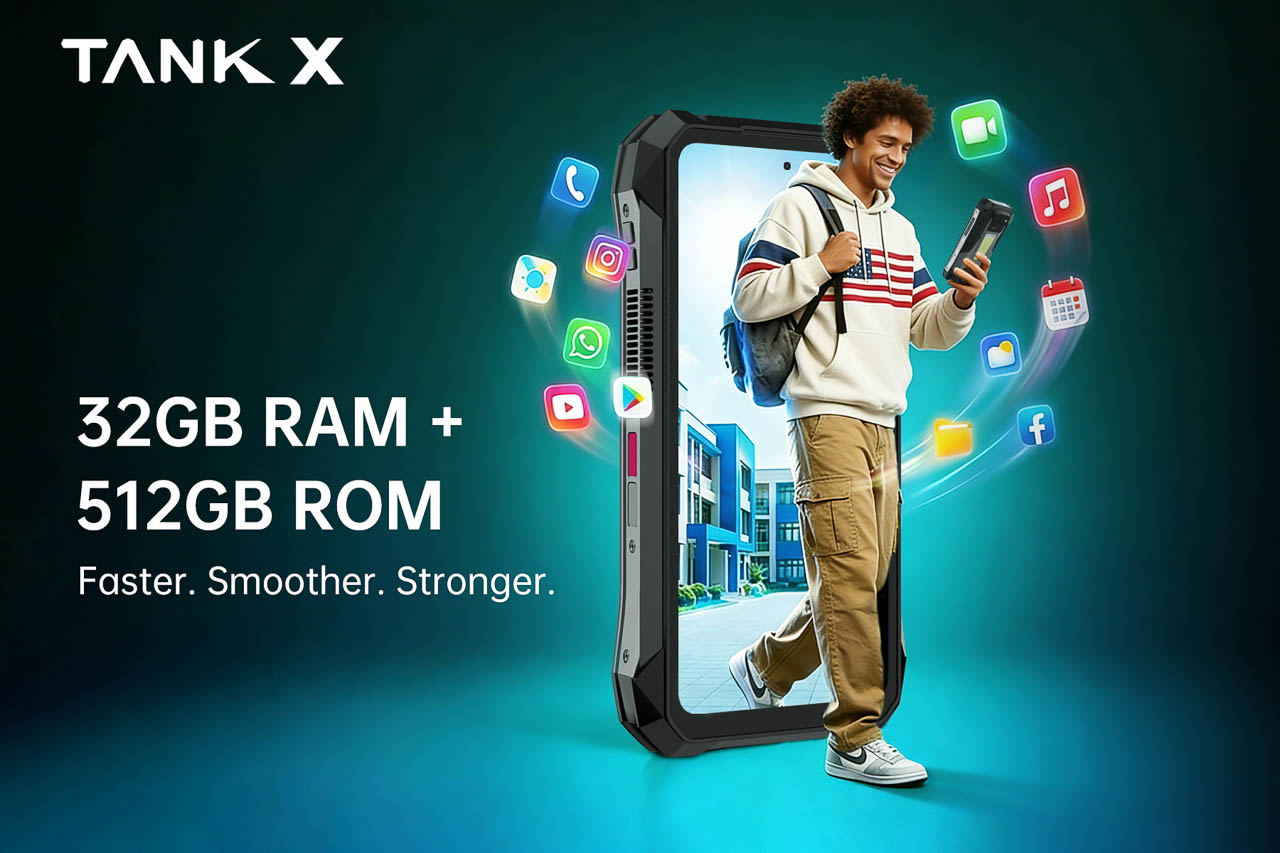
The Dimensity 8200 provides high performance headroom for projection, imaging, and multitasking workloads. It handles 1080p projector encoding, IR image processing, and power management simultaneously while still running maps, camera apps, and comms without stuttering. 16GB of RAM. 512GB storage. Enough headroom to capture days of footage and offline maps without constant file juggling.
The connectivity stack reflects global deployment expectations. 5G NR support across FDD and TDD bands including N77 and N78, comprehensive LTE coverage, and fallback through WCDMA to GSM. WiFi 6 with MIMO, dual band support, and Display capability for streaming content to larger screens when available. Bluetooth 5.4 handles peripherals and audio with current generation efficiency. The dual frequency GPS system using L1 and L5 with GLONASS, Galileo, and Beidou support delivers positioning accuracy that matters for navigation in challenging terrain.
NFC with full reader and card modes plus EMVCo certification means payment and access card functionality works properly. The infrared remote adds universal control for external equipment. FM radio reception from 65 to 108 MHz provides emergency broadcast access independent of cellular or internet connectivity. None of these features are headline grabbers, but collectively they represent a communication and control platform designed for operational flexibility.
The sensor array covers essential functions: gyroscope, accelerometer, and compass for orientation and navigation, ambient light and proximity for display management, barometer for altitude tracking. Side mounted fingerprint authentication provides security without compromising the device’s IP68 rated front surface. Dual PTT keys reinforce the tactical positioning, giving you hardware buttons for push to talk applications without hunting for software controls.
Audio performance through the Smart PA speaker system with its 3.5cc chamber delivers 97 dB output for notification audibility in noisy environments. The 3.5mm headphone jack survives where USB audio would require adapters. Dual analog silicone noise reduction microphones handle voice capture in challenging acoustic conditions.
Who Actually Needs This
Who actually needs this? Anyone who’s watched a phone die on day two of a backcountry trip. Anyone who’s wanted to see in true darkness without a flashlight giving away position. Anyone who’s squinted at a tiny screen trying to review a map that needed to be bigger. Night navigation. Campsite checks. Property walkarounds after dark. Off grid documentation where there’s no second chance to capture the shot. Field researchers. Overlanders. People who measure gear by what it can do, not what it costs.
At 750 grams, this isn’t a daily driver for city commuting. The 31.9mm thickness won’t disappear into slim pockets. The 580 nit peak brightness on the LCD display serves readability rather than OLED aesthetics. None of that matters if you’re evaluating the Tank X for what it actually is: expedition grade field equipment running Android 15, designed around integration rather than specification competition. The question isn’t whether it’s better than a standard flagship. It’s whether you need what it uniquely provides.

KAMRUI Pinova P2 Mini PC 16GB RAM 512GB SSD, AMD Ryzen 4300U(Beats 10110U/3500U/N150/N95,Up to 3.7 GHz)Mini Computers,Triple 4K Display/HDMI+DP+Type-C/WiFi/BT for Home/Business Mini Desktop Computers
(as of March 20, 2026 18:24 GMT -05:00 - More infoProduct prices and availability are accurate as of the date/time indicated and are subject to change. Any price and availability information displayed on [relevant Amazon Site(s), as applicable] at the time of purchase will apply to the purchase of this product.)
