Praxis-1 started life as a video model, and Runway has handed its weights to anyone who wants to run a robot with it. The release covers the model, the inference code and the fine-tuning code under Apache 2.0, and commercial use sits inside that license.
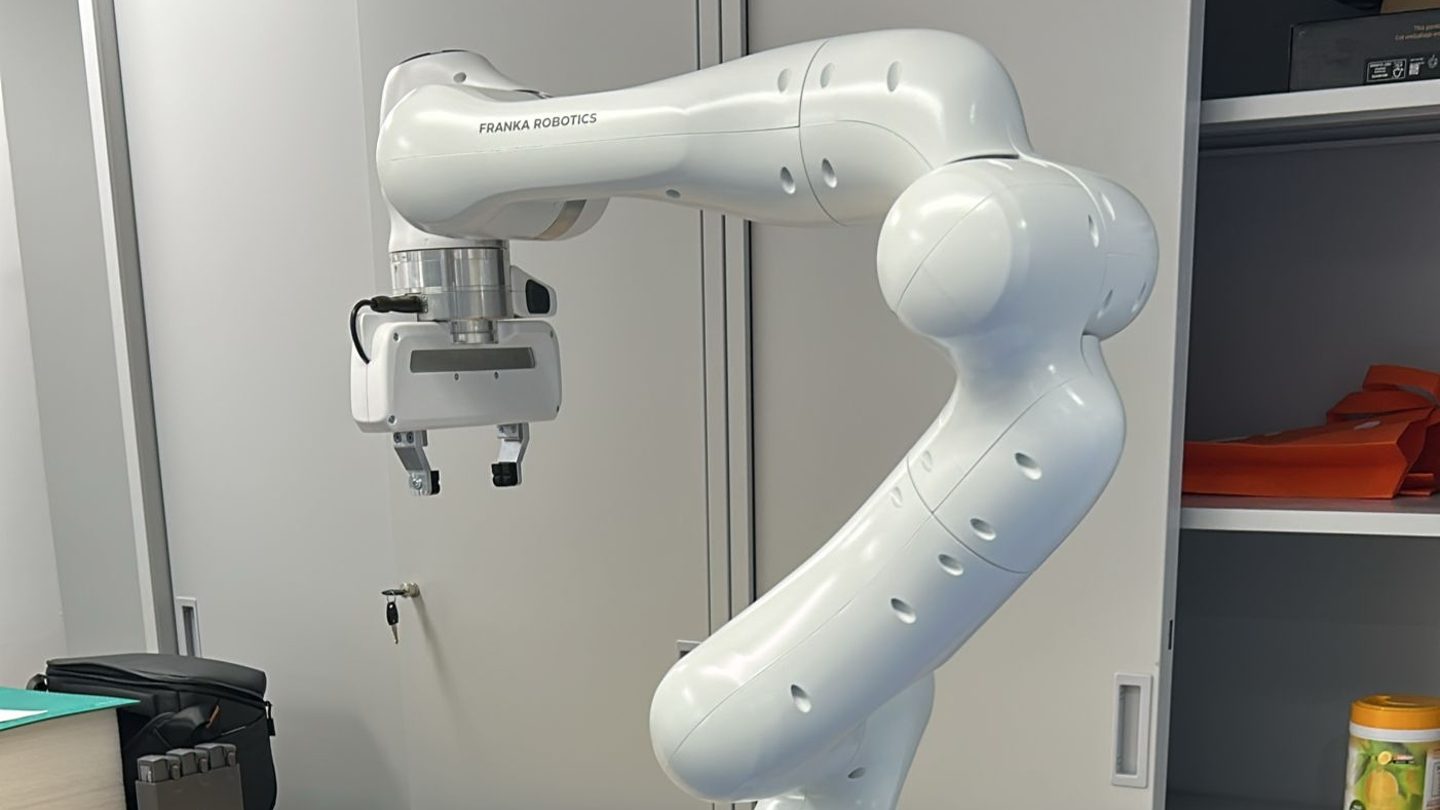
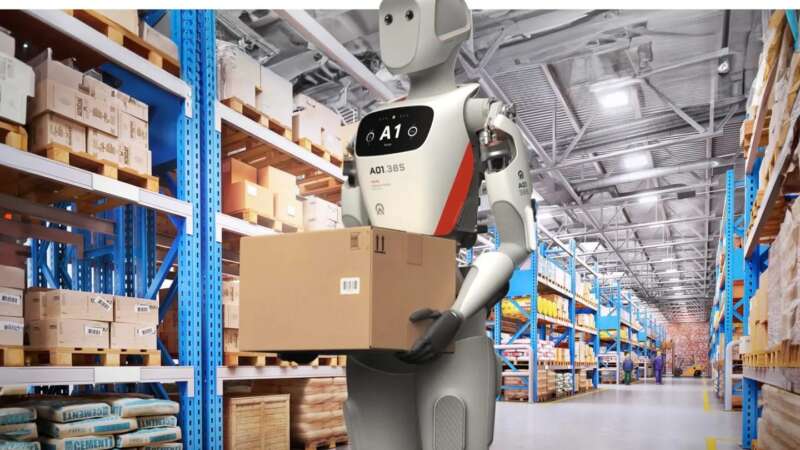
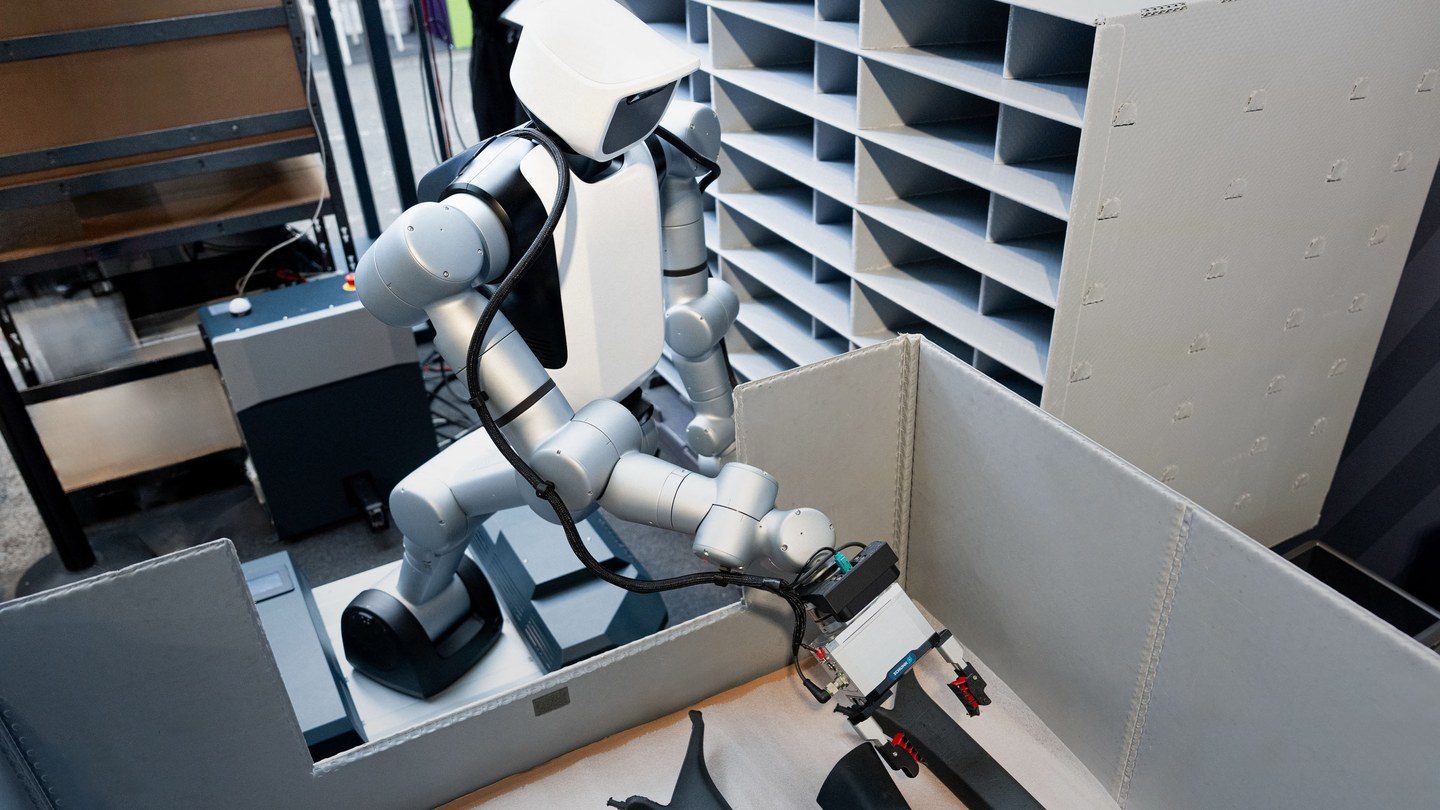
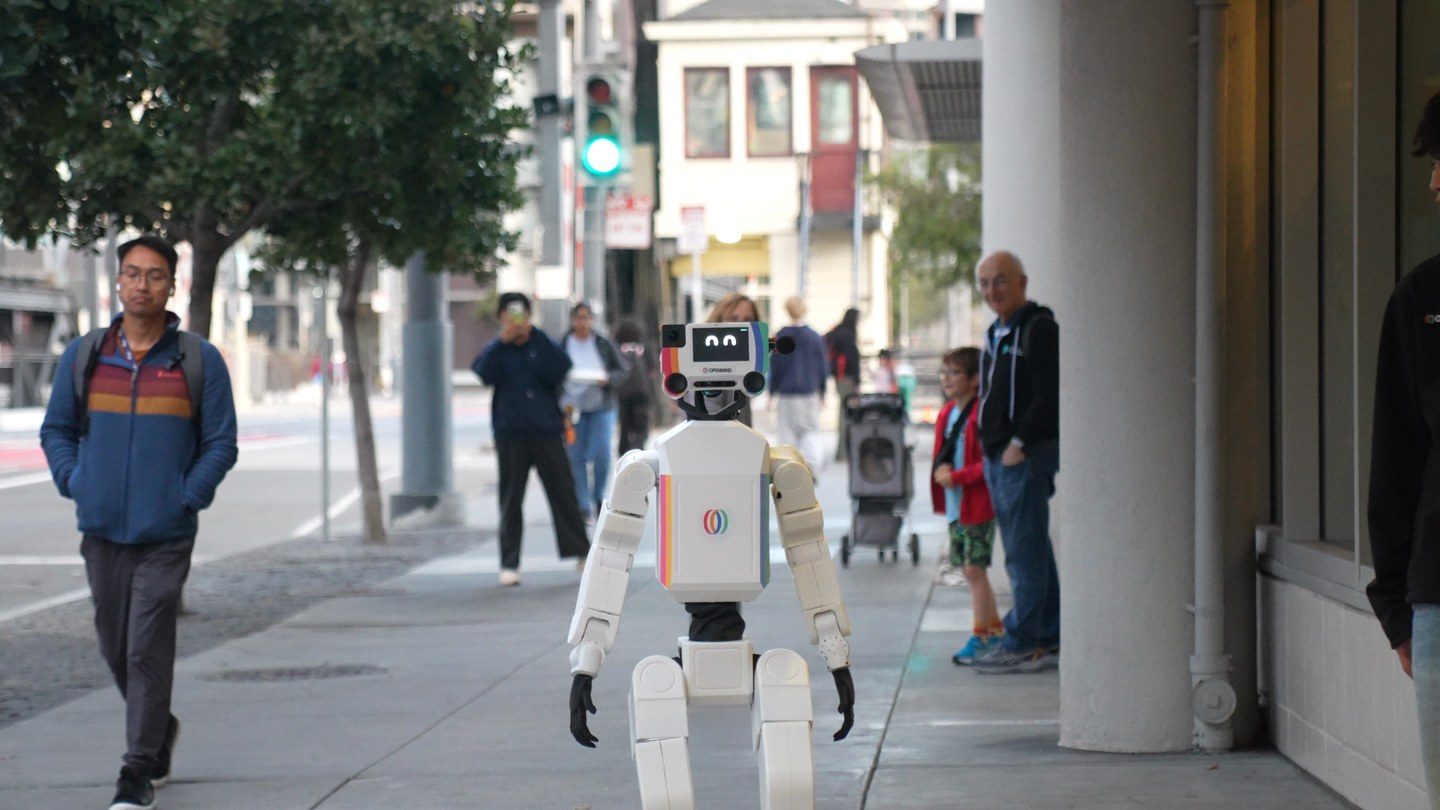
Runway introduced the model in September as its first world action model, built on the same large-scale video pretraining behind the company’s general world models. Three launch partners have run it on their own hardware since then. Noble Machines put it on a legged humanoid, Standard Bots ran it on a six-axis industrial arm, and Ultra set it to work on a dual-arm warehouse robot.
One checkpoint, three very different machines.
Video first, actions second
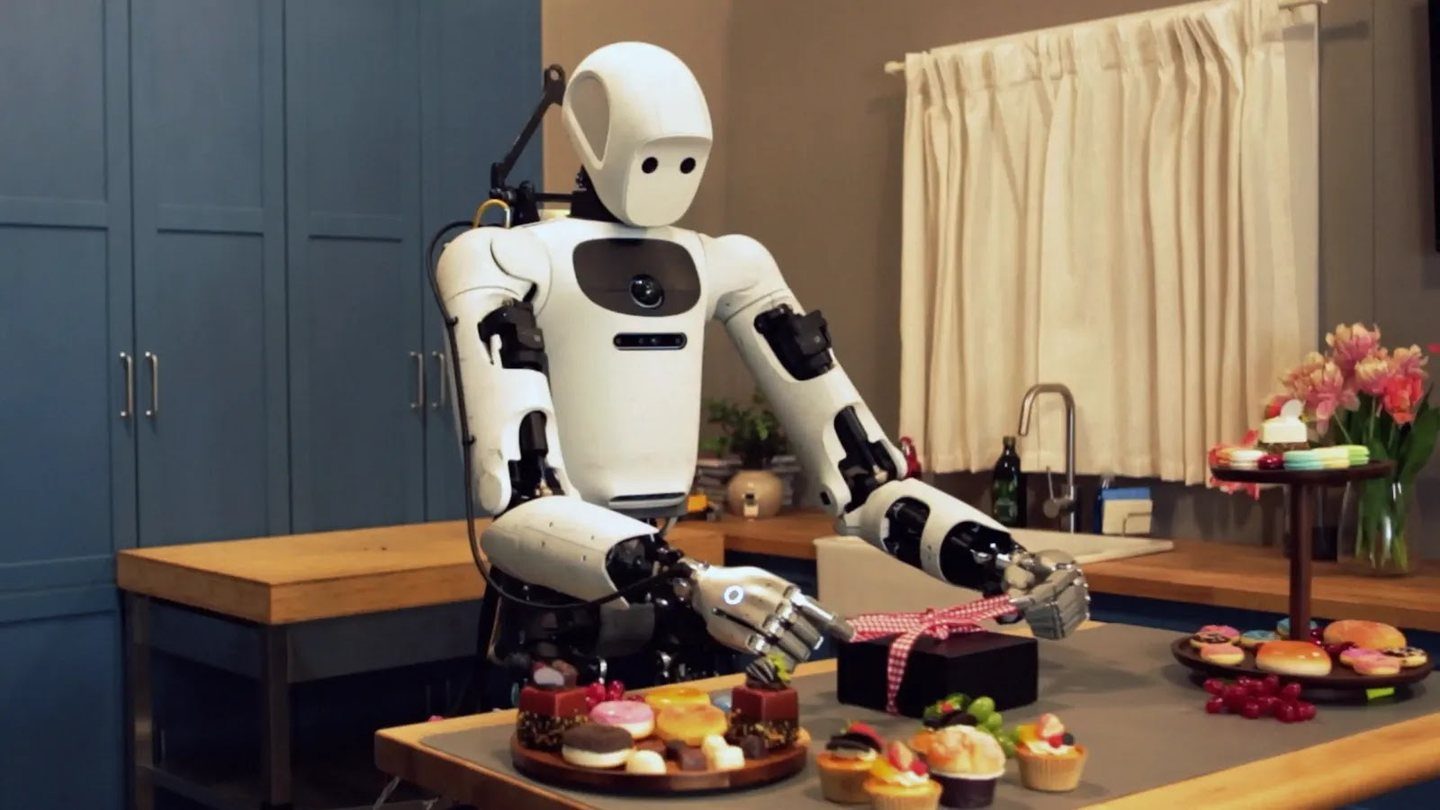
Each call takes an instruction, the latest camera frames and the robot’s current pose, and it returns a predicted chunk of future video alongside 1.6 seconds of actions. Runway counts that output as 24 action rows at 15 Hz. A small action expert reads the video model’s internal state as the backbone imagines what comes next, and thin per-robot projections translate each machine’s poses into a shared format.
On a single H100 server, Runway puts one call at about 0.55 to 0.6 seconds round trip, roughly a third of the motion the call returns. The robot executes the full chunk, sends back what its cameras saw, and calls again. Nothing waits on a cloud round trip to a closed service, because the weights sit on the operator’s own hardware.
The loop stays local.
Under the hood sits a 27B-parameter mixture-of-experts diffusion transformer, with a video backbone of 26.9B parameters and about 2.8B active for any token. The action expert adds a dense 16-layer transformer of about 314M parameters. Total size lands at 27.2B parameters and 54.4 GB in bf16, and Runway says the model runs on one 80 GB GPU.
What the reported numbers say
On RoboLab-120, Runway reports 46.2% success across 1,200 episodes for the DROID fine-tune, ahead of FLUX 3 Action at 42.9%, Cosmos3 Nano at 36.8% and π0.5 at 28.0%. Runway ranks the result first among world action models on that leaderboard, and first among open-weight robot foundation models. Every figure in that table comes from Runway’s own reporting, with data as of November 2026.
SimplerEnv tells a sharper adaptation story.
Fine-tuned on Google’s RT-1 robot, a machine absent from its training data, the model reaches 80.0% success in Runway’s SimplerEnv results, against 52.4% for the original RT-1 policy. For the Franka fine-tune, Runway trained on 277 hours of DROID episodes, drawn from a public dataset of demonstrations with exterior and wrist cameras.
Runway’s research also reports that web video matches teleoperated robot video as pretraining data for policy performance, which shifts the bottleneck toward how much general video a model can learn from.
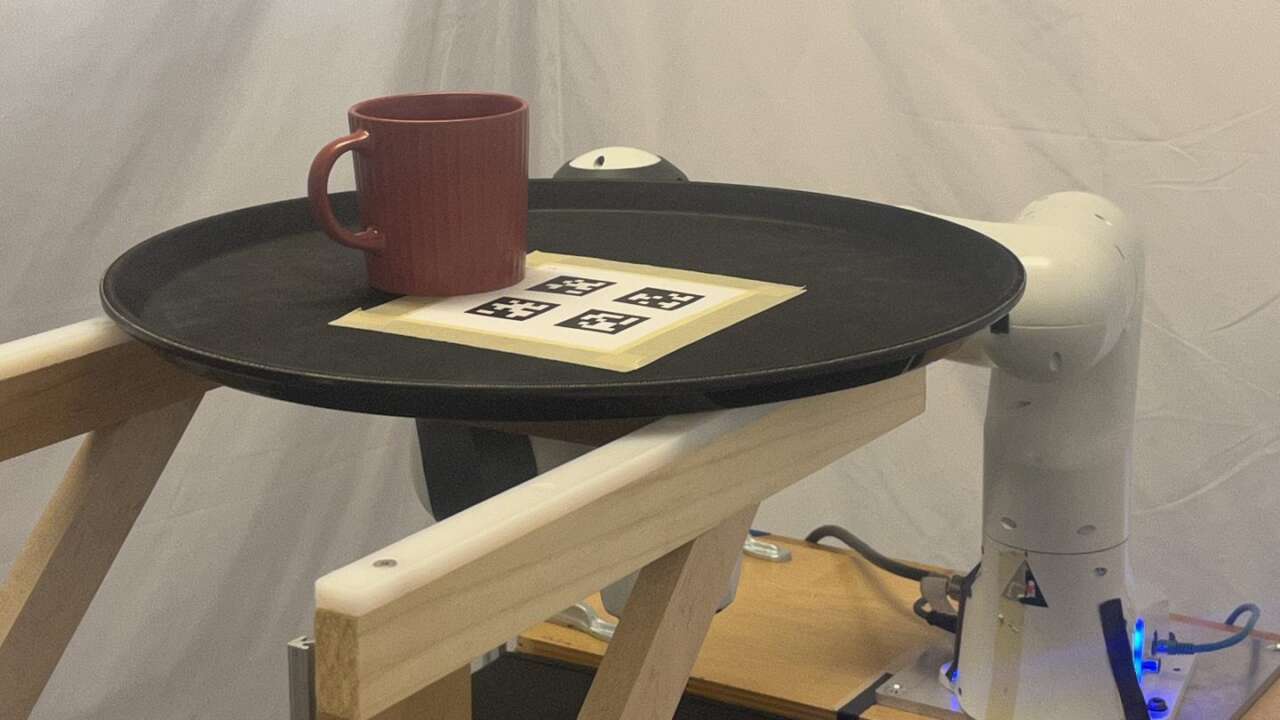
Everyday tasks in the demos need contact and coordination rather than simple pick-and-place. A bimanual YAM robot and a single Franka arm place a mug upside down on a tray, put an item in a box and close the lid, clear bottles into a bin and close a drawer. Runway shows every demo at normal speed, with no cuts to a faster replay.
Training compute shows the same pattern in Runway’s reported scaling tests, where five mid-training checkpoints fine-tuned on DROID scored 25.5%, 35.2%, 39.2% and then 41.2% on RoboLab-120 before the fifth leveled off at 41.2%. On the unseen RT-1 embodiment, the same checkpoint ladder lifted SimplerEnv success from 56.3% at the earliest point to 80.0% at the latest. More training helped both machines, seen and unseen.
Open weights change who gets to try
Downloads sit on GitHub and on Hugging Face with native LeRobot support, and serving runs through vLLM-Omni with hosted inference on Reactor for teams that don’t want to run their own stack.
Hardware support runs out of the box across NVIDIA silicon, from H100 and B200 data center cards to the RTX 5090 and RTX PRO 6000, down to Jetson Thor on the robot itself. Post-training for a specific domain also runs through NeMo Automodel tutorials linked from the release, for a guided first fine-tune.
Adaptation doesn’t demand a full retrain either.
LoRA fine-tuning lets a team adapt the model to its own embodiment, cameras and tasks without retraining every parameter, and full fine-tuning code ships alongside. At the small end, Runway reports the model can be fine-tuned on the low-cost SO-101, a hobbyist arm, and still solve a range of real-world tasks.
Runway frames the open release as shared ground for physical AI, building on its role as a founding member of the Cosmos Coalition alongside NVIDIA. Our earlier coverage of Google’s Gemini Robotics work shows the closed route a rival lab took with its own robot model.A 46.2% success rate still fails more tasks than it finishes, and every headline number here is Runway’s own measurement rather than an independent replication. That gap marks the limit of the announcement. Labs with a Franka arm, a YAM setup or an 80 GB GPU can now test the claim themselves, on their own benches, without asking anyone for access. The next result worth trusting is one another lab reproduces on its own hardware.