Smart glasses can display information without requiring users to reach for a smartphone, but not every pair is designed for the same tasks. Reading translations, following directions, and recording hands-free video require different capabilities from watching videos or viewing colorful graphics. Choosing between them means considering how the display works, what the glasses can show, and whether those features justify the price.
Price: CNY 3699 (About $555)
Where to Buy: Rokid
Translation prompts and full-color video ask different things of smart glasses. Rokid’s Glasses 2 keeps a green Micro-LED display for quick prompts like translation and navigation, while Color adds full-color Micro-LED for images, video, and richer graphics. Both debuted at Rokid Jungle on October 27, 2026.
Rokid Glasses 2 Keeps Information Simple
Rokid Glasses 2 retains a monochrome green Micro-LED waveguide display with a resolution of 480 × 380 pixels, a 25-degree field of view, and a rated brightness of 1,500 nits. The display is intended for information such as translated conversations, navigation prompts, meeting notes, and AI responses.
For travelers, translated text near eye level could reduce the need to consult a phone during conversations. Navigation instructions offer a similar advantage when walking through unfamiliar places. The emphasis is on presenting information that users can read quickly rather than filling their view with elaborate graphics.
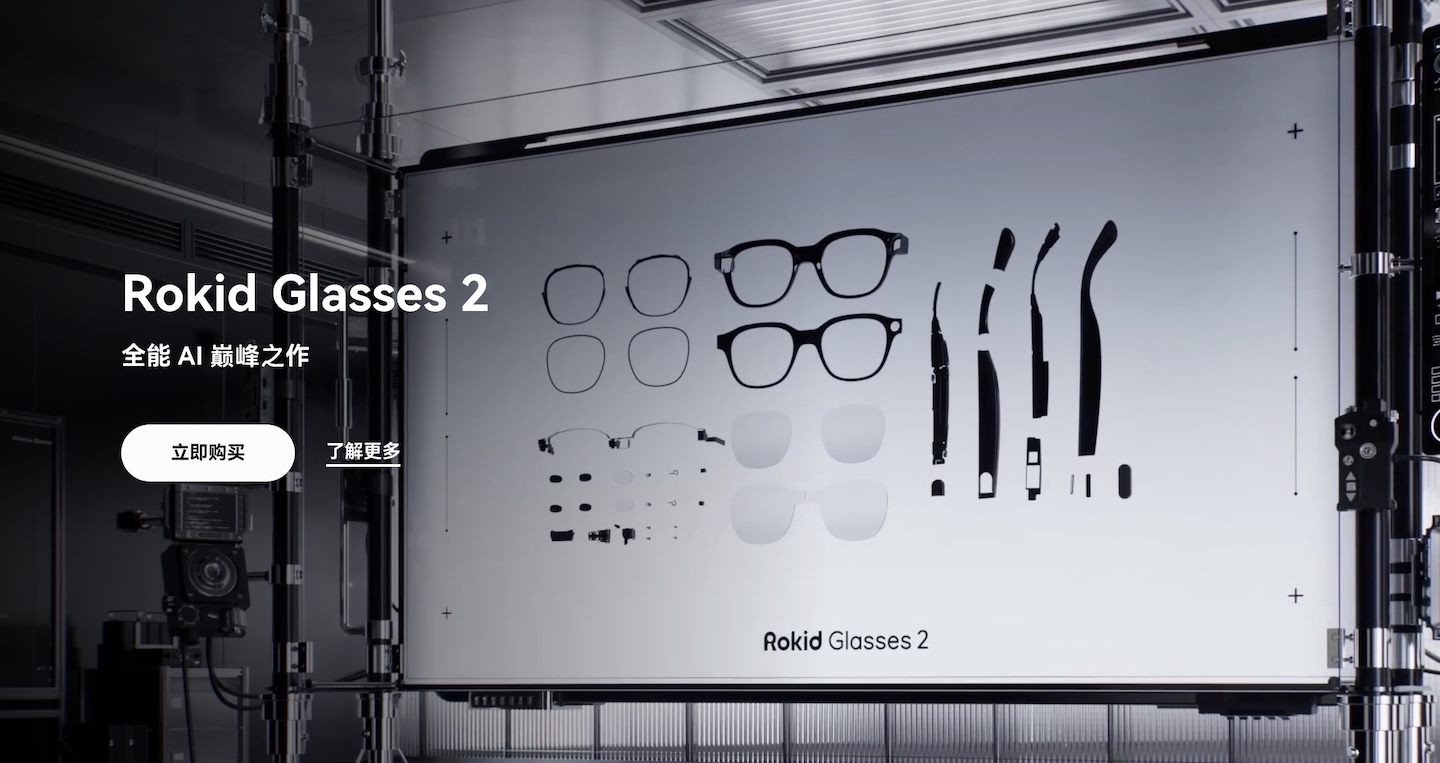
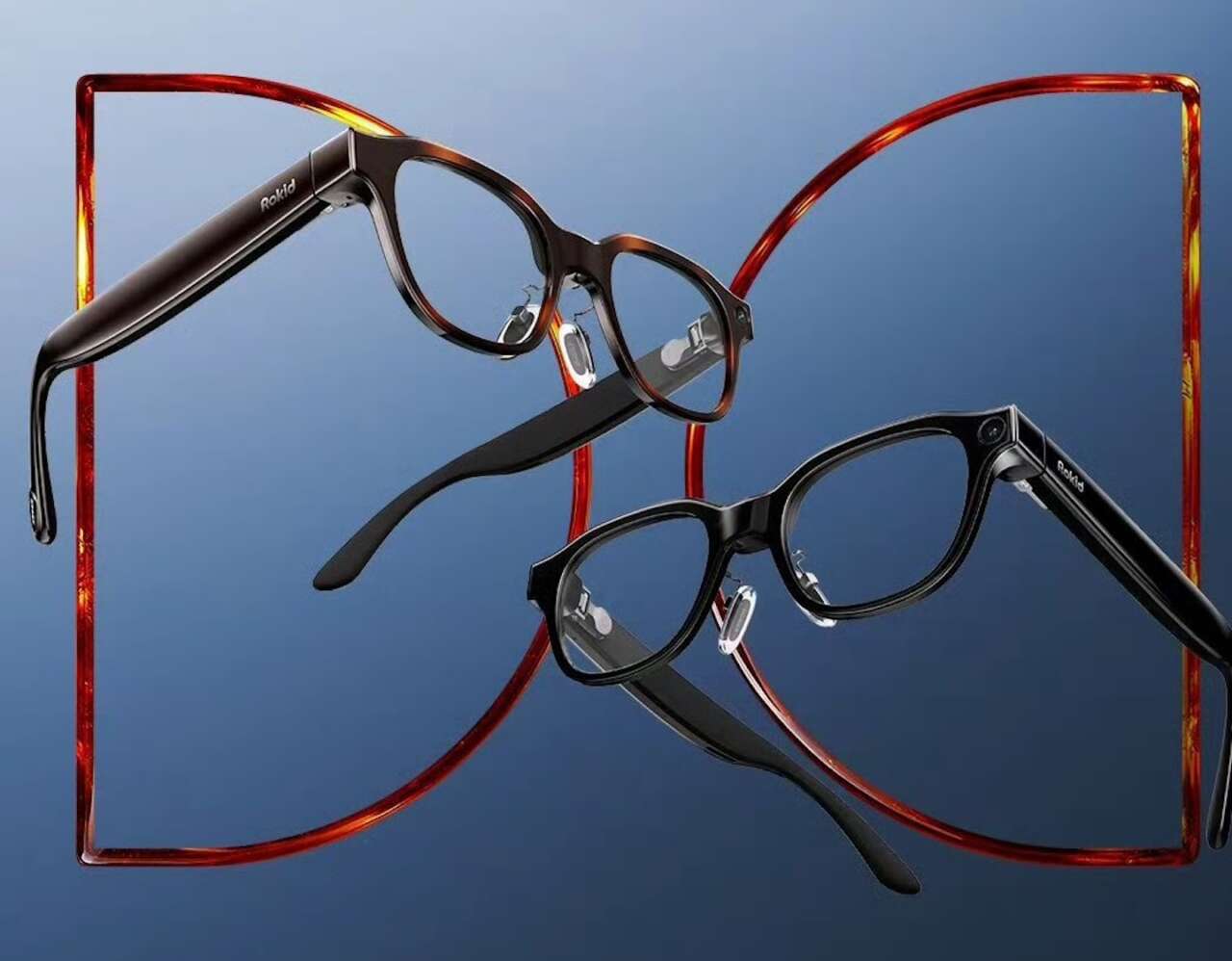
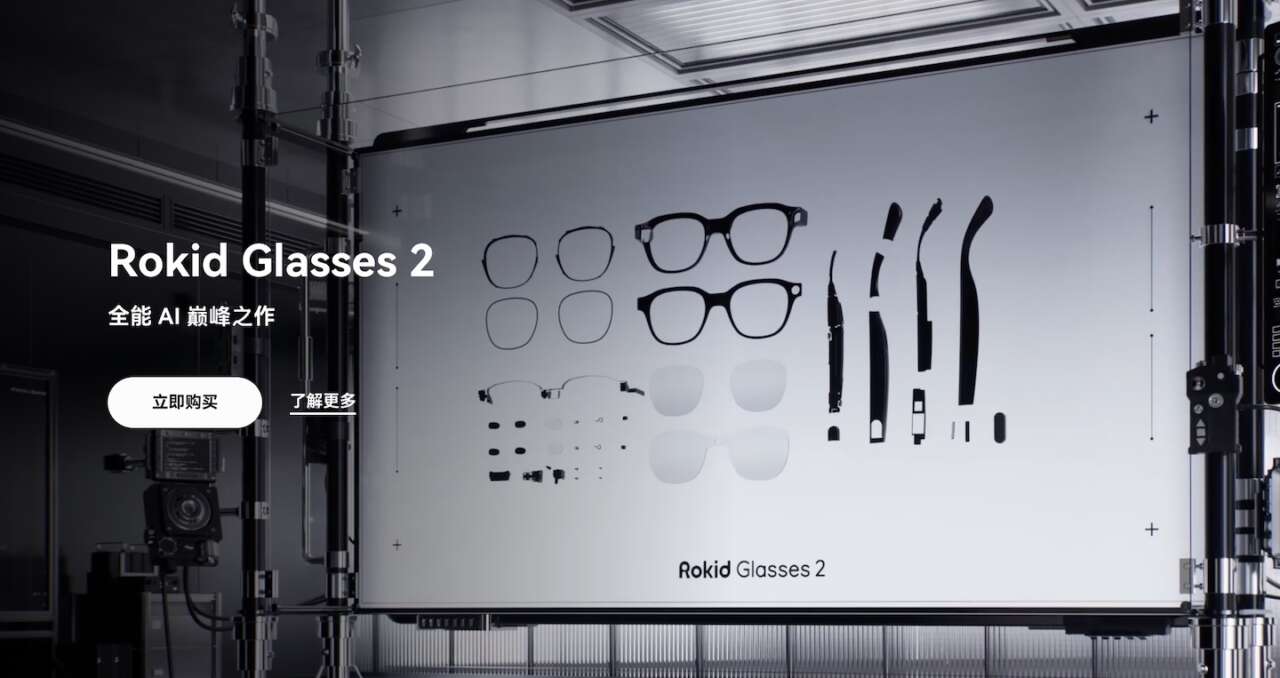
The redesigned frame has flexible temples that open 22% wider than those of the previous generation. Rokid has also revised the nose pads to improve fit.
The optical module is 30% smaller. Rokid reports 70% lower reflectance and 60% fewer rainbow artifacts, figures that describe the claimed design improvements rather than independently measured results.
The glasses retain IPX4 splash resistance and support magnetic prescription lens attachments, making them more adaptable for users who need vision correction.
Camera and Audio Upgrades Expand Everyday Use
Rokid Glasses 2 pairs Qualcomm’s Snapdragon AR1+ Gen 1 platform with a BES2800BP processor, using Android and RTOS to handle different workloads.
A 12-megapixel camera supports video recording at up to 4K at 30 frames per second or 2K at 60fps. The new video “super night” processing is intended to improve footage captured in darker environments.
Hands-free recording could be useful for documenting travel, demonstrations, or activities where holding a smartphone is inconvenient. However, resolution alone does not establish image quality, and the announced specifications cannot determine stabilization or low-light performance.
Audio hardware includes upgraded speakers with Dolby Audio support, four omnidirectional microphones, and a bone-conduction microphone. These support calls, voice commands, and speech-related AI functions, though performance in noisy environments remains unverified.
Battery capacity increases to 263mAh, approximately 25% more than the previous generation. According to Rokid’s launch figures, a fully charged second-generation charging capsule and charging case can together recharge the glasses approximately six times. Actual endurance will depend on camera, display, and AI usage.
Rokid Color Brings Full-Color Content to the Lenses
Rokid Color introduces a full-color Micro-LED optical system capable of displaying images, videos, and graphical interfaces. Unlike Glasses 2, which emphasizes text and simple information, Color is intended to support more visually detailed content.
Color uses a custom 0.16cc Micro-LED optical engine and weighs about 55 grams without nose pads. Its reported gamut volume is 167% of sRGB, with 100% sRGB coverage.
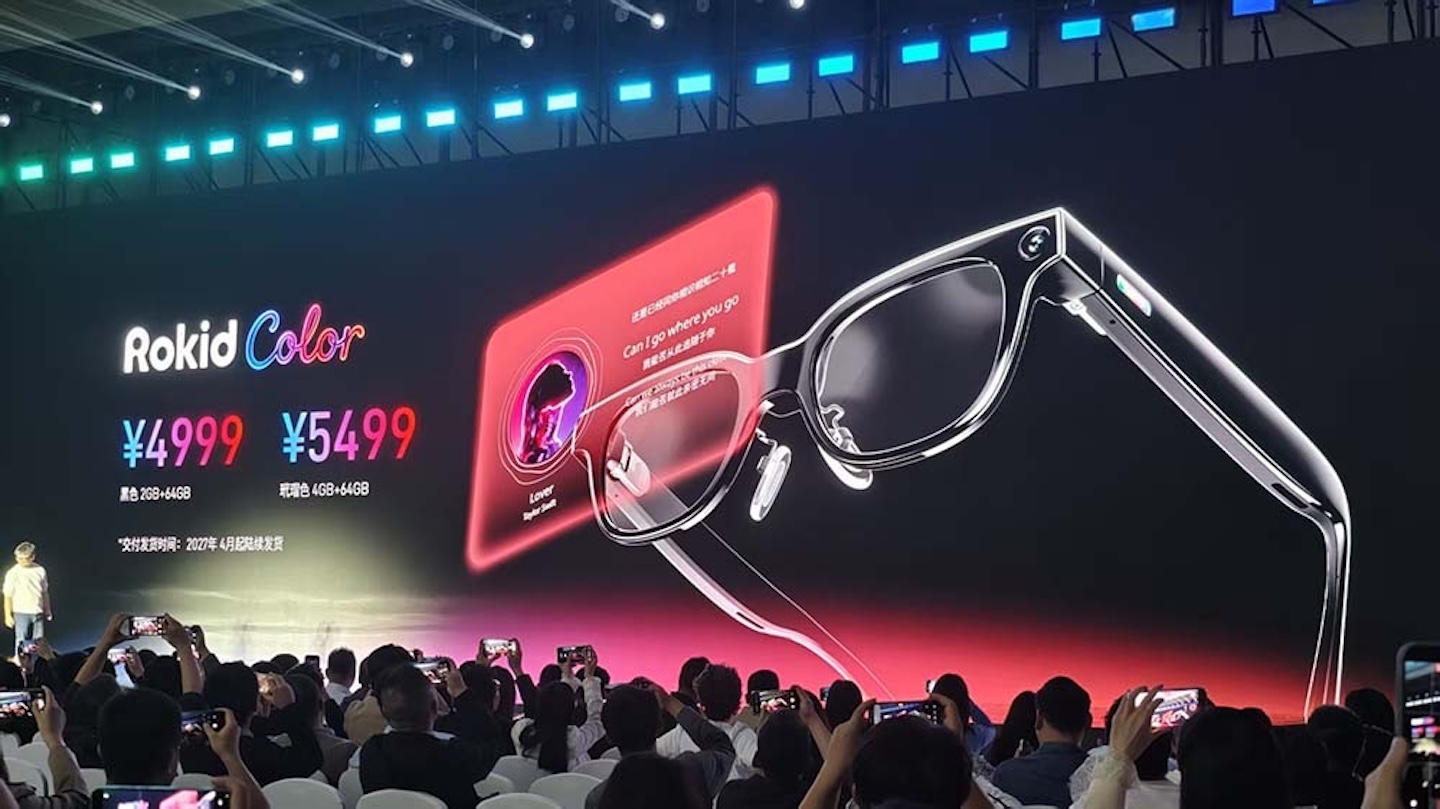
Color can help distinguish different elements within an interface, particularly when presenting images or graphical information. It also makes the glasses more suitable for media viewing and supported entertainment applications.
According to launch coverage from VR Tuoluo, Rokid Color has a 25-degree field of view, a 500 × 380 resolution, and a maximum brightness of 1,000 nits. The report also lists Qualcomm AR1+ Gen 1 and BES2800 processors, a 263mAh battery, and a 12-megapixel camera. Those specifications provide a useful comparison with Glasses 2, but they do not establish real-world image quality or battery life.
Rokid Ring Adds Gesture-Based Interaction
Rokid also introduced Rokid Ring, a separate accessory designed to control compatible smart glasses through touch and finger gestures. It provides another way to navigate supported content without relying entirely on voice commands or controls built into the frames.
Gesture input could be useful in public places or meetings where spoken commands would be inconvenient. Rokid Color also supports controls on its temples, voice interaction, and compatible wearable devices.
The ring incorporates heart-rate, blood oxygen, temperature, and sleep monitoring. These are general wellness features, and their presence does not establish medical-grade measurement accuracy.
Rokid Ring is priced at CNY 1,699 in China and sold separately. Buyers interested in gesture controls should account for the additional cost rather than assume it comes with either pair of glasses.
Pricing and Availability
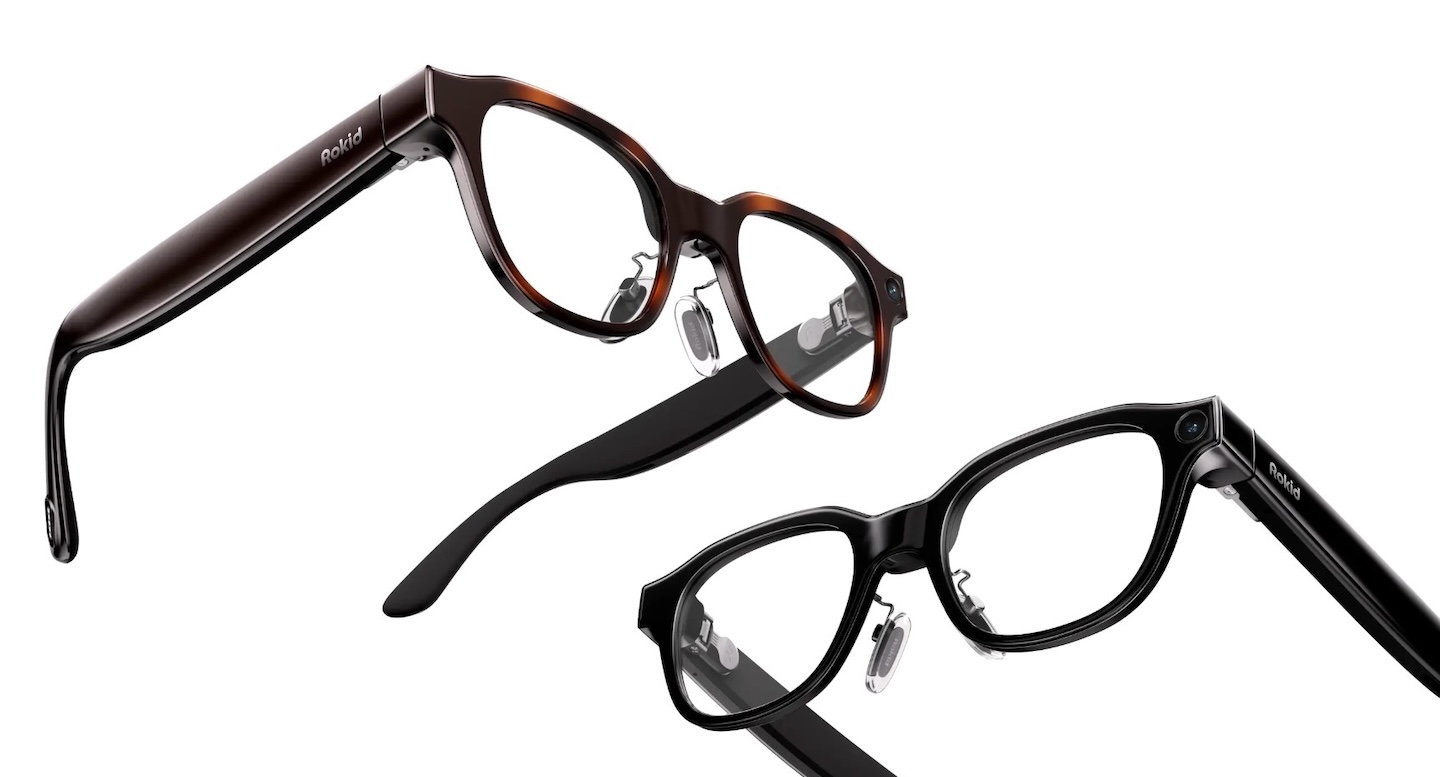
Rokid Glasses 2 starts at CNY 3,699 for the black version, while the tortoiseshell version costs CNY 3,849. Preorders opened in China on October 27, with shipping scheduled for November 11, 2026.
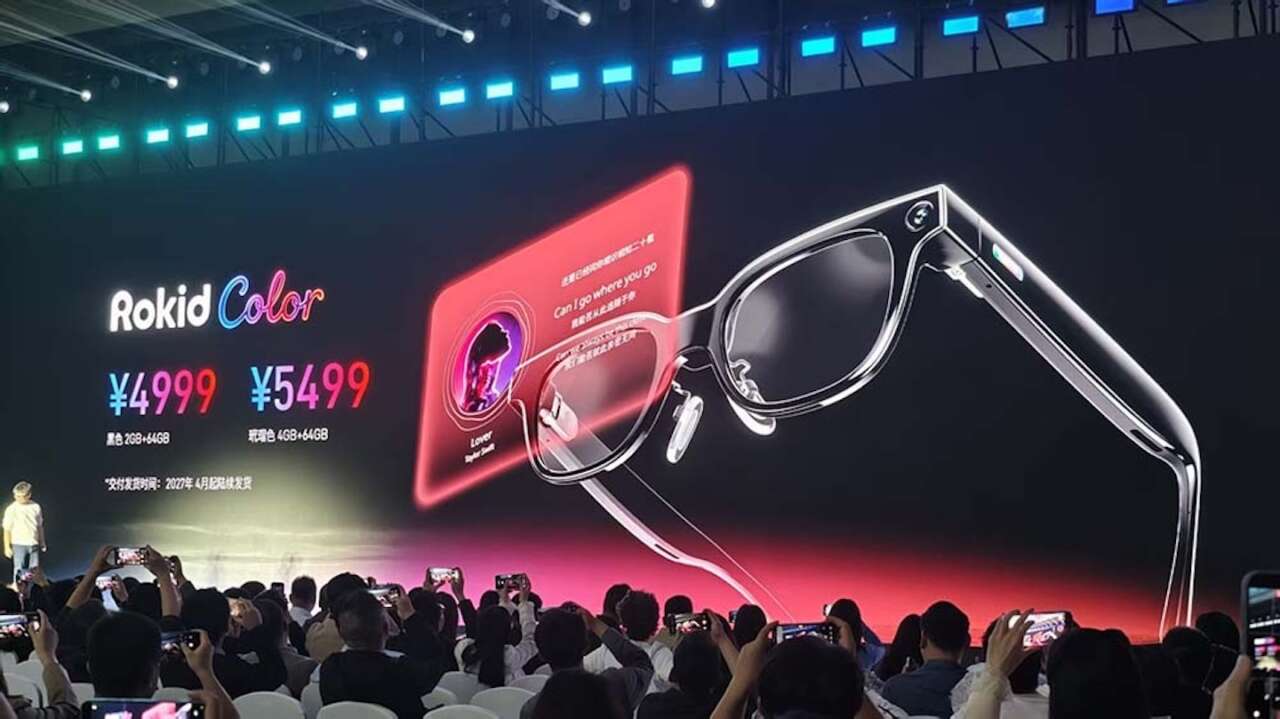
Rokid Color starts at CNY 4,999, with the tortoiseshell version priced at CNY 5,499. Rokid’s reported target is April 2027 for deliveries, contingent on completing the product ecosystem, so treat that timing as a target rather than a firm ship date.
Reporting says Rokid expects to take the new products into overseas markets via CES 2027. Specific global models, U.S. retail prices, and release dates have not been confirmed, so the Chinese prices should not be treated as American launch pricing.
How the Two Models Compare
Rokid Glasses 2 is the more focused option for buyers interested in translation, navigation, AI assistance, and hands-free recording. Its hardware updates support tasks that benefit from quick access to information without requiring a full-color display.
Rokid Color is intended for buyers who want images, videos, and richer graphical content within their field of view. Its higher price and later release make it worth evaluating once more complete specifications and independent performance information become available.
Price: 4,999 (~$750)
Where to Buy: Rokid
For everyday information and productivity, Glasses 2 offers the clearer purpose. Rokid Color has greater potential for visual applications, but its value will depend on the content and software available when it reaches buyers.