You can spend thousands upgrading an amplifier, DAC, turntable, or speakers and still be disappointed by the sound. Before replacing another component, look at the room.
Walls, floors, furniture, speaker placement, and your listening position all affect what reaches your ears. Room modes can make bass boom in one spot and nearly disappear in another; early reflections can blur clarity and stereo imaging.
A better hi-fi listening room starts with free adjustments. Position the speakers and your chair, listen, then measure the results before deciding whether acoustic treatment or room correction is needed.
Start With the Room You Have
A dedicated room gives you more freedom, but an office, bedroom, den, or living room can still become a good listening space.
Low frequencies are especially sensitive to room dimensions and listening position. Standing waves create peaks and nulls in different locations, which is why moving a chair or speaker can change the bass dramatically without changing any electronics.
Avoid chasing a supposedly perfect room ratio. Real spaces have windows, doors, furniture, openings, and different construction materials. Measuring your actual room is more useful than assuming an idealized rectangle predicts exactly how your system will sound.
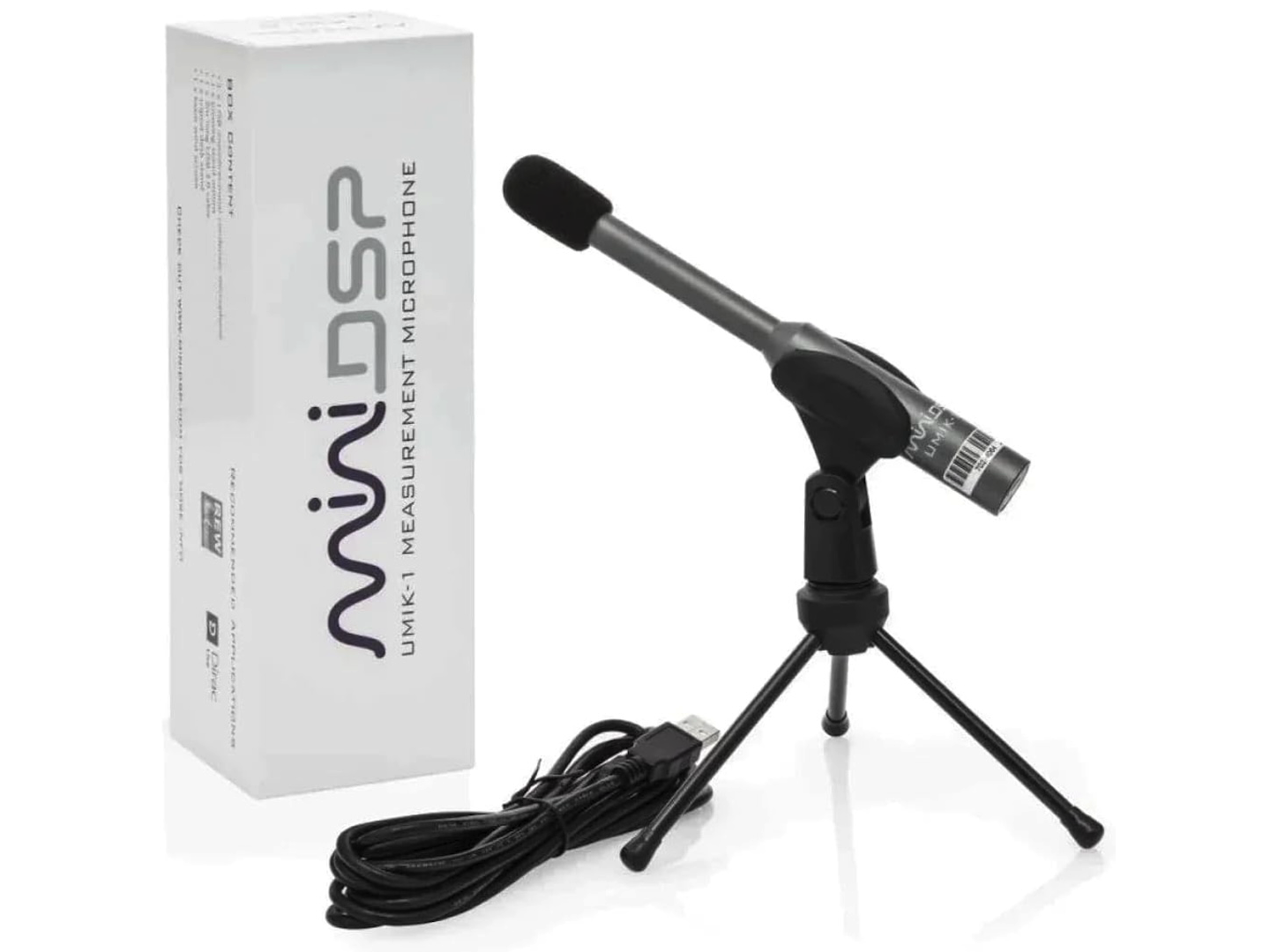
Relevant product: miniDSP UMIK-1
Price: $149.95
Where to Buy: Amazon
The UMIK-1 is a USB measurement microphone supplied with an individual calibration file. Its calibrated response is specified from 20 Hz to 20 kHz. Pair it with the free Room EQ Wizard (REW) software to compare speaker and chair positions, investigate bass problems, and check whether a change helped rather than relying on auditory memory alone.
Get Speaker Placement Right First
Speaker placement should come before acoustic accessories.
Nearby walls affect bass response through boundary interaction and reflected sound. Moving speakers farther from the wall is not always the answer: Genelec recommends relatively close front-wall placement for many of its monitors to reduce certain cancellation dips. Start with the guidance for your particular speakers rather than applying a universal wall-distance rule.
For stereo listening, arrange the speakers and listening position in a roughly equilateral triangle as a starting point. Then experiment with speaker spacing, toe-in, and distance from nearby surfaces. Small changes can affect bass response, image focus, and tonal balance.
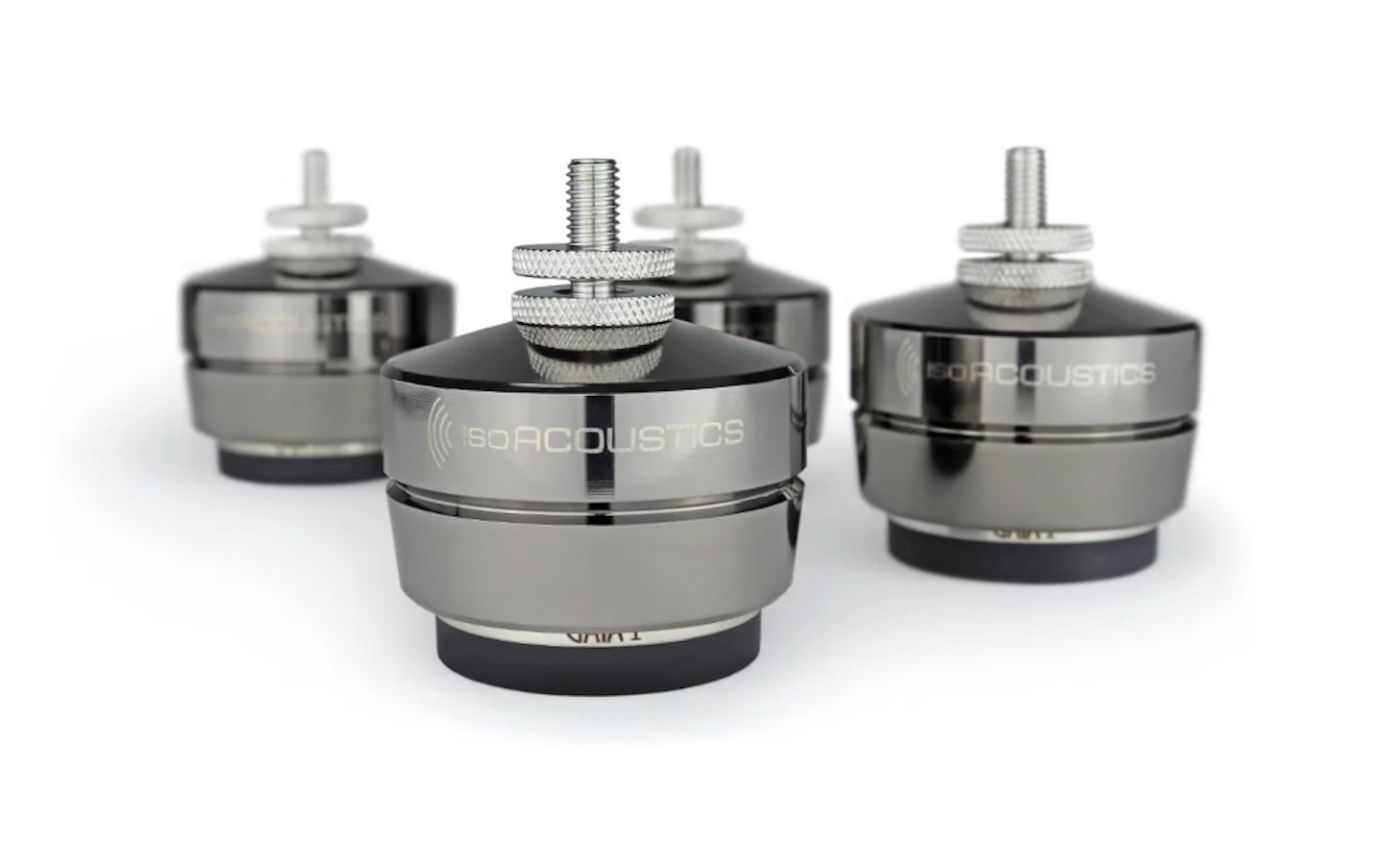
Relevant product: IsoAcoustics GAIA
Price: $229.99
Where to Buy: Amazon
GAIA feet replace compatible factory spikes or feet on floorstanding speakers and subwoofers. Different versions support different speaker weights. IsoAcoustics says their isolation design reduces vibration transfer and improves clarity and openness, but the audible result will depend on the speakers and floor.
Consider them a possible finishing step, not a substitute for getting speaker placement right.
Move the Listening Position Too
The speakers are only half the equation. Where you sit determines the combination of direct sound, reflections, peaks, and cancellations you hear.
Sitting directly against a rear wall can expose you to strong reflections and boundary effects. The exact center of a rectangular room can also be troublesome for certain room modes. Neither observation produces a seating position that works in every room, so avoid treating rules such as the often-repeated “38% rule” as a final answer.
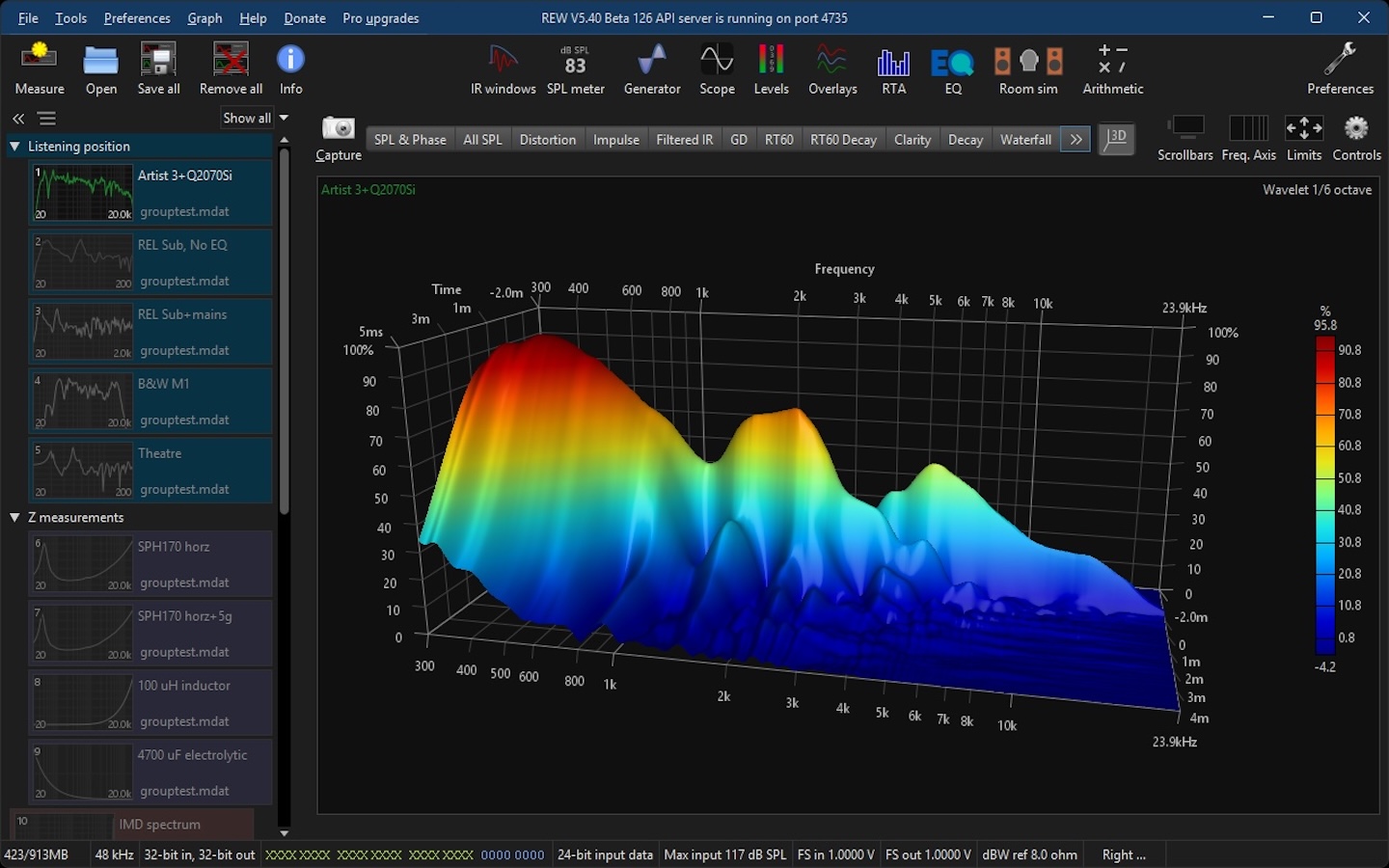
Setup tool: UMIK-1 and REW (Room EQ Wizard)
Price: TBD
Where to Download: REW
Measure at several realistic chair positions and compare the results. Moving the chair may solve part of a bass problem without buying another component.
Control Early Reflections
Once the basic speaker-and-chair geometry works, investigate early reflections.
The mirror method offers a practical starting point: sit in your listening chair while someone moves a mirror along a side wall. When you can see a speaker in the mirror, you have found an approximate first-reflection location. Reflections occupy an area rather than one pinpoint spot, but the method helps identify where treatment might be useful.
Broadband absorption in these areas can reduce reflected energy and make the direct sound more prominent.
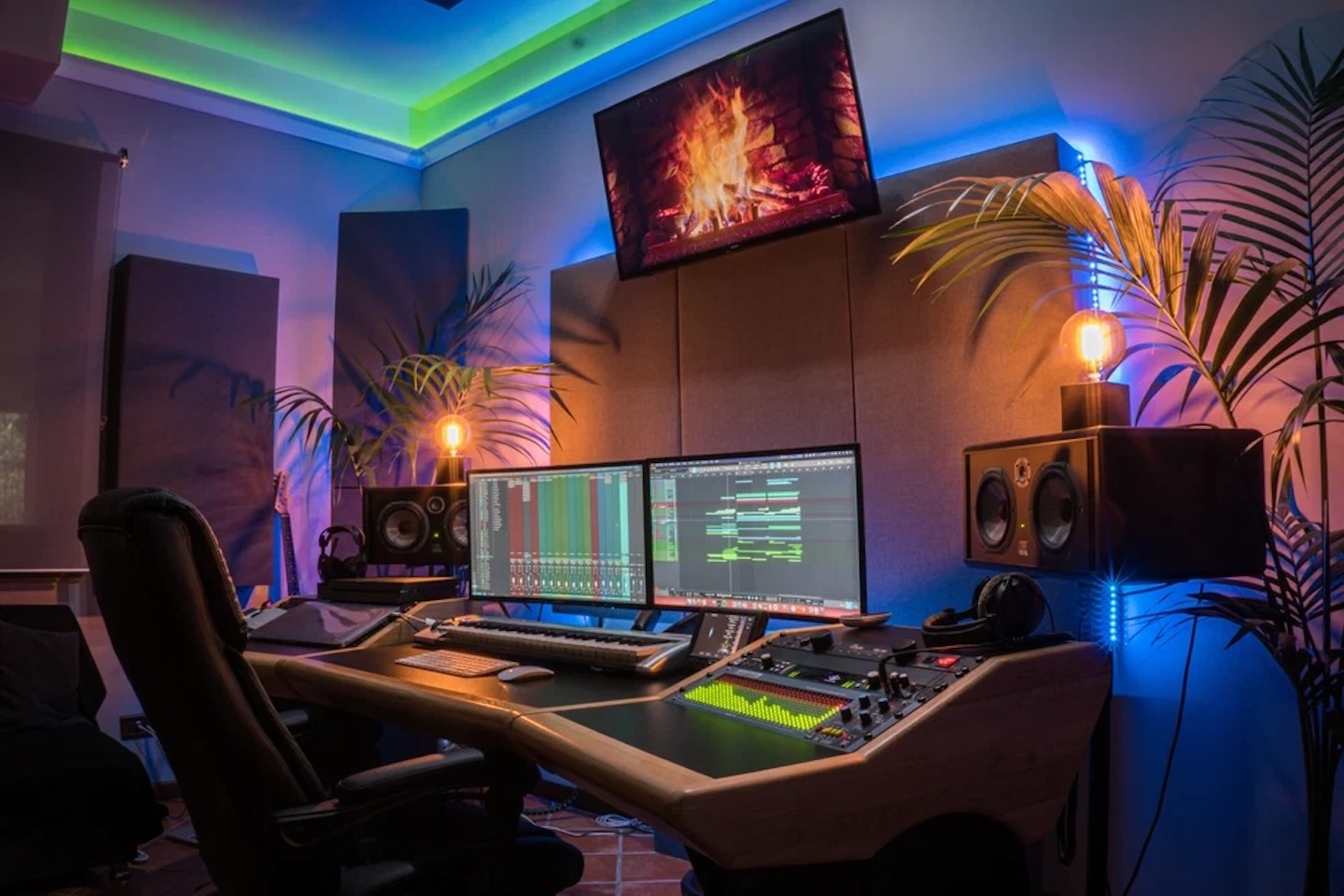
Relevant product: GIK Acoustics FlexRange Bass Trap Panel (5.25-inch model, labeled 90 Hz)
Price: From $119
Where to Buy: GIK ACOUSTICS
GIK lists the 5.25-inch-deep FlexRange panel as its 90 Hz version. That label does not mean one panel will guarantee flat response at 90 Hz in your room. Its usefulness still depends on placement and the problem you are trying to address.
Treat Bass With Enough Depth
Low-frequency problems are often harder to control because long bass wavelengths and room modes create substantial variation from place to place.
Thin foam is not a substitute for substantial bass treatment. Thicker absorbers can work farther into the low frequencies, but the right amount and placement depend on what your measurements reveal. Corners can be useful locations for substantial bass absorption, depending on the room and the treatment.

Relevant product: GIK FlexRange Bass Trap Panels
Price: From $119
Where to Buy: GIK ACOUSTICS
GIK offers FlexRange versions measuring 5.25, 7.3, and 9.3 inches deep, associated with low-end control around 90, 70, and 50 Hz, respectively. Treat those figures as product guidance, not promises about your finished in-room response. Measure, treat, and measure again.
Know When Diffusion Makes Sense
Absorption and diffusion do different jobs. Absorption reduces reflected acoustic energy; diffusion scatters reflections in multiple directions, helping retain a sense of spaciousness.
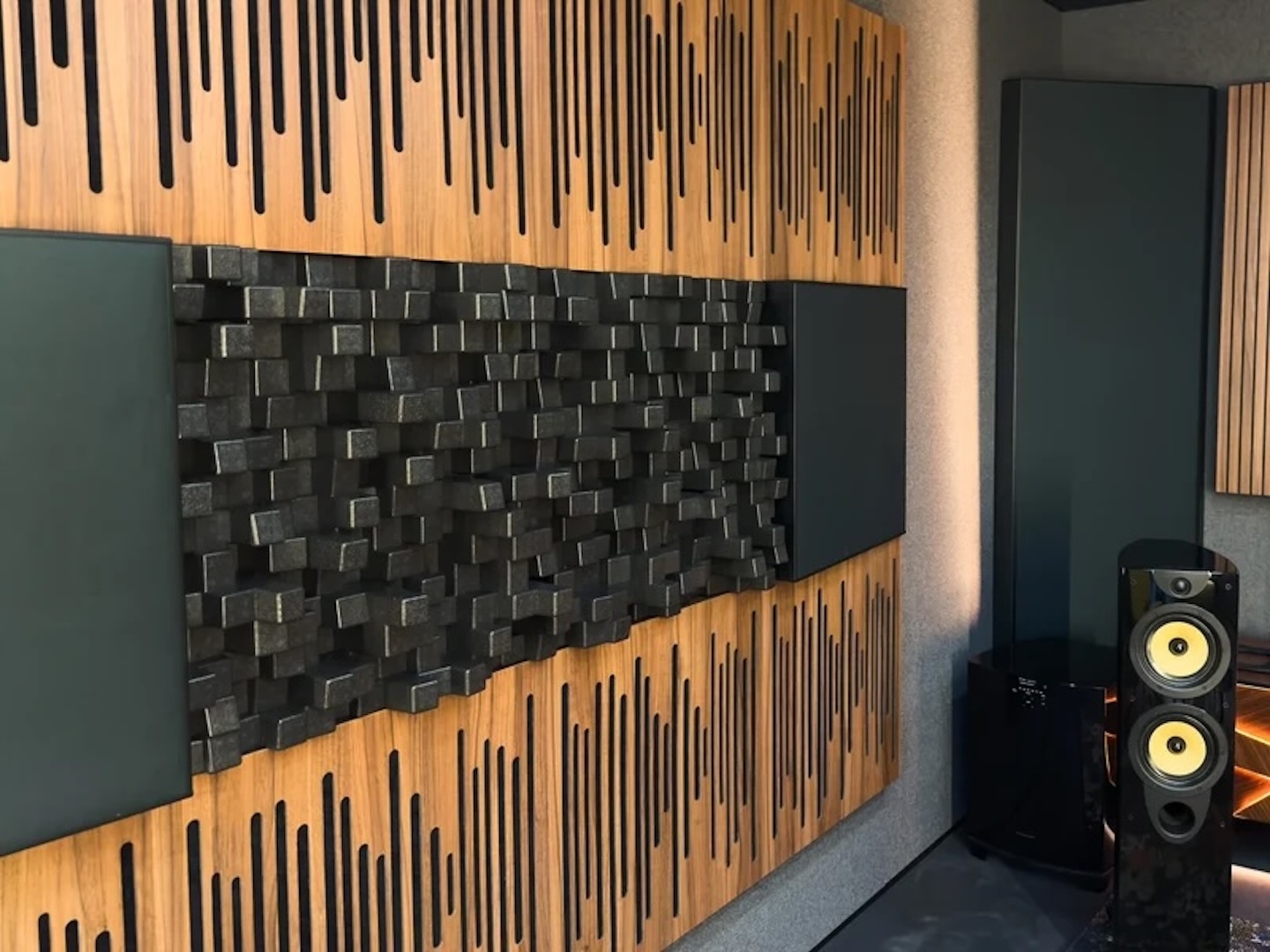
Relevant product: Vicoustic Multifuser DC4
Price: TBD
Where to Buy: Vicoustic.com
The Multifuser DC4 is a two-dimensional diffuser designed to scatter sound vertically and horizontally. It works primarily in the mid and high frequencies, so do not mistake it for bass treatment.
Diffusion also needs sensible placement and enough distance from the listener. If your chair is close to the rear wall in a small room, substantial absorption may be a more practical starting point.
Use Furnishings Realistically
Rugs, sofas, curtains, bookshelves, and other furnishings affect a room’s sound, but their effects depend on material, depth, surface area, and placement.
A rug may reduce some higher-frequency floor reflections, while substantial curtains may alter reflections near a large glass surface. Neither is an automatic replacement for broadband acoustic treatment.
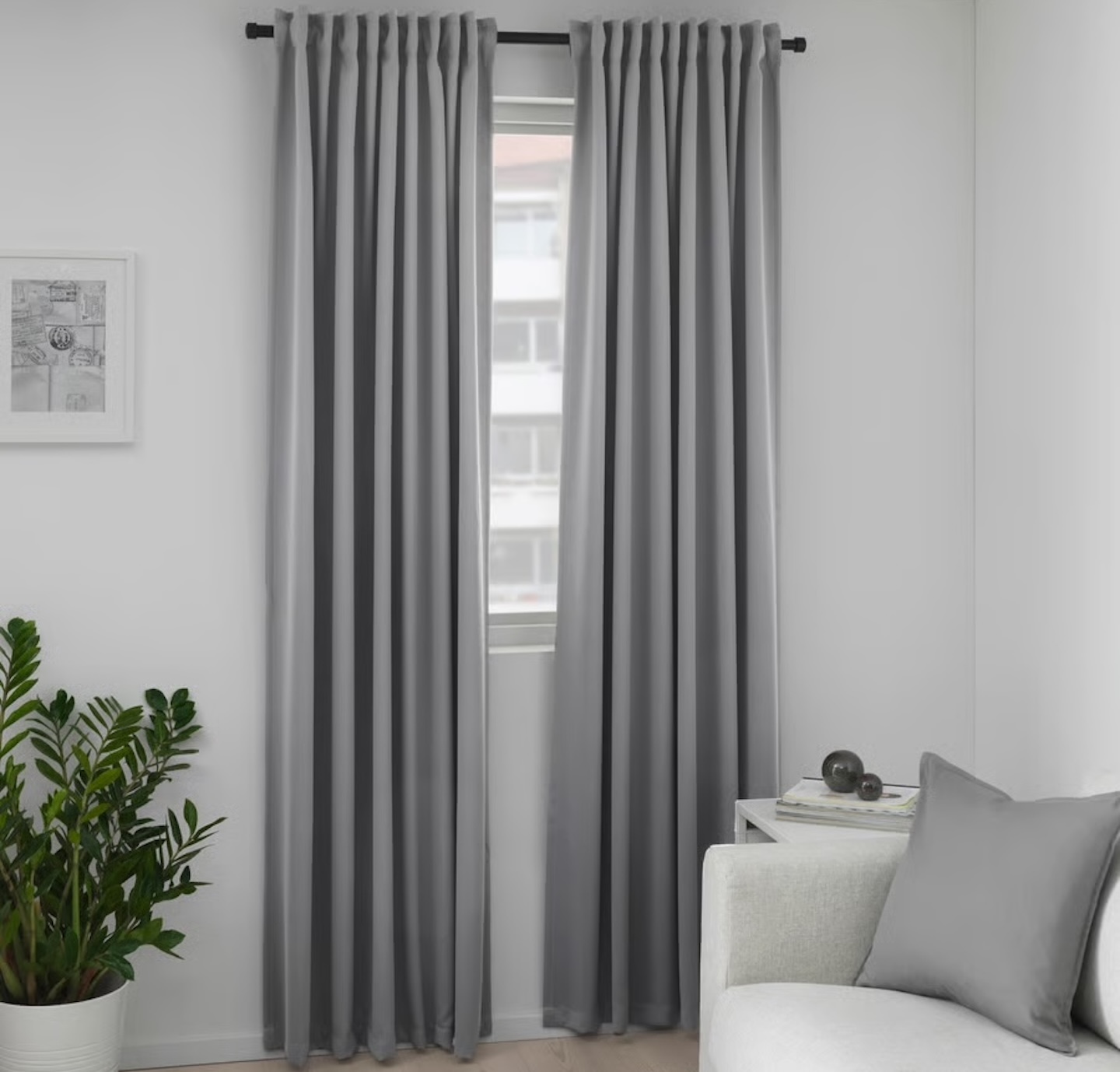
Relevant product: IKEA MAJGULL
Price: $49.99
Where to Buy: Ikea
MAJGULL is a polyester blackout curtain. IKEA’s product page does not list acoustic absorption data, so choose it if you need a curtain and regard any acoustic change as a possible secondary benefit. If you need predictable absorption, look for treatment with published performance data.
Apply Room Correction Last
Digital room correction can be useful, but it should not excuse poor placement or an untreated acoustic problem.
A deep cancellation caused by the interaction of direct and reflected sound can be difficult to fix with simple EQ. Adding more energy at that frequency does not necessarily remove the interference that created the null.
Relevant product: Dirac Live
Price: TBD
Where to Download: Dirac
Dirac Live measures multiple positions and builds correction filters for compatible devices or computer playback. It offers features including impulse-response correction, phase alignment, and customizable target curves.
Optimize speaker and chair placement first. Add treatment where it helps, then use room correction to address what remains.
Reduce Background Noise
Improving a room’s internal acoustics is not the same as soundproofing it. Acoustic panels primarily affect sound within the room; substantially reducing transmission through walls, doors, floors, and ceilings can require construction work.
Before considering that expense, deal with obvious distractions where practical: a noisy computer, rattling HVAC vent, nearby appliance, or poorly fitting door can intrude on quiet passages.
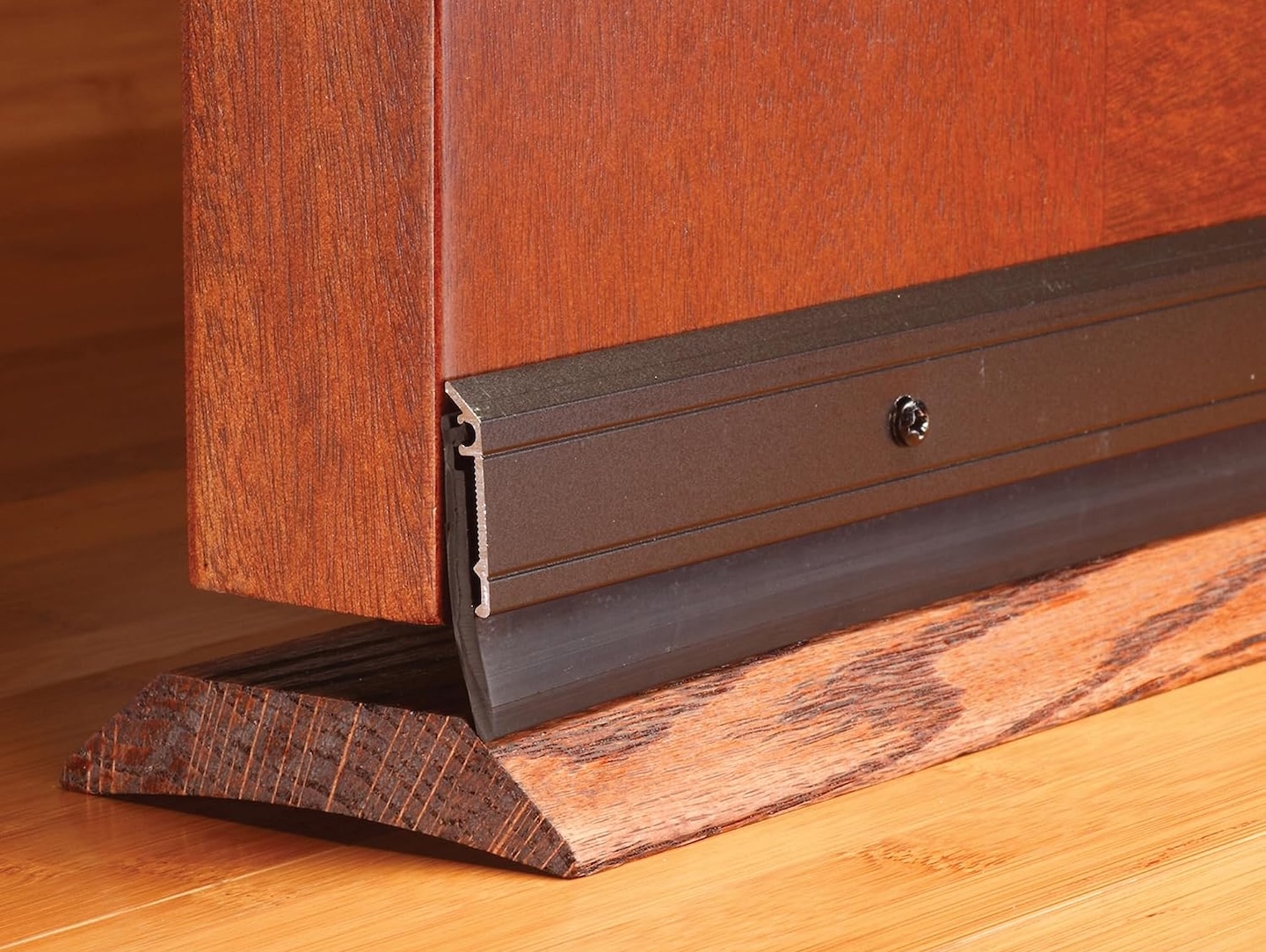
Relevant product: M-D door sweeps and weatherstripping
Price: From $22.61
Where to Buy: Amazon
Door sweeps and seals can close gaps around a door, but an ordinary door sweep will not soundproof a listening room. Closing an obvious air gap may offer a secondary acoustic benefit; serious isolation requires a broader approach.
Build the Room Before Upgrading the System
A good listening room is not one covered indiscriminately in acoustic products. It is a space where the speakers, listening position, reflections, bass behavior, and background noise work together.
If you buy only one specialized setup tool from this guide, the miniDSP UMIK-1 is a useful choice because its measurements can inform many later decisions rather than attempt to fix just one problem.
Start with the free changes: follow your speakers’ placement guidance, move your chair, listen, and measure. Add broadband absorption where reflections need controlling, use sufficiently deep treatment for bass problems, consider diffusion where the room supports it, and apply room correction once the physical setup makes sense.
GAIA feet, GIK panels, Vicoustic diffusers, curtains, weatherstripping, and Dirac Live may each have a role. None belongs in every room simply because it appears on an audiophile checklist. Every component you own plays into the same physical space; improve that relationship before assuming another amplifier or DAC is the upgrade you need.
[Cover Image. by Vika Glitter | Pexels]