
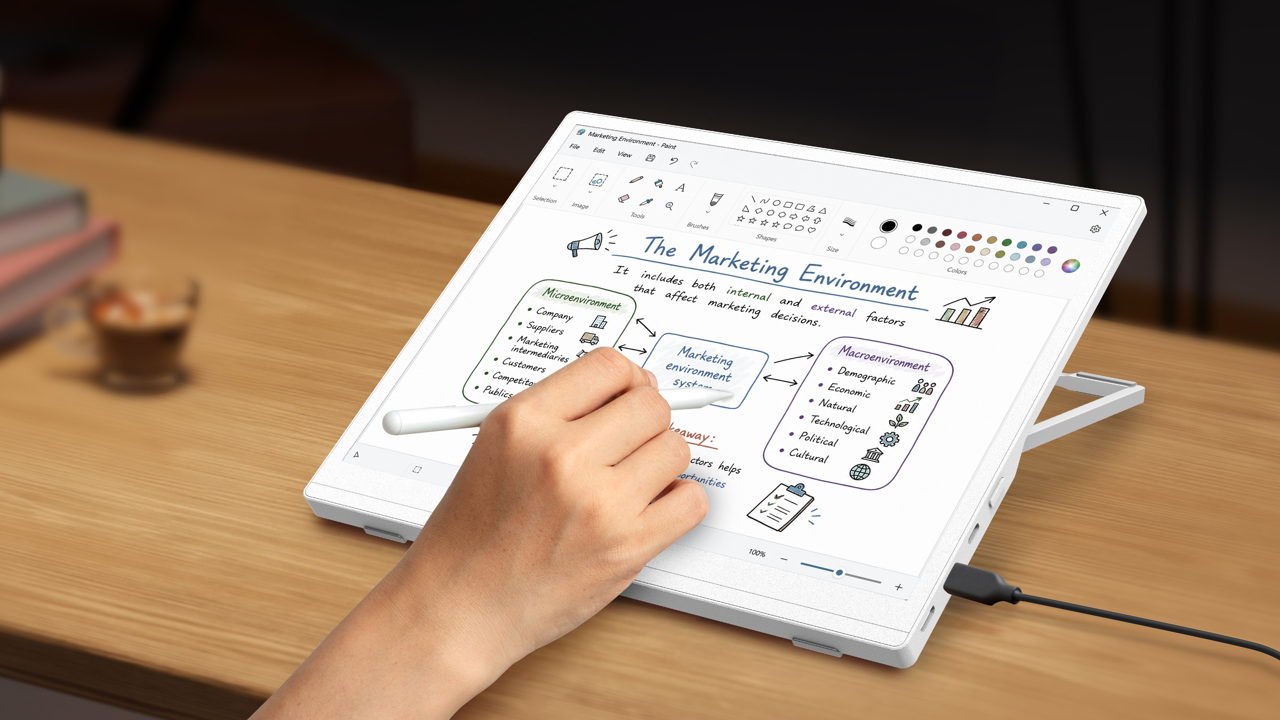
Acer’s new EP130K is a 13.3-inch color ePaper monitor that accepts a 60Hz signal in both its black-and-white and color modes. That is the headline. The part that matters is what 60Hz looks like after an ePaper panel has handled cursor motion, scrolling, color conversion, and ghosting. Acer plans to charge $749.99 when the monitor reaches North America in the first quarter of 2027, so this isn’t a curiosity priced for an impulse buy. It needs to make everyday computer work feel substantially better than the slow ePaper displays many of us expect.
The official Acer product page promises up to 60Hz, pen and finger input, two display modes, and single-cable USB-C operation. Acer’s September 2 announcement adds the details: black-and-white mode runs at 3200 x 2400, color mode drops to 1600 x 1200, and the panel can show 4,096 colors. The surface is matte, there is no backlight, and a static image remains visible after power is removed.
Price: From $749.99 (announced U.S. starting price)
Where to buy: Acer (Coming Q1 2027)
Those are useful specifications. They still don’t answer the buying question.
60Hz doesn’t guarantee LCD-like motion
On an ordinary monitor, 60Hz means the display can draw a new frame 60 times per second. With ePaper, the signal rate is only one part of the story. The controller has to move charged pigment particles, manage partial updates, clean up retained pixels, and decide when a full refresh is necessary. A monitor may accept a 60Hz signal while visible motion still shows trails, reduced detail, or periodic flashes.
Acer also lists a 20ms gray-to-gray response time. That figure sounds familiar because monitor companies use the same unit for LCD response measurements, but Acer hasn’t published the test method. Twenty milliseconds is longer than a single 60Hz frame, which lasts about 16.7 milliseconds. More important, one response figure can’t describe cursor lag, scrolling artifacts, color conversion, and ghosting on its own.
That doesn’t mean Acer’s claim is empty. If the EP130K can keep text legible while a page scrolls and make a mouse pointer easy to follow, it could remove a lot of friction from ePaper computing. It just means “up to 60Hz” isn’t proof of that experience.
TG has already covered the same basic tension with the AOC 13T5S color E Ink monitor: speed matters, but ghosting and lag decide whether the screen works as a real monitor. Acer’s model raises the stakes by putting 60Hz at the center of its pitch.
Two modes make sense, even with the resolution tradeoff
The EP130K’s black-and-white mode uses the full 3200 x 2400 resolution. Color mode cuts both dimensions in half to 1600 x 1200. That sounds severe, but it follows a familiar color ePaper tradeoff: adding color information reduces the effective resolution available for each image.
For reading a PDF, writing in a text editor, or keeping reference material beside a laptop, the sharper monochrome mode is likely the important one. Color mode could be enough for charts, syntax highlighting, calendars, and other work where a few colors add meaning. Its 4,096-color limit is nowhere near the millions of colors an LCD or OLED monitor can show, so this isn’t the screen for photo editing, video grading, or judging a product’s finish.
Acer hasn’t identified the panel supplier or named the exact ePaper platform. That omission matters because it keeps buyers from comparing the EP130K’s color layer, refresh technology, and expected artifacts with established ePaper monitors. Acer also hasn’t published contrast, power consumption, dimensions, weight, or a front-light specification.
The official page says the display has no backlight. That is the point for many buyers, but it also means the room supplies the light. A reflective screen can look excellent near a window or under a desk lamp and be hard to use in a dim room. “No blue light” on the product page describes the panel’s lack of a light source. It isn’t a promise that a long work session will be comfortable for every person.
This is more than a document display
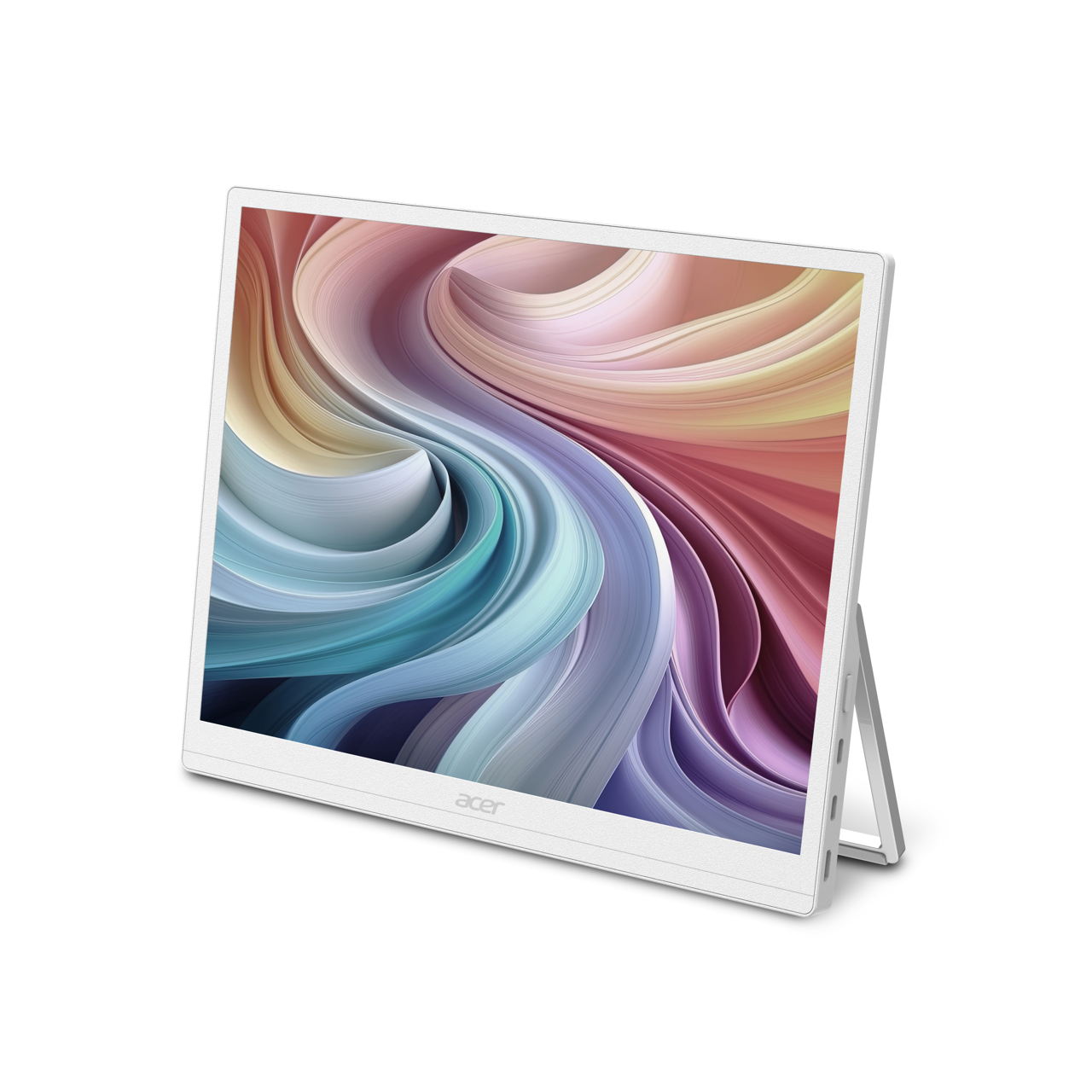
Acer gives the EP130K two USB-C ports, mini-HDMI, a 3.5mm audio output, and two 1W speakers. USB-C can carry video, data, and power from the host in low-power mode, which could make this a genuinely portable second screen instead of another device that needs its own adapter.
Touch and stylus support also widen the appeal. Annotation, page navigation, and sketching are more natural fits for a reflective display than gaming. Still, Acer hasn’t published the included accessories, stylus protocol, touch compatibility by operating system, driver requirements, or whether both USB-C ports support the same functions. Those details should be checked before anyone assumes one-cable operation will work with every laptop, tablet, or phone.
The bi-stable screen creates a more unusual use. You could leave a schedule, reference sheet, checklist, or dashboard visible without continuing to power the panel. The display electronics consume power while content changes, so this is not a zero-power monitor during active use. The saved static image is the benefit.
The price makes testing essential
Acer says the EP130K will arrive in North America during the first quarter of 2027 starting at $749.99. It is also planned for EMEA at €749 and Australia at AUD 1,499 during the same quarter. There is no US retail stock to verify yet, and Acer notes that specifications, prices, and availability may vary by region.
At that price, the EP130K doesn’t need to replace a normal monitor for everyone. It needs to be excellent at a narrower job. Writers, programmers, researchers, and people who keep long documents open for hours may value a reflective screen more than fast video or saturated color. Outdoor and brightly lit work could be another good fit.
But the expensive part of an ePaper monitor is also the risky part. You can’t judge cursor latency, scrolling clarity, full-refresh interruptions, text sharpness, touch mapping, or four-hour comfort from a specification sheet. Acer’s product page uses “smooth scrolling,” while the announcement gives the underlying 60Hz and 20ms figures. The first phrase is marketing. The second set of numbers needs to be measured.
Price: From $749.99 (announced U.S. starting price)
Where to buy: Acer (Coming Q1 2027)
My take is simple: the EP130K is one of the more interesting portable monitors Acer has announced, because 60Hz could make reflective computing less awkward without giving up the static-image advantages of ePaper. I wouldn’t preorder it on that number alone. If independent testing shows clean cursor motion, readable scrolling, manageable ghosting, and reliable one-cable operation, the $749.99 price will make sense to a very specific kind of screen-weary professional. If it doesn’t, the EP130K will still be a beautiful document viewer with a monitor-sized price.
