
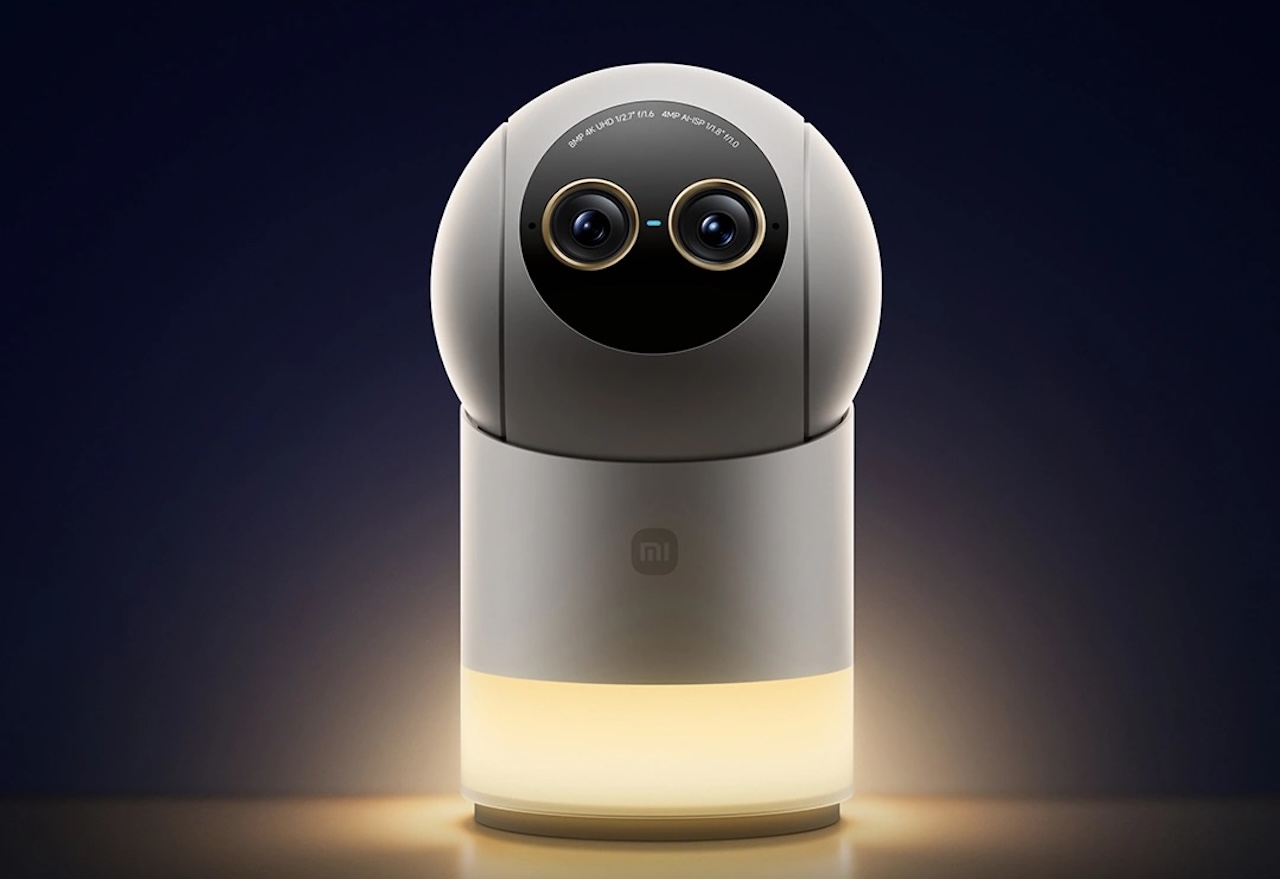
A security camera is less useful if nighttime footage shows a person but loses the details needed to identify what happened. Conventional infrared night vision can preserve shapes and movement, but its black-and-white image may erase useful information such as clothing or object colors.
The Xiaomi Smart Camera 5 Pro Full-Color Night Vision is designed to retain more of that information after dark. It pairs an 8MP main camera with a 4MP secondary camera, low-light color imaging, on-device AI processing, motorized pan-and-tilt movement, and multiple storage options. The main camera records at up to 4K, while the secondary camera adds another viewing perspective rather than combining with the 8MP sensor to create a single 12MP image.
For now, this is primarily a China-market product. Xiaomi has opened crowdfunding in China at 429 yuan, with a suggested retail price of 599 yuan. A global launch has not been announced.
Keeping Color After Dark Is the Big Idea
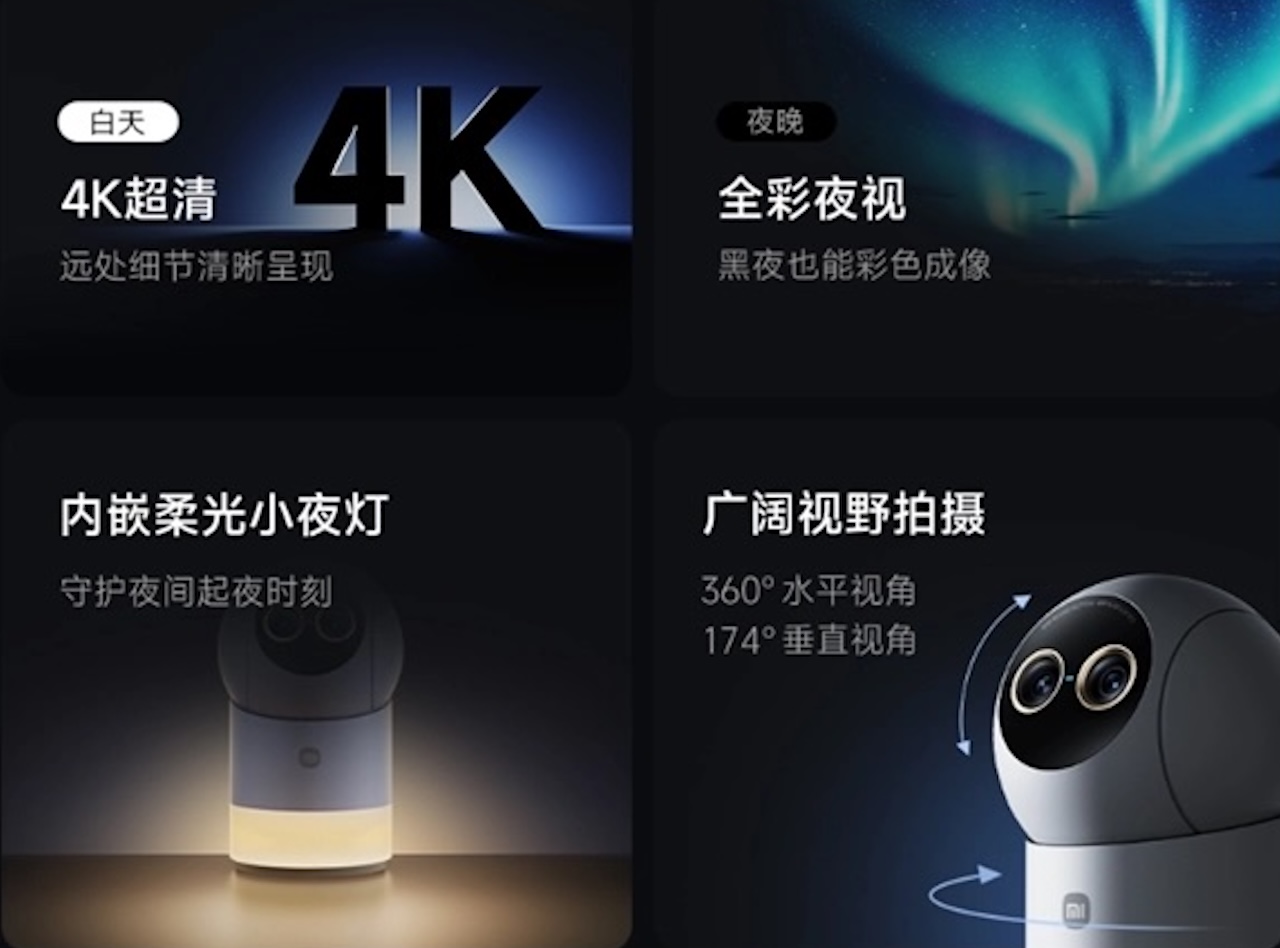
Xiaomi calls the Smart Camera 5 Pro its first “day and night full-color” camera, designed to retain color in low light rather than defaulting to black-and-white infrared footage.
Its 8MP main camera records in 4K, while a 4MP secondary camera provides an additional view instead of combining into a single 12MP image. Light-sensitive hardware, image processing, and a soft fill light support several night modes, including human-motion and event-triggered recording. Xiaomi also lists a no-red-glow mode for less intrusive monitoring in bedrooms or nurseries.
Those are manufacturer claims, not independent test results. The key question is how much usable color and detail the camera can retain in genuinely dark rooms.
Local AI Could Reduce Meaningless Alerts
The Smart Camera 5 Pro has a 1.5 TOPS on-device AI platform that Xiaomi says can recognize people and pets and detect sounds such as crying, keeping supported analysis on the camera rather than entirely in the cloud.
That could help reduce unnecessary alerts in nurseries, pet areas, and busy living spaces. Local processing may offer privacy benefits, though cloud recording and connected features still rely on network services.
Xiaomi also lists lens masking and access controls. It is not yet clear whether the masking function uses a physical privacy shutter or software.
 Pan and Tilt Add Placement Flexibility
Fixed cameras force you to choose the viewing angle carefully. Xiaomi instead uses a dual-motor pan-and-tilt mechanism with 360 degrees of horizontal rotation and 174 degrees of vertical movement.
That gives the camera considerable freedom to change its viewing direction without requiring you to reposition the entire device. It does not guarantee complete room coverage, however. Furniture, walls, mounting position, and the camera’s field of view still determine what it can actually see.
Two-way voice calling is supported too, potentially making the camera useful for talking to a family member or checking in on someone in another room rather than only recording activity.
4K Footage Needs Somewhere to Go
Higher resolution can make small details easier to inspect, but it also increases the amount of data a security camera needs to move and store.
The Smart Camera 5 Pro supports dual-band Wi‑Fi 6. Xiaomi claims its Wi‑Fi 6 implementation improves transmission speeds by about 60%, though actual performance will depend on the router, distance, interference, and network congestion.
Storage is flexible, with support for microSD cards, cloud storage, and NAS storage. NAS support could be particularly appealing if you already maintain local network storage and would rather keep recordings on hardware you control.
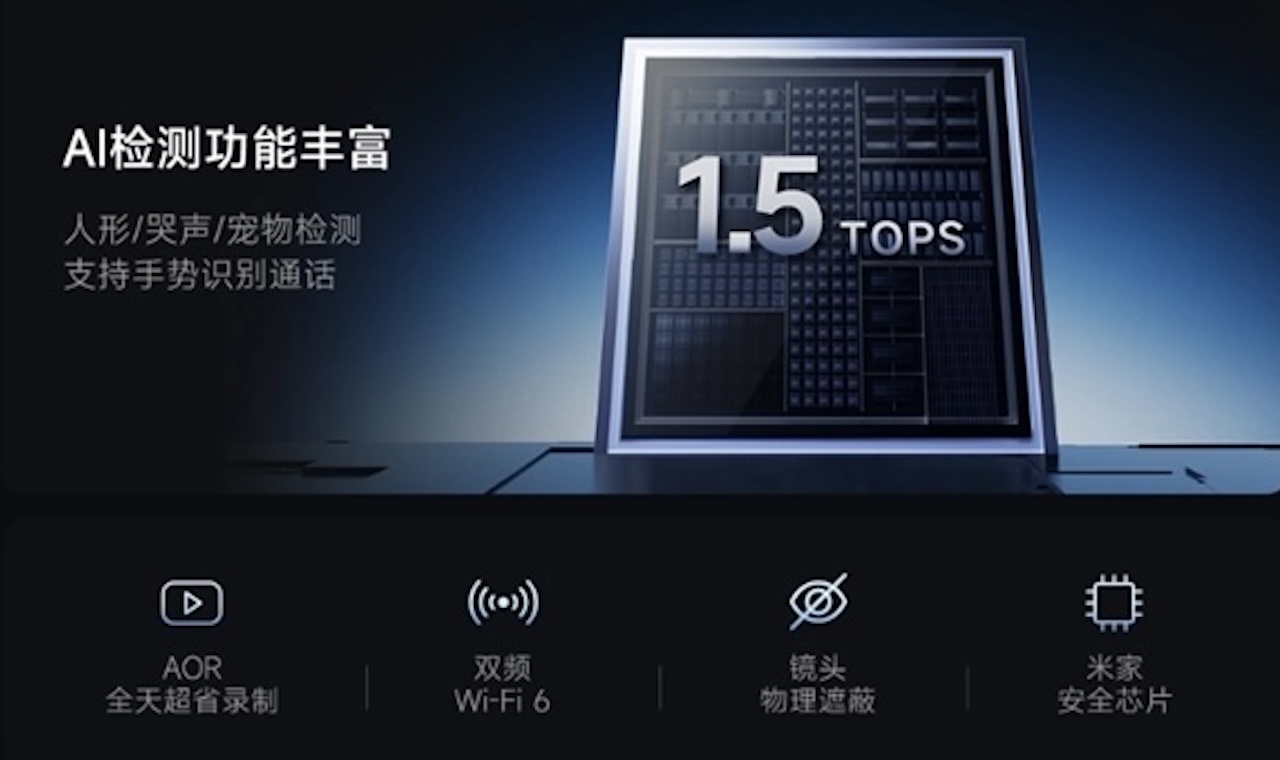
Xiaomi also lists an AOR all-day low-power recording system designed to reduce the storage demands associated with extended recording. How effectively it balances continuous monitoring and storage consumption will need independent testing.
Who Is the Xiaomi Smart Camera 5 Pro For?
The Smart Camera 5 Pro is most compelling for indoor spaces that need useful coverage after dark, such as nurseries, pet areas, and living rooms.
Its spec sheet includes 4K recording, a secondary camera, on-device AI, extensive pan-and-tilt movement, Wi‑Fi 6, lens masking, and microSD, cloud, or NAS storage. The unanswered questions are how well its color night vision works in truly dark rooms, how reliable its AI is, whether lens masking is physical or software-based, and how AOR recording performs over time. There is also no confirmed global launch.



If Xiaomi brings it to more markets, its key feature will not be 4K. It will be whether the camera can retain enough color and detail after dark to show not just that something happened, but what happened.
