
The problem with most “AI PCs” is that the term has become vague. A laptop may have an NPU, a few AI-assisted features, and a new badge, but that does not necessarily mean it can run demanding models locally or replace cloud-based AI services.
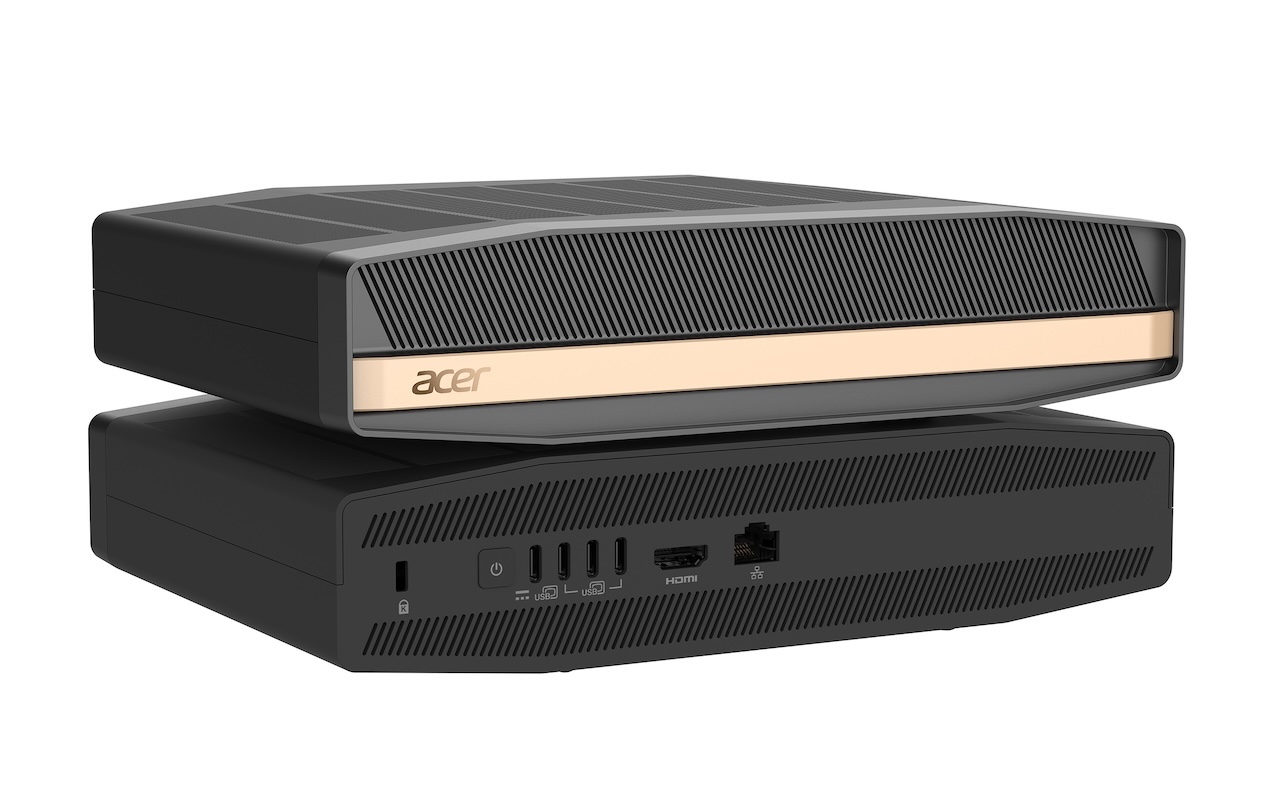
Acer’s compact RTX Spark desktop design points toward a more ambitious kind of personal AI computer. Shown at IFA 2026, it is a compact desktop design built around NVIDIA’s RTX Spark superchip. Acer positions it for local AI agents, advanced content creation, and gaming.
The practical promise is appealing: put substantial AI compute and memory on a desk rather than sending every task, file, or prompt to a remote server. But the wording matters. Acer has shown a design, not announced a shipping desktop with a price, release date, or final configuration.
That makes RTX Spark interesting today, but not a buying recommendation yet.
Local AI Needs More Than an AI Badge
Running a small AI model locally is easier than it was a few years ago. Running a larger model comfortably, keeping lengthy context available, and working with local files is another matter.
Many PCs have limited memory available to graphics and AI workloads. A machine may be able to launch a model, but struggle once the model, its context, and other applications compete for memory. The result can be slow responses, smaller models, or a workflow that shifts back to the cloud.
Acer says its SFF RTX Spark design is specified with up to 128GB of unified memory and up to 1 petaflop of AI performance. It also lists an NVIDIA Grace CPU with up to 20 cores and a Blackwell RTX GPU with up to 6,144 cores.
Those are substantial targets for a small desktop. Most people do not need a petaflop of AI performance. The more useful point is that a large shared memory pool could let developers, creators, and advanced users handle more AI work locally without immediately moving to a conventional workstation or cloud infrastructure.
What Acer Actually Announced
Acer unveiled the SFF RTX Spark design at its September 2 next@Acer event during IFA 2026. The company calls it a compact, ultra-efficient desktop design powered by NVIDIA RTX Spark.
Acer says the platform is aimed at creators, AI developers, and gamers, with NVIDIA’s AI platform and RTX technologies available for local workloads. It also frames the design around agentic AI, meaning software that can work through multi-step tasks using tools, applications, or connected functions.
These are Acer and NVIDIA platform claims, not independent test results. The available material does not include benchmarks for this Acer design, thermal testing, noise measurements, sustained-power results, gaming tests, or detailed retail configurations.
Most importantly, Acer says availability of RTX Spark devices will be announced at a future date. There is no published price, order page, or confirmed release window for an Acer system.
Why Unified Memory Is the More Meaningful Specification
The potential 128GB of unified memory may matter more than the headline performance number.
Conventional PCs generally split system memory from graphics memory. That works well for many jobs, but AI workloads can run into limits when a model needs more memory than a separate GPU can provide. Unified memory gives the CPU and GPU access to the same pool, which could make some larger models and longer-context workflows more feasible.
That does not mean every model will run quickly or easily. Performance depends on the model’s architecture, optimization, software support, precision, and the total workload. More memory also does not automatically make a local AI project simple.
Still, it addresses a real limitation. NVIDIA says RTX Spark is designed for on-device agents and can provide up to 128GB of unified memory. For users who want to experiment with larger local models, create AI-assisted media, or keep sensitive material on their own computer, that capacity could be a meaningful advantage.
Local processing does not eliminate every privacy or security concern. It can, however, reduce the need to upload every file or prompt to a third-party service.
Small Does Not Automatically Mean Simple
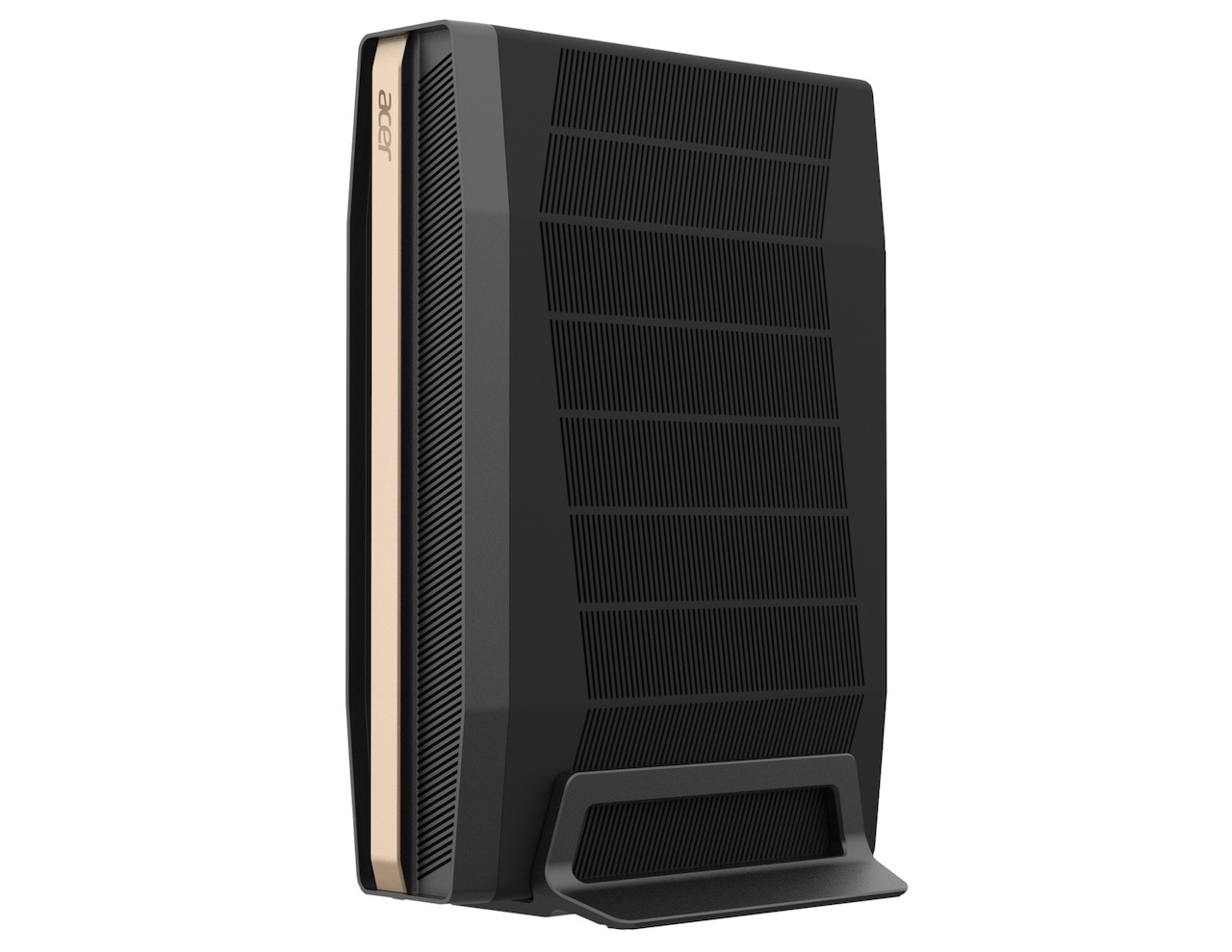
Acer emphasizes a space-saving and ultra-efficient desktop design. That could be appealing for anyone who wants serious compute without a large tower taking over the desk.
But compact hardware raises questions Acer has not yet answered. High-performance components generate heat, and thermal design affects sustained speed, fan noise, and long-term reliability. Storage expansion, ports, display support, networking, serviceability, and upgrade options are also unknown.
Those details determine whether a compact AI desktop becomes a practical workstation or a great-looking spec sheet. Acer has not yet given buyers enough information to make that call.
Who Should Watch Acer’s RTX Spark Design?
Acer’s SFF RTX Spark design is worth following if you are an AI developer, local-model enthusiast, content creator, or small business that wants more local compute without immediately renting cloud infrastructure.
It may also appeal to users who value more control over where sensitive projects, documents, and media files are processed. The potential combination of compact size, RTX graphics, and up to 128GB of unified memory is compelling.
Do not delay an everyday desktop purchase for it. Acer has not confirmed pricing or availability, and ordinary browsing, office work, streaming, and basic photo editing do not need this class of hardware.
The reason to pay attention is not the petaflop headline. It is the possibility of making local AI less of a specialist project and more of a practical desktop capability. Acer still needs to prove that promise with a finished system.
Auto Amazon Links: No products found.
