
Lenovo’s gaming arm in China just dropped a teaser for a new headset that’s clearly meant to sit at the top of its Legion audio lineup. It’s called the Legion Y960, and Lenovo says it’ll launch on May 19, 2026, alongside a refresh of the Legion phone, two Legion Y900 gaming tablets, and a new Y7000X laptop.
Price: TBD
Where to Buy: LENOVO
The pitch is built around one big claim: physical 7.1-channel surround sound, not the software-emulated kind, plus what the brand calls a “patented six-unit voiceprint perspective” system inside each earcup. If Lenovo’s marketing copy holds up at launch, the Y960 is being positioned squarely at competitive players who care more about hearing footsteps than feeling bass.
What Lenovo Says About the Audio
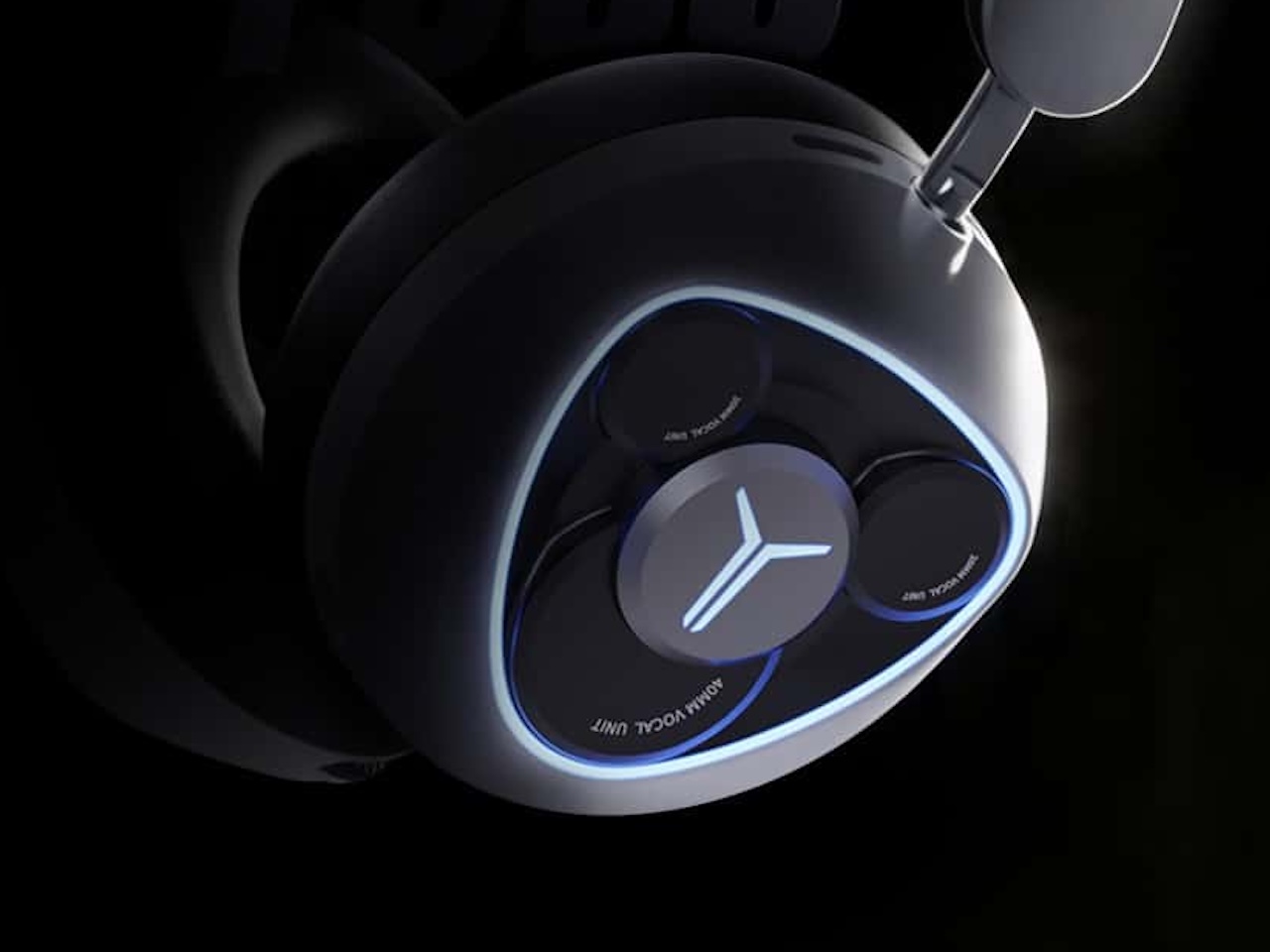
The teaser leans hard into the surround-sound angle. Lenovo claims the Y960 delivers “physical” 7.1-channel audio, meaning multiple independent drivers per cup are doing the channel separation rather than a software algorithm faking it from a stereo source. According to the teaser breakdown from Notebookcheck, each cup houses one 40mm driver paired with two 20mm units, which is how Lenovo is getting to the multi-driver count it’s advertising.
That’s a different approach from most consumer “7.1” headsets, which usually deliver virtual surround through DSP. We won’t know how it actually performs until the launch event on May 19, but the hardware spec sheet, at least the part Lenovo’s willing to share, does match what a true multi-driver design typically looks like.
How Soundprint Perspective Is Supposed to Work
The other headline feature is the Y960’s “patented six-unit voiceprint perspective” tech, which is said to be the soundprint recognition system. Lenovo’s poster pitches the design philosophy roughly like this: knowing where a sound is coming from is the baseline, and knowing what is making the sound is what separates winning from losing.
In practice, Lenovo says this means the headset is tuned to reproduce fine material details, so a player can tell the difference between, say, footsteps on wood and footsteps on metal, or distinguish a reload from a weapon swap. The brand hasn’t shared the technical mechanism behind the patent, and we’ll want to hear it at launch before treating “object recognition by ear” as anything more than a marketing line.
The Hardware We Can See in the Teaser
The teaser image Lenovo posted to Weibo shows a closed-back, over-ear design with a pretty conventional gaming-headset silhouette. There’s a Y-shaped Legion logo centered on each earcup, ringed by what looks like an LED accent. The earcups themselves appear large and thickly padded, and the headband appears curved and adjustable in a typical gaming-headset style.
Lenovo hasn’t confirmed connectivity yet, but Notebookcheck says the teaser strongly suggests a wireless build. Until Lenovo says it on stage, we’ll keep that one in the unconfirmed column.
Why Physical 7.1 Actually Matters
Physical 7.1 surround sound uses multiple independent drivers inside each earcup to physically reproduce a multi-channel surround signal, rather than simulating it through software algorithms. The result is more accurate spatial positioning, especially in competitive games where directional sound determines outcomes.
Here’s the practical gap between physical and virtual 7.1, in case it’s been a while. Virtual surround takes a stereo signal and tries to convince your brain that sound is coming from behind, above, or to the side using HRTF math. It works, mostly, but it’s only as good as the algorithm and your ears.
Physical surround uses separate drivers angled inside the cup to actually push different channels into your ear from different directions. In an FPS, that translates to a sound stage that’s less guesswork and more “the enemy is one floor up and slightly to my right.” That’s the experience Lenovo’s selling, and if the Y960 nails it without the usual physical-surround tradeoffs like boomy bass, muddy mids, and sealed-in treble, it could be a genuinely interesting alternative to the SteelSeries and HyperX wireless options that dominate this category.
What Else Is Launching Alongside the Y960
The May 19 event isn’t a solo show. Lenovo’s bringing four other Legion products to the same stage, which gives you a sense of how the brand is rebuilding its gaming lineup in China.
There’s a refreshed Lenovo Legion Y70 gaming phone, which is the first new Legion phone since the original Y70 in 2022. A pair of Legion Y900 gaming tablets, which Lenovo previewed earlier with 4K display specs, will land at the same event. And the Lenovo Legion Y7000X gaming laptop is also on the docket, though Lenovo hasn’t detailed it yet.
For Western readers, there’s no word on whether any of this, including the headset, is heading outside China. The original Legion phone was a China-first product with limited international availability, and the Y960 announcement is currently a domestic launch.
What We Still Don’t Know
Pricing is the obvious blank. Lenovo hasn’t shared a yuan figure yet, and there’s no indication of a US dollar conversion or an international SKU. We also don’t have battery life, charging method, microphone specs, software and EQ support, RGB controls, or weight. All of that should land on May 19.
What we do know is enough to peg the Y960 as Lenovo’s most ambitious Legion-branded headset to date, at least on paper. The brand has been pushing audio harder lately, and a flagship esports headset with a true multi-driver layout is a logical next step after the H600 and H500 Pro lines.
Price: TBD
Where to Buy: LENOVO
If the Y960 hits the May 19 launch with the surround-sound performance Lenovo’s advertising and a price that doesn’t drift into Audeze territory, it could be one of the more interesting gaming-audio launches of 2026. We’ll be watching the Weibo post for the launch announcement and we’ll update this story when Lenovo posts the full spec sheet.





Gadgeteer Comment Policy - Please read before commenting
Looking forward to seeing how it performs after launch.
Space Waves