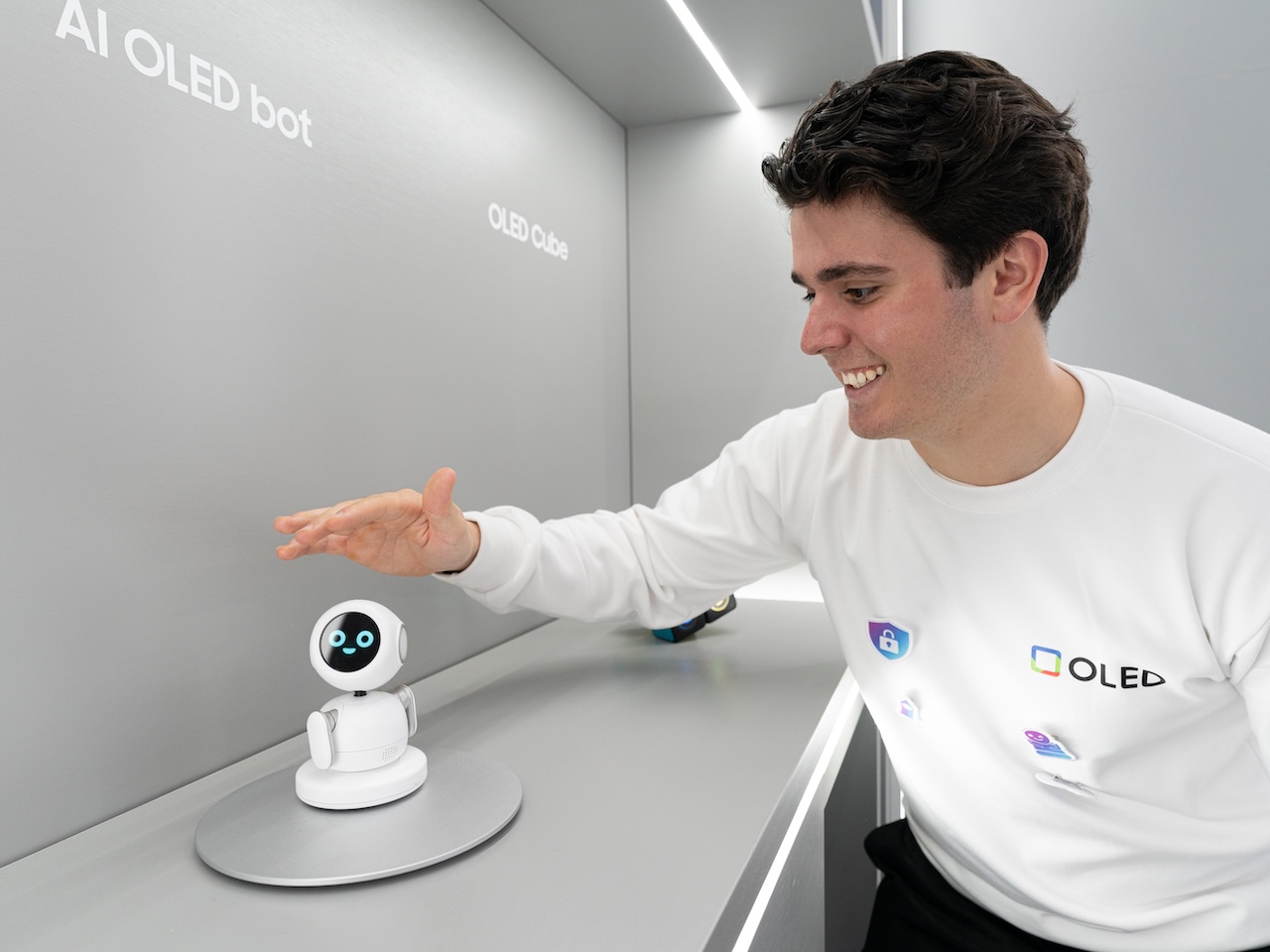
Talking to AI still carries a faint whiff of weirdness. You ask a question into the void, something invisible answers back, and the whole exchange feels like filing a support ticket with a very fast typist. Samsung Display looked at that problem and decided the fix wasn’t better language models. It was a face. The OLED AI Mini PetBot, shown at MWC 2026 in Barcelona, is a pocket-sized companion robot concept with a 1.34-inch circular OLED screen where its face should be, and it uses that tiny display to react to everything you say and do.
The robot doesn’t sit blankly while it processes a command. It shifts animated expressions in response to voice and touch input, scrunching when confused and looking up when spoken to. Samsung Display built the entire emotional premise around that circular OLED panel, which renders fine gradients and deep blacks without a backlight. At 1.34 inches, the screen is smaller than most smartwatch faces, but the circular format removes any rectangular frame of reference so the expressions read organic rather than screen-mounted. It closes a psychological gap that better chat interfaces haven’t managed to bridge on their own.
A tiny screen carrying a big idea
The Mini PetBot isn’t the first device to explore this territory. LivingAI’s EMO, Energize Lab’s Eilik, and KEYi Tech’s Loona have each taken a run at the desktop companion robot concept with different personalities and price points. KEYi Tech even showed a concept at CES 2026 that docks an iPhone on a motorized MagSafe stand to create a desk robot face. DIY builders have been assembling expressive robot heads from microcontrollers and small screens for years. The appetite for something to look at while talking to a machine turns out to be very real, and Samsung Display’s contribution to that conversation is the panel itself.
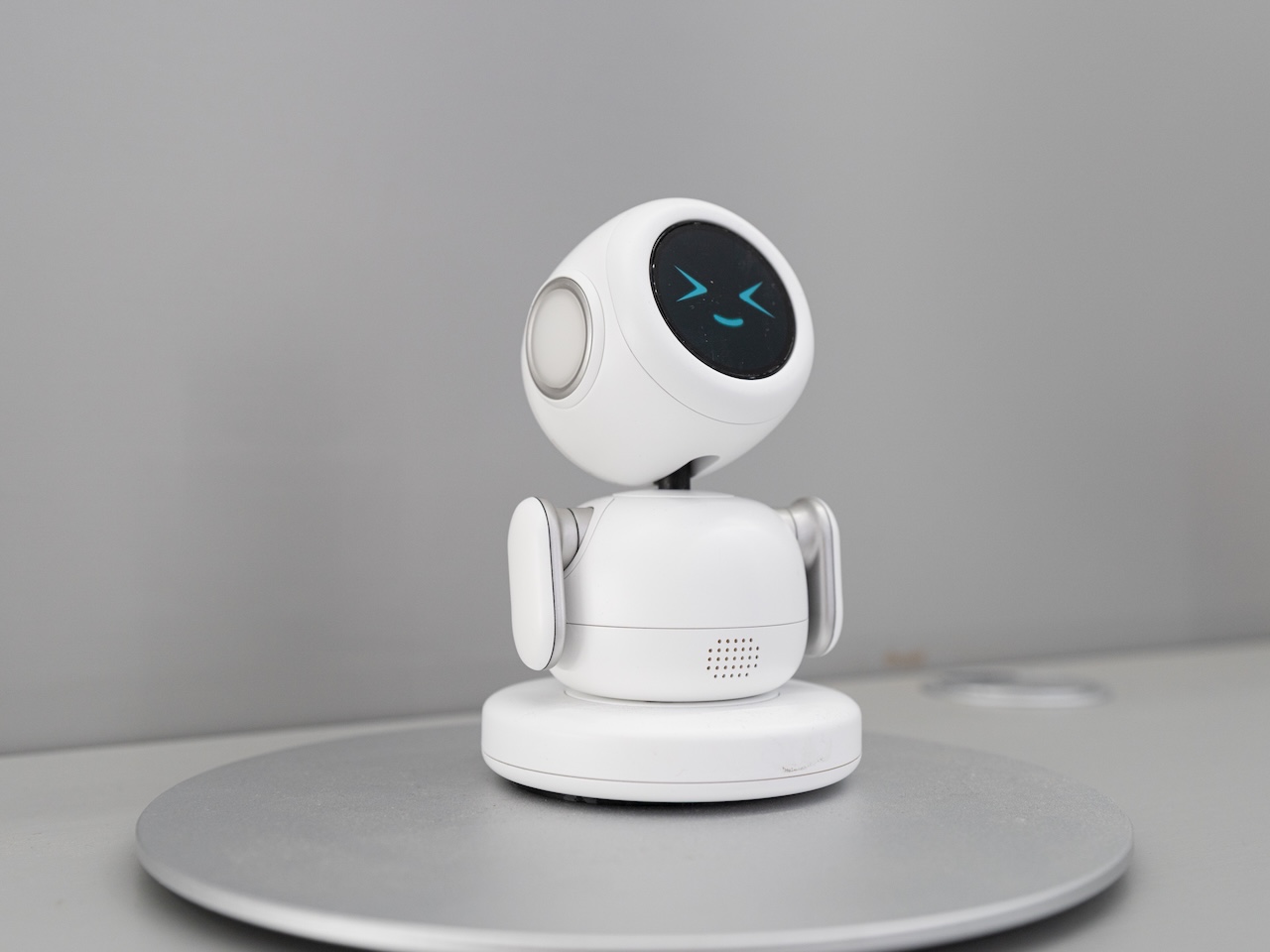
A 1.34-inch circular OLED at this quality level is a flex in miniaturization. Deep blacks mean animated eyes pop without backlighting artifacts, and the round shape eliminates the telltale rectangular border that would break the illusion. Samsung Display also brought the AI Toyhouse to MWC, a separate concept pairing a 13.4-inch circular OLED with an 18.1-inch flexible panel that can bend and curve around objects. Both concepts exist to prove where Samsung’s OLED panels can go when they aren’t locked inside phones and TVs.
Still a concept, and that’s the honest part
The Mini PetBot comes from a display technology booth, not a product launch. There’s no price, no release date, and no confirmed hardware partner turning this into something you can order. Samsung Display’s play here is showcasing panel capabilities for potential partners, not taking pre-orders. Samsung already has Ballie, the rolling home robot it has been teasing since CES 2020 and finally started shipping in limited markets, but Ballie is a full-sized household device with a projector and a very different job description. The Mini PetBot scales the companion idea down to something you can hold in one hand, and it comes from the display division rather than the product team. That context matters because the companion robot space is thick with concepts that never ship and promises that arrive watered down.
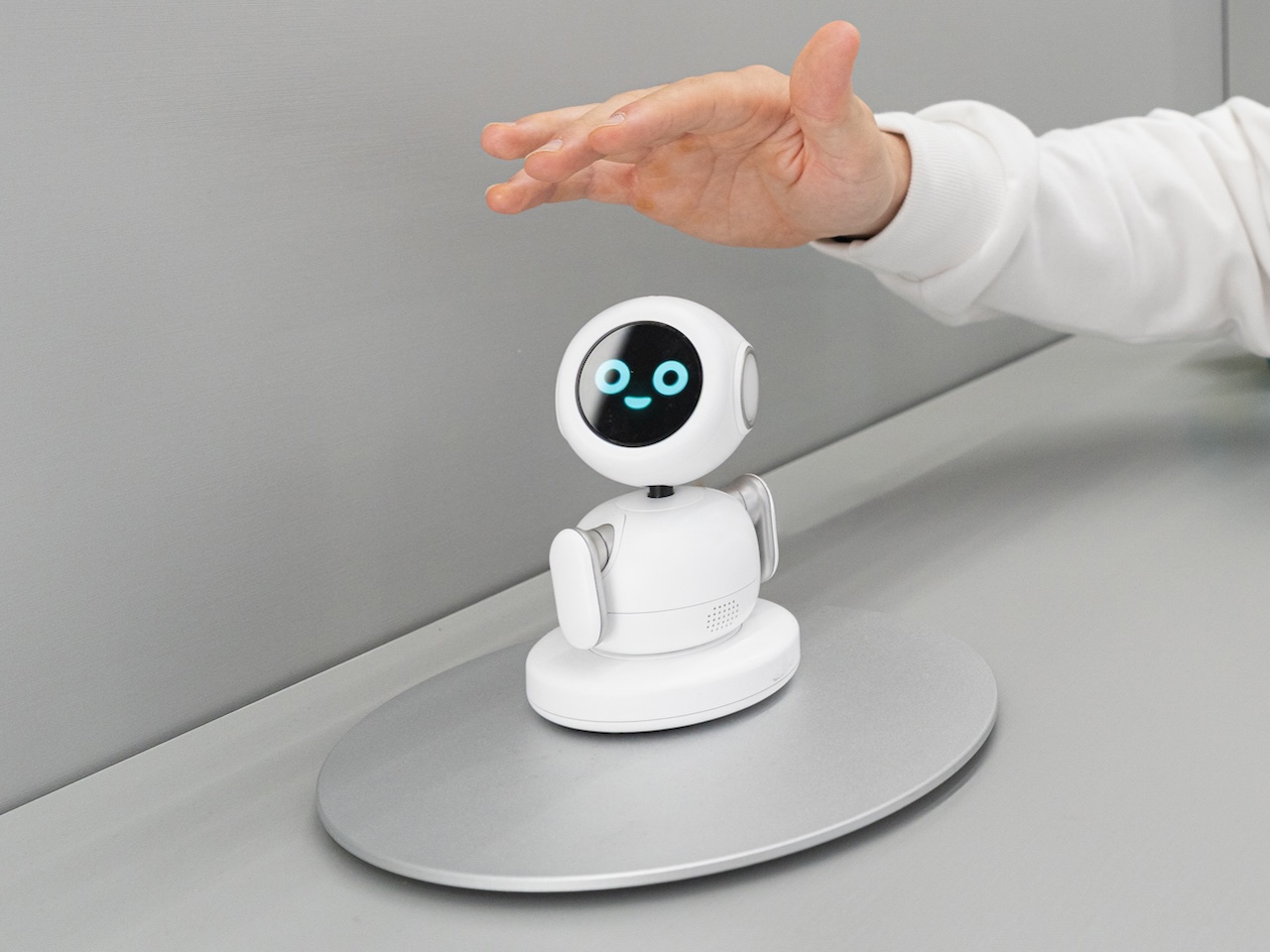
What makes the Mini PetBot worth watching anyway is how small Samsung managed to pack the formula. It’s still a concept with no confirmed production plans, but a pocket-sized robot that responds with visible emotion through a circular OLED face is a tighter pitch than most companion robots manage, and it suggests the display technology is ready even if the product isn’t. Whether a hardware team picks up this form factor and turns it into a real device is the open question. Samsung Display has done the showing part. Now someone has to do the building.