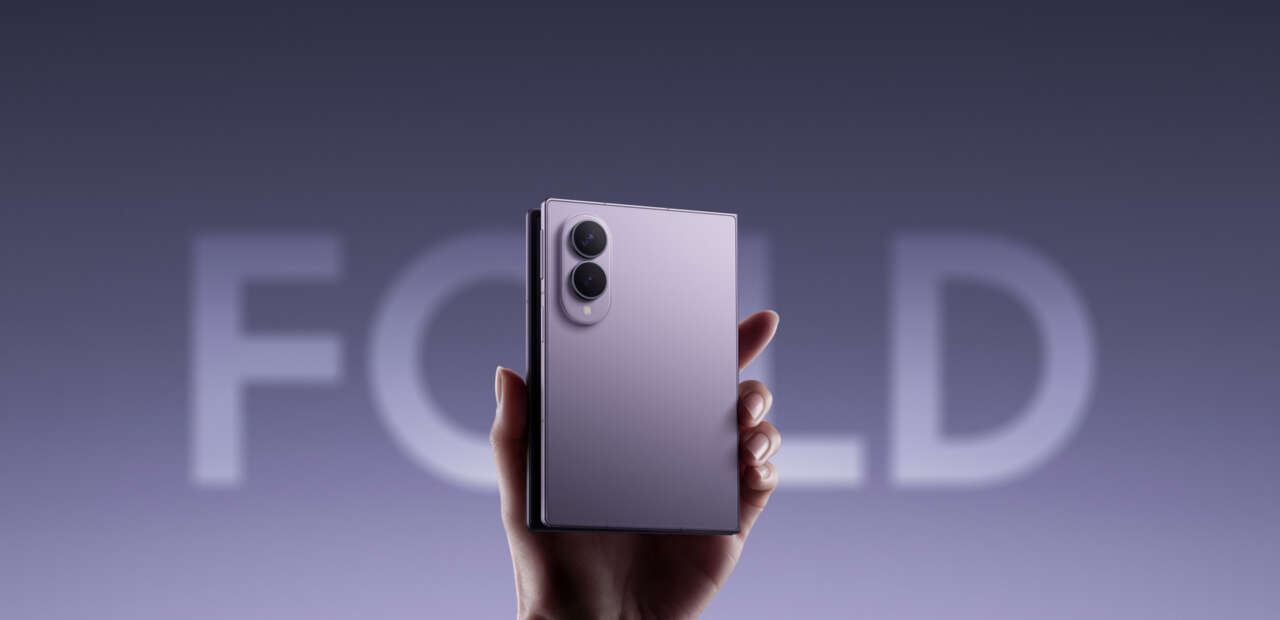
Three of the most interesting phones of 2026 open sideways into wide, paper-shaped screens. The fourth is Apple’s answer to all three.
Huawei’s Pura X Max, Xiaomi’s 18 Fold and Samsung’s Galaxy Z Fold8 all bet on that wide shape. Apple’s flagship iPhone never went wide at all, so Apple launched the iPhone Duo instead: its first foldable, opening to a 7.6-inch screen, the largest display Apple has ever put on an iPhone.
Price: $1,549.99 at Amazon for the Samsung Galaxy Z Fold8 (256GB, Graphite), the wide fold US buyers can order today
Where to buy: Buy on Amazon
Geography splits this field before specs get a say: the Pura X Max and the 18 Fold are China-only releases with no US sale announced. The Fold8 and the Duo are the wide folds Americans can order today, and the Duo carries the extra weight of being Apple’s first foldable, measured against every one of them, spec for spec.
One correction to the foldable story you already know: the tall, narrow book fold has left this group entirely. Samsung widened the Fold8 for 2026, and Apple skipped the tall book shape altogether, so all four foldables here open into landscape screens between 7.58 and 7.7 inches. The fight is no longer tall against wide. Wide fights wide now, and Apple is finally in it.
The spec sheet, side by side
| HUAWEI Pura X Max | iPhone Duo | Samsung Galaxy Z Fold8 | Xiaomi 18 Fold | |
|---|---|---|---|---|
| Main display | 7.7-inch OLED, 2,584 × 1,828, 1–120Hz | 7.6-inch OLED, 1,878 × 2,670, up to 120Hz | 7.6-inch AMOLED, 2,448 × 1,848, 120Hz | 7.58-inch AMOLED, 2,364 × 1,672, up to 120Hz |
| Cover display | 5.4-inch OLED, 1,848 × 1,264 | 5.4-inch OLED, 1,398 × 2,034 | 5.5-inch AMOLED, 1,972 × 1,248 | 5.38-inch AMOLED, 1,712 × 1,168 |
| Dimensions | Folded 120 × 85 × 11.2mm, open 120 × 166.5 × 5.2mm | Dimensions not published by Apple | Folded 123.9 × 81.9 × 9.7mm, open 123.9 × 161.4 × 4.5mm | Folded 117.8 × 83.6 × 10.68mm, open 117.8 × 163.8 × 5.02mm |
| Weight | 229g | 254g | 201g | 219g |
| Chip | Kirin 9030 Pro | Apple A20 Pro | Snapdragon 8 Elite Gen 5 for Galaxy | Xiaomi XRING O3 |
| RAM and storage | 12GB with 256/512GB, Collector’s Edition 16GB with 512GB/1TB | RAM not published by Apple, 256GB to 2TB storage | 12GB with 256/512GB, 16GB with 1TB | 12/16GB with 256GB to 1TB |
| Rear cameras | 50MP variable-aperture main, 50MP periscope telephoto at 3.5x, 12.5MP ultrawide | 48MP main, 48MP ultrawide, 2x optical-quality telephoto | 50MP wide, 50MP ultrawide, no telephoto | 200MP Leica main, 50MP periscope telephoto at 3.5x, 50MP ultrawide |
| Front cameras | 8MP outer, 8MP inner | 12MP Center Stage outer, under-display inner | 10MP cover, 10MP main | 16MP |
| Battery | 5,300mAh | Capacity not published by Apple, up to 44 hours video playback on the outer display, 31 hours on the inner display | 4,800mAh | 6,000mAh |
| Charging | SuperCharge charger in the box | 50% in about 20 minutes wired, 25W MagSafe wireless | 45W wired | 67W wired, 50W wireless |
| Water resistance | IP58 and IP59 | IP68 | IP48 | IP58 |
| Software | HarmonyOS 7 | iOS 27 | Android 17, One UI 9 | Xiaomi HyperOS 4 |
| US availability | China only, no US sale | On sale in the US from $1,999 | On sale in the US, $1,549.99 at Amazon for 256GB | China only, no US sale |
Read the weight row twice: at 254 grams, the Duo is the heaviest phone in this comparison, and it earns the weight with a second display, a grade 5 titanium frame and two batteries working as one. It also makes the widest swing here: 5.4 inches in your pocket, 7.6 inches open. A year ago, the Apple column in a table like this was a slab with one screen. That column reads completely differently now.
Wide folds changed what a phone opens into
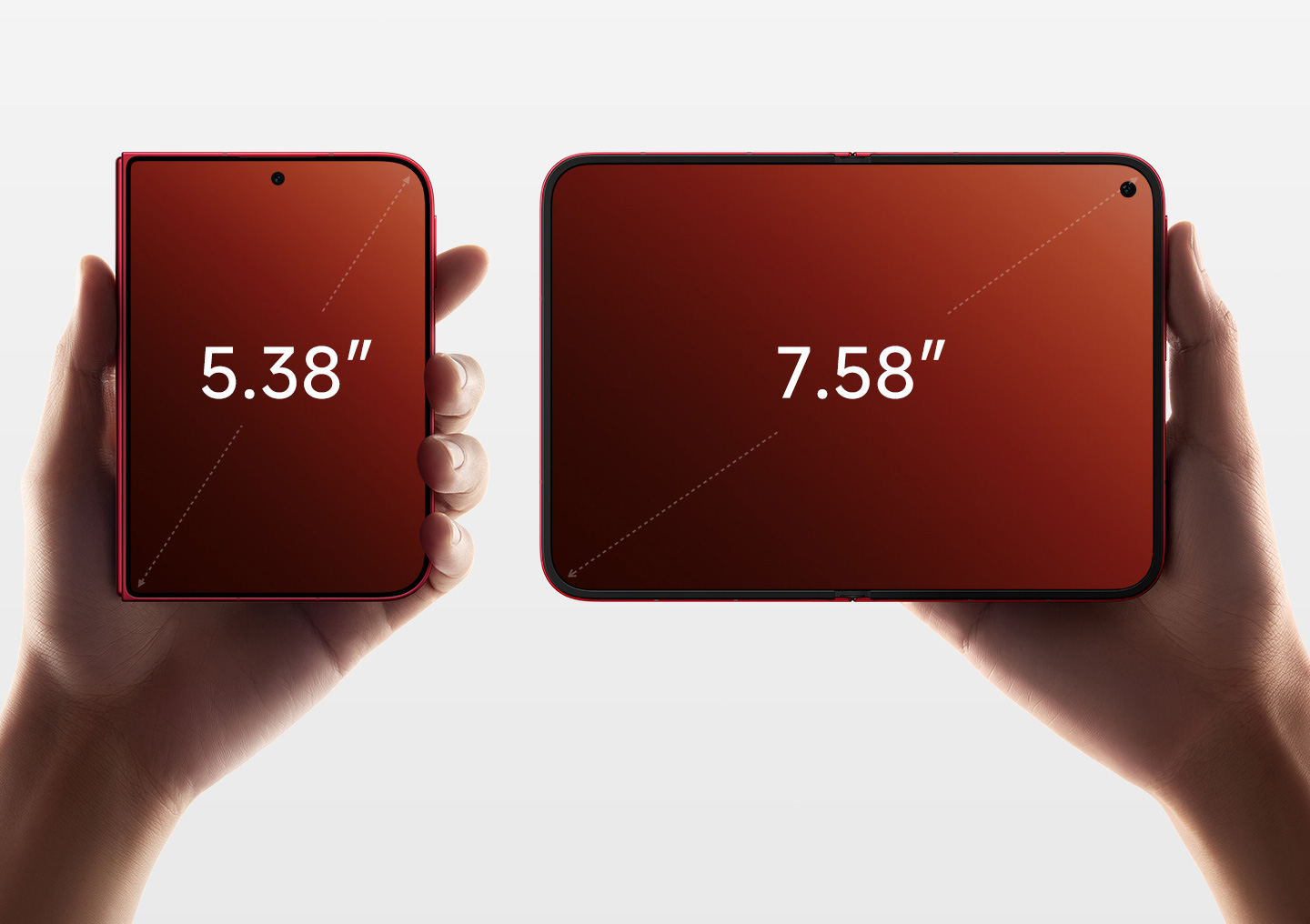
Huawei built the Pura X Max around video, documents and games, the three things a tall screen crops worst. Folded, it stands 120 millimeters tall and 85 wide, closer to a passport than a phone, and the 5.4-inch outer screen handles calls and replies one-handed. Open it and the inner screen runs 166.5 millimeters across, wide enough that landscape video fills the frame instead of floating in black bars.
Price: Sold in China only, with no US price or US release announced
Where to buy: See it at Huawei
Xiaomi chased the same shape with a ruler. Both 18 Fold screens use the paper ratio of an A4 sheet, so the folded phone and the open phone share one proportion, and at 117.8 millimeters the Xiaomi stands shortest of the three folds. Its inner screen is the smallest here at 7.58 inches, a difference you need the spec sheet to notice.
Samsung arrived at wide from the opposite direction. Seven generations of Fold phones opened tall, and the Fold8 scraps that shape for a 10:16 cover screen built for scrolling and typing and a 4:3 main screen built for everything else. At 4.5 millimeters open, it’s also the thinnest phone here, and folded, at 9.7 millimeters, it still pockets slimmer than both Chinese folds.
Against all three, the Duo answers with sealing: IP68, a rating none of the other foldables here match. A folding phone that shrugs off water like a slab removes the easiest objection buyers had to the whole category.
Four camera systems, four different bets
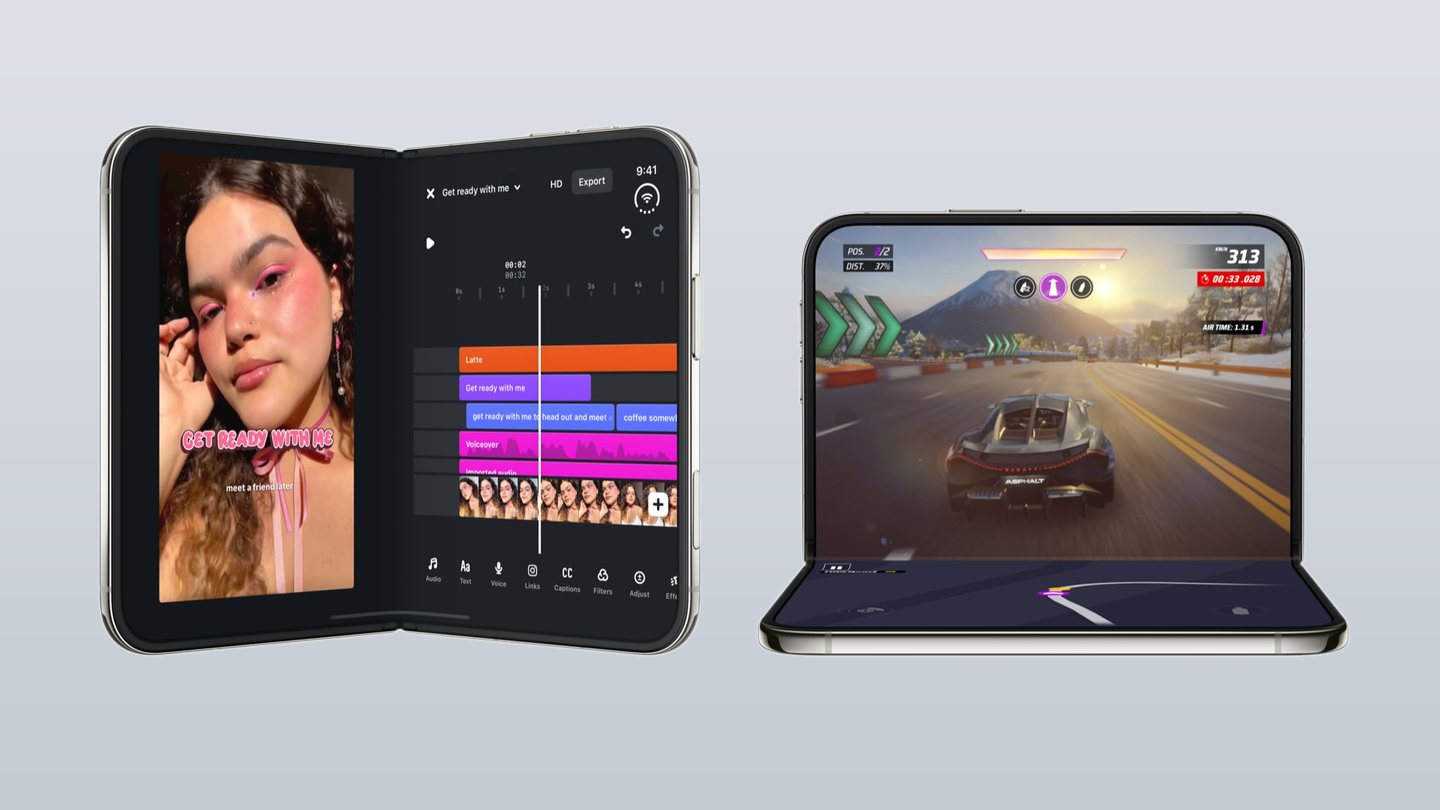
Huawei’s main camera bends light with moving glass: a physical variable aperture from F1.4 to F4.0 across ten stops, so depth of field becomes a dial instead of a software guess. Apple took the opposite bet on the Duo. Its 48MP Fusion Main sits at a fixed ƒ/1.6 and leans on computation, pairing with a 48MP Fusion Ultra Wide, and its telephoto is a 2x optical-quality crop from the main sensor rather than a third camera.
Price: From $1,999 at Apple for the iPhone Duo (256GB)
Where to buy: Buy at Apple
Xiaomi placed the biggest bet on resolution. A 200MP Leica main camera, a 50MP periscope at 3.5x and a 50MP ultrawide give the 18 Fold the deepest zoom bench here alongside Huawei, whose own 50MP periscope also reaches 3.5x. Samsung ships no telephoto at all: the Fold8 pairs two 50MP cameras, wide and ultrawide, and crops its main sensor for 2x, the same crop trick the Duo plays from its 48MP main. On phones at $1,549.99 and $1,999, those empty slots are the loudest lines in their spec sheets.
Selfie hardware splits the group the same way. Xiaomi fits 16MP. The Duo fits a 12MP Center Stage camera on its outer screen, with a second camera hidden under the inner display. Samsung fits 10MP on both screens. Huawei’s pair of 8MP cameras is the weakest hardware in its whole spec sheet. Foldable owners can flip any of these phones around and shoot selfies with the rear cameras instead, which quietly erases most of that gap.
Four operating systems, four different worlds
Software decides whether any of these phones can be your only phone. The Pura X Max runs HarmonyOS 7, Huawei’s own system with Huawei’s own app store, and no US release means no US support story behind it. Buy one and you’re importing the ecosystem along with the hardware. Support follows the same route.
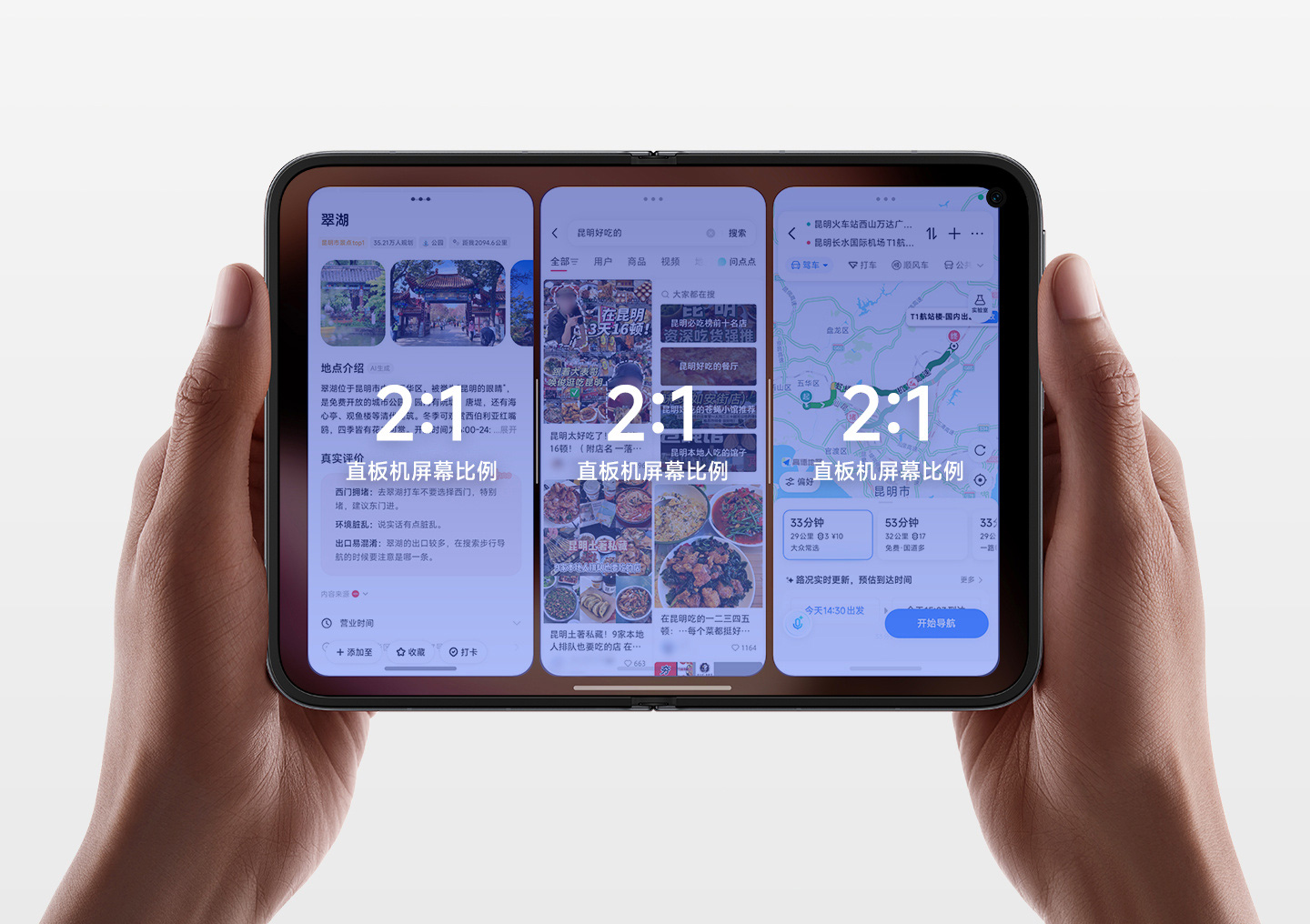
Xiaomi’s 18 Fold runs HyperOS 4 over Android 17, and Xiaomi built the software around the wide screen: three apps run side by side, each at the proportions of a normal phone screen, as the photo above shows. The build sold in China is still a China build, with the same import caveats as the Huawei.
Price: Sold in China only, with no US price or US release announced
Where to buy: See it at Xiaomi
Samsung’s One UI 9 on Android 17 carries the least friction of the three foldables, because the Fold8 is a US product with US apps, US carriers and Galaxy AI features like Now Nudge built for this market. The Duo’s iOS 27 was reimagined around the fold, with Split View running two apps side by side on an iPhone for the first time. It plays the ecosystem game on top: Apple Intelligence and the new Siri AI assume your laptop, tablet, watch and earbuds already speak Apple. For millions of buyers, that assumption is the spec that decides everything. Ecosystems close more sales than spec sheets do, and every one of these four companies knows it.
Who each one is actually for
Buy the Fold8 if you want the wide fold today, from a US store, with a warranty behind it. The lightest phone here and the thinnest when open, it’s also one of only two foldables in this group with a US price, and you accept the missing telephoto as the cost of the shape.
Buy the Duo if you want Apple’s ecosystem on the biggest screen Apple sells. It posts up to 44 hours of video playback on its outer display, folds down to a 5.4-inch phone you can work one-handed, and asks you to accept 254 grams and a cropped telephoto instead of a third camera. Plenty of Apple buyers will take that deal without blinking.
Look at the Pura X Max if the wide screen itself is the draw: it opens widest, its variable-aperture camera is the most ambitious hardware here, and its 5,300mAh battery is the second largest in the group. You just have to live in China, or live with importing, to use one.
Look at the Xiaomi 18 Fold if spec sheets are your love language. It carries the biggest battery, the fastest charging and the highest-resolution main camera here, with the same China-only catch as the Huawei. Between the two imports, Xiaomi built the maximalist and Huawei built the camera purist’s phone.
The flagship iPhone slab isn’t in this table, and that absence is the story: it never went wide, so Apple built the Duo to go wide instead.