Philips Hue’s holiday lineup makes the most sense as a system gift, and the Bridge Pro is the piece that turns three separate lights into one coordinated setup. The hub costs $149.99 at Philips Hue and supports more than 150 lights and 50 accessories, so a starter gift this year still has room to grow next year. Buy the hub first.
At a Glance
| Bridge Pro | Signe gradient pole | Play gradient strip 85 inch | |
|---|---|---|---|
| Best for | Starting a Hue system | Design-first rooms | Movie and game nights |
| Role | Hub for 150+ lights | Gradient pole lamp | TV backlight strip |
| Price | $139.99 at Amazon | $319.99 | $149.99 |
The Bridge Pro is the gift that unlocks the rest
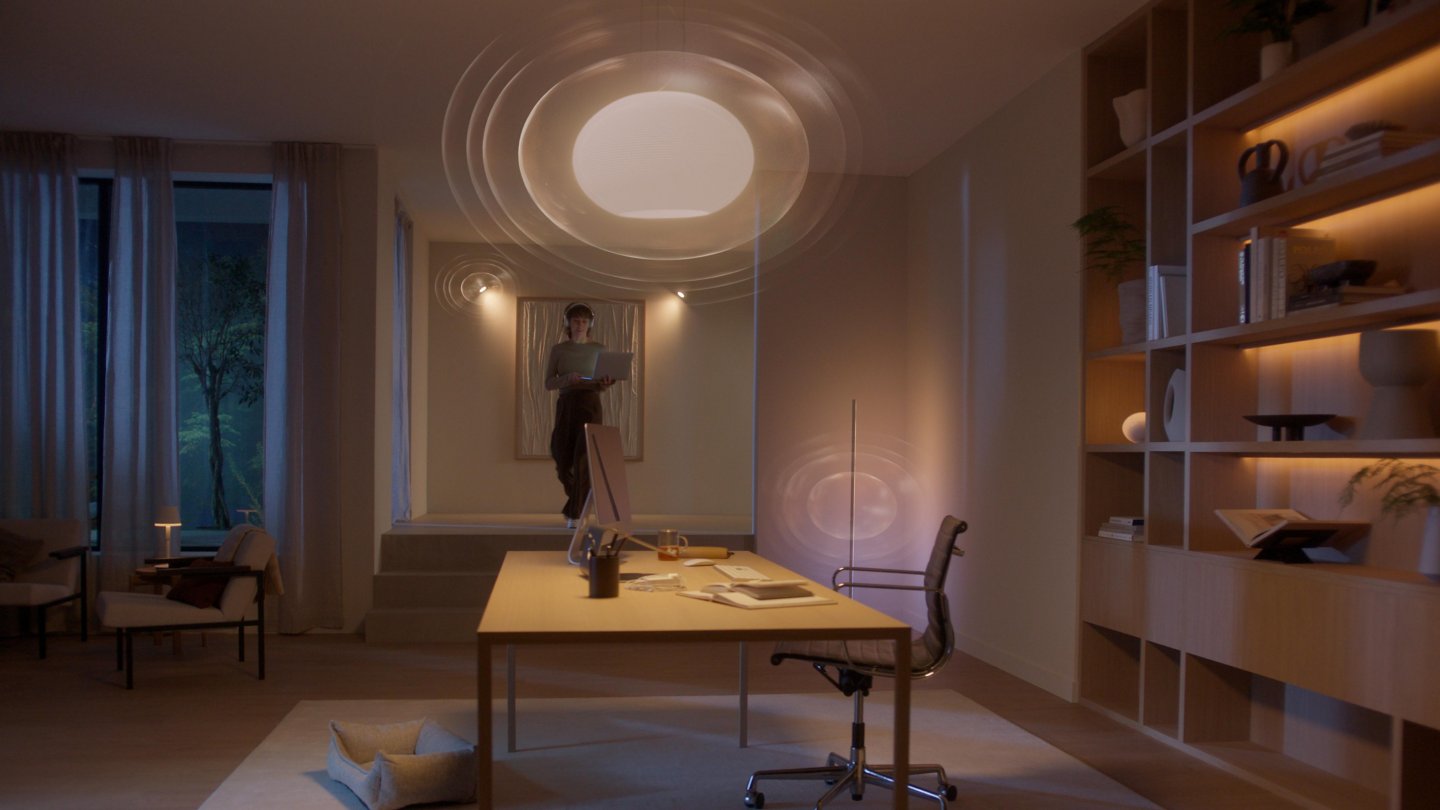
The Bridge Pro runs on a new Hue chip that handles complex algorithms and AI-powered features, and it turns paired lights into motion sensors through MotionAware. It works with Apple Home, Alexa, Google Assistant and Samsung SmartThings, and advanced encryption through the Zigbee Trust Center guards the network it runs. The tradeoff is the entry fee, though the math flips fast: the hub adds $149.99 before a single bulb, though it also triples the old Bridge’s ceiling and removes the second-hub shuffle from big houses.
Price: $139.99
Where to buy: Amazon, Philips Hue ($149.99)
Skip it for a two-bulb apartment with no expansion plans. Everyone else starts here.
The Signe gradient pole is the statement piece
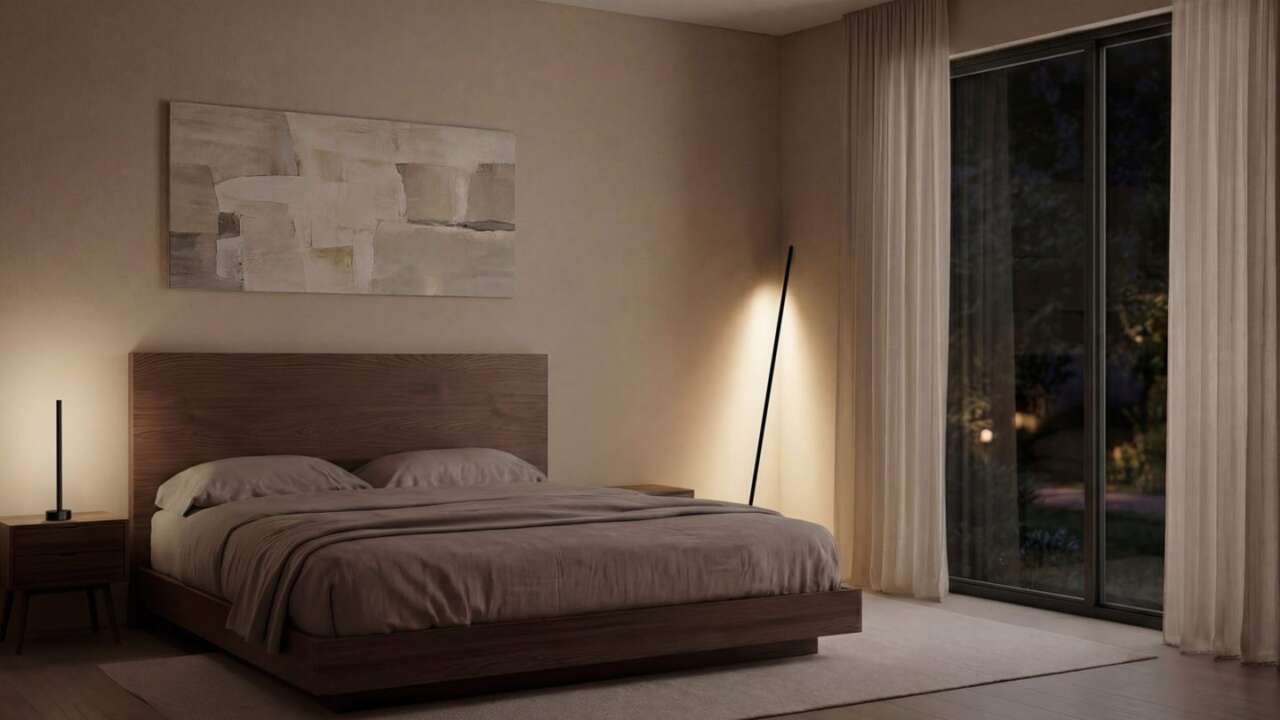
Standing vertically against a wall, the Signe gradient pole washes it with gradients of light, shifting from warm white tones for reading to gentle decorative color for the evening. Its black aluminum body keeps an ultra-slim profile, dimming runs down to 0.1%, and the Hue app handles scenes and automations once the pole joins a system. At $319.99, it’s the priciest piece in this guide.
Price: $319.99
Where to buy: Amazon, Philips Hue ($319.99)
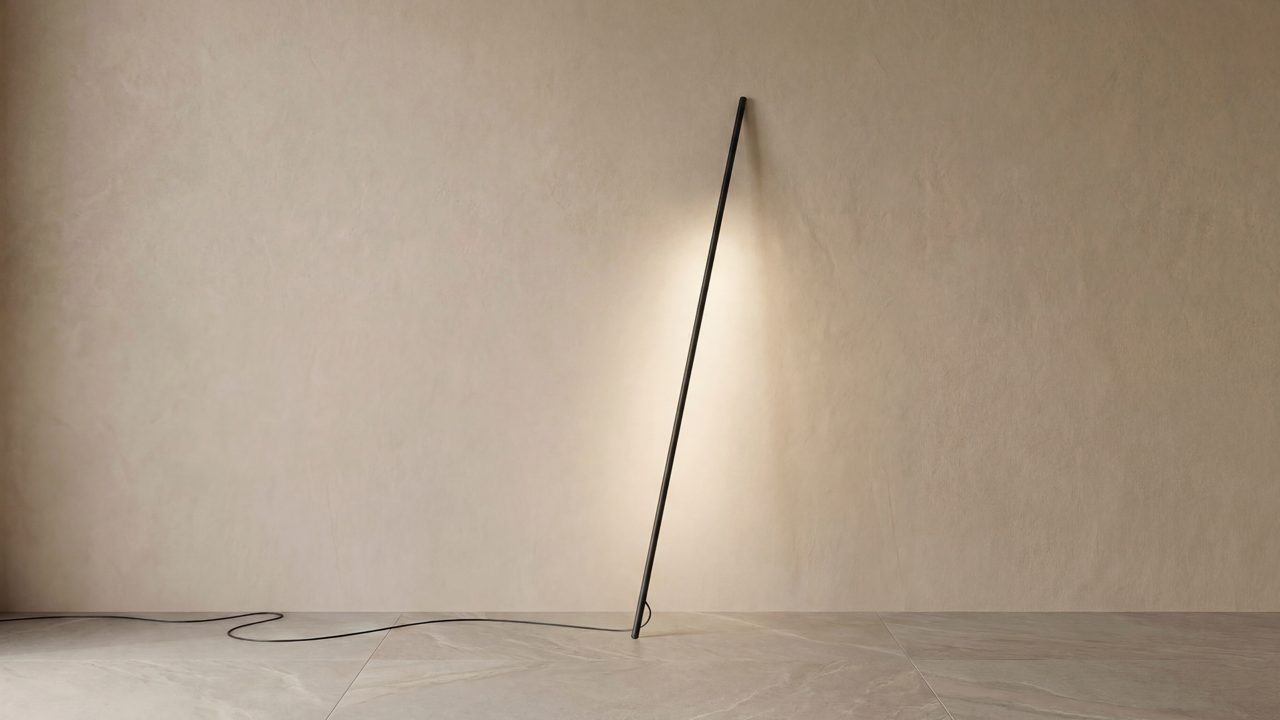
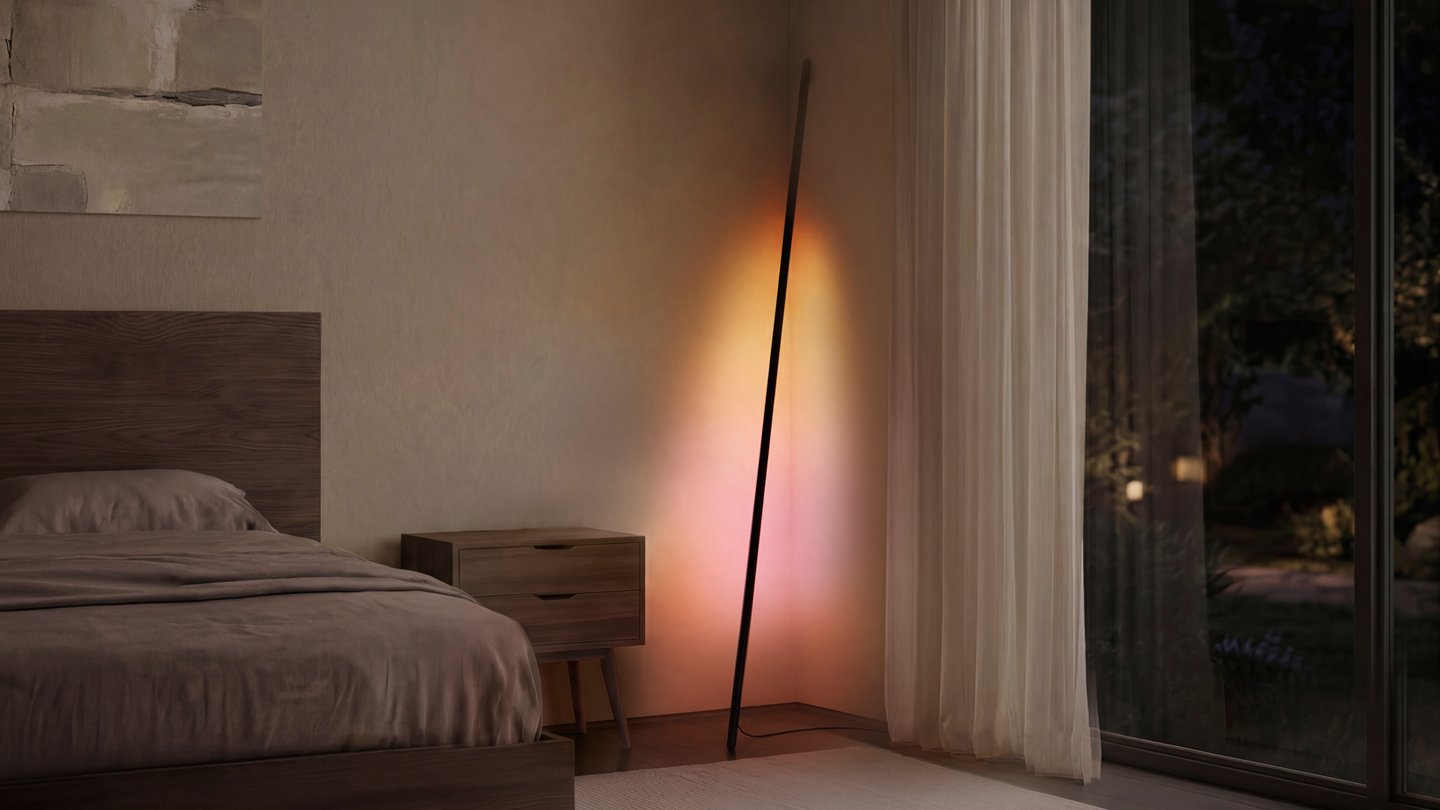
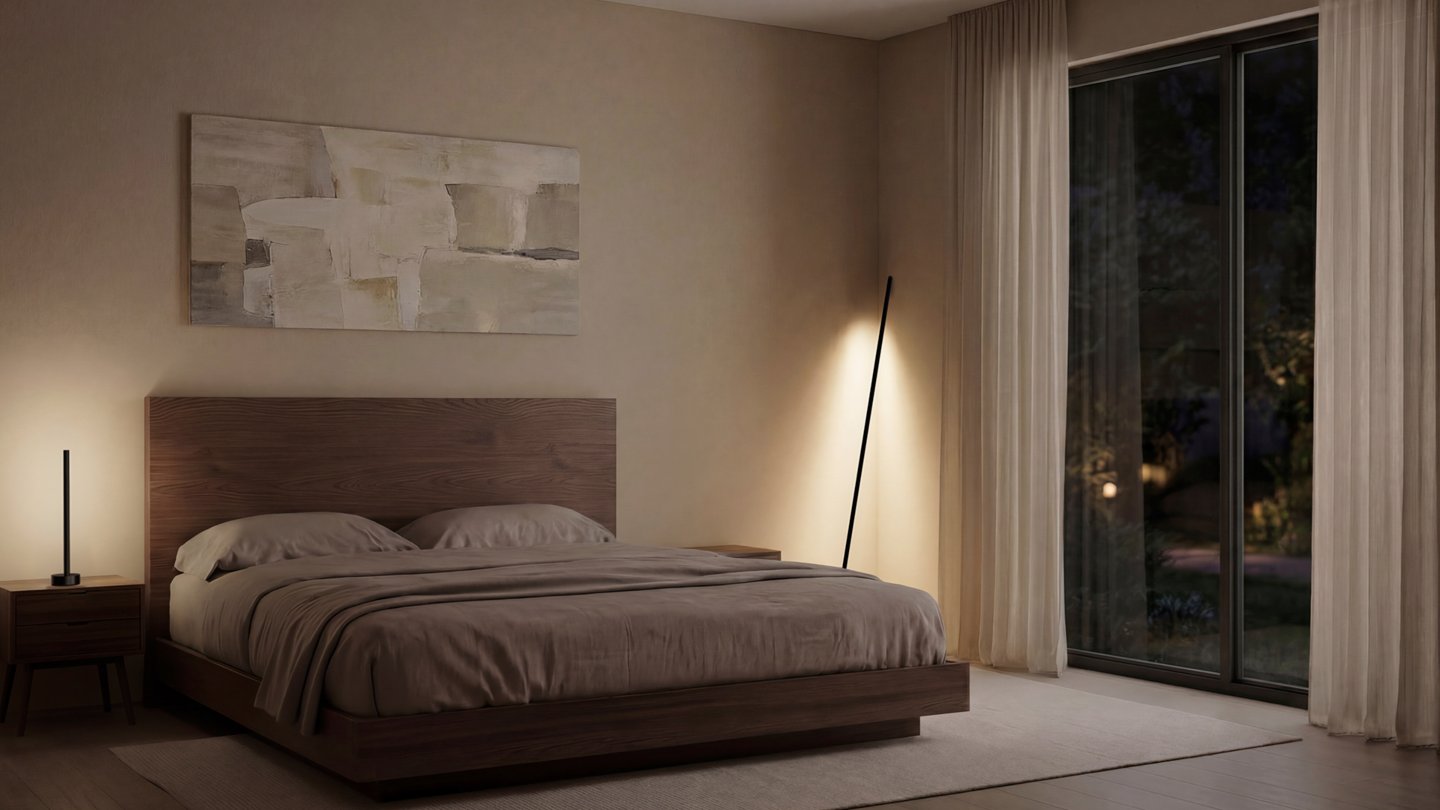
Living room corners, bedroom walls and home offices all suit the pole, and it plugs in without a fixture swap or an electrician. Buy it for the design-first reader on your list.
The Play gradient strip turns the TV into the gift
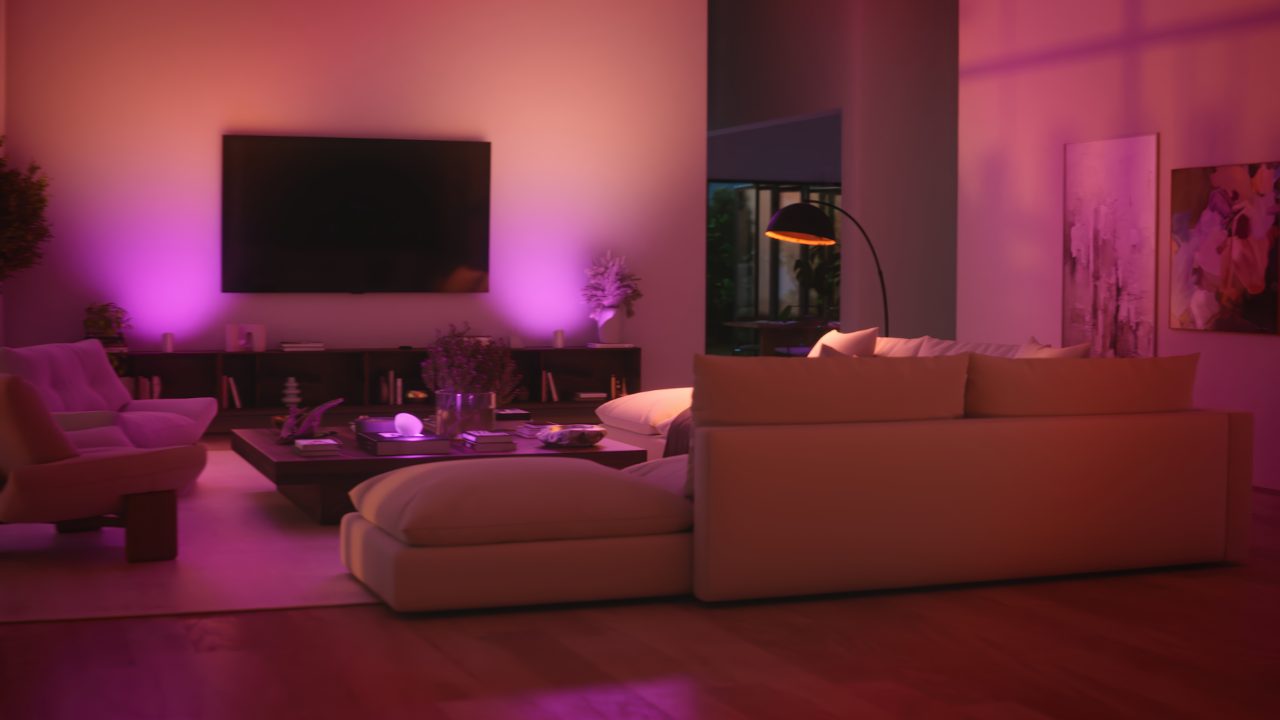
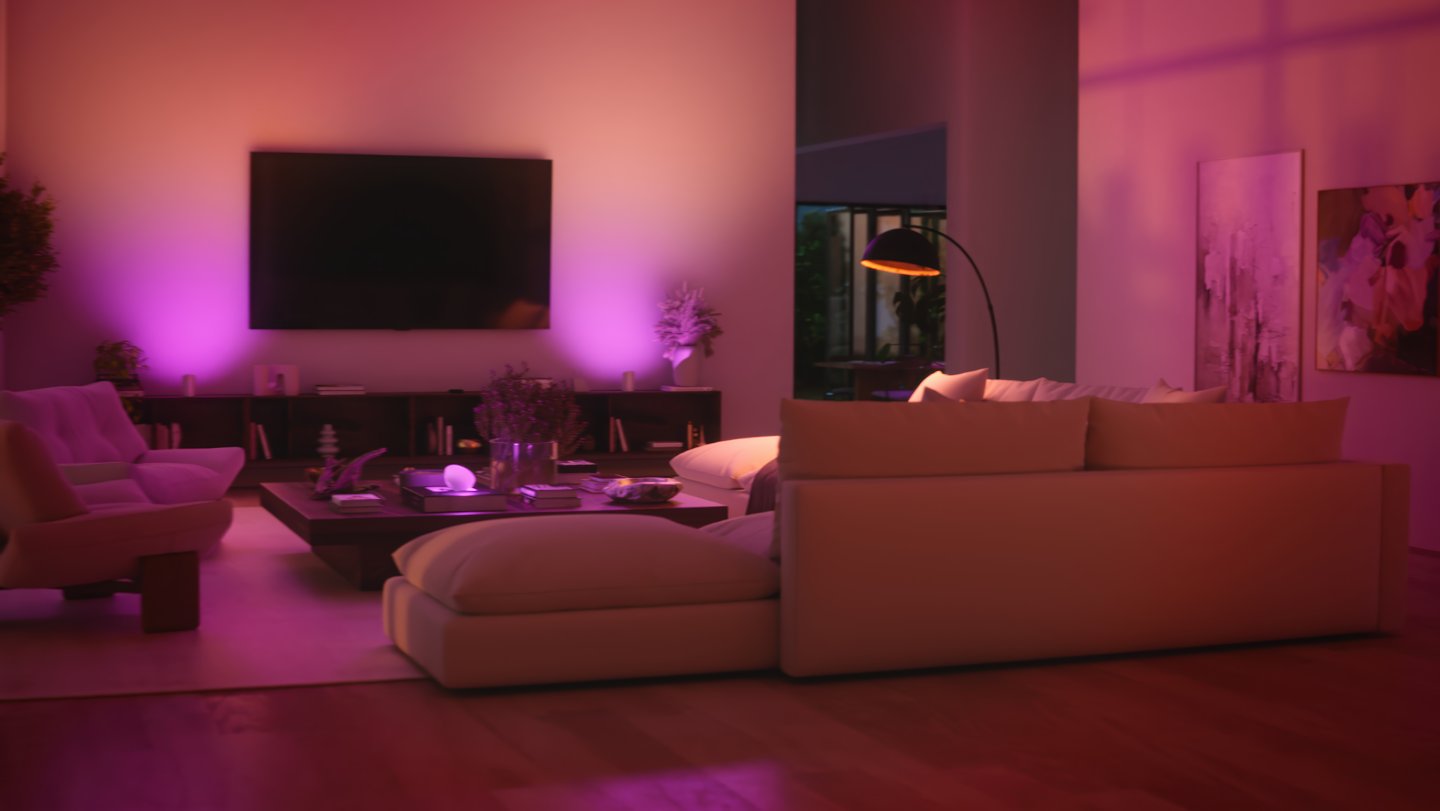
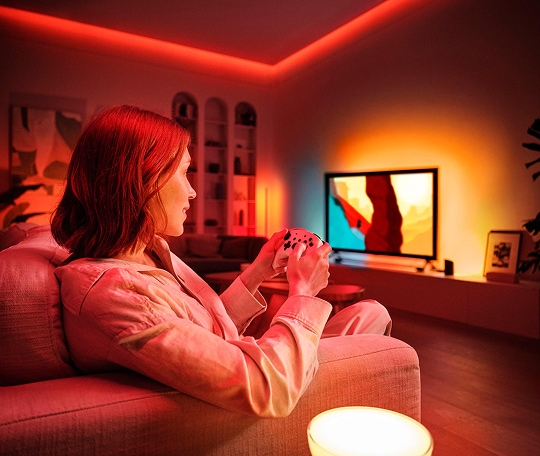
The Play gradient strip light mounts on the back of a TV up to 85 inches and paints the wall behind it with color that tracks the movie or show on screen. RGBWWIC technology drives the gradient, Chromasync keeps its colors matched with other Hue lights in the room, and sync runs through the Hue Sync TV app, Hue screen sync or an HDMI sync box. Deep dimming keeps dark scenes moody instead of washed out.
Price: $149.99
Where to buy: Amazon, Philips Hue ($149.99)
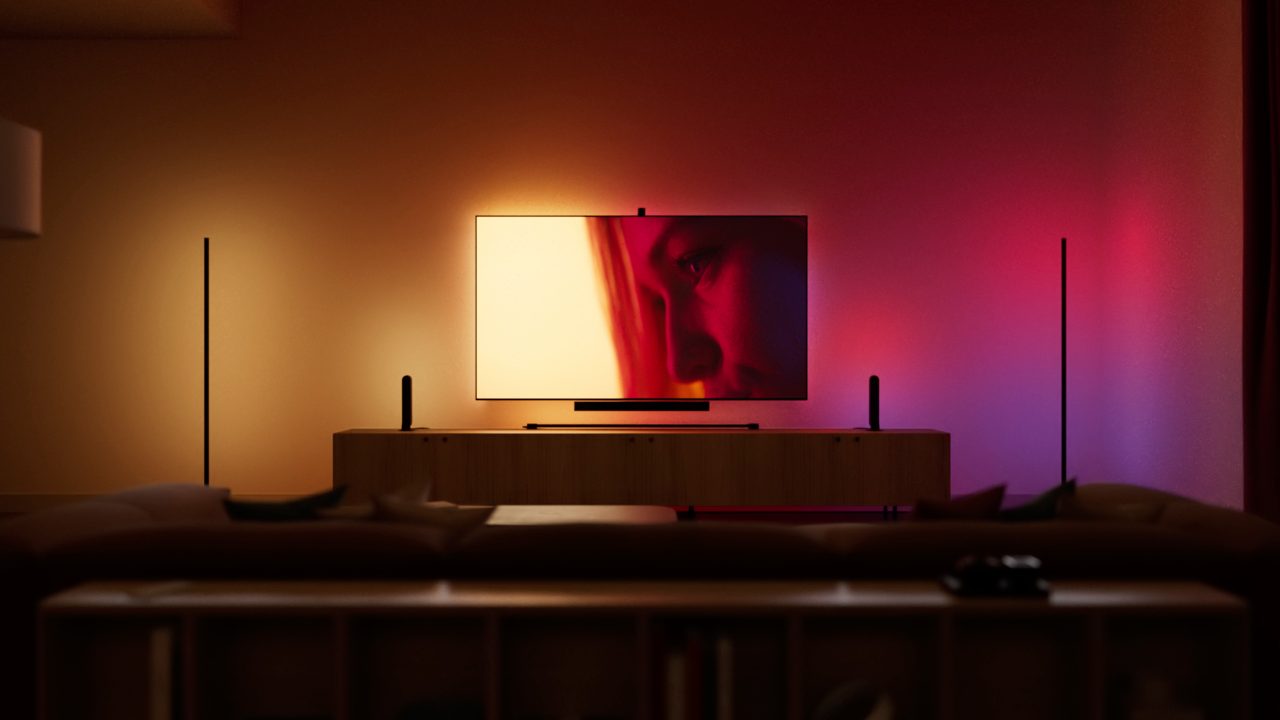
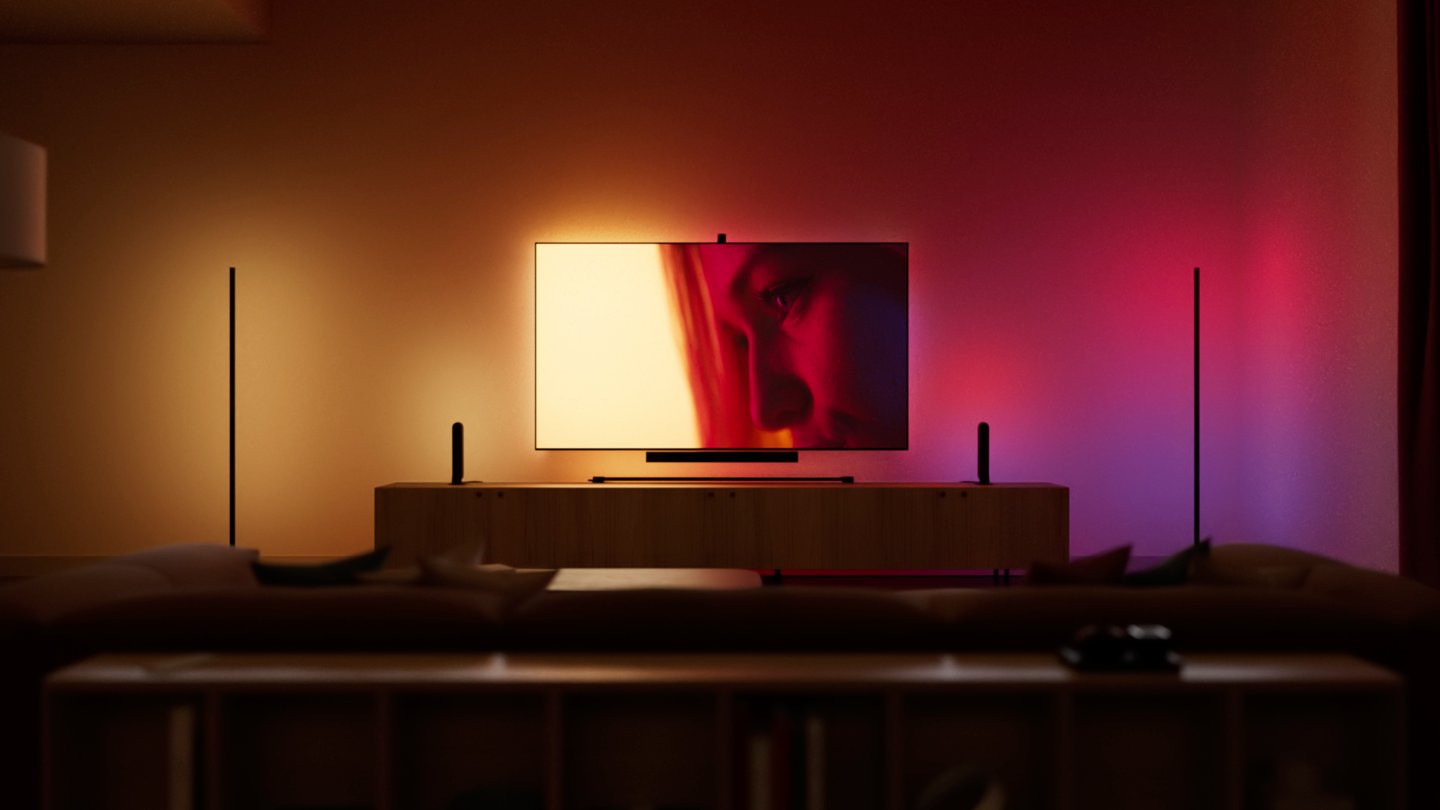
Cut it to size and it attaches with the included brackets, so a big TV gets the full gradient without a custom install or a second purchase. It’s the easiest yes in the guide.
FAQ
Does the Play strip need a Bridge Pro to sync?
Yes for the Hue Sync TV app, which Philips Hue lists as requiring a Hue Bridge on compatible Samsung and LG TVs. Without a Bridge, the strip syncs only through a Play screen sync or a Play HDMI sync box over Bluetooth, and that bridgeless mode runs this one strip and no other lights. Get the Bridge Pro with the strip if the TV app is the plan.
How many lights can one Bridge Pro run?
It handles more than 150 lights and 50 accessories at once, and MotionAware turns those paired lights into motion sensors across the whole house without a second hub in the hallway. One hub covers even a large home on its own.
Which piece should a renter buy first?
The Play strip at $149.99, because it cuts to size, mounts with the included brackets and asks for no fixture swap or electrician at move-in time or at any point during the lease. It still needs a sync path, so pair it with the Bridge Pro for the Hue Sync TV app or with a Play screen sync or HDMI sync box for a single bridgeless strip. Skip the pole until the lease allows a corner that stays put.
How I’d spend it
For a household starting from zero, I’d buy the Bridge Pro at $139.99 on Amazon and the Play strip at $149.99 together, since the strip needs a sync path and the hub gives every later light a home. The Signe pole at $319.99 goes to the reader who treats lighting as furniture and wants the room itself to change character at night. Renters in small spaces should skip the pole and put the same money into the strip.
Start with the hub.