EchoMotion turns a stock smartwatch into a full-body tracker, reading ultrasonic echoes off your arms, legs and torso to place 12 joints from your head to your ankles. No extra hardware rides along today.
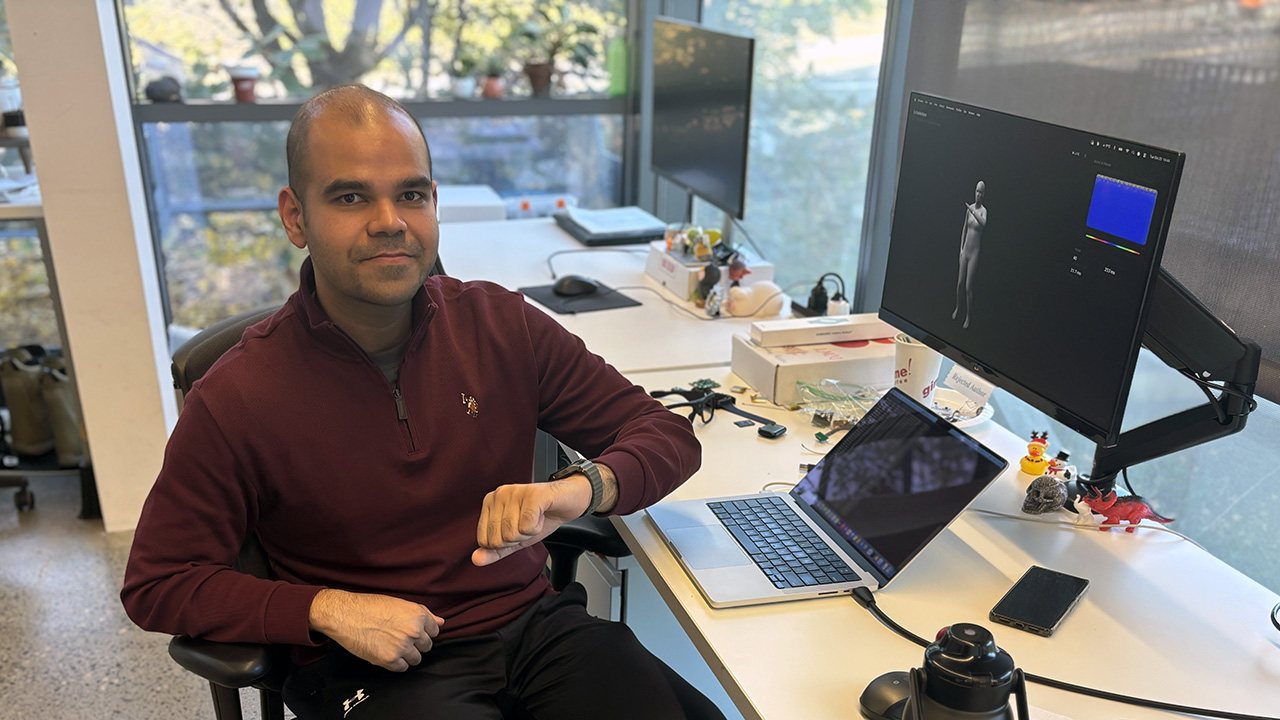
Cornell’s SciFi Lab built the system around a commercial watch’s speaker and microphone. Cheng Zhang directs the lab. Its tests ran on a Galaxy Watch 6.
Samsung Galaxy Watch 7 40mm Bluetooth
EchoMotion ran on this watch with no retraining
Price: $219.00 $249.99 (save $30.99, 12% off)
Where to buy: Buy on Amazon
Sonar on your wrist
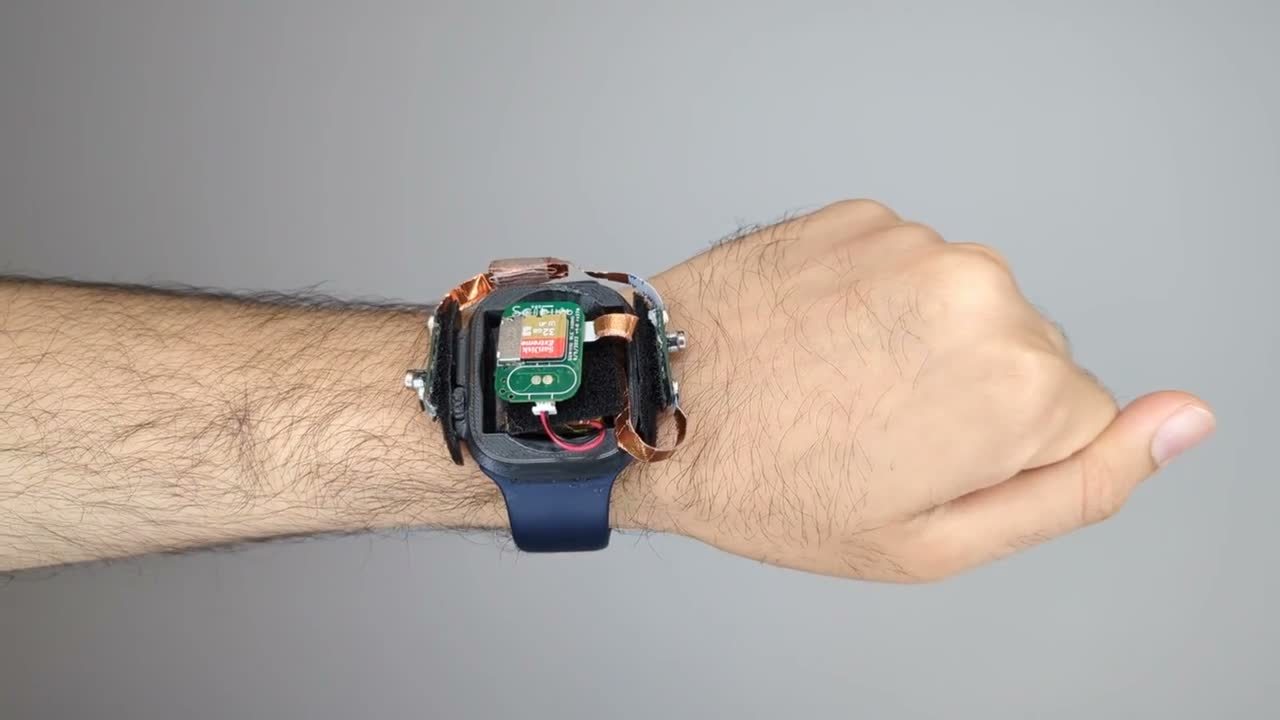
The watch speaker sends out ultrasonic sound, and its microphone listens for the echoes that bounce back from the wearer’s body as it moves through space. A lightweight model turns those echoes into joint positions. Development started on a 3D-printed watch replica carrying a speaker and microphone pair on each side, with two speakers wrapping the wearer in a sphere of inaudible sound that nobody could hear. Retail watches carry a single speaker and microphone pair, though the model still reads the full body from that one contact point on the wrist. Its microphones picked up the echoes returning off the body, and the model read those returning patterns to place each joint in three-dimensional space around the wearer.
Your watch today tracks only itself. Its accelerometer and gyroscope know where the device sits and how it moves, and nothing in that hardware knows where your knees or elbows have gone. Whole-body tracking has traditionally meant adding a smartphone, earbuds or a VR headset to the watch, and camera systems solve the same problem by filming the wearer and everyone nearby.
What the tests showed
Training started with 10 volunteers wearing the prototype on the nondominant hand through 18 exercises in the lab. The model learned echoes, not video.
The team then moved the same model onto an unmodified Galaxy Watch 6 and handed it to 15 people the system had never encountered during its training runs. For each of those new wearers, the average error per joint came in under four inches, measured against the true position of that joint in the room. A one-time calibration of 12 minutes, spent moving while the watch learned the wearer’s body, cut that error by more than a third to about 2.4 inches. A deep learning model translated each echo pattern into movement, and the scoring compared its predicted joint positions against the camera-captured poses from training.
The same model also ran on a Samsung Galaxy Watch 7 and a Google Pixel Watch 3 with no retraining, so the software travels across current watches without starting over. Three watches ran one model. Sensing on the prototype drew about 12 milliwatts, roughly 40 times less power than a wearable camera, and a 30-minute session on the Galaxy Watch 6 used 5% to 6% of the battery. “This is a very important jump for body tracking,” said lead author Saif Mahmud. The National Science Foundation backed the research.
The team also ran 10 new participants through the same 18 exercises in a small room, a narrow hallway and a spot beside a noisy road, outside the lab’s controlled setup. Furniture and ambient noise left the readings alone, and the acoustic data stayed small, cheap to process and free of any video of the wearer or bystanders. Echoes bouncing off other people in that narrow hallway nudged performance down slightly, the one condition in the testing where the surroundings pushed back against the sonar readings. Traffic beside the road session gave the microphones a competing wall of sound to sort through, and the readings held up through all 18 exercises anyway.
Why your watch can’t do this yet
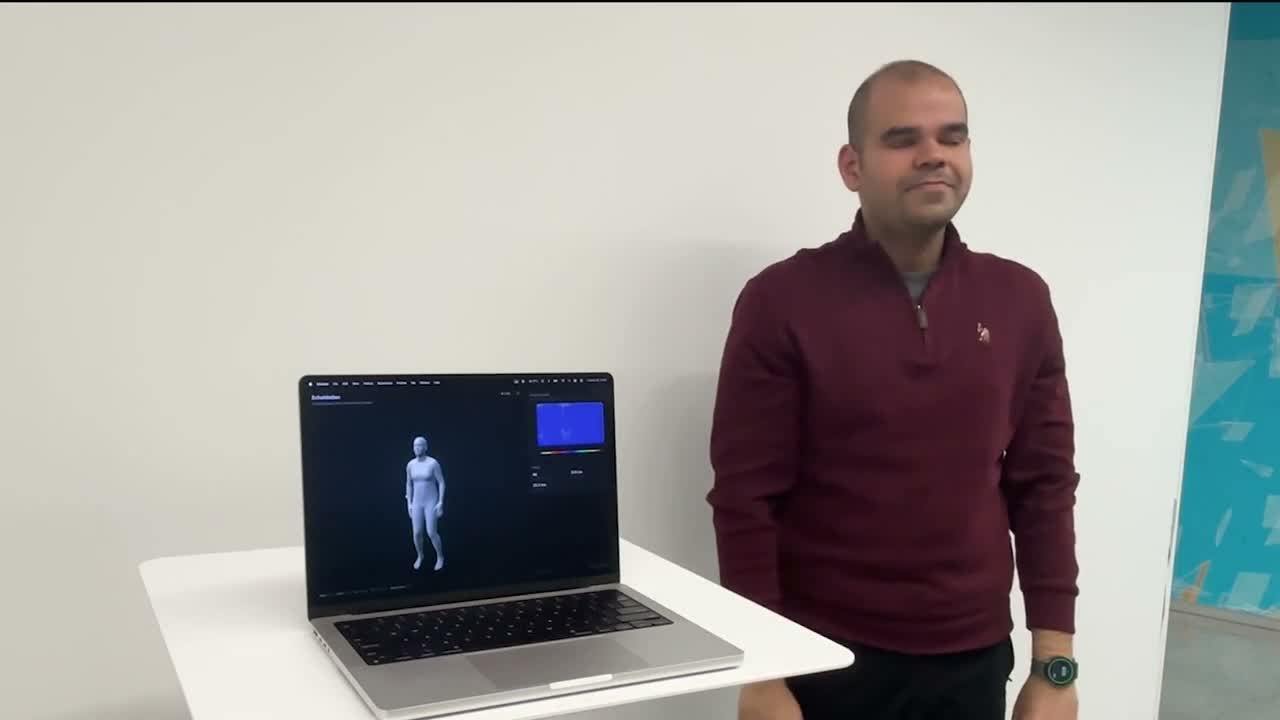
EchoMotion remains a research system, with no app, no download and no release date attached to it, so the watch on your wrist gains none of this today. Nothing here ships yet. The team presented the paper in Shanghai on October 13, and it runs in an ACM journal covering interactive, mobile, wearable and ubiquitous technologies.
The group’s current work points the system at fitness, building a personal fitness agent that counts reps and corrects form during a workout, down to a Bulgarian split squat. Form correction drives the roadmap. Mahmud also expects the model to improve as data arrives from thousands of users moving through crowded places like the subway, where echoes get harder to read and the body sits among other moving bodies.
The group is also exploring a pairing with smartglasses, where first-person vision from the glasses tracks the objects the wearer’s hands pick up while the watch tracks the body itself. Mahmud’s longer vision is a personal agent describing a whole day, what its wearer did and what that person ate, with EchoMotion supplying the body tracking underneath it, joint by joint and hour by hour. That agent remains a vision.
“We have made significant efforts in making EchoMotion work on commercial devices, so that the adoption can be very easy,” Mahmud said. Any current watch with a speaker and a microphone already clears the hardware bar, and the Galaxy Watch 7 in the box above ran the same model in testing at a current price of $219.00. Buy that watch for its own features today, and treat EchoMotion as a reason to watch the next software cycle rather than a feature waiting in an app store for your current watch. Mahmud put the longer bet in his own words: “This project enables the body tracking part of that vision.” The software decides the timeline.