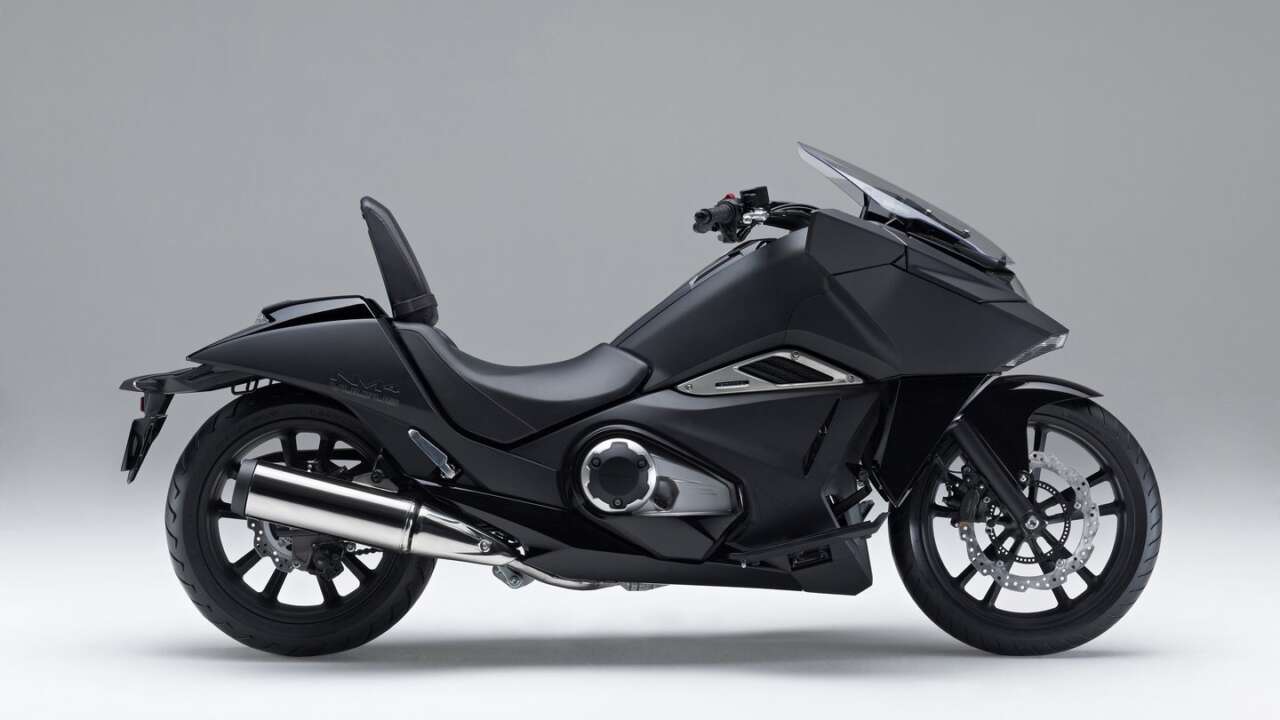
In June 2014, Honda dealers across America took delivery of a motorcycle that looked like it had ridden straight off a film set. It had no clutch lever, a seat lower than most cruisers, and bodywork drawn straight from Japanese comics.
The NM4 was a genuine production model, sold in the United States from 2014 and in Europe as the NM4 Vultus, and Honda aimed it squarely at people who had never once considered owning a bike. The target buyer had never thrown a leg over a motorcycle. The price was real motorcycle money, though.
Designed by twenty-somethings with a free hand
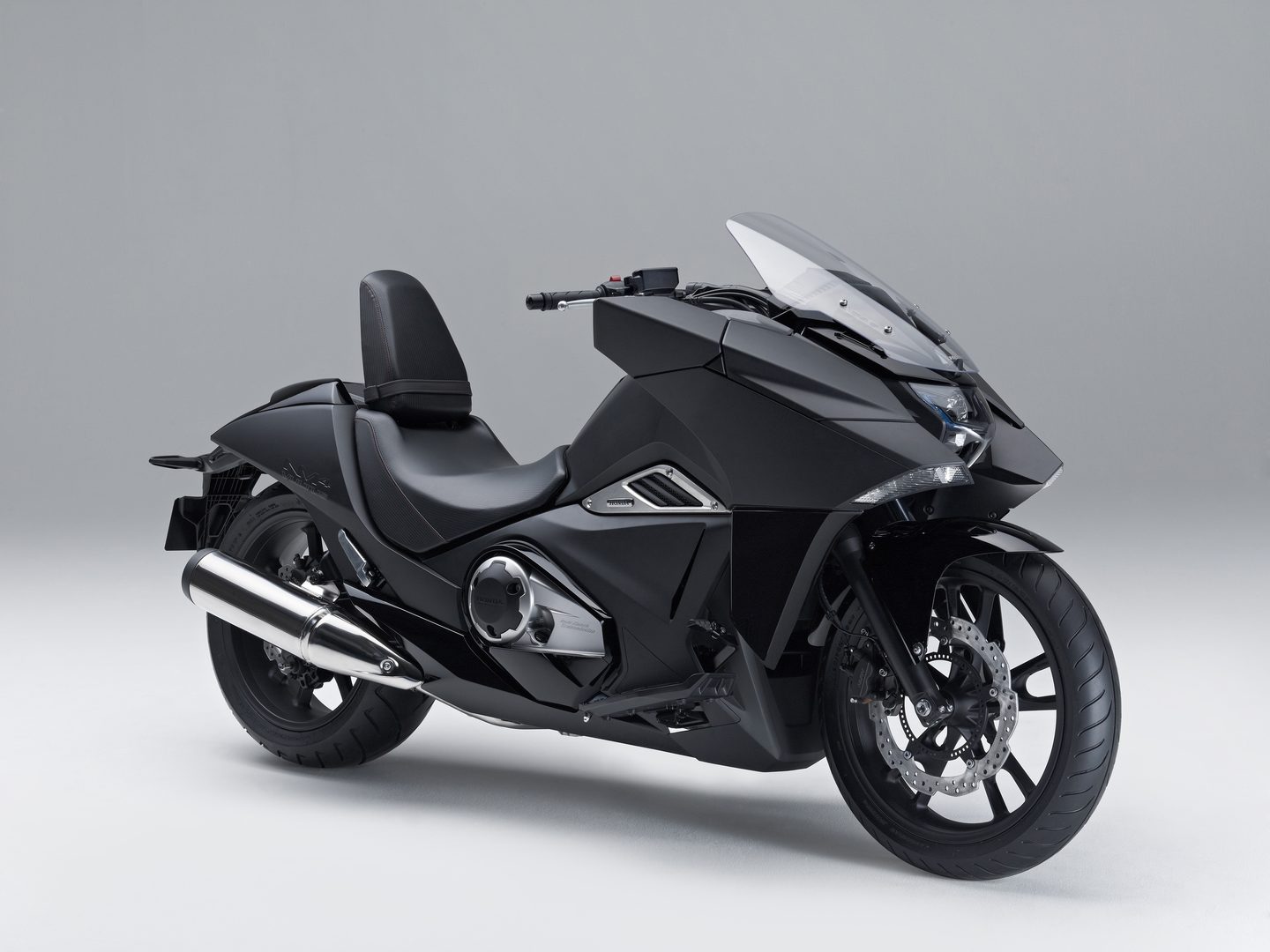
Honda handed the project to a design team in its twenties and early thirties and told them to ignore the rulebook. The team worked under project leader Keita Mikura, and Honda says the low, stealth-bomber silhouette came straight from the anime and manga the designers grew up on.
Matte panels, sharp creases and a hunched front end gave the bike its menace at a standstill. Parked, it looked fast in a way cruisers never try to. The stance came from the feet-forward layout and that long, low, stretched tail section.
“We wanted to create something special, not just in the two-wheeled world, but truly unique in the whole world,” Mikura said at the unveiling. Full LED lighting front and rear completed the effect, and the only paint option on the order sheet was Matte Black Metallic, a Henry Ford joke Honda played straight. Nothing else in the range looked close.
Vultus, the European name, is Latin for a face or an expression, and the bike wore its angular panels like a mask lifted from a drawn character’s face. The face was the whole idea.
The production bike kept the concept’s feet-forward stance and integrated front storage. Honda presented the bike at the Osaka Motorcycle Show in March 2014, weeks before the US announcement landed on April 1. American sales started that June, as a 2015 model, in the same single color, matte black.
A 25.6-inch seat and no clutch lever
The seat sat 25.6 inches off the ground, the six-speed Dual Clutch Transmission shifted on its own or by handlebar switches, and ABS brakes, a 43mm fork and a Pro-Link rear end came from the proven NC parts shelf. The hardware was familiar on purpose, borrowed from bikes Honda already built by the thousand.
Riders sat in it, not on it. Feet went forward onto floorboards, and the low build kept a 562-pound machine calm at walking pace. A low 3.0-gallon tank and a 64.7-inch wheelbase stretched the silhouette out like a drag bike.
Under the bodywork sat a 670cc liquid-cooled parallel twin with fuel injection and a chain final drive, tuned for low and midrange pull rather than a top-end chase for peak power. Europe got a larger 745cc version of the same engine, while American buyers took the 670 and never saw the bigger option. Honda filed the model in its NC range, alongside the NC700X adventure bike and the CTX700 cruisers that used the same 670 twin in America.
The dash changed color with the mode
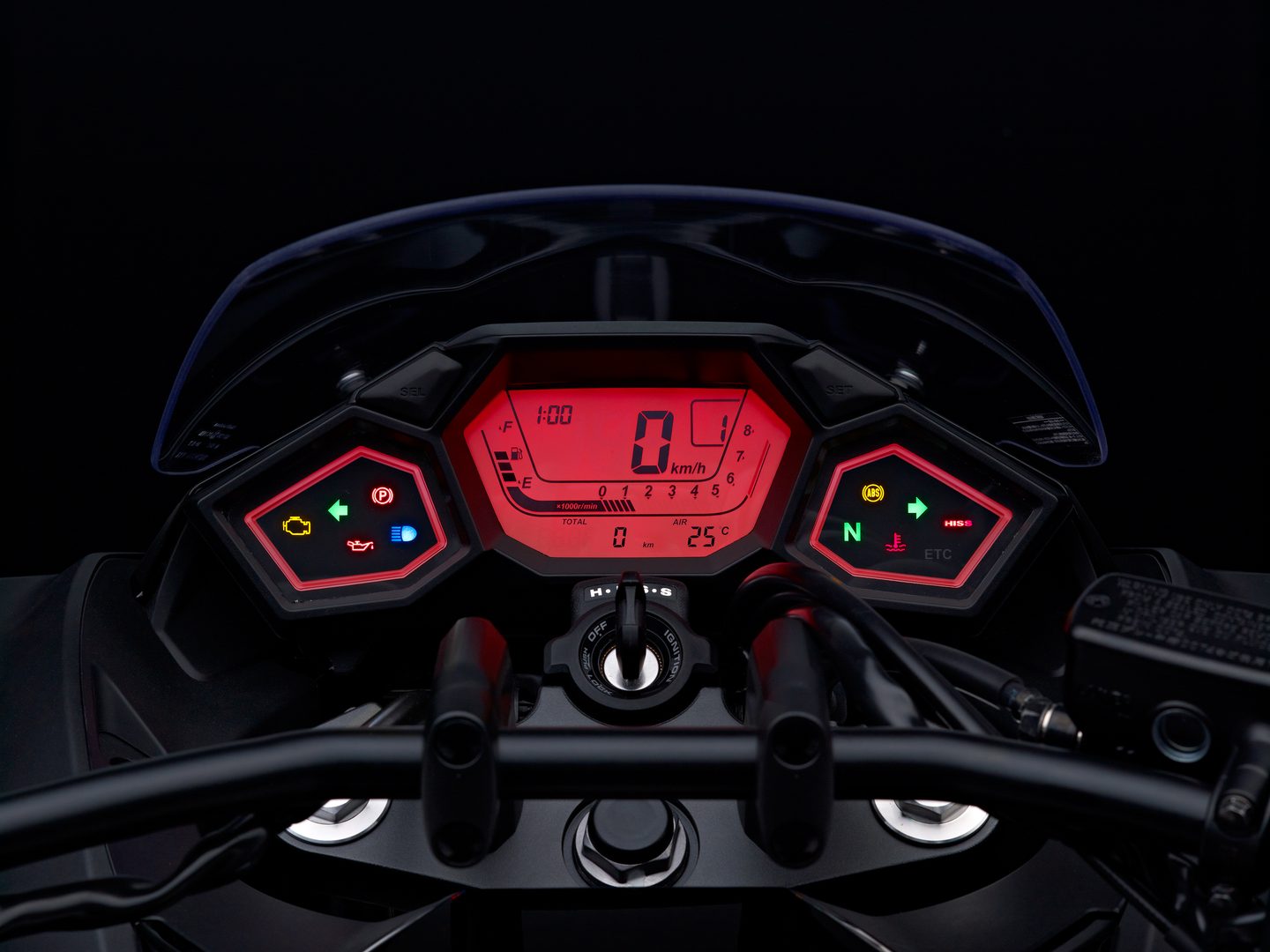
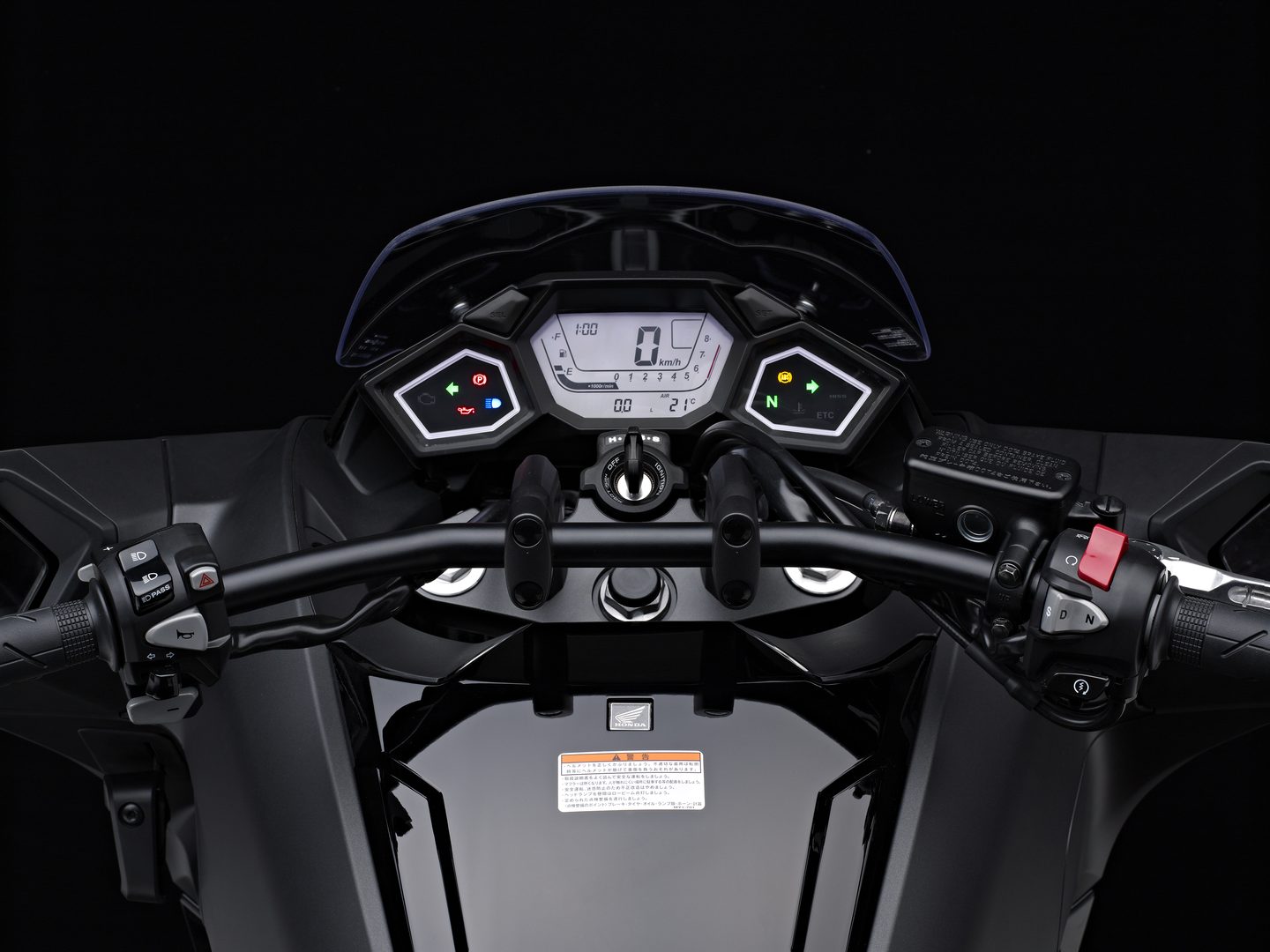
Select Neutral and the instruments glowed white, Drive turned them blue, Sport pink and Manual red, and across every mode the dash offered twenty-five colors in total. Each mode announced itself before the rider read a single digit anywhere on the panel.
Pure theater, standard equipment. The color coding also worked at a glance, since the glow announced the mode before a rider looked for the indicator. Honda even let riders pick shades within the settings, because the party trick was the point as much as the information it carried.
The panel packed speed, revs, gear position, fuel level, twin trips and a clock into one angular housing that wrapped around the rider’s field of view. It read like a game screen on purpose.
A passenger seat that becomes a backrest
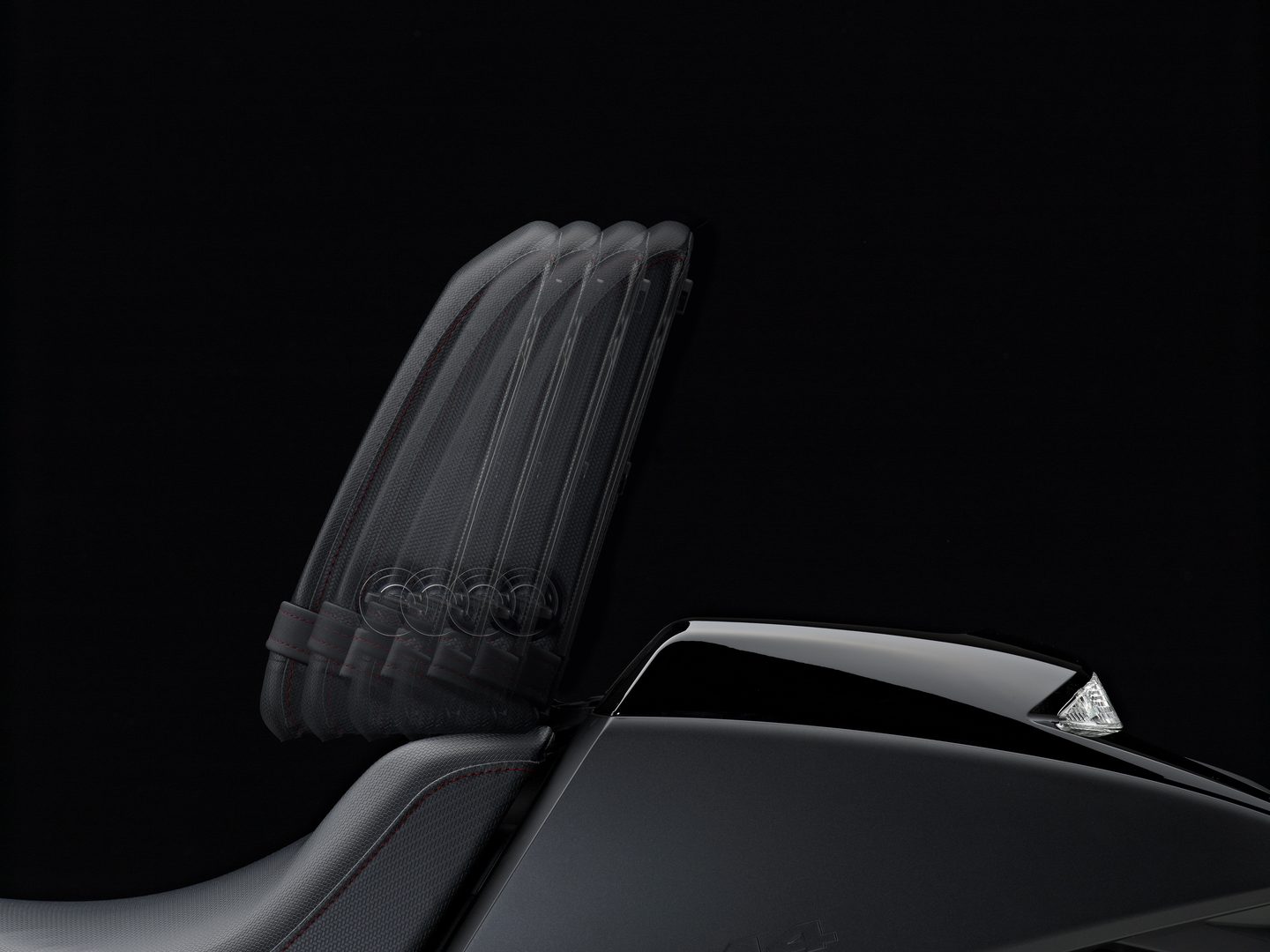
The pillion seat flipped up to become the rider’s backrest, adjusting through three angles and sliding fore and aft, while lockable cubbies in the front bodywork swallowed a phone, a wallet and a charging cable on the 12-volt socket.
Storage was the real weakness. Four liters split between the two front compartments handled daily carry, and real luggage meant ordering Honda’s integrated panniers from the accessory catalog at Honda prices. For scale, the underseat trunk on a typical maxi-scooter swallows a full-face helmet whole, with room to spare.
Honda quoted the European version at 80.2 mpg in WMTC testing, with more than 185 miles of range from its 11.6-liter tank, the same unit American buyers knew as 3.0 gallons. The economy suited the commuter mission Honda designed the bike around, sipping fuel on the daily run into the city.
The price asked buyers to believe
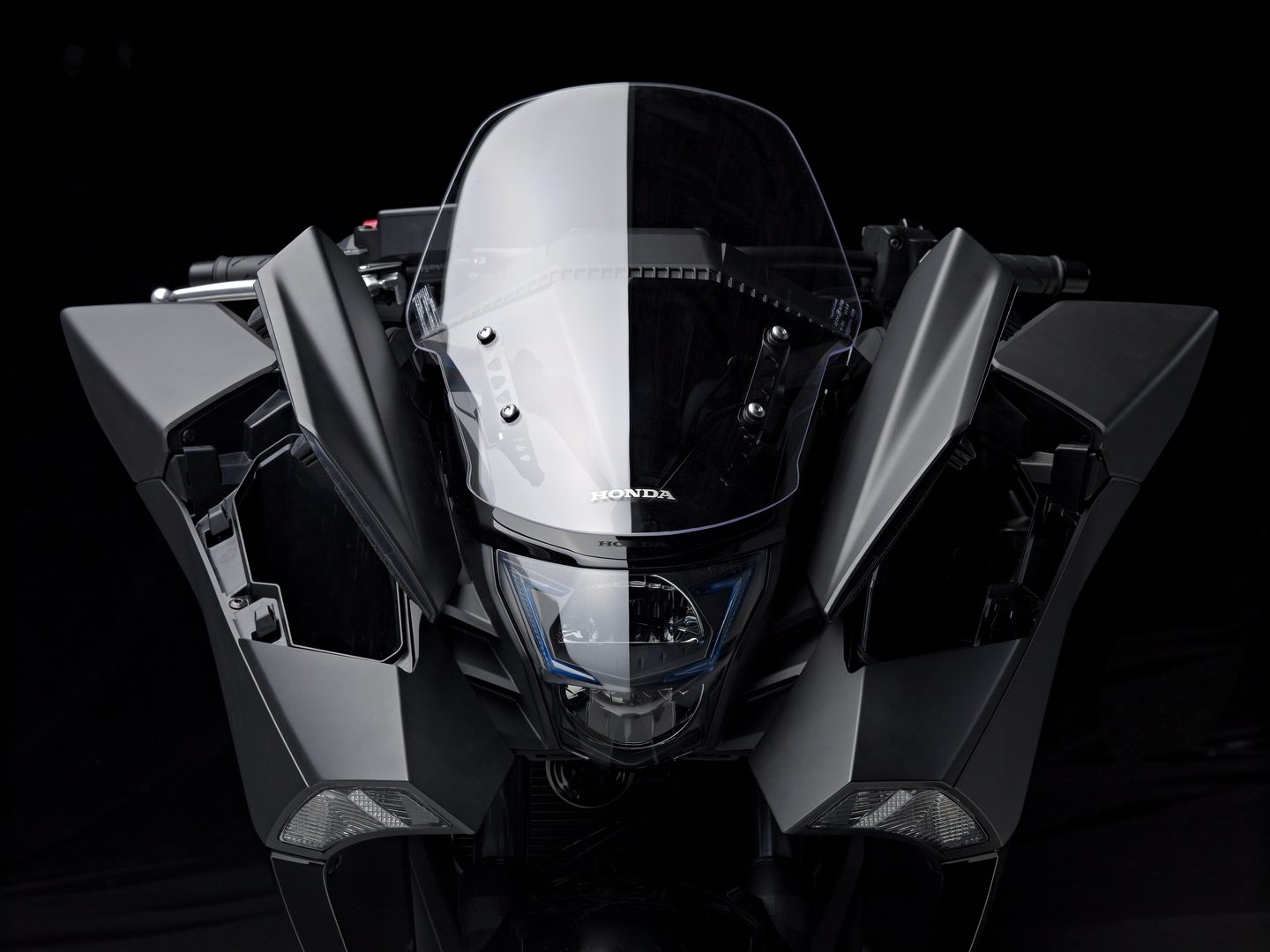
At $10,999 the NM4 cost thousands more than the conventional Honda cruisers and NC models sharing its engine architecture, and the price climbed to $11,299 by the 2018 model year without changing the formula or the audience.
Attention was never the problem. Honda’s pitch promised a machine for forward-thinking riders, and the pitch worked as a showroom draw, but curiosity at bike nights never turned into real sales volume.
Dealers had a harder pitch still, because the buyer Honda wanted often didn’t own a trade-in or any riding gear at all.
The 2018 model was the last one on Honda’s US site, and the NM4 left the lineup without a successor, a concept bike that escaped into production and stayed exactly as strange as the day it arrived. The automatic idea it carried went mainstream anyway, since Honda now sells DCT versions of the Africa Twin, the Gold Wing and the Rebel 1100. The color-shifting dash never spread, and neither did the flip-up backrest, both still waiting for a second act today.
It still looks like tomorrow.