Your shoes can feel comfortable when you leave the house and leave your feet aching by lunchtime. Long hours standing, daily walks, and running all put pressure on your feet, and the basic insoles supplied with your shoes may not provide the cushioning or support you need.
As someone who used to deal with plantar fasciitis, especially when traveling, I’ve learned to pay closer attention to the shoes I buy and the inserts I use. Long days on my feet have taught me that soft cushioning isn’t the only thing that matters, support and fit deserve just as much attention.
Orthotic insoles come in different arch profiles, thicknesses, and levels of firmness. Some provide structured support, while others focus on cushioning or accommodating movement. Before replacing your current inserts, here are five things to check and a product example for each.
1. Match Arch Support to Your Foot Shape
Start with your arch height. Low, medium, and high arches have different contours, and an insert that presses too firmly against the middle of your foot can make walking uncomfortable. Arch height is a useful starting point, but the support still needs to feel comfortable when you put weight on your feet.
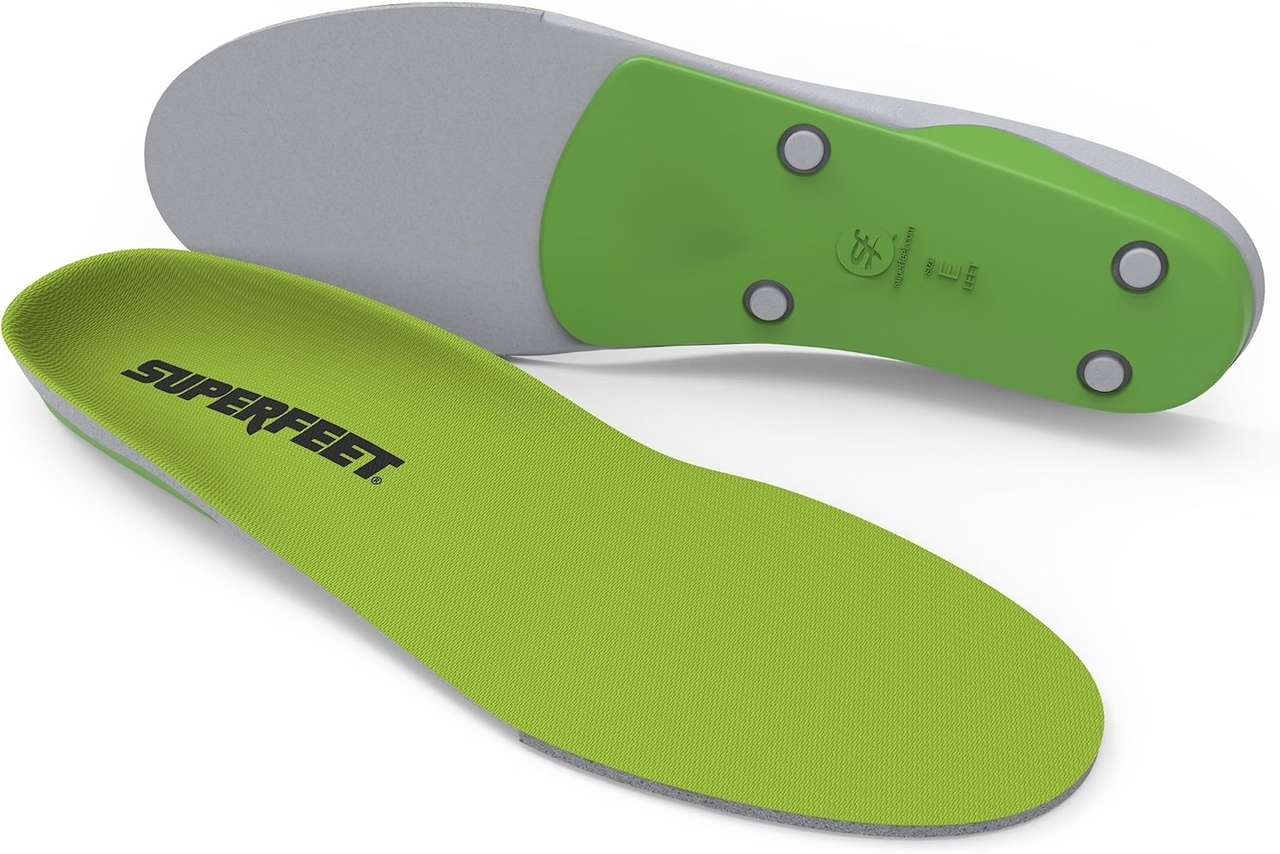
Price: $59.95
Where to Buy: Amazon
Superfeet All-Purpose Support High Arch uses high-density foam, a stabilizer cap, and a sculpted heel cup. Superfeet specifies firm cushioning, high arch support, and maximum thickness. That combination provides a pronounced contour beneath the arch and a structured heel area.
Its trim-to-fit construction works in roomy to moderately fitting shoes with removable liners. You’ll need enough interior space to accommodate the thicker profile.
At $59.95, this is for buyers with high arches who want firm support in everyday shoes or work boots. Its thick profile needs enough room inside the shoe. Buyers who prefer a lower arch contour or have tight-fitting footwear should consider a lower-profile alternative. Its strength is the pronounced arch contour, not soft cushioning.
2. Balance Cushioning With Structural Support
Soft padding can make hard floors feel less harsh underfoot, but cushioning alone doesn’t provide the same structure as a supportive insert. If you spend hours walking or standing, look for a combination of padding and a base that maintains its shape.
Price: $53.49
Where to Buy: Amazon
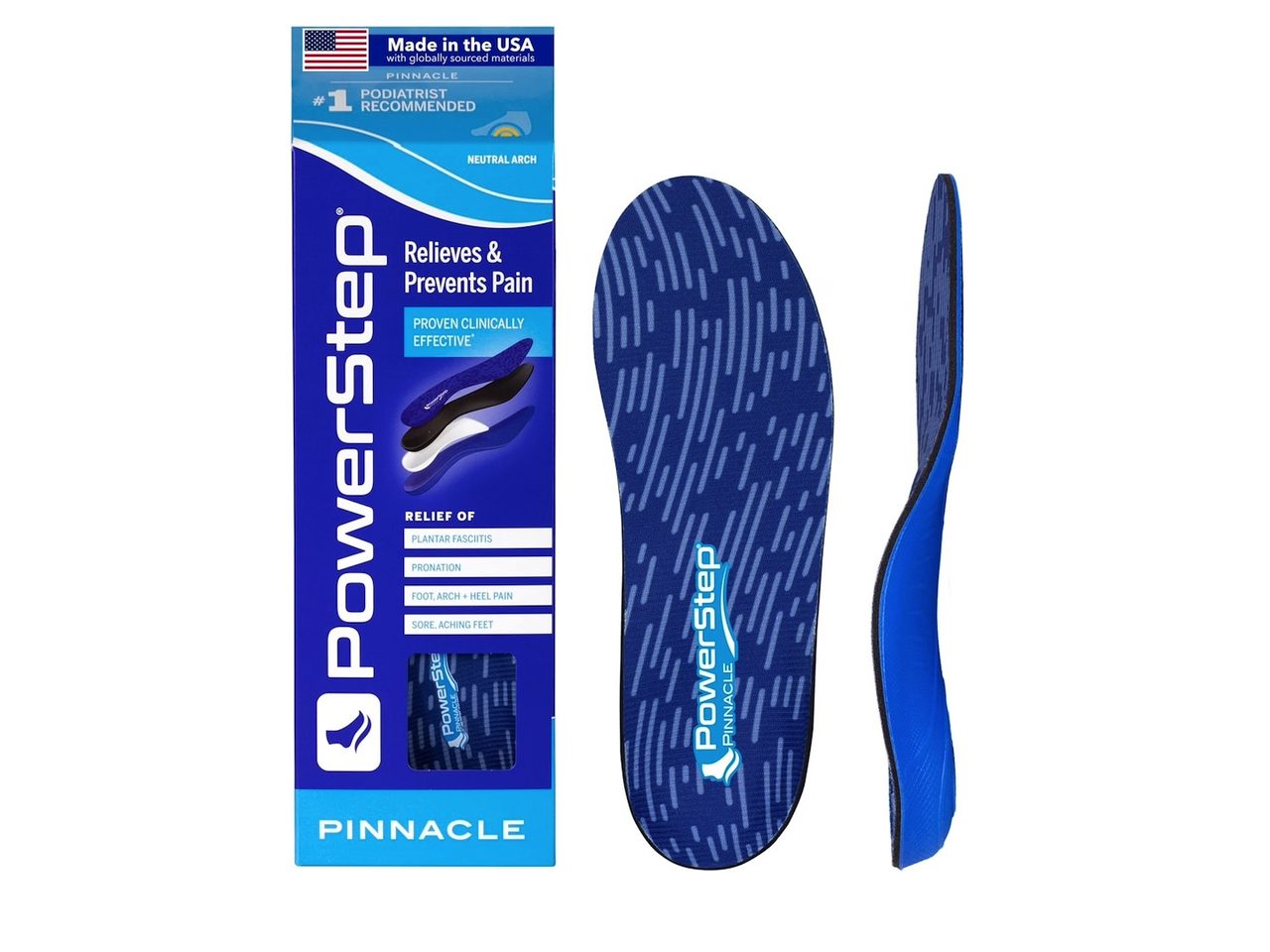
PowerStep Pinnacle combines a foam top layer and EVA base with a firm but flexible polypropylene arch shell. Its neutral arch profile accommodates standard arches, while a deep heel cradle provides additional structure around the rear of the foot.
PowerStep also uses an odor-control polyester top fabric and a full-length design intended for footwear with removable factory insoles. Walking shoes, casual sneakers, and work boots are among the supported footwear types.
At $53.49, this is the choice for everyday walking when you want cushioning and moderate arch support together. Buyers who need a pronounced high-arch contour or have limited shoe space should skip it. The combination of padding and a flexible support shell gives it a clear everyday purpose.
3. Choose an Insole for Your Main Activity
Running places repeated pressure on the heel and forefoot, so an insole needs to accommodate movement as well as provide cushioning. A design intended for running can have different support features from one made primarily for standing or casual walking.
Price: $59.95
Where to Buy: Amazon
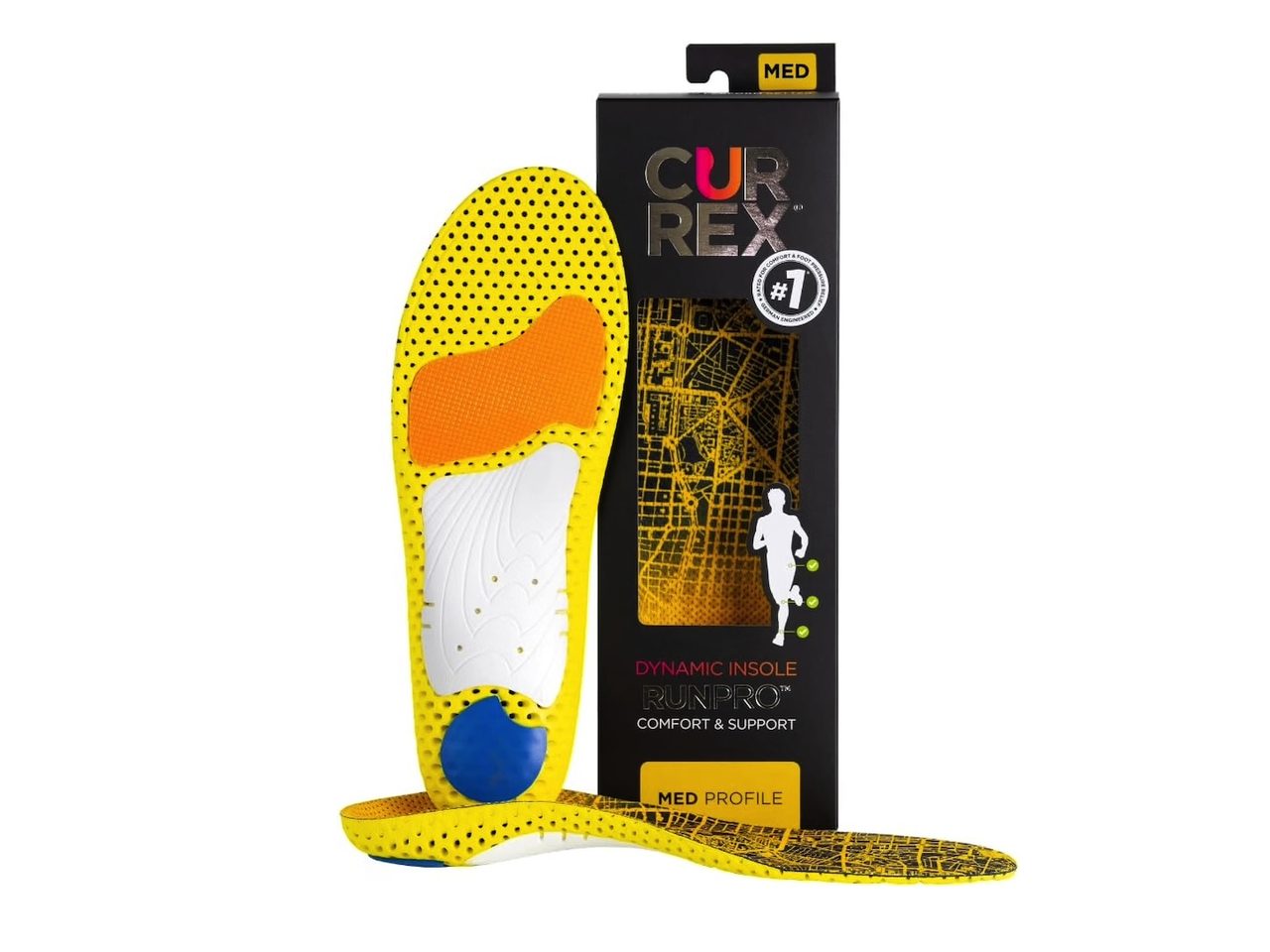
CURREX RUNPRO comes in low, medium, and high arch profiles. Its construction includes dynamic arch support, dual-layer cushioning, a fully decoupled heel, and targeted cushioning beneath the forefoot.
CURREX specifies zero heel drop for the insert itself, meaning it doesn’t add a height difference between the heel and forefoot. The decoupled heel is designed to accommodate movement through a running stride, while the cushioning addresses repeated impact.
You can trim the forefoot to match your running shoes after selecting the appropriate size and arch profile.
At $59.95, this is for runners who want activity-specific cushioning and arch support. RUNPRO is designed primarily for running shoes. If you mainly need inserts for office footwear or prolonged standing, compare its fit and support with a general-purpose alternative before buying.
4. Check the Heel Cup for Stability
Arch support gets most of the attention, but the heel cup also affects how your foot sits inside a shoe. A contoured heel area helps position the rear of your foot, while a firmer structure can provide additional stability during walking.
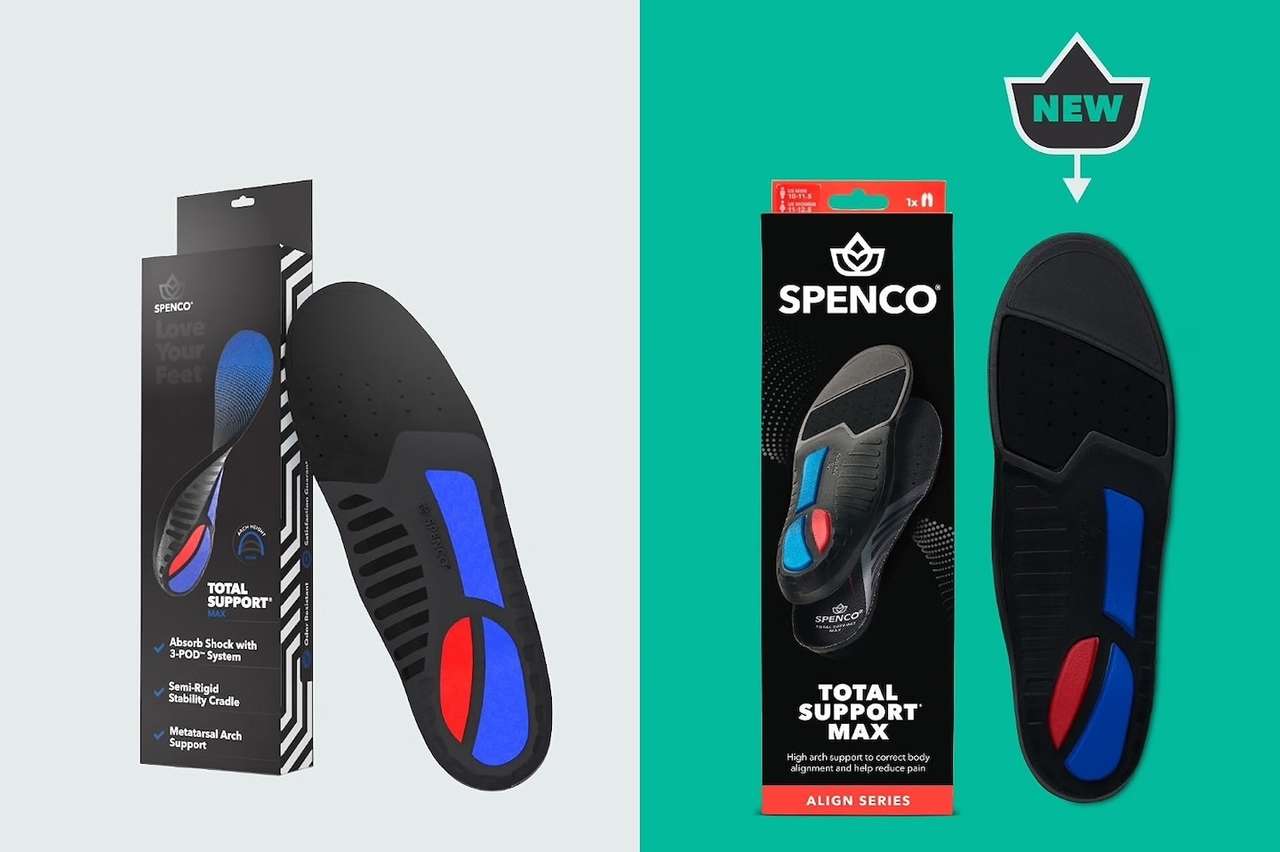
Spenco Total Support Max uses a deep heel cup, firm high-arch support, and multi-density cushioning. Spenco includes a stiffer pod designed to slow excessive inward rolling of the foot, along with softer pods that cushion impact.
Price: $36.99
Where to Buy: Amazon
Metatarsal arch support sits beneath the forefoot, providing structure near the ball of the foot. Ventilation channels, forefoot perforations, and antimicrobial treatment are also included.
Unlike a basic cushioning insert, this design emphasizes structural support and control. Its high-arch profile and firm construction make it a more specific choice.
At $36.99, it’s for buyers who want firm high-arch support with a structured heel area. People looking for soft, flexible cushioning should pass. Choose it for the combination of heel stability and firmer support.
5. Make Sure the Insole Fits Your Shoes
Even a supportive insole can make your shoes uncomfortable if it takes up too much room. A thick replacement can raise your foot inside the shoe, crowd your toes, or press against the upper.
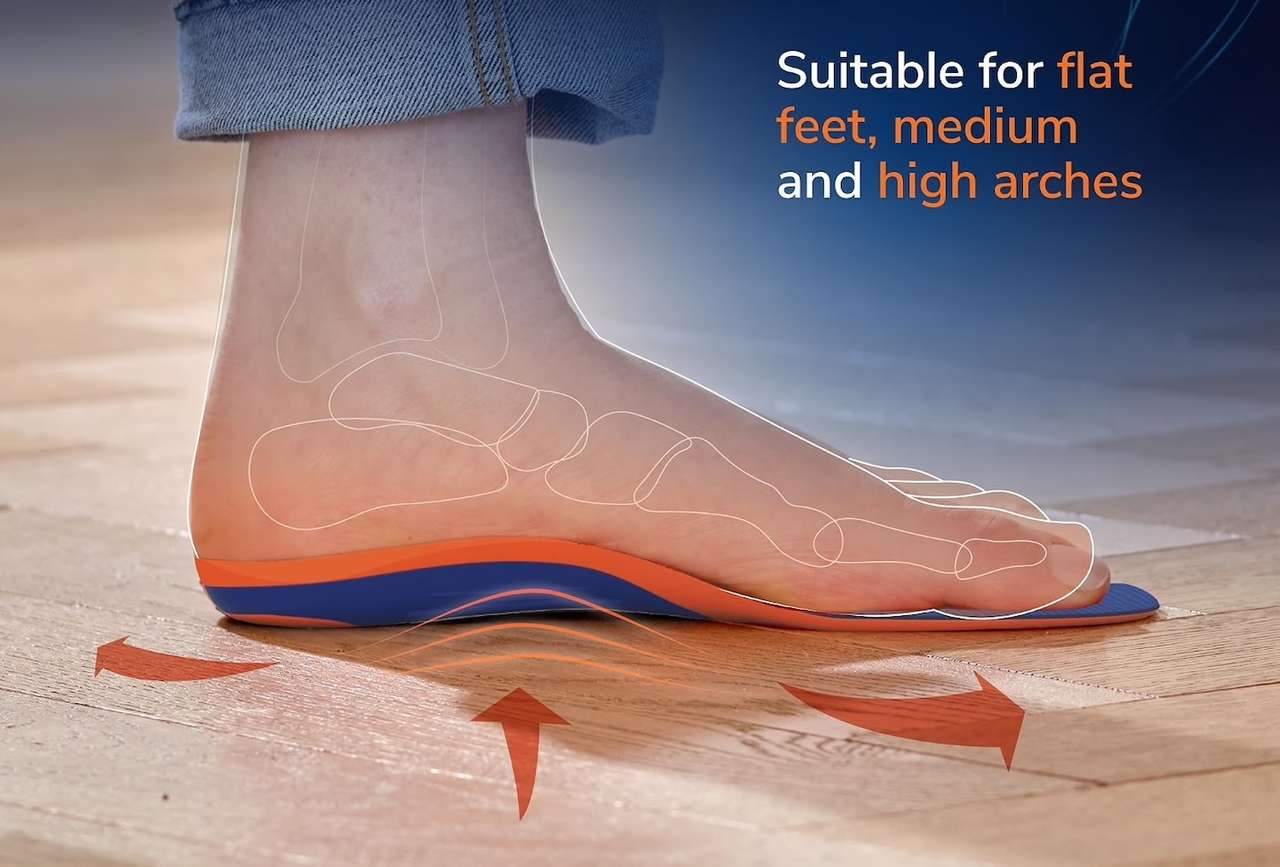
Dr. Scholl’s Advanced Pain Relief uses triple-layer cushioning, targeted arch support, and shock absorption. Dr. Scholl’s specifies compatibility with flat, standard, and high arches, along with a moisture-wicking top cloth.
Price: $29.99
Where to Buy: Amazon
These come in specific shoe sizes and are marketed as ready to use without trimming, although Dr. Scholl’s says they can be trimmed for half-size adjustments. The company also markets them for foot and lower-body pain, including plantar fasciitis, although the effectiveness of an insert depends on the cause of the discomfort.
At $29.99, this is the lowest-priced option here for buyers who want everyday cushioning and arch support. Anyone whose shoes already feel tight should check the available space before purchasing. A properly fitting insert is more useful than extra padding that crowds your feet.
When Should You Replace Your Insoles?
Cushioning gradually compresses, and support materials can wear down with regular use. REI estimates that aftermarket insoles generally last around twelve months, although lifespan depends on construction and activity.
Check for flattened padding, worn surfaces, and damaged support structures. If your shoes become uncomfortable, inspect the inserts before replacing the footwear.
Persistent heel or arch pain calls for professional assessment. Over-the-counter insoles can provide cushioning and support, but they aren’t a solution for every foot condition.
Final Thoughts
Choosing orthotic insoles starts with your arch shape, the shoes you wear, and how you spend your day. Firm support works for some feet, while others need more cushioning or an insert that accommodates running.
Start with the feature you’re missing, then check the arch contour, thickness, and fit. A well-matched insole can make your existing shoes more comfortable, but buying the wrong profile can leave you with less room and more pressure underfoot.