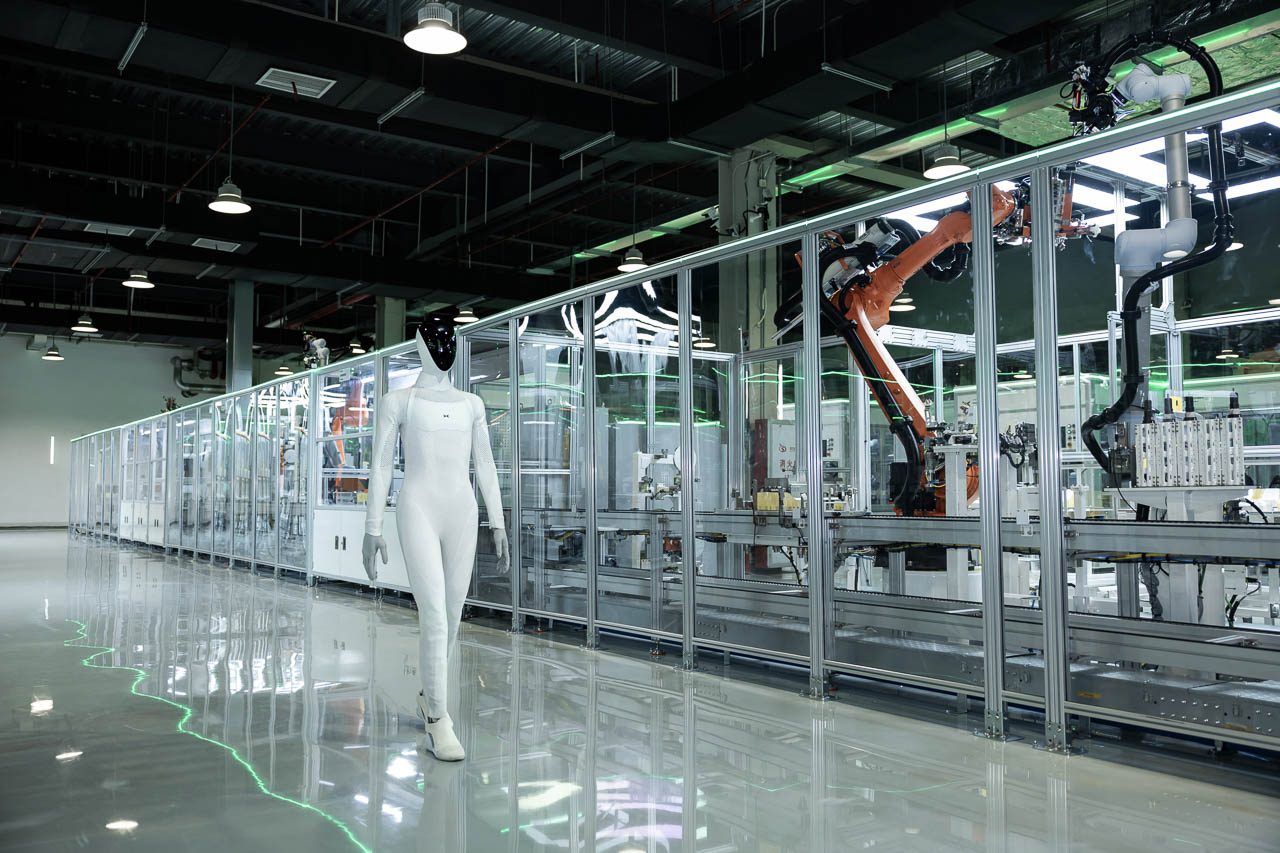
IRON finished assembly, walked off the production line under its own control, and received a staff badge from XPENG’s CEO. For a machine being developed to work alongside people, that’s a fitting way to begin.
The moment marked the commissioning of XPENG’s humanoid robot production lines in Guangzhou, announced on September 8, 2026. According to the company, IRON made the walk autonomously. Behind those steps is a larger change: XPENG is moving its humanoid project from R&D prototyping into production-line manufacturing, drawing on the experience it developed building electric vehicles.
Building the next IRON
XPENG Chairman and CEO He Xiaopeng described the manufacturing effort as starting from scratch. “Today’s step is small, but XPENG is building the production lines for an entirely new product category,” he said.
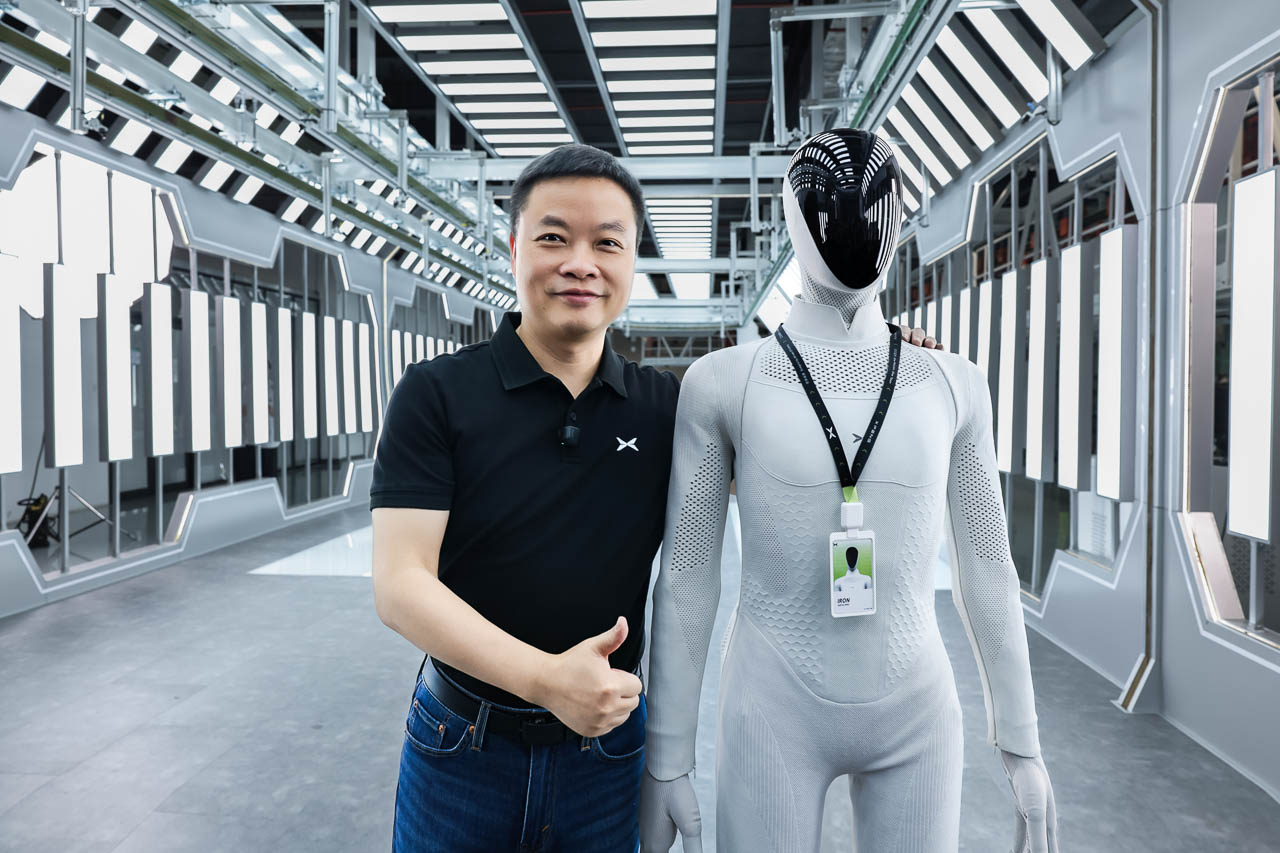
More than 80% of the line’s core processes are automated, according to XPENG. The system incorporates automotive-grade quality controls and is designed to keep critical processes consistent while allowing production capacity to expand. He identified faster production cycles and greater scale as the next goals.
Consistent manufacturing will be essential to IRON’s rollout. A humanoid combines articulated hardware, computing and control systems in a body that has to move as a coordinated whole. Building successive units consistently is part of turning that design into a product that can be deployed beyond development.
XPENG is targeting mass production by the end of 2026. Its current production rate hasn’t been disclosed.
A human-like body with its AI onboard
IRON’s fully enclosed flexible lattice structure is designed to balance a human-like appearance with safety. XPENG lists 76 degrees of freedom across the body and 21 in each hand. Three in-house Turing AI chips provide up to 2,250 TOPS of effective computing power, supporting XPENG’s Physical AI foundation model directly onboard. The company describes that system as enabling complex tasks without remote operation, with local processing intended to reduce latency and improve data security.
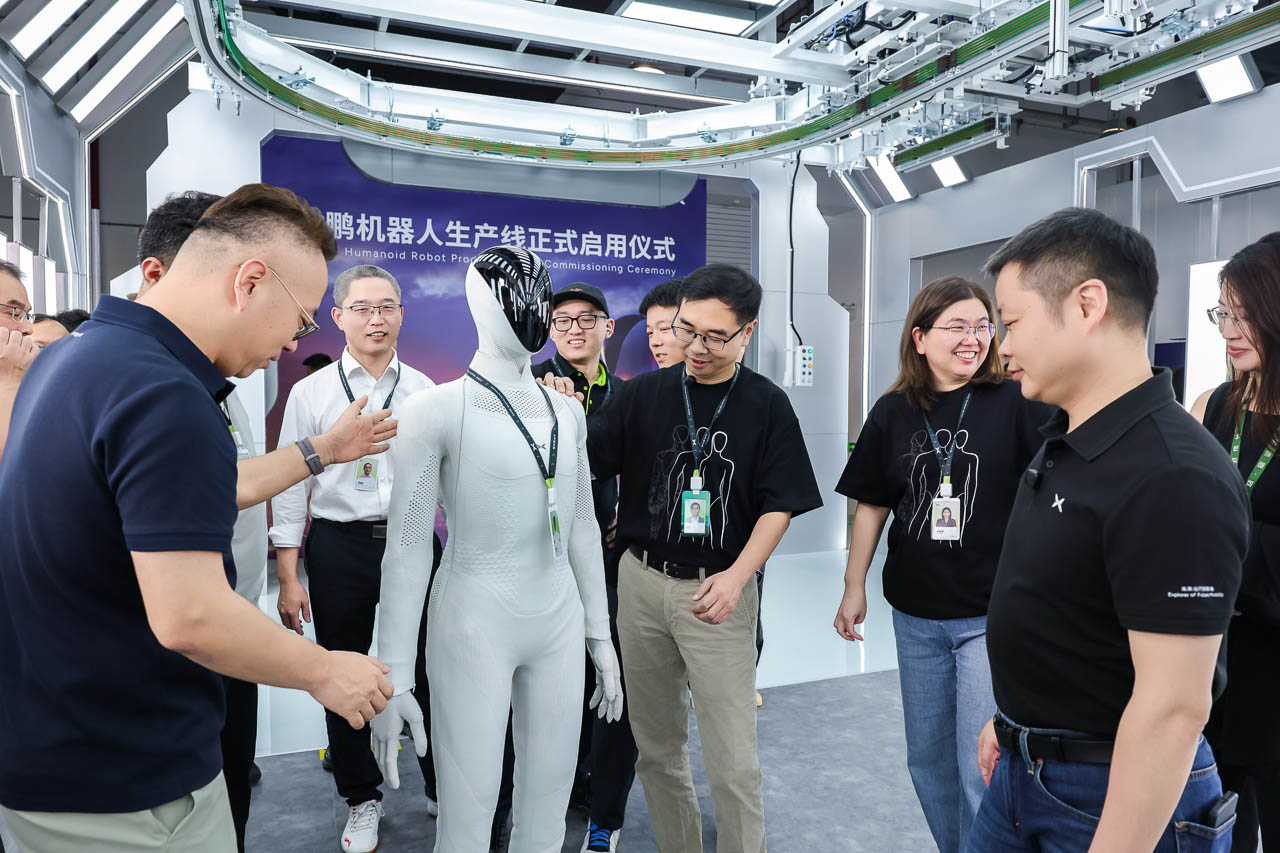
XPENG wants that hardware and software to support a general-purpose robot that improves through real-world learning. He hopes robots will eventually take on work people do not want to do or that is dangerous.
The first workplace is XPENG’s own
IRON’s first commercial deployments are planned for XPENG’s stores and campuses. An official launch and deliveries in China and overseas markets are planned for 2027. Pricing hasn’t been announced.


The expansion has substantial financial backing: XPENG announced an August 24 financing agreement raising more than US$900 million for its robotics business at a post-money valuation above US$6.3 billion. It sees robotics as a second source of growth alongside its vehicle business. He’s looking decades ahead to how robots might improve everyday life, but the next steps start within XPENG itself, where IRON is due to enter its first workplaces. “We’ve taken a crucial step forward,” he said.