Nintendo DS games can be awkward to play on a conventional retro handheld. You can stack two virtual screens on one display, shrink them until neither is especially comfortable to see, or devote most of the panel to one screen and swap views with a button. Those workarounds function, but they remain compromises for games designed around two physical displays.
Price: TBD
Where to Buy: ANBERNIC
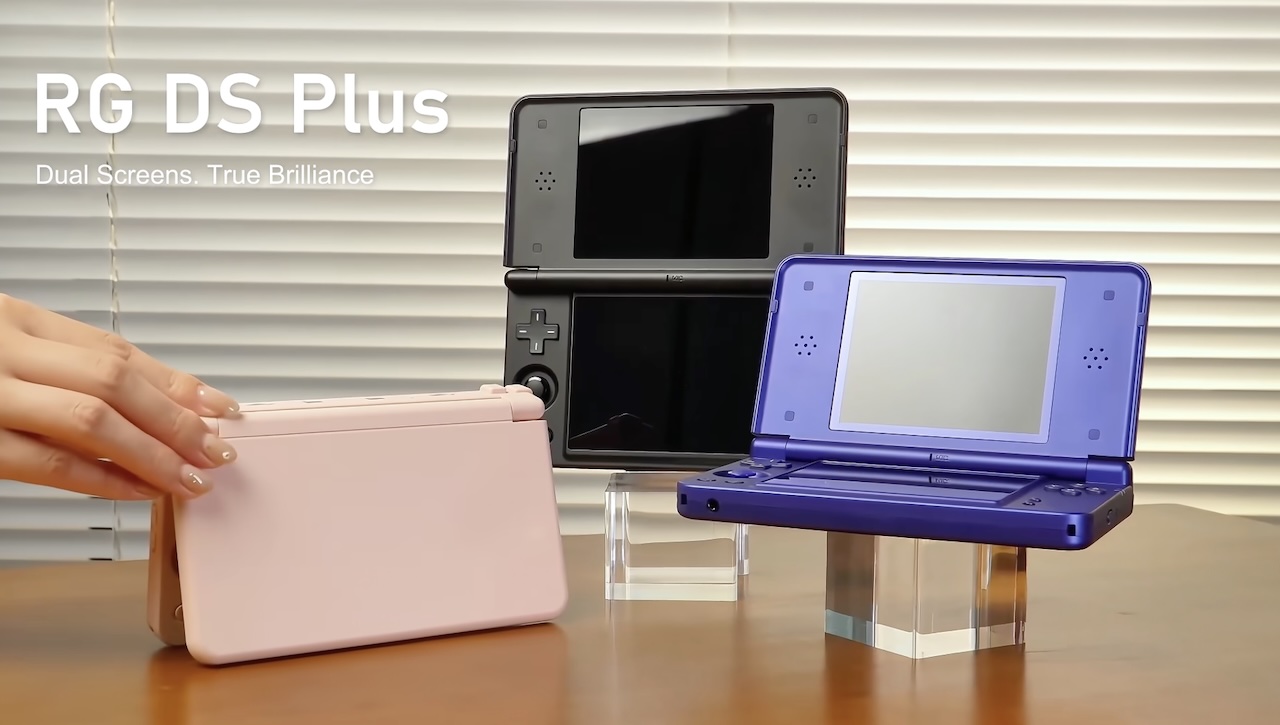
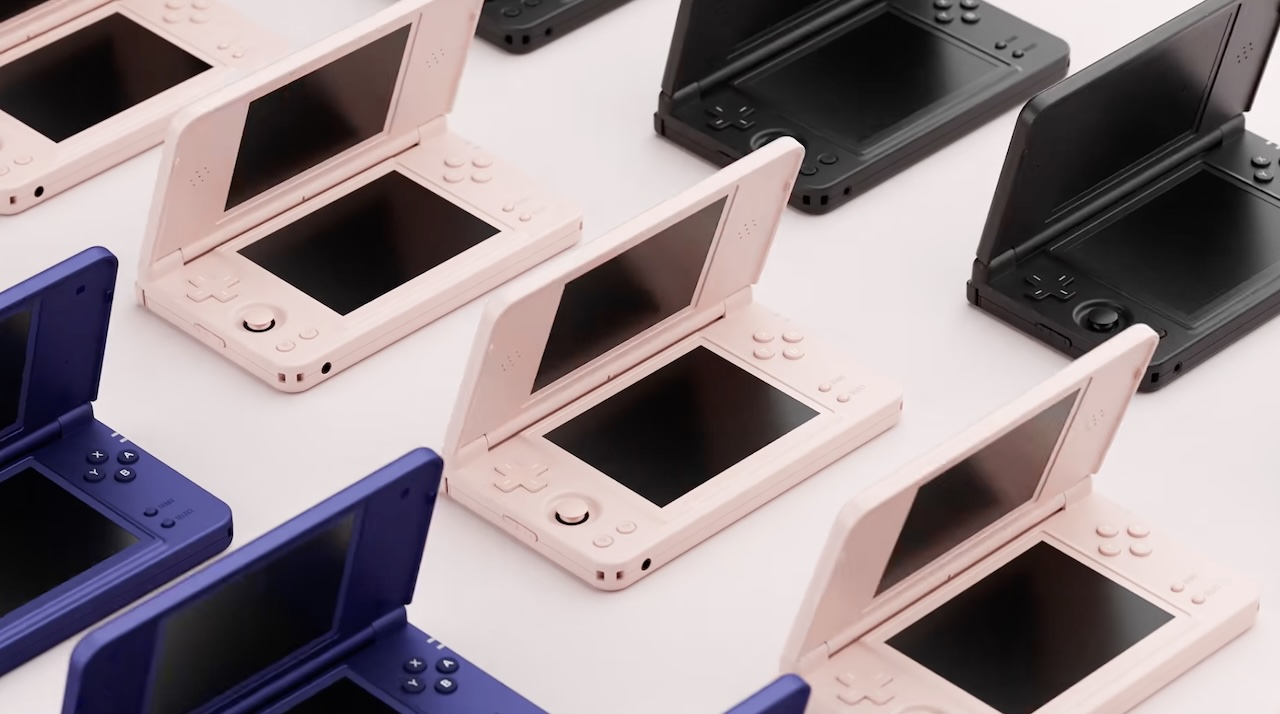
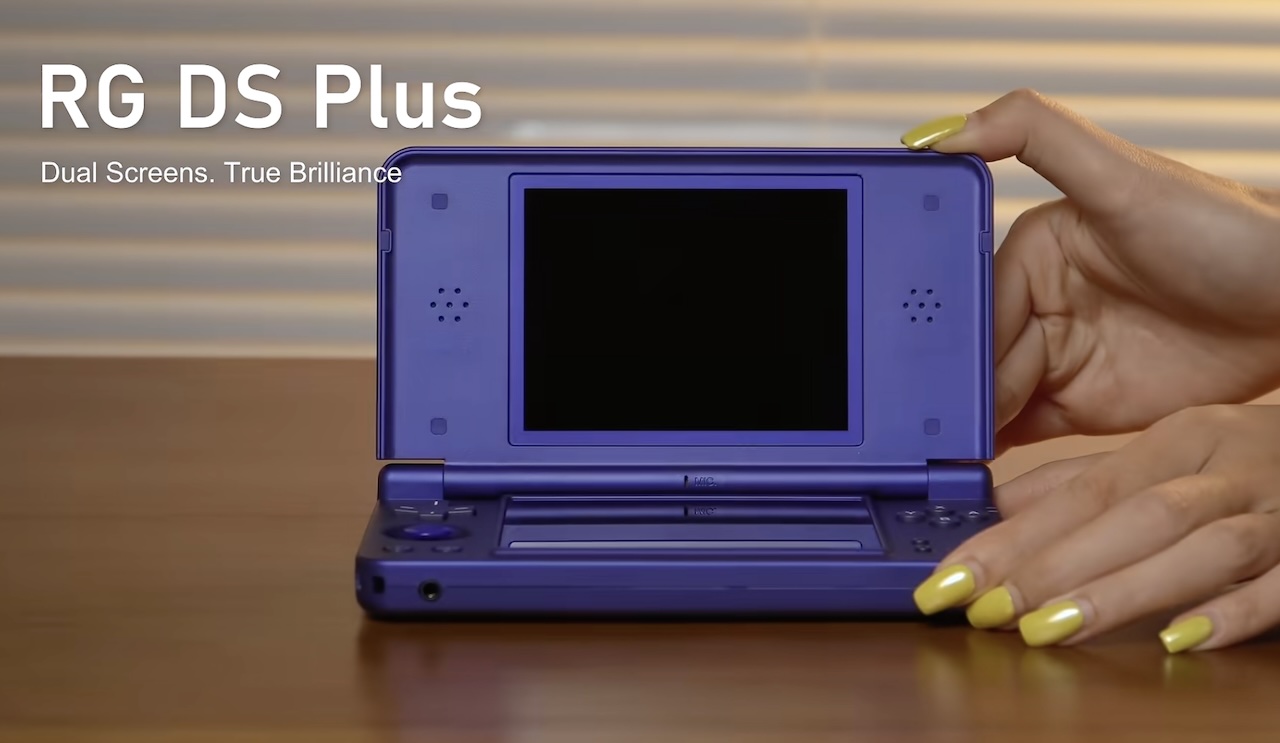
The ANBERNIC RG DS Plus takes the more obvious approach: it gives each screen its own display. The company is also positioning it as a meaningful update rather than a repeat of the original RG DS formula, with larger, higher-resolution screens, a redesigned hinge, an integrated stylus, and a customized Linux interface for dual-screen play.
Two screens, proper scaling
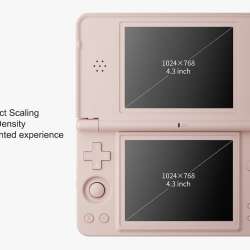
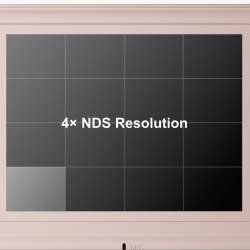
The RG DS Plus uses two 4.3-inch 1024 × 768 displays. That resolution is especially appropriate for Nintendo DS emulation because the original DS screens ran at 256 × 192 pixels, exactly one-quarter of the RG DS Plus display dimensions in each direction.
In other words, DS games can be presented using clean 4× integer scaling: every original pixel becomes a 4 × 4 block of display pixels. That avoids fractional pixel mapping, which can make pixel art and interface elements look softer or unevenly scaled.
It is worth separating that benefit from internal rendering resolution. Clean 4× display scaling does not necessarily mean the emulator renders every game at four times its native resolution; it means the handheld’s screen resolution can accommodate the original DS image without scaling artifacts. For a device built around dual-screen games, that is a more useful upgrade than a larger number on a spec sheet.
Software built for DS play
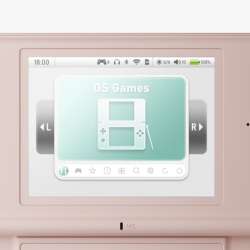
ANBERNIC says the RG DS Plus will use a customized Linux interface designed for a two-screen layout. Announced features include screen swapping, lower-screen touch control, instant save states, real-time clock support, microphone support, cheat codes, and 76 built-in shader options.
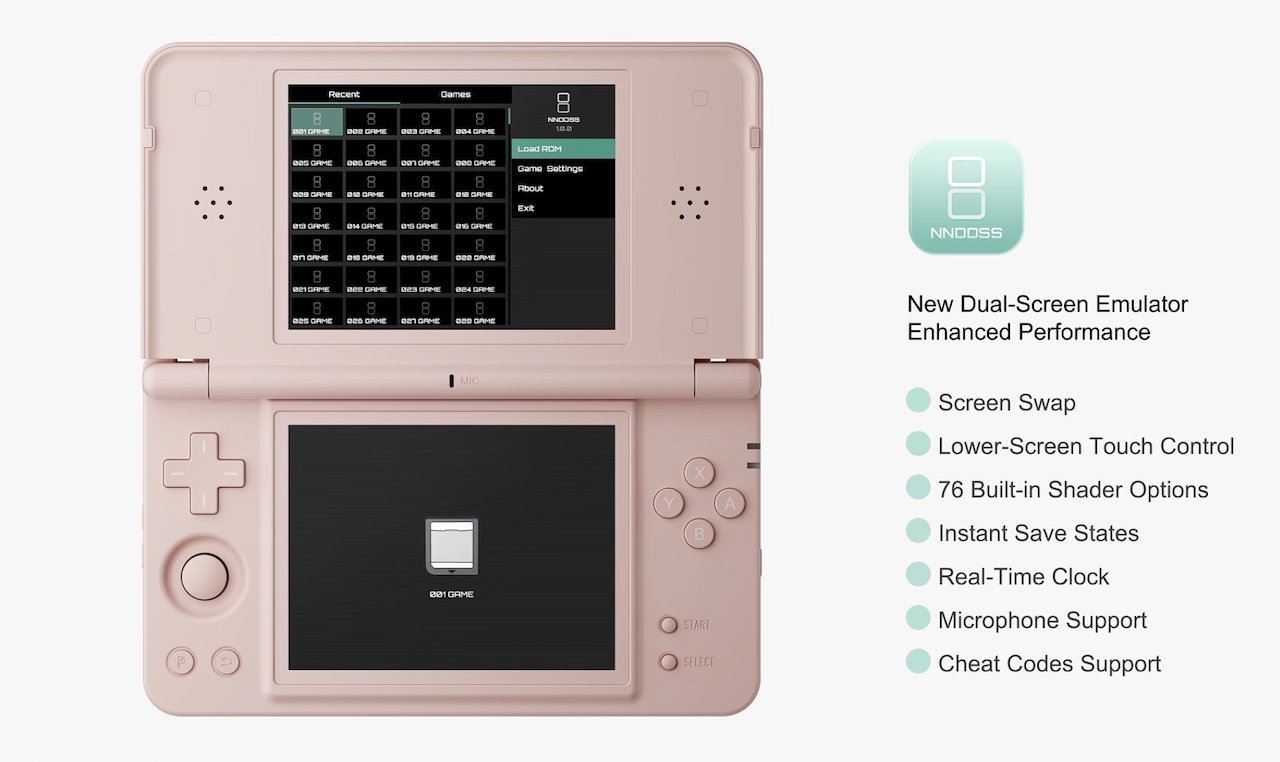 Several of those features address actual needs in the DS catalog rather than merely filling a feature list. Touch input is essential in many games, while certain titles rely on the system clock or microphone functions.
The unanswered question is how well the finished software will work. A launch announcement cannot show how responsive screen swapping feels, how accurate the touch layer is, or how consistently microphone, clock, and stylus-dependent games behave. Those are details that will require hands-on testing.
A stylus that stays put
The RG DS Plus includes an integrated capacitive stylus that stores inside the handheld. That is a practical choice for a device intended to play games where tapping, drawing, and navigating the lower screen are central to the experience.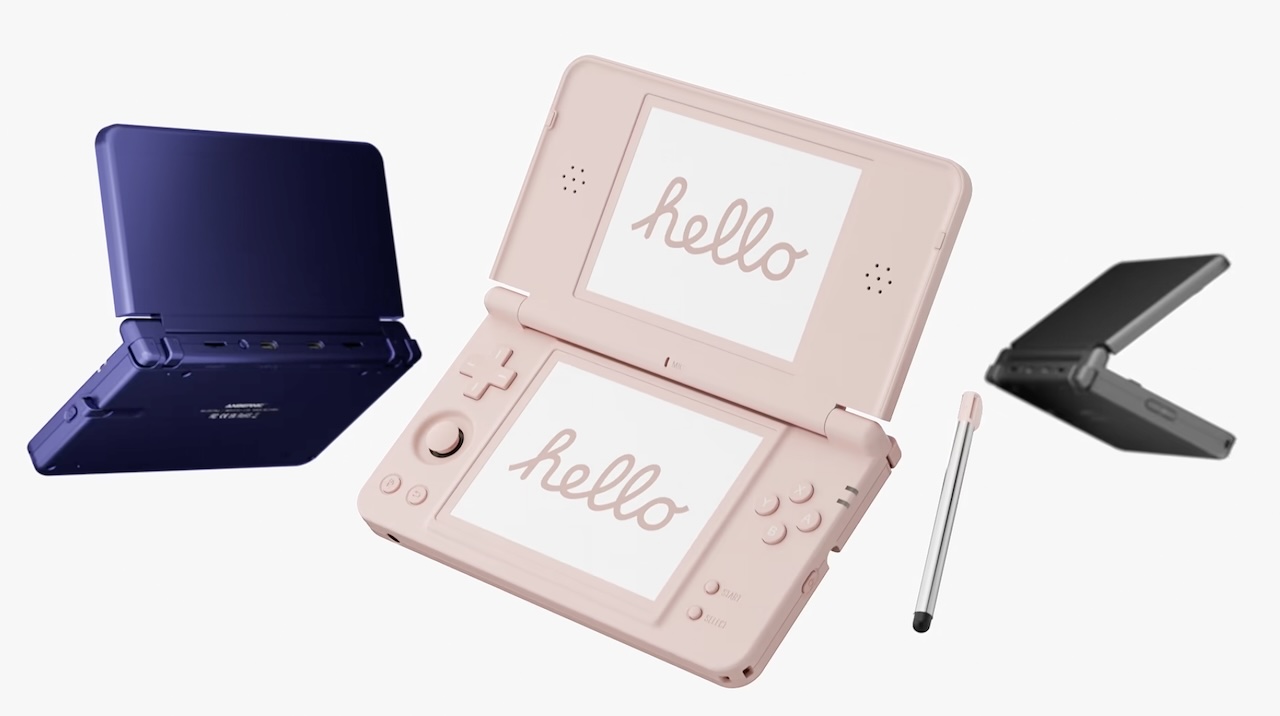
However, the setup differs from Nintendo’s original hardware. Nintendo DS systems used pressure-sensitive resistive touchscreens, while ANBERNIC specifies a capacitive stylus for the RG DS Plus. It remains to be seen how closely drawing, tapping, and other stylus-heavy interactions will match the original experience.
Still, an onboard stylus is far better than making a vital control method into another loose accessory that can get lost in a bag.
An adjustable clamshell hinge
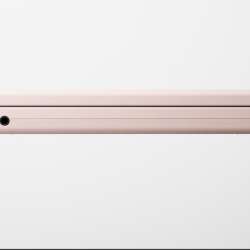
ANBERNIC says the clamshell has a dual-alloy hinge with stepless adjustment between 15 and 180 degrees. Rather than limiting the top display to a handful of preset positions, the design should allow users to set a more comfortable viewing angle.
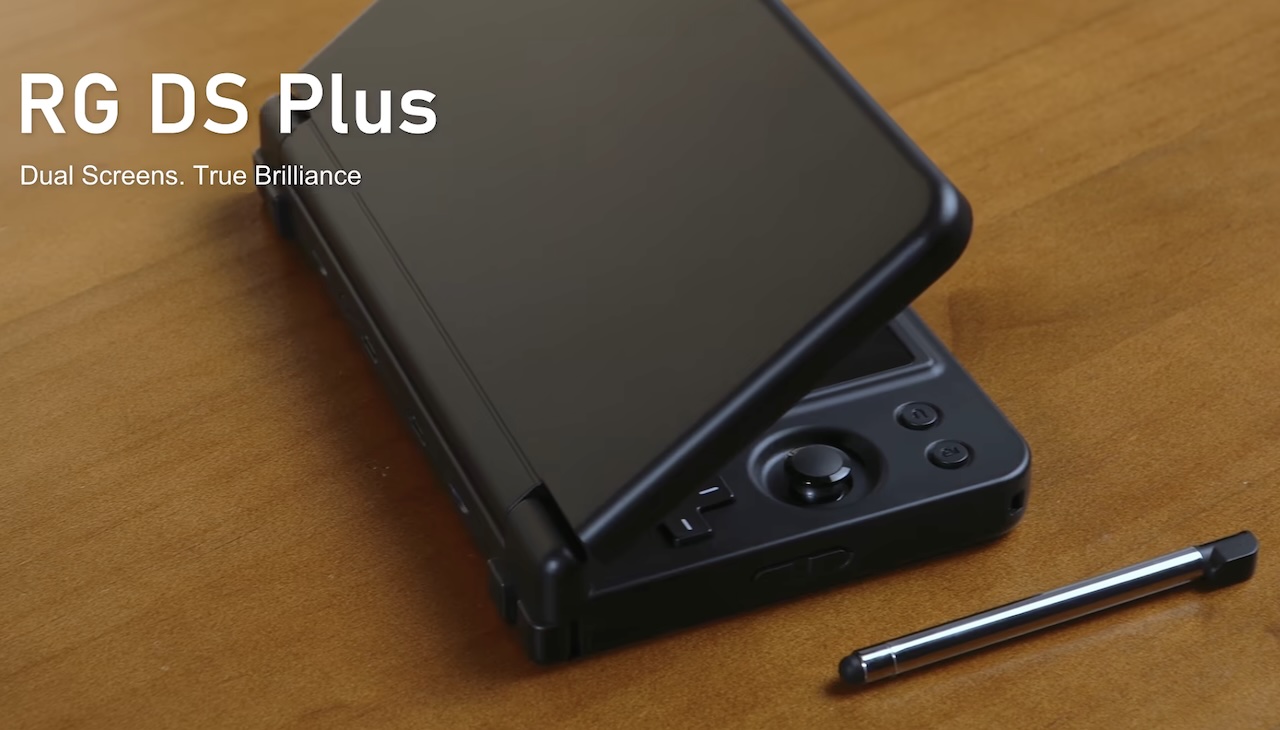 That could be useful whether you are playing at a desk, on a couch, or with the handheld closer to your face. It is also a potentially important improvement over retro clamshells that offer little control over upper-screen placement.
Durability, of course, is another matter. ANBERNIC’s announcement describes the hinge positively, but launch material cannot establish long-term reliability. Repeated use will be the real test, especially because the hinge is one of the most consequential components on any clamshell handheld.
Don’t assume 3DS support
The two-screen layout naturally raises a question: could the RG DS Plus replace a Nintendo 3DS?
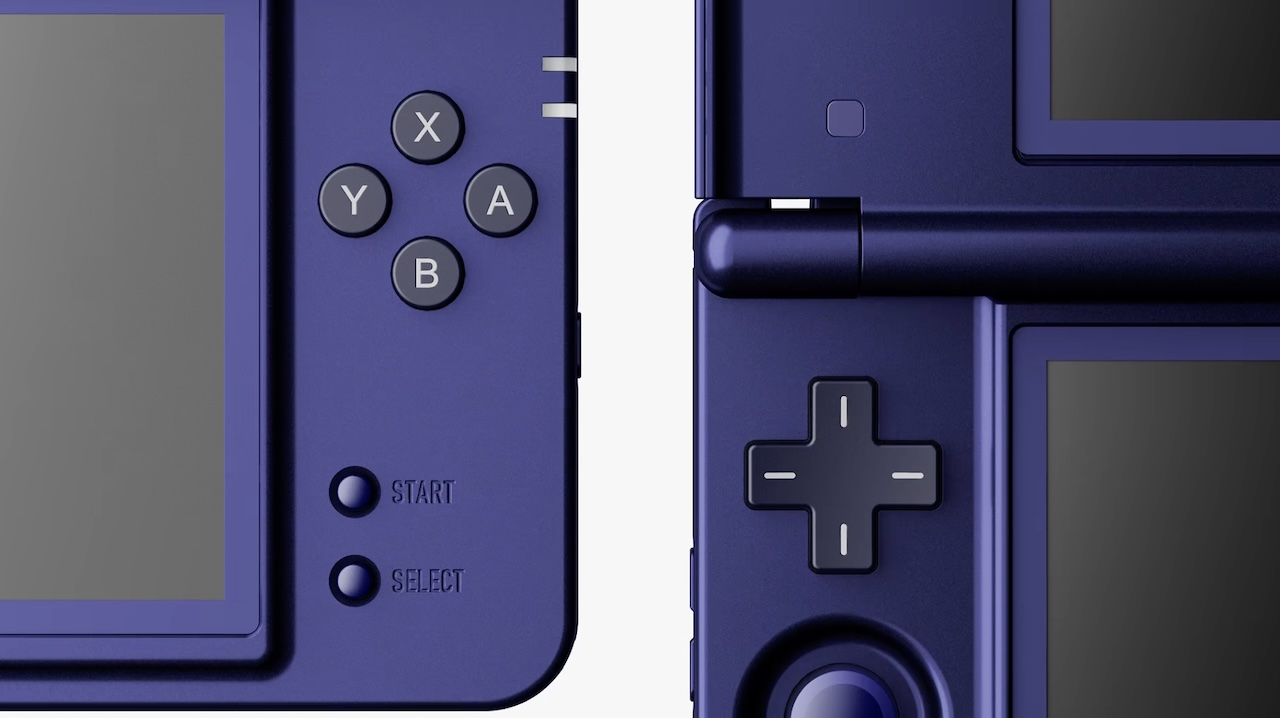 ANBERNIC has not provided enough official information to answer that with confidence. Its first-look material focuses on DS-specific features:
4× scaling, touchscreen controls, microphone support, the stylus, and dual-screen software,
rather than making promises about Nintendo 3DS emulation.
That does not prove the RG DS Plus cannot run 3DS software. It simply means buyers should not assume that two screens automatically make it a capable 3DS replacement. Until ANBERNIC publishes complete hardware specifications and independent testing arrives, the sensible approach is to judge it on the dual-screen experience the company has actually demonstrated.
Who it is for
The RG DS Plus looks like a specialized retro handheld rather than another attempt to cover every legacy platform. Its dual 4.3-inch 1024 × 768 displays, clean 4× scaling for 256 × 192 DS imagery, integrated stylus, dual-screen-focused Linux interface, and adjustable hinge all target the specific problems that arise when DS games are squeezed onto a single-screen device.
Key questions remain, including overall performance, battery life, software stability, touch responsiveness, hinge durability, and compatibility across a broader library. Those answers will have to wait for final specifications and independent reviews.
If most of the games you want to revisit were made for one screen, a simpler retro handheld will likely make more sense. But for players who specifically want to return to the Nintendo DS library, the RG DS Plus addresses the format at the hardware level instead of asking software to disguise a one-screen compromise.
Price: TBD
Where to Buy: ANBERNIC
That is what makes it interesting: when games were built around two screens, the most convincing solution may simply be giving them two screens again.