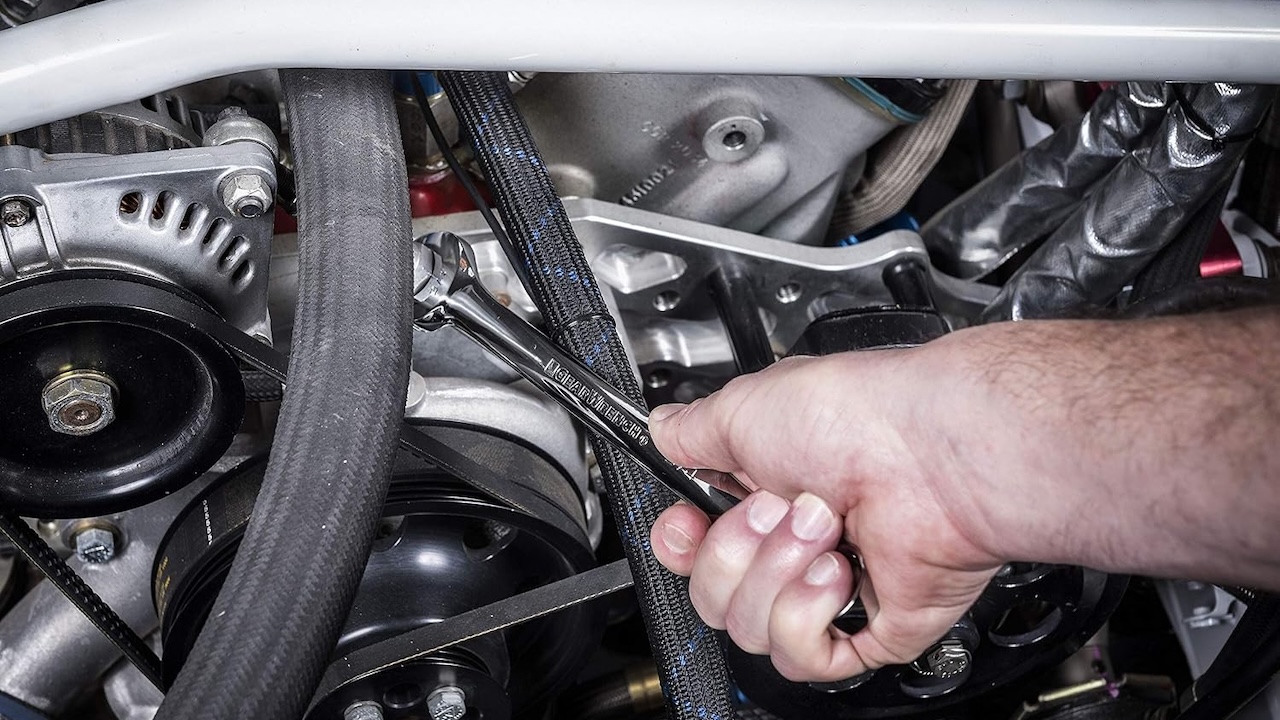
The hardest part of working on your own car usually isn’t turning the wrench. It’s discovering halfway through the job that you don’t own the wrench you need.
A basic oil change can stall because the filter housing requires a different socket. Brake work becomes impossible if you can’t safely lift the car. A check-engine light sends you to a shop simply because you have no way to read the fault code. Before long, the savings from DIY maintenance disappear into repeat parts-store trips or repair bills for jobs you could have handled yourself.
You don’t need a professional mechanic’s massive tool chest to change oil, replace brakes, diagnose a weak battery, swap sensors, or tackle basic suspension work. You need a smaller collection of tools that unlocks the greatest number of common jobs.
These are the 10 I’d buy first, along with one product to consider in each category, when to buy it, and where it belongs in your tool budget.
1. A good socket and ratchet set
If you’re building a DIY automotive toolkit from scratch, start here. Cars are held together with an enormous number of nuts and bolts, and a socket set with ratchets, extensions, shallow sockets, and deep sockets will handle a large percentage of them.
Ideally, it should cover 1/4-inch, 3/8-inch, and 1/2-inch drive sizes. Don’t get hypnotized by enormous advertised piece counts. Socket coverage, ratchet quality, useful extensions, and the sizes your vehicle actually uses matter more than hundreds of rarely used pieces.
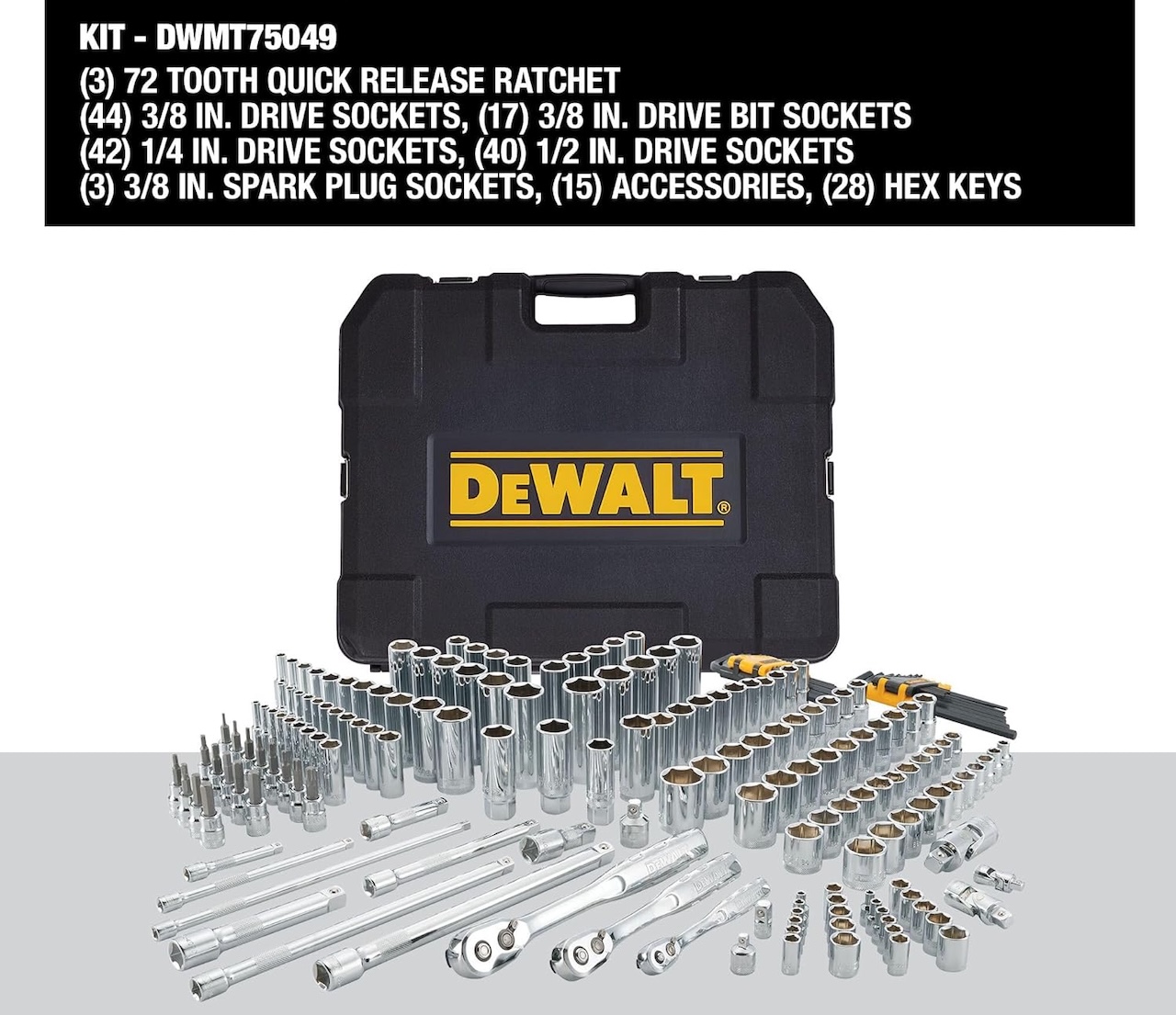
What I’d buy: DEWALT DWMT75049 192-Piece Mechanics Tool Set. DEWALT lists three ratchets along with an assortment of sockets, extensions, universal joints, and adapters. More importantly, it covers all three major drive sizes, giving a new DIY mechanic a broad foundation instead of a starter kit that immediately needs expanding.
Price: $164.99
Where to Buy: Amazon
Buy it: Day one. This is also one of the categories where spending more makes sense because you’ll reach for these tools constantly.
2. Combination wrenches
Sockets work beautifully until a hose, bracket, or other component prevents the ratchet from reaching the fastener. Combination wrenches provide another route and are particularly useful when you need to hold a nut on one side while turning a bolt from the other.
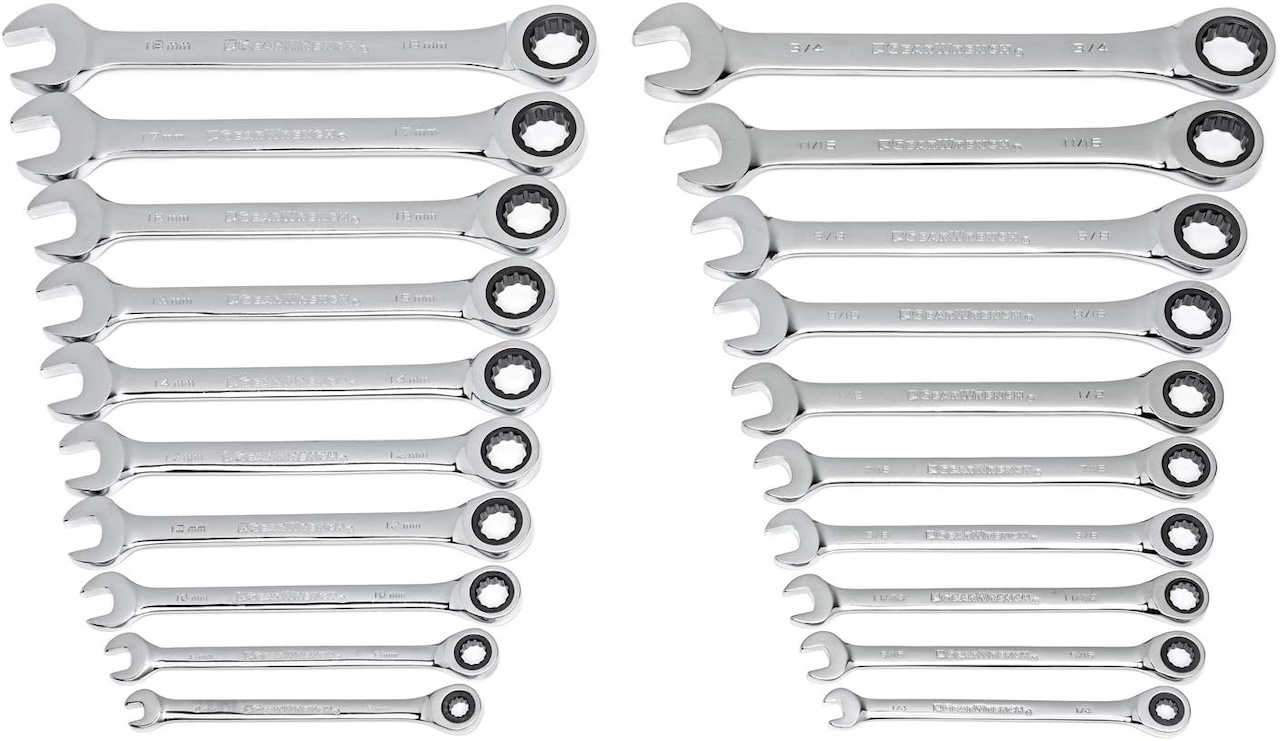
What I’d buy: GEARWRENCH 35720-06 20-Piece Ratcheting Combination Wrench Set. GEARWRENCH specifies 72-tooth ratcheting box ends requiring a 5-degree swing arc. That small working arc can make a noticeable difference when surrounding components leave little room to move a conventional wrench.
Price: From $68
Where to Buy: Amazon
Buy it: Day one. Midrange is a sensible budget target here. Good fit, useful sizes, and comfortable operation matter more than fancy finishes.
3. A breaker bar
Your ratchet isn’t a substitute for a breaker bar. A 1/2-inch drive breaker bar provides extra leverage for stubborn lug nuts, suspension fasteners, and other high-torque hardware without asking your ratchet mechanism to absorb the abuse.
More force isn’t always the answer. Corrosion, damaged threads, poor tool engagement, and the possibility of snapping a fastener still matter. But when leverage is genuinely what you’re missing, a long breaker bar can turn a stalled repair into a manageable one.
What I’d buy: TEKTON 1/2-Inch Drive x 24-Inch Comfort Grip Breaker Bar. TEKTON specifies a 24-inch working handle length, which is the important number here. That longer handle provides substantially more leverage than a typical ratchet without resorting to an improvised cheater pipe.

Price: $125
Where to Buy: Amazon
Buy it: Before your first wheel, brake, or suspension job. Budget to midrange is sufficient because the basic mechanism is considerably simpler than a ratchet or torque wrench.
4. A torque wrench
Getting a bolt loose is only half the job. Putting it back correctly matters just as much.
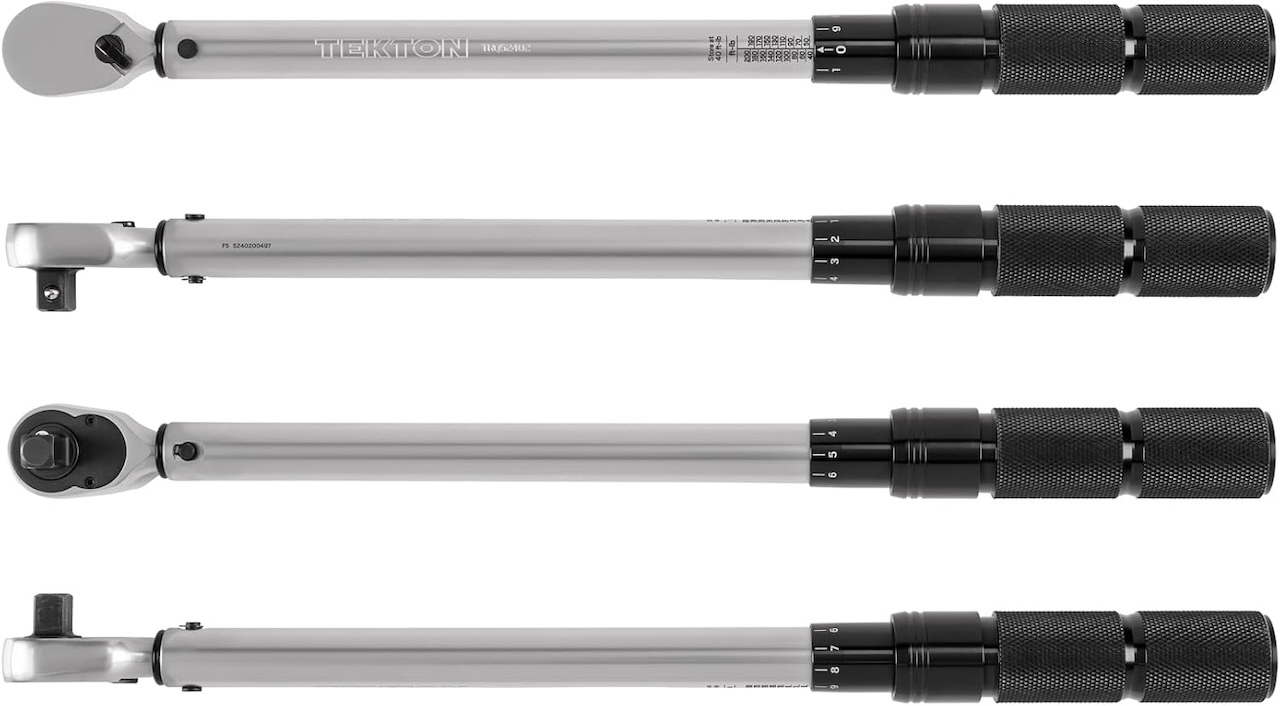
A torque wrench allows you to tighten fasteners according to the vehicle manufacturer’s specification rather than guessing by feel. That’s important for wheel lug nuts, spark plugs, brake components, suspension hardware, drain plugs, and many other fasteners. More torque isn’t automatically safer, and overtightening can damage threads, stretch hardware, or distort components.
What I’d buy: TEKTON 1/2-Inch Drive Micrometer Torque Wrench. A click-type 1/2-inch torque wrench is a practical starting point for wheels and many larger automotive fasteners. Check the required torque for your particular job and make sure it falls comfortably within the wrench’s specified range rather than assuming one wrench can appropriately handle every fastener on the car.
Price: $125
Where to Buy: Amazon
Buy it: Before tackling jobs with critical torque specifications. This is a midrange-or-better purchase because repeatability and accuracy matter.
5. A floor jack, jack stands, and wheel chocks
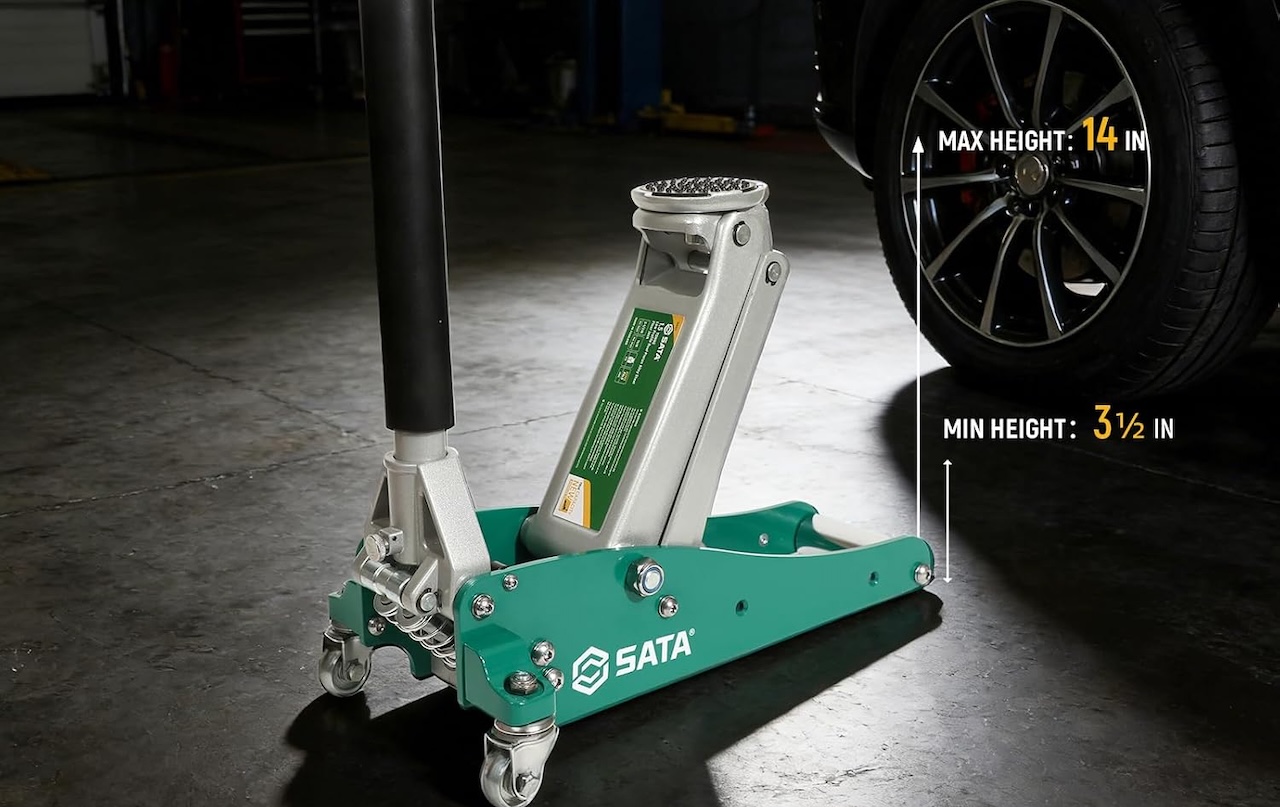
Treat these as one safety system. A floor jack raises the vehicle, properly rated jack stands support it, and wheel chocks help prevent unwanted movement. You also need to identify the correct lifting and support points for your particular vehicle before starting.
What I’d buy: Daytona 3-Ton Low-Profile Professional Floor Jack, plus appropriately rated jack stands and wheel chocks. The low-profile design can make getting beneath lower vehicles easier, while the three-ton rating provides substantial capacity for many passenger vehicles. Don’t choose lifting equipment by capacity alone, though. Verify your vehicle’s weight, lifting points, required lift height, and the ratings of every component you intend to use.
Price: $124.99
Where to Buy: Amazon
Most importantly, never crawl underneath a vehicle supported only by a hydraulic floor jack.
Buy it: Before your first wheel-off or under-car repair. Spend more here. Safety equipment is a poor place to chase the absolute lowest price.
6. An OBD-II scanner
Sometimes the most useful automotive tool doesn’t turn anything.
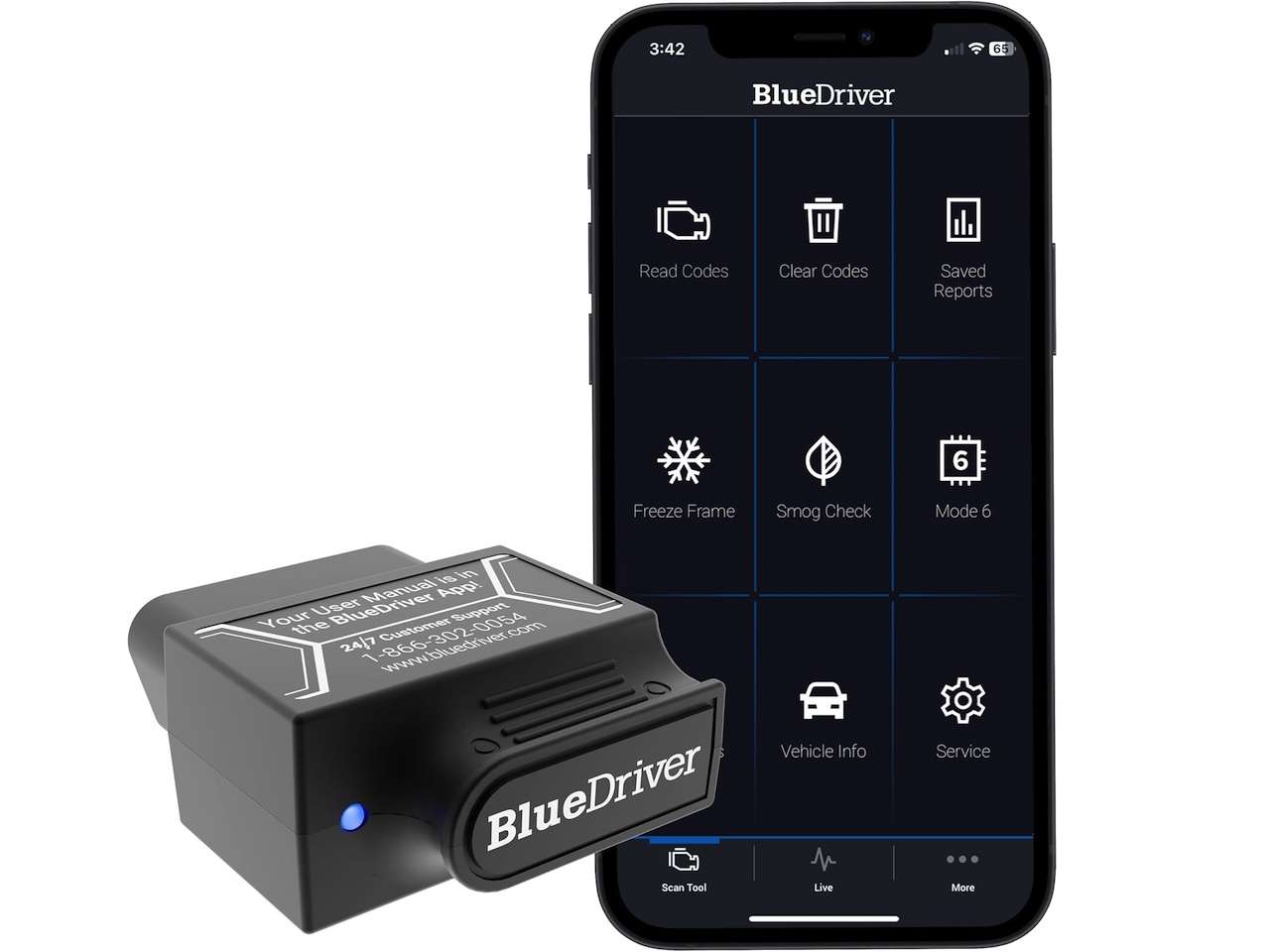
An OBD-II scanner gives you access to diagnostic trouble codes when the check-engine light appears. The crucial distinction is that a code isn’t a diagnosis. An oxygen-sensor-related code, for example, doesn’t automatically prove the oxygen sensor itself has failed. Wiring faults, vacuum leaks, fuel-delivery problems, and other issues can produce related symptoms or codes.
What I’d buy: BlueDriver Bluetooth Pro OBDII Scan Tool. BlueDriver connects to a compatible smartphone and offers more diagnostic capability than a basic code reader. However, enhanced functions and system coverage can vary by vehicle, so check compatibility with your exact make, model, and year before buying it for a particular advanced feature.
Price: $139.95
Where to Buy: Amazon
Buy it: Early, particularly if you’re maintaining an aging vehicle. Start in the budget-to-midrange category and spend more only when you need deeper manufacturer-specific access.
7. A digital multimeter
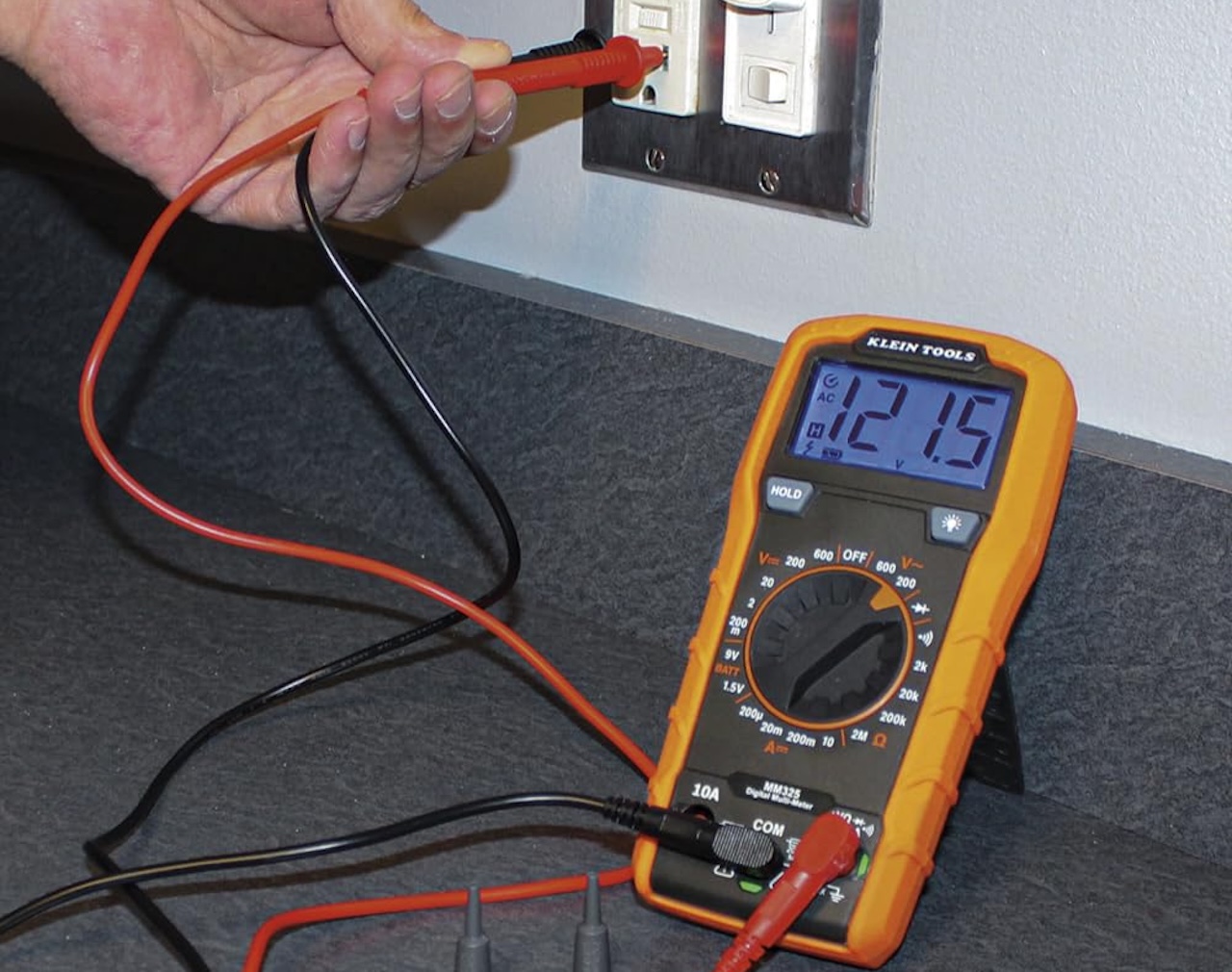
Modern cars are mechanical machines wrapped around increasingly complicated electrical systems. A digital multimeter lets you measure electrical values that can help investigate batteries, fuses, switches, grounds, wiring, and charging-system problems.
Its practical value is reducing guesswork. A car that won’t start could have a weak battery, poor connection, charging fault, starter problem, blown fuse, or something else entirely. A multimeter won’t diagnose the car for you, but it gives you measurements instead of encouraging the expensive habit of replacing parts until the problem disappears.
What I’d buy: Klein Tools MM325 Digital Multimeter. It’s a general-purpose meter with the core measurements a beginning DIY mechanic is likely to need without jumping straight to expensive professional diagnostic equipment. As with any electrical tool, understand the measurement you’re making and the correct meter setup before connecting it to a circuit.
Price: $29.98
Where to Buy: Amazon
Buy it: Early. Midrange is the sweet spot here. You don’t need a laboratory instrument, but I’d skip the anonymous bargain-bin meter.
8. A useful set of pliers
Cars contain much more than hex-head bolts. Pliers help with hose clamps, clips, awkward fittings, wires, and components that sockets and combination wrenches can’t easily handle.
You’ll eventually want several styles, including needle-nose pliers, cutters, and locking pliers, but one versatile pair can be an excellent starting point.
What I’d buy: KNIPEX Cobra Water Pump Pliers. The adjustable gripping design makes the Cobra useful around fittings, clamps, and irregularly shaped components, particularly when access is limited. That versatility doesn’t make it a universal replacement for the correct socket or wrench. Using pliers on ordinary fasteners when the proper tool fits is still an easy way to damage them.
Buy it: Day one or shortly afterward. You can start with budget-to-midrange pliers and upgrade individual styles once you know which ones you use most.
9. Screwdrivers and a proper bit set
Traditional screwdrivers haven’t become obsolete just because the rest of the toolbox has grown more sophisticated. Modern vehicles use Phillips, slotted, Torx, hex, and other fastener styles across interior trim, airboxes, engine covers, sensors, and brackets.
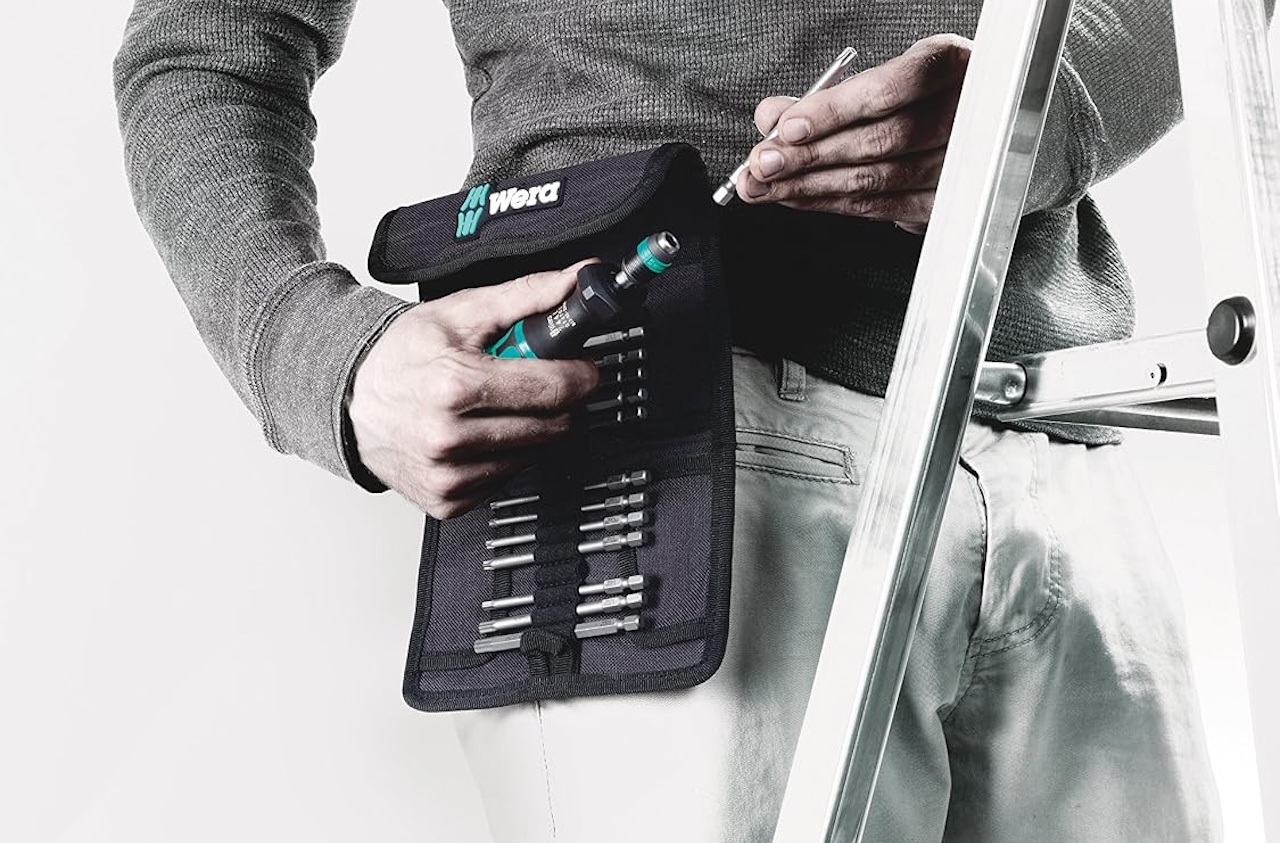
What I’d buy: Wera Kraftform Kompakt 60. This compact driver-and-bit system makes sense for someone who values organized bit coverage without filling a drawer with dozens of individual drivers. Check the included bits against the fasteners on your particular vehicle, because no general-purpose set can guarantee coverage for every manufacturer.
Price: $64.99
Where to Buy: Amazon
Fit matters more than force. Using the wrong bit can damage a fastener and transform a five-minute repair into an extraction project.
Buy it: Day one. Budget to midrange is enough, but prioritize accurately fitting bits over a huge assortment of obscure sizes.
10. A bright rechargeable work light
A work light may sound less important than a torque wrench, but you’ll probably use it more frequently. Engine bays, wheel wells, and dashboards contain plenty of places where normal garage lighting doesn’t reach.
A rechargeable LED work light with magnetic or adjustable positioning illuminates the repair while leaving both hands free. Positioning, useful runtime, and charging convenience matter more in the garage than winning a lumen-number contest.
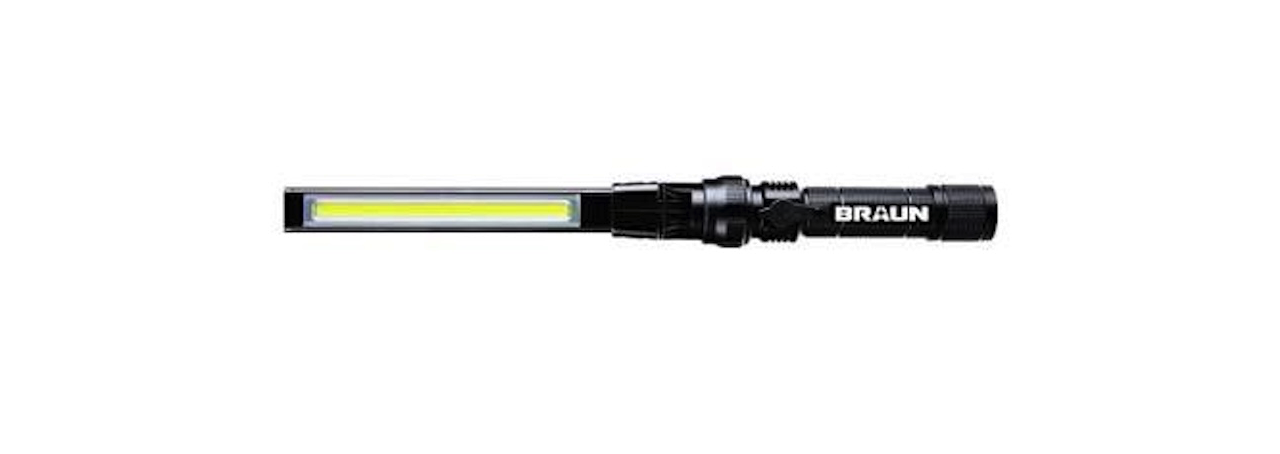
What I’d buy: BRAUN 390-Lumen Magnetic Slim Bar Folding LED Work Light. The useful part isn’t simply the advertised output. The slim folding format and magnetic mounting give you options for positioning the light close to the job instead of trying to hold a flashlight while working.
Price: $64.99
Where to Buy: Harbor Freight
Buy it: Day one. Budget to midrange is perfectly reasonable, and two well-positioned inexpensive work lights can sometimes be more useful than one premium model.
Build your garage in three stages
You don’t need all 10 tool categories before your first repair. Build your kit around the work you’re ready to do.
Tier 1: Basic maintenance, roughly $150 to $300. Start with sockets and ratchets, combination wrenches, pliers, screwdrivers and bits, a work light, and a multimeter. This covers batteries, filters, accessible sensors, basic electrical checks, and other small repairs.
Tier 2: Wheels, brakes, and under-car work, roughly $300 to $700 total. Add safe lifting equipment, a breaker bar, and a torque wrench. Proper lifting procedures and manufacturer torque specs are essential at this stage.
Tier 3: Diagnostics and more involved repairs, roughly $500 to $1,000+ total. Add an OBD-II scanner, then buy specialty tools only as jobs require them, such as trim and brake tools, pullers, fluid-handling gear, an impact wrench, or vehicle-specific sockets.
These are planning ranges, not price guarantees; brand, sales, set size, and vehicle needs can shift the total. Avoid buying specialty tools until a repair actually calls for them.
Don’t try to replace an entire repair shop
Even a well-equipped home garage has limits. Wheel alignments, tire mounting and balancing, major engine or transmission work, refrigerant service, and some manufacturer-specific diagnostics often require specialized equipment or training.
The goal isn’t to replace professional mechanics; it’s to avoid paying shop labor rates for manageable maintenance because you lack a basic tool.
Buyer fit: Start with Tier 1 and learn to use those tools properly. Add Tier 2 when you’re ready for wheel, brake, and under-car work, then invest in Tier 3 diagnostics and specialty tools only when your vehicles and repair needs warrant it.
A capable DIY garage isn’t about tool count. It’s about having the right tool to diagnose the problem, complete the repair safely, and reassemble the car correctly.
Final note
One small style call remains: the article currently uses “What I’d buy” and first-person framing throughout, which reads naturally and consistently in the present draft. If you want a more publication-neutral tone, those can be converted to “Recommended pick” throughout in one pass without changing the structure.