The sunglasses that work perfectly well walking around outside aren’t necessarily the pair you want behind the wheel.
Driving creates a particular mix of problems. Sunlight reflects from wet pavement, dashboards, windshields, and surrounding vehicles. Your view can change from full sun to tree cover in seconds. Modern cars add instrument screens and head-up displays that may interact badly with certain polarized lenses.
Simply buying the darkest sunglasses you can find isn’t the answer.
For this list, I looked for five models that approach those problems differently. Some prioritize reflected-glare reduction. Others emphasize contrast, changing-light performance, display compatibility, or long-drive comfort.
Here are five driving sunglasses worth considering, depending on what bothers you most behind the wheel.
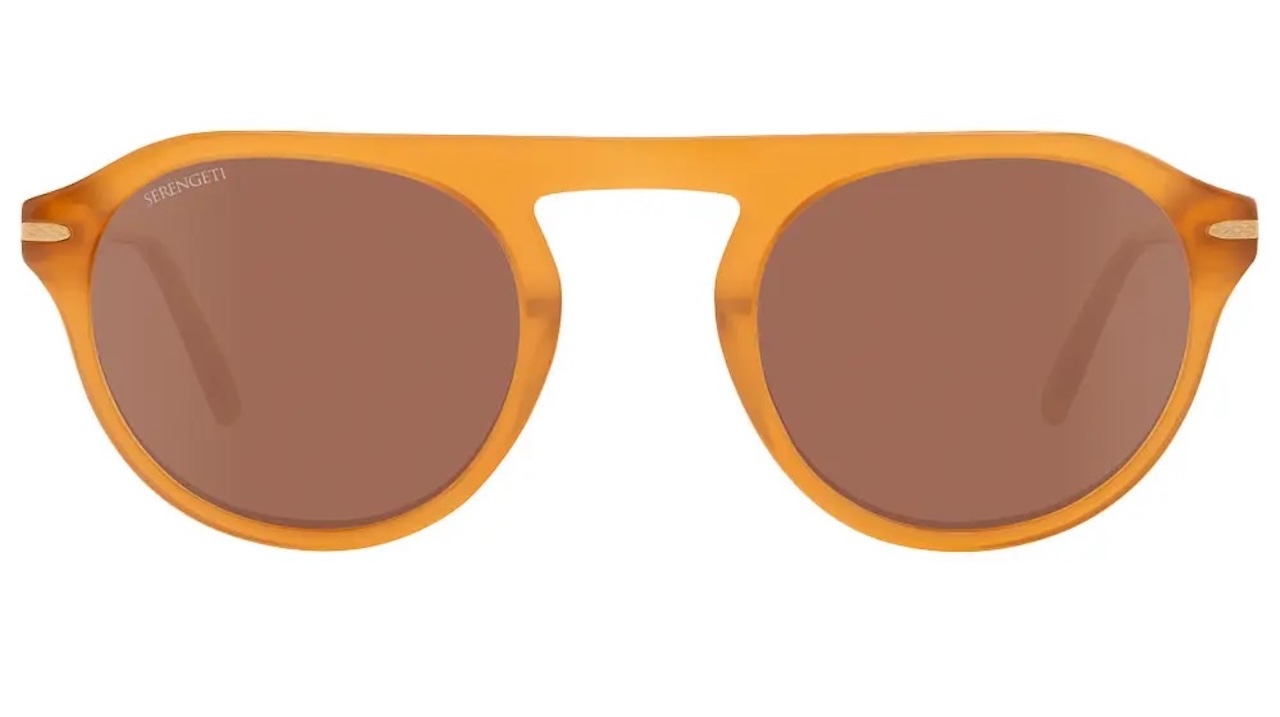
1. Serengeti Arthur Drivers: Best overall for changing daylight
Variable weather is not just about brighter sun; it is about lenses that stay the same while conditions change.
The Serengeti Arthur’s Drivers lenses are photochromic, polarized ultra-light mineral lenses designed to respond to available light. Serengeti rates them Category 2–3 for overcast to medium-light conditions and says its Spectral Control technology helps distinguish reds, greens, and yellows.
That could be useful around traffic lights, signs, lane markings, and brake lights, though those color and contrast benefits are manufacturer claims, not our road-test findings.
The photochromic lens is why the Arthur stands out: it is designed to adjust rather than lock you into one tint. How quickly it changes inside a specific vehicle still requires hands-on testing.
Price: £228.71 (About $309)
Where to Buy: Glisshop
Buyer fit: Choose the Serengeti Arthur Drivers if your commute or road trips regularly move between bright and shaded conditions and you’d rather have one lens designed to adapt than switch between multiple pairs of sunglasses.
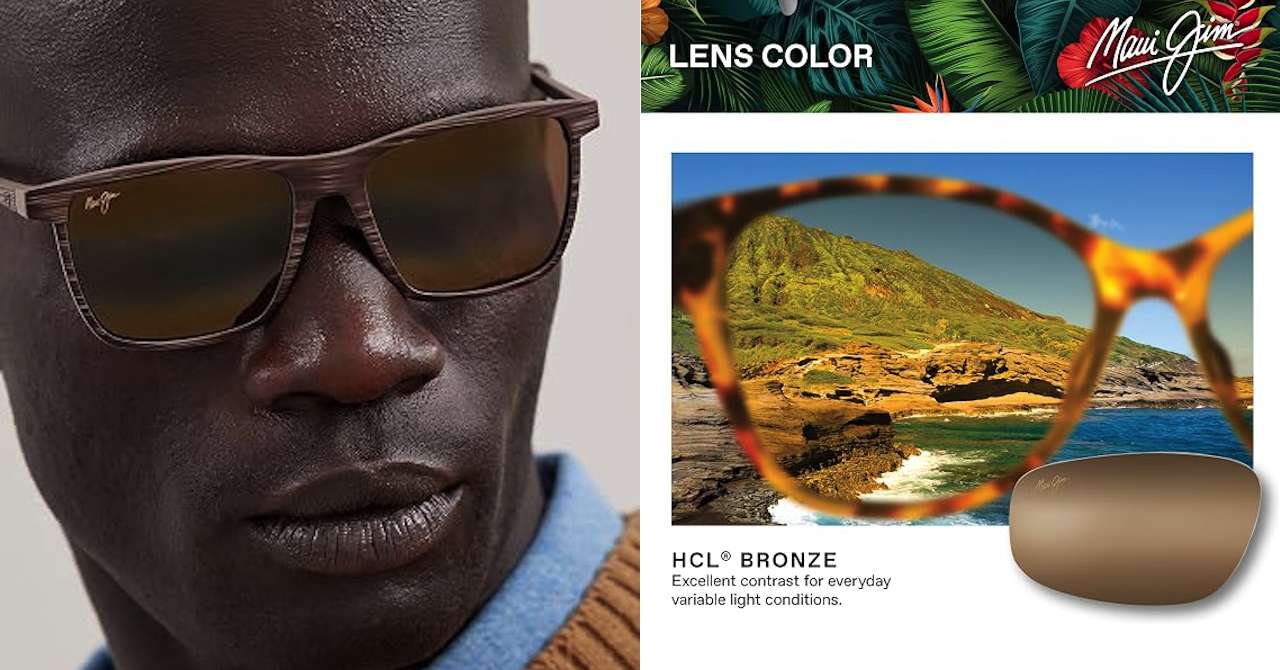
2. Maui Jim Ho’opili HCL Bronze: Best for reflected glare
Sometimes the issue is not the brightness of the sky but the glare reflecting off the road, windshield, dashboard, and nearby vehicles.
The Maui Jim Ho’opili with HCL Bronze lenses is a strong pick for drivers who prioritize glare reduction. Its PolarizedPlus2 lenses use a warm tint that Maui Jim describes as versatile in changing conditions.
This version uses SuperThin Glass, which Maui Jim says is 20% to 32% thinner and lighter than conventional glass, with high clarity and strong scratch and solvent resistance. Those are manufacturer claims, not results from our own comparative testing.
Polarization can reduce reflected glare, but it may also make some vehicle displays or HUDs appear dim, depending on the display design and viewing angle. Check compatibility in your own car before making it your everyday driving pair.
Price: $289
Where to Buy: Amazon
Buyer fit: Pick the Ho’opili HCL Bronze if reflected glare from roads and surrounding vehicles is your main complaint and you want a warm-tinted polarized lens. Check your dashboard and HUD compatibility before making it your permanent driving pair.
3. Oakley Actuator Prizm Road: Best for contrast without polarization
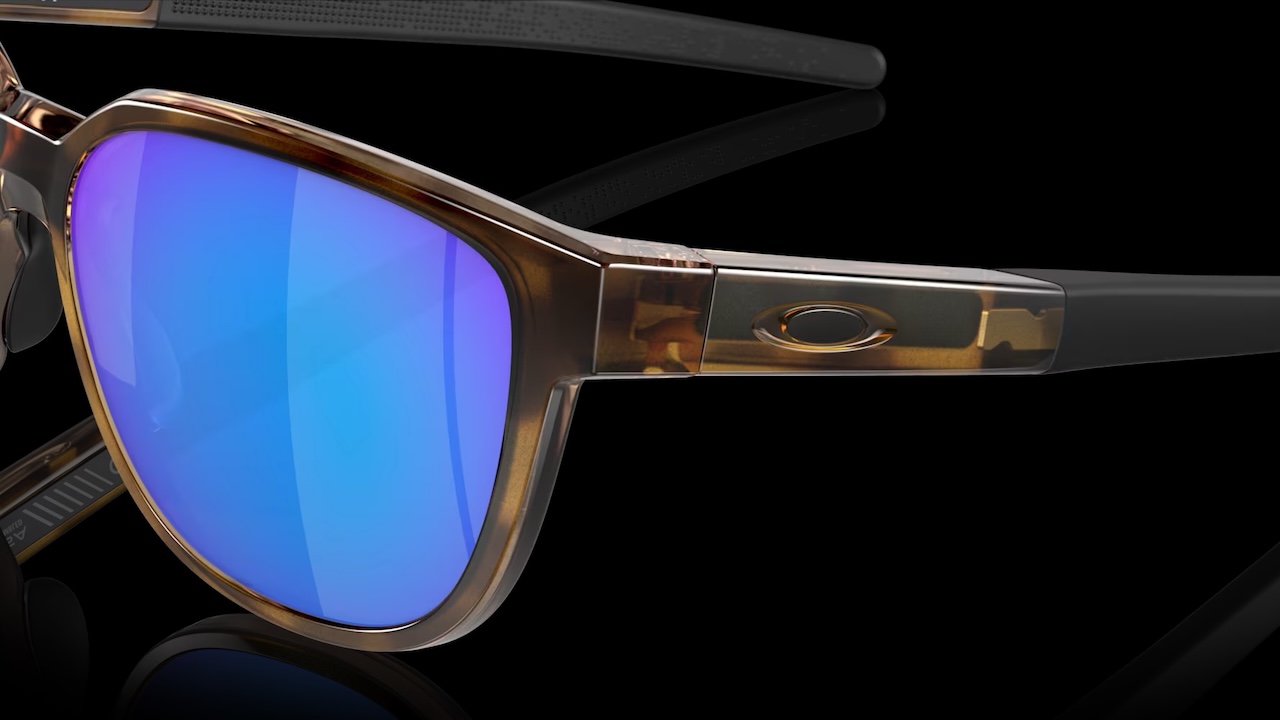
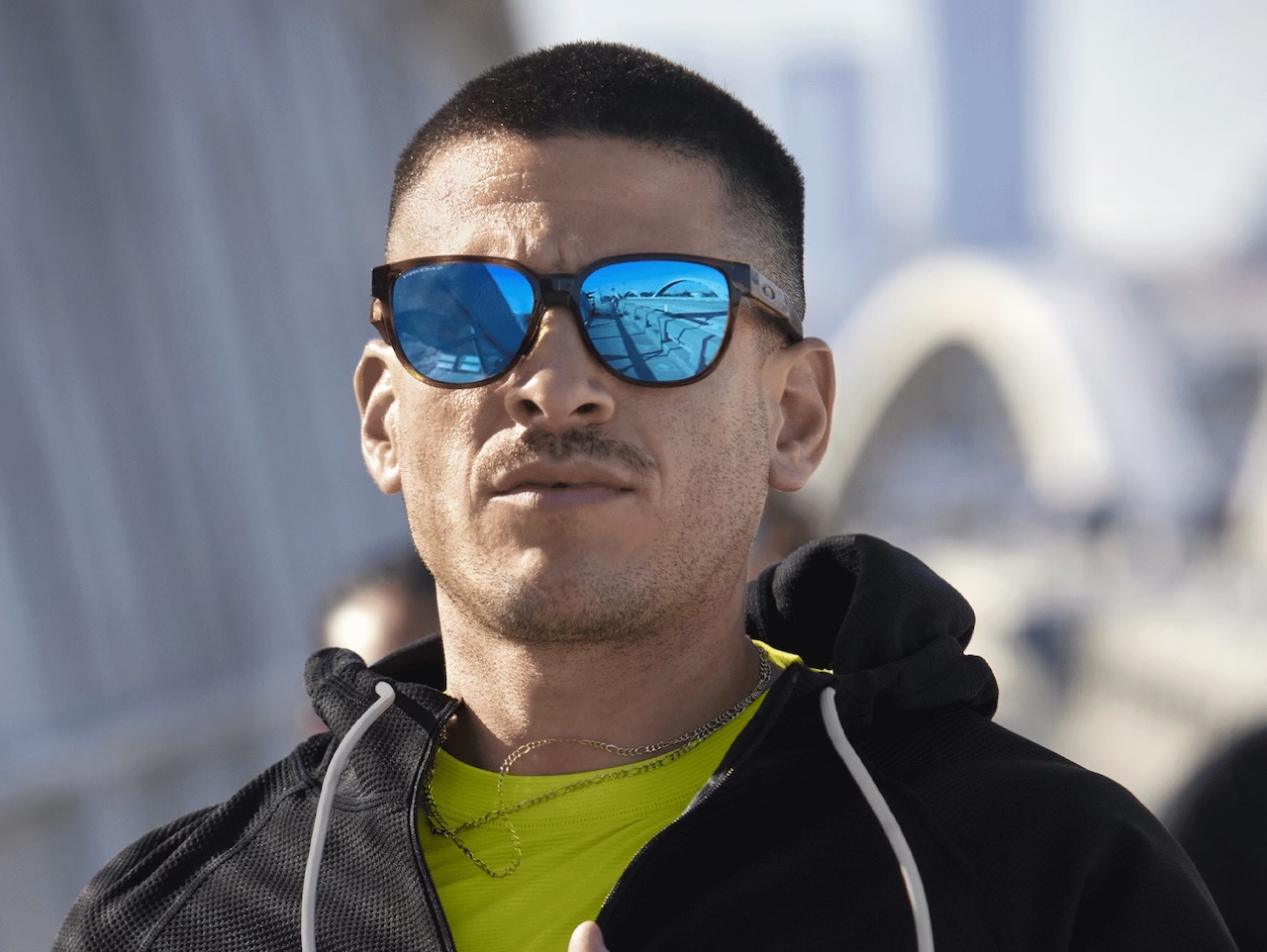
The Oakley Actuator with Prizm Road is a good option if you want a medium-light, non-polarized lens with Oakley’s contrast-focused Prizm technology.
Oakley lists 20% light transmission, a rose base color, and a Medium Light classification for Prizm Road. It says the lens is engineered to enhance color and contrast, though that is a manufacturer claim rather than our own driving-test result.
The non-polarized lens may work better with HUDs and other in-car screens. The Actuator’s O Matter frame, Unobtainium nose pads, and earsocks are designed for secure wear, though Oakley positions it as a running frame rather than a driving-specific model. Comfort over long drives will still depend on your fit
Price: €155.40 (About $180)
Where to Buy: Oakley
Buyer fit: Consider the Actuator Prizm Road if you want a sportier frame, 20% light transmission, and a non-polarized contrast-oriented lens, particularly if display compatibility matters more than maximum reflected-glare reduction.
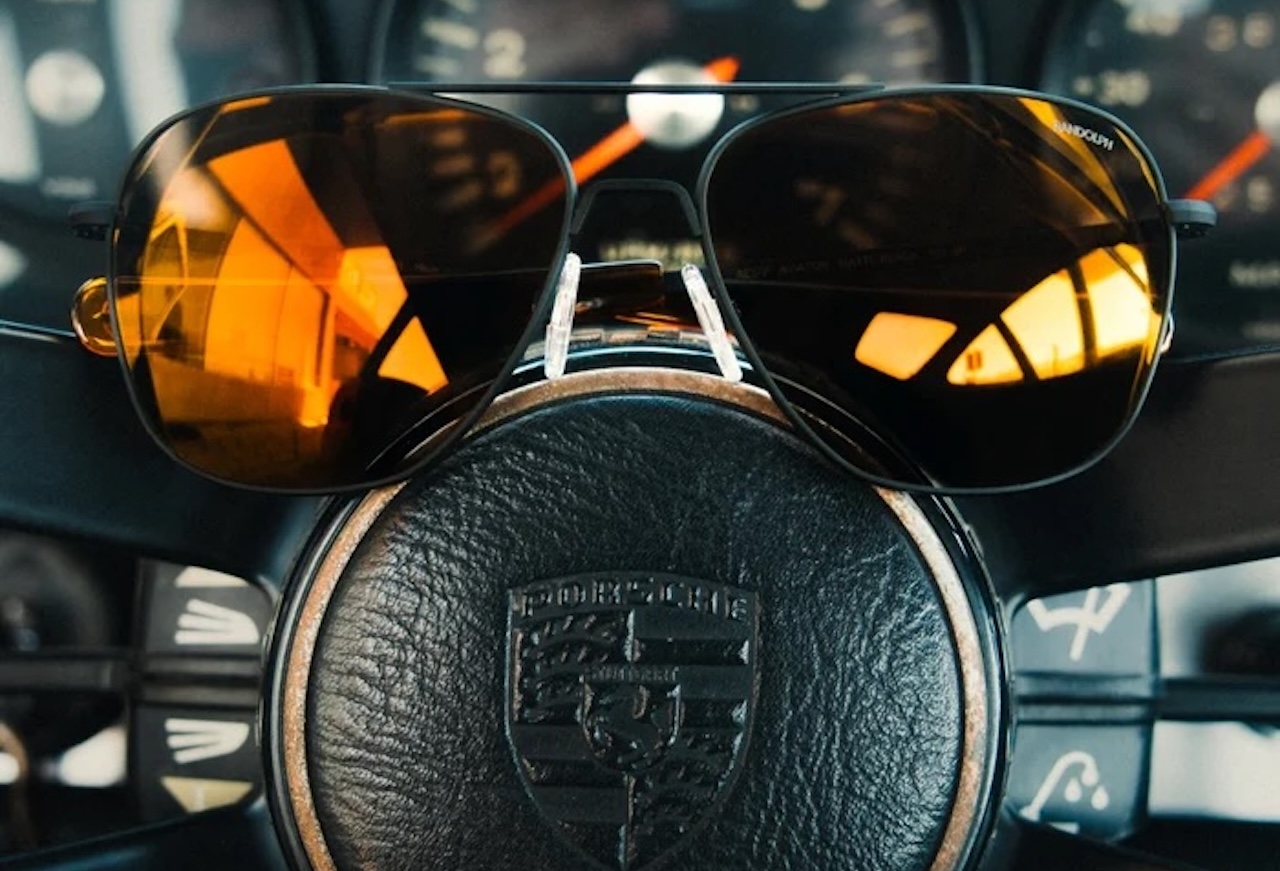
4. Randolph Aviator DriveWorks: Best for screen-heavy cars
Modern cars complicate the old advice to simply buy polarized sunglasses.
The Randolph Aviator DriveWorks is designed around that problem.
Randolph’s DriveWorks range uses ZEISS LightPro Technology with semi-polarized lenses. Randolph says the approach reduces glare while remaining compatible with digital displays.
There are three current lens choices: Redline at 15.88% light transmission, Le Mans Blue at 16.37%, and Apex Gray at 16.84%.
Those figures make the choices easier to compare than vague descriptions such as “dark” or “bright.”
Randolph markets all three for bright driving conditions, although each uses a different color treatment. The Aviator DriveWorks sits firmly in premium-sunglasses territory.
The interesting part isn’t simply that it’s an expensive aviator. It’s that Randolph is deliberately addressing a problem created by increasingly digital car interiors.
Price: $325
Where to Buy: Randolph
Buyer fit: The Aviator DriveWorks is the strongest choice here if you have a screen-heavy vehicle and want glare reduction without going to a conventional fully polarized driving lens.
5. Maui Jim Cliff House HCL Bronze: Best polarized aviator
Maybe you don’t want your driving sunglasses to look like specialized driving equipment.
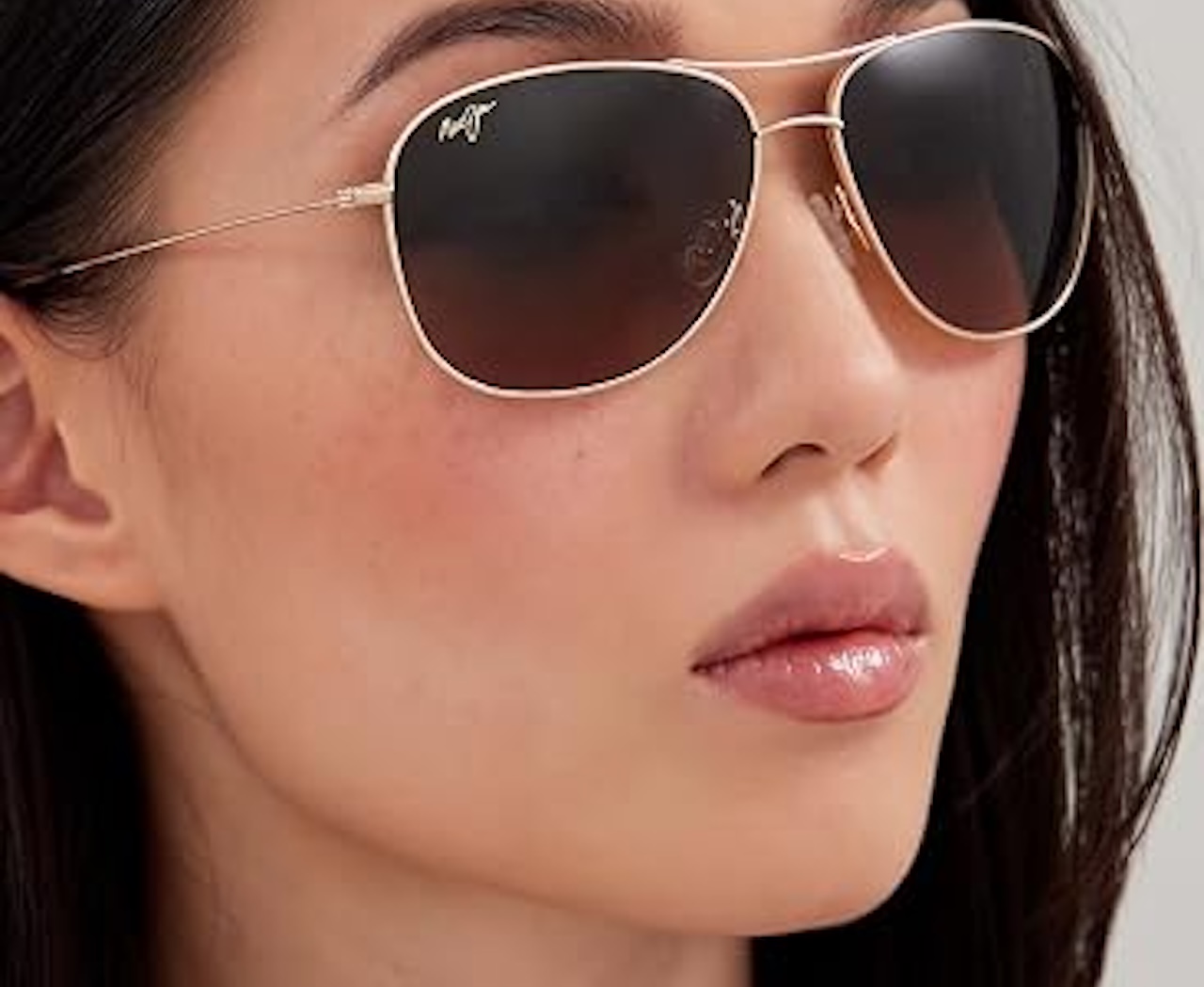
The Maui Jim Cliff House with HCL Bronze lenses packages Maui Jim’s polarized approach into a classic aviator.
The HCL Bronze tint is described by Maui Jim as versatile in changing conditions with a warm appearance. The Cliff House uses MauiPure lenses, rather than the SuperThin Glass found in the Ho’opili above.
Maui Jim describes MauiPure as offering optics approaching its glass lenses while reducing weight and providing scratch and shatter resistance. Those comparisons come from Maui Jim rather than independent testing performed for this article.
The Cliff House has a 58mm lens width, 15mm bridge, and 135mm temples, and Maui Jim classifies it as a medium fit.
It also brings the same polarization consideration as the Ho’opili. Reflected-glare reduction is the attraction, but you’ll want to confirm that your car’s displays remain easily visible through the lenses.
Price: $279
Where to Buy: Maui Jim
Buyer fit: Choose the Cliff House HCL Bronze if you want polarized glare control and a warm tint but prefer a traditional aviator over a sportier frame.
Which driving sunglasses should you buy?
Start with the problem you need to solve.
For changing daylight, choose the Serengeti Arthur Drivers: its photochromic, polarized lenses are designed to adapt as conditions shift. For reflected glare, the Maui Jim Ho’opili HCL Bronze is the conventional polarized choice. If you want contrast without polarization, consider the Oakley Actuator Prizm Road.
The Randolph Aviator DriveWorks is the best fit for screen-heavy cars or HUDs, thanks to its semi-polarized lenses. Prefer a classic aviator with full polarization? Choose the Maui Jim Cliff House HCL Bronze.
Before you buy, try the sunglasses in your own car. Check the instrument cluster, infotainment display, mirrors, and HUD, then see whether the tint still works as you move between direct sun and shade. That quick test will tell you more than another page of lens specs.
Buyer fit: Don’t choose driving sunglasses because they have the darkest lenses or the longest list of optical technologies. Choose the pair that solves your particular glare and lighting problem without making anything important inside or outside the car harder to see.