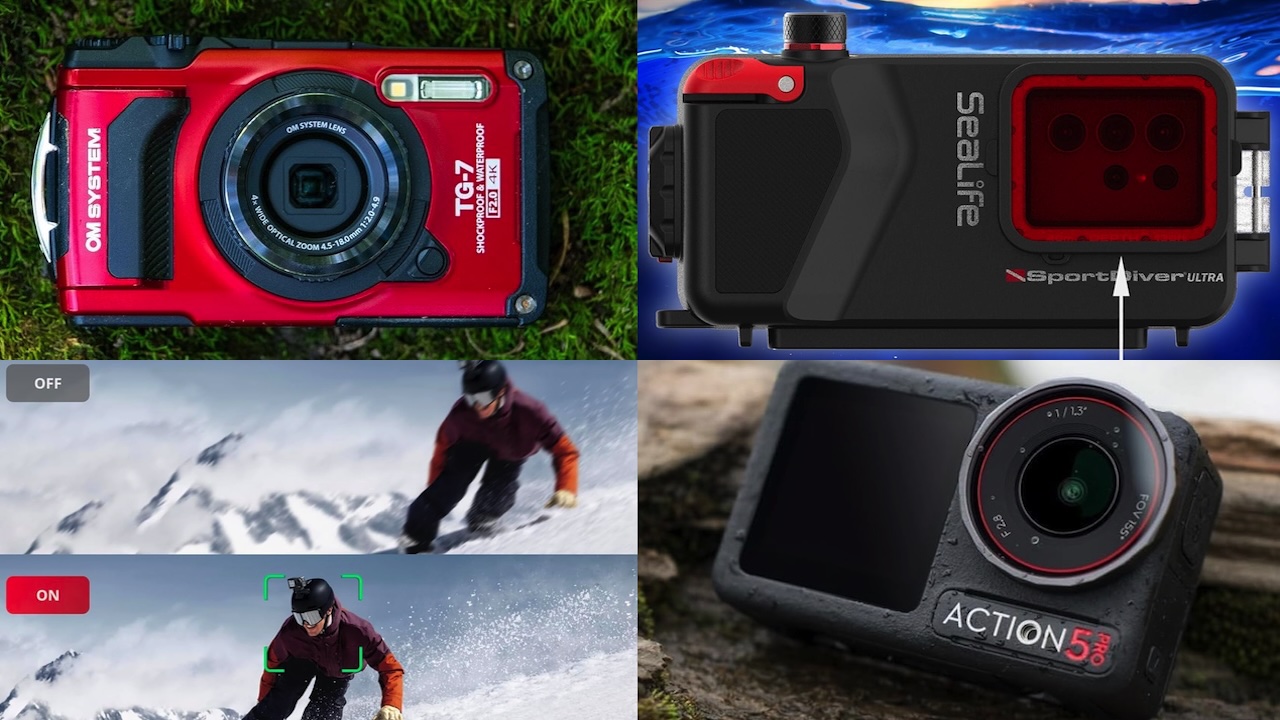
Your phone already takes excellent pictures, but some of the best places to take pictures are also terrible places to risk the device containing your messages, maps, boarding passes, payment cards, and everything else you need to get home. A snorkeling trip means saltwater, kayaking combines water with hard surfaces, and hiking adds rain, mud, dust, and cold. Go scuba diving and ordinary consumer electronics quickly reach their limits.
That’s where rugged cameras and waterproof cases still earn their place. Just remember that “waterproof” doesn’t mean indestructible. Manufacturers specify particular depths and test conditions, and those ratings depend on doors, lens covers, and seals being properly secured. Some manufacturers specifically recommend housings for prolonged immersion or activities involving higher water pressure.
Instead of starting with megapixels, start with where you’re going and what your camera will have to survive. These seven rugged cameras and cases are designed for environments where your everyday electronics may be better left somewhere safe.
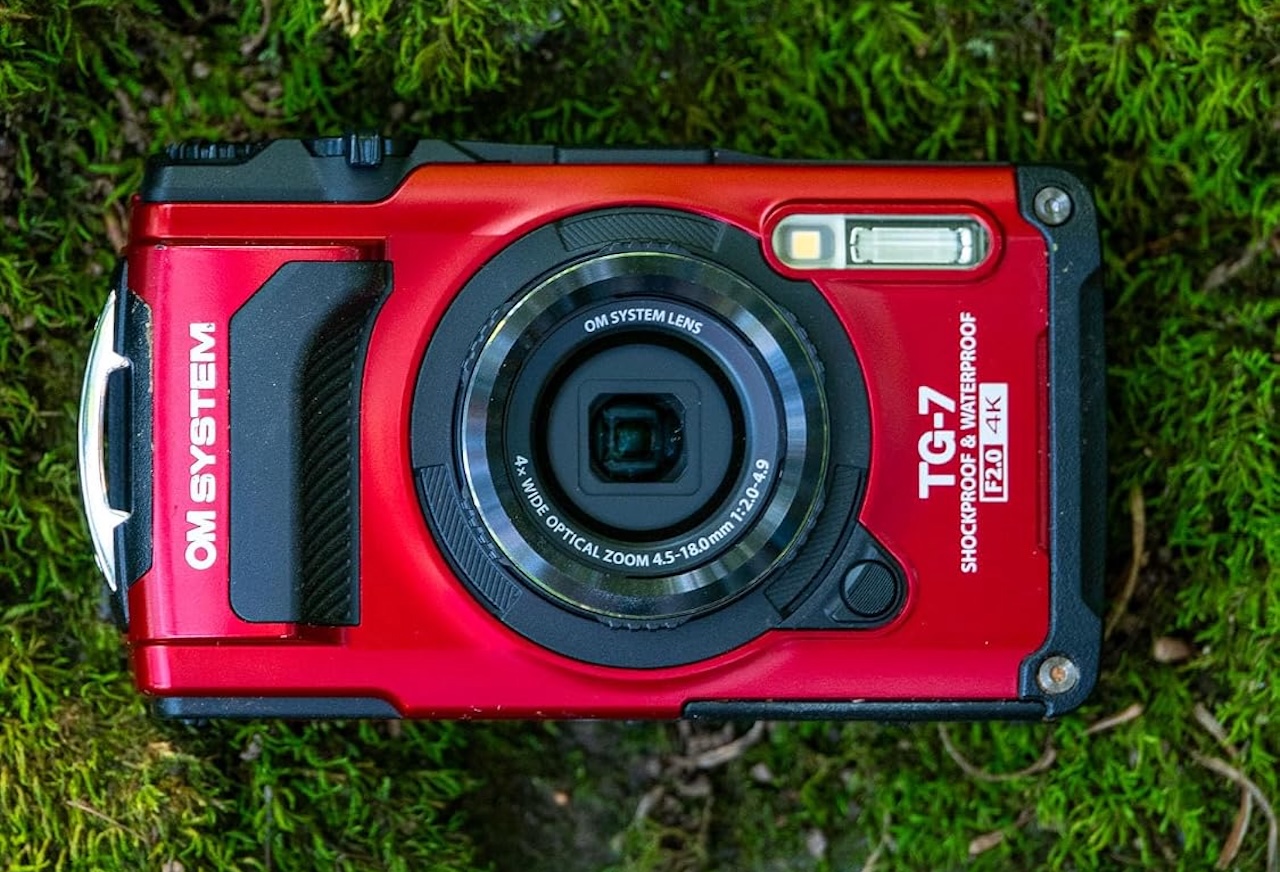
1. OM System Tough TG-7: Best Rugged Still Camera
The OM System Tough TG-7 favors still photography over the ultra-wide video focus of most action cameras. It is rated for depths to 15 meters, 2.1-meter drops, crushproof to 100kg of force, -10°C operation, and dust protection.
A 12MP BSI CMOS sensor, 25–100mm-equivalent f/2 optical zoom, RAW capture, sensor-shift stabilization, 4K video, and macro modes set it apart from basic waterproof compacts. Those ratings reflect controlled testing, not a guarantee against damage or failure.
Price: $549.99
Where to Buy: Amazon
For boats, trails, shorelines, and wet-weather trips, it offers optical zoom and photography-focused controls in a package built for conditions where a conventional compact may be a risk.
Buyer fit: Choose the TG-7 if still photography is your priority and you want one tough camera for snorkeling, kayaking, hiking, camping, and wet vacations without giving up optical zoom or RAW capture.
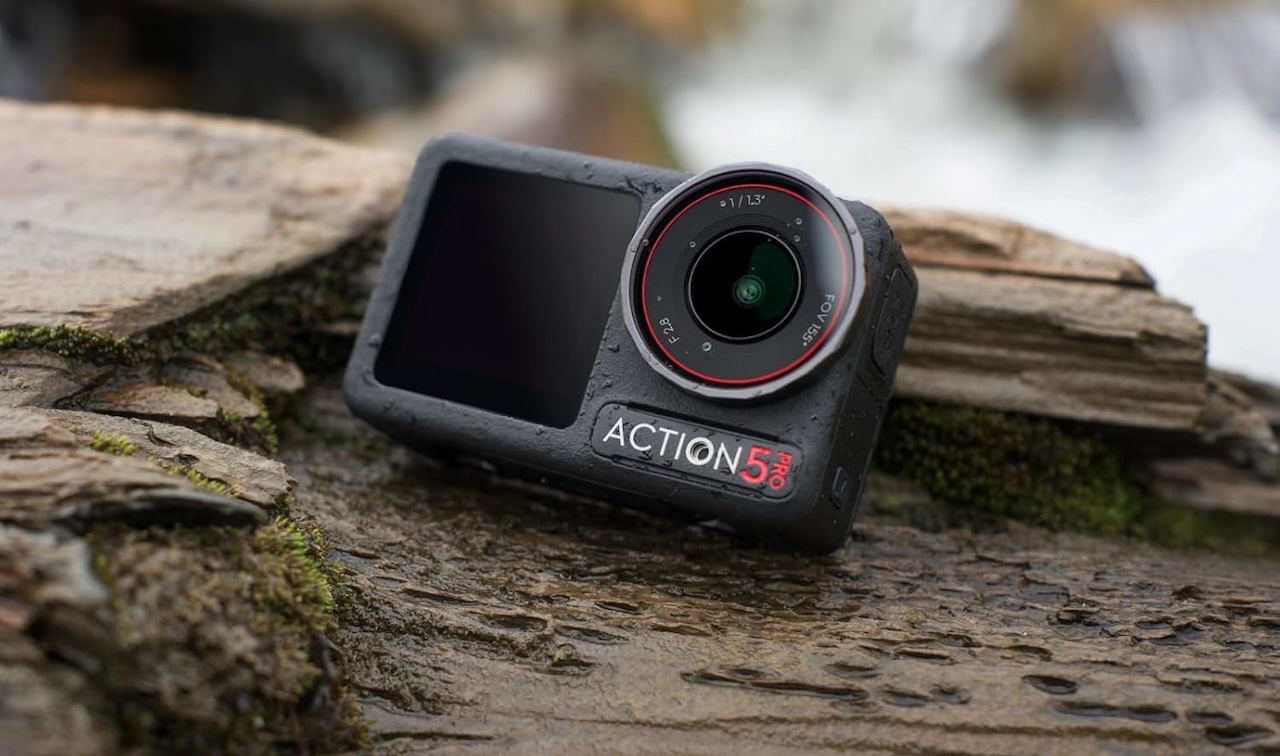
2. DJI Osmo Action 5 Pro: Best Without a Waterproof Case
The DJI Osmo Action 5 Pro cuts down on housing use with a 20-meter waterproof rating on its own. Add DJI’s Waterproof Case, and that increases to 60 meters. Both configurations carry IP68 protection, but DJI recommends the case for prolonged submersion or high-impact water activities.
Before entering the water, close the battery and USB-C covers and secure the lens cover. That makes the Action 5 Pro especially convenient for swimming and snorkeling, while divers can add the housing for greater depth.
Price: From $309
Where to Buy: Amazon
The tradeoff is its action-camera design: it is optimized for wide-angle video rather than the optical zoom and traditional photographic flexibility of the OM System Tough TG-7.
Buyer fit: Pick the Action 5 Pro if video and water sports come first and you want substantial waterproof capability without automatically putting the camera into a separate housing.
3. Insta360 Ace Pro 2: Best for Self-Filming
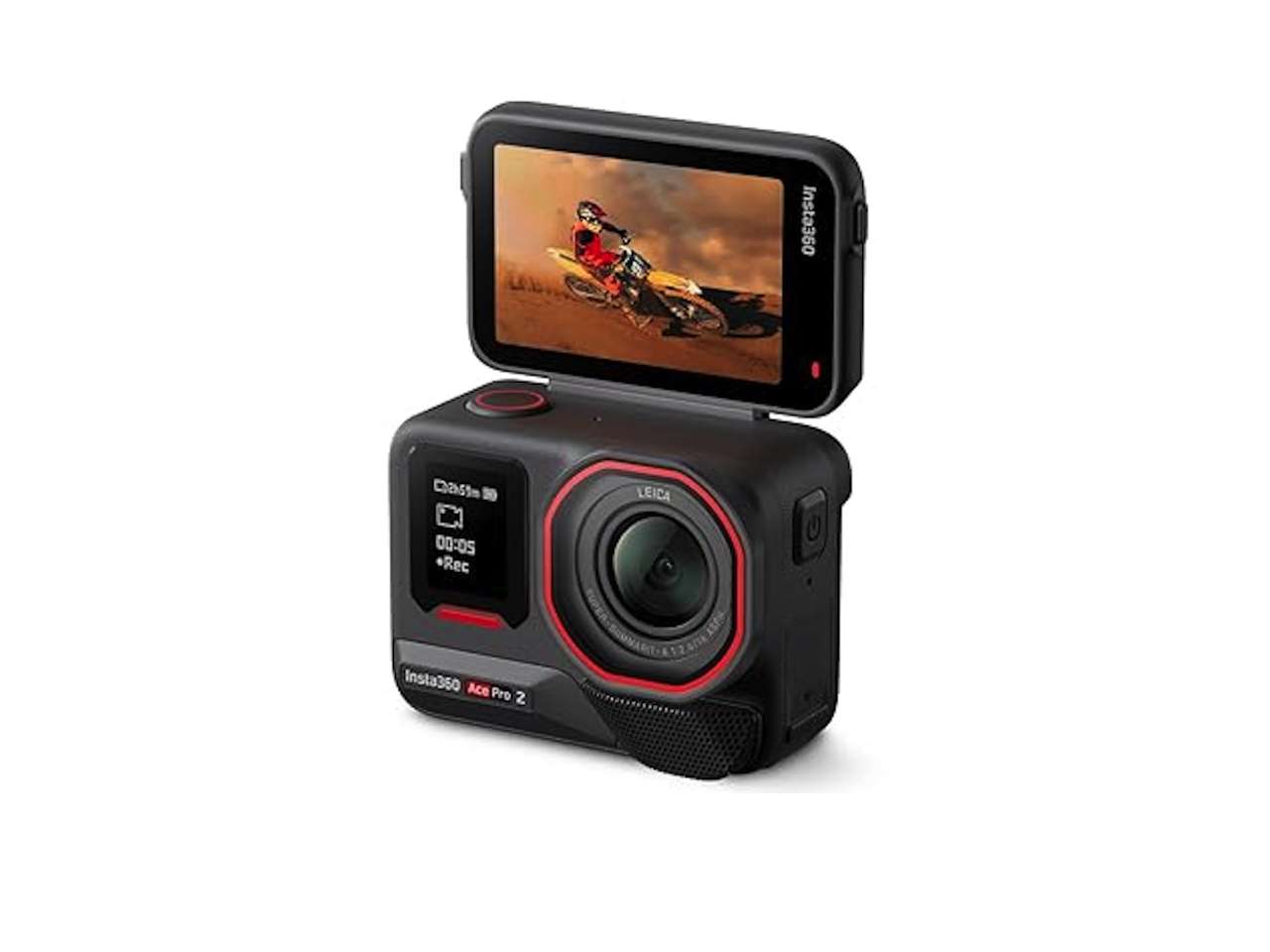
Rugged cameras are often excellent at surviving adventures but less convenient when you’re trying to film yourself during one. Insta360 addresses that problem with the Ace Pro 2’s 2.5-inch flip touchscreen, giving solo creators a straightforward way to check framing without sacrificing meaningful water protection.
The Ace Pro 2 uses a 1/1.3-inch sensor and can record at resolutions up to 8K. More relevant for this list, Insta360 rates the camera waterproof to 12 meters without additional protection, while the optional Dive Case extends the rated depth to 60 meters.
Price: From $329.99
Where to Buy: Amazon
Those figures come with conditions. Before entering the water, Insta360 says the battery cover and USB cover must be fully closed and the lens guard securely installed. The company also warns that dirt or debris around the rubber seals can compromise waterproofing and recommends the Dive Case for extended underwater shooting.
For travelers and creators, that combination means the same camera can be used for self-filming on a trail and then taken swimming or snorkeling without necessarily requiring another enclosure. The flip display becomes particularly useful when you’re back above water and need to compose a shot with yourself in the frame.
The 8K headline shouldn’t be treated as proof of superior video quality by itself. Resolution is only one part of the equation, alongside lighting, stabilization, lens characteristics, compression, and the recording mode you’re actually using.
Buyer fit: Choose the Ace Pro 2 if your adventures regularly involve filming yourself and you value its flip-screen design as much as its underwater capability.
4. Kodak PIXPRO WPZ2: Best Simple Waterproof Camera
Not everybody wants an action camera connected to an app and surrounded by mounting accessories. For a family vacation or a day at the pool, a straightforward camera you can hand to somebody else without explaining a collection of video modes may actually be more useful.
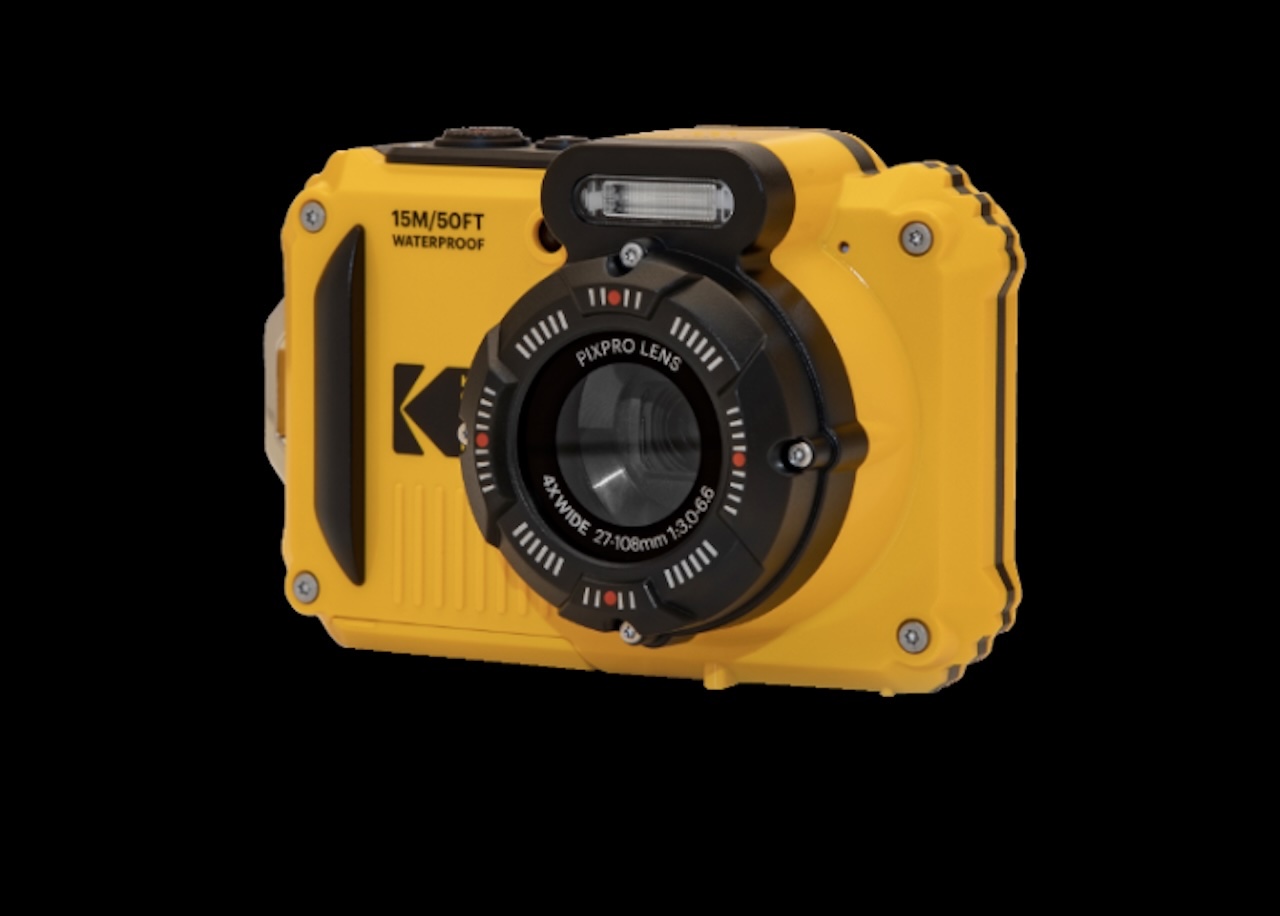
The Kodak PIXPRO WPZ2 follows that simpler formula. Kodak specifies a 16MP CMOS sensor, 4x optical zoom, 1080p Full HD video, and built-in Wi-Fi. More importantly for wet environments, the camera is rated waterproof to 15 meters, shockproof against drops of up to 2 meters, and dustproof to an IP6X-equivalent standard.
Price: $199.99
Where to Buy: Kodak
The 4x optical zoom gives the WPZ2 a practical advantage over fixed ultra-wide action cameras when you’re primarily taking photographs. At a beach, pool, or snorkeling location, you can’t always get physically closer to the person, animal, or object you’re trying to photograph, and optical zoom gives you another way to frame the shot.
The compromise is that this isn’t a cutting-edge content-creation camera. Don’t expect the sophisticated recording modes of current premium action cameras or the computational photography capabilities of a flagship smartphone. Its appeal is much simpler: it’s a dedicated camera with optical zoom that can go places where you might prefer not to risk your phone.
Buyer fit: The WPZ2 makes sense for families, beach vacations, pools, and anyone who wants a straightforward dedicated camera that can get wet without putting a much more valuable smartphone at risk.
5. Ricoh WG-80: Best for Rough Outdoor Work
Water isn’t the only threat to electronics. A camera used for fieldwork may encounter dust, freezing temperatures, drops, mud, and crushing pressure long before anybody takes it swimming, which is where the Ricoh WG-80’s broader approach to ruggedness starts to make sense.
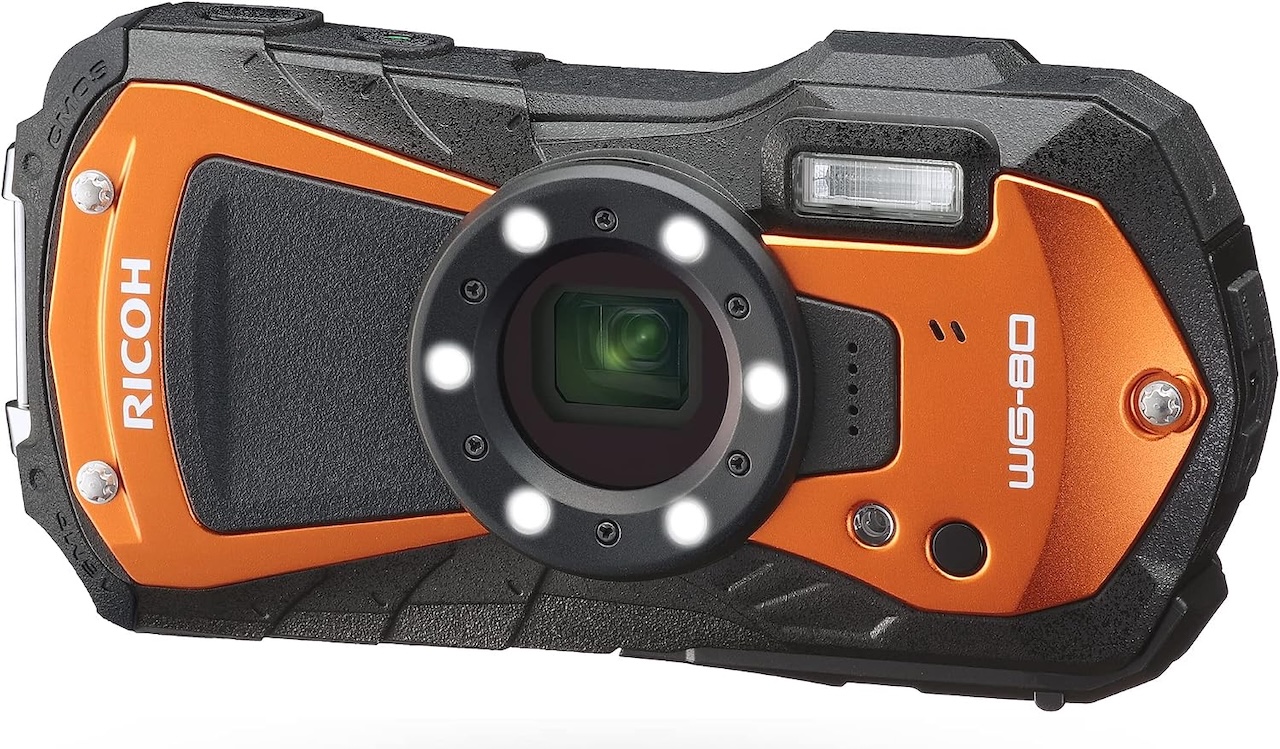
Ricoh rates the WG-80 waterproof to 14 meters for up to two hours, shockproof against a 1.6-meter drop, freezeproof to -10°C, crushproof to 100 kgf, and dustproof to IP6X. It also provides approximately 16 effective megapixels and a 5x optical zoom covering roughly 28-140mm equivalent.
Price: $329.99
Where to Buy: Amazon
That 5x optical zoom makes the camera useful for more than recreational underwater photography. Someone documenting equipment, inspecting a structure, or working outdoors can frame details without relying entirely on digital enlargement or physically moving closer to the subject.
As with every rugged rating in this article, Ricoh’s specifications describe controlled testing rather than proof that the camera can’t be damaged. A sufficiently hard impact can still damage the camera or compromise the seals responsible for keeping water out.
The WG-80 makes the strongest practical case when you need protection from several environmental hazards rather than simply wanting a camera for the swimming pool. Its design is as relevant to inspections, construction, camping, and field research as it is to recreational water use.
Buyer fit: Consider the WG-80 if your definition of “rugged” involves job sites, cold weather, dust, and accidental drops just as much as water.
6. SeaLife SportDiver Ultra: Best Waterproof Case for Your Phone
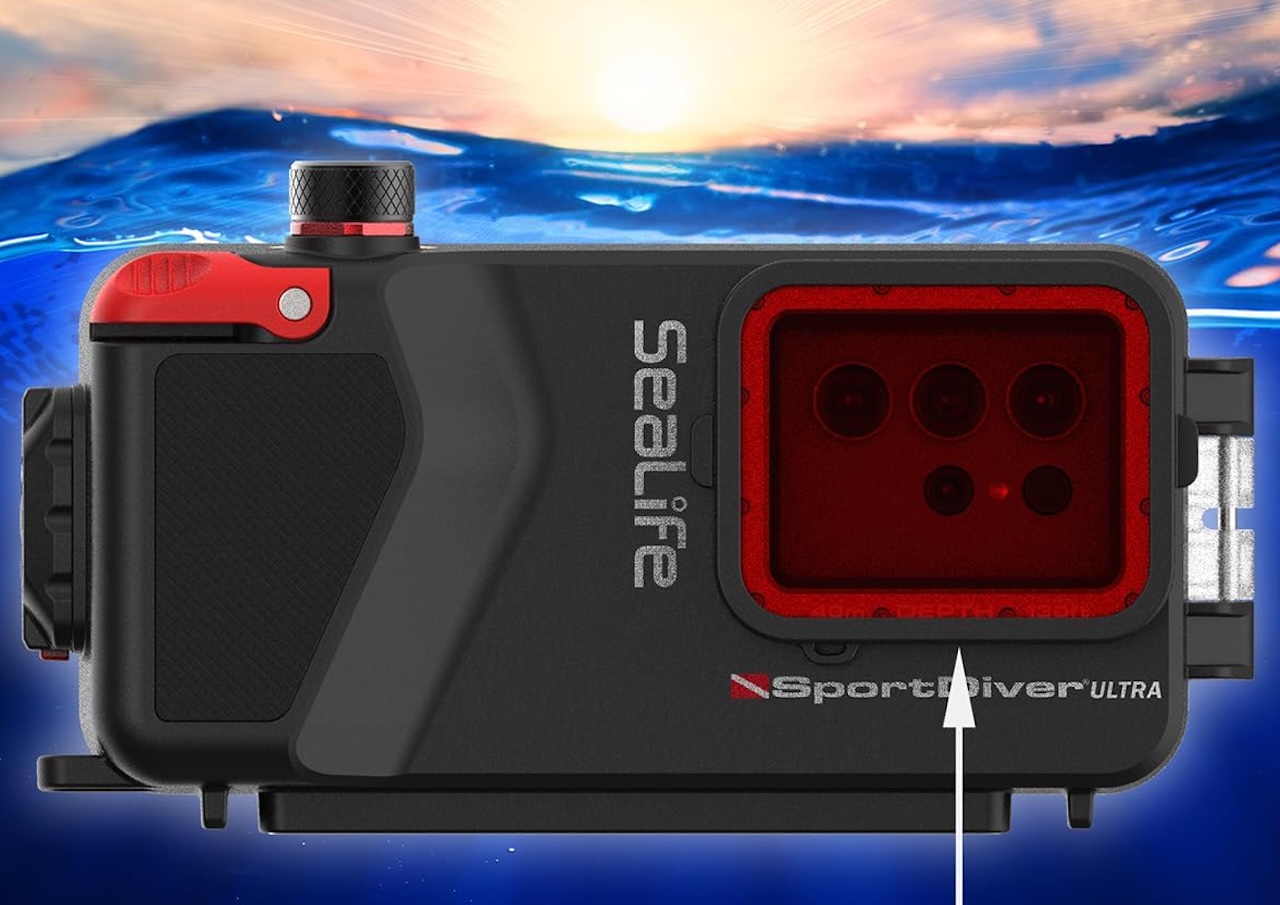
The SeaLife SportDiver Ultra lets you take the smartphone camera you already know underwater. It is rated to 40 meters, individually depth-tested, and compatible with many iPhone, Samsung Galaxy, and other Android models.
Dual leak warnings, a vacuum-pressure alarm and internal moisture sensor, help monitor seal integrity. Bluetooth LE connects the housing’s external controls to the phone without mechanically pressing its buttons.
Price: $23.95
Where to Buy: Amazon
The tradeoff is clear: a housing preserves your phone’s familiar camera and processing, but a leak could also cost you your primary communication, navigation, payment, and travel device.
Buyer fit: The SportDiver Ultra is for divers who specifically want to use their smartphone camera underwater and consider that familiarity worth the additional risk to their primary device.
7. Insta360 Ace Pro 2 Dive Case: Best Upgrade for Deeper Water
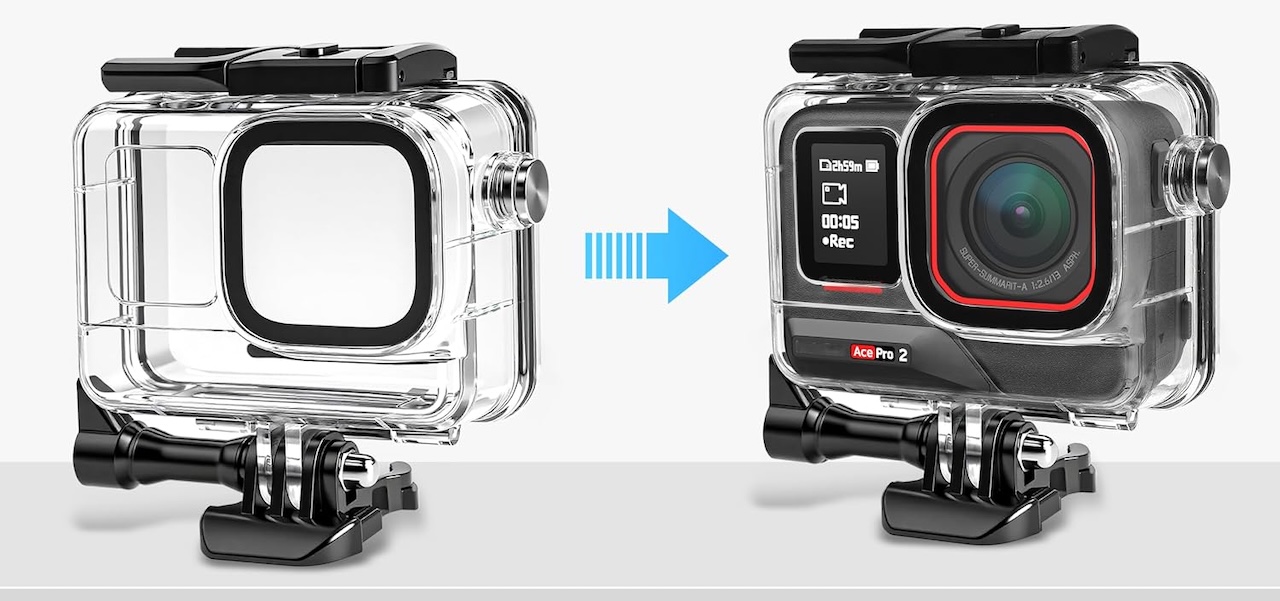
The Insta360 Ace Pro 2 Dive Case is a logical upgrade for owners who need more than the camera’s 12-meter standalone rating. It extends rated waterproofing to 60 meters and is recommended for extended underwater shooting.
It saves you from buying and managing a separate underwater camera, but adds bulk and seals that need routine inspection. For deeper or longer dives, that tradeoff is preferable to pushing the Ace Pro 2 beyond its standalone limits.
Price: From $70
Where to Buy: Amazon
Buyer fit: Buy the Dive Case if you already own an Ace Pro 2 and are moving beyond casual swimming and snorkeling into deeper or longer underwater shooting.
Which Rugged Camera or Waterproof Case Should You Buy?
The best place to start isn’t sensor resolution or even maximum depth. Think about what you’re actually trying to protect against and what kind of pictures or videos you want when you get there.
For photographers expecting rain, drops, cold, and underwater use, the OM System Tough TG-7 is the strongest all-around still-camera choice here. Its optical zoom and RAW support give photographers tools that typical action cameras aren’t designed to replace.
If video is the priority, the DJI Osmo Action 5 Pro stands out because DJI rates it to 20 meters without a separate housing. The Insta360 Ace Pro 2 doesn’t go as deep on its own, but its flip display makes a stronger case for travelers and creators who regularly put themselves in the frame.
The Kodak PIXPRO WPZ2 keeps things simple for pools and family vacations, while the Ricoh WG-80 is better suited to situations where the threat includes dust, cold, drops, and demanding field conditions in addition to water. If you’re determined to use your phone underwater, the SeaLife SportDiver Ultra provides a substantially more serious solution than a basic waterproof pouch. Existing Ace Pro 2 owners heading deeper can instead add the Dive Case.
Whatever you choose, don’t confuse a depth rating with invincibility. Clean seals, properly closed doors, manufacturer instructions, and rinsing equipment with fresh water after saltwater exposure still matter. A camera rated for your destination can still fail if its seals aren’t maintained or its doors aren’t correctly closed.
Ultimately, the right rugged camera isn’t necessarily the one capable of surviving the deepest dive. It’s the one that gives you the photographs or video you want in an environment where risking your everyday camera or the phone containing the rest of your digital life would otherwise be a bad trade.