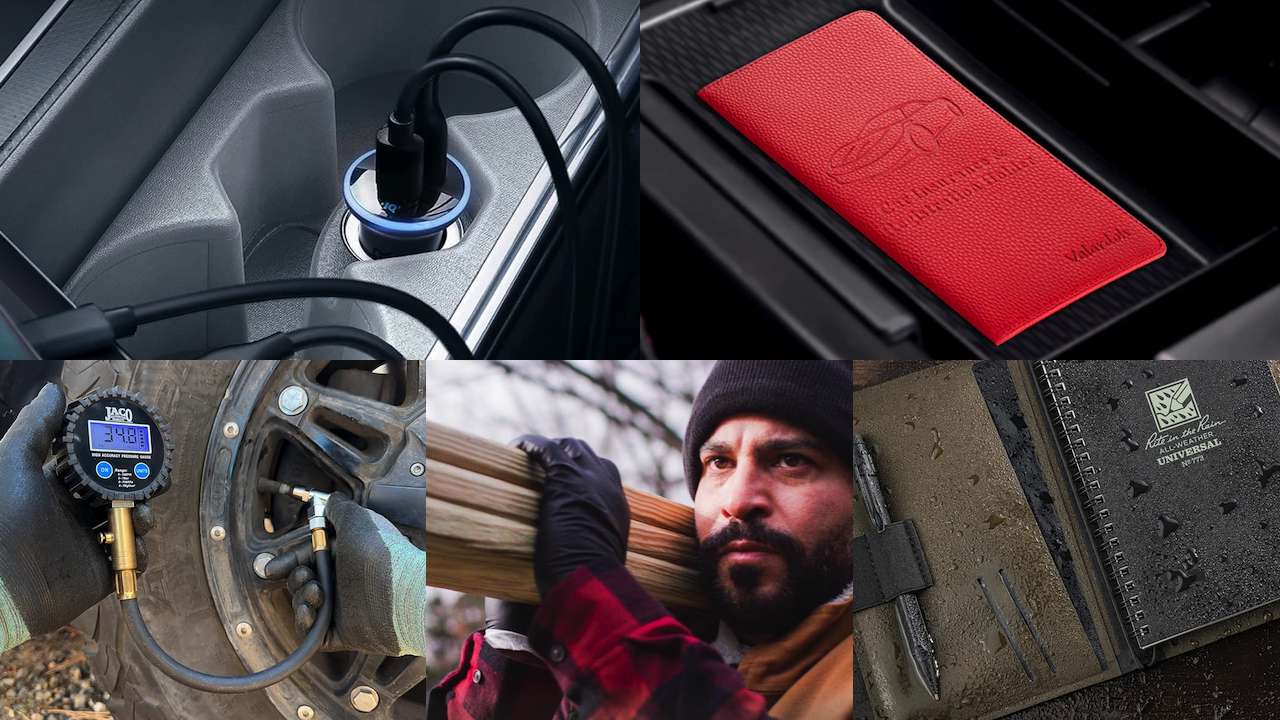
The glovebox is close enough to be useful and convenient enough to become a junk drawer. Receipts, outdated documents, and random clutter quickly crowd out the items you may actually need.
As we head into fall and winter, this list can help you clear the clutter and prepare for less predictable driving conditions. Treat the glovebox as a limited space budget, not an emergency bunker: keep small, accessible problem-solvers up front, and move jumper cables, warning triangles, tire inflators, blankets, water, and other bulky emergency gear to the trunk or cargo area.
These 10 Glovebox Essentials earn the space.
1. Solve the Dashboard Mystery With Your Owner’s Manual
A warning symbol appears on the dashboard, and suddenly the booklet you’ve ignored for five years becomes considerably more interesting.
Your vehicle owner’s manual explains systems specific to the car you’re actually driving. Depending on the vehicle, that can include warning lights, controls, fluid specifications, tire information, fuse locations, jump-starting instructions, and features you may not even realize the car has.
Searching online can accomplish some of the same things, but now you’re depending on a charged phone, connectivity, and finding information for the correct model and model year. The paper manual has none of those dependencies.
What to buy: Nothing, ideally. Use the factory manual supplied with the vehicle. If you bought the car used and it’s missing, check whether the automaker offers an official replacement or downloadable version before buying a third-party manual.
That establishes a useful rule for the rest of this list: don’t buy something for the glovebox when the car already gave you a perfectly good solution.
Buyer fit: Every vehicle should have its correct manual accessible. It earns the space because it can answer questions about the specific machine surrounding you.
2. Stop Borrowing Your Own Charging Cable
A phone can be your navigation system, roadside-assistance connection, camera, insurance-card viewer, payment device, and primary way of contacting someone when things go wrong. A dead battery can take all of those functions away at once.
The solution doesn’t need to be clever. Leave a dedicated charging cable in the vehicle instead of continually moving your everyday cable between your house, bag, office, and car.
Compatibility matters more than buying the fanciest cable. Check the connector on your phone and the port available in the vehicle or car charger. USB-C-to-USB-C makes sense for many newer setups, while older vehicles may still require USB-A at the charger end.
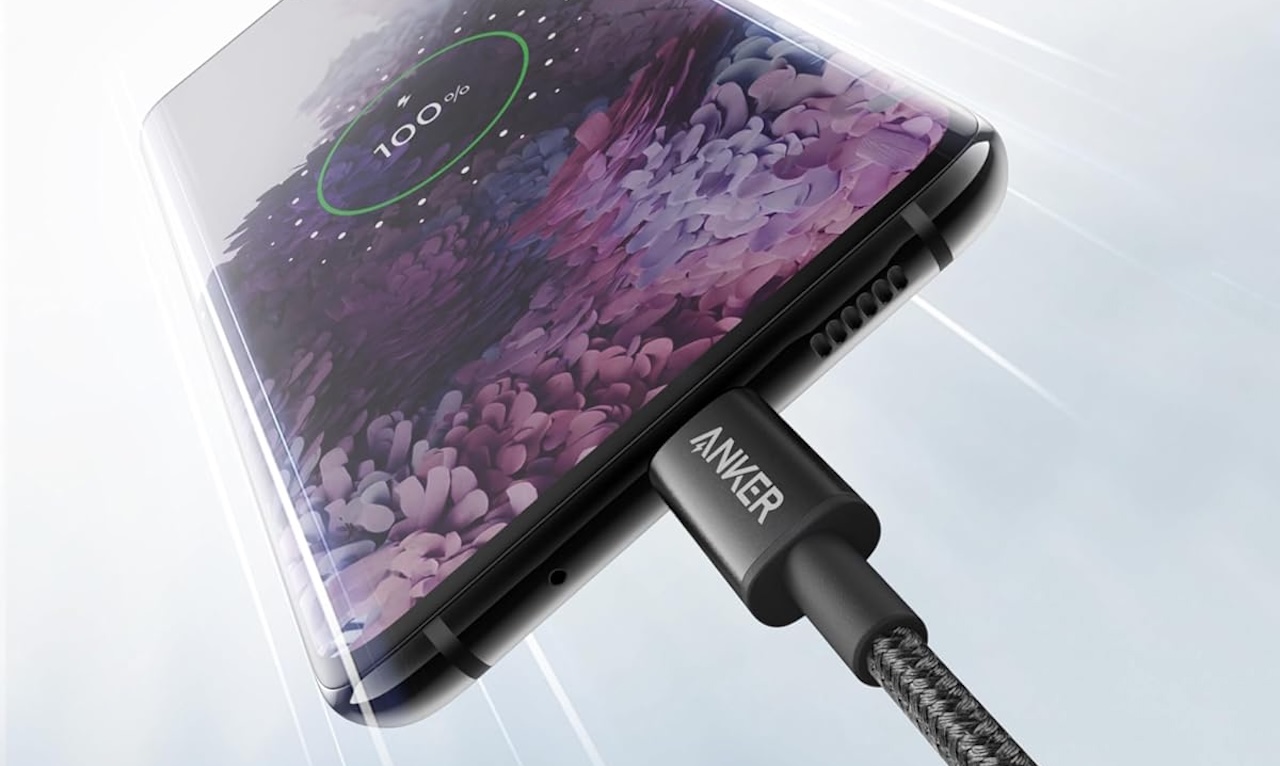
What to buy: Anker USB-C charging cable. Anker sells numerous lengths and connector combinations, so choose the one that actually matches your setup rather than buying based on a maximum charging number you may never use.
Price: $9.99
Where to Buy: Amazon
For glovebox duty, shorter can also be better. Excess cable doesn’t add capability; it adds something else to untangle.
Buyer fit: If your phone is part of how you drive, navigate, or call for help, a dedicated car cable easily earns its tiny amount of glovebox space.
3. Give an Older 12V Socket a New Job
Some cars have USB-C ports everywhere. Others remind you that the circular 12V accessory socket used to be called the cigarette lighter.
That socket is still useful. A compact USB adapter can turn it into a modern charging point without modifying the vehicle, which makes this a particularly practical upgrade for an older car.
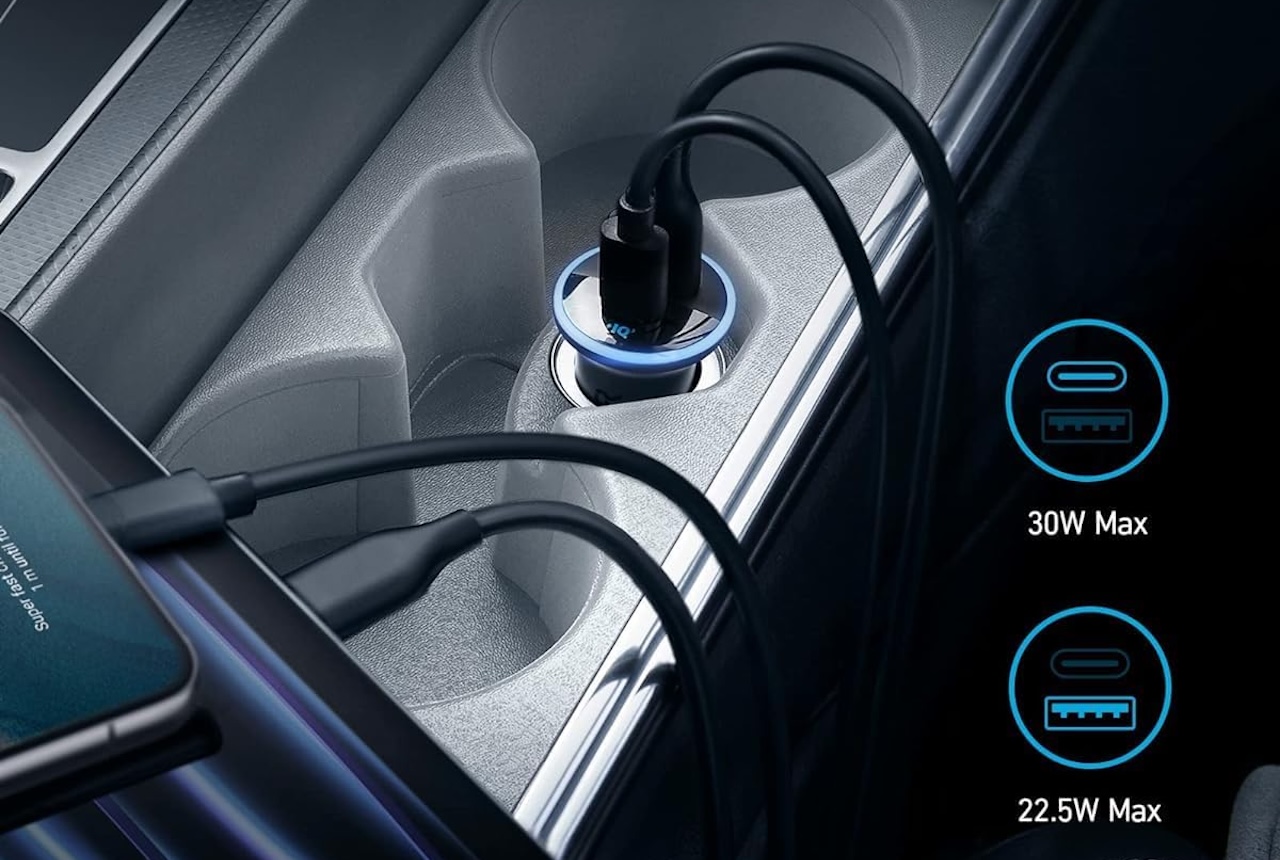
What to buy: Anker 323 Car Charger. Anker identifies this as model A2735 and rates it for up to 52.5W total output, combining a USB-C port rated for up to 30W with a USB-A port rated for up to 22.5W. Having both connections is useful in a shared vehicle where everyone may not be using the same cable standard.
Price: $14.99
Where to Buy: Amazon
The numbers are manufacturer specifications, so real charging performance still depends on the connected device, cable, and charging protocol. The practical benefit is simpler: one small adapter makes an older 12V socket useful for modern electronics.
This item doesn’t even need to occupy the glovebox once you’ve installed it. Plug it into the socket and you’ve effectively converted a piece of old vehicle infrastructure into something useful again.
Buyer fit: Worth buying for cars that still have a 12V socket but lack useful built-in USB charging. If your dashboard already provides several capable USB-C ports, spend the money and space elsewhere.
4. Turn a Tire Warning Into an Actual Number
A tire-pressure warning light gives you a problem. A pressure gauge gives you information.
That’s an important difference because looking at a tire isn’t a reliable way to determine its pressure. With a gauge, you can check each tire and compare the result with the vehicle manufacturer’s recommended cold pressure, typically listed on a placard around the driver’s door area or in the owner’s manual.
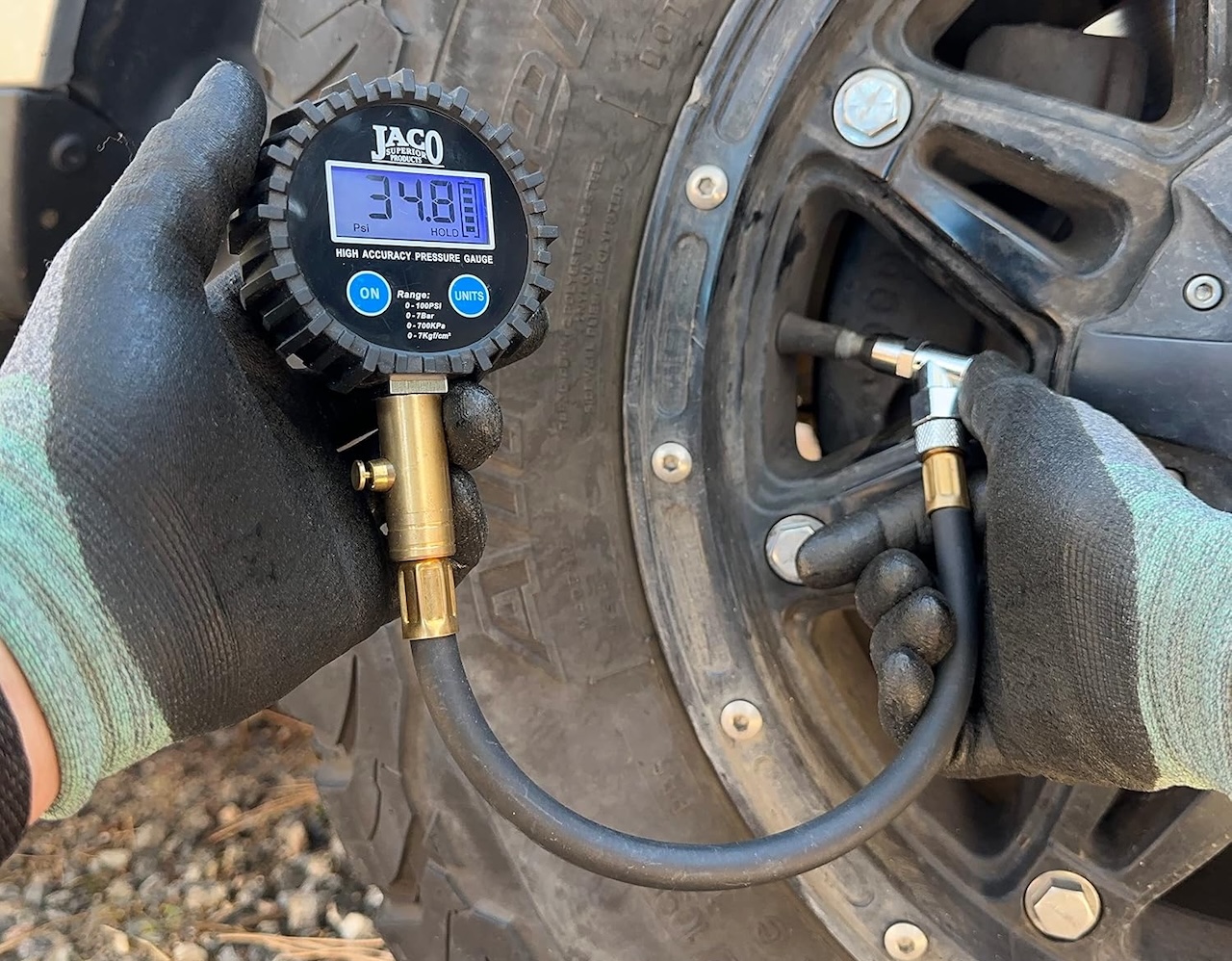
What to buy: JACO ElitePro Digital Tire Pressure Gauge. Its digital display gives a readable pressure measurement, while its published 5–100 PSI range covers typical passenger-car needs. Like any battery-powered tool, it should be checked periodically rather than forgotten indefinitely in the glovebox.
Price: $29.90
Where to Buy: Amazon
A gauge doesn’t inflate a tire, repair a puncture, or tell you whether the tire is structurally safe. That’s why a portable inflator and other tire equipment can still belong in the larger roadside kit in the trunk.
What this little tool does is turn “that tire looks a bit low” into information you can actually use.
Buyer fit: Almost every driver can justify this one. It takes little space and remains useful during routine maintenance as well as unexpected pressure warnings.
5. Don’t Make Your Emergency Phone Your Only Flashlight
Yes, your phone has a flashlight. It also has your maps, contacts, roadside-assistance information, camera, and remaining battery percentage.
Using the same device for every job creates a weak point. A dedicated flashlight lets you inspect a tire, look underneath a seat, read something in the dark, or check around the vehicle while leaving your phone available for communication.
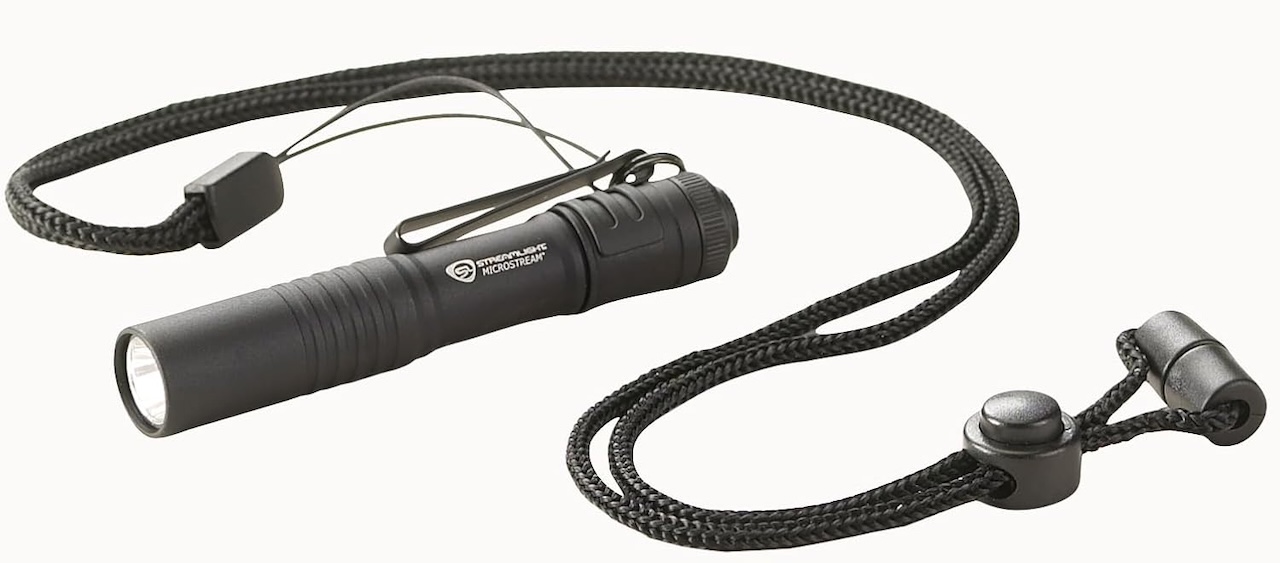
What to buy: Streamlight MicroStream. The standard model runs on one AAA alkaline battery and measures 3.6 inches long. Streamlight rates it at 45 lumens with a claimed 2.25-hour runtime, along with IPX4 water resistance and one-meter impact-resistance testing.
Price: $22.49
Where to Buy: Amazon
Those are Streamlight’s published specifications, not a promise that a forgotten AAA battery will remain healthy after years inside a vehicle. Check the flashlight periodically and replace a deteriorating battery before corrosion turns a useful backup into something that no longer works.
For this job, extreme brightness isn’t the priority. Small size, simple operation, and independent power are.
Buyer fit: If you can spare roughly the space of a marker pen, this is easy redundancy to justify.
6. Make the Current Insurance Card the First One You Find
Gloveboxes don’t usually lack paperwork. They suffer from geological layers of it.
Registration documents, expired insurance cards, service invoices, inspection paperwork, and random receipts eventually become one pile. That’s inconvenient during the exact situations when you don’t want to be searching through paper.
The fix is to keep the current documents required for your vehicle and jurisdiction together while removing outdated copies.
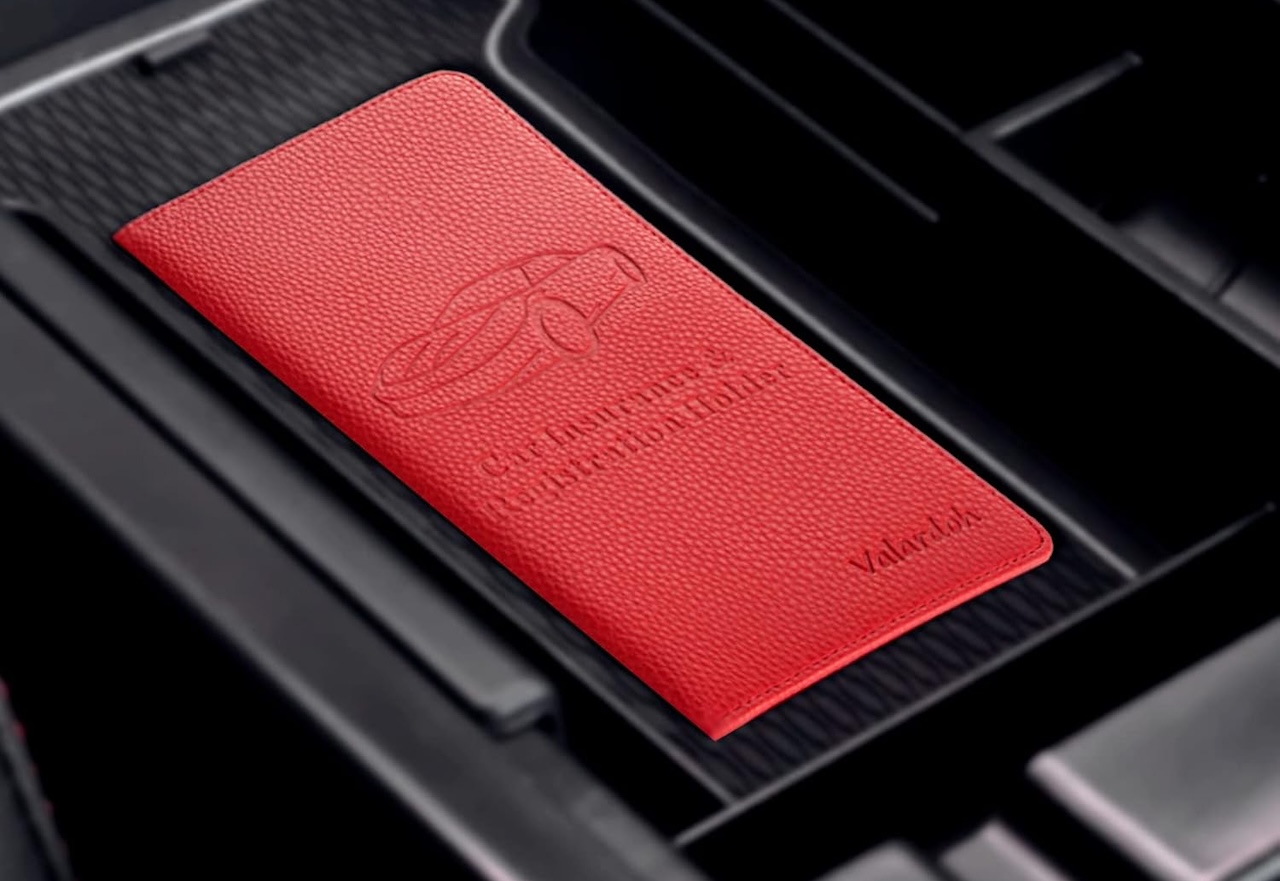
What to buy: Valardoh Premium Car Registration and Insurance Card Holder. This is a basic organizer rather than a sophisticated piece of gear, and the available product information is largely marketplace-based. Its value is simply that it gives current vehicle documents a defined location.
Price: $6.98
Where to Buy: Amazon
If your factory manual wallet already has suitable document pockets, you don’t need another organizer. Use what you have. More importantly, don’t treat the glovebox as secure archival storage. Keep the documents you need there, not a collection of sensitive records that would create another problem if the vehicle were stolen.
Buyer fit: Buy an organizer if finding the current insurance card means sorting through three expired ones. Skip it if your existing document wallet already does the job.
7. Give Yourself One Way to Record Information Without Electricity
A smartphone can take notes, photograph a license plate, save an address, and store contact information. It can also be the device you’re simultaneously using to call roadside assistance.
That’s where a tiny notebook earns its space. It provides somewhere to record witness information, a mile marker, instructions, another driver’s details, or anything else you don’t want to trust to memory.
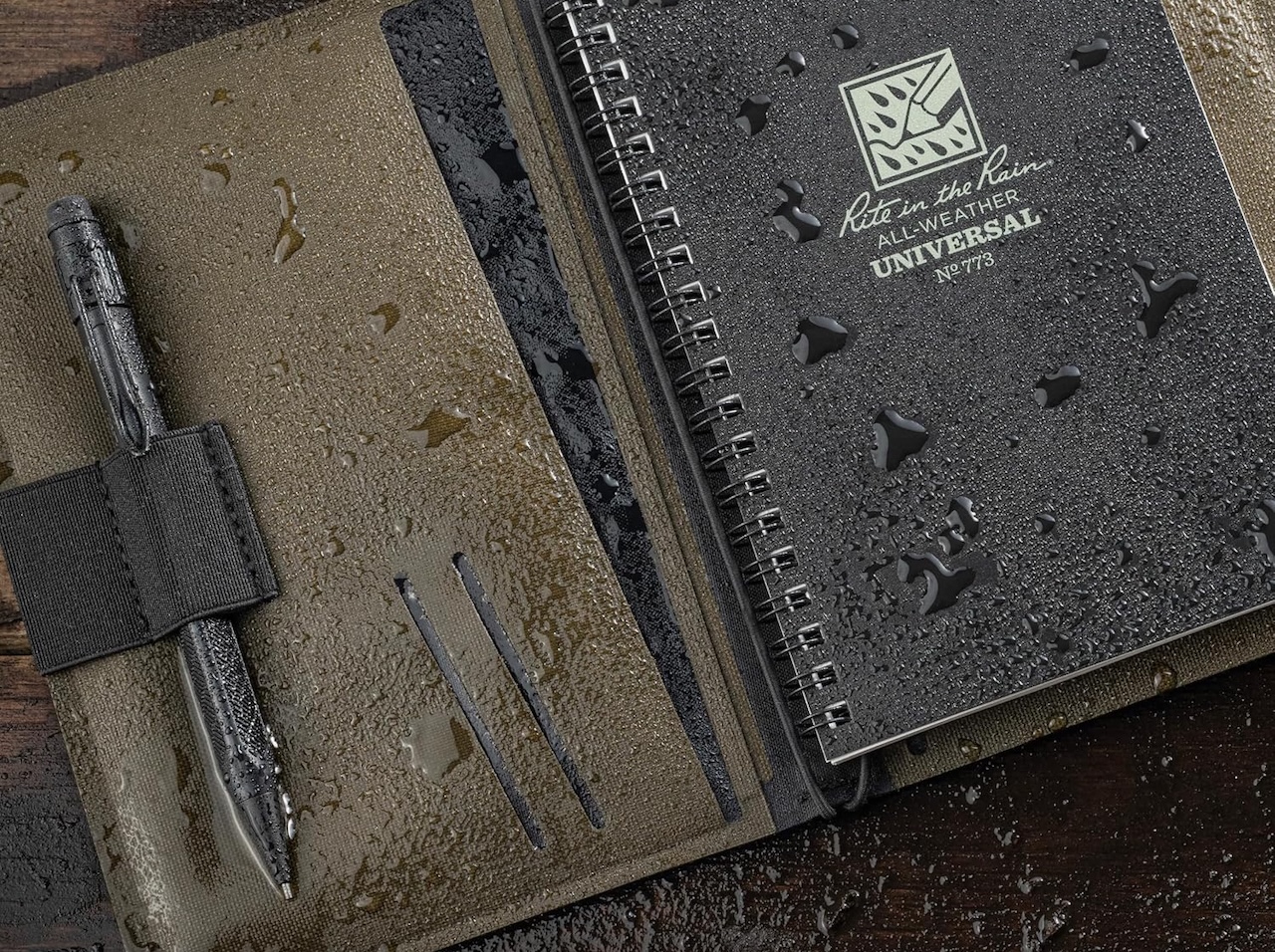
What to buy: Rite in the Rain Pocket Notebook with a pencil. A compact notebook makes more sense here than a full-size pad, while a pencil avoids relying on a pen that may eventually dry out or leak after spending years in a vehicle.
Price: $64.85
Where to Buy: Amazon
The all-weather aspect isn’t essential for every commuter, but durability is useful for something intended to sit around until an inconvenient moment arrives. The point isn’t nostalgia for paper. It’s independence. Paper doesn’t care about your battery percentage.
Buyer fit: Particularly useful for road trips, work vehicles, and unfamiliar driving, but cheap and small enough to justify in almost any glovebox.
8. Shrink the First-Aid Kit Until It Actually Fits
A giant first-aid bag stuffed into the glovebox defeats the purpose of keeping the compartment organized. Put the comprehensive kit in the trunk and keep a smaller set of basic supplies up front.
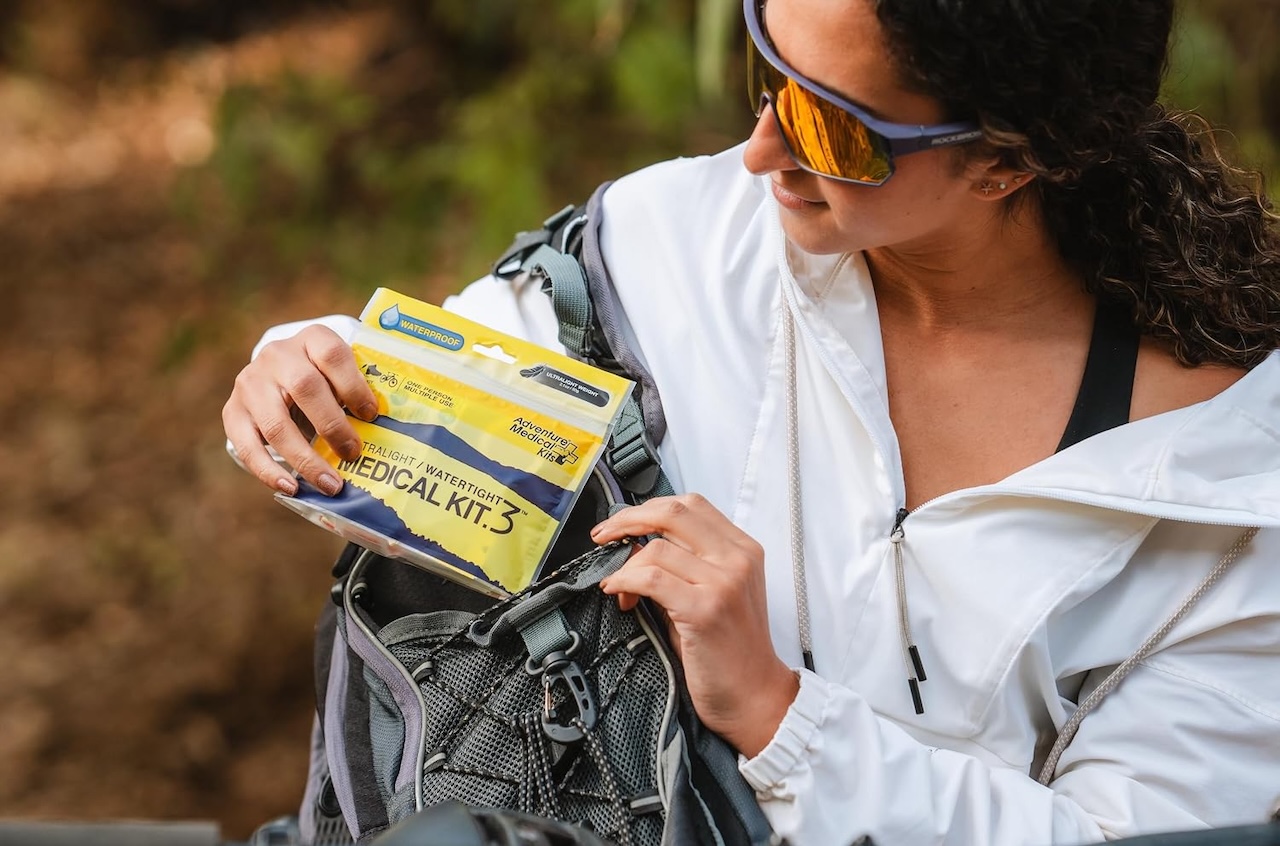
What to buy: Adventure Medical Kits Ultralight/Watertight .3. The manufacturer currently lists it at 2.6 ounces and packages its supplies inside a waterproof DryFlex bag. Published contents include bandages, gauze, tape, antibiotic ointment, moleskin, and medications for several common needs.
Price: $27.98
Where to Buy: Amazon
That inventory tells us what’s included. It doesn’t mean a 2.6-ounce kit can handle every medical situation. The advantage is having a compact collection of supplies available for smaller problems without excavating the cargo area.
Anything containing medications also requires more attention than a flashlight or notebook. Check expiration dates and follow the individual products’ storage instructions, particularly because a parked vehicle can experience substantial temperature extremes.
Buyer fit: This is for drivers who want basic supplies close at hand. If you expect the glovebox kit to replace a comprehensive first-aid setup, you’re asking too much from a very small pouch.
9. Give Dirty Jobs a Disposable Layer
A glovebox item doesn’t need electronics or an emergency label to be useful. Checking around a dirty wheel, touching something grimy under the hood, cleaning up after a passenger, or handling basic first-aid supplies can all leave you wishing you had something between your hands and the problem.
A couple of pairs of disposable nitrile gloves take almost no space when flattened inside a resealable bag.

What to buy: Venom Steel Industrial Nitrile Gloves. Don’t put the whole box in the car. Take two or three pairs, seal them in a small bag, and leave the remaining supply at home.
Price: $27.99
Where to Buy: Amazon
Disposable nitrile gloves shouldn’t be assumed to protect against every automotive chemical or solvent. Their role here is more modest: they’re a convenient disposable barrier for ordinary messy tasks.
That’s exactly the kind of item that passes the space-budget test. It occupies almost no room, requires no setup, and solves an obvious problem when you need it.
Buyer fit: Especially useful for anyone who performs basic vehicle checks, travels with children, or would prefer not to finish a trip with road grime on their hands.
10. Build One Backup That Doesn’t Need a Signal
Modern navigation is dramatically better than unfolding a road map across the steering wheel. That doesn’t make the paper map useless.
The reason to carry one isn’t because paper navigation beats GPS. It’s because it has a completely different failure mode. A map doesn’t need cellular service, a charging cable, an account, or a working phone.
Keep a regional map covering somewhere you actually drive rather than filling the glovebox with an atlas you’ll never open. Add a small emergency-contact card with a few important phone numbers, because smartphones have also relieved many of us of the need to memorize them.
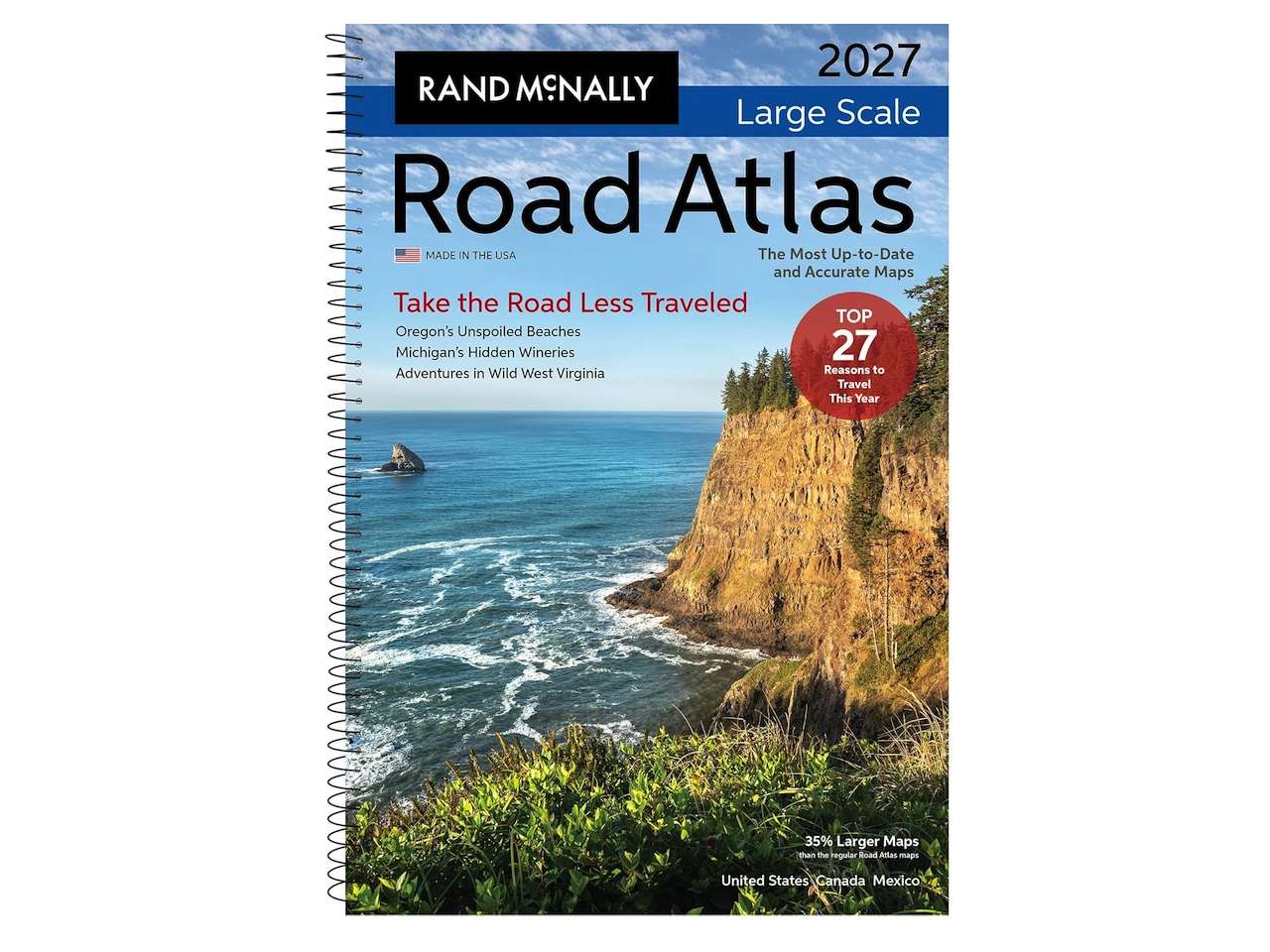
What to buy: Rand McNally Road Atlas. It’s a logical option for U.S. road travel. Drivers elsewhere should choose a current map or atlas covering the country or region where they actually drive.
Price: $32.99
Where to Buy: Amazon
Don’t turn the contact card into a security liability. Names and essential phone numbers are useful; passwords and sensitive account information aren’t.
Buyer fit: The farther you travel from familiar roads and dependable connectivity, the more useful this becomes. Urban drivers may get more value from the emergency-contact card than the map itself.
Make Every Inch Earn Its Place
There’s no universal perfect glovebox because the space itself changes from vehicle to vehicle. Some barely accommodate the owner’s manual. Others could swallow half this list without trying.
The useful question isn’t whether you’ve collected all 10 items. It’s whether each thing inside solves a problem worth sacrificing dashboard storage for.
The owner’s manual explains the car. The charging gear keeps your communication device alive. The tire gauge replaces guessing with a measurement. The flashlight provides independent light. Organized documents eliminate searching. The notebook works without electricity. First-aid supplies handle smaller problems. Gloves isolate your hands from the mess. A paper map gives electronic navigation a fundamentally different backup.
Meanwhile, the bulky equipment can stay where it belongs. Jumper cables or a jump pack, warning triangles, tire inflator, blankets, water, tools, and climate-specific emergency gear generally make more sense in the trunk or cargo area.
Buyer fit: Don’t order 10 products and dump them into an already-full compartment. Empty the glovebox first, throw away the junk and expired paperwork, and rebuild it according to the problems you actually need it to solve. A useful glovebox isn’t measured by how much you can fit inside. It’s measured by how little you have to move before you find the thing you need.