Buying a retro handheld gets complicated once your game library moves beyond the easy stuff. Cheap models can be great for older 2D systems, but demanding emulation exposes their limits fast. More powerful Android handhelds offer extra headroom, yet their prices can climb high enough to change the buying decision.
Price: $139.99
Where to Buy: Anbernic
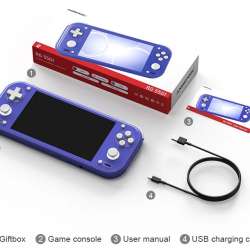
The ANBERNIC RG 55G1 is trying to sit in the useful middle. It combines a Qualcomm Snapdragon G1 Gen 2 processor, a 5.5-inch 1080p display, Android 14, Hall-effect controls, active cooling, expandable storage, and two memory configurations. ANBERNIC lists a regular starting price of $149.99 and says a $10 sale will reduce the base model to $139.99 beginning August 31 at 3:00 a.m. PDT.
It is also Anbernic’s first Qualcomm Snapdragon-powered handheld. That matters for the company. For buyers, the more important question is what that Snapdragon chip actually lets them play.
1080p gives this handheld room to grow
The RG 55G1 uses a 5.5-inch Incell IPS touchscreen with OCA full lamination and a 1920 × 1080 resolution. Older consoles do not need 1080p to look good, but the extra pixels become more useful when scaling retro games, playing native Android titles, streaming games, or emulating systems where higher rendering resolutions are practical.
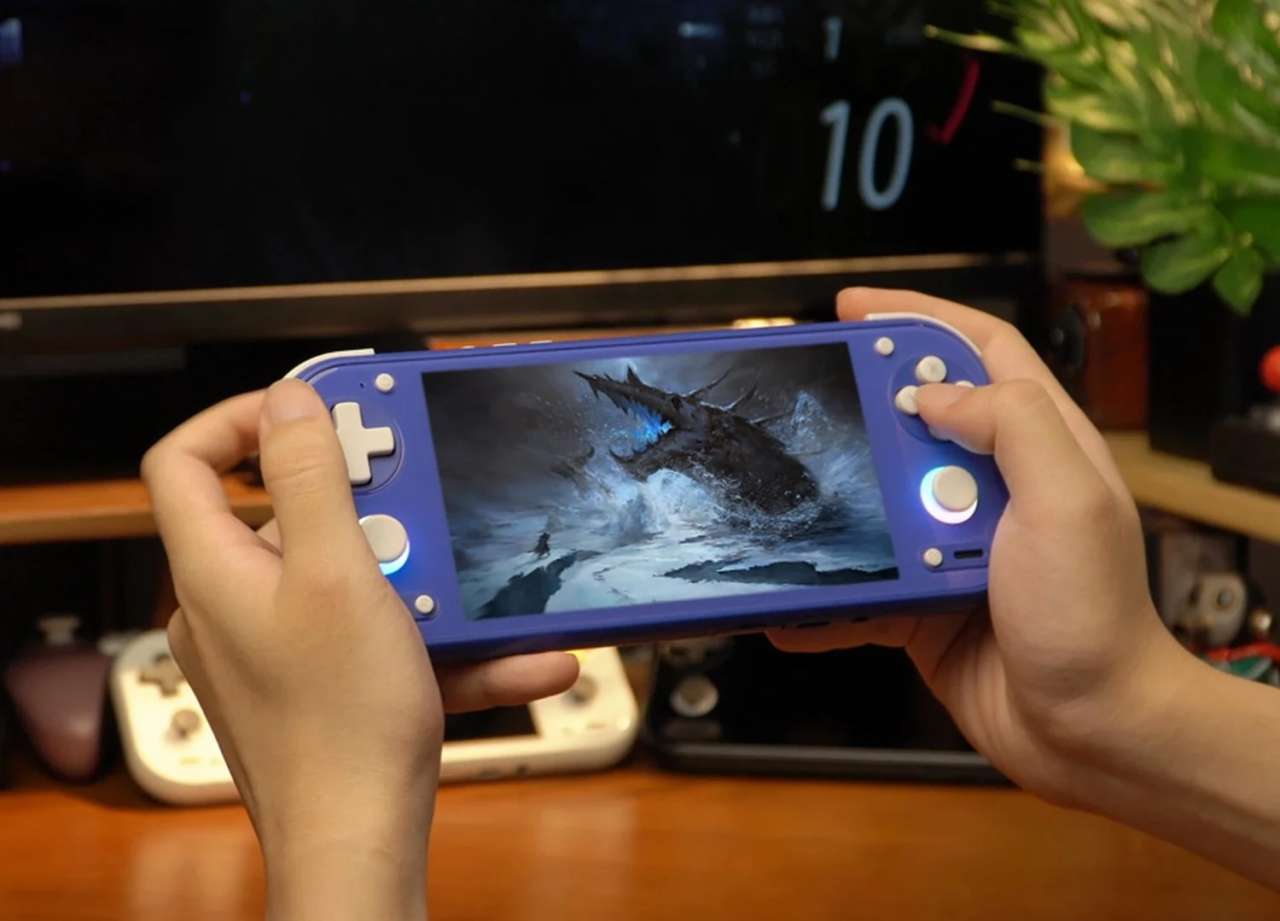
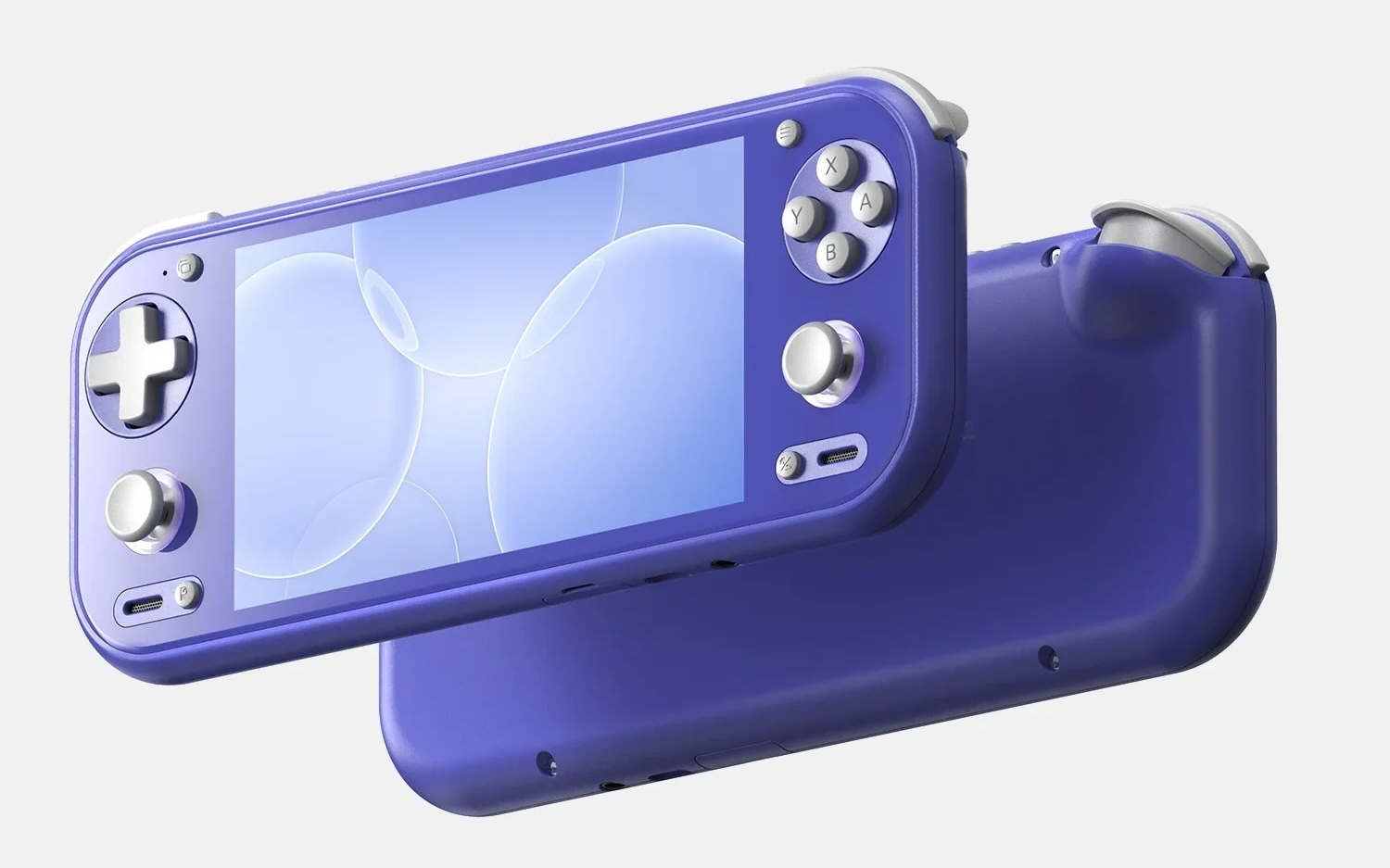
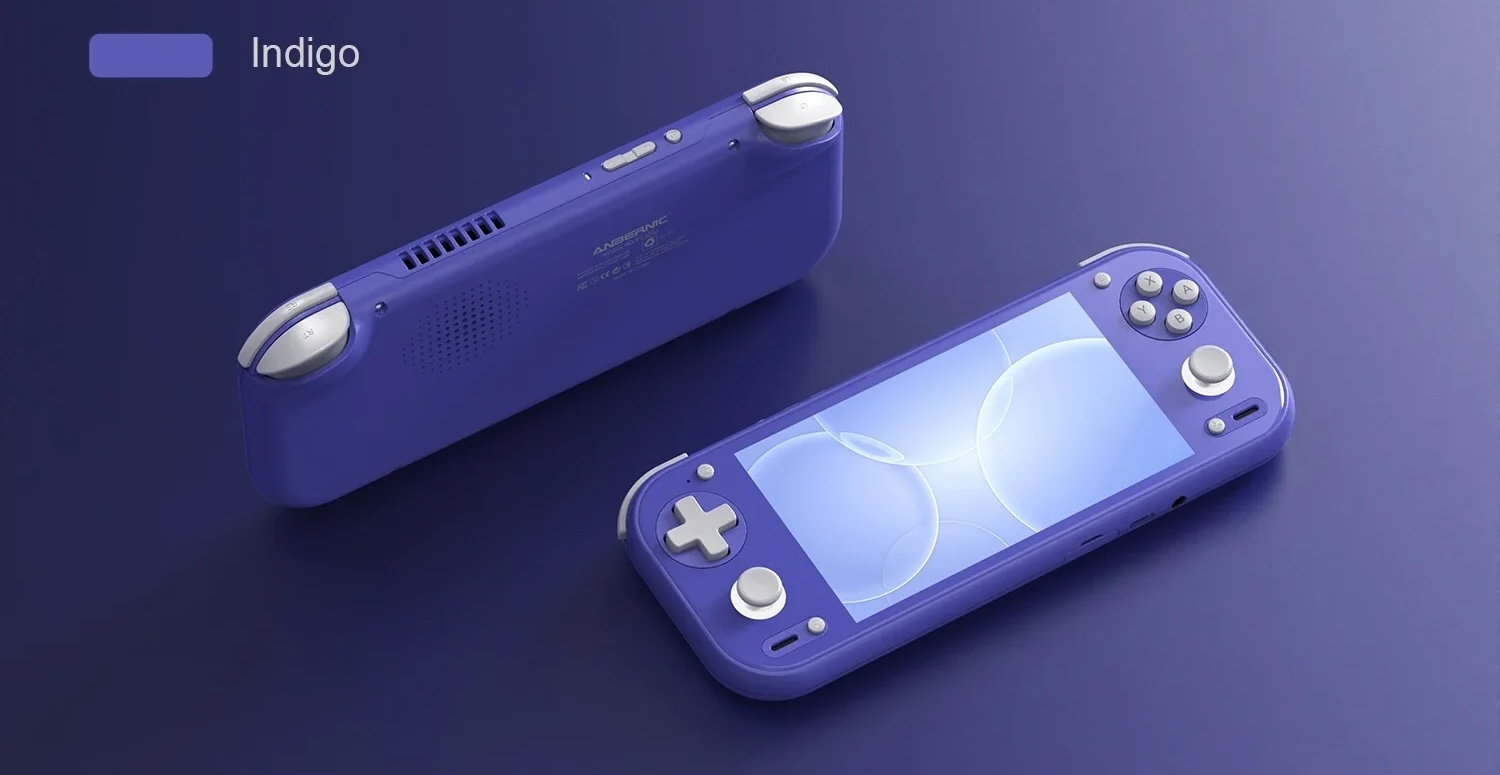
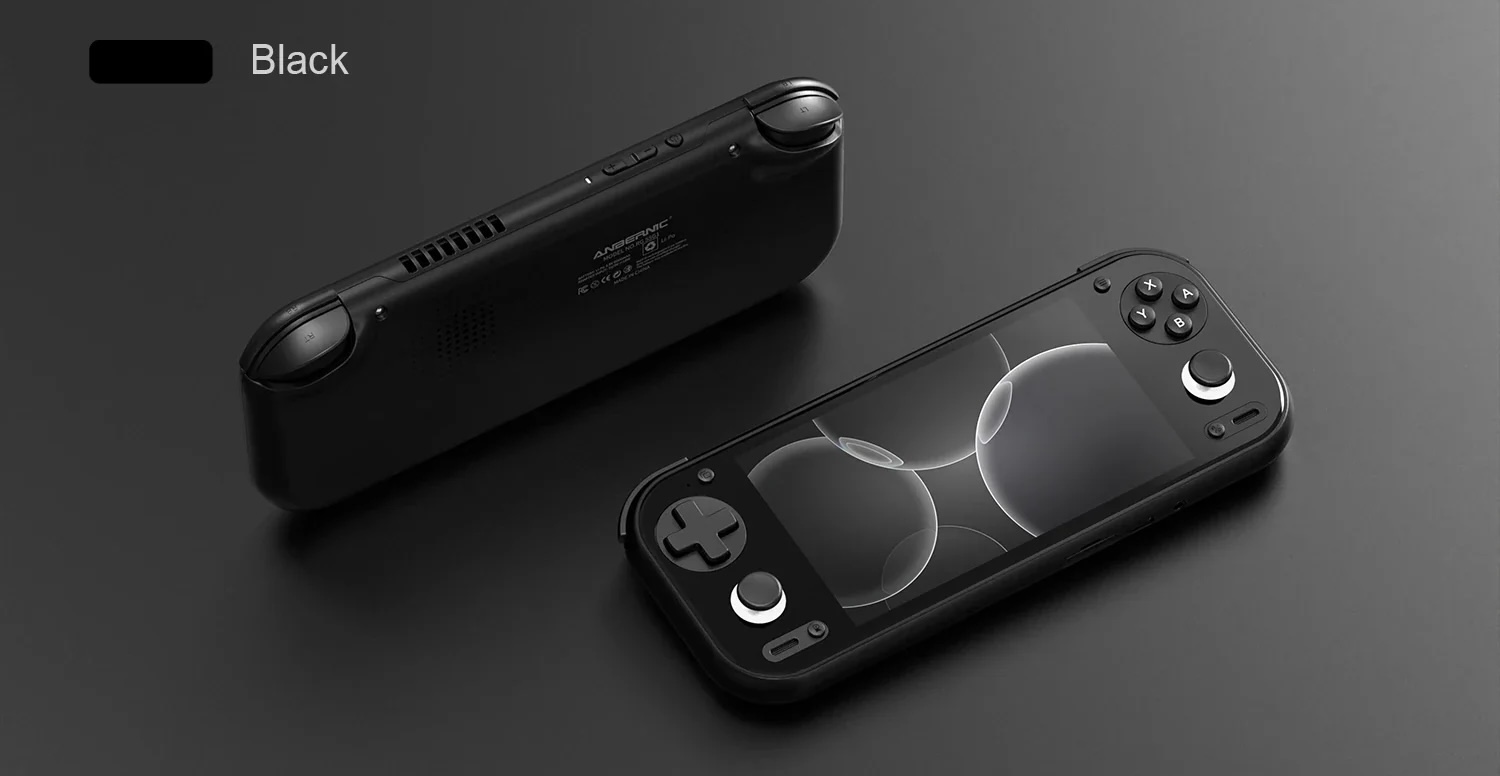
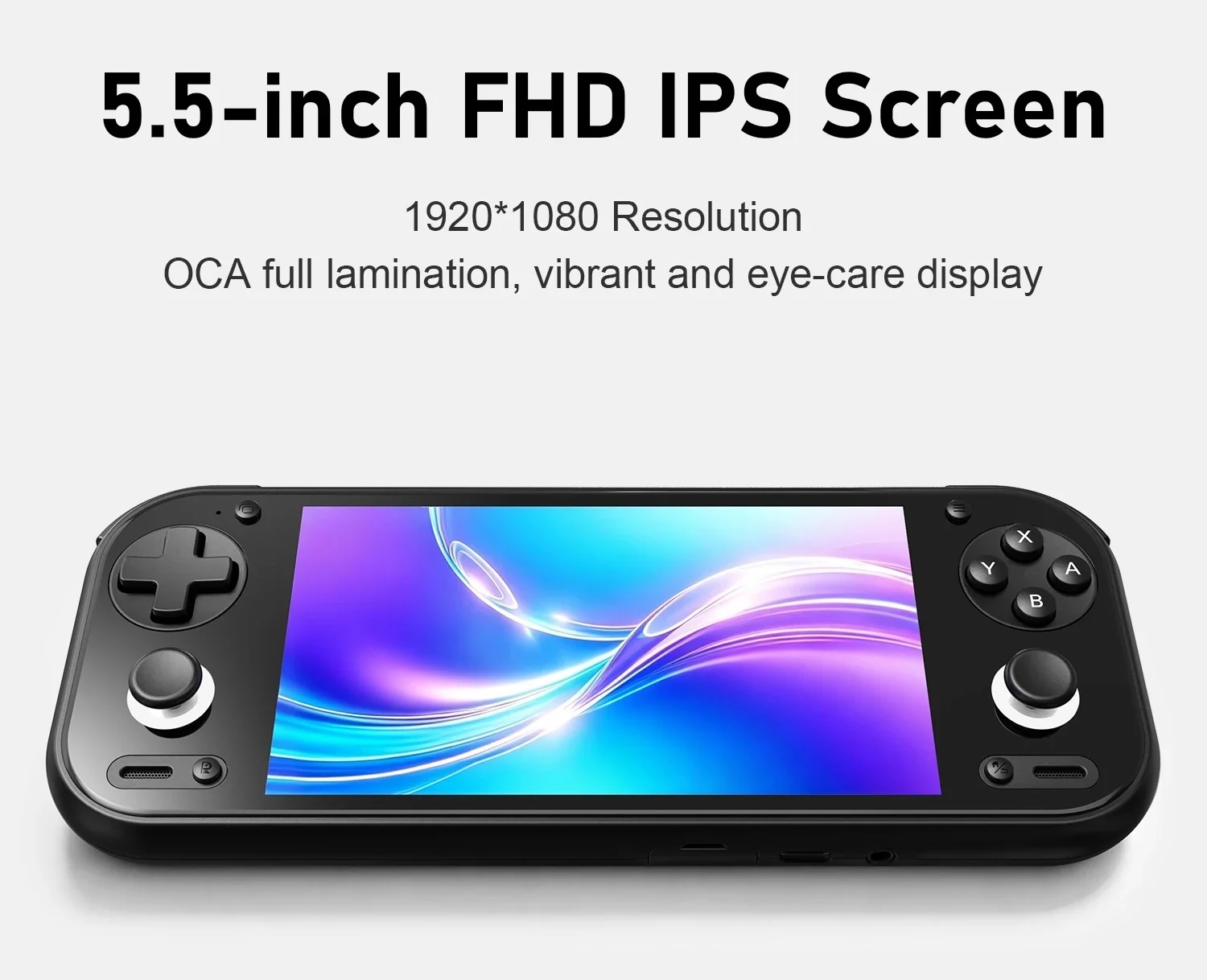 ANBERNIC also covers the front with 2.5D glass, giving the device a cleaner look than many inexpensive emulation handhelds. Its wide horizontal layout invites Nintendo Switch Lite comparisons, although the hardware, software, and purpose are different.
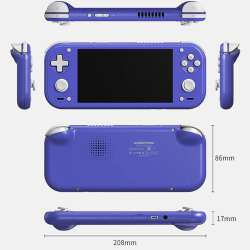
At 8.2 × 3.4 × 0.7 inches (208 × 86 × 17 mm) and about 12 oz (339 g), this is portable rather than pocket-sized.
The Snapdragon chip is the real test
Inside is Qualcomm’s Snapdragon G1 Gen 2 SG4250P, manufactured on a 4nm process. The CPU combines two Kryo Gold cores up to 2.4GHz with six Kryo Silver cores up to 2.0GHz, paired with an Adreno A12 GPU.
Buyers can choose 4GB RAM with 64GB storage or 8GB RAM with 128GB storage. A microSD card slot supports cards up to 2TB.
 ANBERNIC says the system supports Android games and more than 20 emulator types. That sounds broad, but a compatibility list can be misleading. Running an emulator and running every game for that system are not the same thing. Performance can change with the emulator, game, graphics driver, settings, and available memory.
We know the silicon. We do not yet know where owners will consistently stop tweaking and simply play.
Hall controls help, but feel still matters
Bad controls can ruin a capable handheld. ANBERNIC equips the RG 55G1 with 3D Hall-effect joysticks and Hall-effect triggers, plus double-shot buttons and a six-axis gyroscope.
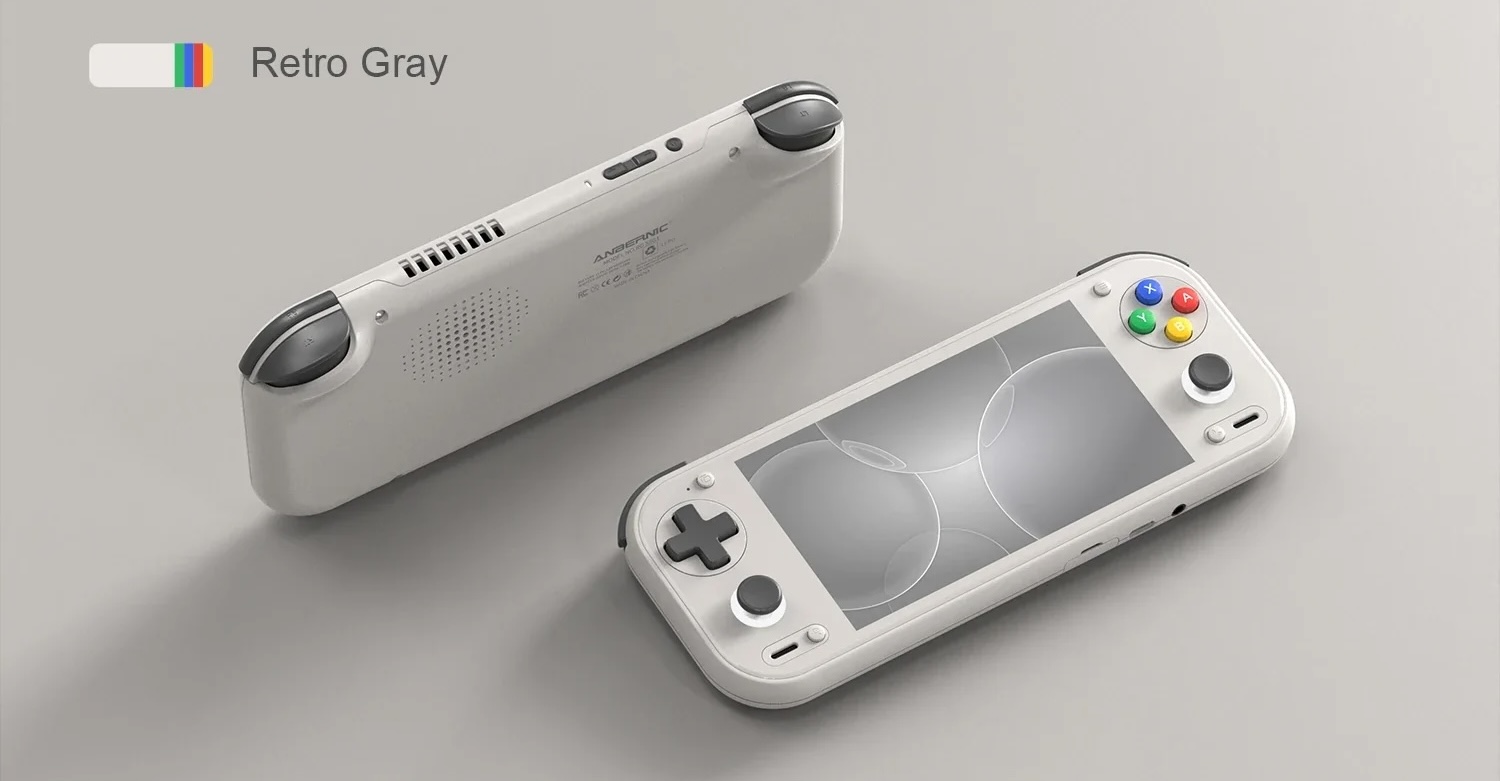 Hall-effect controls use magnetic sensing rather than conventional contact surfaces, removing one familiar source of analog-stick wear. That does not make a joystick indestructible or guarantee that it feels good.
Dead zones, spring tension, firmware calibration, stick height, button feel, grip shape, and ergonomics still matter once the handheld is in your hands.
Cooling and battery claims need real testing
The RG 55G1 includes an active-cooling system with a high-speed fan; ANBERNIC’s product imagery also depicts a heat pipe. The reason to care is sustained performance. Short bursts of speed are less useful if heat eventually forces the processor to slow down.
 Active cooling gives the system a way to move heat away from the chip, but fan noise, temperatures, clock behavior, and sustained gaming performance still need testing. The handheld also supports Turnip graphics drivers, giving experienced Android-emulation users another tool for improving compatibility and performance.
ANBERNIC lists a 6,000mAh lithium-polymer battery and rates the RG 55G1 for up to eight hours of battery life, with 18W charging. That number needs context. A lightweight 2D game and demanding 3D emulation are very different workloads. Brightness, wireless use, processor load, fan activity, and the game itself can all change runtime.
Connectivity includes Wi-Fi 5 and Bluetooth 5.0, plus a 3.5mm headphone jack. ANBERNIC also lists streaming, wireless screen projection, vibration, online multiplayer support, and built-in DSP sound processing.
AI is a bonus, not the reason to buy
ANBERNIC is promoting AI features including one-click game-guide retrieval, real-time translation, intelligent dialogue, text-to-image generation, and image-processing tools.
Real-time translation has the clearest gaming use. Understanding an imported title without reaching for another device could be genuinely useful. Whether ANBERNIC’s implementation is fast and accurate enough during actual play is another question.
 For now, AI looks more like a bonus than a deciding feature. RG Home, ANBERNIC’s interface for organizing and launching games, may matter more day to day because owners will use it whenever they browse their libraries.
Buyer fit: $150 buys potential, not proof
The ANBERNIC RG 55G1 makes the most sense for someone who wants a larger Android emulation handheld without immediately moving into premium-handheld pricing.
There is a lot here for the money: a 5.5-inch 1080p screen, Snapdragon processor, Hall controls, active cooling, expandable storage, and Android 14. The base version is listed at $149.99, with a planned $139.99 sale price.
The 4GB/64GB versus 8GB/128GB decision is harder before broader testing. Extra RAM and storage are tangible upgrades, but they do not automatically prove better real-world emulation.
That is the buying decision hiding behind the spec sheet. You do not need independent testing to confirm the screen resolution, chip, storage, or listed battery capacity. You need it to know whether the RG 55G1 runs the games you care about well enough to justify buying it.
Price: $139.99
Where to Buy: Anbernic
If your library is mostly older and easier-to-emulate systems, cheaper handhelds can already do that job. The RG 55G1 becomes interesting when you want to push farther without pushing the price much farther with it.