Smartphones have made dedicated cameras unnecessary for a lot of people. Pull out your phone, tap the shutter, and computational photography handles much of the work.
Price: From $148
Where to Buy: Amazon
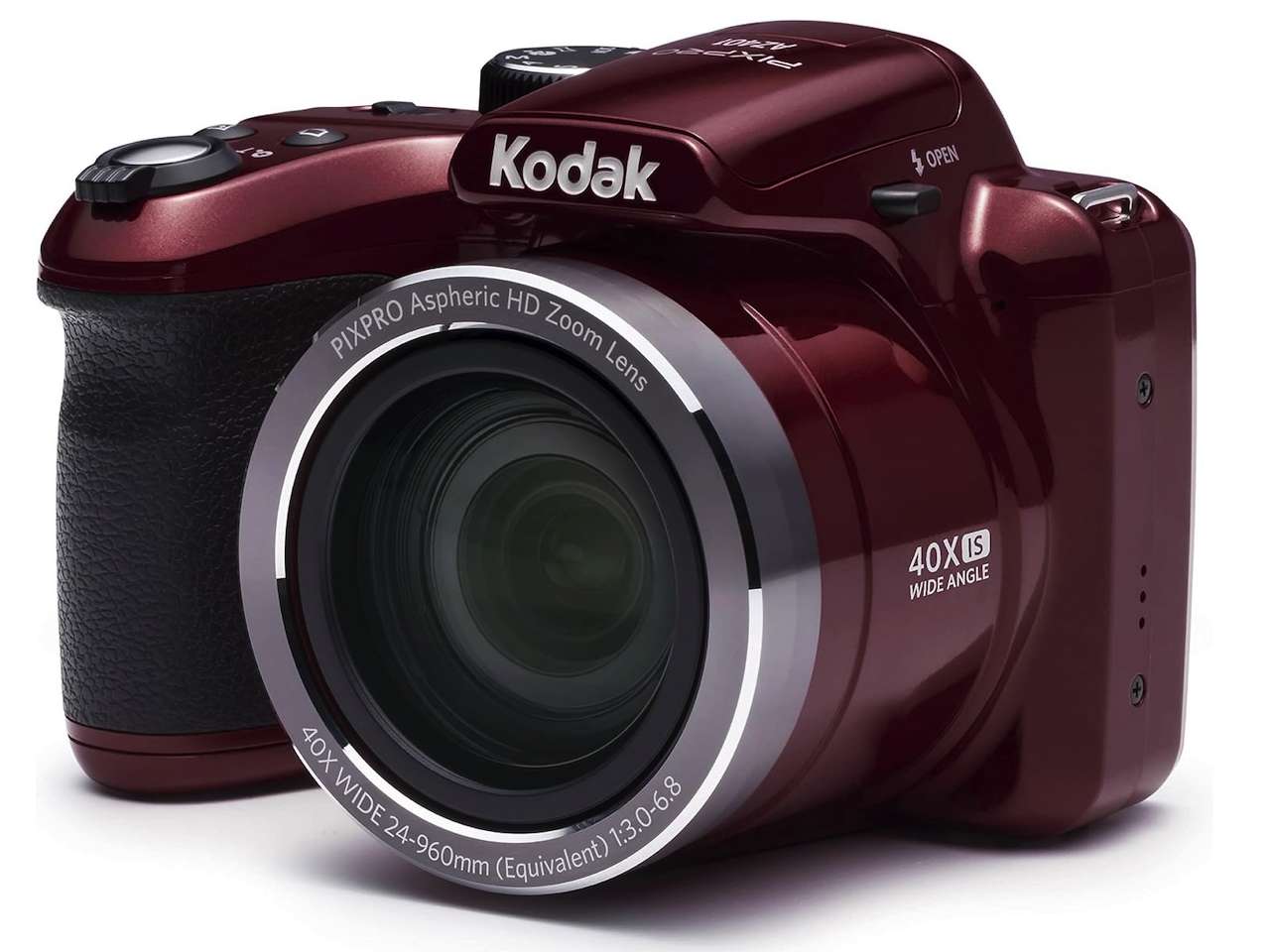
But one simple problem can still get expensive to solve on a phone: getting genuinely close to something that’s far away. That’s where the Kodak PIXPRO AZ401 still makes sense.
Kodak PIXPRO describes the AZ401 as “one of our best sellers,” which is notable because there is little about this camera that looks cutting-edge in 2026. It has a 16.15-megapixel 1/2.3-inch CCD sensor, records video at up to 720p, runs on AA batteries, and supports SD/SDHC cards up to 32GB. Kodak lists it at a $169.99 U.S. MSRP.
Those specifications sound dated. But the AZ401 has one feature that remains easy to understand: a 40x optical zoom lens.
The 40x Optical Zoom Is Still Its Strongest Argument
The AZ401’s lens covers a 24-960mm equivalent focal range. At the wide end, 24mm works for landscapes, groups, buildings, and vacation photos. Zoom all the way in and 960mm gives you serious reach for subjects you can’t physically approach.
Think zoo animals, birds in the backyard, distant landmarks, or architectural details across the street. The 40x optical range comes from the lens changing focal length. Kodak also lists up to 4x digital zoom, for a claimed 160x combined maximum.
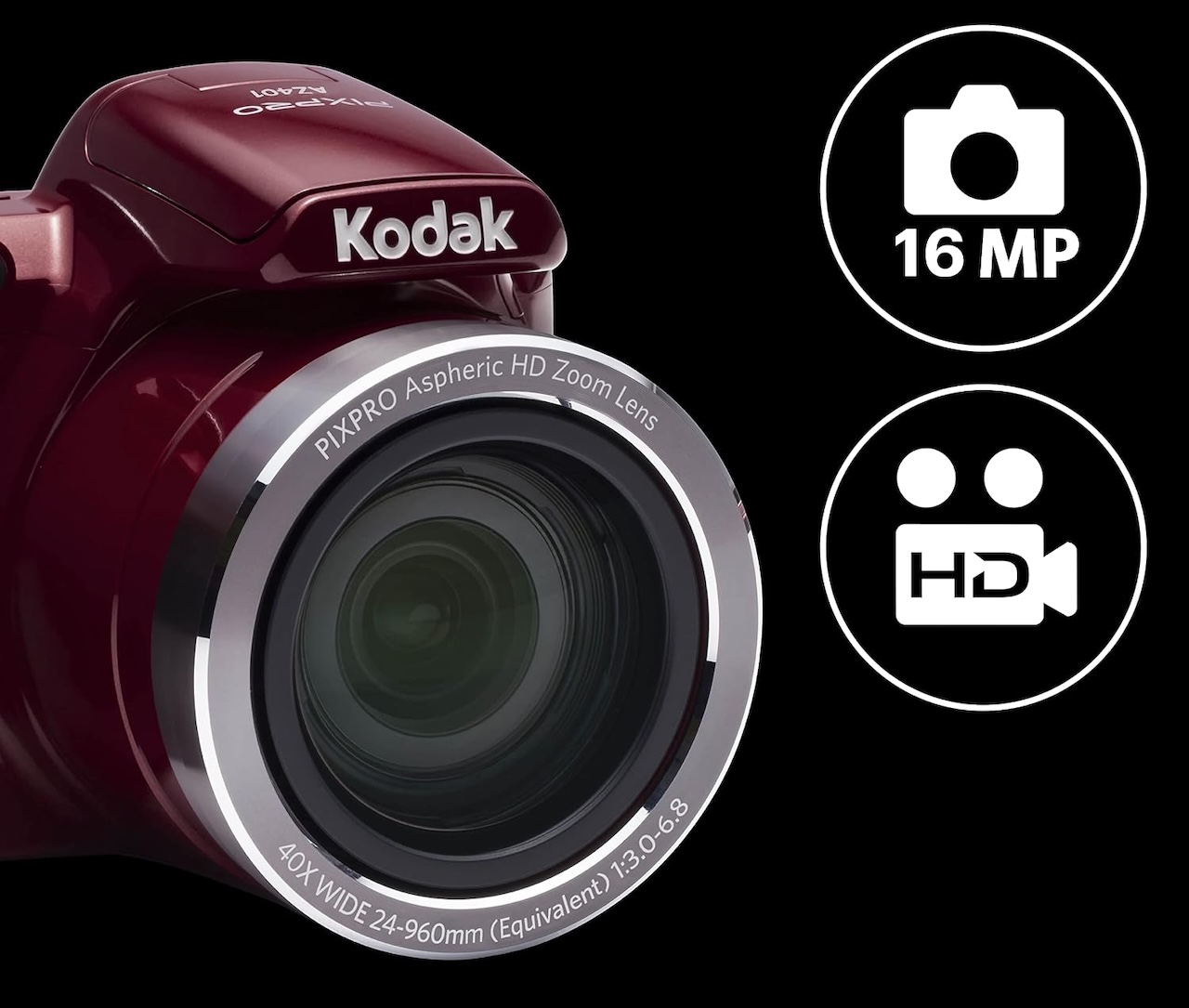
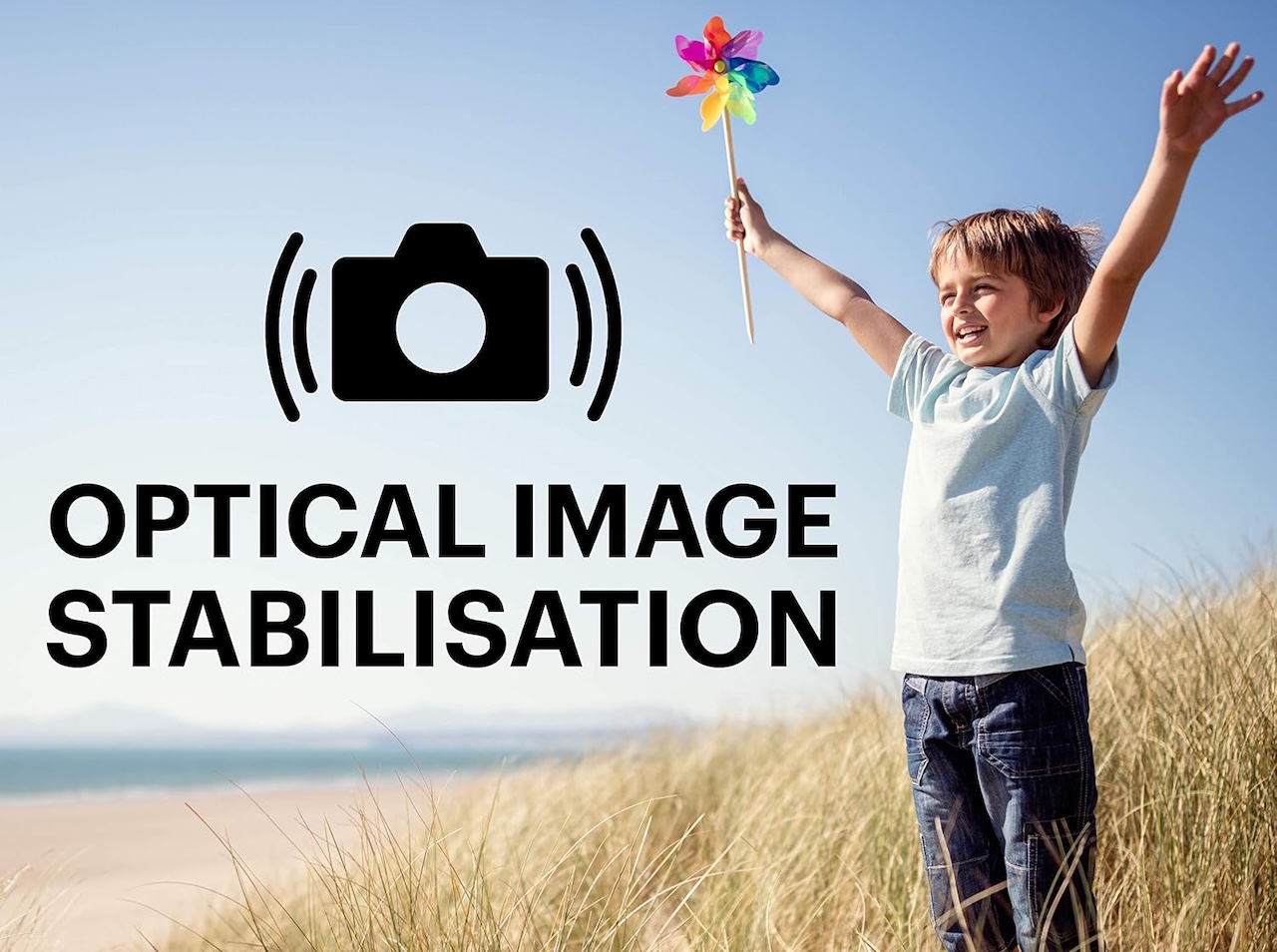
Kodak also includes optical image stabilization, which matters because camera movement becomes more noticeable at long focal lengths. It does not guarantee a sharp photograph at 960mm. Shutter speed, lighting, subject movement, and photographer technique still matter.
That’s the AZ401’s basic proposition: one permanently attached lens takes you from wide angle to extreme telephoto without requiring another lens purchase.
It Gives Beginners Room to Experiment
The AZ401 also provides something different from shooting entirely on a phone: conventional camera controls.
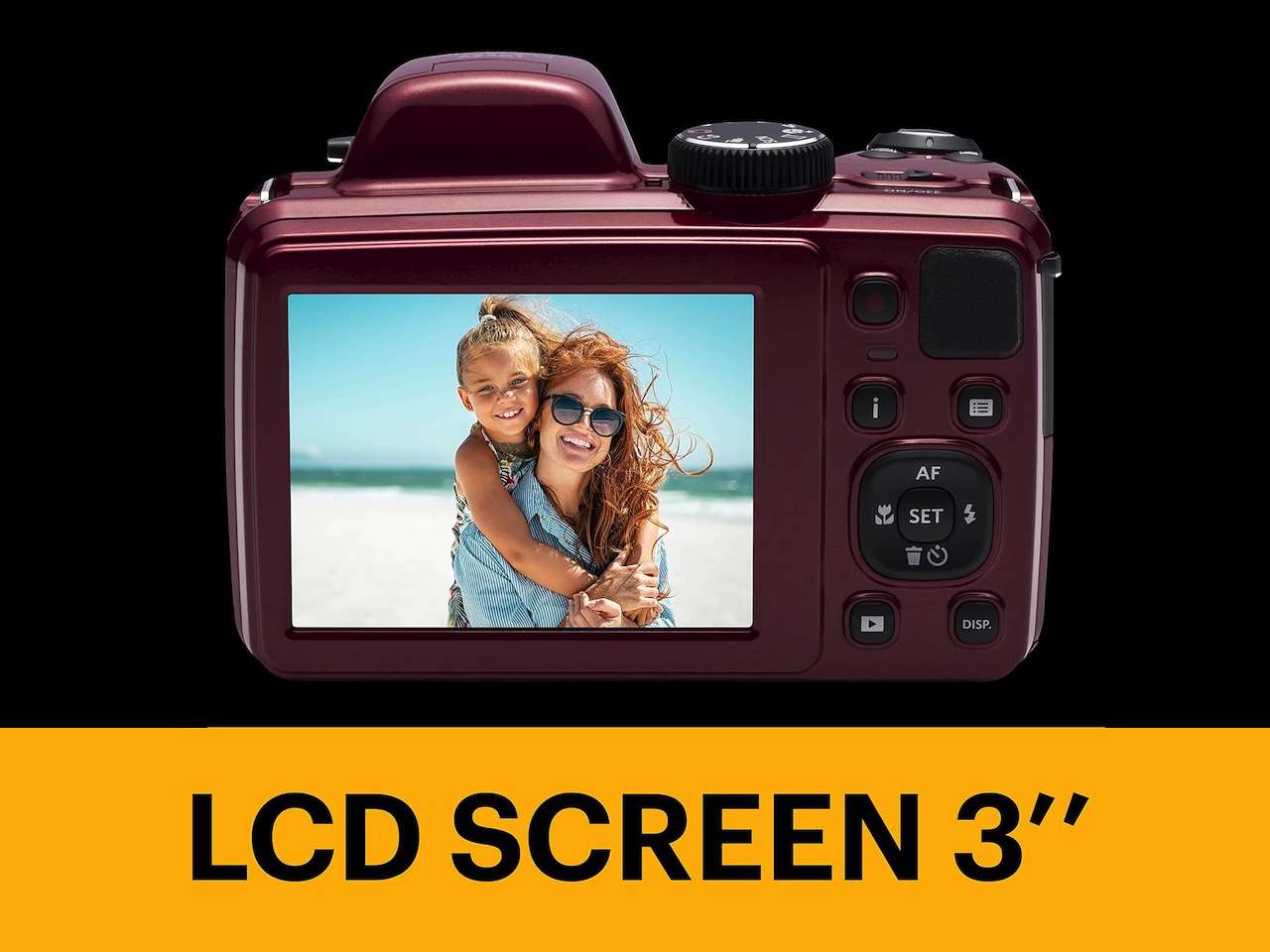
There’s a camera-style grip, manual pop-up flash, physical controls, and a 3-inch, 460K-pixel LCD. According to Kodak’s specifications, shooting modes include Auto, Program, Shutter Priority, Aperture Priority, and Manual, along with panorama and scene modes; it also lists object tracking and face detection.
 A beginner can start in Auto, while P, S, A, and M modes leave room to experiment with exposure controls later.
There’s also no lens ecosystem to figure out. You aren’t buying a camera body and then discovering that the telephoto lens you really want costs hundreds of dollars more.
You buy the camera, not the beginning of a shopping list. For a casual photographer who doesn’t want to think about lenses, that’s a meaningful advantage.
Even the AA Batteries Have an Upside
The AZ401 runs on four AA batteries. That feels old-school next to cameras and phones with rechargeable lithium-ion packs and USB-C charging. But there is a practical advantage: the camera isn’t dependent on a proprietary rechargeable battery pack.
Kodak supports both alkaline and NiMH AA batteries. The camera comes with four starter alkaline batteries, and Kodak rates shooting capability at approximately 280 shots under CIPA standards.
 For frequent shooting, rechargeable NiMH batteries could make more economic sense than continually buying disposable AAs. AA batteries aren’t modern, but easily replaceable power can still be useful when you’re traveling.
There Are Some Serious Compromises
None of this means the AZ401 is secretly competitive with a modern premium camera. The 16.15-megapixel 1/2.3-inch CCD sensor sets expectations. This is not a large-sensor model built around the advantages that come with a physically larger imaging sensor.
Video is an even clearer limitation. The AZ401 tops out at 1280 x 720 at 30fps, with a 15fps option at the same resolution. That’s well behind the video specifications available from many modern phones and cameras.
Storage is similarly from another era. Kodak officially supports SD and SDHC cards up to 32GB, Class 4 or higher. There’s also no electronic viewfinder listed in Kodak’s specifications, so framing is handled through the rear LCD.
This isn’t a forgotten professional camera that’s somehow selling for bargain money. It’s an inexpensive superzoom built around a very specific strength.
So Why Does the AZ401 Still Work?
Because it doesn’t have to beat a smartphone at everything. It needs to solve one problem well enough to justify carrying another device.
Kodak’s $169.99 MSRP puts that proposition into perspective. You’re getting a stabilized lens covering 24mm wide angle through 960mm-equivalent telephoto without buying additional lenses or committing to an interchangeable-lens camera system.
Kodak calling the AZ401 one of its best sellers doesn’t tell us how many cameras it sells, and it shouldn’t be confused with independently verified Amazon sales data. But the formula’s continued appeal is easy to understand.
The formula isn’t sophisticated: put an unusually long zoom into an inexpensive camera and don’t require the buyer to purchase another lens to access that range.

Who Should Buy the Kodak PIXPRO AZ401?
The AZ401 makes the most sense for beginners, families, travelers, and casual photographers who mainly want a lot of optical reach without investing in a more expensive interchangeable-lens camera system.
Its specifications make the proposition easy to understand for photographing distant subjects in good light, whether that’s wildlife, landmarks, zoo animals, or details you simply can’t get physically close to.
Look elsewhere if modern video specifications are a priority. And if low-light shooting, fast action, or maximum image quality matter most, the AZ401’s small CCD sensor and older design are reasons to compare it carefully with newer alternatives before buying.
Price: From $148
Where to Buy: Amazon
Judged on the problem the AZ401 actually tries to solve, its appeal is straightforward: it gives casual buyers a 40x optical zoom at an approachable price without requiring an interchangeable-lens system.