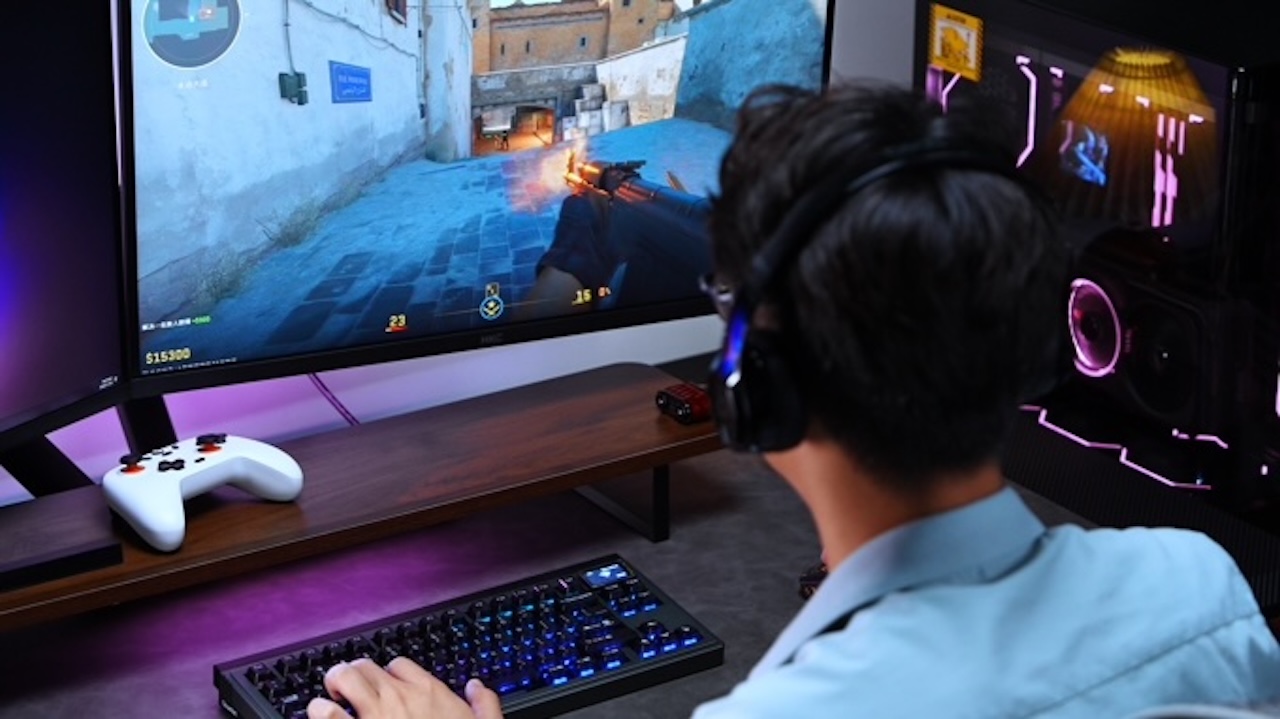
A lot of desk setups collect keyboards the way kitchens collect mugs. One board is comfortable enough for writing and work. Another is tuned for fast gaming input. Neither quite earns the right to do both jobs, so both stay.
Price: From $299
Where to Buy: Kickstarter
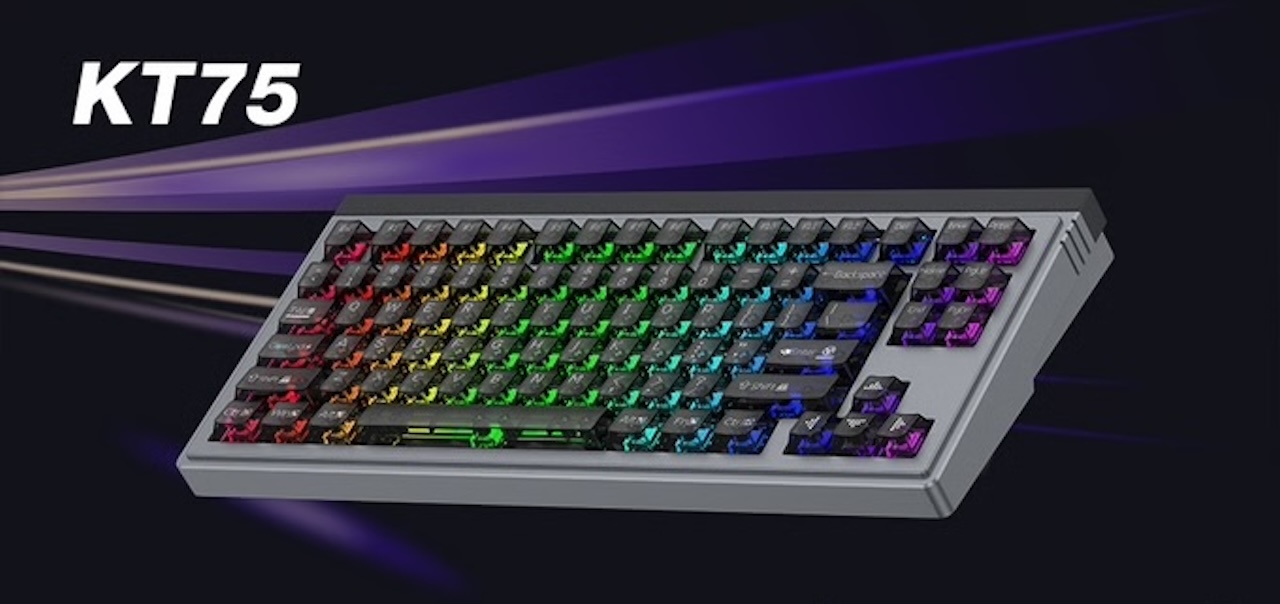
The GlowHint KT75 is not asking you to choose a faster keyboard. It is asking whether one keyboard can earn the right to replace the separate boards many desk setups have accumulated. Its pitch combines Hall Effect magnetic switches, Rapid Trigger, and high-speed wired performance with an aluminum case, adjustable gasket mounting, acoustic dampening, a compact 75% layout, and customizable display features.
That makes this more than another “work and gaming” keyboard story. The question for potential backers is whether one board can deliver enough typing comfort, performance tuning, and daily convenience to justify consolidating the desk. The feature set is promising, especially for buyers who want one compact board that can handle both work and play.
It tries to replace, not merely supplement, your existing keyboard
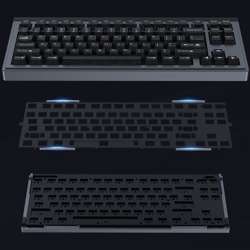
Many hybrid keyboards add gaming features to an ordinary typing board, or add RGB and a premium case to a gaming-focused model. GlowHint’s more interesting idea is the Dual Mount Structure, which lets gaskets be installed for a more cushioned typing feel or removed for a firmer, more direct response.
That is a physical adjustment, not a software profile, which makes it relevant to the “one keyboard” promise. It will not transform the KT75 into two entirely different boards, and the final feel will still depend on switches, keycaps, and preference. But it is a credible attempt to give one keyboard a broader working range.
Magnetic switches make the performance side adjustable
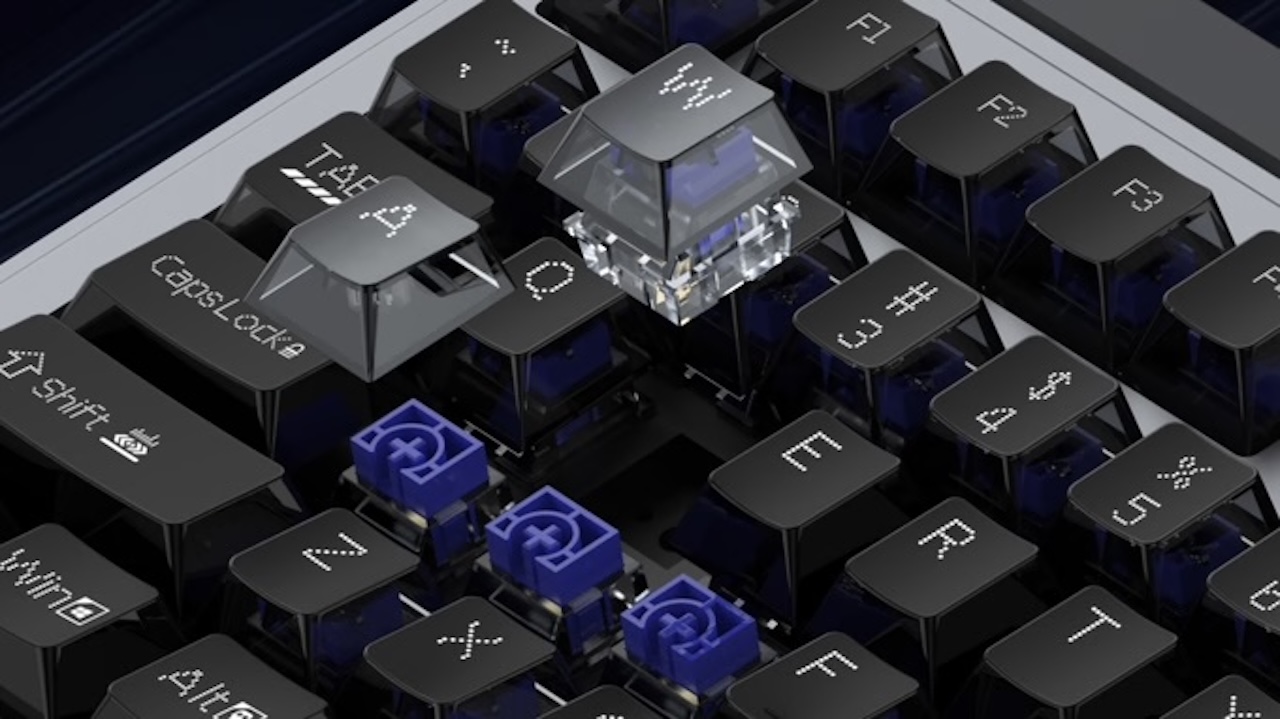
Conventional mechanical switches normally activate and reset at fixed points. Hall Effect magnetic switches track key travel, which enables adjustable actuation and Rapid Trigger behavior.
 GlowHint lists 0.01 mm Rapid Trigger sensitivity. The underlying technology is real, and its practical value will depend on firmware and software tuning. For shooters, rhythm games, and fast directional movement, that can offer a more responsive reset. For work, the same tuning lets users avoid an overly sensitive typing setup.
The supporting hardware makes the pitch more credible
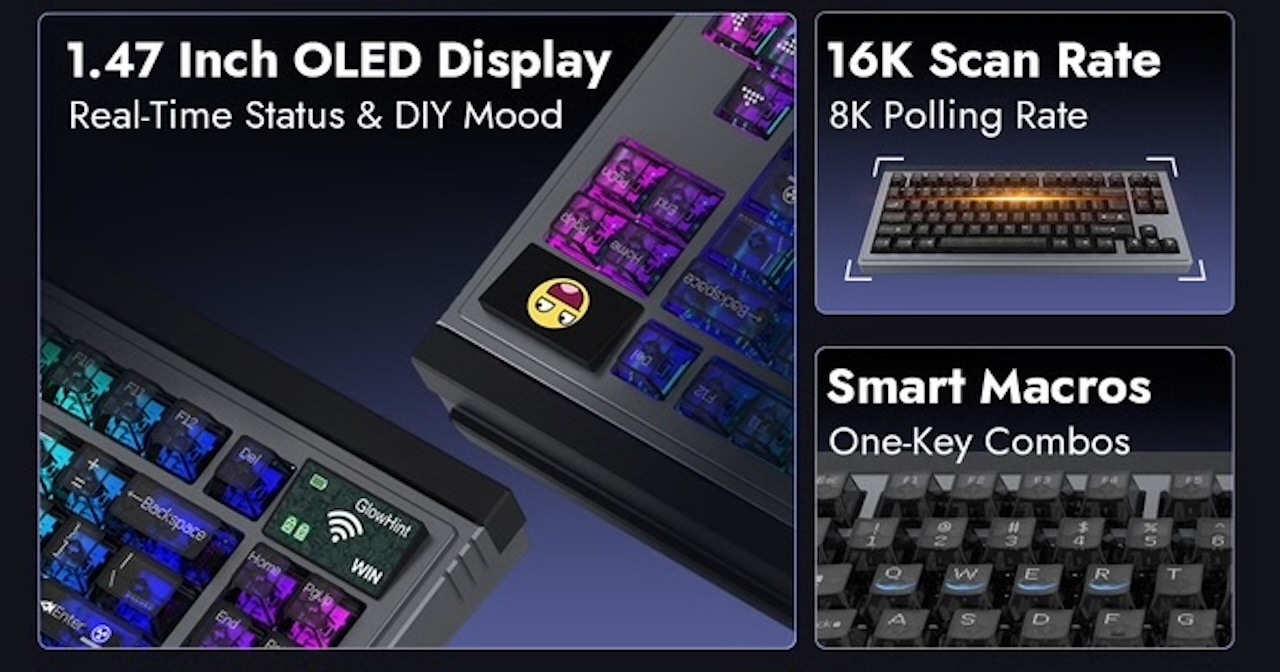
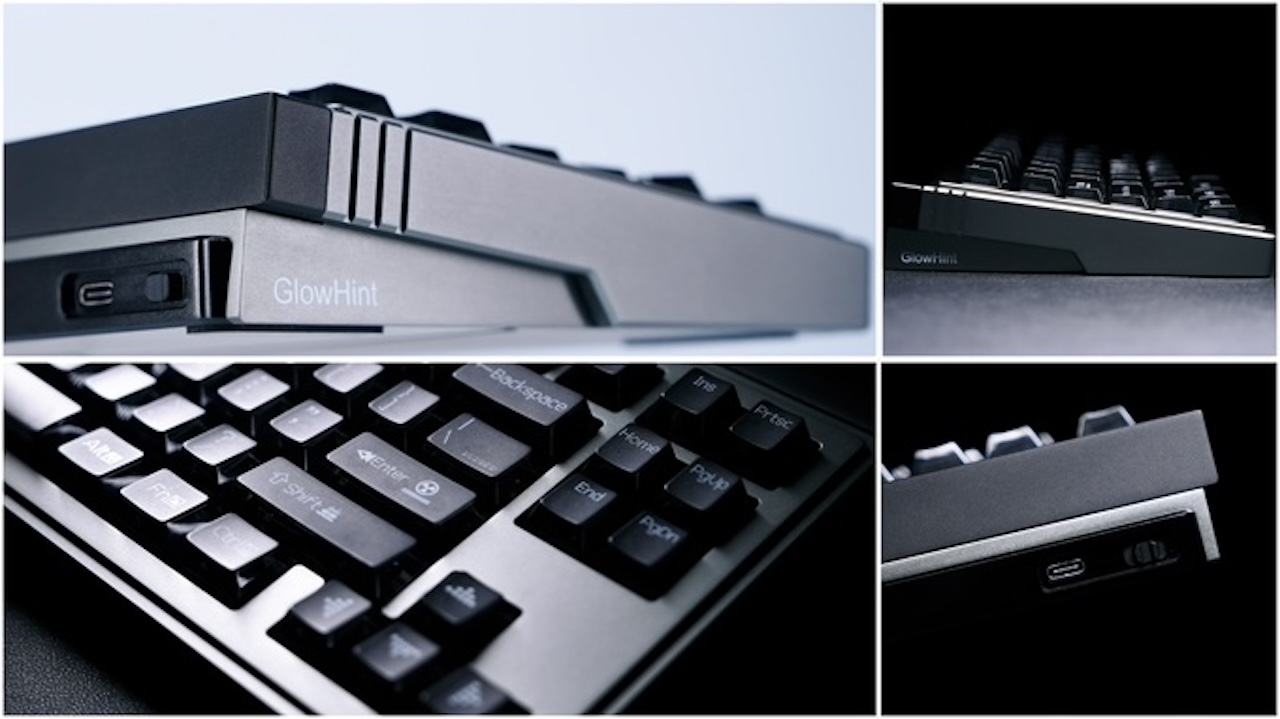
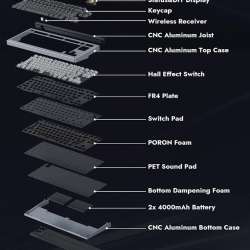
GlowHint lists 16K scans per second, 8,000 Hz wired polling, a 30 gf actuation force, 50 gf bottom-out force, an aluminum-alloy chassis, FR4 plate, and multi-layer acoustic dampening.
The real-world feel will still depend on implementation, and hot-swap support should be checked for compatible switch types. Still, the overall combination is more persuasive than a single headline speed number.
The layout is compact without becoming inconvenient
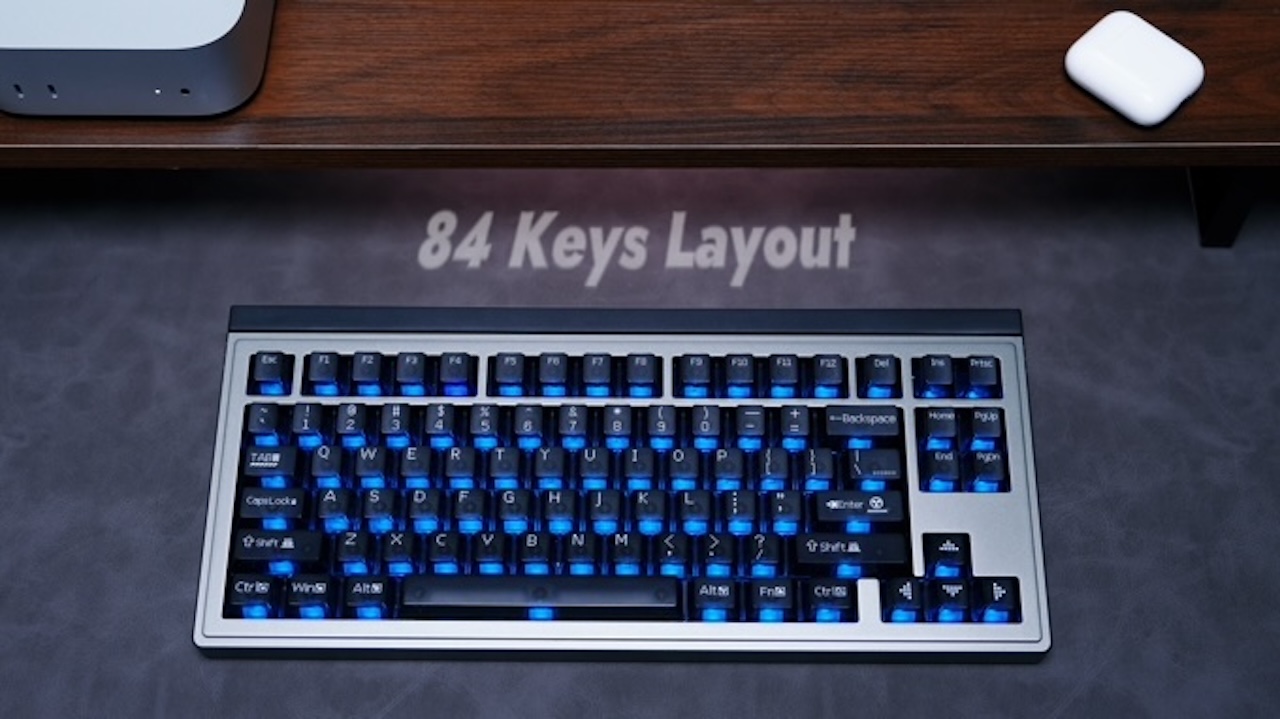 The 84-key, 75% layout preserves the function row and arrow cluster while freeing up mouse space. GlowHint also lists a 1.47-inch display, per-key ARGB lighting, macros, remapping, and depth-based inputs.
The display and lighting are not reasons to back the KT75 on their own. Their value depends on GlowHint Hub being stable and well supported. But they add useful personalization to a practical layout, rather than forcing buyers into a smaller board that compromises work shortcuts.
It distinguishes maximum performance from wireless convenience
The KT75 supports USB-C wired, 2.4 GHz wireless, and Bluetooth. GlowHint also lists up to 95 hours of battery life, though real-world runtime will depend heavily on lighting, connection mode, and usage.
Those runtime figures will vary by settings and connection mode. More importantly, the 8,000 Hz polling claim applies to wired use. Wireless is the convenience option, while wired mode is for buyers pursuing the maximum advertised responsiveness. That is the right tradeoff for a keyboard meant to move between a desktop, laptop, and cleaner workspace.
Buyer fit
Back the GlowHint KT75 if you are trying to replace two keyboards with one premium 75% board that feels comfortable enough for daily work and configurable enough for competitive games.
Skip it if you need a numpad, only want the least expensive gaming keyboard, or prefer to wait for long-term software impressions and hands-on reviews before spending.
Price: From $299
Where to Buy: Kickstarter