Windows gaming handhelds keep getting faster, but they’re also becoming harder to call affordable. Intel’s new Panther Lake-based Arc G3 hardware illustrates the problem: the architecture promises considerably more performance for portable gaming, but premium devices built around it are pushing handheld PCs toward laptop-like prices.
Now a new report suggests Intel may be looking further downmarket.
Intel is reportedly preparing a lower-cost Panther Lake processor for gaming handhelds, potentially positioned below the existing Arc G3 and G3 Extreme. The reported handheld would use one of Intel Panther Lake’s existing lower-end configurations rather than the more powerful silicon Intel selected for Arc G3 and G3 Extreme. Panther Lake already includes an eight-core design with four P-cores, four low-power E-cores and four Xe3 graphics cores; what’s unconfirmed is Intel’s reported plan to bring that configuration to gaming handhelds.
If the report proves accurate, the most interesting addition to Intel’s handheld lineup may not be a faster chip. It could be one that gives manufacturers a better chance of building cheaper devices.
The rumored chip would sit well below Arc G3
Intel launched Arc G3 and Arc G3 Extreme in May 2026 as Panther Lake-based processors designed specifically for Windows 11 gaming handhelds. Both have 14 CPU cores, while G3 uses 10 Xe3 graphics cores and G3 Extreme steps up to Arc B390 graphics with 12 Xe3 cores.
If Intel brings the eight-core, four-Xe3 configuration to handhelds as reported, it would have less than half the graphics resources of the regular G3.
That’s not necessarily a problem if lower cost is the objective.
Reducing CPU and GPU resources could give Intel another tier beneath G3 rather than requiring manufacturers to build every Panther Lake handheld around relatively powerful silicon. But that’s still speculation. The handheld processor’s final name, power targets, price and intended market haven’t been confirmed by Intel.
Four Xe3 cores would mean different expectations
If the reported configuration becomes a commercial handheld chip, buyers shouldn’t expect it to compete directly with G3 Extreme. Intel’s G3 Extreme uses 12 Xe3 cores, while the regular G3 has 10. Intel is positioning both as purpose-built handheld processors with power management and core configurations optimized for portable gaming.
A four-Xe3 processor would be targeting a very different performance level. It could make more sense in cheaper handhelds intended for indie games, older PC titles and less demanding games, potentially paired with lower display resolutions or heavier use of upscaling.
That’s an inference from the reported hardware, not evidence of Intel’s plans. There are no benchmarks showing how this configuration would perform in the rumored handheld implementation. Memory bandwidth, power limits, cooling, drivers and display resolution would all affect what a finished device could deliver.

The real attraction is potentially lower cost
The significance of this Intel Panther Lake rumor isn’t really four Xe3 cores. It’s what bringing a smaller Panther Lake configuration into handhelds might do to the price of devices built around it.
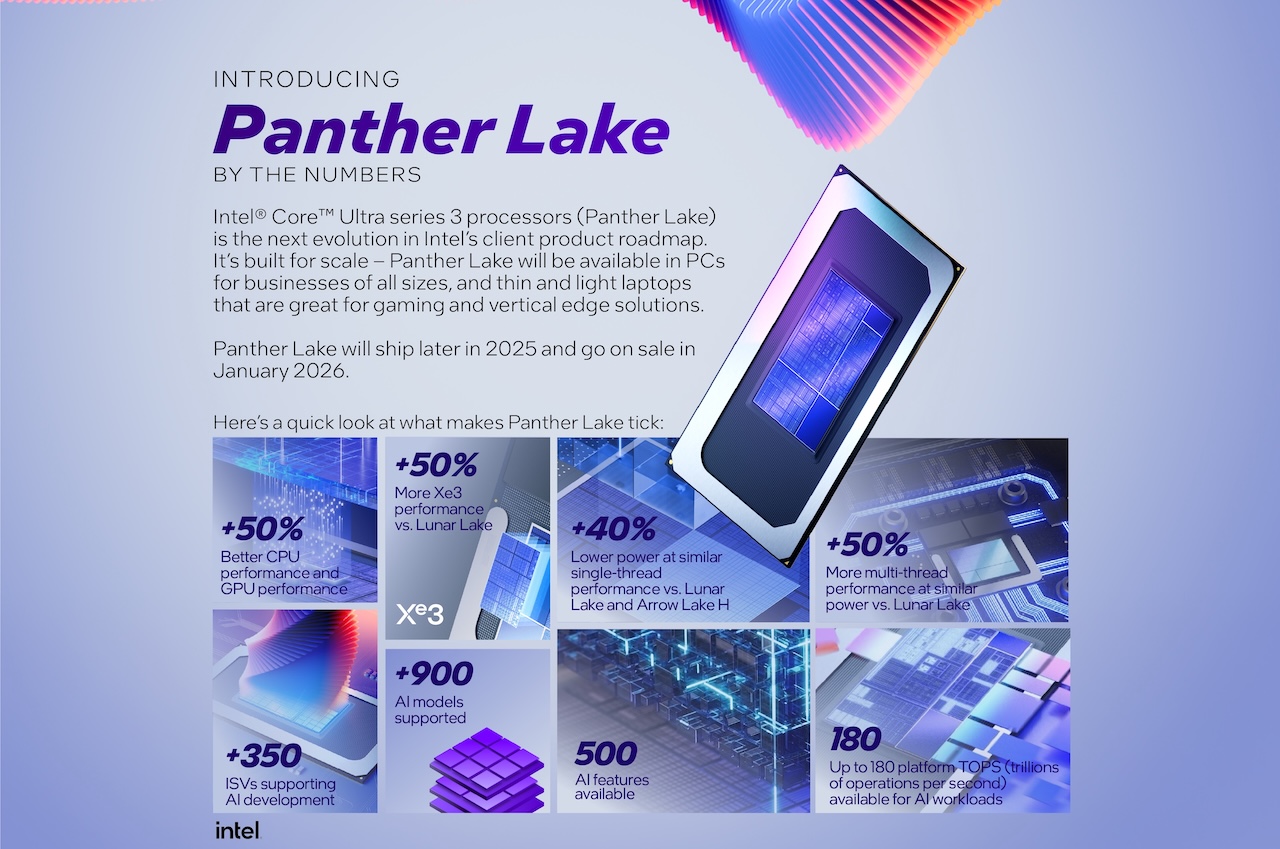
Intel has already established G3 and G3 Extreme as its first dedicated Panther Lake-based handheld processors. The G3 Extreme has a 14-core CPU, Arc B390 graphics and a rated TDP range of roughly 8W to 35W, with Intel promoting performance at low power as one of the platform’s advantages.
A smaller configuration could potentially give manufacturers more room to build less expensive devices rather than another flagship handheld. That’s particularly relevant because handheld PCs increasingly span a huge price range. Buyers interested in lighter games don’t necessarily need the graphics resources of G3 Extreme, especially if getting them means paying substantially more for the finished device.
A cheaper chip doesn’t guarantee a cheap handheld
This is also where the rumor needs some restraint. Reducing CPU and GPU resources doesn’t automatically produce an inexpensive gaming handheld. Memory, storage, display, battery, cooling and controls all contribute to the final bill of materials. Manufacturers also decide how much memory and storage to include, which display to use and where to position the product.
There could also be a significant performance tradeoff. Going from 10 or 12 Xe3 cores to four would be a substantial reduction in graphics resources. Without benchmarks from a handheld implementation, we don’t know whether that tradeoff would make sense for Windows gaming or what resolution and power targets manufacturers might choose.
The evidence currently goes only as far as the report: Intel may be considering a lower-tier Panther Lake handheld configuration. It doesn’t establish how fast, efficient or inexpensive a resulting device would be.
Who should be watching this cheaper Panther Lake chip?
This rumor is most relevant to budget-conscious buyers who want a Windows gaming handheld but don’t need flagship performance. Arc G3 and G3 Extreme show Intel’s ambitions at the more powerful end of portable PC gaming. Intel officially describes the processors as designed for next-generation handheld gaming rather than ordinary laptop chips repurposed for smaller devices
A lower-tier processor could broaden that strategy by giving manufacturers another performance and pricing target. But there are still major unknowns. Intel hasn’t confirmed the handheld product, manufacturers haven’t announced devices using it, and there are no official prices or performance figures for such a device.


The bottom line
Intel’s next interesting handheld chip may not be faster than Arc G3 Extreme. If this report is accurate, bringing an eight-core Panther Lake configuration with four Xe3 graphics cores to gaming handhelds could give manufacturers a path toward less expensive Windows devices. For buyers priced out of increasingly premium portable gaming PCs, bringing Panther Lake downmarket could matter more than pushing its performance ceiling even higher.