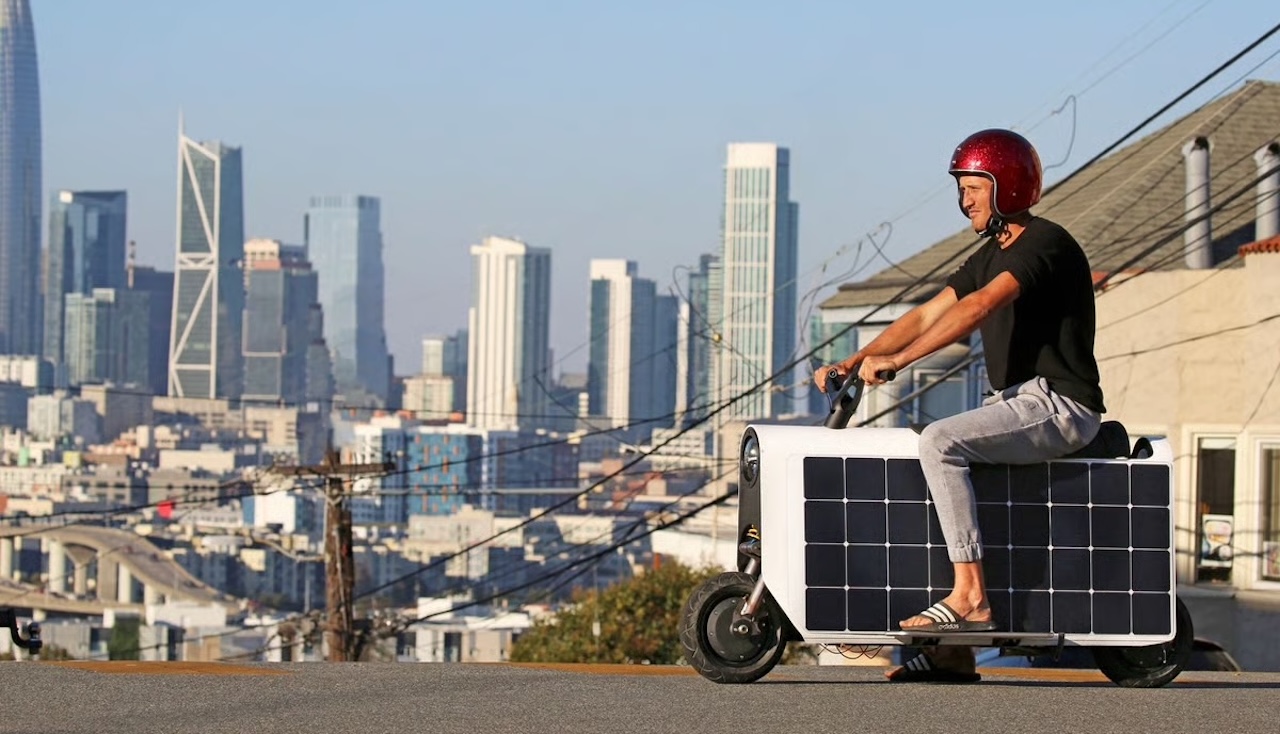
A gadget earns a place in daily life by answering one question: does it remove a real source of friction, or does it add another object to manage? Lightfoot Solar Cargo Scooter, a solar cargo scooter from California-based Otherlab, takes the first path on paper. It turns the roof and sides of a small electric vehicle into a charging surface, then uses the same body to carry groceries, work gear, or a second rider.
❗ Price: $4,995
Where to Buy: Lightfoot
That promise sounds bigger than a scooter, but the pitch is more specific. Lightfoot isn’t a replacement for every car trip or every bike ride. It’s a short-journey machine for people who want cargo space, weather protection, and less dependence on a wall outlet without stepping up to a full car.
The solar panels are useful because they stay attached
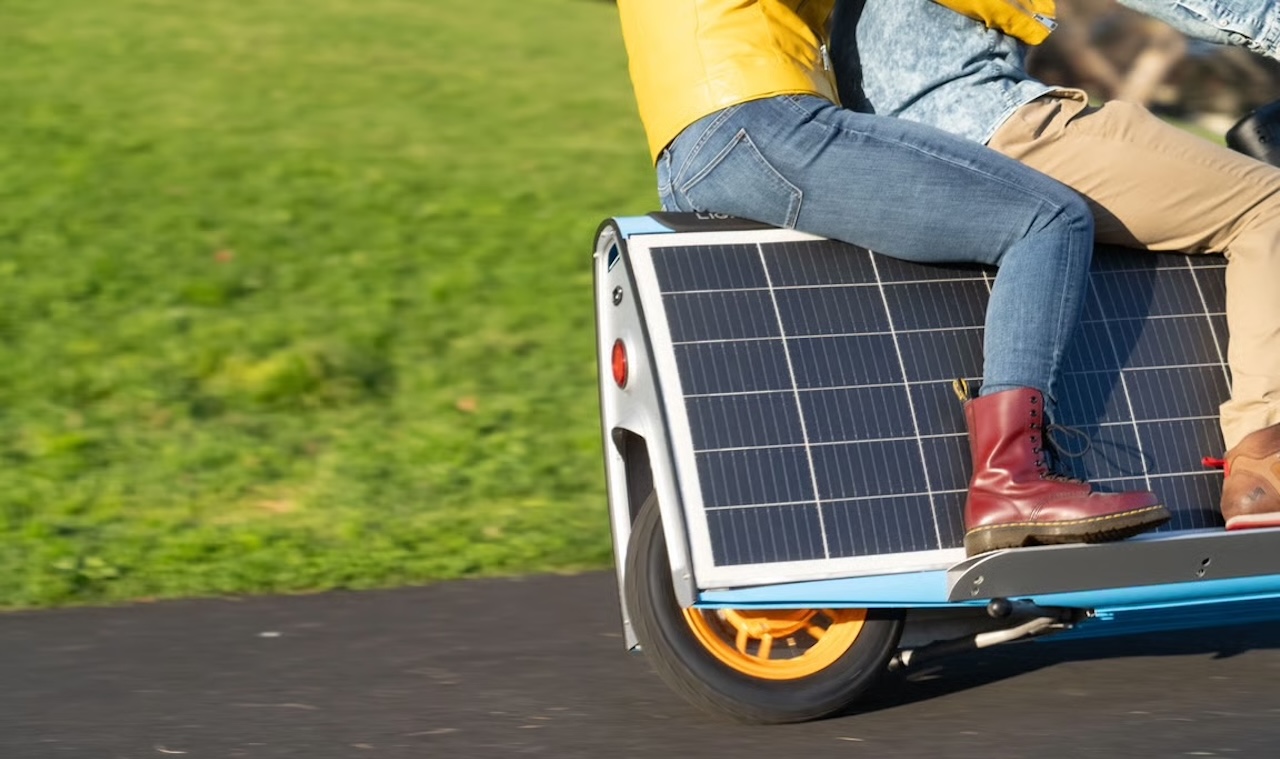
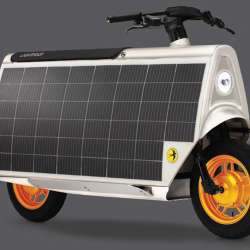
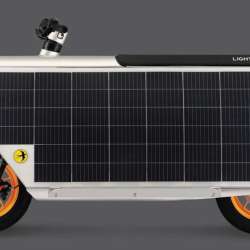
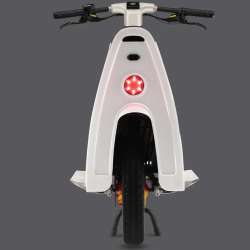
Solar charging usually fails as a daily habit because it asks you to unfold, position, and remember a separate panel. Lightfoot folds the charging surface into the vehicle itself. Designboom reports that the scooter uses two 120-watt panels built into the sides of its clamshell body. The company estimates up to 18 miles of added range per day in good sun, gaining roughly a mile of range every twenty minutes of strong exposure.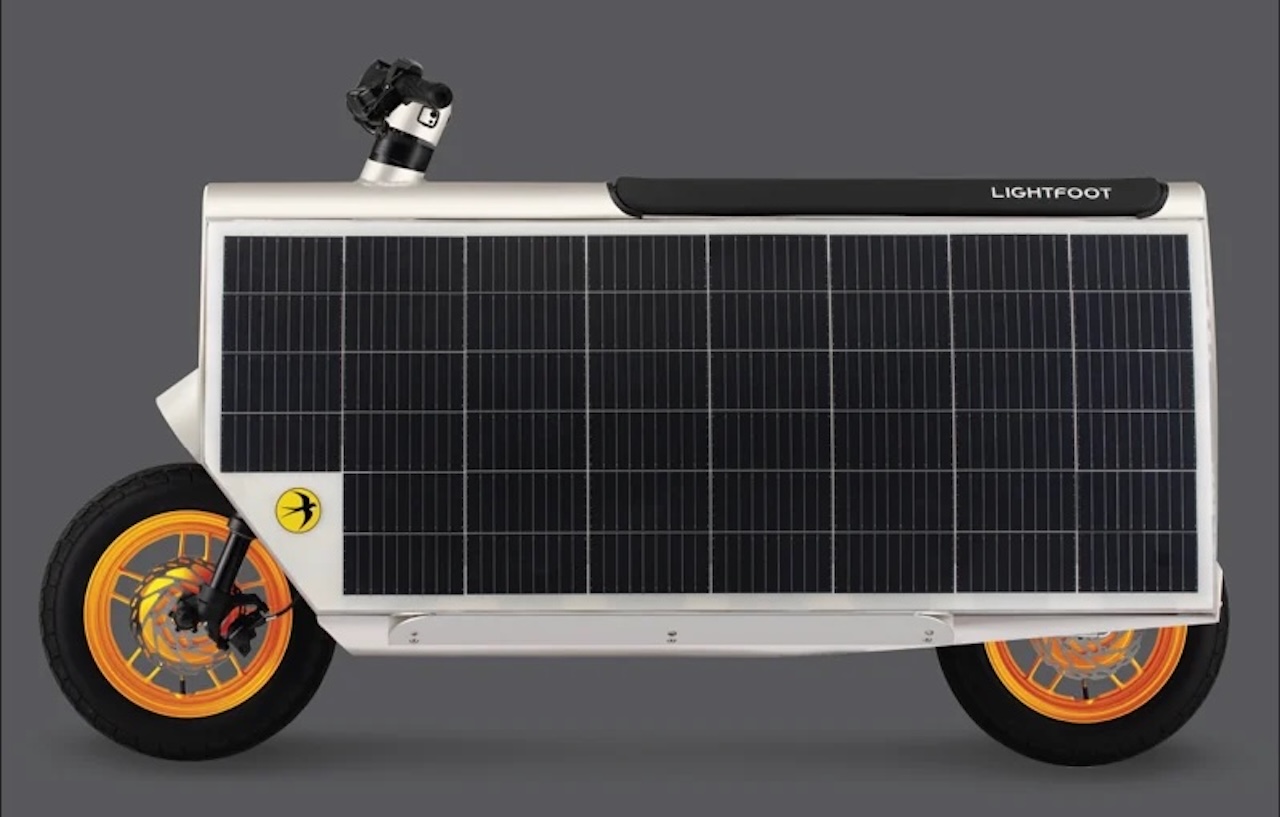
That estimate needs a clear boundary. It isn’t a promise that the scooter will gain 18 miles every day in every season. Shade, parking direction, weather, and the angle of the sun will change the result. The useful idea is simpler: the vehicle can gather energy while it sits, so a parked scooter isn’t always a parked battery.
This is a cargo vehicle first, scooter second
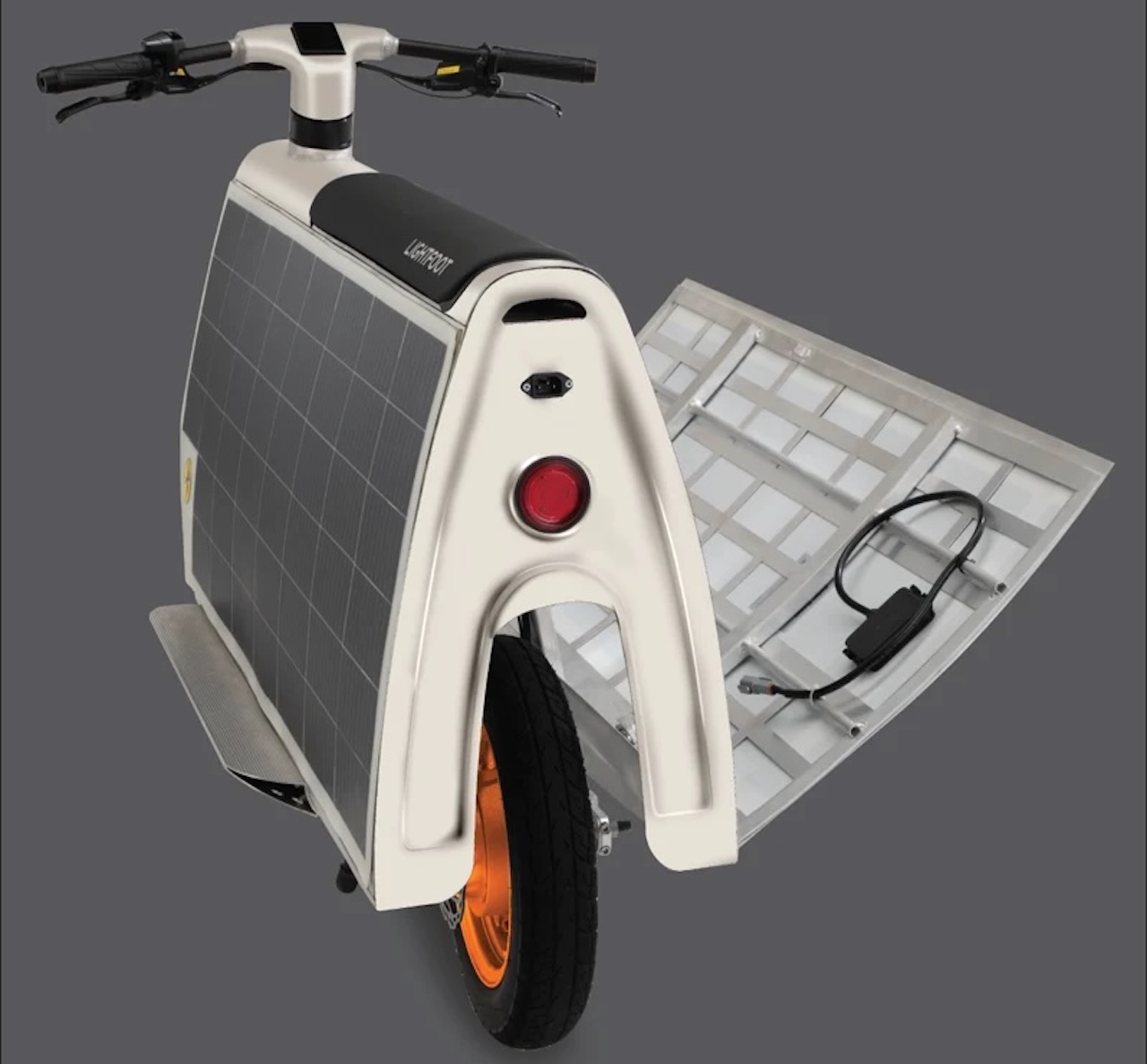
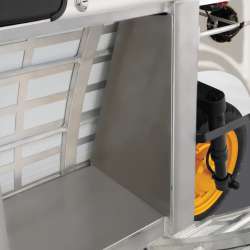
The strongest design choice is the storage bay. Lightfoot lists 45.2 liters of lockable, weather-resistant cargo space and a load rating of up to 15 kilograms (33 lbs). That changes the ownership question from ‘Can I ride this to the store?’ to ‘Can I carry the store home without using a car?’
The cargo compartment sits behind the rider rather than on a backpack or a front basket. Groceries, a helmet, work equipment, or a small delivery load can stay low and centered. That arrangement won’t turn the scooter into a pickup truck, but it gives the machine a job beyond moving one person from one location to another.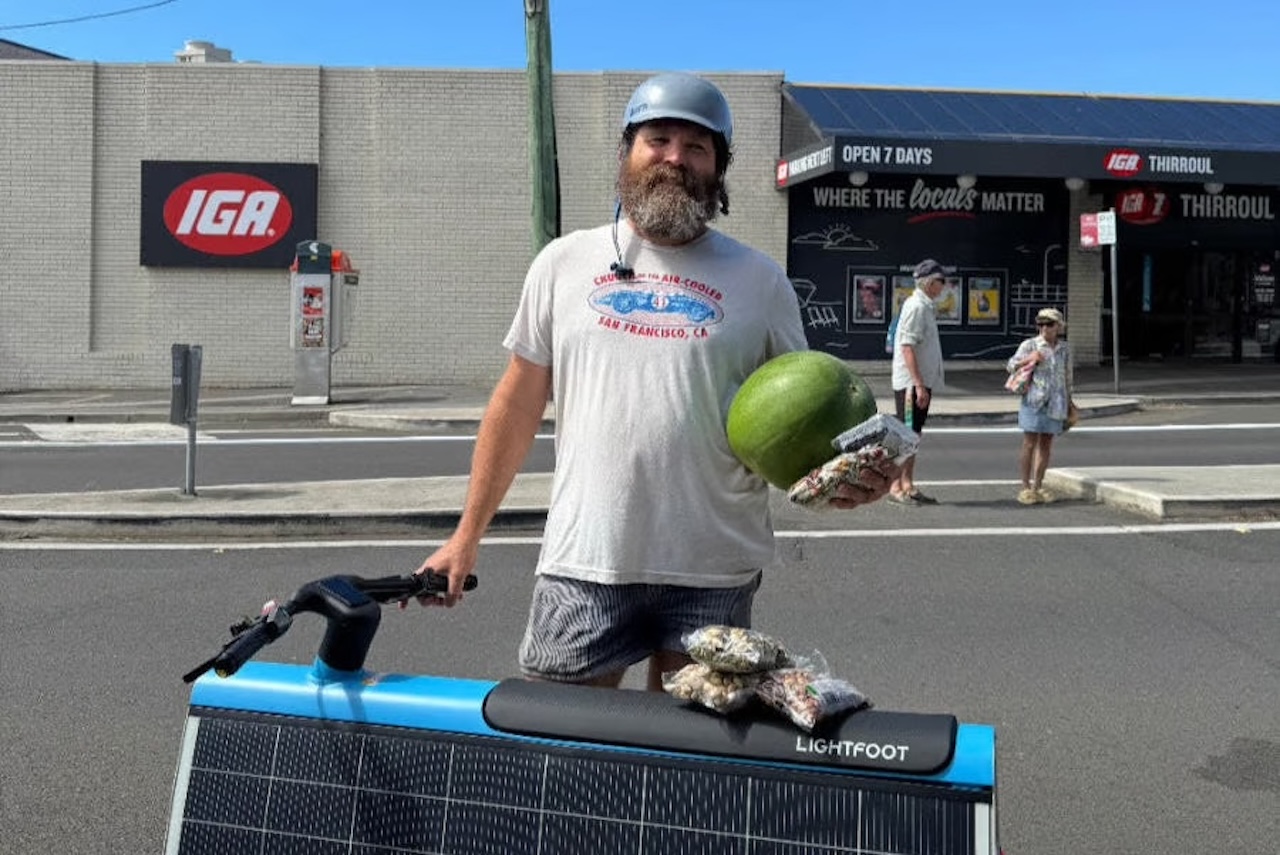
A second seat extends the use case, though it also raises the usual questions about local rules, passenger safety, and the rider’s route. The official product page should settle those details before anyone places an order. Designboom’s report describes Lightfoot as a two-seat vehicle, while the brand positions it around short urban trips.
The range number is less interesting than the charging behavior
Lightfoot’s current product page lists up to 37 miles of plug-in range. The same page lists an onboard charger that reaches 80 percent in about 90 minutes. Those figures frame the scooter as a vehicle that can work from a normal charging routine, with sunlight extending the gap between plug-ins rather than replacing charging altogether.
 That distinction gives the solar system a more credible role. The panels don’t need to carry the entire vehicle’s energy budget to be useful. They only need to cover some of the short trips that would otherwise consume stored battery capacity. The design makes more sense for an owner who parks outside during the day than for someone who keeps the scooter in a garage.
It has enough performance for streets, not highways
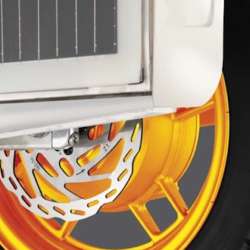
The product page lists a top speed just under 20 mph, while Designboom reports 19.9 mph. Braking relies on hydraulic discs backed by regenerative recovery, while ten-inch wheels and motorcycle-style suspension front and rear absorb the bumps. The vehicle weighs about 62 kilograms, so this isn’t a lightweight scooter you carry up a flight of stairs.
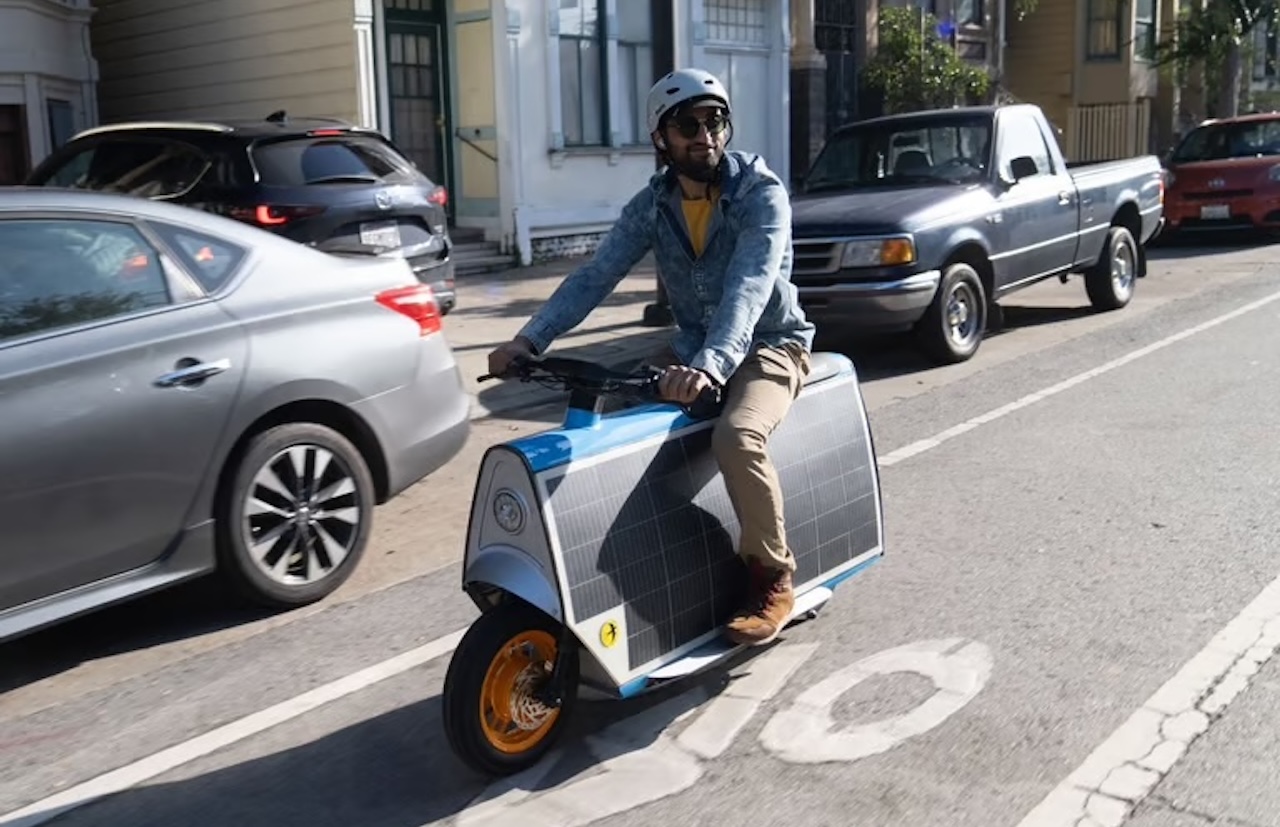 Those numbers point to a different ownership rhythm. Lightfoot is built to move through city streets and bike lanes with cargo on board. It isn’t designed around folding into a train station locker or disappearing beneath an office desk. The aircraft-grade aluminum frame and modular components also suggest a service strategy, with maintenance intended for home work or local bicycle shops.
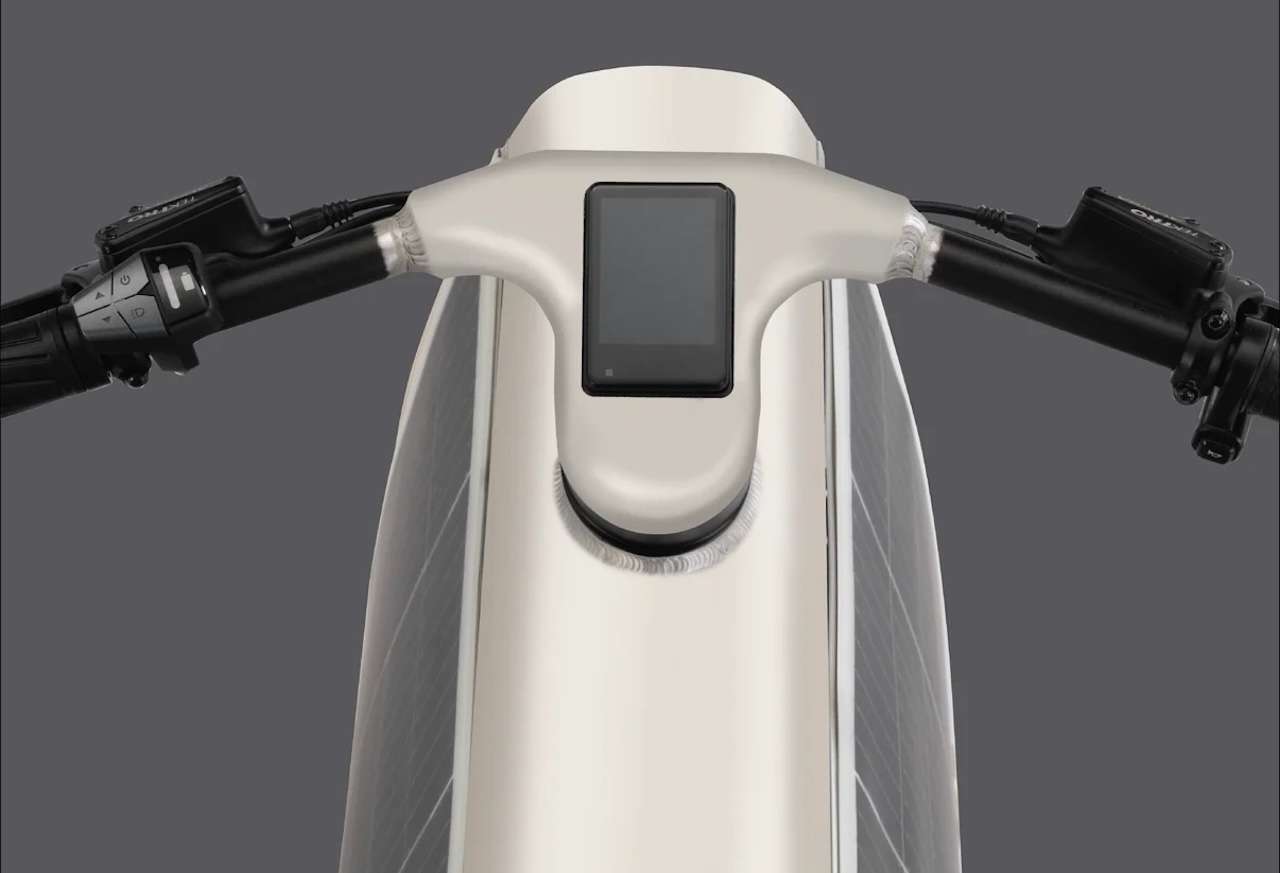
The lighting package is unusually specific for a small urban vehicle. A 2,000-lumen headlight sits up front, rear lights trigger automatically based on motion sensing, and a horn rated at 120 decibels rounds out the safety hardware. The product page and local regulations should decide how those features can be used in a given city.
The price makes this a replacement decision
At $4,995, Lightfoot isn’t an impulse purchase. The price puts it in the territory where a buyer has to compare it with an electric bike, a cargo bike, a used car, or a second vehicle. The solar panels are interesting, but they aren’t enough on their own to justify the cost.
 The case gets stronger when the scooter replaces several small car trips every week. A person who regularly carries groceries, equipment, or a child across a compact city can use the cargo bay and second seat as the core reason to consider it. The solar system then becomes a daily bonus that reduces charging dependence while the scooter is parked.
The case gets weaker for a rider who wants low weight, easy storage, or a simple weekend toy. Sixty-two kilograms is a serious object. A 37-mile plug-in range is a company figure, not an independent test result. The product is listed for purchase, reservation, and preorder options, so buyers should confirm delivery timing, local legality, service coverage, and final equipment before paying.
Who should choose a solar cargo scooter?
 Choose this category if your daily trips are short, your route has usable sunlight, and your biggest problem is carrying things without using a car. Lightfoot’s design is aimed at errands, not speed runs. The cargo bay, second seat, and integrated charging surface all point toward a practical routine that happens close to home.
Skip the Lightfoot Solar Cargo Scooter if your building has no secure parking, if you need to carry the vehicle often, or if your trips regularly exceed the range and speed envelope of a compact urban scooter. A normal cargo bike may be easier to store. A small electric car may be easier to live with in bad weather. The solar hardware doesn’t erase those tradeoffs.
❗ Price: $4,995
Where to Buy: Lightfoot
The decision comes down to your parking spot
Lightfoot’s smartest idea isn’t that sunlight can power a scooter. Solar vehicles have been chasing that idea for years. The sharper idea is that a cargo vehicle can collect energy while it waits, with no separate panel, no setup ritual, and no extra floor space.