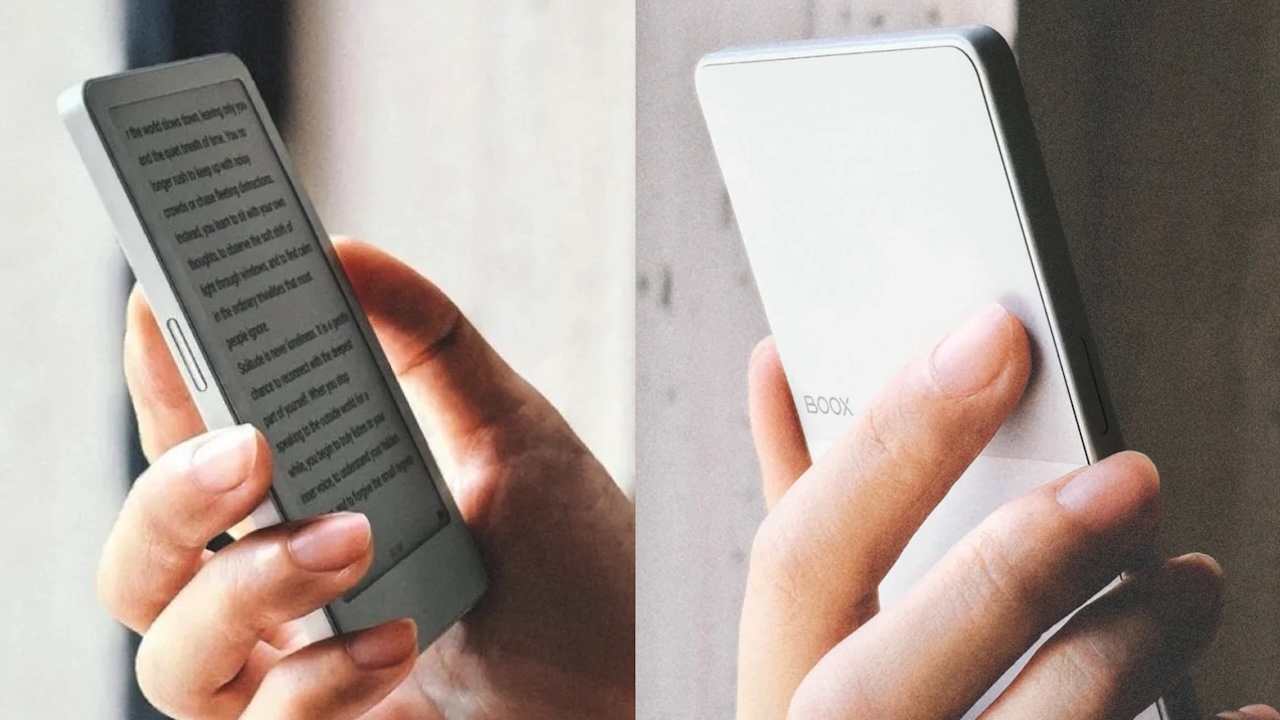
The ideal reading device would be small enough to disappear in a pocket, yet not so small that most readers give up after ten pages. Boox Picco is built around that contradiction. It is a tiny black and white E Ink reader with a front light, expandable storage, and no confirmed release date or price yet.
That uncertainty is part of the story. Boox has confirmed to The Verge that the Picco is in development as part of a new Tile lineup, but the company has not published the full specification sheet. The useful question is not whether this will replace a Kindle. It is whether a deliberately limited screen can make reading easier to choose than a phone.
This is not a review. No hands-on testing is available yet. This is a decision tool for a product category that is still taking shape.
The phone is the wrong comparison
A phone wins the hardware contest before a tiny reader leaves the starting line. It has a larger screen, faster software, better search, richer typography, and every book app you already know. It also has the feed, the alerts, the messages, and the small loop that turns a ten minute reading break into an hour of unrelated scrolling.
The Picco would make a different offer. Boox is trading versatility for a clearer boundary. The company says the device will use a 3.97 inch front lit black and white E Ink display and an SD card slot for expandable storage. Those details describe a reader that wants you to bring a book, not an entire digital life.
Tiny screens create useful friction
A small display changes reading in ways that are easy to overstate. It will show fewer words at once. Pages will turn more often. Charts, comics, PDFs, and dense nonfiction will ask more of your eyes. Any claim that the Picco feels comfortable for every kind of book needs a real device and a reading interval without a notification queue.
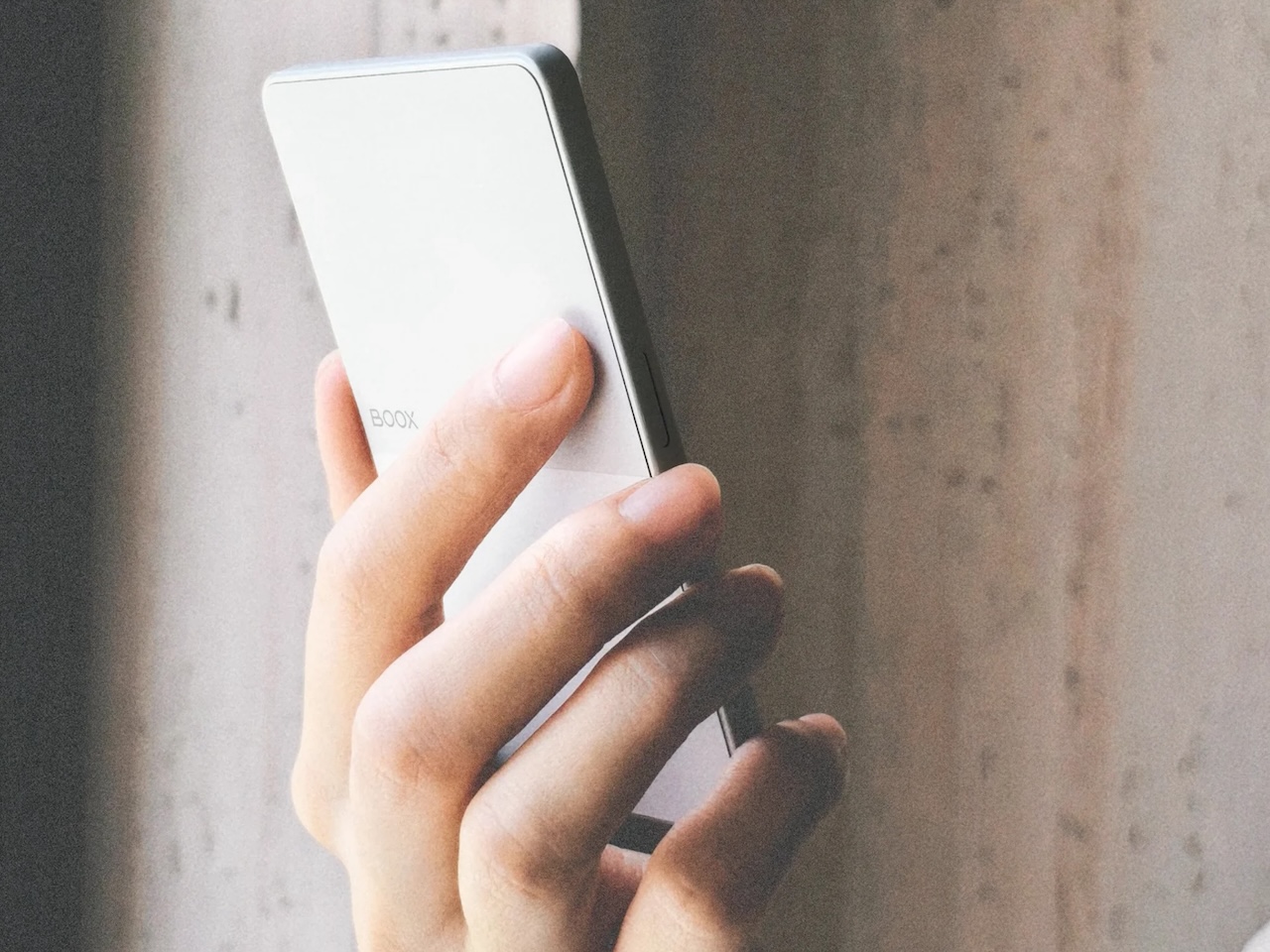 The upside is more specific. A tiny reader can become the thing you carry when a full size tablet feels excessive. Its small display suggests a device intended for easy carrying, but Boox has not yet published dimensions or weight. The format earns a place by being available at the exact moment when a phone is too distracting and a normal reader feels too large.
The friction also creates a filter. Readers who need color, extensive PDF reading, audiobooks, or broad app support should wait for final specifications before treating the Picco as a suitable option. If you want one novel or a few essays close at hand, the limits could be the feature that keeps the session intact.
Where the Picco could win
The Picco could be most useful during short reading windows, such as transit waits, coffee breaks, checkout lines, or the last few minutes before sleep. Its pocket-friendly size may also appeal to readers who leave a six-inch e-reader at home because it feels like one more device to carry and manage.
It could also suit readers seeking a phone-free reading session, an intentional object separate from the notification-filled screen already in their pocket. Readers who manage DRM-free EPUB libraries may be interested in the SD-card slot, although Boox has not yet confirmed the Picco’s supported file formats or library workflow. These are use-case hypotheses rather than test results. The final product will need to show that its software, controls, battery life, and screen readability support those use cases.
The open questions are the whole product
Boox has shown the device in a promotional image, and the image appears to show physical buttons. The Verge reports that it is still unclear whether the Picco will rely on buttons alone or add a touchscreen. That choice changes the entire reading experience. Buttons favor deliberate page turns and simple operation. Touch makes navigation easier, but it also creates more room for gesture confusion on a very small panel.
The software is just as important. Good E-Reader reports that the Picco may use a minimal tiled interface with basic apps such as NeoReader, a music player, and a podcast player. That report is not an official specification, so it belongs in the expected column until Boox publishes details. If the software stays narrow, the Picco will be easier to understand than an Android e-reader. If Boox adds too many layers, the small screen loses its reason to exist.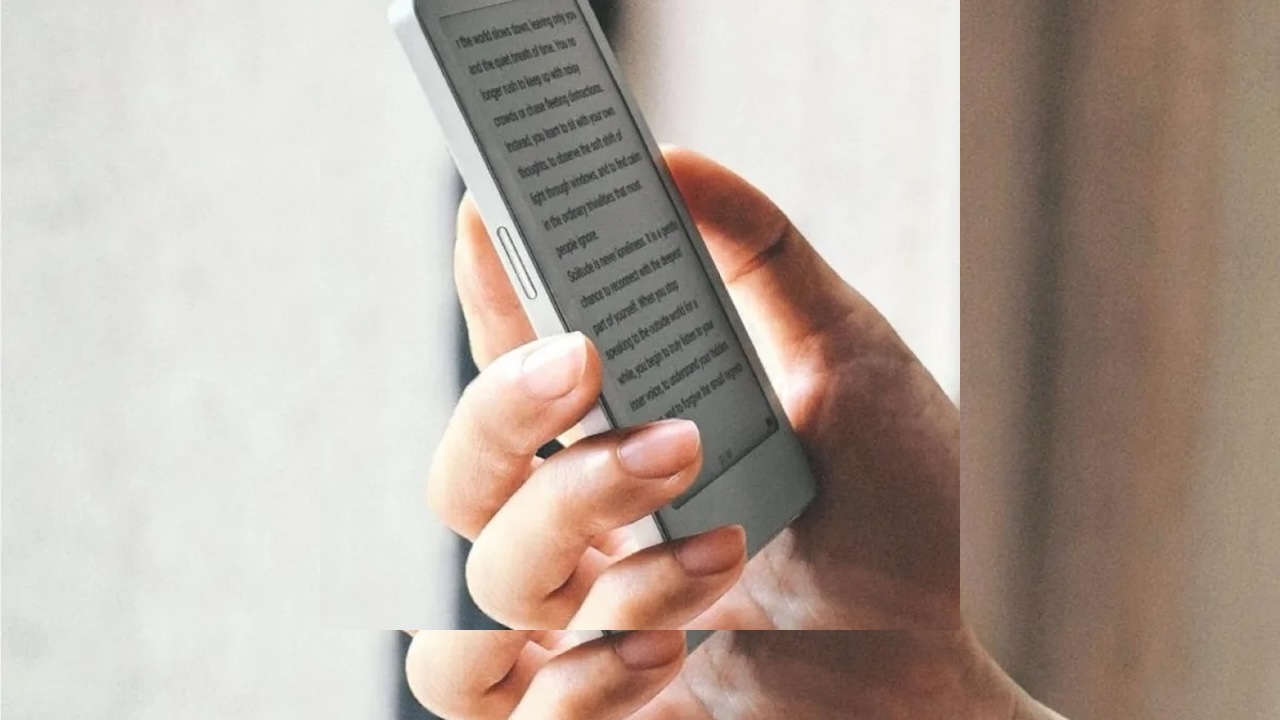
Xteink already shows the tradeoff
Xteink is the clearest comparison because it already sells several tiny E Ink readers. Its X4 Pro has a 4.3-inch display, a front light, touchscreen controls and physical buttons, a bundled 16GB microSD card expandable to 256GB, a 1,100mAh battery, and a listed weight of 72 grams. Xteink also sells more basic models, but their display sizes and feature sets differ; shoppers should compare each model’s current specifications before treating them as direct substitutes.
The X4 Pro makes the tradeoff concrete: buyers can prioritize pocketability, then decide whether features such as lighting, touch controls, storage expansion, and battery capacity justify the higher-end model. Boox Picco will need a similarly clear reason to exist. A smaller clone of an existing reader will be less compelling than a reader with a sharper boundary between books and everything else.
Price will decide how forgiving readers are. Xteink lists the X4 Pro at $99. Boox has only described the Picco as having an accessible price point. Until Boox publishes a price, it is impossible to call the Picco a value, a premium alternative, or a serious rival.

The decision is about sessions, not specs
The key question is what should happen when the device is picked up. For reading a chapter without opening a social app, a tiny E Ink reader makes sense. For browsing, note-taking, color content, audio, and deep library searches, its limitations may create more friction than value.
That is why the final details matter. Before the Picco can be recommended, Boox needs to confirm its price, release date, regional availability, control method, SD-card capacity, and included apps. Hands-on testing also needs to establish how the front light performs in dim conditions and during longer sessions, and whether the compact body can provide battery life that suits frequent pocket carry. Until then, the Picco remains an interesting format experiment rather than a product recommendation.
Final TG Take
Boox Picco has a sharp editorial promise: make reading easier by making the device less capable. That promise only works if the price stays accessible, the controls stay simple, and the screen is comfortable enough to support the short sessions the form invites.
This one is worth watching, but it is not a buying recommendation based on the announcement alone. The Picco earns a place on a shortlist only after Boox confirms its price, software, controls, and availability. A tiny reader does not need to beat a phone at everything; it only needs to provide one good reason to leave the phone in a pocket.