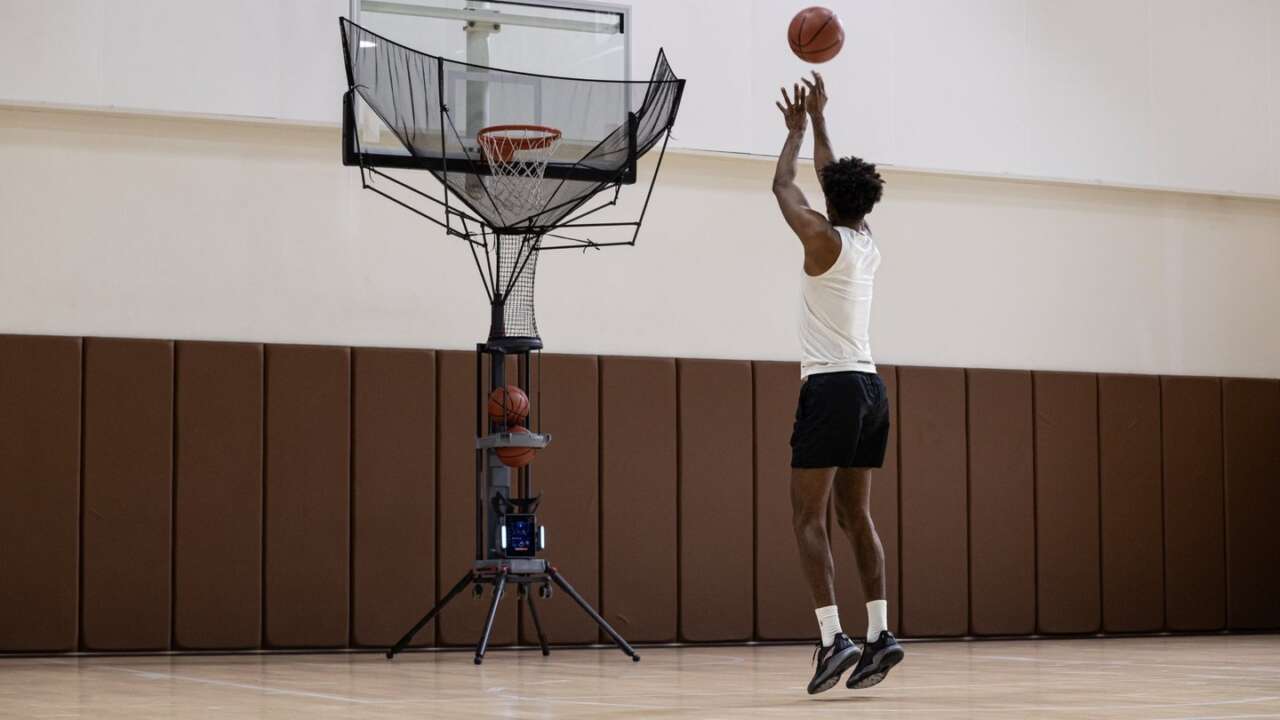
Best of Innovation in Sports & Fitness at the CES Innovation Awards 2027 went to a basketball robot that rebounds, passes and grades your jumper. The Consumer Technology Association announced the 2027 honorees today, drawn from a field of nearly 4,000 submissions across 37 categories, and CARRY, built by Lumistar (Shanghai) Robotics Technology, took the top designation in Sports & Fitness.
CARRY is a movable AI basketball training partner. It parks under the hoop, gathers makes and misses in a return net, feeds passes back to a shooter anywhere on the floor, and grades every shot it watches.
Price: $2,499
Where to buy: Kickstarter
Sixty seconds from folded to working
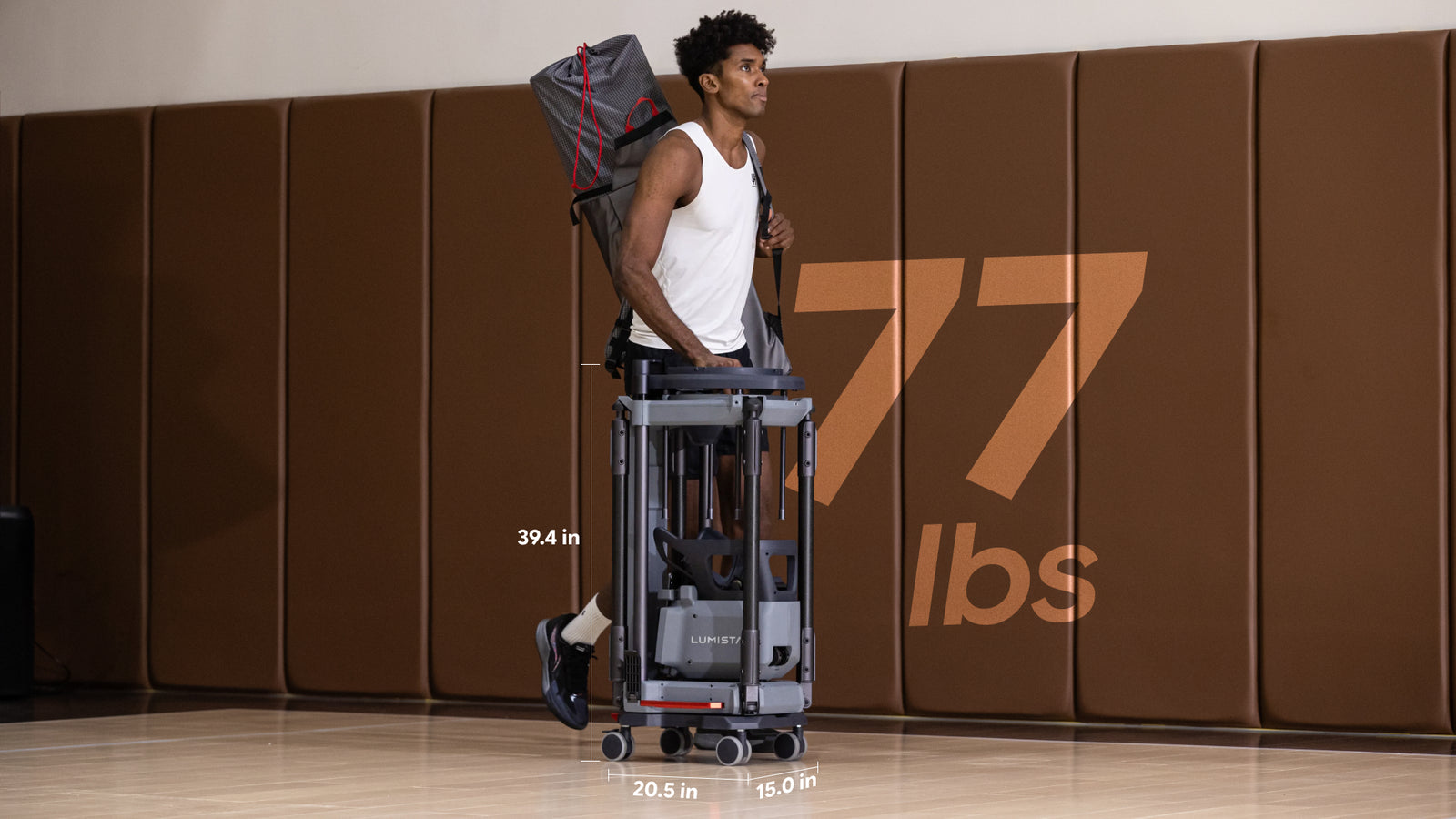
Setup takes about a minute, start to finish, and needs no tools or a second pair of hands. The collection net rises on its own at a button press, and the folded unit stands 39.4 inches tall on a 20.5 by 15.0 inch footprint, enough to store against a gym wall or in a garage corner. The net system rides along as part of the same folded package, so the whole rig moves and stores as one piece.
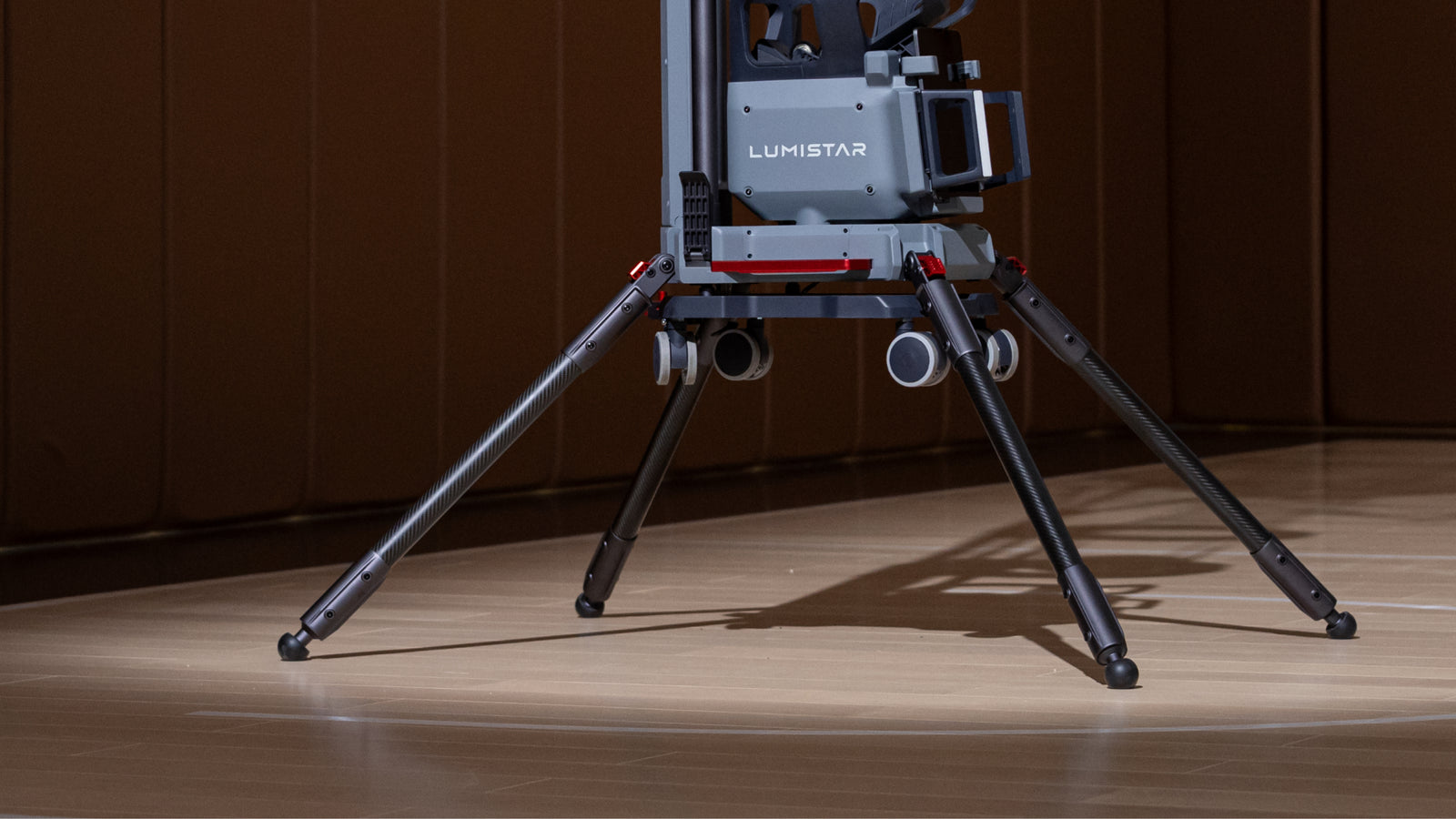
One player can move the whole rig. The main unit weighs 77 pounds and the net system another 4.5, and a handle and casters roll it across the floor to whichever hoop is free. Carbon fiber and aluminum alloy carry the frame, and a pyramid support structure spreading 1.5 meters wide plants the legs, so hundreds of passes at full pace never walk it out of position.
Four cameras and a 190-degree view
The vision system is a quad-lens array with a 190-degree field of view. It tracks where the shooter stands and how the shooter moves. It also tracks how the ball enters the basket.
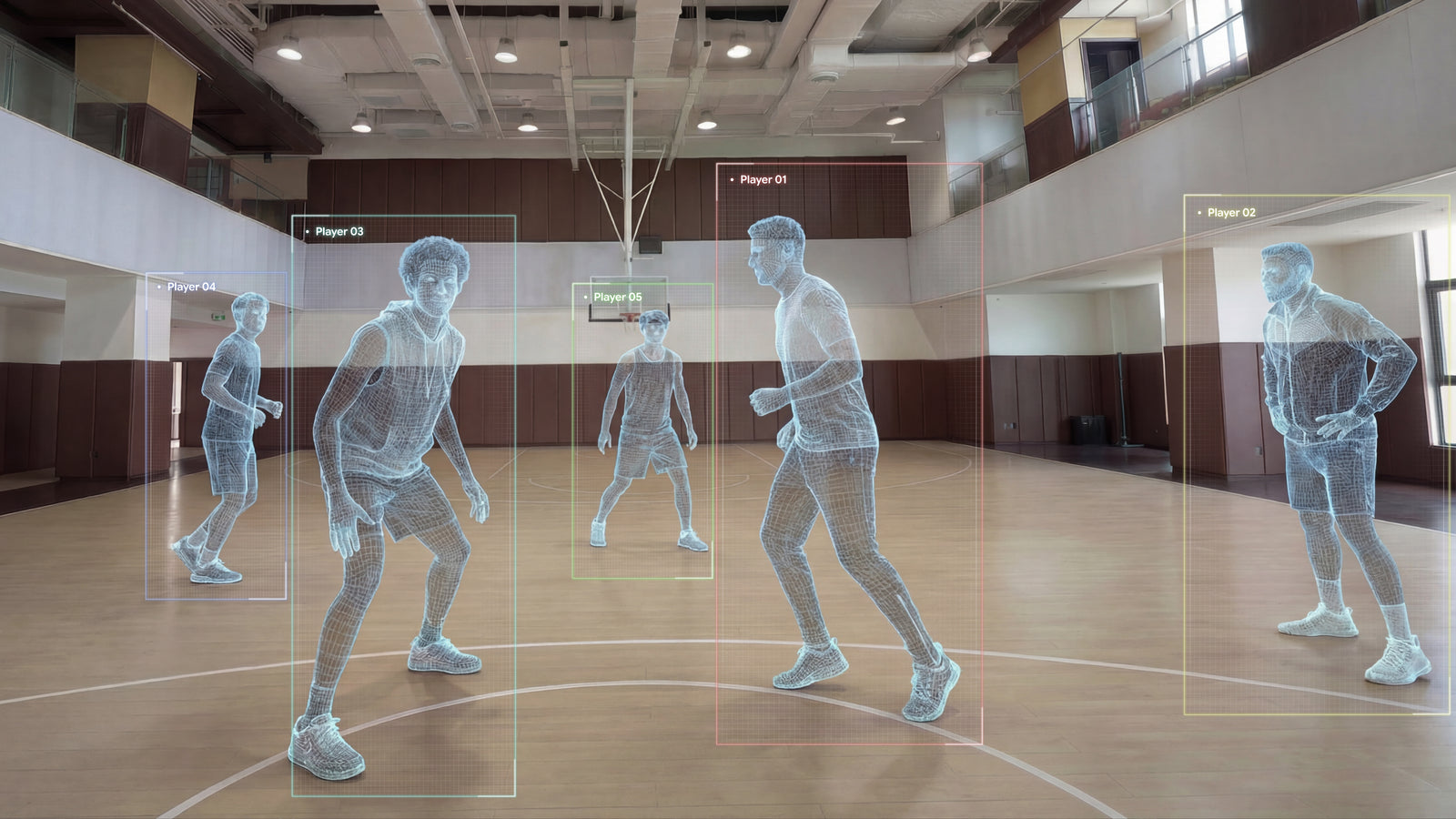
Five players can work at once, with the system alternating passes between them while live scores and rankings run on the built-in screen, each shooter tracked as an individual instead of a blur. Calling for the ball takes a set hand gesture, so there’s no remote to lose, no display to tap mid-drill, and no break in the rhythm of a workout.
Passes shaped like a teammate’s
Shooting machines feed from one spot, on one arc, at one speed. CARRY changes the feed itself. Dynamic motors vary the velocity, arc, backspin and height of every pass, shaping feeds that land in a shooter’s hands like a teammate’s. At full pace it delivers every 2.5 seconds, spinning the ball up to 500 RPM. The rack holds four balls, the range reaches 33 feet beyond the three-point line, and a non-friction feed keeps the ball’s grip intact.
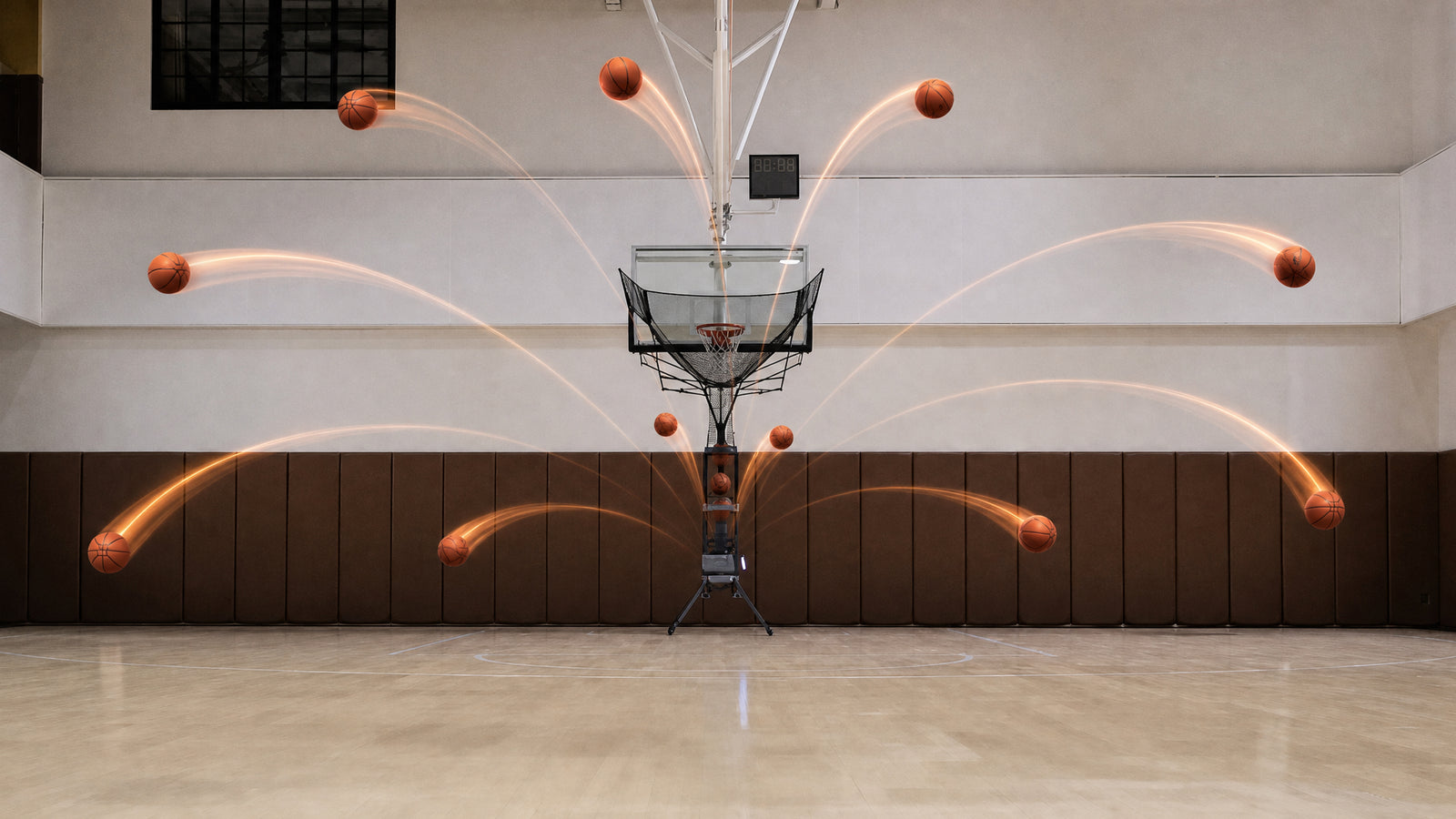
Spot-Up mode works fixed ranges, fixed angles or free movement around the floor. Advanced drills set the reps per spot and the pause between passes, and Lead-Pass mode feeds a shooter on the move, off a cut or a curl.
Every shot gets graded
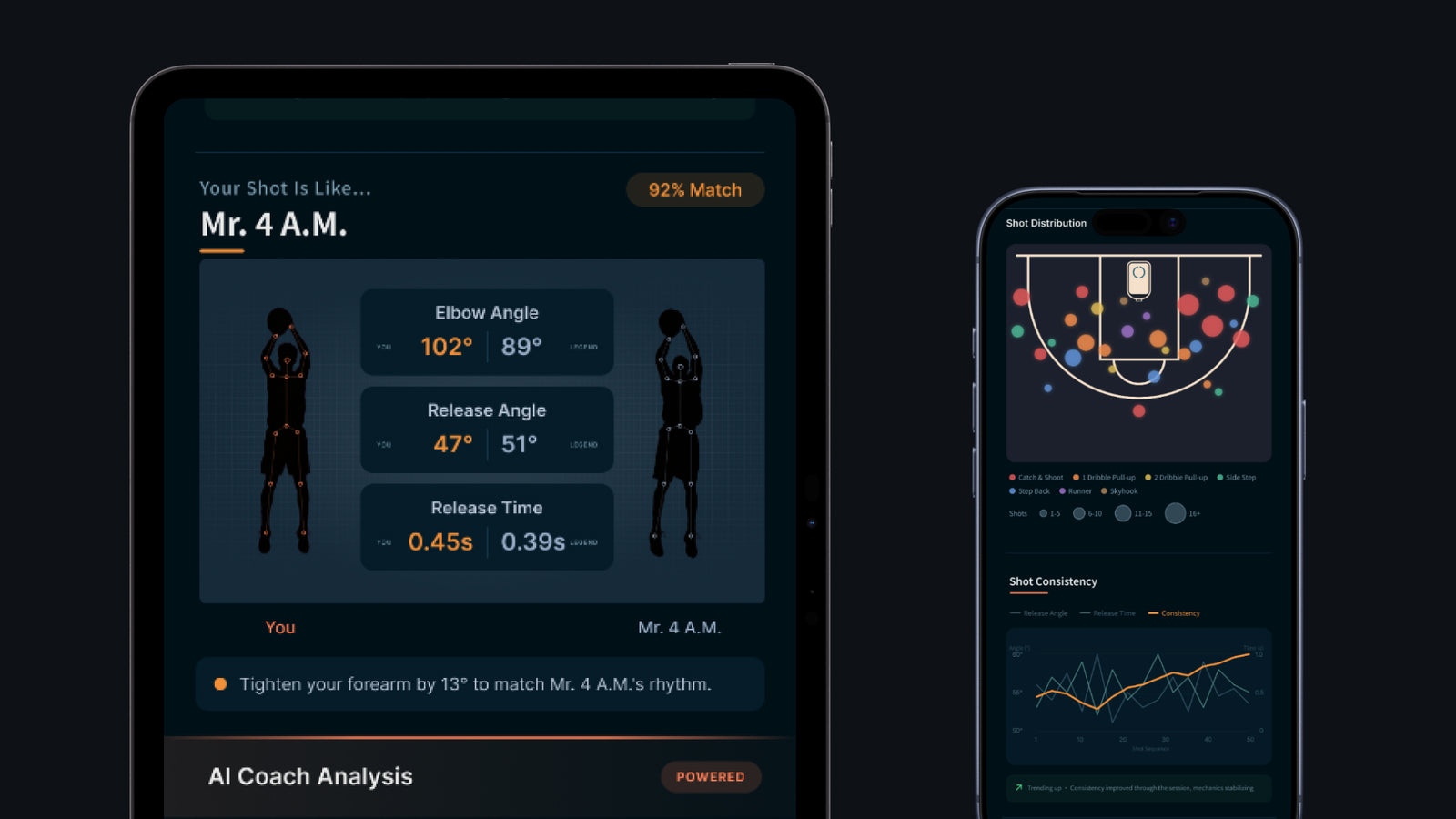
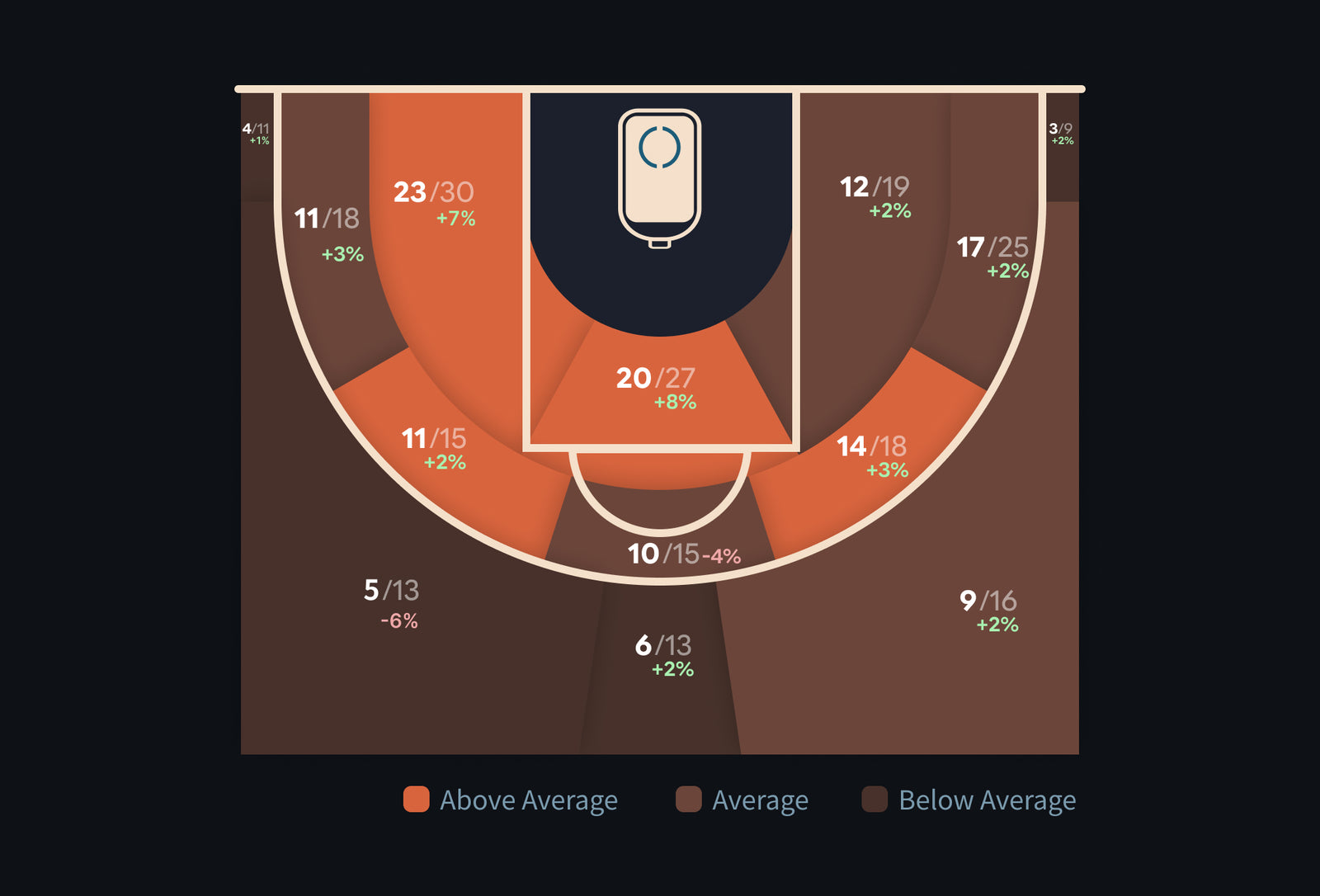
Power Chain Analysis follows the shooting sequence from the legs to the fingertips, watching how force travels through the body on every rep. The benchmark tool then maps those mechanics against elite player profiles. Scoring reads trajectory and backspin in real time, and the output lands as a heatmap of the whole floor.
Every session closes with a per-shot report and conditioning notes stored in the cloud, ready to pull up on a phone. The system then builds the next workout from the weak spots it found, generating a training plan from the data instead of leaving the shooter to guess what to fix. That closes the loop a human training partner usually closes, the part of practice that disappears when a player works alone.
Four hours on battery
The battery runs four hours of training and fast-charges from 20% to 80% in under two hours, so a lunch break restores most of a charge. The unit also runs plugged into AC power, and a built-in USB port charges a phone during the session.
Safety sensors watch the floor in front of the machine, and anyone stepping inside a 9-foot protection zone halts the serving at once.
What it costs, and what it replaces
CARRY launched on Kickstarter in July, and the campaign closed on August 21 with $1,399,206 pledged from 498 backers against a $10,000 goal. The $2,399 early-bird tier sold out during the campaign, and late pledges stay open with the machine itself starting at $2,499, deliveries estimated for December. One purchase covers the rebounder, the passer and the analytics stack, three jobs a shooting workout usually splits between a machine, a partner and a tripod camera.
Lumistar already works the other court sport. Its TERO machines track tennis players and feed balls through full-court drills.
The machines CARRY lines up against sit in one place and fire the ball back to a spot picked in advance. This one follows the player instead, and layers the grading on top of the feed. Programs, trainers and serious home players are the buyers it fits.
The award went to the machine that turned a rebounder into a training partner.
Price: $2,499
Where to buy: Kickstarter