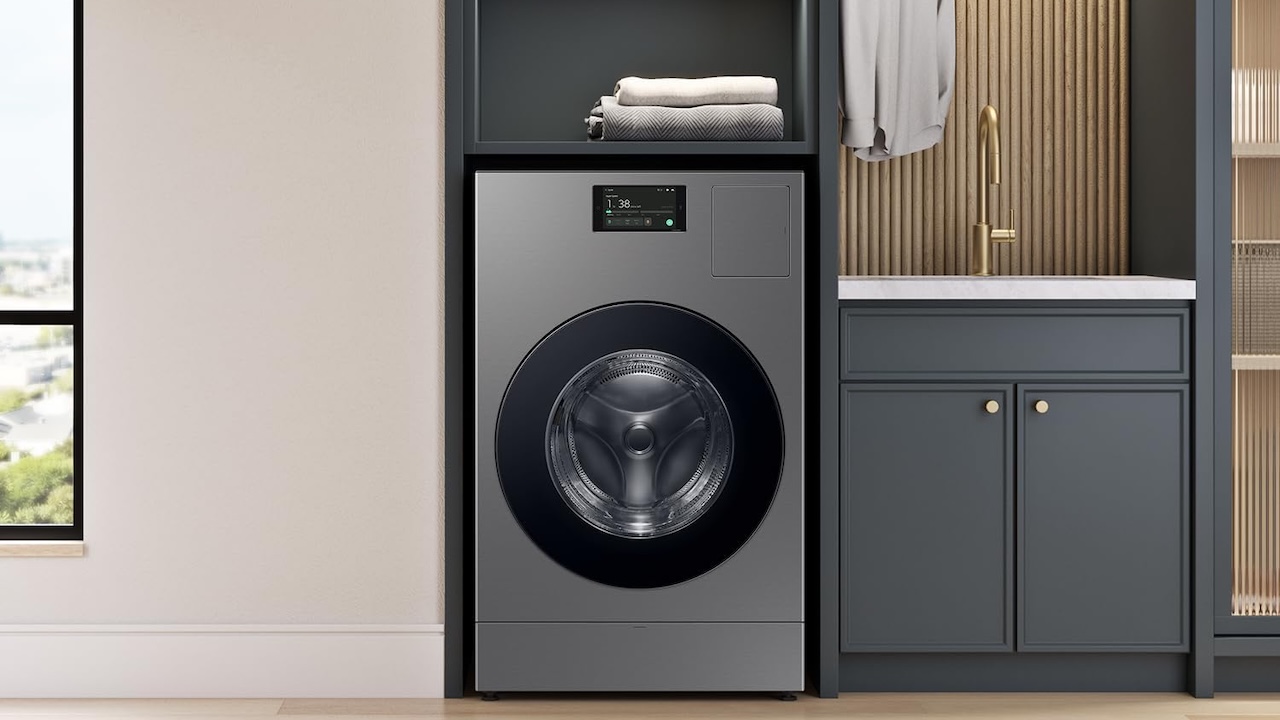
I keep asking the same question about smart appliances: when does convenience stop helping and start taking useful control away? The Samsung Bespoke AI Washer puts that question on a 7-inch screen. Samsung says AI OptiWash & Dry adjusts wash and drying conditions based on the load. Amazon lists the Dark Steel WD90F53AVSUS at $1,999, and Samsung’s own page shows a $3,099 comparison value for the Brushed Black WD90F53AVBUS.
The pitch is easy to understand. You load the drum, choose a broad laundry goal, and let the machine tune the details.
The harder decision is whether you want an appliance making those choices when fabrics, stains, water temperature, and drying time all have consequences. I’d buy the one-machine format for the right room. I wouldn’t hand over every decision without a clear override plan.
Samsung Bespoke AI Laundry Vented Combo (WD90F53AVSUS)
Price: $1,999
Where to Buy: Amazon
The appeal is one machine, not one more app
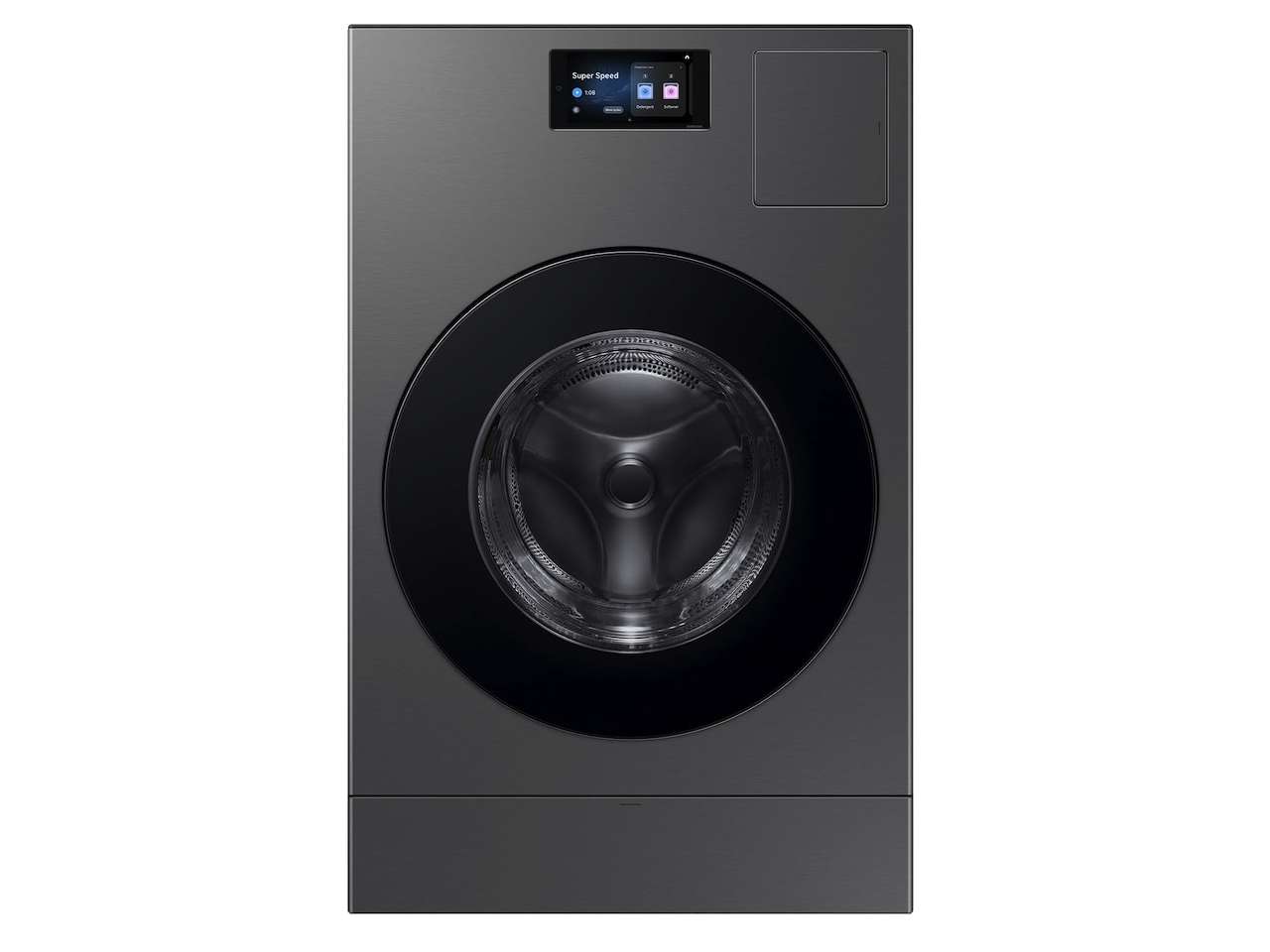
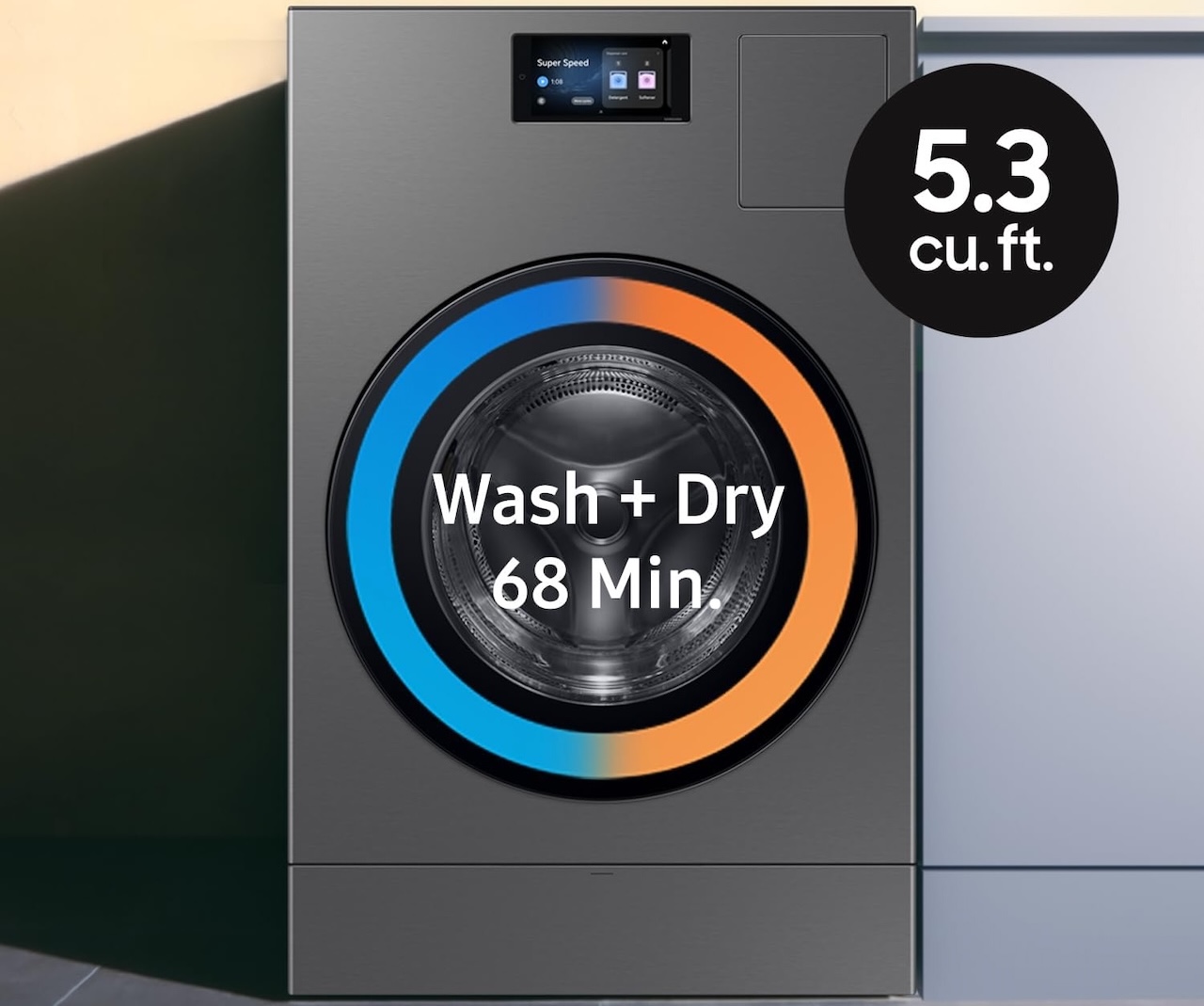
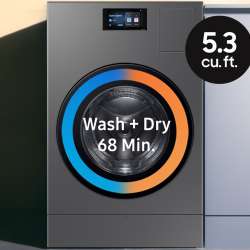
The combo pairs a 5.3 cubic-foot front-load washer with an electric dryer in a single 27-inch-wide unit. That removes the transfer step between machines, which is the strongest reason to consider it. Samsung says a Super Speed cycle can wash and dry a 10-pound load in 68 minutes, although the company’s footnote says results vary with the load. It’s the same space-saving bargain we weighed with a Xiaomi combo that cleans and humidifies air from one box.
That format fits a laundry room where stacking is awkward, a renovation where every inch counts, or a household that wants fewer decisions during a busy week. It also changes the failure point. If the combo stops working, you lose both washing and drying instead of one half of the pair. A separate washer and dryer take more space, but they give you a fallback when one appliance needs service.
AI OptiWash and Dry sounds useful until the load gets complicated
Samsung lists 23 total cycles, including AI OptiWash & Dry, Time Dry, and Air Fluff, along with five temperature settings and five selectable dry levels. Automation can simplify ordinary loads, but delicate or mixed-fabric loads still warrant manual care-label judgment.
A mixed load is where automation gets tested. Cotton, synthetics, towels, and a delicate shirt can all need different treatment. An automated cycle can make a sensible choice for a normal load, yet the safest choice for a valuable garment may still be a manual cycle and a lower temperature. The 7-inch AI Home display is the main interface.
The AI label also needs a boundary. Samsung describes the feature as a way to detect and adjust settings. It doesn’t promise that the system will identify every stain, protect every fabric, or replace a laundry expert. Treat the automation as a starting point, not a guarantee.
The screen is the control surface, but the plumbing still decides the purchase
The 7-inch AI Home LCD touchscreen gives the appliance a modern front end, and SmartThings adds phone-based control. The physical requirements are less glamorous and more important: Samsung lists a 240-volt connection, a water line, and a drain hose. The product page also tells buyers to measure the room and the delivery path before ordering.
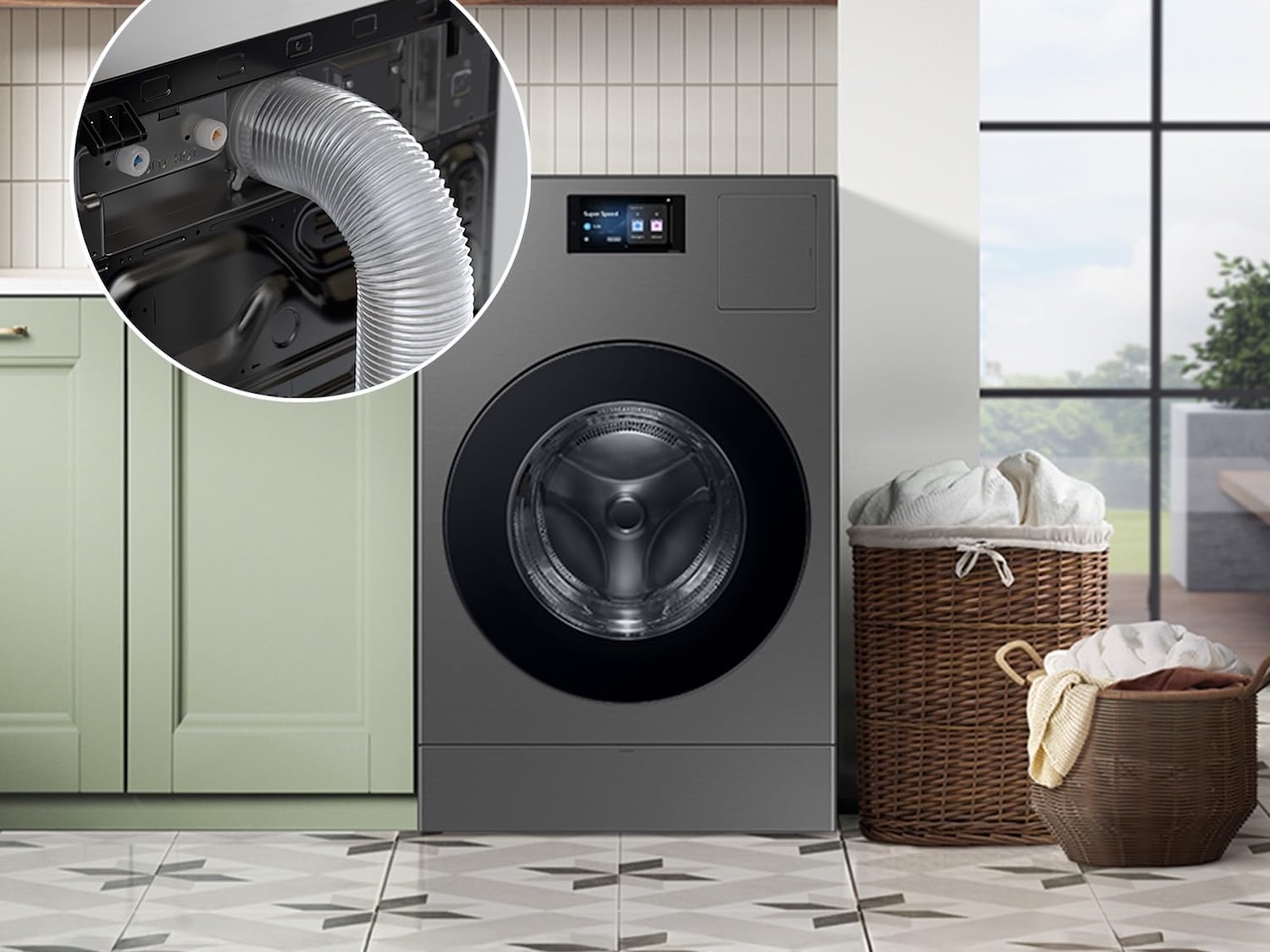 At 34.5 inches deep, 27 inches wide, and 43.75 inches tall, this isn’t a shallow appliance. Samsung lists a 297.6-pound product weight.
The vented design means the installation plan has to match the product rather than assuming every laundry room can accept the same connection. Amazon’s listing rates annual energy use at 103 kilowatt hours.
That’s the first decision branch: if your room already supports the required electrical and plumbing setup, the combo has a clear space-saving argument. If you’re starting from scratch, the installation cost can erase the appeal of a single box. Measure first, then ask the retailer who handles delivery, hookup, haul-away, and returns in your area.
The ownership risk is concentrated
Samsung lists one year of parts-and-labor coverage and three years of stainless-steel-tub coverage for the part. Motor coverage requires especially careful checking: surfaced Samsung-derived documents show different terms, so buyers should verify the warranty page tied to their exact model and purchase date before ordering.
The marketplace signal also needs a careful read. When checked, the Amazon listing showed a $1,999 price, six ratings, and a 3.1-star average, with the unit ranked #20 in combination washers and dryers. That’s too small a sample to predict long-term reliability, yet it’s enough to reject the idea that a premium price automatically means a risk-free purchase. Buy from a seller with a clear return path and confirm who handles service in your region.
Who should let the washer choose?
Choose the Samsung if your main goal is reclaiming floor space, you already have the required 240-volt setup, and you prefer one large machine over two separate appliances. The automatic wash and dry flow also fits people who regularly forget to move wet clothes from the washer to the dryer.
 Skip it if you wash many delicate garments, need a fast fallback when an appliance is down, or want a conventional pair that lets you run washing and drying at the same time. You should also skip it if the installation path is uncertain.
No AI feature can rescue an appliance that doesn’t fit through the doorway or connect safely in the laundry room. If you want to work through a purchase this way, our branching decision tree for robot vacuums applies the same logic on a smaller budget.
What to ask before ordering
Before you purchase, confirm the exact model number and finish with the retailer: the WD90F53AVSUS is Dark Steel, while the WD90F53AVBUS is Brushed Black. Then make sure your laundry space has the required venting, 240-volt outlet, water line, and drain hose. Measure the door swing and 56.3-inch open-door depth as well as the 27-inch cabinet width, since clearance can be the deciding factor in a tight room.
 Also ask whether delivery includes hookup and haul-away, who will perform the installation, and what happens if the unit cannot be installed. Confirm the return window, local repair support, and the correct service contact for your area. Finally, verify that the advertised price applies to your delivery ZIP code and whether any bundle discount requires buying a second Samsung appliance.
Then decide how much control you want. If you want the appliance to recommend a cycle but still choose temperature, drying level, and fabric protection yourself, the physical controls and touchscreen give you that path. If you want a fully autonomous laundry routine, read the cycle descriptions first and accept that the machine’s decisions won’t fit every mixed load.
Final take: buy the format only when the room needs it
Samsung’s AI Laundry Combo makes its strongest argument with the physical layout. One machine can replace the transfer step and fit where a stacked pair won’t.
The AI layer is useful as a guided shortcut, but it shouldn’t be the reason you spend $1,999. The installation requirements, service plan, return path, and concentrated failure risk matter more than the screen.
Samsung Bespoke AI Washer Laundry Vented Combo (WD90F53AVSUS)
Price: $1,999
Where to Buy: Amazon
For a small laundry room with the right hookups, the Samsung Bespoke AI Washer is a practical space-saving appliance with an aggressive automation pitch. For everyone else, a conventional washer and dryer remain the safer decision because one failure won’t stop the entire laundry routine.