
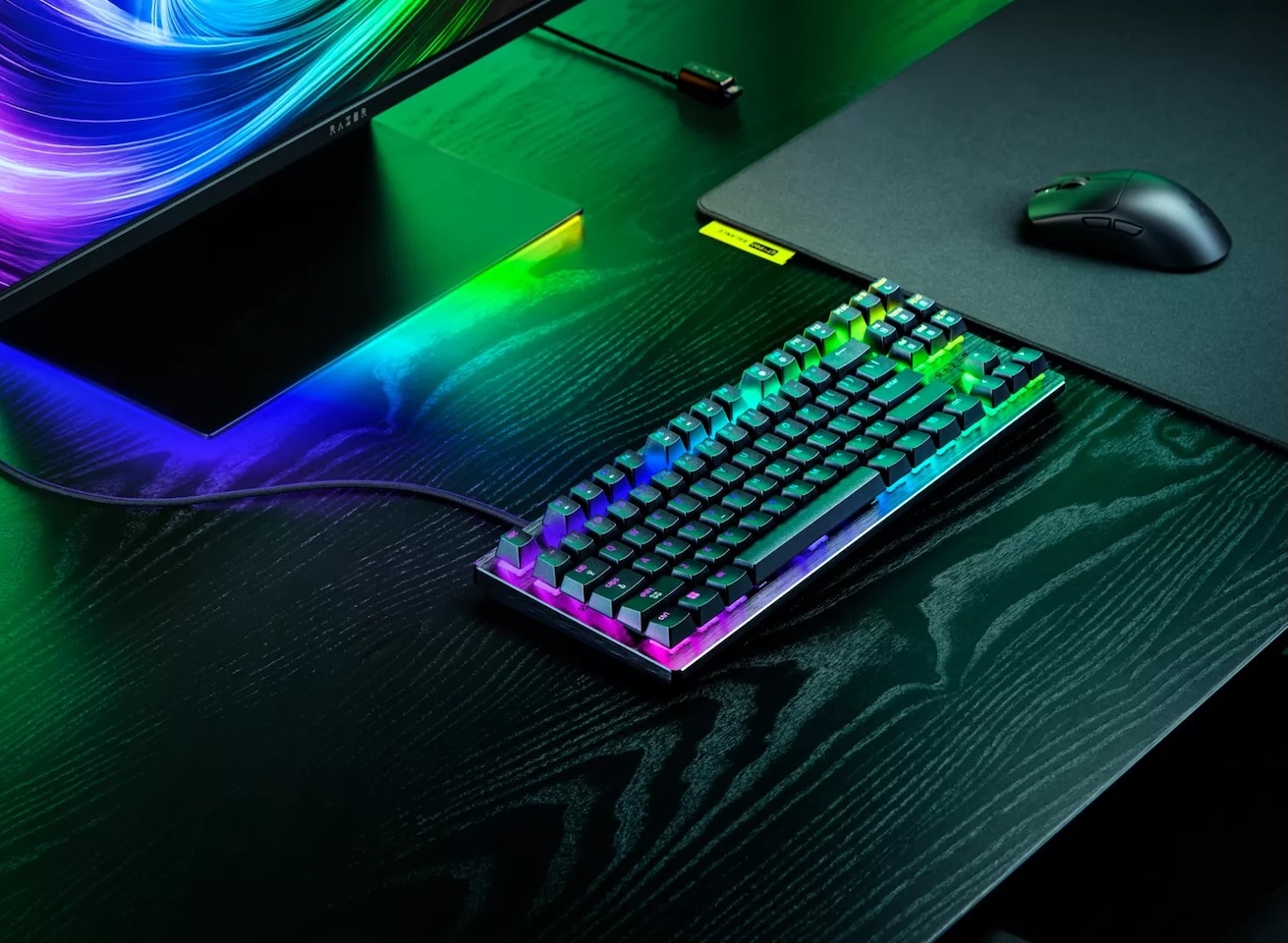
Razer spent years telling competitive players that its analog optical switches were the fastest input it could build. On July 30, 2026, it announced the Razer Huntsman V3 HE Magnetic 8KHz Keyboard line, its first Hall Effect magnetic keyboard family, and published a latency number that sits behind the optical boards it already sells. That’s an unusual thing for a company to volunteer about its own launch. It’s also the most useful detail in the whole announcement.
Price: $139.99 (Tenkeyless) / $119.99 (Mini 65%)
Where to Buy: Amazon
The line comes in two shapes, a Tenkeyless and a Mini 65%, both wired and both running true 8000 Hz polling. Razer’s pitch is that magnetic switches finally get a full Razer treatment instead of a rebadge. What you’re actually paying for is adjustable actuation and a deep stack of input tricks, not a new speed record.
What the Razer Huntsman V3 HE Magnetic 8KHz Actually Built
Razer Hall Effect Magnetic Switches use contactless magnetic sensing, so nothing physically touches to register a press. Actuation is adjustable from 0.1 mm to 4.0 mm across the full key travel, and Razer rates the switches for 100 million keystrokes. At the factory default 2.0 mm point, actuation force sits at 40 g. Each switch ships individually lubricated and seated in a dense foam layer.
The top plate is brushed aircraft-grade aluminum, and the keycaps are textured doubleshot PBT that resists shine and holds its legends. Razer’s stated goal for the acoustics is a muted, clean sound rather than a loud one. Both form factors share the same switch and build story, so the only real split between them is layout.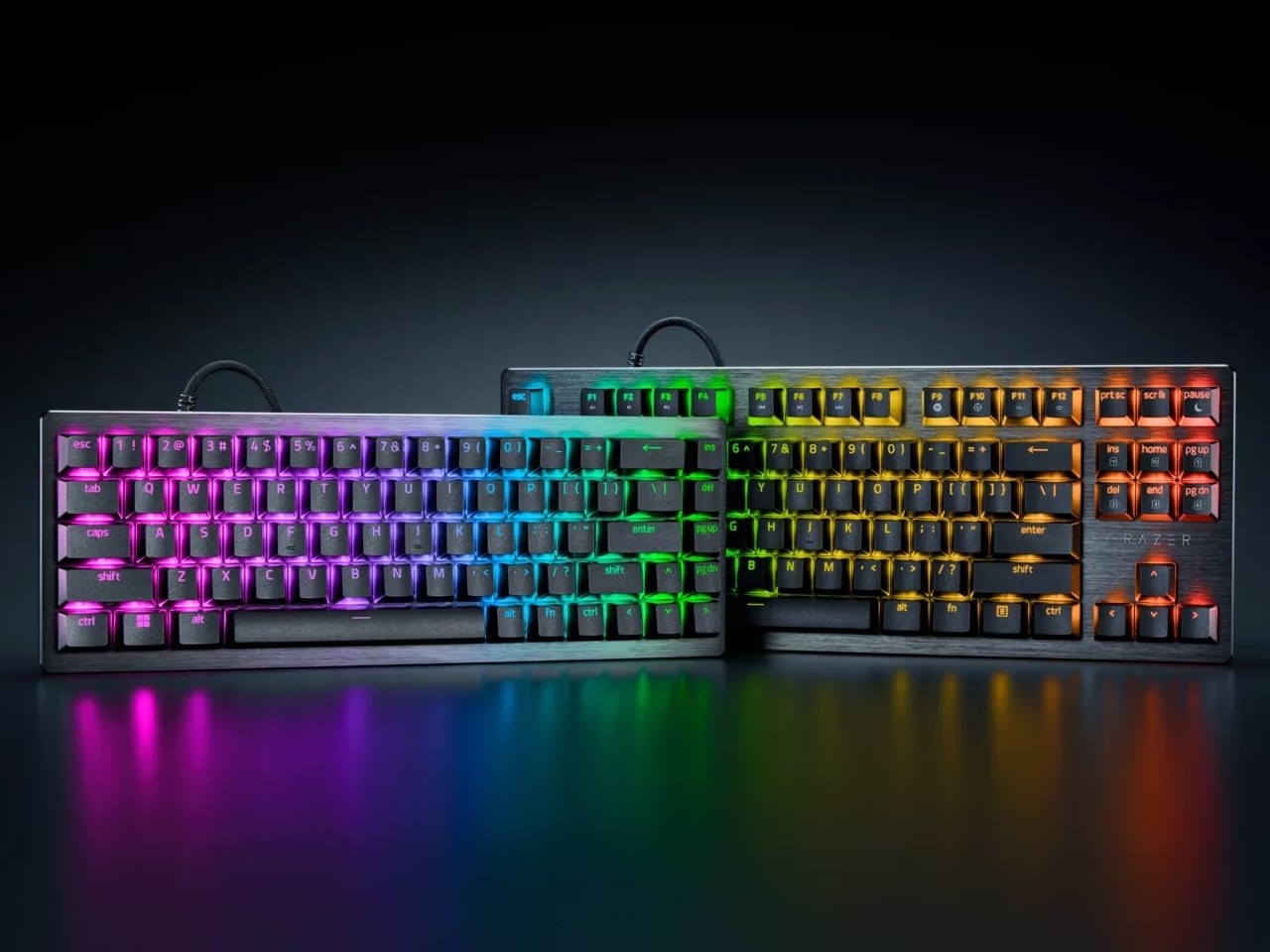
One thing to settle before you order: the switches aren’t hot-swappable. Razer says pulling them out would deteriorate the keyboard’s performance. If swapping switches is part of how you use a keyboard, this line isn’t built for it.
The Latency Number Razer Didn’t Hide
Razer’s own comparison chart puts the HE Magnetic board at 0.60 ms at 8000 Hz. Its Analog Optical 8000 Hz keyboards come in at 0.48 ms in the same test. Razer publishes both figures on the product page, side by side, without softening the gap.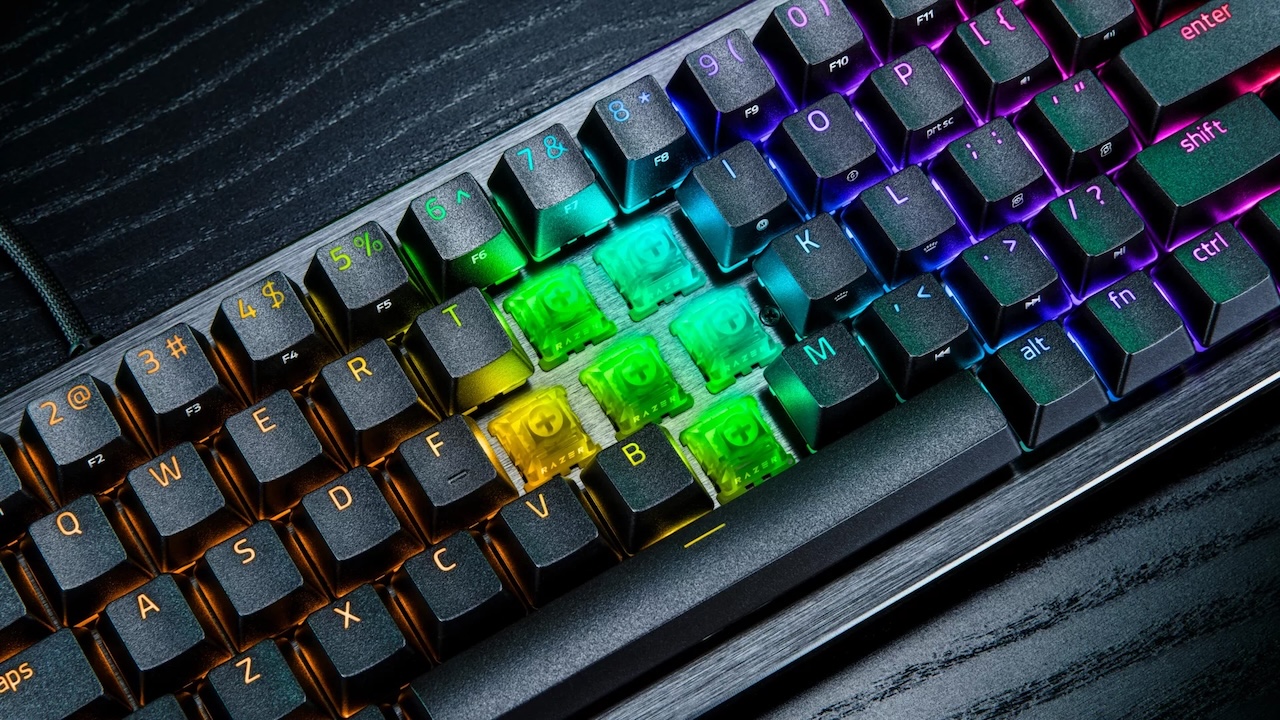
Barrie Ooi, who heads Razer’s PC Gaming Division, said the same thing in plain language in the announcement, noting that Razer’s analog optical keyboards “remain the benchmark for players seeking the absolute best in esports performance” while this line is aimed at players who specifically want the best magnetic board. Razer does claim the 0.60 ms result is about 8% faster than the nearest competing HE magnetic keyboard it tested. Latency there was measured from switch actuation to the signal reaching the host USB port, across 20 measurements with every keyboard set to 0.1 mm actuation, so your end-to-end result will move with your own setup.
Snap Tap, Snap Flex, and the Rest of the Input Stack
Rapid Trigger Mode resets a key the instant you start lifting your finger, with a reset threshold as low as 0.1 mm. It’s off in the Factory Default profile, and you switch it on through Synapse or with Fn plus Caps Lock.
Snap Tap prioritizes your most recent input between two paired keys, so you don’t have to release the first key to change direction. A and D are paired out of the box, Fn plus Left Shift toggles it, and the board stores up to four pairs. Paired keys light white when it’s on and red when it’s off.
Snap Flex is the newer idea. It binds one action to the press and a second to the release of the same key, which collapses a two-key sequence into one motion. It’s off by default. Dynamic Keystroke pushes the same concept further, firing up to four actions at different press depths, and Instant Cancel Control lets you stop a later action before it triggers if the situation changes mid-press.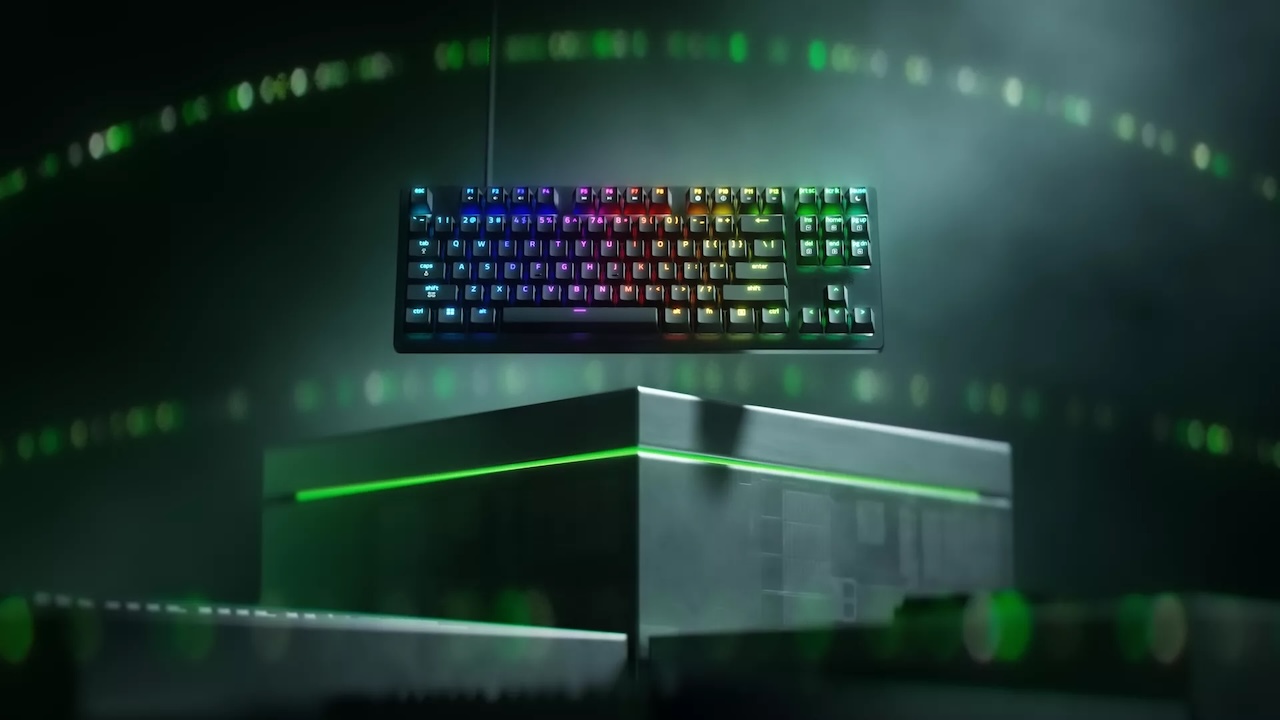
Dual-Keypress Priority handles the messier WASD moments, keeping simultaneous presses from fighting each other. Six onboard profiles ride along, two preset and four open for your own settings. NetEase also published Marvel Rivals profiles for both form factors, downloadable straight from Razer’s product page.
What the Razer Huntsman V3 HE Magnetic 8KHz Gives Up
There’s no wrist rest in the box and no media dial, both of which the pricier Huntsman V3 Pro boards carry. Media controls live on a secondary layer instead. Neither model is wireless.
The bigger question is which side of Razer’s own lineup you want. If you’re chasing the lowest latency figure Razer can produce, its analog optical boards still hold that spot, including the Huntsman V3 Pro TKL 8KHz that anchored the NiKo collection earlier this year. If you want adjustable actuation and magnetic feel with Razer’s software behind it, this is the board.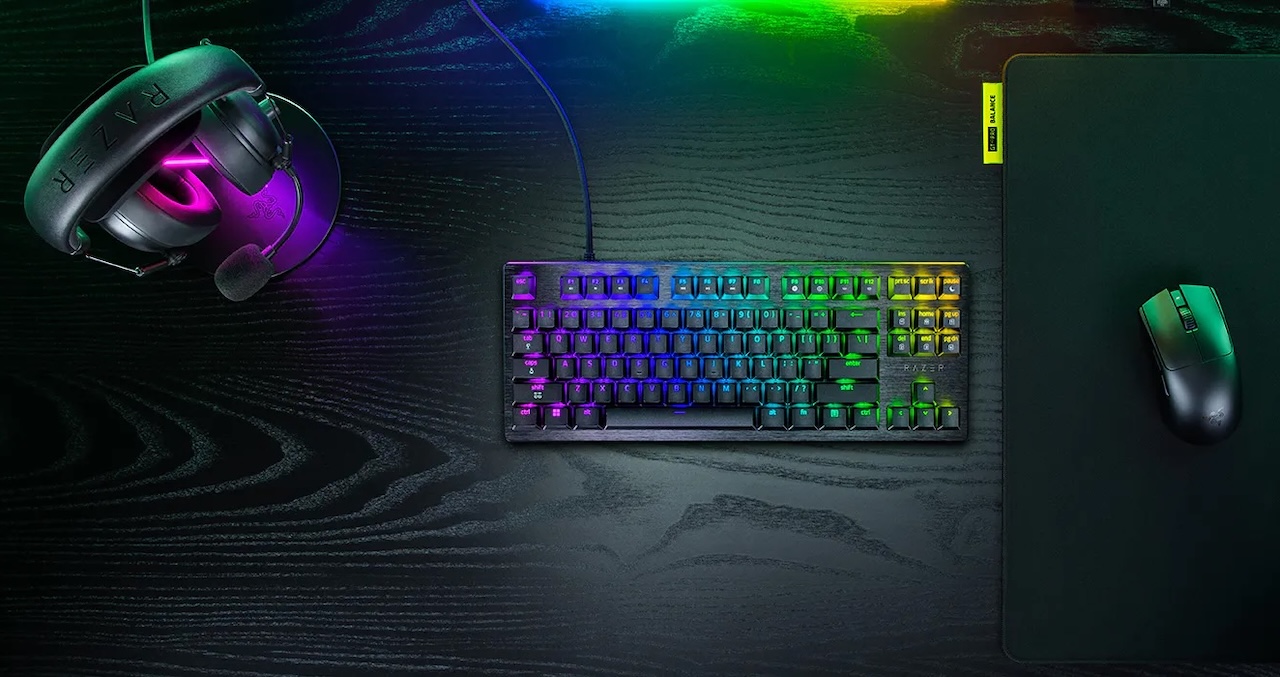
Razer Huntsman V3 HE Magnetic 8KHz Price and Availability
Razer lists the Mini 65% at $119.99 and adds $20 for the Tenkeyless in its own store configurator, which puts the TKL at $139.99. Both models are on sale now through Razer’s own store, RazerStores, and select retail partners.
Razer covers the line with up to two years of warranty, and orders placed directly through its store come with a 14 day risk free return window. The Amazon listing for the Tenkeyless is live, though pricing there can drift from Razer’s.
Who This Is For
Players who’ve been buying magnetic boards from smaller brands now have a Razer option with Synapse behind it, which counts for something if you already run a Razer mouse and headset. The feature list is unusually deep for the money, and Snap Flex and Dynamic Keystroke give you input behavior most magnetic keyboards don’t offer at all.

Price: $139.99 (Tenkeyless) / $119.99 (Mini 65%)
Where to Buy: Amazon
Everyone else should weigh that 0.12 ms gap against the price gap. The Gadgeteer hasn’t tested this keyboard, so treat every performance figure above as Razer’s own, measured under Razer’s conditions.
