
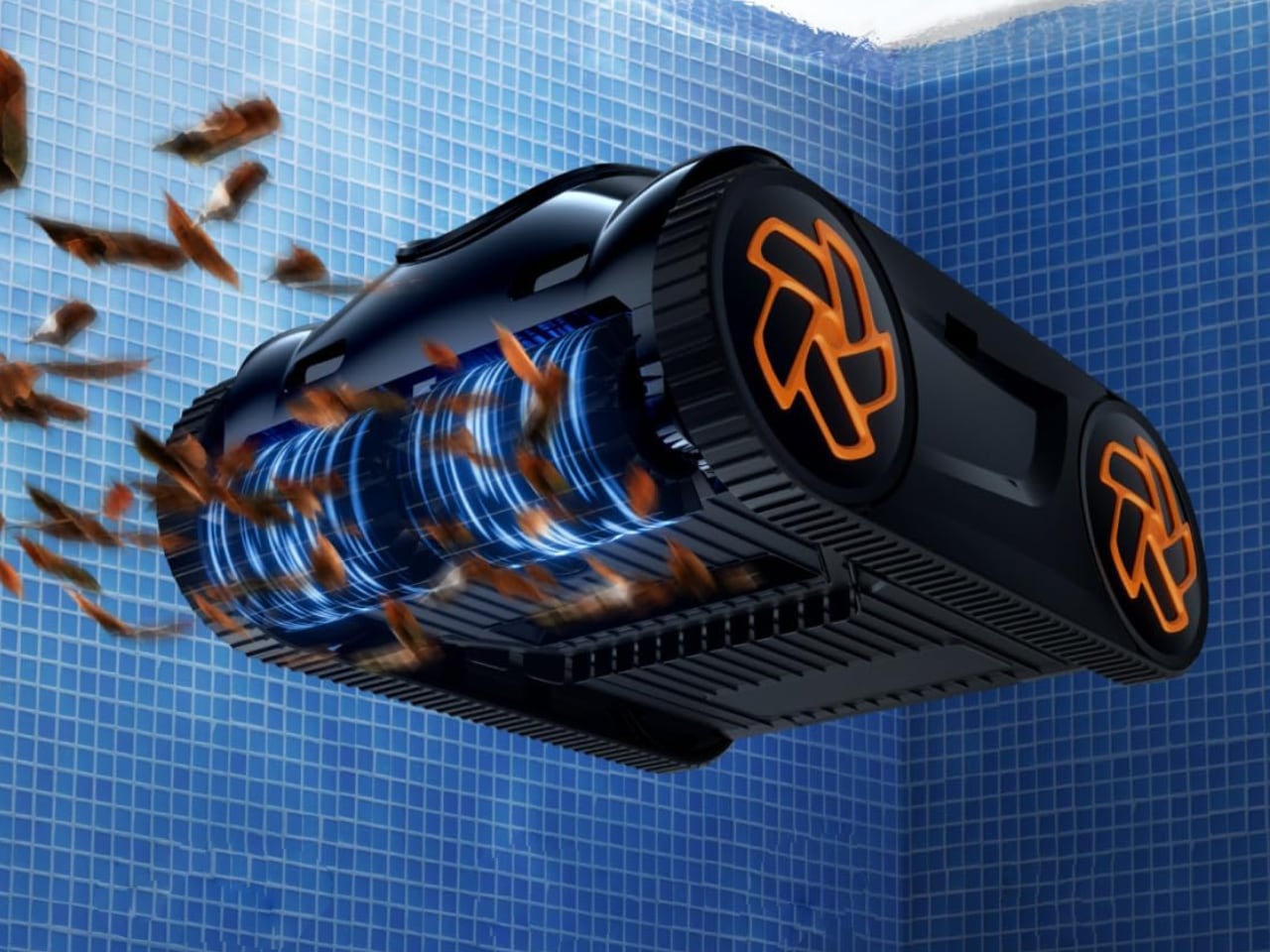
Pool opening season is the great equalizer. It doesn’t matter how much you spent on the cover, how carefully you winterized, or how confidently you told yourself this spring would be different. You pull the tarp back, stare at months of accumulated leaves and murky sediment, and seriously consider whether concrete would’ve been the smarter investment.
If you’ve already tried a cordless pool robot, you know how the next part usually goes. Ninety minutes of runtime. Maybe 60% of the floor cleaned. Walls completely ignored. The robot parks itself at the shallow end like it just clocked out of a shift, and you end up finishing the job with a manual vacuum anyway. The money spent, the time wasted, the promise broken.
iGarden K36 Price: $499.99
Where to buy: Amazon
iGarden KN35 Price: $499.99
Where to buy: Amazon
iGarden’s 2026 KN Series lineup is designed around the idea that this experience isn’t a user problem. It’s a category problem. The K36 and KN35 are cordless robotic pool cleaners built to cover floors, walls, and waterline on a single charge, with enough runtime to complete most residential pools before the battery runs out. One keeps things deliberately simple. The other brings navigation intelligence and verified suction power that stands out in this price range.
They’re not the same product at two price points. They’re two different answers to the same question: what would it take to make pool maintenance something you genuinely don’t think about?
The Spring Problem Nobody Advertises at the Open House
Owning a pool means owning a maintenance schedule that starts the moment temperatures rise. Leaves that blew in over winter settle into a soggy layer on the floor. Fine sediment coats textured surfaces. The waterline develops a visible ring of buildup that no amount of chemical treatment removes on its own. And all of this happens before you’ve even thought about swimming.
Most pool owners handle this one of three ways. Some hire a weekly cleaning service, which typically runs $150 to $300 per month depending on pool size and location. Some drag out the manual vacuum and pole every weekend, turning a relaxation amenity into a recurring chore. And some buy a cordless pool robot, hoping automation will solve the problem.
The third option sounds like the right move until you live with the reality of most cordless robots on the market. Short runtimes force you to babysit the device. Random navigation patterns mean the robot covers the same spot three times while ignoring the corner four feet away. Weak suction can’t handle anything heavier than dust. And many cordless models struggle with consistent wall and waterline coverage, which means you’re still doing manual work even after running the robot.
This is the gap iGarden built the K36 and KN35 to fill. Not incremental improvements over what exists, but a fundamentally different approach to what a cordless pool robot should accomplish in a single session.
Two Robots, One Goal: Understanding the K36 and KN35 Split
Instead of iterating on a single product, iGarden split its 2026 lineup into two distinct paths. The split matters because it reflects how different pool owners actually use their pools, and choosing the wrong model means paying for capabilities you don’t need or missing ones you do.
K36: The Everyday Pool Robot
The K36 is positioned by iGarden as the simpler, more accessible option. The brand states it runs for up to 220 minutes on a single charge (nearly four hours of continuous cleaning), covers floors, walls, and waterline, and includes a built-in touchscreen plus app control over 2.4GHz WiFi.
If the touchscreen works as described, it solves a real friction point. Many cordless pool robots require a phone app to operate, which means pairing, connecting, troubleshooting Bluetooth at 8 AM on a Saturday when all you want is the pool cleaned before the kids wake up. The K36 would let you walk to the pool, press a button on the robot itself, drop it in, and walk away. No phone required.
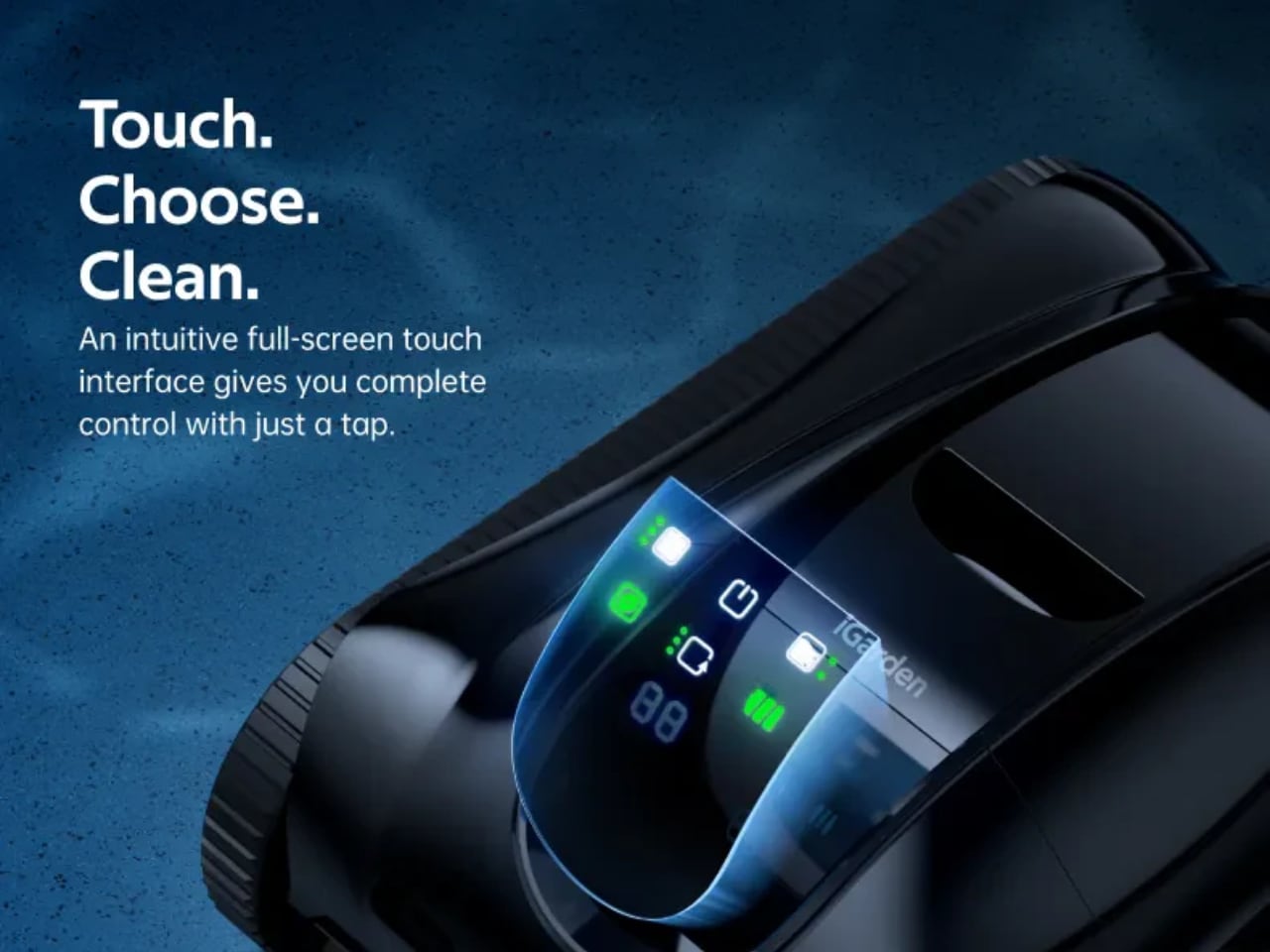
iGarden describes a turbo mode for heavier debris loads (think spring opening with a carpet of wet leaves) and a standard mode that conserves battery for lighter weekly maintenance runs. The interface assumes you have better things to do than micromanage a pool robot. It’s built for pool owners who want the chore to disappear, not for people who want to optimize cleaning algorithms.
If you’re upgrading from a manual vacuum, a suction-side cleaner, or a budget cordless robot that keeps dying at the 60% mark, the K36 is positioned to solve the single biggest frustration in the category: having to babysit it. We’ll verify these claims during hands-on testing.
KN35: The Smarter, Harder-Working Option
The KN35 is available on for $499.99, and it’s where iGarden concentrated the engineering budget. It runs for up to 210 minutes on a single charge, powered by a high-performance battery paired with ai-inverter technology that dynamically adjusts power output to maintain consistent cleaning efficiency throughout the cycle.
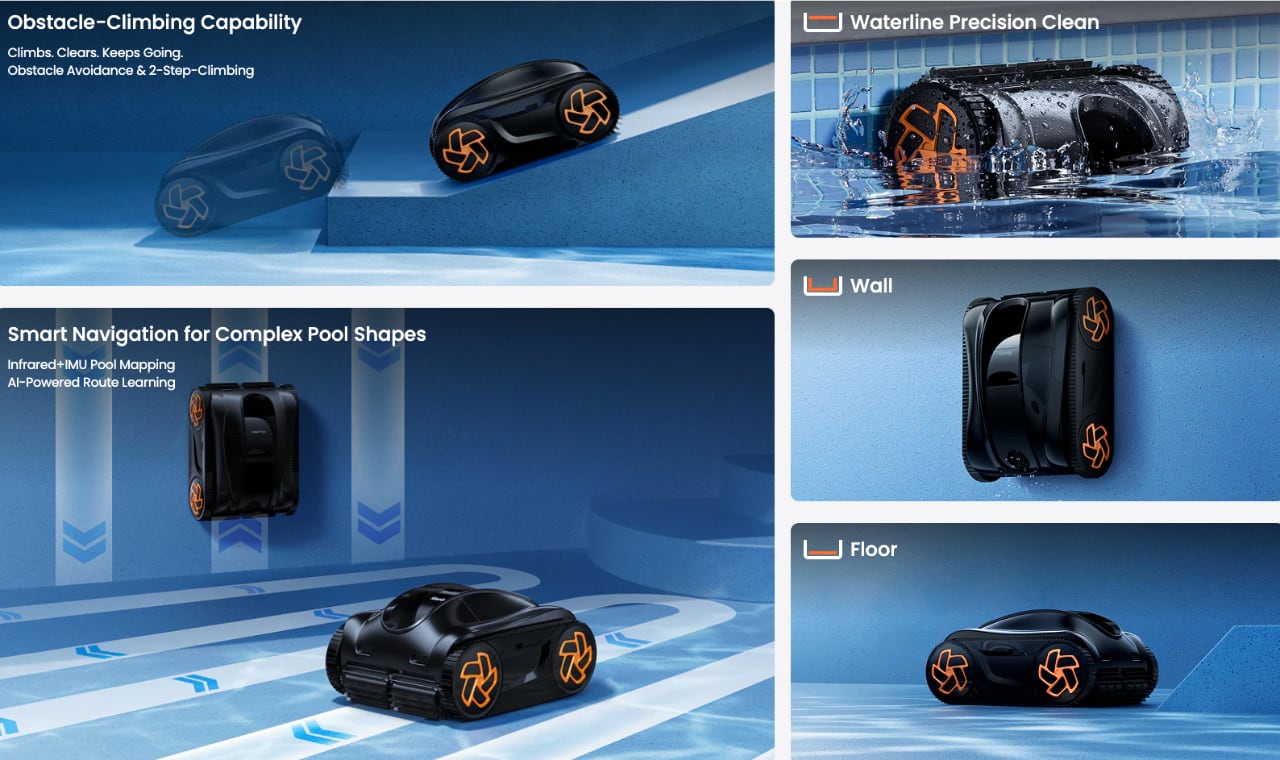
Start with navigation. Most cordless pool robots bounce randomly off walls and surfaces, hoping that enough random passes eventually add up to full coverage. You’ve probably watched one do this. It looks like a Roomba without a map: bumping, redirecting, leaving clean patches surrounded by dirty strips. The KN35 utilizes multiple sensors and Smart 3D Navigation to plan an optimized S-path across the floor, walls, and waterline, moving in organized, overlapping lanes that ensure consistent coverage.
Then suction. The KN35’s triple brushless motor system delivers a powerful suction rate of 17,000 LPH (liters per hour), giving it the force to handle heavy, waterlogged leaves, fine sediment, and dense spring debris without losing performance mid-cycle. If your pool bottom looks like a compost pile after months under a cover, this is one of the specs that determines whether you need one cycle or multiple passes.
The motor system ties it together. Triple brushless motors scale their output between 20% and 100% in real time. When the robot hits a clean stretch of floor with light debris, motors dial down, extending battery life and keeping noise low. When it encounters a heavy pocket of leaves in the deep end, they ramp to full power without any input. The system is designed to adjust power automatically based on cleaning load. You don’t manage it. You don’t think about it. You come back to a clean pool.
Three cleaning modes give targeted control. Floor mode (green LED) handles the bottom surface only, ideal for a quick midweek pass. Full mode (blue LED) runs a complete circuit across floor, walls, and waterline. Wall and waterline mode (purple LED) targets the scum line and vertical surfaces specifically, useful when the waterline looks neglected but the floor is fine. Having the choice means you’re not burning a full cycle on surfaces that don’t need it.
WiFi and Bluetooth connectivity, a full scheduling app, real-time status monitoring, and over-the-air firmware updates (which means the robot can genuinely improve after purchase) round out a package that feels less like a pool accessory and more like a tool that replaces an entire chore from your life.
The Quick Comparison
| Feature | K36 | KN35 |
| Runtime | 220 min (brand-stated) | 210 min (with intelligent power scaling) |
| Cleaning Coverage | Floor, walls, waterline (brand-stated) | Floor, walls, waterline (3 structured modes) |
| Navigation | Smart 3D S-path | Smart 3D S-path (1.5x coverage efficiency) |
| Suction | 5810 GPH | 17,000 LPH (verified) |
| Filter | 4L basket, 180-micron mesh | 3.2L basket, 180-micron mesh |
| Control | Touchscreen + app (brand-stated) | 2.4GHz WiFi/Bluetooth App + OTA updates + Knob Control |
| Best For | Larger pools, heavy debris, tech-forward owners | Mid-Sized Pools: Powerful, systematic daily cleaning. |
| Price | $499.99 | $499.99 |
Which one should you buy? If you want pool cleaning to require zero thought, get the K36. If you want pool cleaning to require zero compromise, get the KN35. For most pool owners staring down a spring opening with a pool full of winter debris, the KN35’s smarter navigation and stronger verified suction are worth the investment. It costs less per season than a professional cleaning service and works every week on your schedule.
Why Path Efficiency Matters More Than Suction Power
Here’s the insight that changes how you evaluate any cordless pool robot, not just these two: the spec that matters most isn’t suction power or runtime. It’s path efficiency.
A robot pulling 20,000 liters per hour sounds impressive until you realize it bounces randomly and cleans the same patch of floor three times while ignoring the corner four feet away. Suction without coverage is just energy wasted on surfaces that are already clean. Meanwhile, a robot with organized, systematic navigation and moderate suction cleans more total surface area per minute because it isn’t doubling back on areas it already covered.
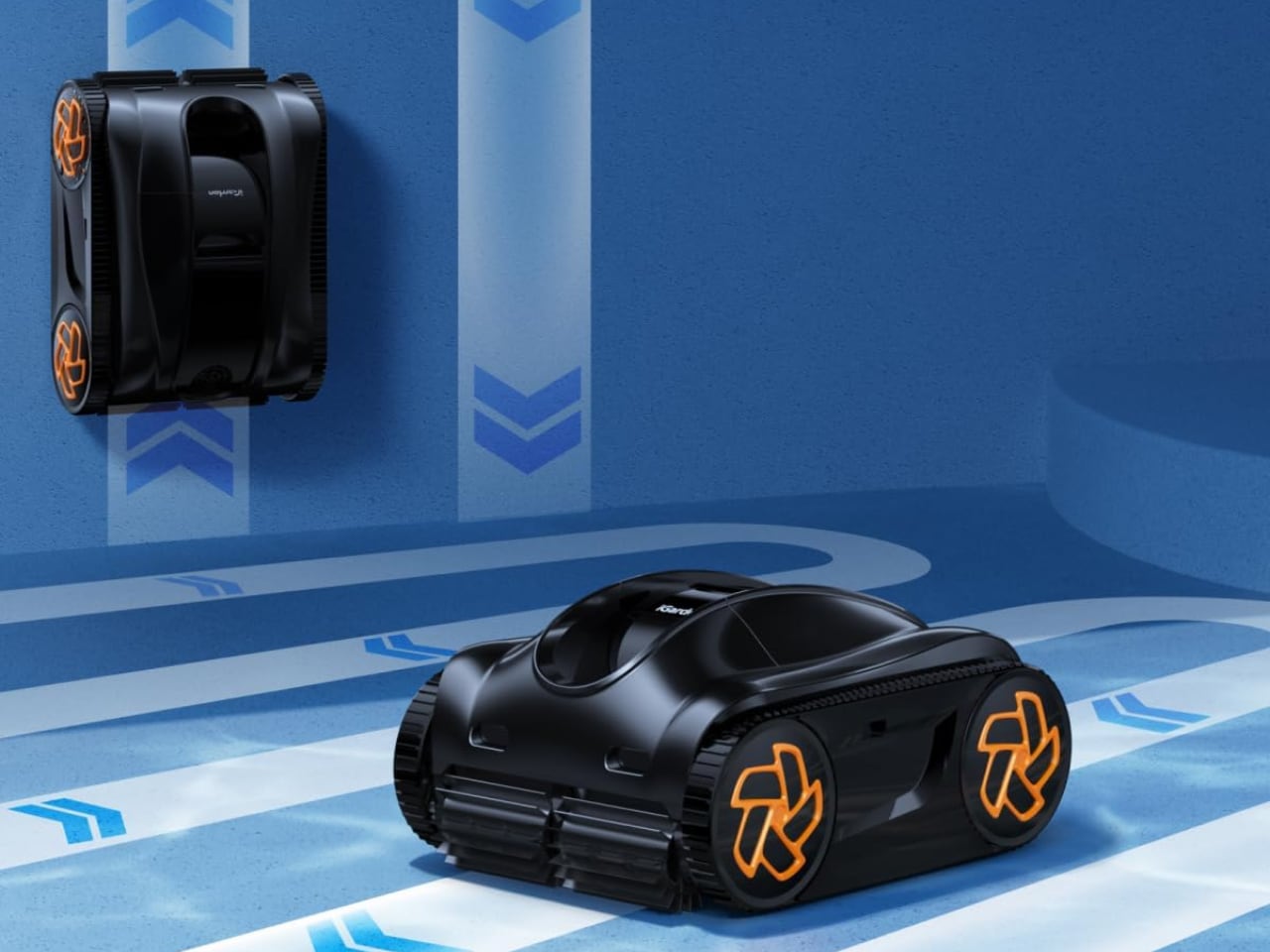
This is why the KN35’s S-path navigation is the feature that justifies its price, not the suction number (which is also strong). Organized lanes with overlapping passes mean the robot progresses through the pool predictably. From above, you can see it working like a lawnmower cutting grass. Every pass builds on the previous one. No gaps. No redundancy.
Runtime compounds this advantage. A robot cleaning in organized lanes doesn’t need as much total runtime to finish the job. Ten fewer minutes of battery with 1.5x better path coverage can still mean more clean surface area per charge than a random-path robot with an extra hour of runtime. The math favors intelligence over brute force.
iGarden describes the K36 as using a basic smart path, which would be a step above pure random navigation but unlikely to match the coverage consistency of the KN35’s structured S-path. For smaller pools where a less organized robot can cover most of the surface just by running long enough, the difference may be subtle. For larger or more complex pool shapes with corners, steps, and obstacles, the gap in coverage quality widens significantly.
The Real Cost Math: Pool Robot vs. Pool Service vs. Your Saturday
The price tag on a pool robot makes more sense when you compare it to what pool maintenance actually costs.
A professional weekly cleaning service runs $150 to $300 per month in most U.S. markets. Over a single pool season (roughly April through September), that’s $900 to $1,800 for the debris removal portion of maintenance alone. The chemical balancing and equipment checks are separate.

The KN35 costs $499.99 once. Even at the low end of service pricing, it pays for itself in about three and a half months. And it keeps working the following season, and the one after that, without an invoice.
But the cost comparison that matters more for most pool owners isn’t financial. It’s time. An hour spent manually vacuuming a pool every week is an hour you don’t get back. Over a six-month season, that’s 26 hours spent on a chore that a robot handles while you do literally anything else. The value of a pool robot isn’t just the money it saves. It’s the Saturdays it gives back.
The KN35 takes this a step further with its scheduling app. Set a cleaning schedule once, drop the robot in when prompted, and retrieval is simplified by the auto-park feature that brings the robot to the wall when the cycle ends. Auto-drain lets water flow out as you lift, so you’re not dumping a gallon of pool water on the deck every time. The entire interaction takes less than a minute per cycle.
What the Filter Tells You About How Serious a Pool Robot Is
Filter capacity is the unsexy spec that determines whether a pool robot delivers on its automation promise or becomes another thing you babysit. If the basket fills up 20 minutes into a cleaning cycle, you’re back at the pool fishing the robot out, dumping soggy debris, and restarting. That’s not automation. That’s a chore with extra steps.
The KN35’s 3.2-liter basket is sized to handle a full cleaning cycle on a typical residential pool without mid-session emptying. The 180-micron mesh catches fine sand, small leaf fragments, pollen clumps, and the granular debris that passes through coarser filters and leaves your pool looking hazy even after a robot runs. Your pool’s main pump and filter system handles the truly microscopic particles. The robot’s basket handles everything you can actually see.
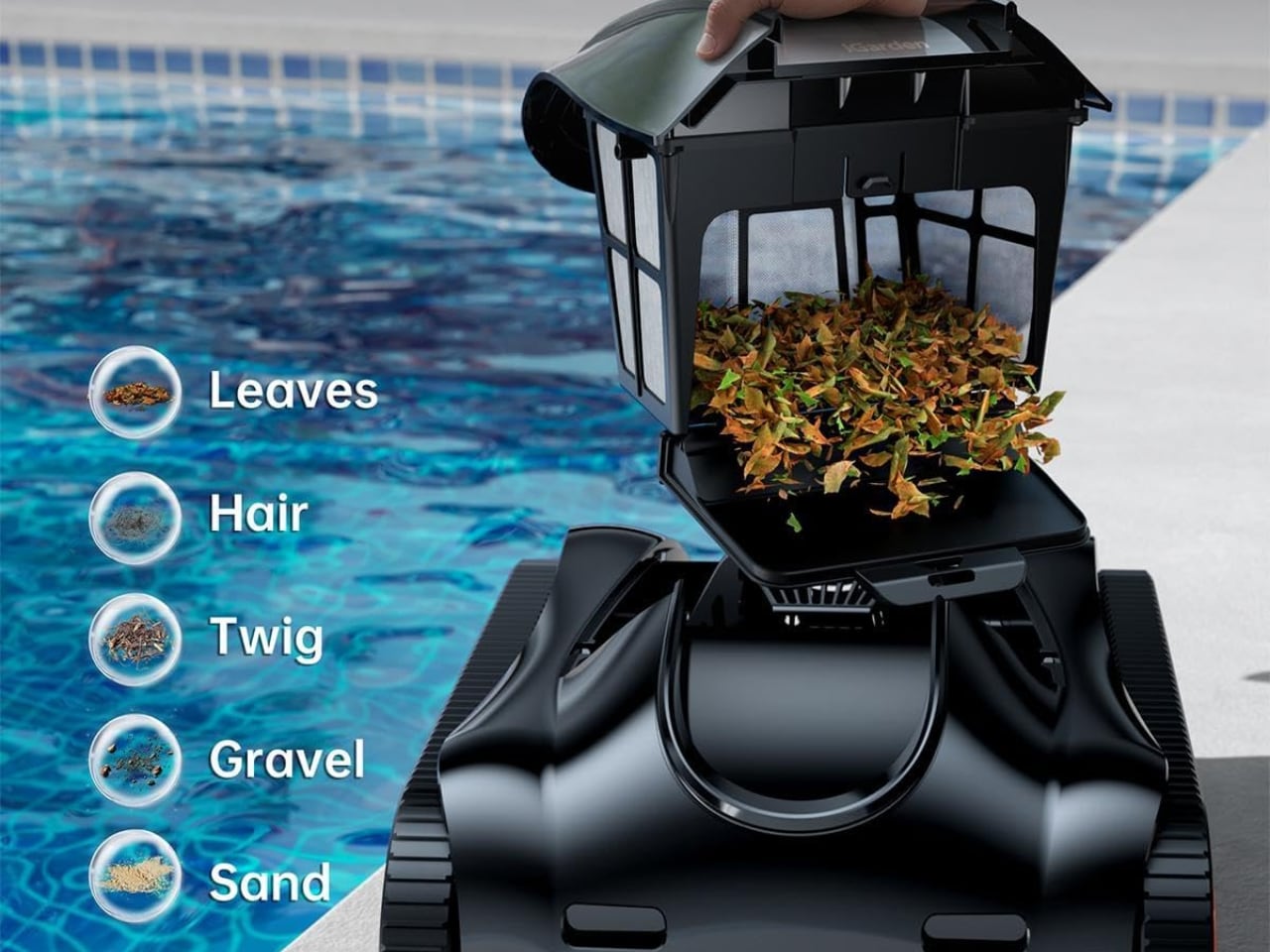
A larger basket also means less frequent maintenance friction. If rinsing the filter after each cycle is a 30-second job under a garden hose, you’ll do it every time. If it’s a 10-minute ordeal of scrubbing mesh corners and prying out trapped debris, you’ll start skipping cycles. Long-term consistency depends on how easy the maintenance routine is, and basket size is the foundation of that equation.
Who Should Buy the K36 vs. the KN35
The KN35 is the right pick if: You want one of the more feature-complete cordless pool cleaners available under $500. Larger pools, heavier seasonal debris, complex pool shapes with corners and obstacles, or simply wanting the peace of mind that the robot will actually finish the job in one pass. At $499.99, it costs less than three months of professional pool service and handles the most time-consuming part of maintenance year-round.
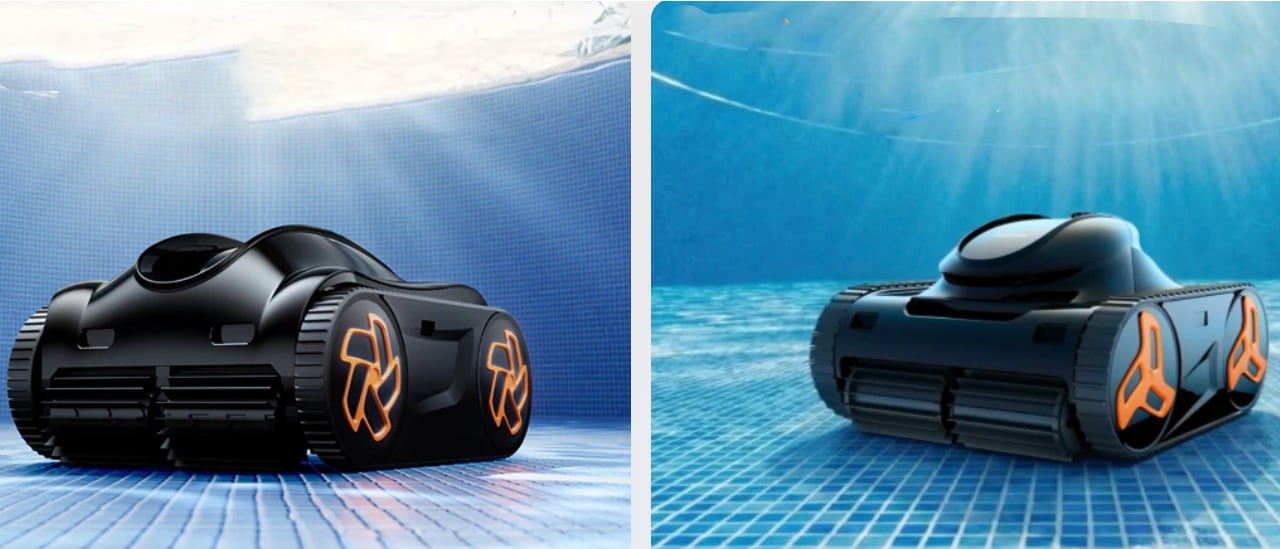
The K36 is the right pick if: You want the simplest possible pool cleaning setup. Smaller pools, light to moderate debris, and a preference for on-device control over app dependency. Based on iGarden’s stated specs, this is positioned as an accessible first pool robot for anyone upgrading from manual vacuuming. Both models handle above-ground and inground pools.
Skip both if: You need a cable-powered robot for a commercial-size pool, or you’re looking for the absolute cheapest cordless option and don’t need wall or waterline cleaning. At that point, a basic floor-only robot or a corded model with unlimited runtime is the better fit.
What You Need to Know Before Buying
How long do these robots run on a single charge?
The KN35 runs up to 210 minutes (about 3.5 hours), verified on its Amazon listing. iGarden states the K36 runs for up to 220 minutes on a single charge, placing it well above the typical runtime range for cordless pool robots in this category. For context, most cordless pool robots in the $300 to $500 range deliver 90 to 150 minutes. Both iGarden models significantly exceed the typical range, which should be enough to complete most residential pools without a mid-cycle recharge.
Can they actually clean walls and the waterline?
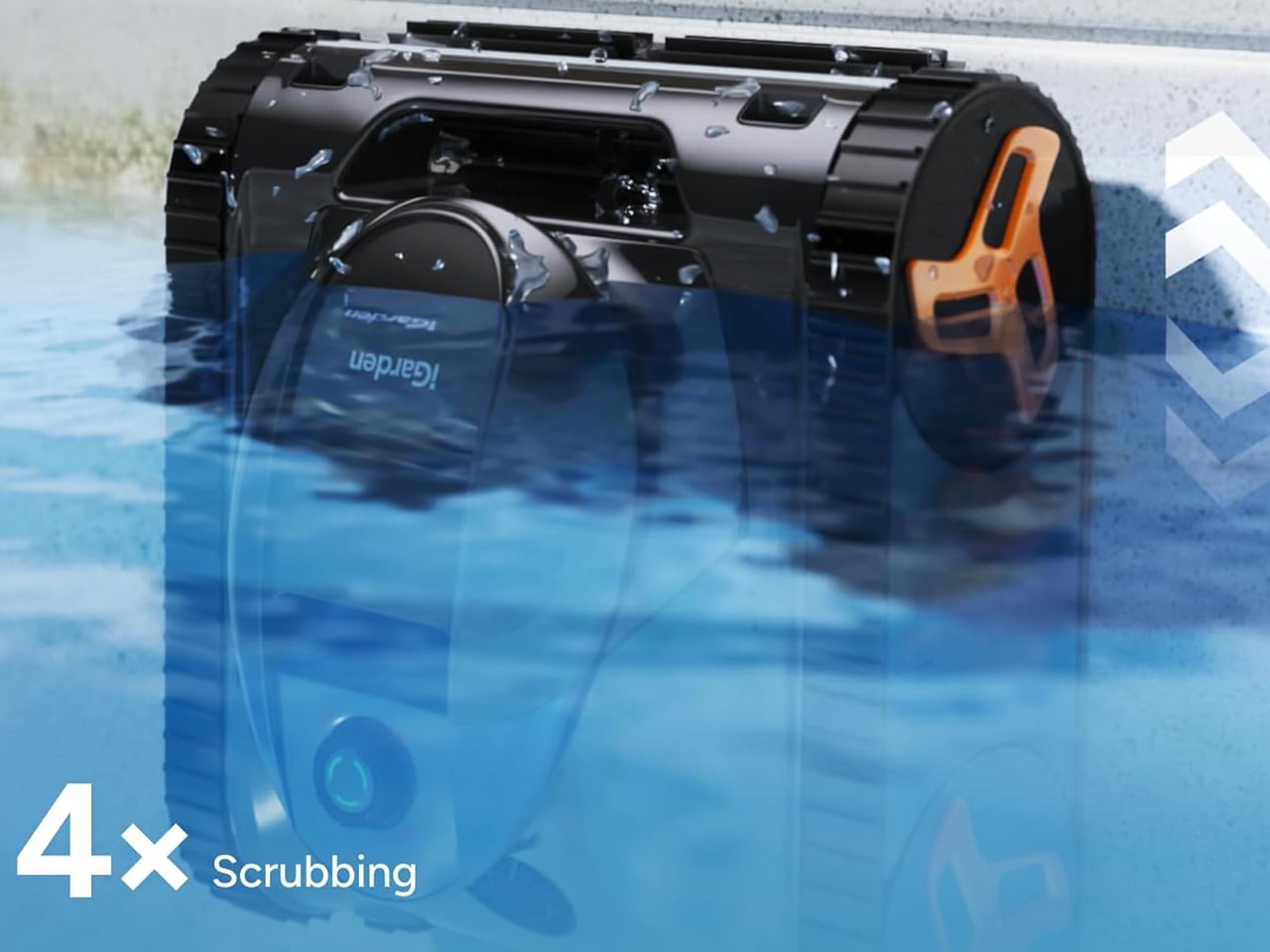
Both models cover floors, walls, and waterline. The KN35 adds structured mode selection: floor only, full coverage, or wall plus waterline. That flexibility matters because you don’t always need a complete cycle. If the floor is clean from a midweek run but the waterline ring is building up, you can target that zone without burning two hours on surfaces that don’t need attention.
Is a pool robot actually worth it compared to a cleaning service?
A weekly pool service runs $150 to $300 per month. The KN35 costs $499.99 once. It pays for itself in about three and a half months at the low end of service pricing. The robot handles debris removal and surface cleaning on your schedule, year-round, without a monthly invoice. It won’t replace chemical balancing or equipment maintenance, but it eliminates the most time-consuming weekly task.
What’s the real difference between the K36 and KN35?
The K36 is positioned for simplicity: iGarden describes on-device touchscreen control, a turbo mode, and a lower learning curve (these specs are brand-stated and unverified). Both have comparable runtimes; the KN35’s advantage is how efficiently it uses that time.
Do they work with above-ground pools?
Yes. Both the K36 and KN35 support above-ground and inground pools of various surfaces and shapes.
Does the KN35 work without WiFi?
Yes. Cleaning modes are selectable via LED indicators directly on the robot. The app adds scheduling, monitoring, and firmware updates, but the robot operates fully without a network connection.
How often does the filter need cleaning?
The KN35’s 3.2-liter basket is large enough for most standard cleaning cycles without mid-session emptying. After each cycle, a quick rinse under a hose is the recommended routine. Heavier spring cleanup sessions with dense leaf loads may require an empty-and-restart.
Full Specifications
| Spec | K36 | KN35 |
| Runtime | Up to 220 min (brand-stated) | Up to 210 min |
| Suction | 5810 GPH | 17,000 LPH (verified) |
| Motors | Triple Brushless | Triple brushless (20 to 100% real-time scaling) |
| Filter Capacity | 4L | 3.2L |
| Filtration | 180 microns | 180 microns |
| Navigation | Smart 3D S-path | 026 Upgrade:Cross Pattern Smartpath Navigation |
| Cleaning Zones | Floor, walls, waterline | Floor, walls, waterline |
| Cleaning Modes | 4Cleaning Modes:①Floor Only ②all & Waterline Only③Full Coverage (with shallow ledge)④Wall & Waterline First, then Floor (standard pool, no shallow ledge) | 3 Cleaning Modes:①Floor-Only ②Full Coverage (including tanning ledges and shallow areas)③Walls and waterline first, then floor (shallow areas excluded) |
| Connectivity | Touchscreen + app (brand-stated) + OTA | 2.4GHz WiFi + Bluetooth + OTA + Knob Control |
| Pool Types | Above-ground + inground | Above-ground + inground |
| Dimensions | 19.25 x 15.31 x 9.45 in | 19.25 x 15.31 x 9.45 in |
| Warranty | 3-year full replacement | 2-year full replacement |
| Price | $499.99 | $499.99 |
Pricing and Where to Buy
The iGarden KN35 is available on Amazon for $499.99 with a 2-year full replacement warranty. Over a single pool season, that’s less than three months of professional cleaning service for a robot that handles debris removal every week, year-round, on your schedule.
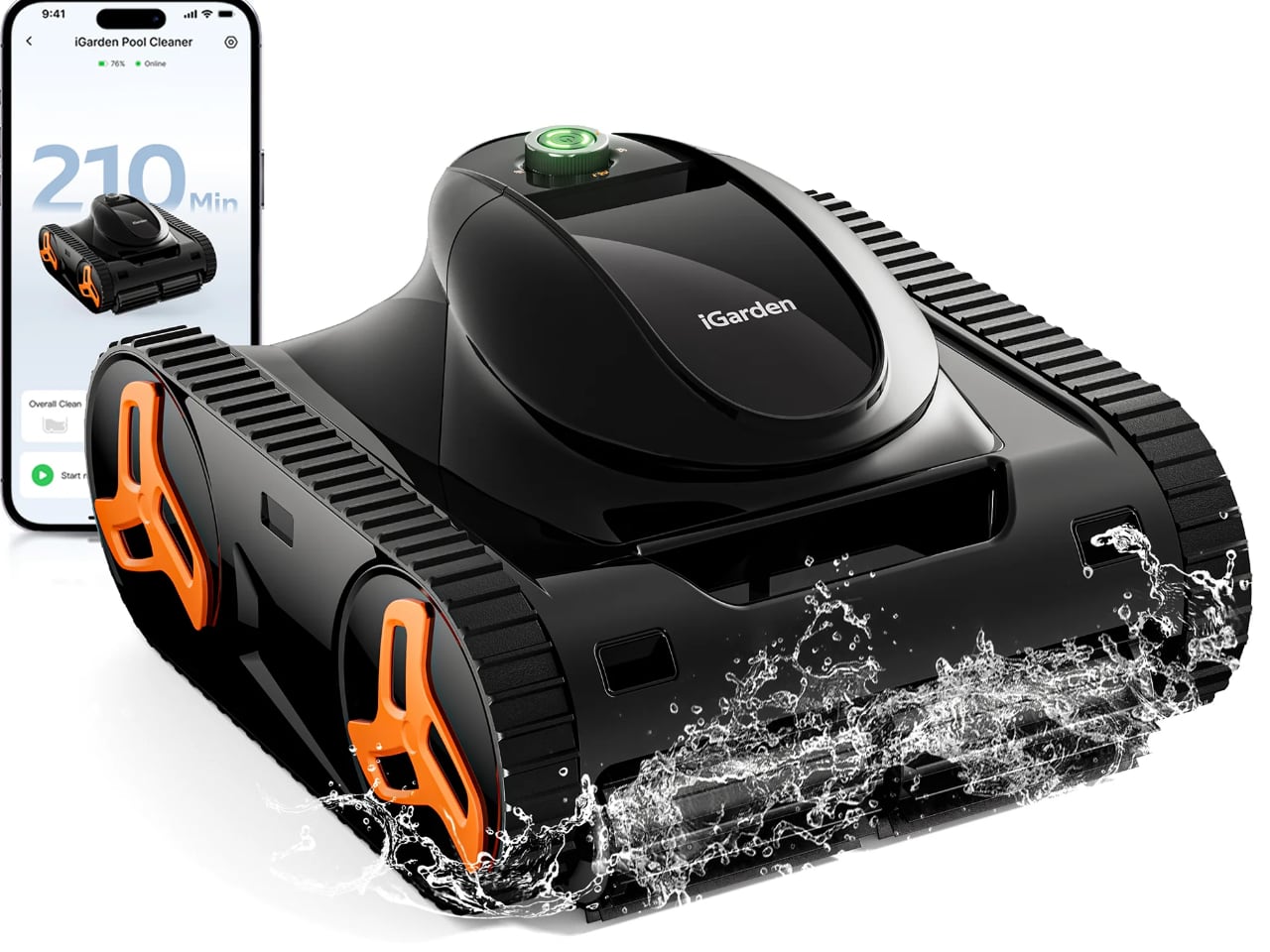
Spring 2026 is the window. Seasonal demand for cordless pool robots peaks between May and July. Buying now means your pool is covered before the rush, and iGarden’s 2-year warranty starts with room to spare before the heaviest use months.
iGarden K36 Price: $499.99
Where to buy: Amazon
iGarden KN35 Price: $499.99
Where to buy: Amazon
