
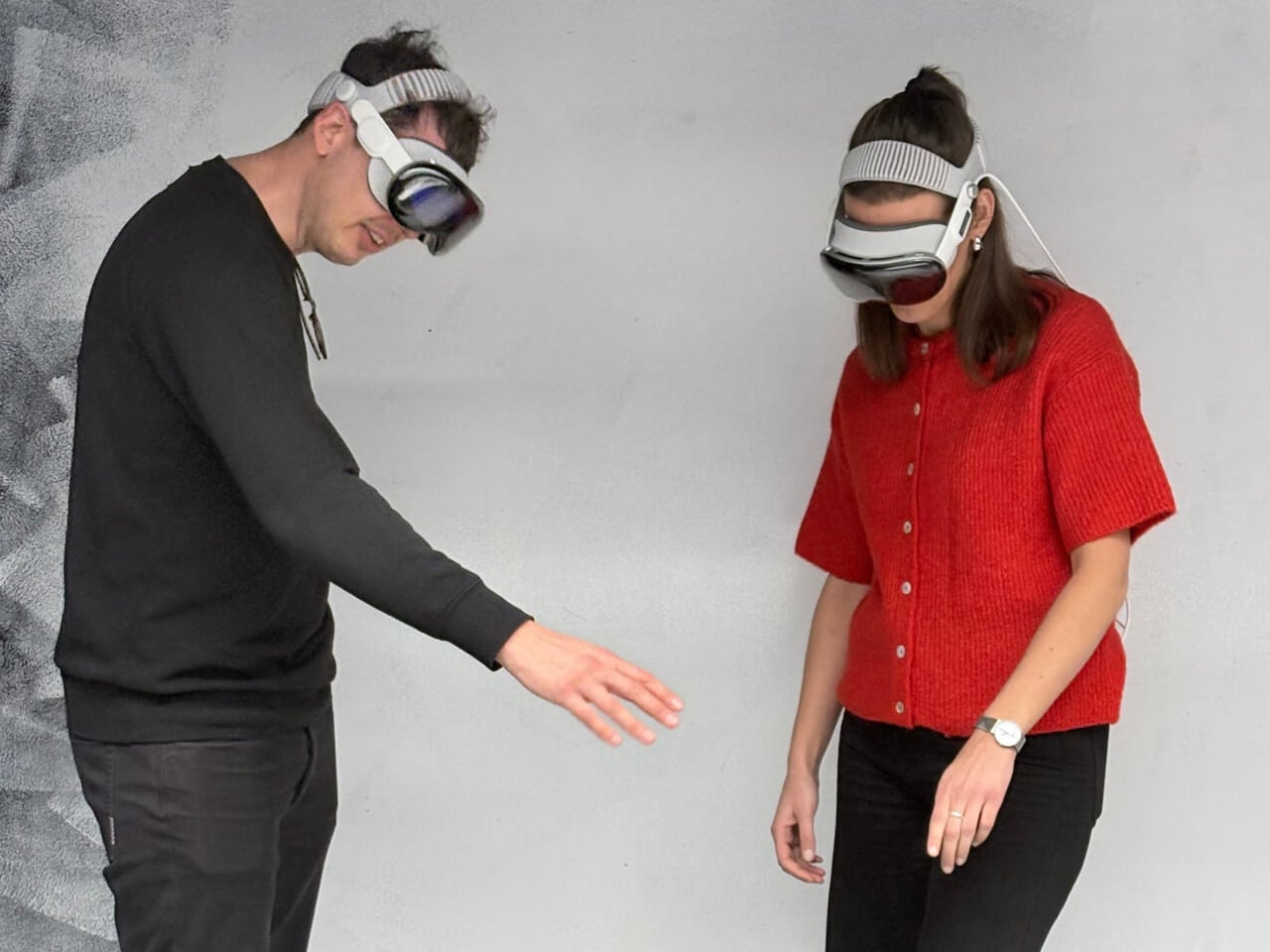
 Apple released visionOS 26.4 yesterday, and the headline feature isn’t a new emoji pack or a minor Spatial Audio tweak (though both of those are included). It’s native CloudXR 6.0 integration with foveated streaming, which means your Vision Pro can now wirelessly receive full 4K RTX-rendered content from a PC or cloud workstation.
The technical backbone here is foveated streaming. Vision Pro tracks the approximate region where you’re looking and tells the system to concentrate rendering power there, pushing maximum resolution exactly where your eyes are focused while dialing back detail in the periphery. The result is a dramatically more efficient use of bandwidth without noticeable quality loss in most scenarios. You won’t notice what’s not being rendered at full resolution because your eyes aren’t looking there anyway.
Price: $3,499
Where to buy: Apple
Apple and built a critical privacy layer into this system. Approximate gaze data stays on the device and is never exposed to the streaming application. That’s a meaningful distinction for enterprise customers who need to comply with data protection regulations, and it’s the kind of detail that separates this implementation from less careful approaches to eye tracking.
NVIDIA highlighted CloudXR for visionOS during GTC this week, the company’s global AI conference, giving it prominent billing alongside their biggest infrastructure announcements of the year. That level of visibility for a spatial computing partnership signals how seriously both companies are treating this.
Jeff Norris, senior director of Apple’s vision products group, framed the collaboration in terms that stretch well beyond a single software update: “Apple Vision Pro is redefining what professionals can do with spatial computing, enabling teams to visualize, collaborate and work with extraordinary fidelity in entirely new ways. With NVIDIA, we’ve brought together the powerful capabilities of visionOS with CloudXR streaming technology to deliver high-fidelity experiences to accelerate work across industries ranging from automotive design to healthcare, aviation and beyond.”
That kind of executive visibility from both sides signals a long-term platform bet. Apple and NVIDIA aren’t treating this as a feature checkbox. They’re publicly committing to a future where spatial computing’s heaviest workloads run on streamed RTX graphics rather than local silicon alone. For developers who’ve been waiting for a credible bridge between desktop-class rendering and untethered headsets, this is it.
iRacing Arrives on Vision Pro, and Sim Racers Should Pay Attention
iRacing is one of the first consumer titles taking advantage of CloudXR for visionOS, and the implementation goes deeper than a simple screen mirror. Physics calculations and high-fidelity graphic rendering still happen on your PC’s RTX GPU, but the frames are encoded and streamed wirelessly over Wi-Fi to a companion app on Vision Pro.
What makes this different from strapping on any VR headset is how Vision Pro handles the physical world. The headset blends your actual racing rig with the virtual cockpit, aligning your physical steering wheel with the one in the game. You see your real hands gripping the real wheel while the track, the dash, and the competition surround you in full fidelity. Tony Gardner, iRacing’s president, called it “a level of immersion and fidelity never before seen in sim racing,” and that tracks with what the technology promises on paper.
iRacing supports hundreds of licensed cars and tracks across NASCAR, INDYCAR, IMSA, and partnerships with BMW, Porsche, Ferrari, and Mercedes-AMG Petronas F1 Team. Every one of those vehicles gets a fidelity boost when you’re seeing them through foveated 4K streaming rather than a traditional VR headset’s fixed-resolution display. iRacing says to expect availability later this spring.
X-Plane Turns Vision Pro Into a Flight Sim Cockpit
X-Plane 12 is taking the same CloudXR path, and the flight sim angle might be even more compelling than racing. When the companion app launches on the Vision Pro App Store this spring, the sim will automatically detect your headset and start streaming.
The clever piece is ARKit image detection. X-Plane uses it to track your physical cockpit hardware, so the virtual instrument panels line up with your real yoke, throttle quadrant, and switch panels. The physical and digital merge in a way that tethered VR headsets can approximate but never quite nail because of the cable constantly reminding you that you’re connected to a box under your desk.
X-Plane 12 is available now on Windows, Mac, and Linux for $59.99. The Vision Pro companion app will be free and available later this spring once visionOS 26.4 is finalized.
Enterprise Is Where CloudXR Gets Serious
Consumer sim titles grab headlines, but the enterprise implications of CloudXR for visionOS could reshape how entire industries work. Here’s the problem it solves: bringing high-fidelity 3D assets to untethered devices has traditionally required developers to degrade, or dramatically simplify, their datasets. Complex automotive models, pharmaceutical simulations, and architectural walkthroughs had to be stripped down to fit the processing constraints of standalone headsets. CloudXR largely removes that compromise. The heavy rendering stays on RTX hardware while the headset receives a pristine foveated stream.
Kia’s design team is already putting this to work, reviewing the Vision Turismo concept car at full scale in Vision Pro through Immersive for Autodesk VRED powered by CloudXR. Karim Habib, Kia’s Senior Vice President and Head of Design Center, described the shift: “Integrating immersive spatial computing into our workflow with CloudXR for visionOS allows us to evaluate our designs at full size with greater clarity and speed on Apple Vision Pro. We can experience proportions, surfaces, colors and materials together in a shared real-world environment and collaborate in real time across our global teams.” That signals a shift toward real production workflows.
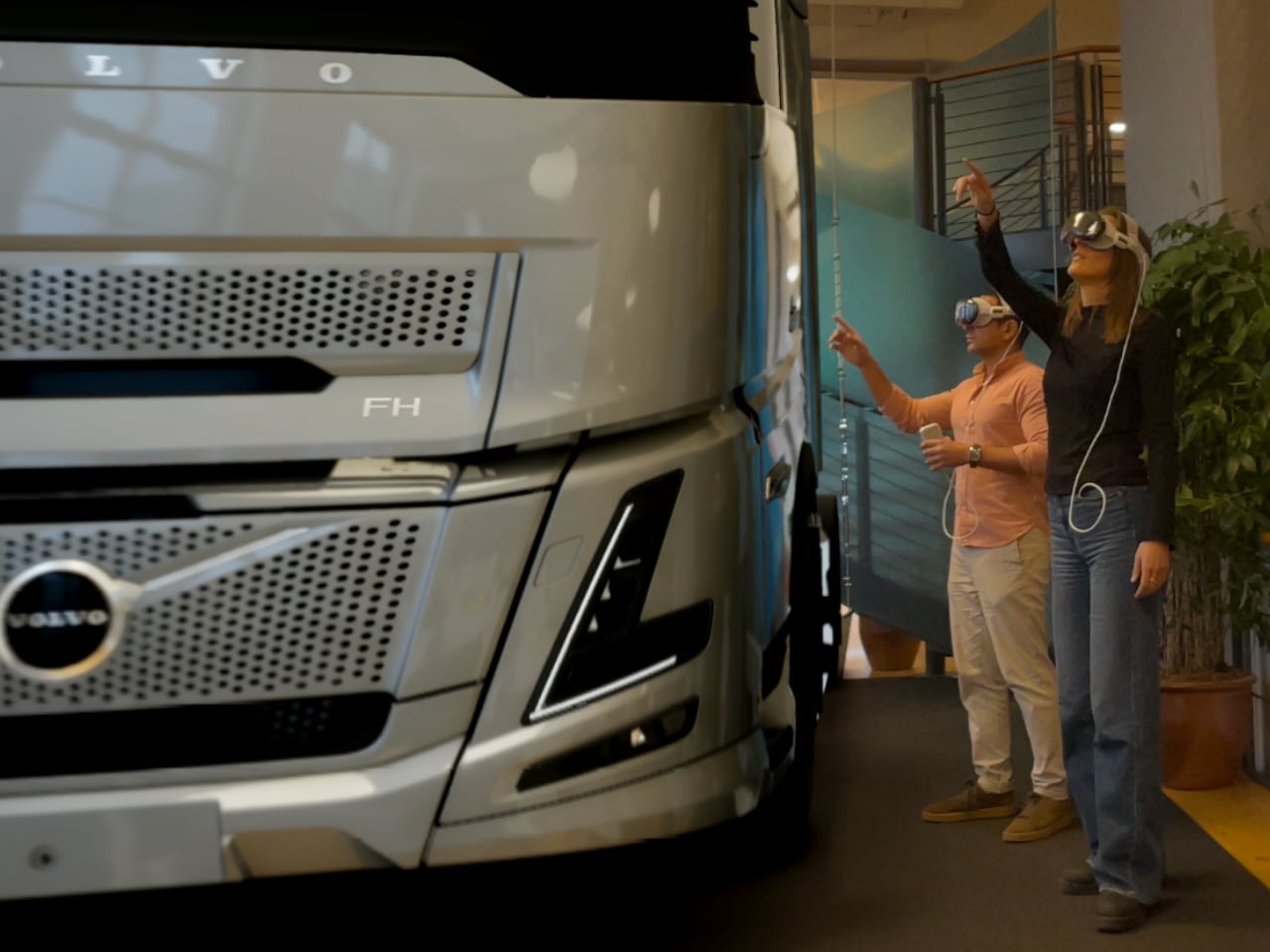
BMW Group, Rivian, and Volvo Group are running identical pipelines with their own vehicle programs. Volvo Group’s head of design, Mikael Gordh, put it bluntly: spatial computing lets his team “experience everything users see and touch, years sooner.” They’re building digitally first and only making physical prototypes when absolutely necessary. The fact that CloudXR preserves full dataset fidelity on an untethered headset changes the calculus for every design review.
The reach extends well beyond automotive. Pharmaceutical company Roche is simulating biofluid analysis lab layouts before building them. Foxconn is walking through factory floors that don’t exist yet. Switch is running digital twins of its EVO AI Factories. MHP is using Synopsys Ansys Discovery through CloudXR to run engineering simulations in spatial computing, and Innoactive’s enterprise XR streaming platform now supports visionOS natively through the integration. CloudXR 6.0 ships as a native Swift SDK, so any developer can build directly in Xcode and tap into this pipeline from day one.
“Debut at the BBC Proms” Drops Friday
Stepping away from CloudXR and into Apple’s own content pipeline, there’s a packed week ahead for Apple Immersive Video. This Friday, “Debut at the BBC Proms” puts you inches from pianist Lukas Sternath’s hands as he performs Edvard Grieg’s Piano Concerto in A minor with the BBC Symphony Orchestra. Chief conductor Sakari Oramo leads the orchestra inside the Royal Albert Hall, and the Spatial Audio capture promises to make that historic architecture feel tangible around you.
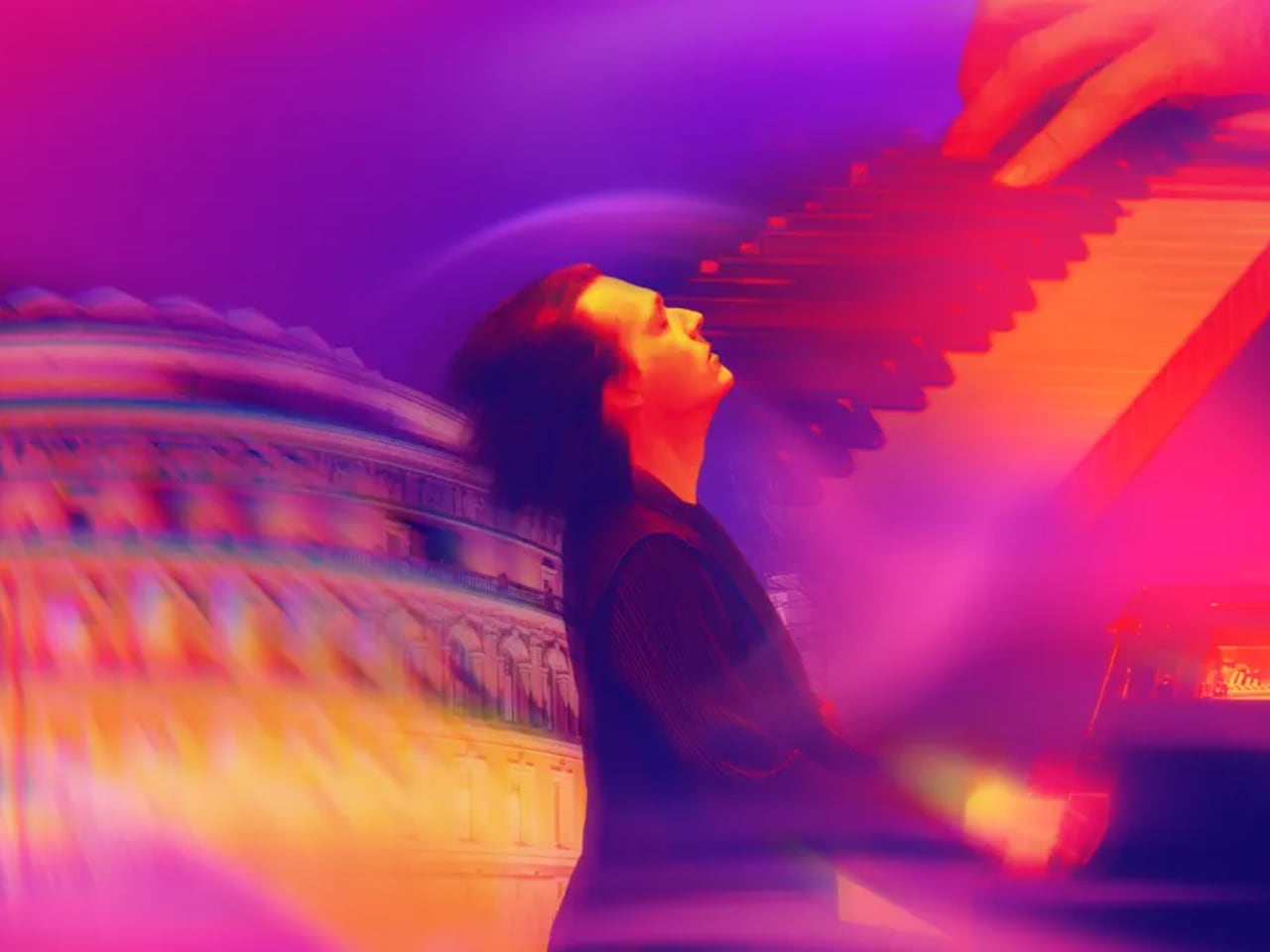
This is the kind of content that justifies Vision Pro’s existence for people who aren’t sim racing enthusiasts or enterprise designers. It shifts the experience from watching a concert to sitting inside one.
F1 at Suzuka, NBA in Immersive, and Zootopia 2 in 3D
The Japanese Grand Prix runs this week at Suzuka, and Apple TV on Vision Pro will carry Practice, Qualifying, and the race with Multiview, which lets you run five video feeds simultaneously. If you’ve ever wanted to track your favorite driver’s onboard camera while keeping the main broadcast and timing screens visible, this is the setup.
On Monday, March 30, the Washington Wizards visit the Los Angeles Lakers. Vision Pro users in the Lakers’ regional broadcast territory can watch the game live in Apple Immersive through the Spectrum SportsNet app, with certain international markets accessing it through the NBA app. Full-game replays and highlights will be available in Apple Immersive as early as 24 hours after the game ends.
Zootopia 2 is now available to watch in 3D on the Apple TV and Disney+ apps. And next month, the next episode of Elevated takes Vision Pro users gliding above New York City’s skyline.
Museas 3.0 and Gucci Bring Culture Into Your Living Room
Museas hits version 3.0 with a full redesign and a meaningful feature expansion. Three new immersive environments join the library alongside new artworks and artifacts. Offline mode means you can explore without a Wi-Fi connection, and new AR widgets let you display art in your physical space. It’s the kind of quiet, thoughtful app that makes Vision Pro feel less like a tech demo and more like a cultural tool.
The Gucci app update takes a different approach to immersion. It drops you into a monumental, museum-like marble space for Gucci Primavera, the first show from creative director Demna. It’s less about functionality and more about atmosphere, which is exactly what luxury brands should be doing with spatial computing. Don’t try to sell me a handbag in VR. Let me walk through a creative director’s vision.
What This All Means for Vision Pro
Let’s be direct about what visionOS 26.4 actually represents. This isn’t a routine maintenance update. NVIDIA CloudXR integration, highlighted during NVIDIA’s GTC conference with executive backing from both Apple and NVIDIA, fundamentally expands what Vision Pro can do. This opens the door for RTX-powered applications and enterprise workflows to be streamed to Vision Pro wirelessly through foveated streaming. This significantly reduces the bandwidth and quality limitations that have held back wireless XR.
The privacy-first approach to gaze data gives Apple a credible answer for regulated industries, from automotive design floors to pharmaceutical labs. Kia, BMW, Volvo, Roche, and Foxconn aren’t experimenting with this technology. They’re already putting this into real workflows. That adoption speed tells you everything about how ready the enterprise market was for this exact solution.
Combine CloudXR with a strong content week (BBC Proms, F1, NBA Immersive, Zootopia 2 in 3D) and a pair of polished app updates, and you’re looking at the most significant single week for Vision Pro’s software story since launch. The hardware was always impressive. The software just took a meaningful step forward, and CloudXR is the reason.
We’ve got a Vision Pro review unit in right now, and I’m genuinely looking forward to putting all of this new content and CloudXR functionality through its paces firsthand. Stay tuned for my full coverage.
Price: $3,499
Where to buy: Apple

Apple AirTag (1st Generation) - 4 Pack. Keep Track of and find Your Keys, Wallet, Luggage, Backpack, and More. Simple one-tap Set up with iPhone or iPad, Bluetooth
(as of March 25, 2026 12:25 GMT -05:00 - More infoProduct prices and availability are accurate as of the date/time indicated and are subject to change. Any price and availability information displayed on [relevant Amazon Site(s), as applicable] at the time of purchase will apply to the purchase of this product.)
