
Most electric bikes want to be taken seriously. They come wrapped in commuter efficiency, marketed with range charts and pedal-assist levels, designed to make you feel responsible. The AOTOS Flux X26 doesn’t care about any of that. It wants you to pop a wheelie.
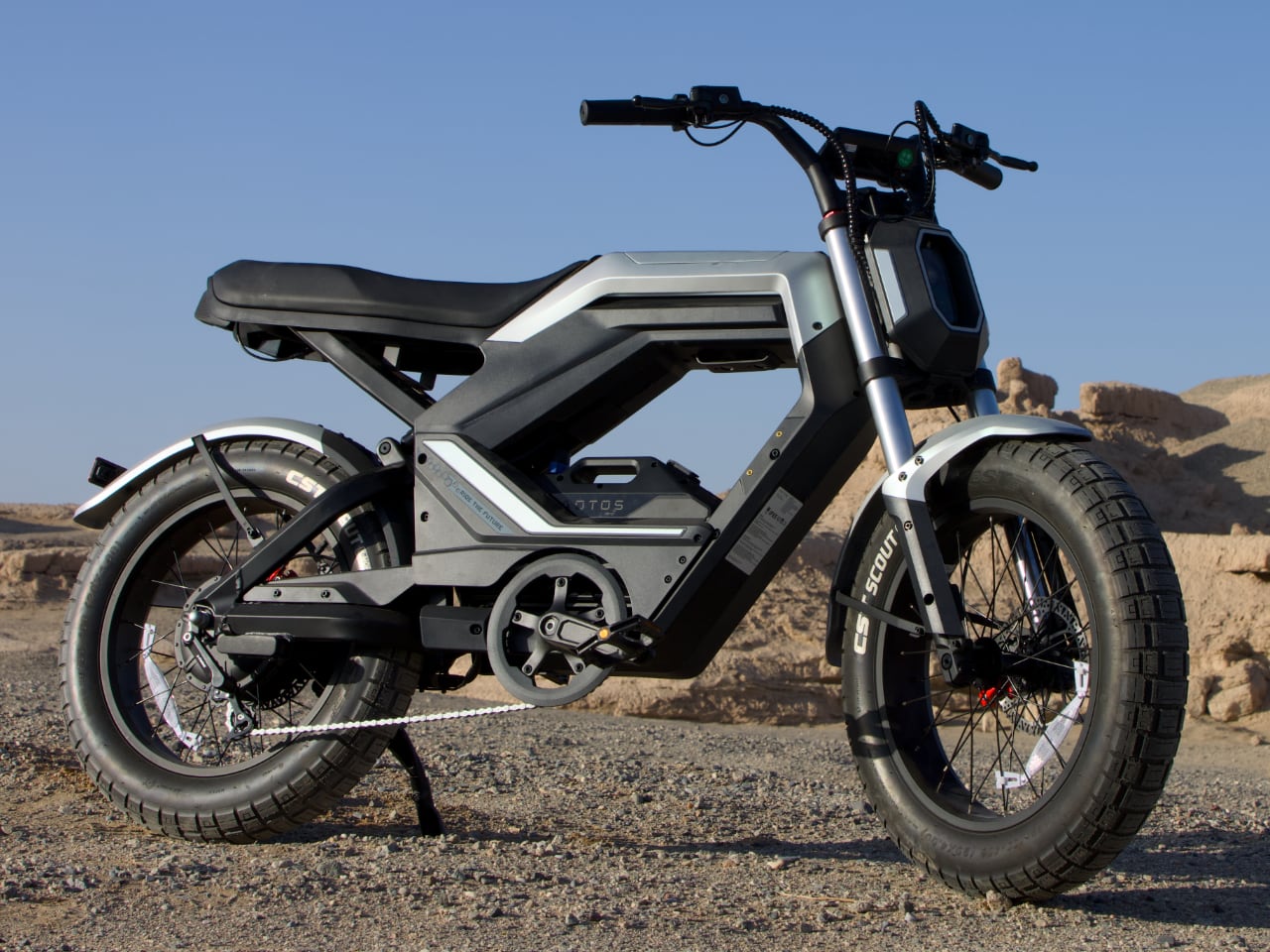
That’s not hyperbole. AOTOS built a one-click wheelie function into this thing. A controlled torque lift managed through an electronic system. For a company that made its name building rideable electric suitcases, this is either a bold pivot or a sharp departure from its roots. The answer probably depends on whether the engineering holds up.
Super Early Bird: $1,199 (only 100 available)
Where to buy: Kickstarter

Here’s what we know so far, and what’s still missing, ahead of the Flux X26’s launch.
The Wheelie Is the Whole Pitch
AOTOS calls it BOOST Mode, short for a head-raising riding posture that delivers an instant torque boost to the rear wheel. You tap a button, the front lifts, and the system uses electronic torque management to control the lift smoothly and safely. It’s the kind of feature that sounds like a liability on paper but could be the single most shareable thing about this product. In a Discover feed full of commuter e-bikes, a wheelie-capable moto stands out.

That matters more than it sounds. Spec sheets don’t stop the scroll. A fat-tire electric moto popping its front wheel in a desert setting? That earns the click.
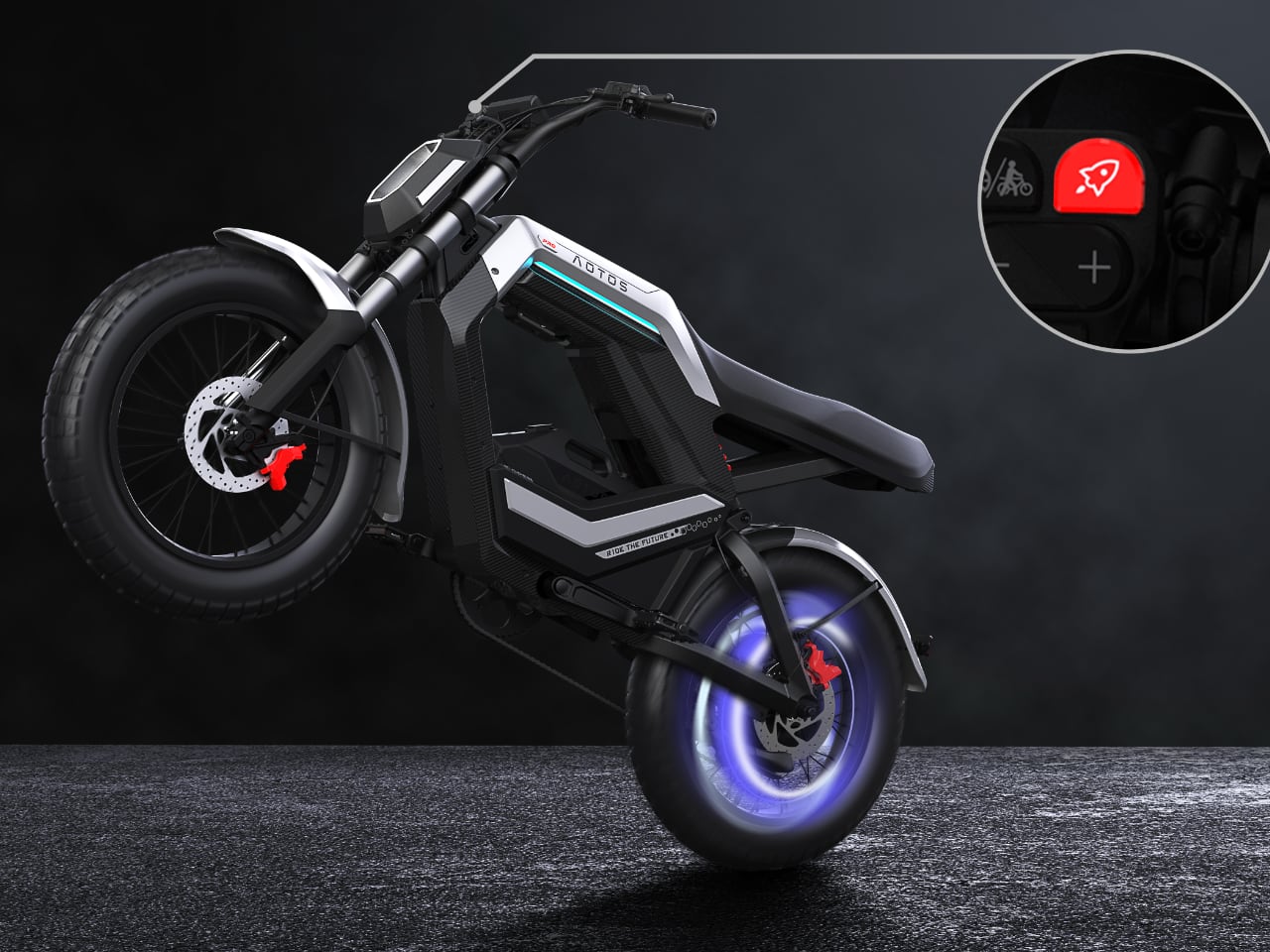
2000 Watts, Moto Geometry, and a Keel Frame
The Flux X26 runs a 750W motor at its street-legal baseline (Class 2, 20 mph) with peak output climbing to 2000W in Pro mode, pushing Class 3 speeds up to 28 mph where local regulations allow. AOTOS also notes that the speed limiter can be manually unlocked for off-road use through a brake hold and repeated throttle input sequence. Torque sits at 100 Nm according to the primary documentation, though one variant of the press materials lists 110 Nm. AOTOS hasn’t clarified the discrepancy yet.

The frame is 6061-T6 aluminum built around what AOTOS calls a keel design, borrowing a term from naval architecture. It gives the bike a parametric, mechanical look that leans closer to moto than bicycle. Up front, an inverted fork with 80 mm of travel handles impacts. AOTOS materials describe a spring-based rear shock setup with 50 mm of travel, with references ranging from mono-spring structures in concept materials to dual-spring configurations in other documentation. Hydraulic disc brakes handle stopping duties, and the tires are 20 by 4.0 inch fat rubber with a turtle-back tread pattern built for grip across pavement and packed dirt.
Geometry tells an interesting story. Concept materials outline a 23 degree head tube angle paired with 126 mm of trail, suggesting geometry closer to moto than commuter e-bikes. You wouldn’t mistake it for a commuter at a stoplight. The shark-inspired fenders, O-shaped headlamp, and matte plus anodized finishes push the industrial mechanical aesthetic hard.
FLUX OS and the Long Game
This is where AOTOS shows what “Human Mobility Robotics” actually means in practice. The Flux X26 runs FLUX OS, a proprietary software platform that supports over-the-air updates. OTA updates allow AOTOS to refine firmware across the battery, display, and control systems after launch.

Connectivity splits between the standard and Pro models. The base Flux X26 gets Bluetooth. The Pro adds 4G and GPRS, which opens up real-time GPS tracking and app-based anti-theft. Both versions pair through a companion app that handles device binding via QR code, real-time riding data, navigation sync, and multi-user sharing for up to three riders on one bike.
Security gets a triple-layer approach: GPS tracking, a mechanical lock, and app-based tracking with FindMy-style tracking integration as described in AOTOS materials. For a product, that’s a notably thorough security approach.
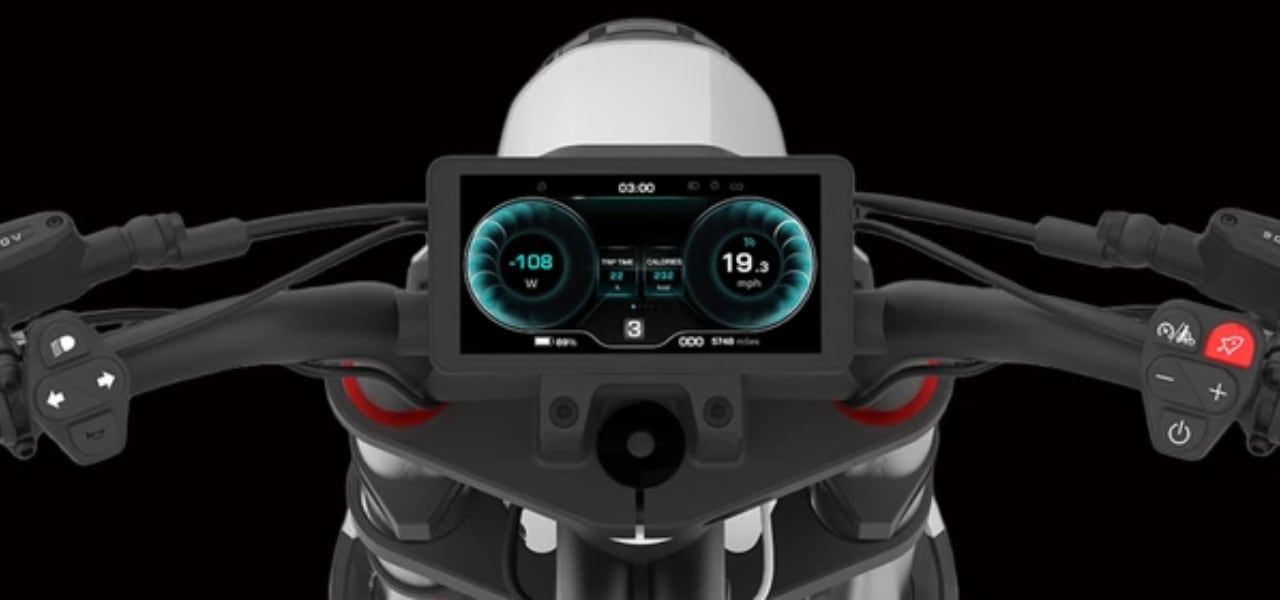
The display is a 5.5 inch TFT color screen, controlled by physical buttons rather than touch. Concept materials reference a 180 degree adjustable mount, though whether that carries to the production Flux X26 hasn’t been confirmed. AOTOS says four adaptive riding modes use cadence, gradient, and speed data to fine-tune torque delivery in real time. The ambient lighting system adds another layer, with dynamic color shifts based on riding mode.
Super Early Bird: $1,199 (only 100 available)
Where to buy: Kickstarter
A Battery That Charges Your Laptop
The power pack is a 48V, 21Ah, 1008Wh modular battery. AOTOS claims up to 70 miles of range, with actual distance depending on rider weight, terrain, temperature, and assist level. The battery is removable with dual charging ports (on-bike and off-bike), and here’s the utility angle worth noting: it provides 25W of external output via USB-A and USB-C. That’s enough to charge a phone, a camera, or keep a tablet running on a trail.

That external output detail matters for the target audience. AOTOS positions this as a Silicon Valley to Joshua Tree machine. The kind of rider who commutes Monday through Friday and loads it onto a truck for desert trails on Saturday wants to charge a GoPro at the trailhead without hunting for an outlet. It’s a small spec with outsized lifestyle value.
Where It Sits and What’s Still Missing
The Flux X26 occupies a gap in the market that’s genuinely hard to name. It’s not a commuter e-bike. It’s not a full electric dirt bike in the mold of the Sur-Ron Light Bee X or Segway X260. It’s nowhere near the premium tier of a CAKE Kalk. AOTOS is calling it “a new class of electric machine,” which sounds like marketing until you look at the combination of moto geometry, wheelie capability, fat tires, and a connected software platform at this price point. Nothing else quite matches.

Kickstarter launch pricing is expected to range from about $1,199 to $1,599 depending on model and configuration, with MSRP landing between $1,699 and $2,299 after the campaign ends. First units are expected to ship in May 2026.
Super Early Bird: $1,199 (only 100 available)
Where to buy: Kickstarter
The Flux X26 weighs in at 100 pounds, with charging times rated at 7 hours for the standard model and 6 hours for the Pro. AOTOS is using a rear hub motor setup rather than a mid drive system, reinforcing its torque delivery focus and simpler drivetrain layout. Water resistance is rated at IPX5 for the full e moto, while the battery itself is sealed to IPX7. FLUX OS supports full over the air updates, so the software will continue evolving well after delivery.
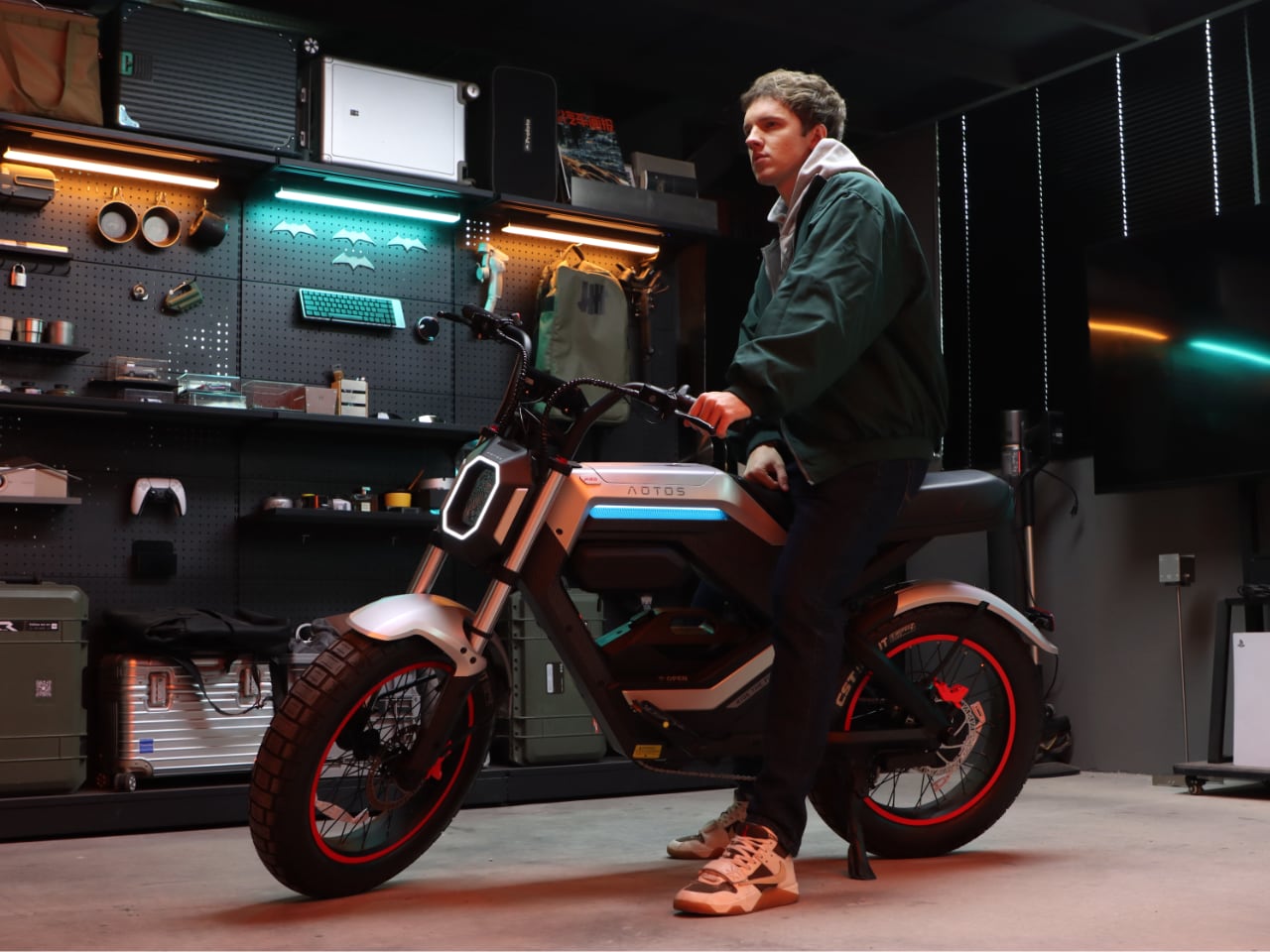
What makes this story worth following is the team behind it. AOTOS started in 2016 building smart electric suitcases, and the SE3 line earned them real traction in that category. The Flux X26 is their push into bigger territory, backed by a team with experience in smart mobility, motion control, and connected systems. They’re not starting from zero. They’re building on what they know into a machine that’s faster, louder, and built to pop a wheelie on command. At the Kickstarter launch tier, it’s one of the more interesting bets in the electric moto space heading into 2026.
