
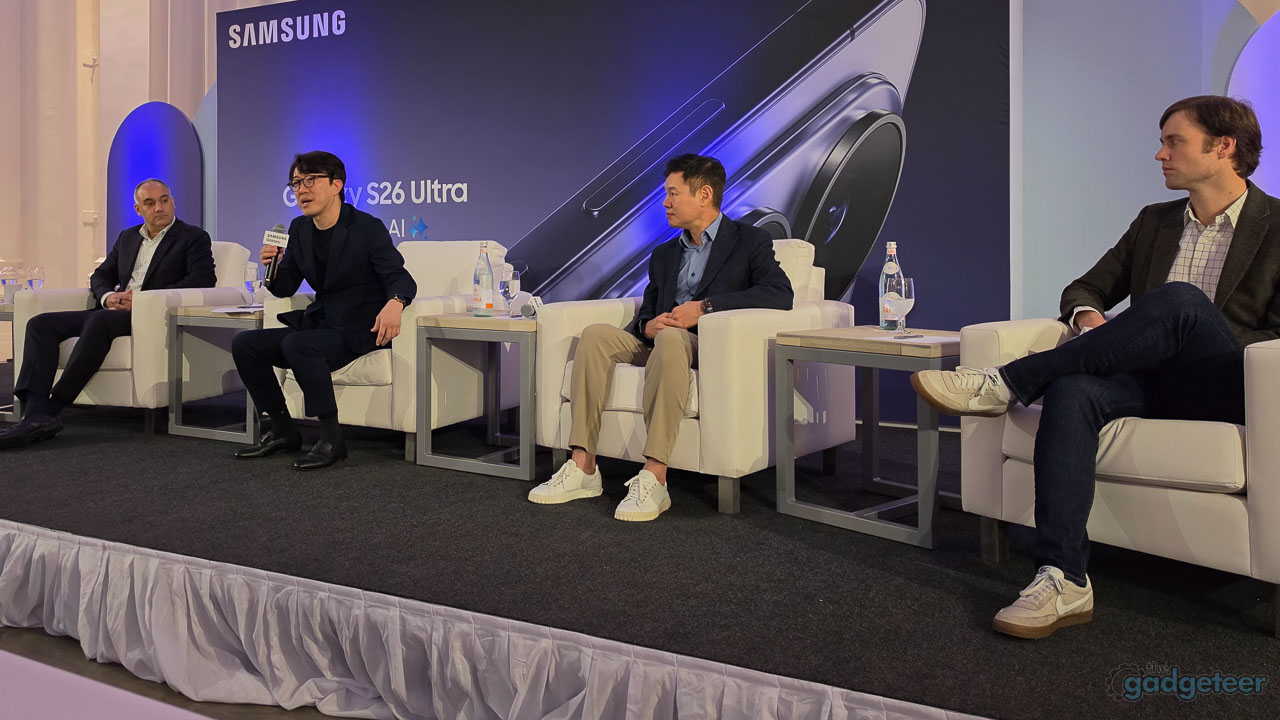
FEATURE – Samsung didn’t pack an auditorium for this one. The morning after the main Unpacked stage show in San Francisco, four of the company’s most senior mobile executives sat down in a small room at 1244 Sutter Street. Won-Joon Choi, Samsung’s President, COO, and Head of R&D for Mobile, was directly across the table. Next to him: Yoonie Joung (President and CEO of Samsung North America), Dave Das (EVP of Mobile eXperience), and Drew Blackard (SVP of Mobile Product Management).
The conversation that followed went far beyond spec sheets. For over an hour, these four executives talked about AI philosophy, consumer trust, and whether people are ready to hand decision-making power to their phones. The Galaxy S26 was the subject on paper. But the real question hanging over the room was bigger: what happens when your phone stops waiting for instructions and starts anticipating what you need?
Samsung Didn’t Build AI Features They Rebuilt the Operating System Around AI
There’s a difference between adding AI to a phone and building a phone around AI. Every manufacturer at this point has some version of the first approach. Samsung, according to Won-Joon Choi, went with the second.
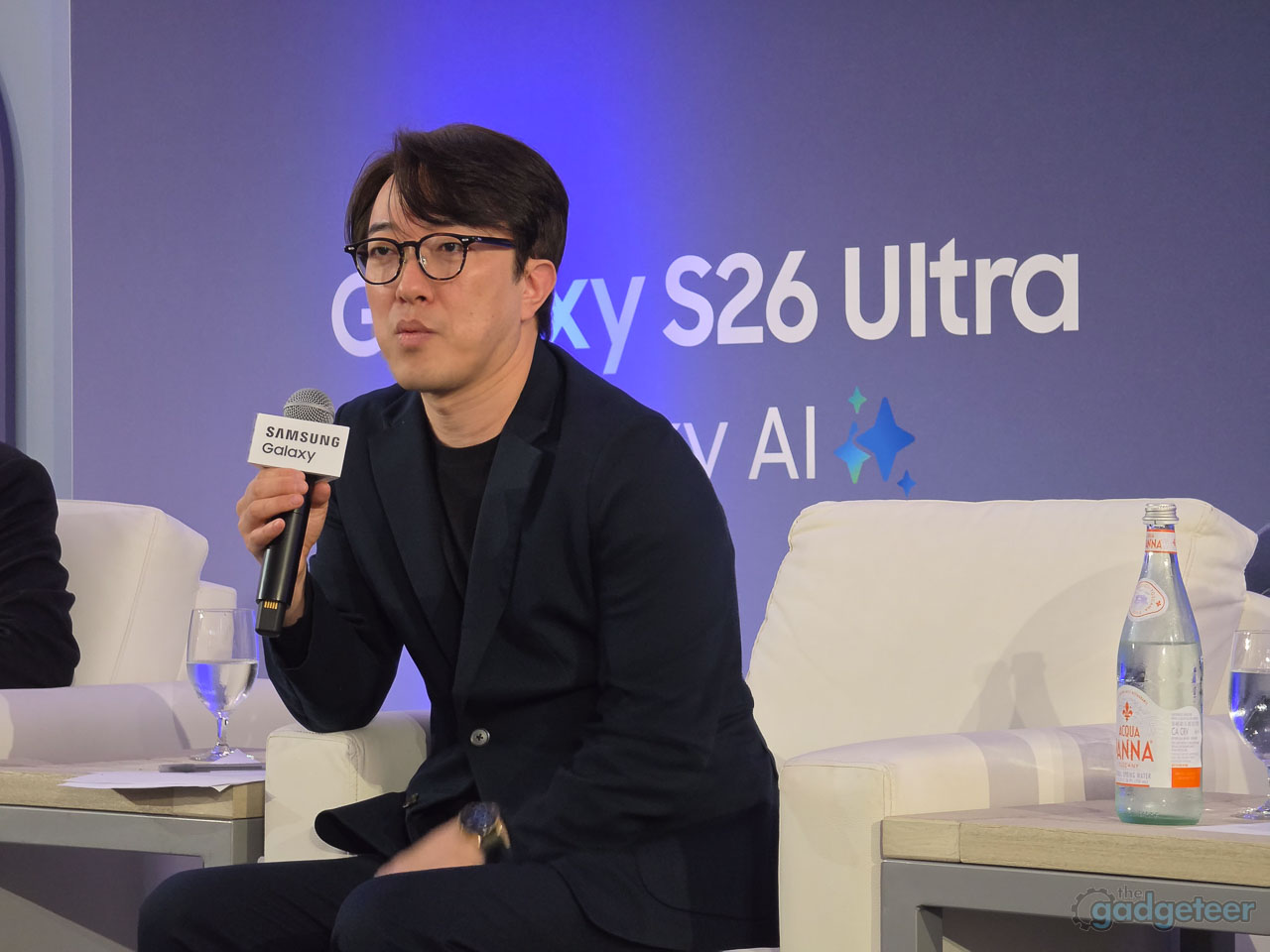
The Galaxy S26 runs what Samsung calls an agentic AI framework. That’s a mouthful, but the concept is straightforward: instead of you opening apps and moving information between them manually, the OS understands what you’re trying to do and handles the steps for you. Three pillars define the system: personal, adaptive, and agentic. All of it lives at the OS level, not bolted on top.
Choi laid this out with the confidence of someone who’d been building toward it for years. This wasn’t a feature demo or a rehearsed pitch. It was a thesis statement about where phones are going, delivered by the person who runs all of Samsung’s mobile R&D. The conviction in the room was hard to miss, even if the claim itself needs real-world use and time to prove out.
Here’s the example that stuck with me from the roundtable. You tell your phone “call me a ride back to my hotel.” On any other phone, that means opening your ride app, typing in the hotel address, confirming the pickup. On the S26, the OS figures out where you are, remembers which hotel you’re staying at, opens Uber, and queues up the ride. You just confirm.
That sounds like a small thing until you think about how many times a day you’re the middleman between apps that should already be talking to each other.
You get to pick your AI, and that’s the point
Most phones give you one AI assistant. Take it or leave it. Samsung’s doing something different with the S26: you choose between three agents, each with genuine system-level access.
Google brings its search and assistant strengths. Perplexity operates at the same deep integration level, which is notable because most third-party AI tools on phones are sandboxed into near-uselessness. And Bixby has been rebuilt from the ground up as a device navigation agent. Tell it “my eyes are strained” and it won’t just suggest turning on the blue light filter. It’ll pull up the toggle right there in the conversation so you can flip it without digging through settings menus.
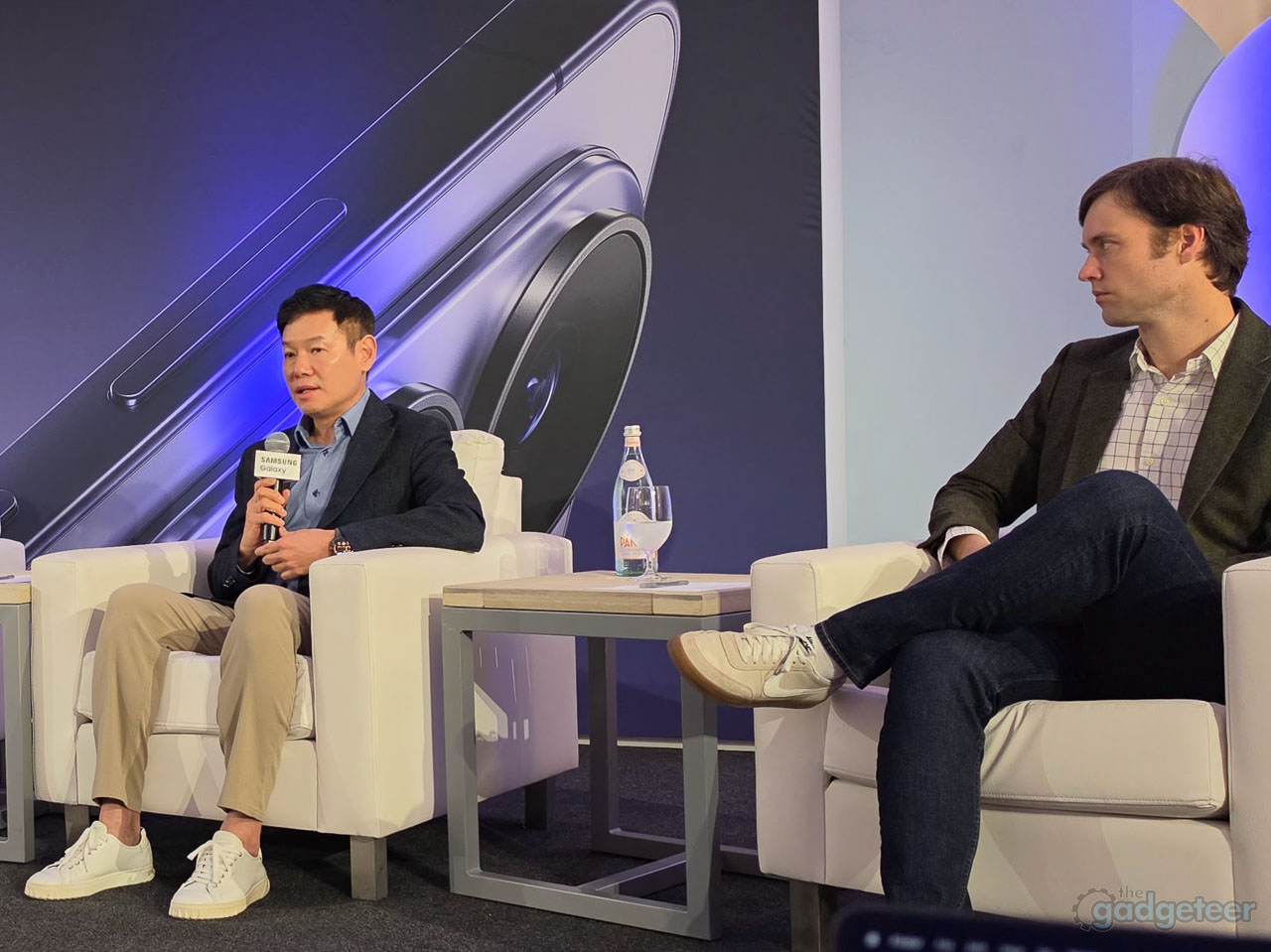
When pressed on why these three specifically, the executives framed it as a philosophical decision rather than a business arrangement. Blackard described it as a matter of consumer choice. Users can go out and pick the AI that fits how they work, and get comparable experiences regardless of which agent they choose. The multi-agent approach isn’t a hedged bet, according to the panel. It’s Samsung’s answer to the question of who controls the AI relationship: the user, not the manufacturer.
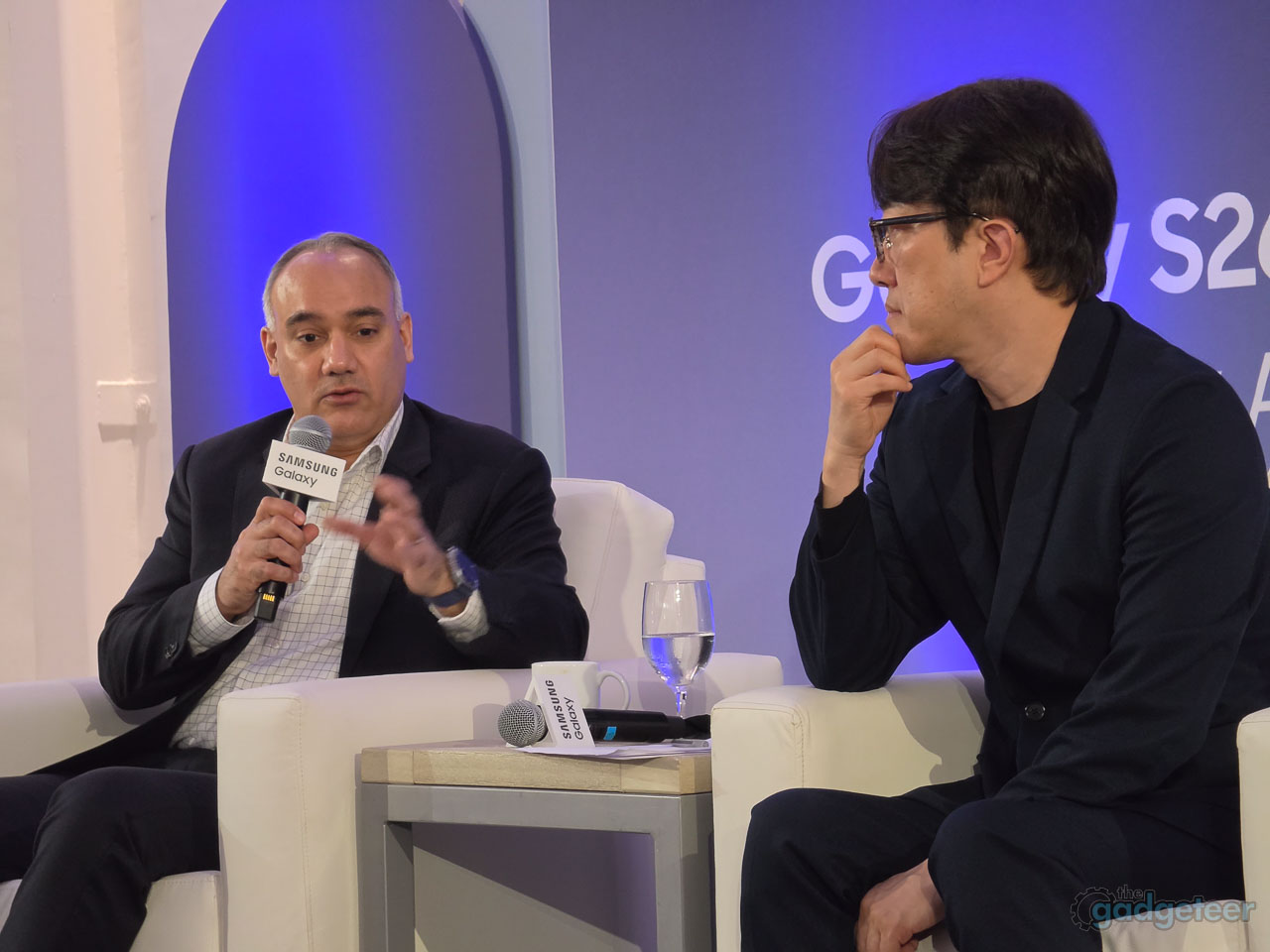
The executives floated something even more interesting for the future: a “super agent” that would route your requests to whichever AI is best suited for the task. You wouldn’t need to think about which assistant to use. The system would decide for you. It doesn’t exist yet, but the fact that Samsung’s architecture already supports multiple agents at the OS level means the plumbing is there.
The privacy question that nobody in the room dodged
When your phone’s AI can read your calendar, check your location, browse your messages, and interact with third-party apps on your behalf, the privacy conversation gets real fast.
A reporter in the room asked the question directly: how do you keep personal data safe when the AI needs access to everything to function properly? Won-Joon Choi fielded it first, and the rest of the panel jumped in without hesitation. Nobody deflected. Nobody pivoted to a talking point. The discussion that followed was the most technically specific stretch of the entire session.
Samsung’s answer comes in layers. First, you can choose between on-device and cloud processing. On-device keeps everything local but trades some performance. For cloud-processed Galaxy AI features, Samsung says data gets processed and then deleted. Not stored, not repurposed, not fed back into training. Won-Joon Choi described the policy as “very, very strict.”
Knox Vault handles compartmentalization. Instead of creating one big bucket of personal data that every app can access, it builds digital walls between services. Only authorized apps touch specific data. That’s a meaningful architectural choice, not just a privacy policy.
The trickier part is third-party agents. Samsung confirmed it’s working with partners like Perplexity to enforce similar privacy standards, though those conversations are still evolving. The tension between personalization and privacy is real, and to their credit, nobody in the room pretended it was solved.
The camera trick you won’t see on a spec sheet
I expected the camera conversation to be about megapixels or zoom ranges. It wasn’t.
The most interesting thing Samsung’s doing with the S26 camera is something you’ll never see in a spec comparison. Every camera sensor has a unique noise pattern, almost like a fingerprint. Samsung’s AI learns the specific noise profile of your individual device’s sensor and reduces noise based on that unique pattern. Not a generic noise reduction algorithm applied to every phone. A custom one trained on your specific hardware.
The practical result is dramatically better low-light photos and video without increasing the megapixel count. It’s the kind of under-the-hood engineering that doesn’t make for a flashy keynote slide but actually changes what your photos look like at a restaurant or a concert.
Won-Joon Choi, speaking as the head of R&D, described this as Samsung’s deliberate move away from the megapixel arms race. The company’s position is that computational photography is where the real gains live now. More megapixels don’t help at a dimly lit restaurant or a concert venue. A smarter noise reduction engine, one that actually knows your specific camera hardware, does. No comparison shots were shown during the roundtable, but Choi’s framing made the technical logic clear enough to land without a visual.
Samsung also threw in AI-powered document scanning that removes your fingers from the corners of the frame, straightens creased paper, and produces clean black and white scans. It’s a small feature that solves an annoyance I didn’t realize I had until someone described it.
When AI gets it wrong (and they know it will)
I expected the camera conversation to be about megapixels or zoom ranges. It wasn’t.
The most interesting thing Samsung’s doing with the S26 camera is something you’ll never see in a spec comparison. Every camera sensor has a unique noise pattern, almost like a fingerprint. Samsung’s AI learns the specific noise profile of your individual device’s sensor and reduces noise based on that unique pattern. Not a generic noise reduction algorithm applied to every phone. A custom one trained on your specific hardware.
The practical result is dramatically better low-light photos and video without increasing the megapixel count. It’s the kind of under-the-hood engineering that doesn’t make for a flashy keynote slide but actually changes what your photos look like at a restaurant or a concert.
Drew Blackard pointed out that this is the kind of engineering users will never consciously notice but will benefit from every day. Won-Joon Choi added the strategic context: Samsung has deliberately moved away from the megapixel arms race. The company launched the first 100MP sensor, pushed to 200MP, and chased Space Zoom. Now the focus has shifted to the full capture, edit, and share pipeline. Computational photography is where the real gains live. More megapixels don’t help at a dimly lit restaurant. A smarter noise reduction engine, one that knows your specific camera hardware, does.
Samsung also threw in AI-powered document scanning that removes your fingers from the corners of the frame, straightens creased paper, and produces clean black and white scans. It’s a small feature that solves an annoyance I didn’t realize I had until someone described it.
The watermark debate tells you where this is all heading
Samsung puts visible watermarks on all AI-generated content, plus metadata tagging. They’re also participating in C2PA, the industry coalition working on content provenance standards.
But the bigger conversation in the room was philosophical. When AI can generate photorealistic images, edit your photos seamlessly, and create content that looks indistinguishable from the real thing, where do you draw the line between creative tool and misinformation machine?
Rich DeMuro from Rich on Tech put the tension into sharp focus. He pointed out that AI-generated metadata already exists in the file, then asked the room: if someone is making a Christmas card with Samsung’s creative tools, does the visible watermark really need to be there? The question drew a knowing laugh.
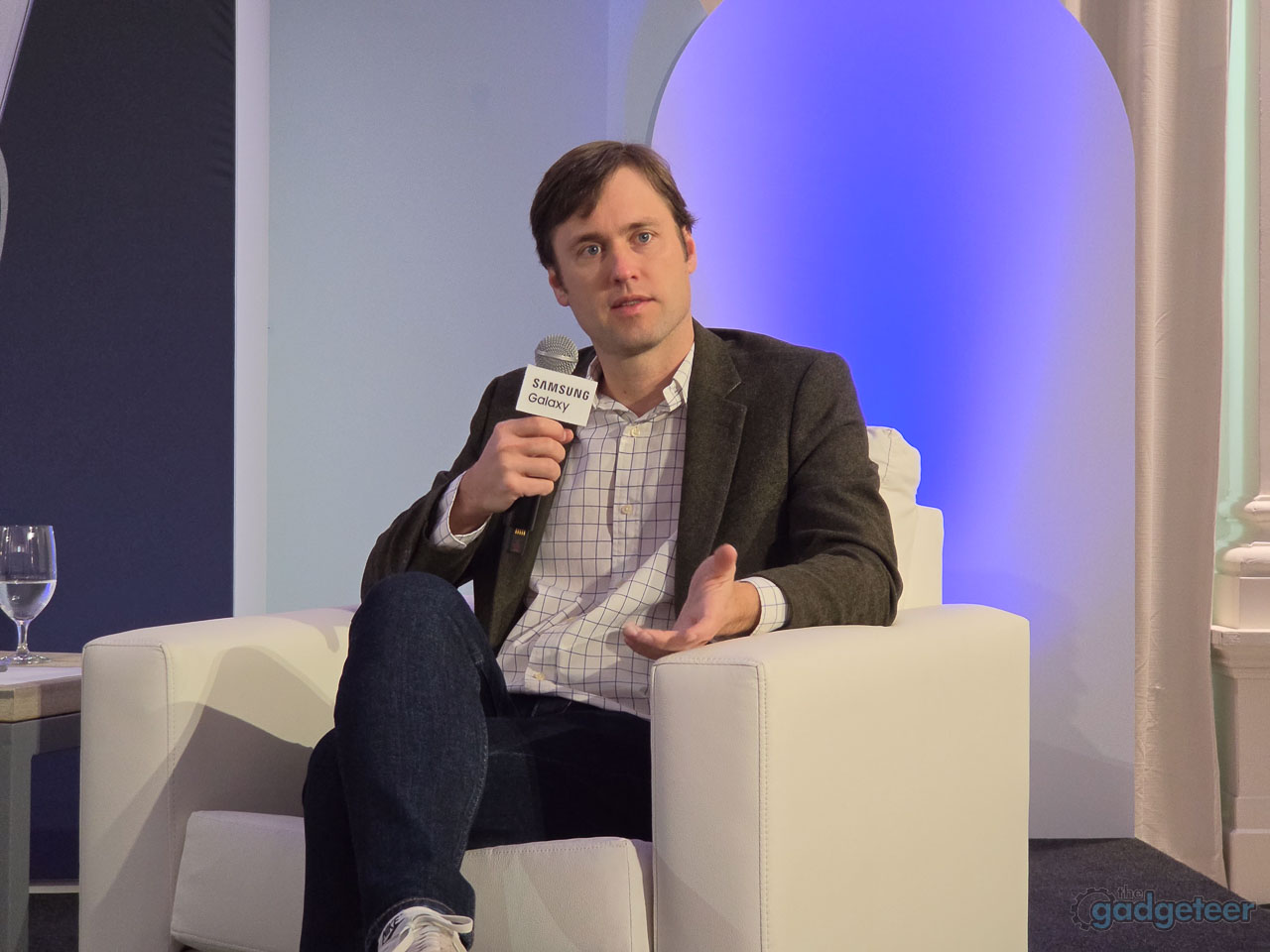
Blackard’s answer was honest about the uncertainty. “I think we on stage probably don’t have the exact answers for” that one, he said. “I think these things will come out as the dialogue happens amongst a bunch of bigger people, consumers, and then obviously the companies involved.”
The comparison one executive made was to user-generated content when it first emerged. Nobody knew the rules then either. Social norms evolved. Samsung’s bet is that the same will happen with AI-generated content, and their job is to provide the transparency tools while the culture catches up.
What this actually means if you’re buying a phone this year
The Galaxy S26 isn’t trying to be the phone with the best camera or the fastest processor, though it’ll compete fine on both fronts. It’s trying to be the phone that understands what you want before you finish thinking about it.
Whether Samsung can actually deliver on that vision is the gap between this roundtable and the real world. The architecture is there. The privacy framework, while still evolving for third-party partners, is more thoughtful than what competitors have articulated so far. But boardroom conviction and daily-use reliability are different conversations entirely, and the Galaxy S26 will be judged by the second one long after the roundtable is forgotten.
What stuck with me most wasn’t any single feature. It was the fact that four of Samsung’s most senior mobile executives, including the person who runs all of R&D, could’ve done a victory lap after Unpacked. Instead, they sat in a small room and debated the ethics of autonomous phone behavior for over an hour. The Galaxy S26 is their first real attempt to get ahead of the rest of the industry on AI. Whether they actually have, or whether the competition just hasn’t shown up yet, is the question worth watching this year.

Gerber Gear Suspension 12-in-1 EDC Multi-Plier Multitool with Pocket Knife, Needle Nose Pliers, Wire Cutters and More, Gifts for Men, Camping and Survival, Grey
(as of April 14, 2026 18:38 GMT -05:00 - More infoProduct prices and availability are accurate as of the date/time indicated and are subject to change. Any price and availability information displayed on [relevant Amazon Site(s), as applicable] at the time of purchase will apply to the purchase of this product.)
