
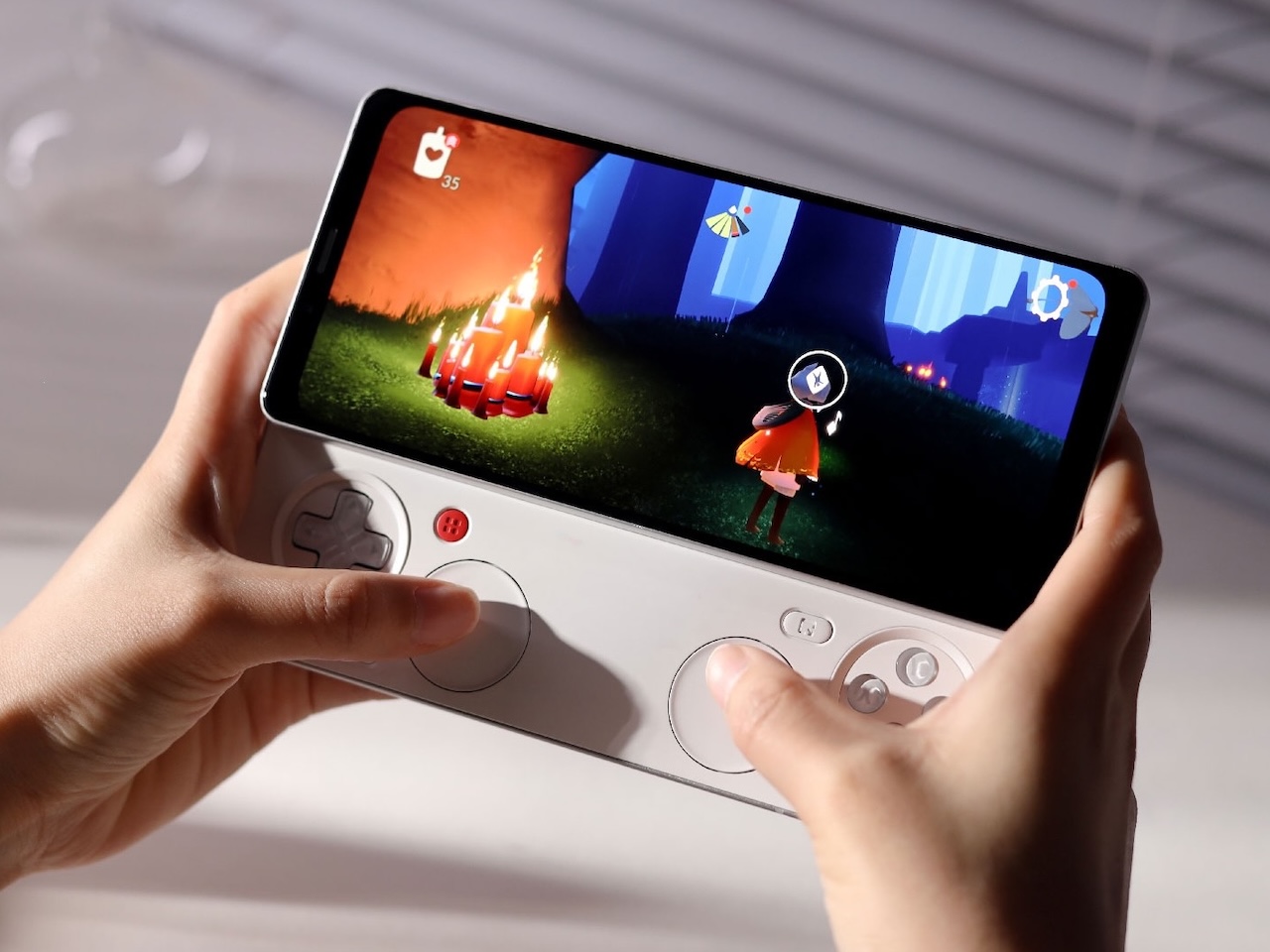
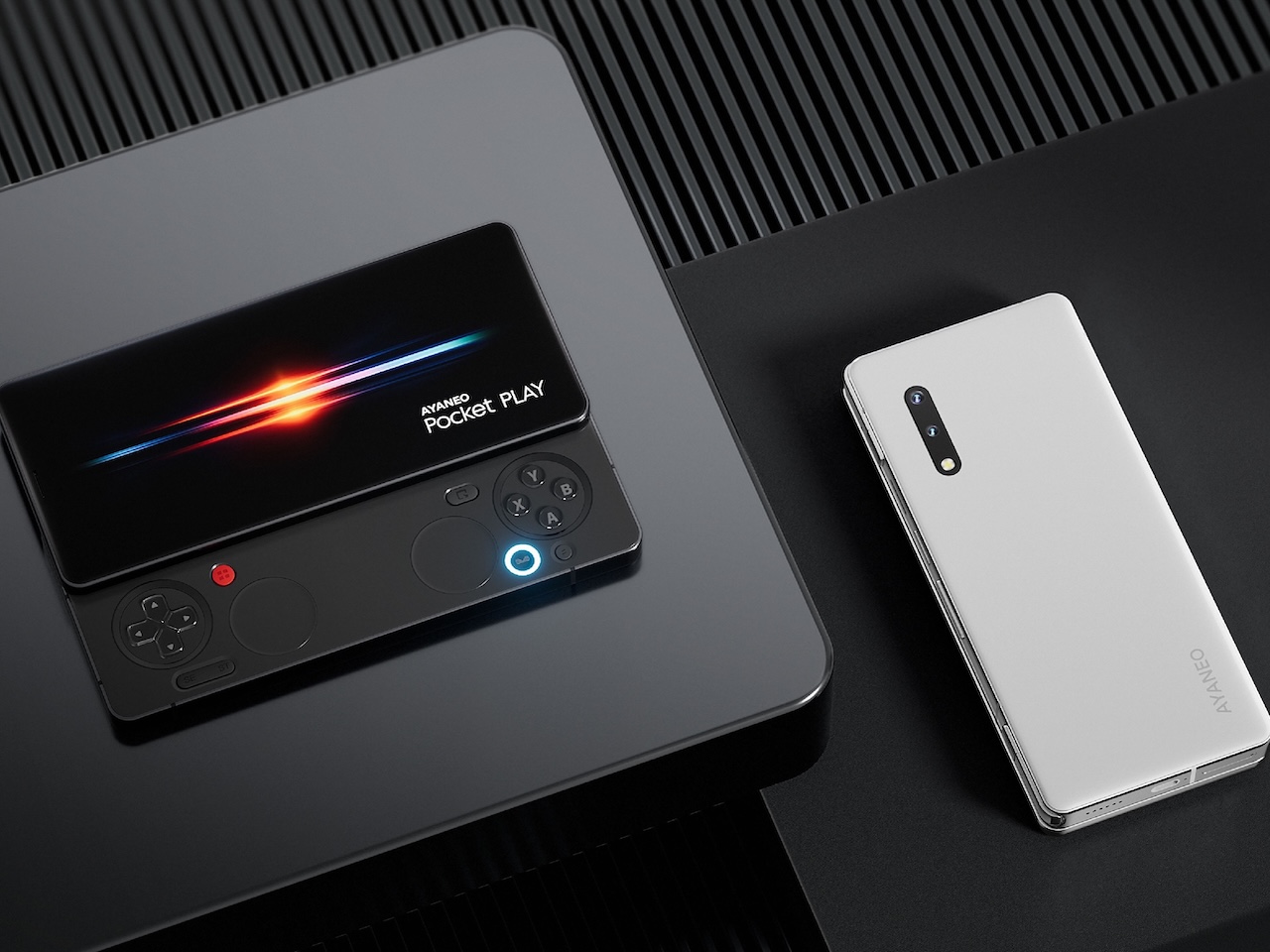
ARTICLE – The smartphone industry spent the last decade telling gamers that glass is good enough. Tap the screen, swipe the virtual joystick zone, clip on a Bluetooth controller when things get serious. Ayaneo, a company that’s built its name on compact Android gaming handhelds, just challenged that assumption directly. The Ayaneo Pocket Play is a smartphone with a sliding display that pushes upward to reveal a full game controller hidden underneath, and it’s the first serious attempt to resurrect this form factor since Sony buried the Xperia Play over a decade ago.
Price: TBD
Where to Buy: Ayaneo
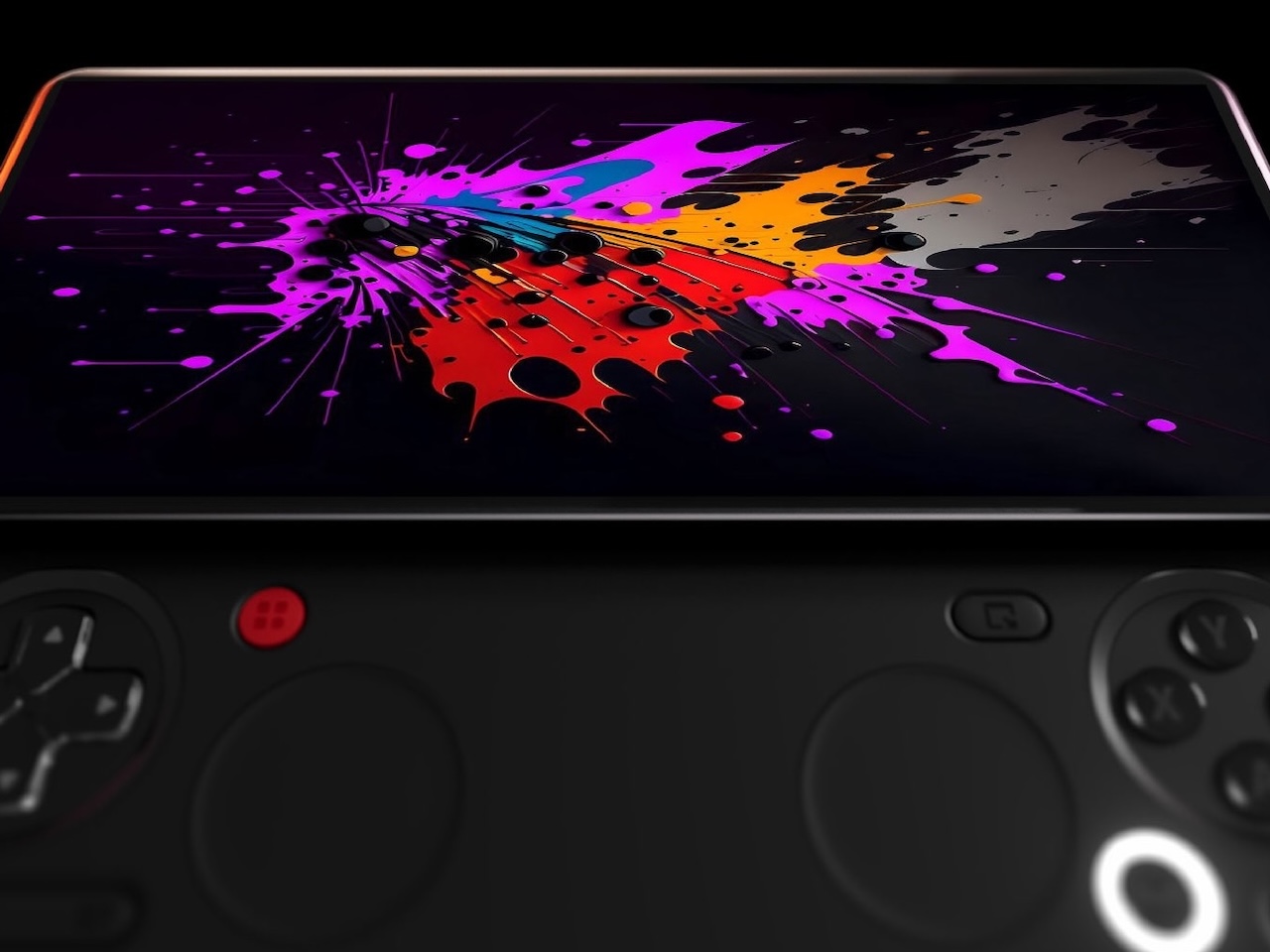
Slide the screen down and you’re looking at a d-pad on the left, ABXY face buttons on the right, and two flat touchpad zones where analog sticks would normally sit. Close it back up and the whole controller disappears. It’s a dual-identity device, and pulling that off is a much taller order than shipping another dedicated handheld.
So the real question is: can a niche handheld maker build a phone that works well enough for daily use while also being the best portable gaming device in your pocket? That tension sits at the center of everything the Pocket Play is trying to do.
What the Pocket Play Actually Brings
AYANEO teased the device in early November 2025 before setting up a Kickstarter campaign page. That campaign was scheduled to go live on January 13, but AYANEO suspended the launch to address shipping delays and support issues across its existing lineup, and it still hasn’t relaunched. However, according to AYANEO CEO Arthur Zhang, development of the Pocket Play is still moving at full speed.
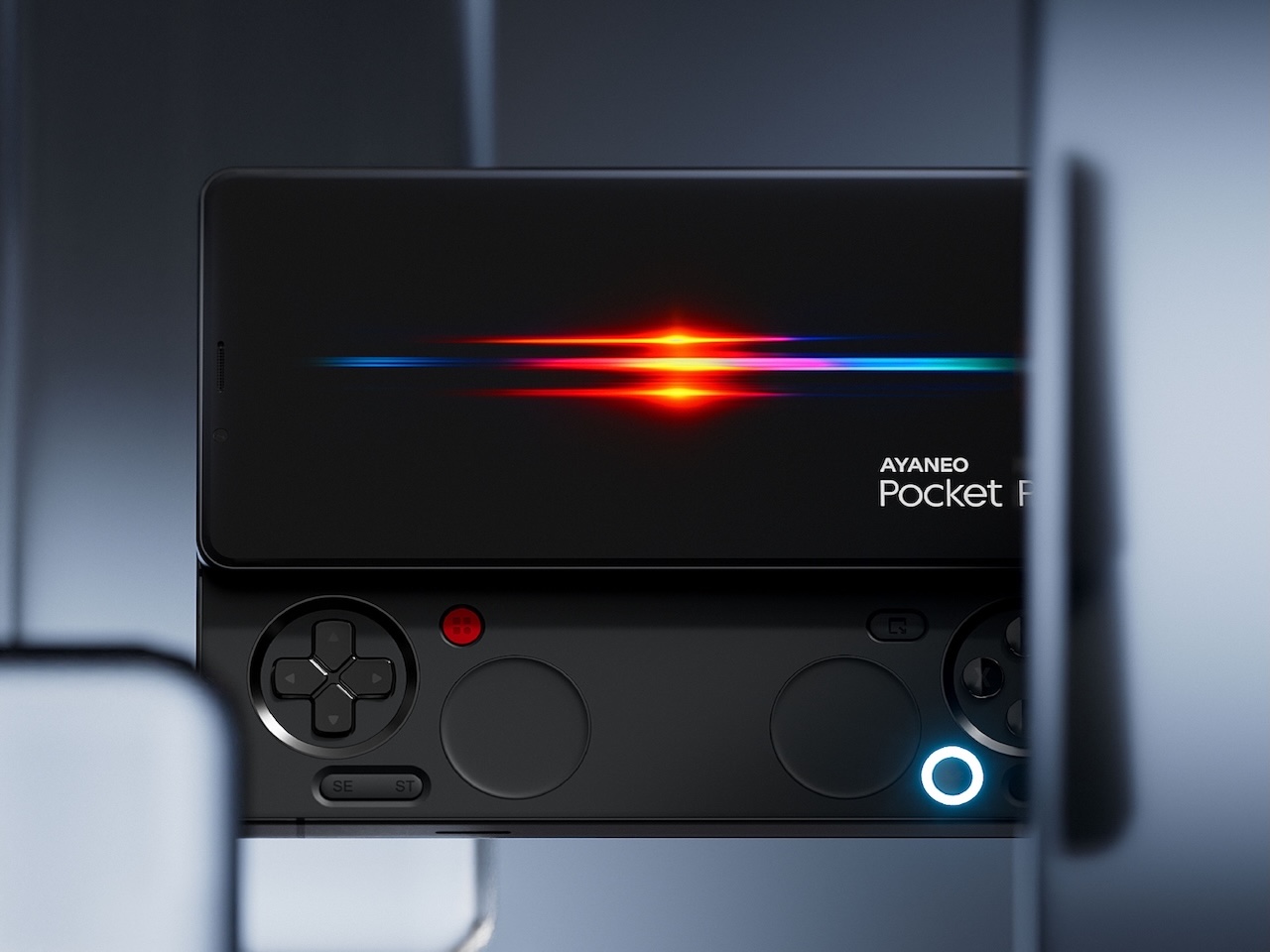
The sliding rail mechanism is the defining feature here, a physical track that lets the screen glide upward to expose the controller panel beneath. If you’ve ever owned a phone with a sliding keyboard, the motion will feel immediately familiar in your hands, and the satisfying click of a rail locking into place is something touchscreens can’t replicate.
The controller layout tells you exactly who Ayaneo is targeting. A d-pad and face buttons work naturally for platformers, fighters, RPGs, and the retro library that emulation communities run on Android devices. Flat touchpads replacing physical analog sticks are the boldest trade-off on the entire device. They keep the phone thinner when closed, which matters when this thing needs to pass as a regular smartphone in your pocket.
That slimmer profile costs you something real, though. Physical sticks give you tactile resistance and a centered resting position that touchpads can’t replicate, and for any game requiring precise 3D camera control, you notice the gap fast. How well Ayaneo’s touchpad software closes it will determine whether the Pocket Play feels like a genuine gaming device or a phone with buttons glued under the screen.
Ayaneo Pocket Play Specs
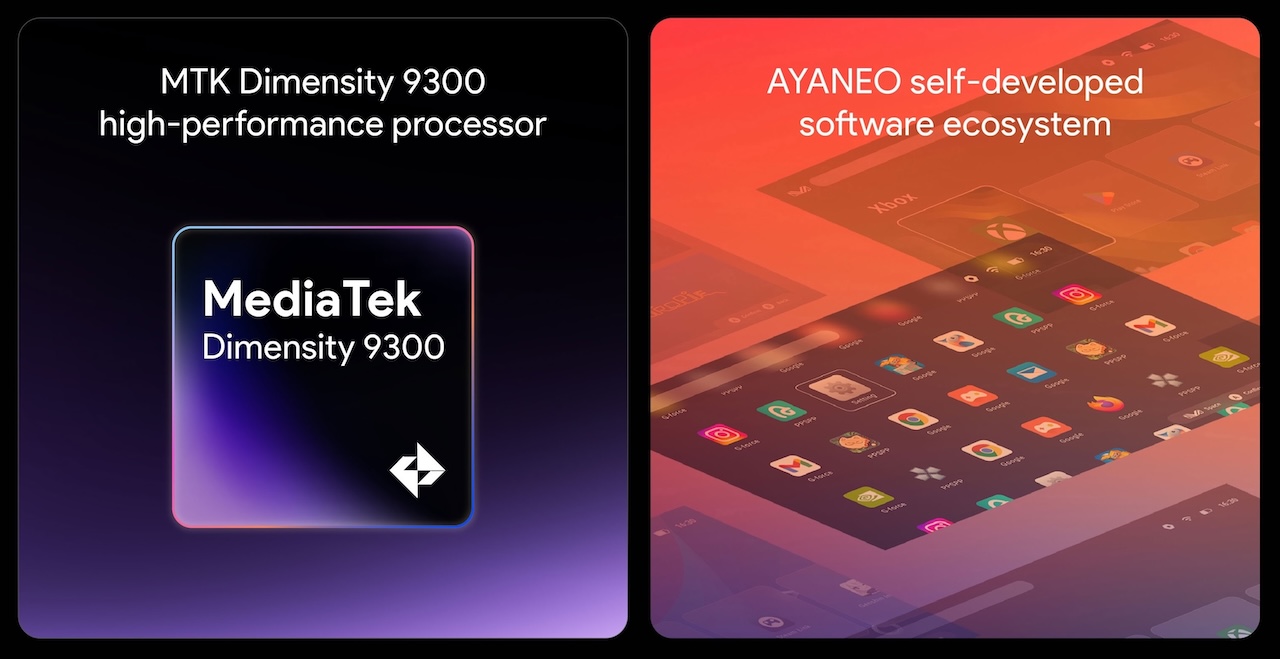
Under the hood sits MediaTek’s Dimensity 9300, a flagship 4nm chip with an all-big-core octa-core CPU and Arm Immortalis-G720 GPU that’s already shipping in phones from Oppo and Vivo. Raw gaming performance isn’t the question mark here. The display is a 6.8-inch hole-free OLED at 2400×1080, supporting 120Hz, 144Hz, and 165Hz refresh rates.
Battery sits at 5,000 mAh, likely to drain faster with the controller active and the display pushing 165Hz. Storage is UFS 4.0 paired with LPDDR5 RAM, a combined SIM/microSD slot, USB 3.2 Gen 2 Type-C with DP 1.4 output, Wi-Fi, and Bluetooth 5. Cameras pair a 50MP main sensor with a 16MP ultra-wide and a 5MP selfie lens, serviceable but not the reason anyone picks up this phone.
Software runs Android 15 with a fingerprint sensor in the power button, and fast charging is confirmed though Ayaneo hasn’t specified the wattage. Controller hardware includes L1/L2 and R1/R2 shoulder buttons on membrane micro-switches, L3/R3 press on the touchpads, a 0815 X-axis linear motor with four vibration modes, and active air cooling for long sessions. A red color option sits alongside the standard black, and if you’ve seen the renders, the red pulls your eye immediately.
What Makes This Harder Than Another Handheld
Ayaneo’s existing Pocket S, built on Qualcomm Snapdragon silicon, proved the team can ship capable gaming hardware with solid build quality. Those supply chain relationships give the Pocket Play more credibility than your average crowdfunded concept render, and you can feel that pedigree in the fit and finish of every Ayaneo product that’s shipped so far like the Pocket S Mini.
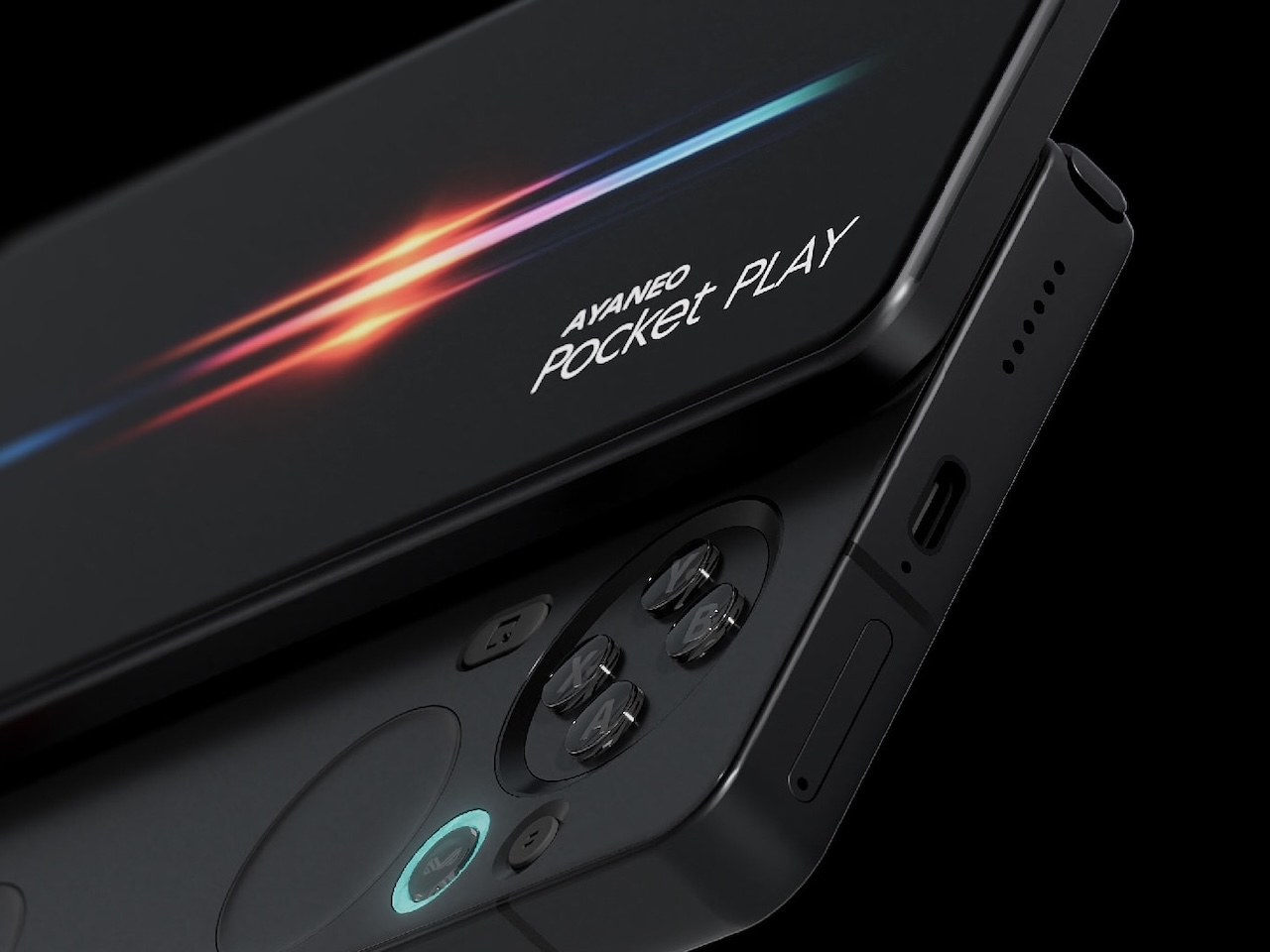
Sliding mechanisms introduce moving parts, ribbon cables through flex points, and structural stress that fixed-body phones never face. These durability concerns killed the sliding phone category a decade ago. Manufacturing has improved since then, but the physics of rail wear and cable fatigue haven’t changed. The gap between a working prototype and a device that survives two years of daily pocket carry is where most mechanical designs quietly fall apart.
A phone also demands competencies that don’t transfer from the handheld market automatically. Reliable cellular radios, competitive cameras, consistent OS updates, and apps that run correctly at this screen resolution are baseline expectations for any smartphone buyer. Ayaneo has never shipped a product that needed to meet all of those at once.
What Ayaneo Hasn’t Said Yet
Most of the hardware picture is filled in now. What’s still missing sits in the details that actually matter when you’re reaching for your wallet: exact RAM and storage tiers, fast charging wattage, final pricing, and a delivery timeline. CEO Arthur Zhang suspended the Kickstarter as part of a broader service improvement plan after the company faced criticism over shipping delays and support backlogs on other products. That’s a telling move. Previous campaigns have delivered, but pulling the launch to fix fulfillment problems first tells you something about how much pressure the company is feeling. Trust is on the line with this one.
Pricing sits at the center of every remaining question. The Dimensity 9300 plus a custom OLED panel, sliding mechanism, and active cooling won’t keep the bill of materials low. If the Pocket Play launches above $500, you can point to a flagship phone paired with a Bluetooth controller costing less combined, and that comparison will follow Ayaneo everywhere.
Who This Is For
Retro gaming and emulation enthusiasts who carry a separate device for classic game libraries sit right at the center of this product’s appeal. If you’ve wished your emulation handheld could also take calls and run daily apps, Ayaneo is building exactly that convergence point. The physical d-pad and face buttons are suited for genres where touchscreen controls feel like a constant, low-grade frustration.
One wrinkle worth watching: the emulation community leans heavily on Qualcomm for better driver support from both emulation apps and third-party performance tools, and early reactions to the Dimensity 9300 choice have been mixed in those circles. If retro gaming is your primary reason for buying, that chipset preference is worth weighing before you back the campaign.
Existing Ayaneo customers who trust the brand’s build quality and accept premium pricing for portable gaming hardware are the natural early adopters. Brand loyalty carries more weight in niche hardware than in mainstream consumer tech, and Ayaneo has built enough goodwill through its handheld lineup to give the Pocket Play a real foundation on launch day.
Mobile gamers frustrated with clip-on controller setups might find the integrated approach worth a serious look. The sliding mechanism eliminates Bluetooth pairing headaches, mount compatibility issues, and the awkward bulk of carrying a separate accessory everywhere. That convenience is tangible the moment you slide the screen up and start playing without reaching for anything else.
If Ayaneo can make a sliding phone that actually works as both a daily driver and a proper gaming device, the Pocket Play won’t stay a niche curiosity for long. It’ll be the proof of concept that makes every other phone maker reconsider what a gaming phone could look like.
Who Should Skip This
Anyone who prioritizes camera quality, slim pockets, or long-term software support guarantees should look elsewhere, because Ayaneo’s expertise sits firmly in gaming hardware rather than the areas where mainstream flagships compete, and a first-generation device from a small company carries inherent uncertainty on all three fronts. The sliding mechanism also guarantees a thicker, heavier body than standard phones at a comparable price, and you’ll feel that extra weight in your hand and your pocket every single day. If gaming isn’t a near-daily activity for you, that physical trade-off loses its justification fast.
Price: TBD
Where to Buy: Ayaneo
Cautious buyers should wait for confirmed pricing and a delivery timeline before the Kickstarter relaunches, because the specs alone don’t tell you what this device will cost or when it’ll ship. The Pocket Play is genuinely compelling as a piece of product design, and the sliding form factor has a visceral appeal that comes through even in renders. Compelling concepts and shipping products occupy different categories, though, and they’ll stay that way until production units reach real hands. Patience costs nothing here.
KAMRUI Hyper H2 Mini PC Windows 11 Pro, Intel Core 14450HX (Beats i7-1195G7/12700H), 16GB RAM 512GB PCIe4.0 SSD, Triple 4K, HDMI, DP, USB-C, Ethernet, Mini Desktop Computer for Office, Business
(as of April 2, 2026 11:18 GMT -05:00 - More infoProduct prices and availability are accurate as of the date/time indicated and are subject to change. Any price and availability information displayed on [relevant Amazon Site(s), as applicable] at the time of purchase will apply to the purchase of this product.)

Gadgeteer Comment Policy - Please read before commenting
this tech reminds me of zach king for some reason
Please just put a keyboard there and give us back useful phones. Touchscreen keyboards are disgusting and awful. Physical keyboards are the only good way to type!
This article was shared on the r/skygame and r/PSP so I came from there. The first image in this article shows the game Sky: Children of the light which I play on several platforms, but tend to play most on console due to the ease using controller. So this phone holds my interest with the potential for easier gaming. If it’s still around when my current phone is ready to replace, I’ll likely be back to see if this ever released.