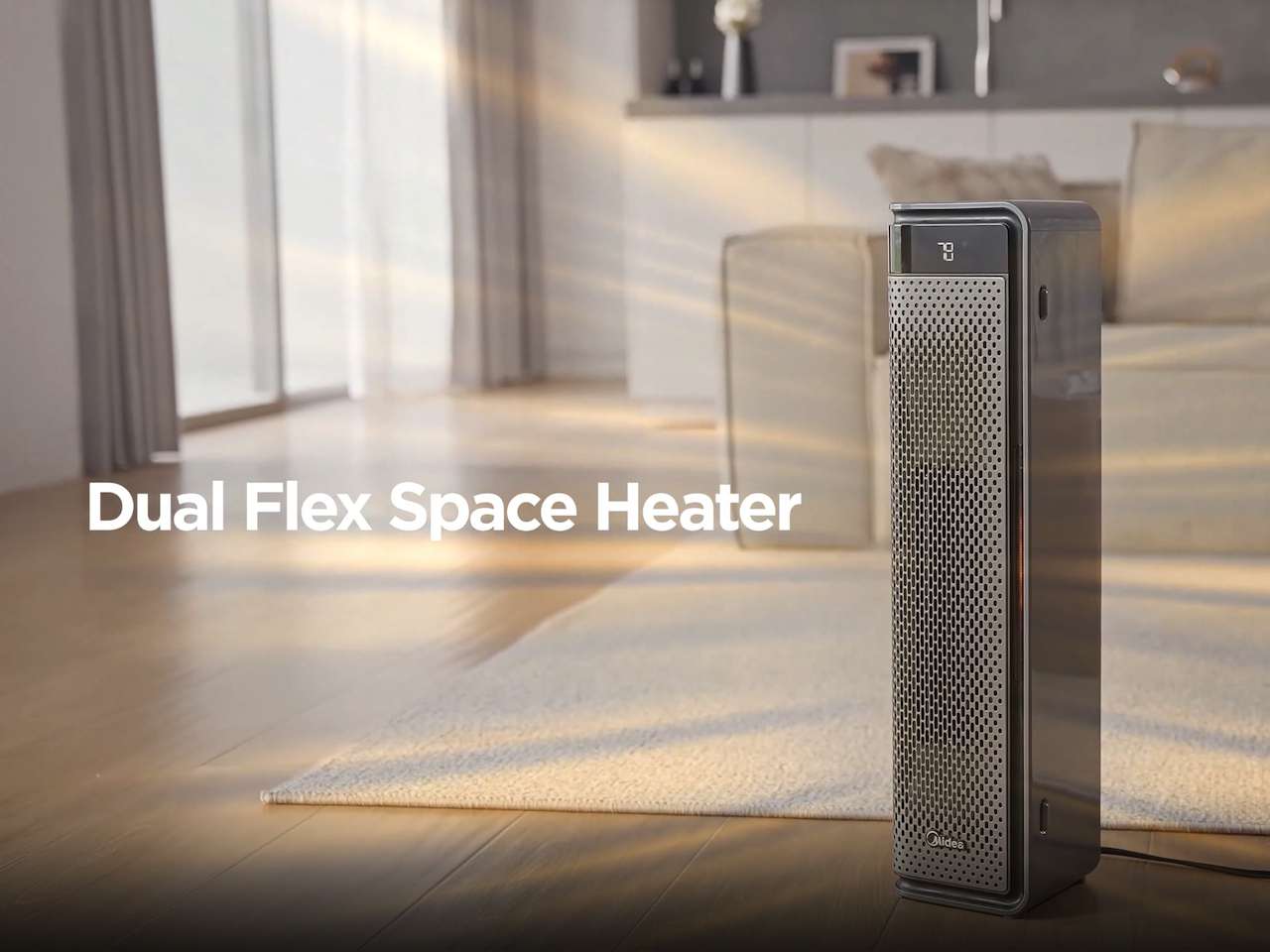
ARTICLE – Tower heaters have trained us to accept a design limit that doesn’t need to exist. They stand upright, blow heat forward, and expect you to arrange the room around them. That works fine if you’ve got an open corner, but it breaks down when you need heat under a desk or along a windowsill. The space heater category has been stuck in this vertical-only design for years, and most buyers don’t even know they’re working around a problem that could be fixed.
Midea’s 23-inch Dual-Flex Safe Space Heater fixes that limit with a simple idea: it works both standing up and lying on its side. The unit doesn’t need special modes or tricky adjustments. It just heats in either position with feet that extend and lock it in place when you lay it down. That opens up placement options that normal tower heaters can’t reach. The real question is whether dual orientation actually matters in daily use, or if it’s just a clever feature that rarely gets used.
Price:$54.99 (From $64.99)
Where to Buy: Midea
How The Dual-Flex Design Works
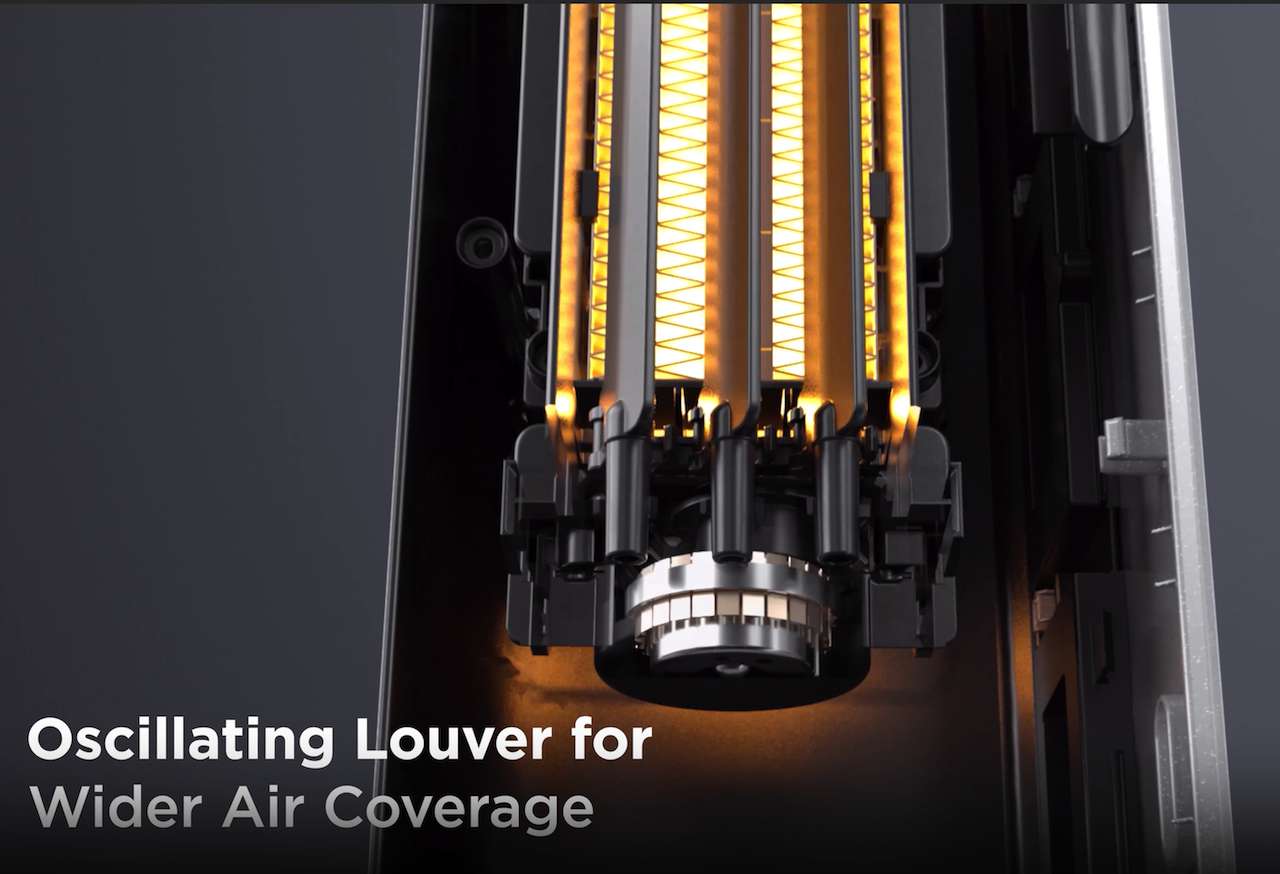
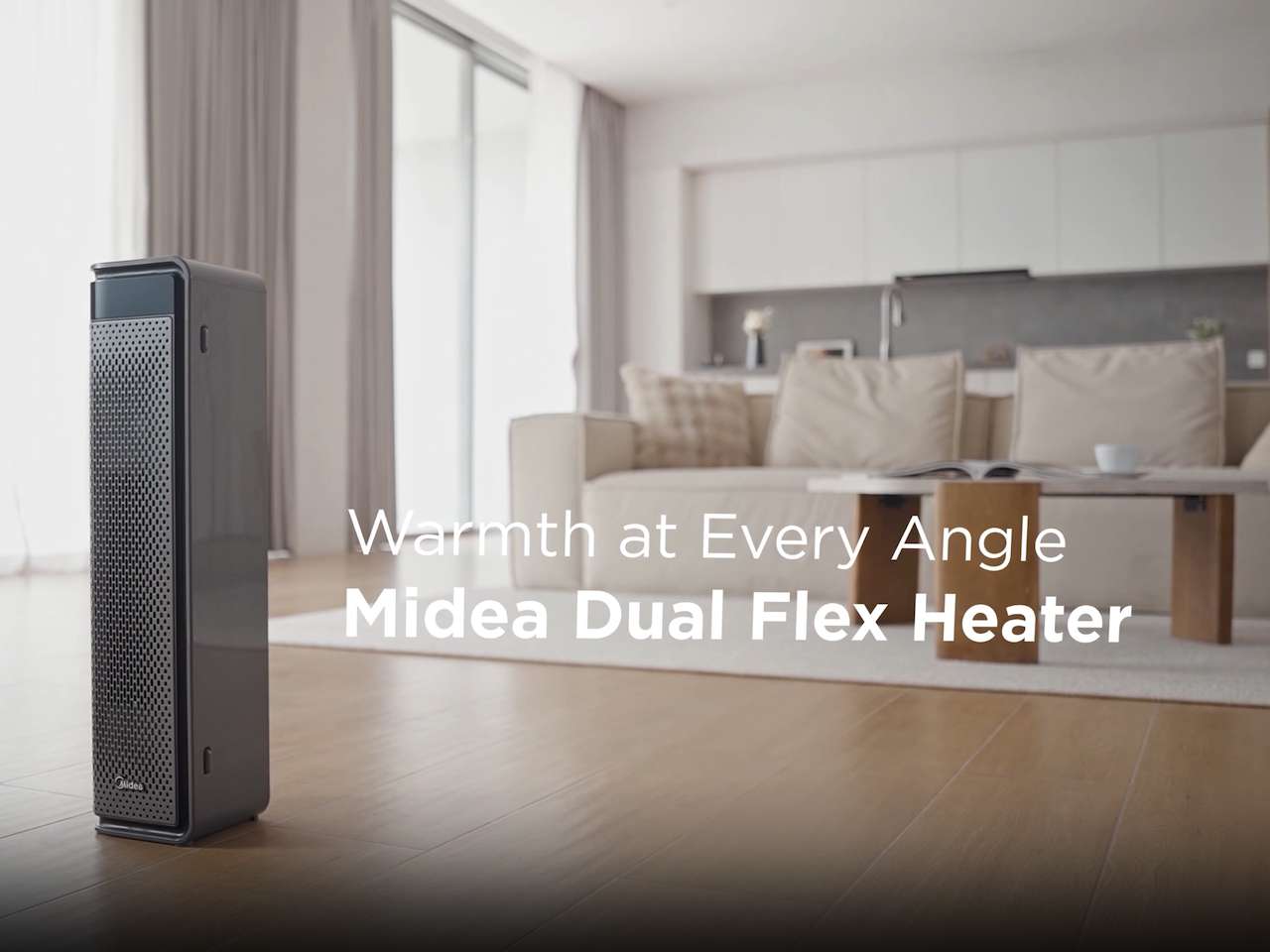
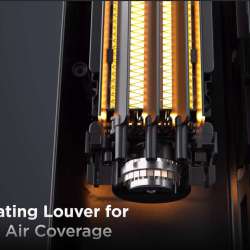
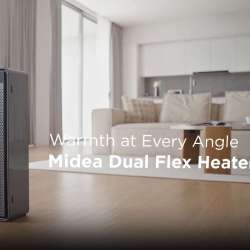
Standing upright, the Dual-Flex works like any ceramic tower heater. Air pulls in through the base, passes over the ceramic heating part, and exits through the front grille. The 60-degree swing sweeps warmth left and right instead of blasting it in one direction. That makes the heat spread wider than the slim body suggests. There’s nothing new about the heating system itself. It’s the same ceramic element and fan setup that’s been standard for years.
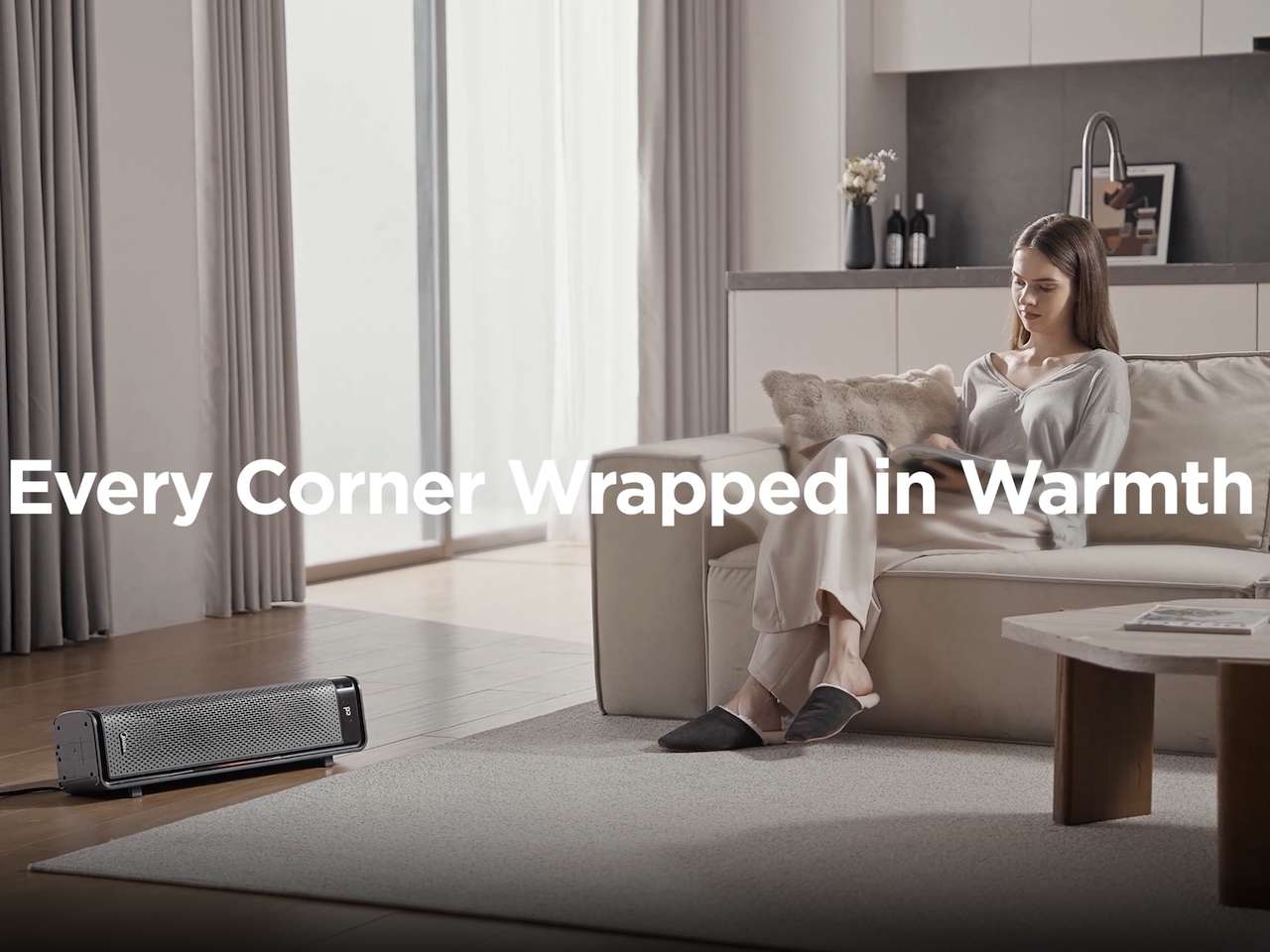
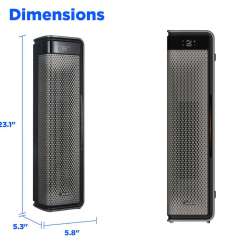
What changes is what happens when you lay it sideways. The feet click out from the body and lock into place so it won’t roll on flat surfaces. The swing feature keeps working, pushing heat along a wider horizontal path instead of a vertical one. That makes it work on bookshelves, under desks, on wide windowsills, or along walls where a tall tower would look out of place. At 5.7 inches wide and just over 5 inches deep, it fits most surfaces without hanging over the edge. Midea lists the full height at 23 inches, which becomes the length when you flip it sideways.
The ceramic element runs at 1,500 watts, which is standard for this type of heater. It covers rooms between 100 and 299 square feet. That puts it in the bedroom, home office, and small living room range. The whole unit weighs about 7 pounds, so switching positions or moving between rooms takes almost no effort. You just lay it down, extend the feet, and turn it on. The simplicity is the point.
Quiet Operation With Adjustable Comfort
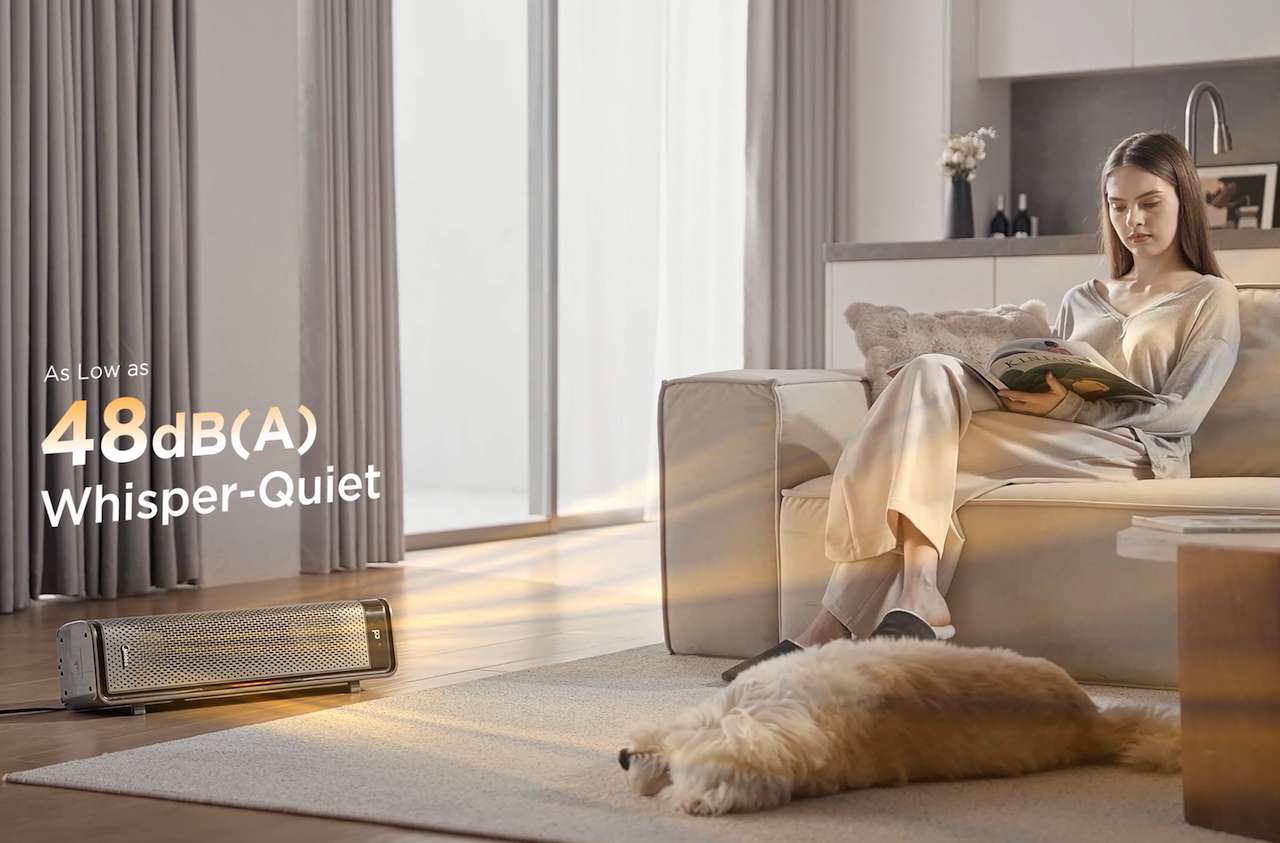
Noise from cheap space heaters is frustrating. Fans rattle, heating parts cycle with loud clicks, and the sound can wreck your sleep. Midea rates the Dual-Flex at 48 dBA on its lowest setting. That’s about as loud as a quiet library or a fridge humming in the next room. That number matters most when the heater runs overnight in a bedroom, where even small noise can wake you up.
The unit stays quiet enough to fade into the background at low and medium settings, though high output does bring more fan noise. Three heat levels cover everything from light warmth to full 1,500-watt power. Switching between them happens right away with no lag. ECO Mode adjusts power based on the room’s current temperature. It cycles the heating element on and off to hold your set point without running at max power constantly. That keeps energy use down and cuts the on-off cycling noise that cheaper heaters make.
Fan Mode moves air without heat for use outside cold months. The thermostat spans 41°F to 95°F, wider than most need but useful for garages or cold basements. A 24-hour timer handles scheduling for wake-up or sleep cycles. Top-mounted controls with a small display show current temp and mode. No manual needed. Smart home features are absent, standard for ceramic heaters at this price.
Safety Features Built Into The Design
Space heater fires make news every winter, and the safety features on budget models vary a lot. The Dual-Flex includes tip-over protection that cuts power if the unit falls. That’s common but not in every heater at this price. It also has overheat protection that shuts down the heating element before temps get dangerous. The safety plug is designed to lower fire risk at the wall outlet, which fixes one of the more common spots where space heaters fail.
The body has a V-0 flame resistance rating under UL standards. That means the plastic case will put itself out if exposed to fire instead of burning and spreading flames. That’s a higher rating than cheaper units get, and it’s one of those things that only matters in worst-case scenarios but really matters when it does. A 24-hour auto-shutoff adds another layer by cutting power if the heater runs without anyone touching it. Combined with the tip-over sensor, the Dual-Flex shuts itself down in the two most common space heater accidents: falling over and being left on when you leave.
Midea treats these features as standard instead of optional upgrades, which is smart but also means you’re paying for them whether you think you need them or not. The safety setup here should work for anyone with kids, pets, or general worry about leaving appliances on. It’s not perfect, no space heater is, but it covers the common failure points better than most units at this price.

Who This Is For
The Dual-Flex targets buyers who heat single rooms but find regular tower heaters limiting. It’s built for people with small apartments, shared home offices, or bedrooms where floor space is tight. If you’ve ever wanted heat under a desk without a bulky unit eating up legroom, or along a windowsill without blocking the view, this heater fixes that problem. The dual orientation isn’t a trick. It’s a real answer to placement issues that most people just work around.
Price:$54.99 (From $64.99)
Where to Buy: Midea
If you’re heating over 300 square feet or want smart features with app control, skip this one. The Dual-Flex does one thing well instead of chasing extras. Available now through Costco, Walmart, and appliance retailers with a 6-foot cord and one-year warranty. Pricing varies by retailer, sitting mid-range where solid build matters more than features you won’t use.
L39 Ultra Slim UV Protective Filter for Leica Q3 43 Q2 Camera with Moisture-Proof Case & Removal Tool 19 Layers Mulit-Coated UV Ultraviolet Filter 99.3% Light Transmission Water Oil Scratch Resistant
(as of March 28, 2026 02:16 GMT -05:00 - More infoProduct prices and availability are accurate as of the date/time indicated and are subject to change. Any price and availability information displayed on [relevant Amazon Site(s), as applicable] at the time of purchase will apply to the purchase of this product.)