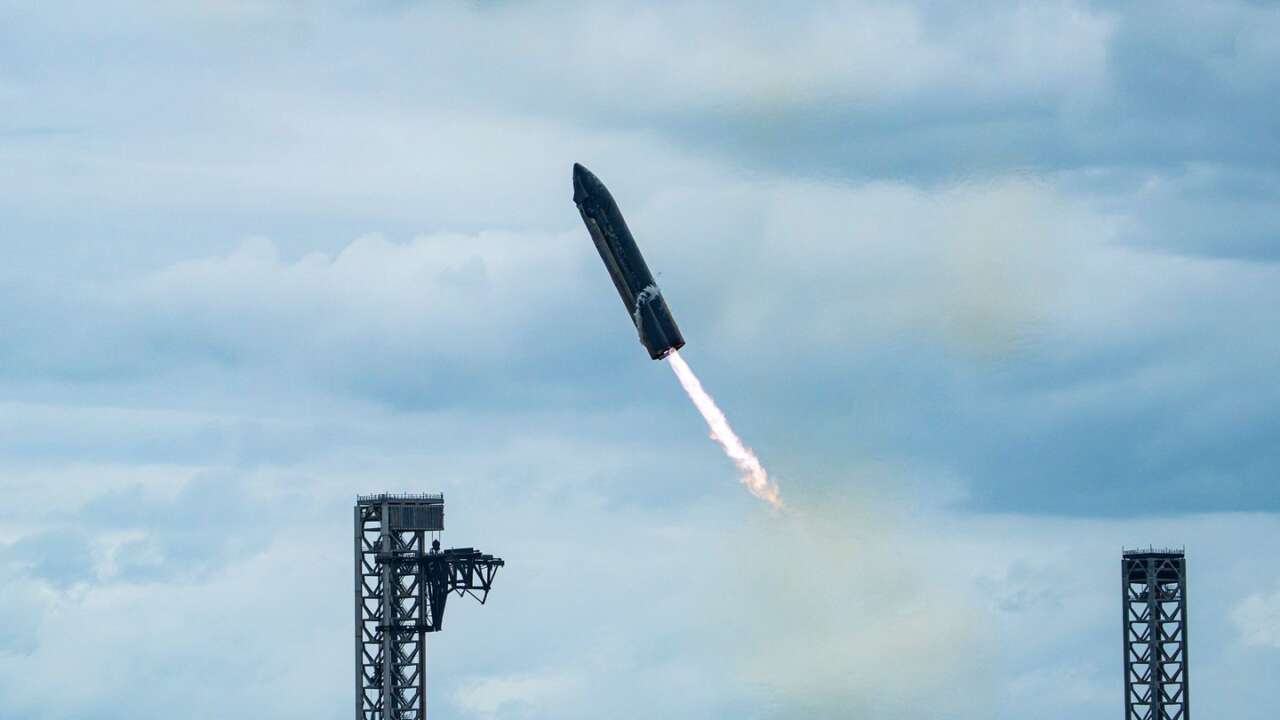
Ship 42 left Starbase on Friday afternoon and spent 22 and a half hours circling Earth. On Saturday it flew home, down through the clouds and into the arms of the launch tower that sent it up.
Flight 15 was SpaceX’s first attempt to catch both halves of the rocket on a single flight, the Super Heavy booster minutes after liftoff and the ship itself a day later. The booster half failed inside six minutes. The ship half is the one that changes what a returning spacecraft can do.
The system is built around a single idea: catch both halves at the launch tower, turn them around, and fly them again without refurbishment. Flight 15 was the first attempt at the full sequence on one flight, with the ship itself as the prize.
The booster made its own call six minutes in
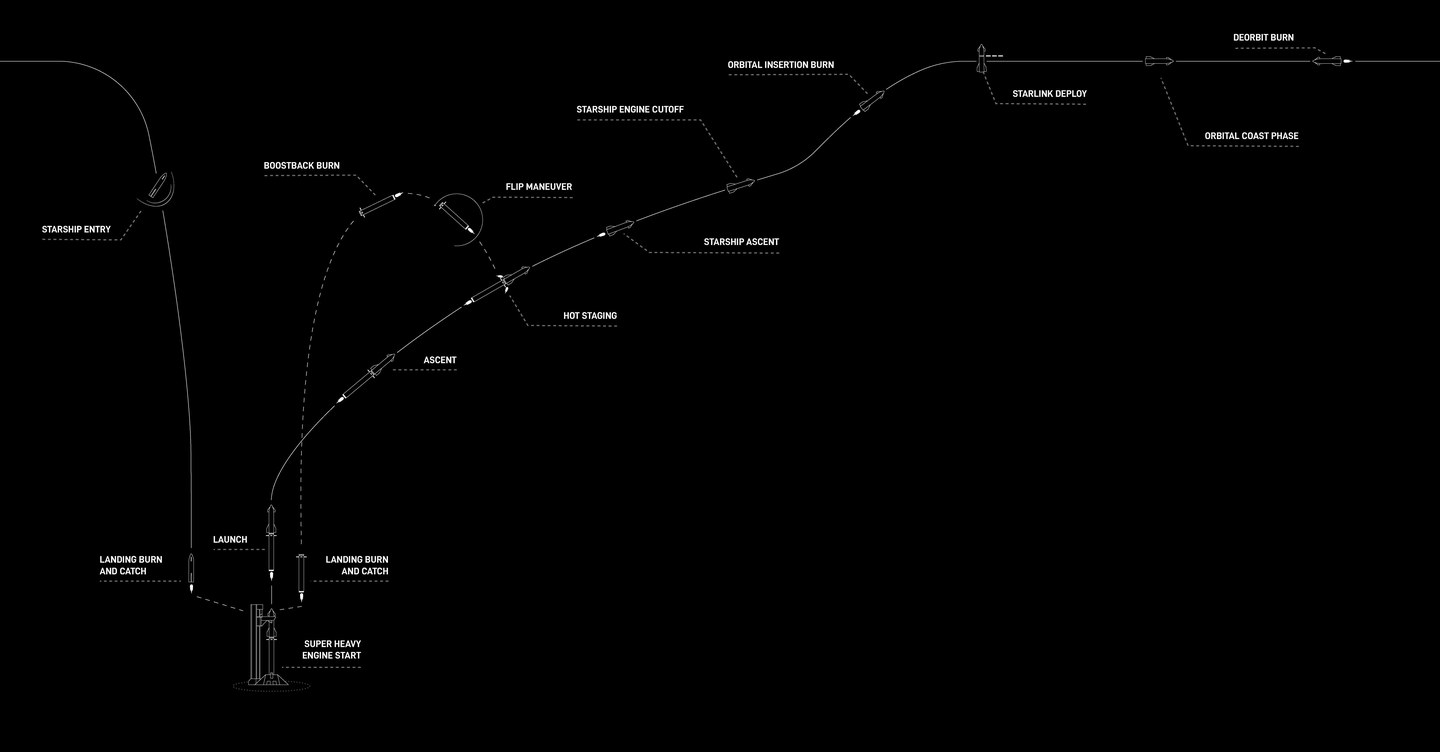
The stack lifted off from Pad 2 at Starbase at 4:47 p.m. Texas time on Friday, all 33 Raptor engines lit on Super Heavy Booster 22. Hot-staging went cleanly, Ship 42’s six Raptors took it on toward orbit, and the booster flipped around to fly itself home. The flight plan had it back in the tower’s arms at T+6:35, six and a half minutes after it left them.
SpaceX says the boostback burn relit 32 of the 33 engines, then ended early, stopped short by low fuel mass. While the booster coasted, its guidance, navigation and control system triggered an automated abort and steered it to its offshore contingency site.
Booster 22 lit its engines once more for a landing burn over the Gulf of Mexico, came to a hover, and shut down. Its flight termination system fired and destroyed it. SpaceX says the root cause of the short burn is still under investigation, and Musk said on Sunday that the booster’s engines had slightly underperformed, leaving it short of propellant for the trip home.
Fourteen orbits, then the long fall home
Ship 42 had no such trouble. A short second burn from a single Raptor settled it into orbit about 275 kilometers up, and over the next 42 minutes it released its full payload, 26 Starlink V3 satellites. SpaceX confirmed contact with every one of them as they began climbing toward their working orbits to join the constellation. It was just the second time a Starship had reached orbit at all.
Each of those satellites adds a terabit per second of capacity, and three of them carried cameras pointed back at the ship to scan its heatshield during the long coast. The ship circled Earth about 14 times while flight controllers ran three scheduled return checks, over Hawaii, then Chile, then Hawaii again, before committing to the trip home.
SpaceX says the 26 satellites together add as much capacity as about 10 Falcon 9 launches carrying the smaller Starlink V2 Mini. The trip home was never automatic either: the ship only started down after flight control confirmed the systems needed for reentry, the landing burn and the tower approach were healthy.
SpaceX streamed the whole flight live, liftoff to catch, and for hours of the coast the ship sent down live views from its own cameras over the same Starlink network it had just added 26 satellites to.
The deorbit burn was a 10-second firing of one sea-level Raptor, enough to drop Ship 42 out of orbit and start the fall. Entry began 22 hours and 10 minutes after liftoff, the ship riding its heatshield belly-first and bleeding speed from more than 16,000 mph. Then came a final swoosh out over the Gulf before it lined up on the pad it had left the day before.
Three Raptors lit at T+22:32:16 and the ship swung upright for its landing flip, the tower’s arms closing on it at T+22:32:34, just over two minutes after it had gone subsonic at T+22:30:13. SpaceX summed it up in three words: “Mechazilla catches Starship!”
Mechazilla catches Starship!
— SpaceX (@SpaceX) November 14, 2026
Catching the ship is the half of full reusability SpaceX had never shown. Boosters have been caught on three earlier flights, and Starship only reached orbit for the first time in September, on Flight 14. A ship that comes home to its launch tower needs no landing legs, no recovery ships and no ocean splashdown, and it lands exactly where it needs to be inspected, refueled and flown again.
None of that turnaround has been proven yet, and the booster investigation will run alongside whatever SpaceX learns from Ship 42’s scorched tiles. Musk, inspecting the ship within hours of the catch, posted that it “looks great.”
The double catch is still out there waiting, and SpaceX hasn’t announced a Flight 16 date. When both halves come home on the same flight, the loop SpaceX has been drawing for years closes. The harder half is done, though, and it was done by a spaceship that flew itself home to a tower that reached out and took it.