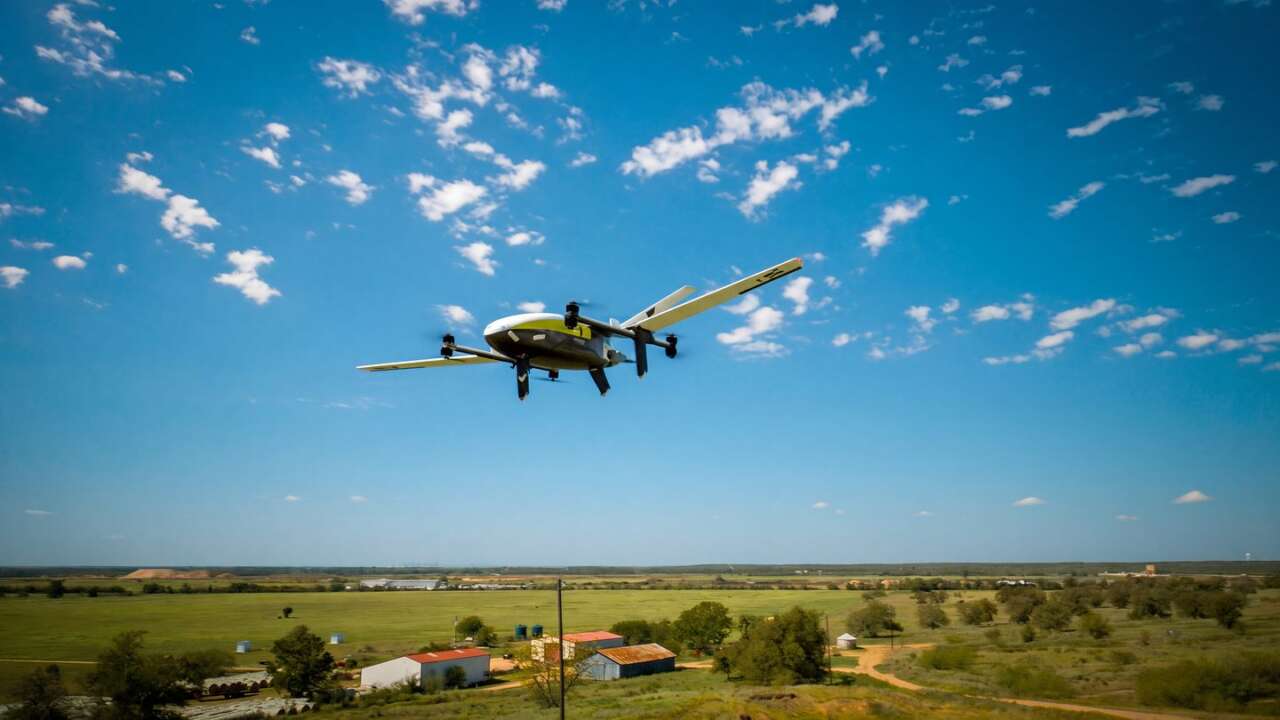
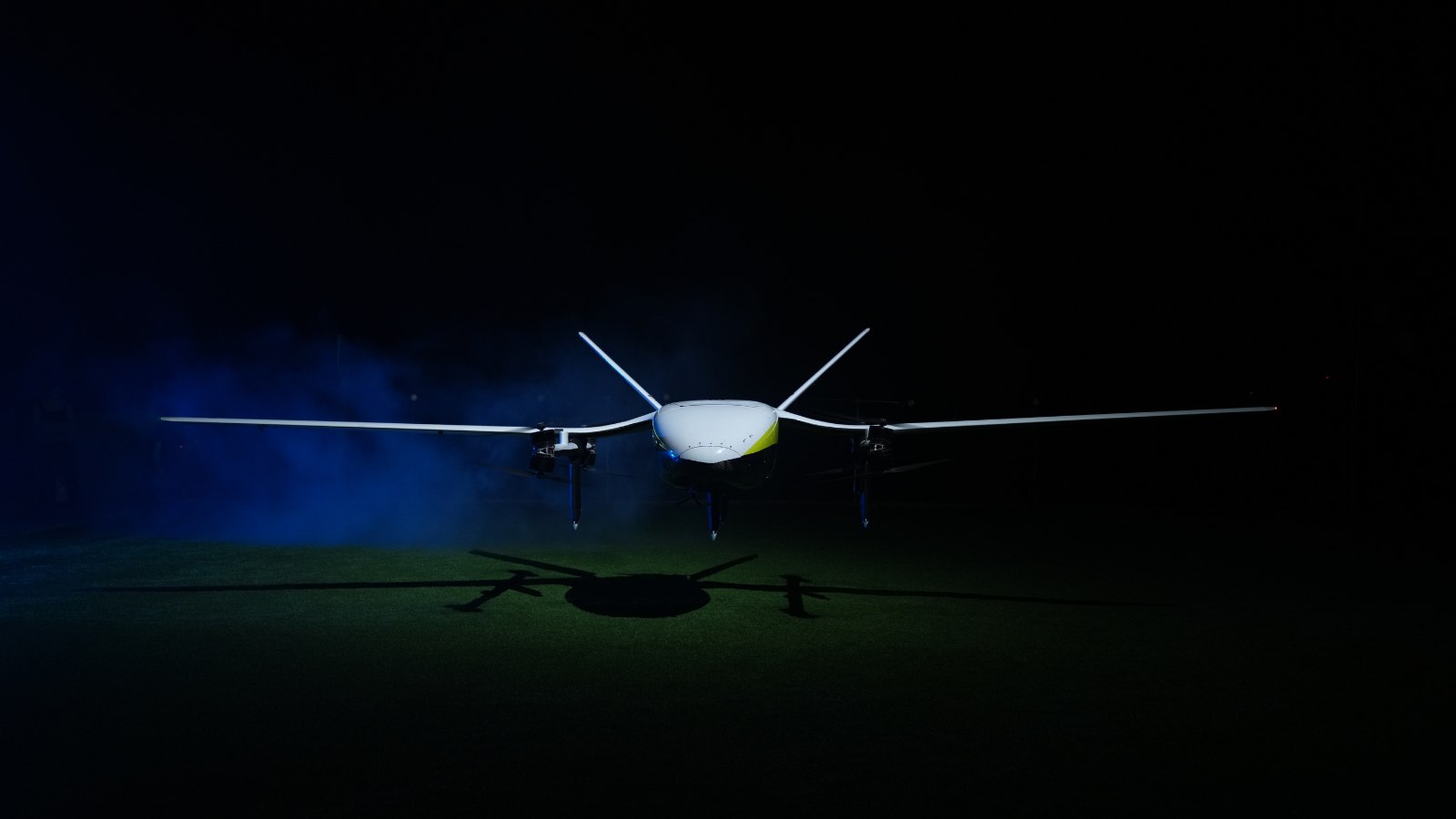
Skyways, based in Austin, Texas, builds cargo aircraft that fly themselves. Its newest is Skyreach, a VTOL with a 22-foot wingspan that rises straight up on eight electric motors, then settles into cruise behind a two-stroke engine burning jet fuel, no runway at either end.
Range is the headline figure: more than 1,300 miles one way, and more than 18 hours in the air on a full fuel load. Skyways prints the condition right on its own spec sheet, though. That range carries 10 pounds of cargo.
The range table is the real story
Cargo and fuel share one budget. At takeoff the aircraft weighs 360 pounds, and just over 100 of those pounds split between fuel and freight, with the fuel load alone able to run to 86 pounds. Every pound of cargo aboard is a pound of fuel left on the ground.
| Cargo aboard | One-way range |
|---|---|
| 10 pounds | 1,300+ miles |
| 50 pounds | 780+ miles |
| 80 pounds | 280+ miles |
Those figures assume level cruise at 70 knots, no wind, and 45 minutes of fuel still in the tanks when the flying stops. Skyways labels them design specifications, and Skyreach is still in flight test, so they can move.
Electric lift, fuel cruise
Eight electric motors do the vertical work, lifting the aircraft straight off a ship deck, a clearing or a pad the size of a driveway. Once it’s moving forward, the two-stroke heavy-fuel engine takes over, turning the cruise propeller and a generator at the same time.
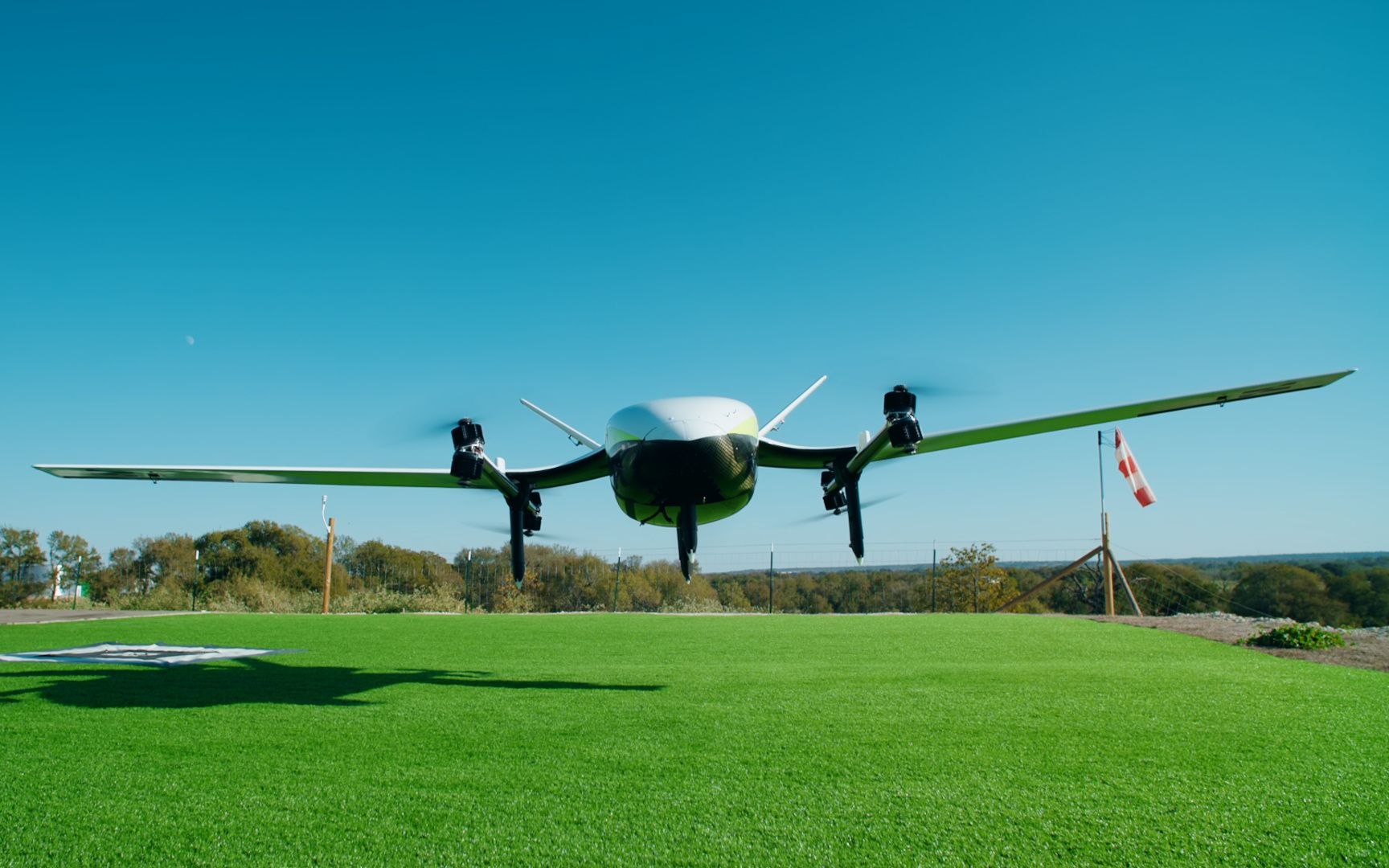
The generator recharges the lift batteries in flight, so nothing plugs in at the destination and no battery pack gets swapped between missions. Turnaround is fuel and cargo, then it’s up again. It burns the fuels the military already stocks: Jet A, Jet A-1, JP-5 or JP-8.
SkyNav, the company’s own mission control software, lets one operator supervise several aircraft at once.
The bay opens at the bottom
The cargo bay measures 7 cubic feet, loads from the top and opens at the bottom. Skyreach never has to touch down to deliver a load: it can release cargo in an airdrop or lower it on a tether while it hovers, then head home on its own.
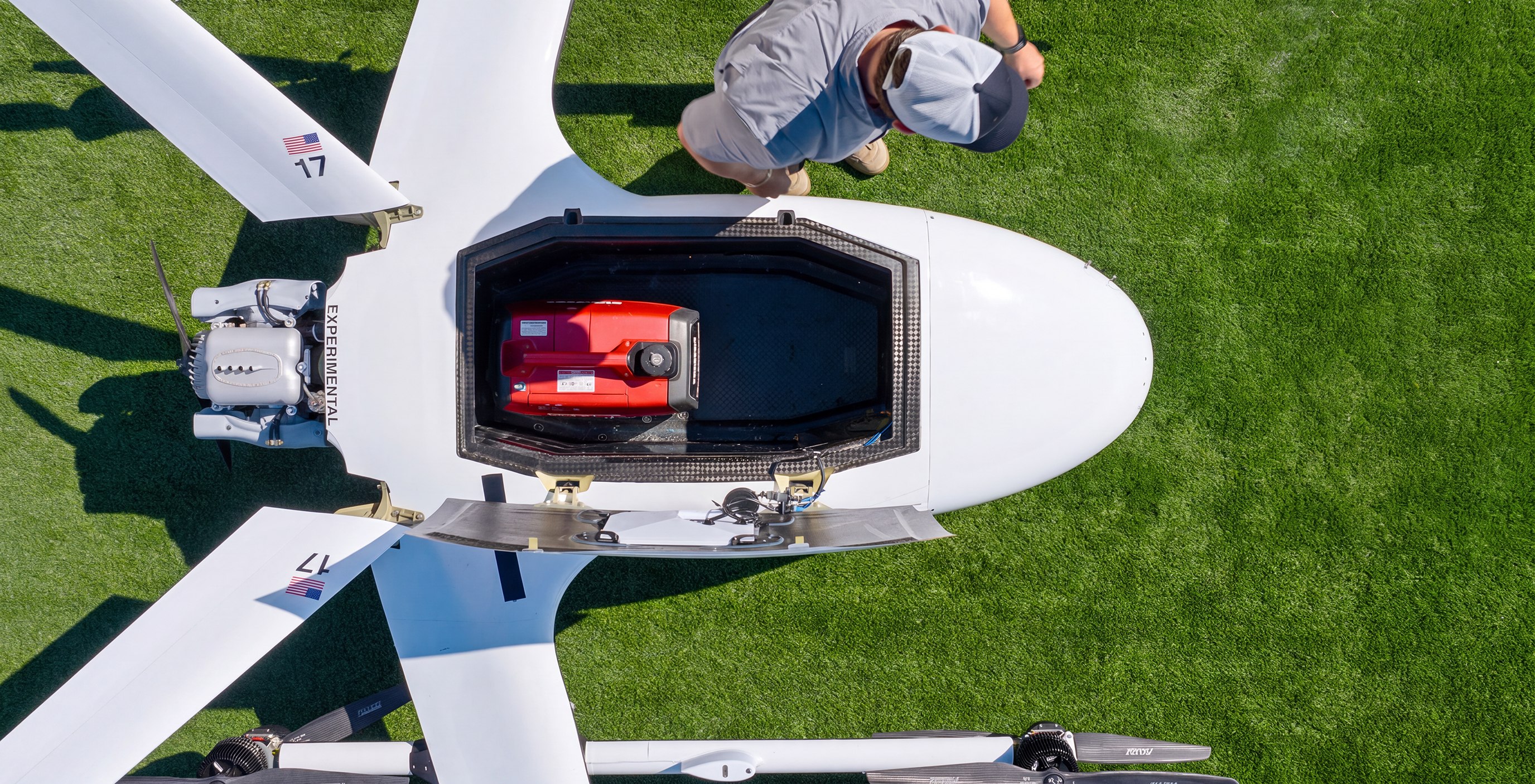
The bay takes temperature-controlled loads, and the airframe swaps over to sensors and communications gear when the mission changes. Skyways rates the aircraft for winds up to 40 knots and temperatures from -5°F to 120°F, and it’s built for shipboard and austere sites instead of prepared fields.
It’s 9.5 feet long, cruises at 70 knots with a dash past 87, and works at up to a 10,000-foot ceiling, high enough to clear most weather on the route.
The smaller aircraft already did the work
Skyreach is the production aircraft, developed as V3 Block 2. The machine before it, the V2, spent eight years flying real missions for the Marine Corps, the Navy and the Air Force.
Its logbook includes carrier-deck trials aboard USS Gerald R. Ford, a ship-to-ship flight of about 220 nautical miles, and a 313-mile stateside flight carrying a temperature-controlled medical payload for a Marine Corps requirement. It also ran medical delivery trials around Okinawa with ANA, completed this year.
The V2’s best commercial proof came in the fall of 2025, three weeks of cargo runs to RWE’s Arkona wind farm in the Baltic.
It flew 50-mile round trips from shore to turbine carrying up to 22 pounds, and cut a trip that takes a crew vessel about two hours down to 26 minutes.
The V2 already flies almost 500 miles on the same dual-hybrid layout, electric lift and a heavy-fuel cruise engine.
The FAA has now cleared a V2 to fly beyond visual line of sight from Gibson, Louisiana, out to a Shell platform in the Gulf of Mexico, the first authorization of its kind for an uncrewed aircraft over water. The flight itself hasn’t happened yet, and the waiver runs through October 2030. The planned flight pairs a pipeline inspection with a simulated cargo drop along the way.
A tenth of a helicopter
Skyways prices the pitch against a helicopter and crew, and puts Skyreach at roughly a tenth of the cost. Co-founder and CEO Charles Acknin has put the running cost at about $300 an hour today, with $100 an hour as the target as the autonomy takes on more of the work.
There’s no purchase price to check that math against, and Skyways doesn’t publish one.
Skyways sells the flying itself, priced by the hour. Nobody rides along.
Production is underway in Austin, backed by a $37 million AFWERX STRATFI award from the U.S. Air Force that Skyways notes is the largest STRATFI ever awarded to a cargo drone program. That money is aimed at full-rate production.
Skyreach starts flying for current defense and commercial customers in December, and ANA Holdings in Japan and DSV in Germany already fly Skyways aircraft. Acknin’s stated ambition is a network of more than 1,000 aircraft within five years.
At 280 miles with a working load and about $300 an hour, Skyreach covers a lot of the work helicopters get called for.