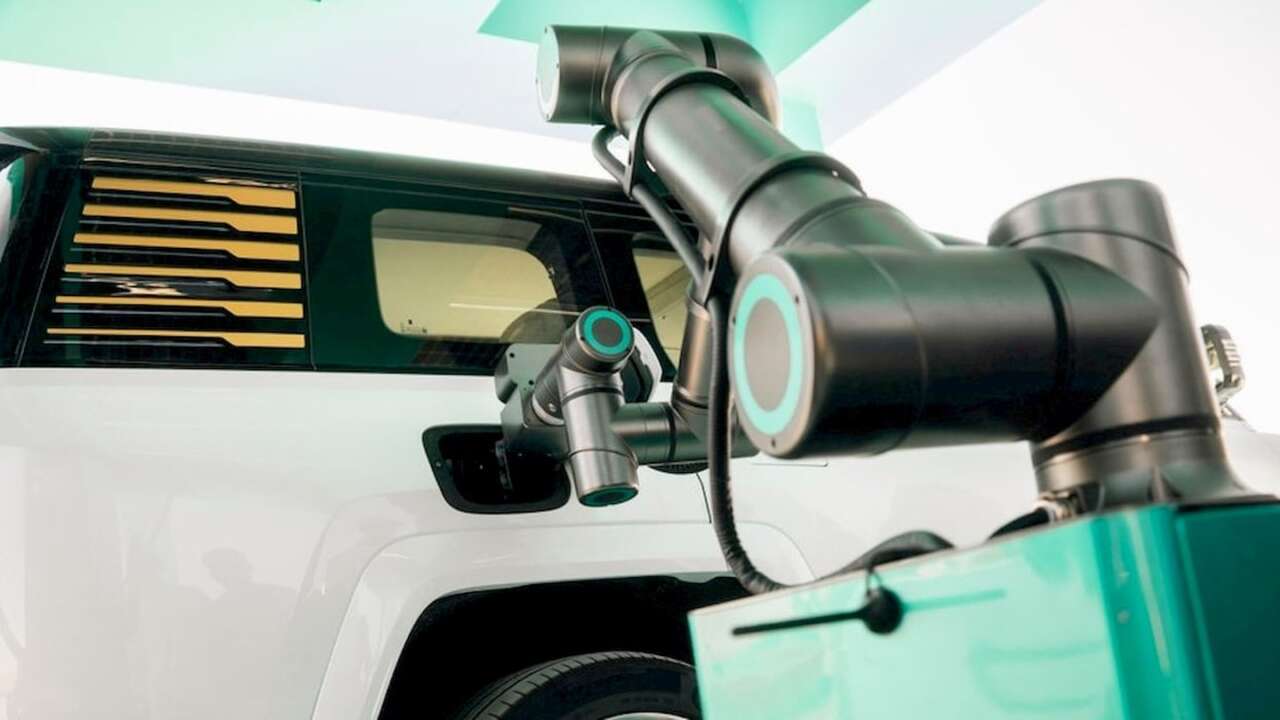
At BYD’s Abu Dhabi desert event, the driver never touched the cable. A robotic arm swung out from the station, found the car’s charge port, opened the cover and seated the connector by itself, then pulled the connector back out once the session ended.
BYD used the demonstration to launch its Solar-Storage-Charging system, which pulls solar generation, battery storage and the company’s Flash Charging hardware into a single installation. BYD calls the combination a world first. The robotic arm is the newest layer on top.
The Yangwang launches headlined the same Abu Dhabi program, and the charger took the smaller stage. Its claim was the stranger one, that the last manual step in fast charging is optional.
The arm is the visible part. Underneath it sits the charging hardware doing the heavy work.
The arm finds the port on its own
Visual recognition does the finding. The arm reads the car’s position and identifies the charge port, then force-feedback control takes over for the last stretch, feeling the connector into place instead of trusting the cameras alone. Once charging completes, the arm withdraws the connector and closes the cover, and the car sits exactly as its driver left it.
BYD also built the arm for more than one plug standard. It was designed to handle the various charging interface specifications used in overseas markets, not just China’s. That overseas brief is why the debut happened in the Emirates.
Cars weren’t where the robot started. BYD has worked on charging robots for years, first on equipment that kept warehouse AGVs charged, then on passenger-car parking scenarios, and the Abu Dhabi arm is where that work surfaces.
BYD Europe’s recap film catches the automated charging demos between the driving sessions.
The demonstration reached 1,000 kW
On site, the charging power reached 1,000 kW during the demonstration. That figure belongs to the full installation running together, solar panels feeding storage and storage feeding the charger, rather than to the arm alone. Public DC fast chargers typically deliver a few hundred kilowatts, so a demonstrated megawatt is several times the hardware drivers meet on the road today.
Keep the bigger numbers in their own lane. The arm rides on BYD’s Flash Charging system, built around the second-generation Blade Battery, and that system’s ceiling is 1,500 kW per connector, a figure BYD set out when it launched the battery program in March 2026. Its charging times run 10 to 70 percent in five minutes and 10 to 97 percent in nine.
Those times describe the battery and the charger, not the robot. The arm changes who does the plugging, not how fast a session runs.
The station carries its own power supply
Solar-Storage-Charging is the architecture under the canopy. Photovoltaic panels collect the energy, battery storage holds it, and the chargers draw on both, so the installation can support operation away from the electricity grid instead of pulling its full load from the local network at peak.
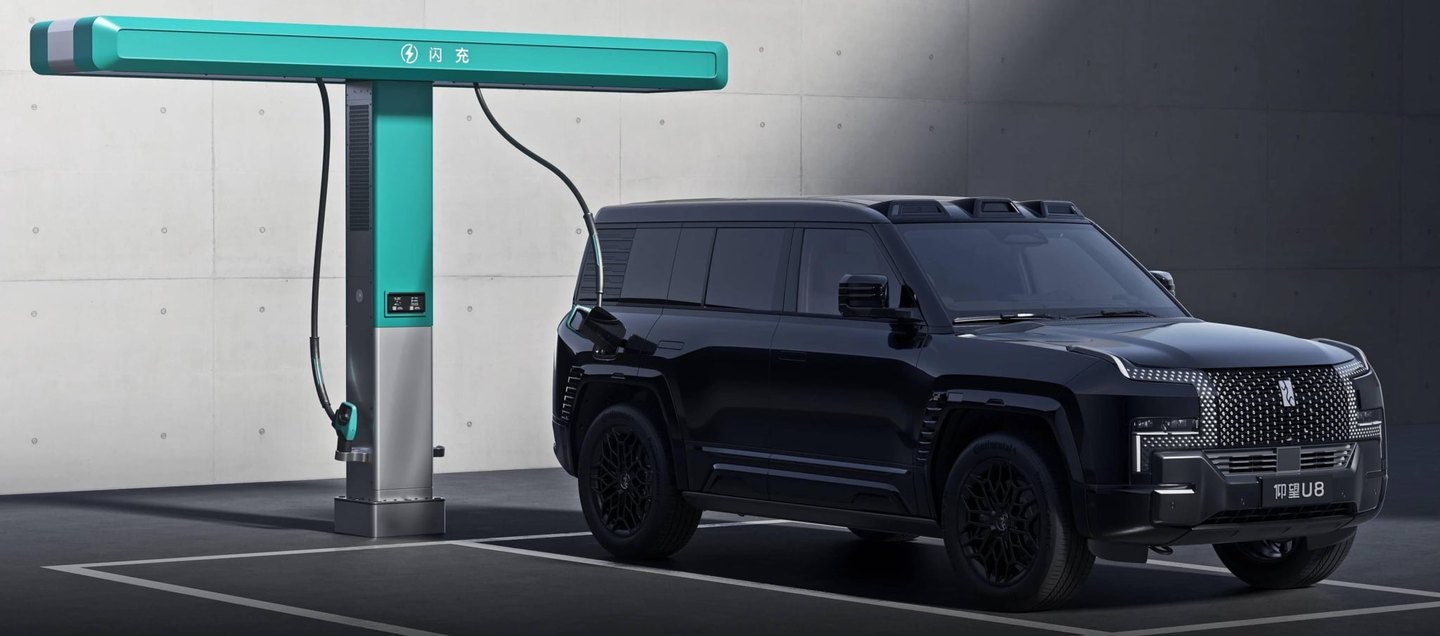
Solar isn’t a sideline for BYD either. The company counts more than 16 years in the solar industry, sells into more than 100 countries and regions, and brought that side of the business to Abu Dhabi as the generation layer of the station.
Intense sunlight, high temperatures and scarce rainfall are the conditions BYD picked, and the setting works as stress test and sales pitch at once. A driver there has a practical reason to like a robot arm, since nobody has to stand outside holding a cable in that heat.
Executive vice president Stella Li presented the system on stage. “For the first time, BYD is bringing its integrated Solar-Storage-Flash Charging technology to the global stage,” she said.
The car parks itself first
Parking folded into the second demo. BYD pairs the arm with its Automated Valet Parking, and with the one-tap parking and charging function the driver gets out, locks the car and walks away while a compatible car drives itself into the designated charging space. The arm connects it once it settles.
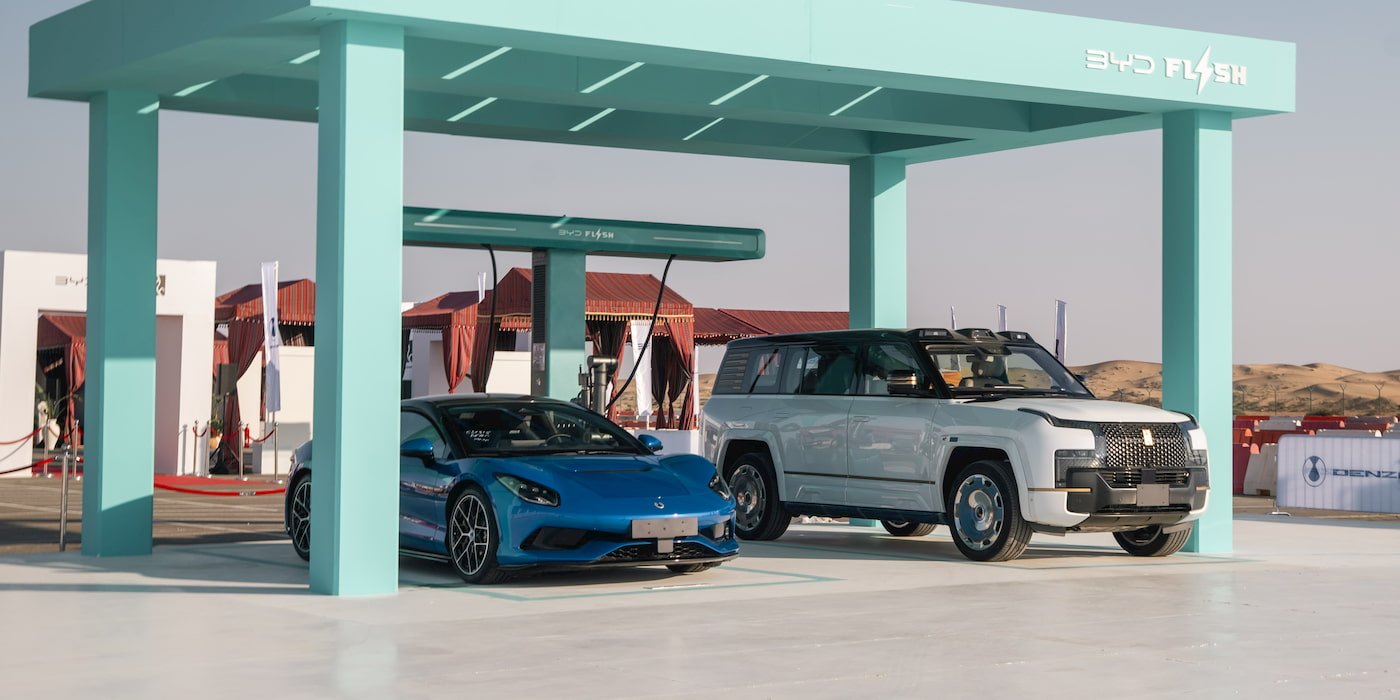
Put together, the sequence covers the whole stop.
The car finds the bay, the station finds the port, and the person who drove in is somewhere else entirely while both happen.
DLMag’s look at the same installation reads the station as a design object, canopy, pillar and all.
The network is real, the robot’s date is not set
Behind the demo, the rollout is already moving. BYD counts more than 12,000 Flash Charging stations running in China and targets 20,000 there by the end of 2026, with 100 in Europe by the end of 2026, 3,000 across Europe by the end of 2027 and 6,000 outside China in the wider plan.
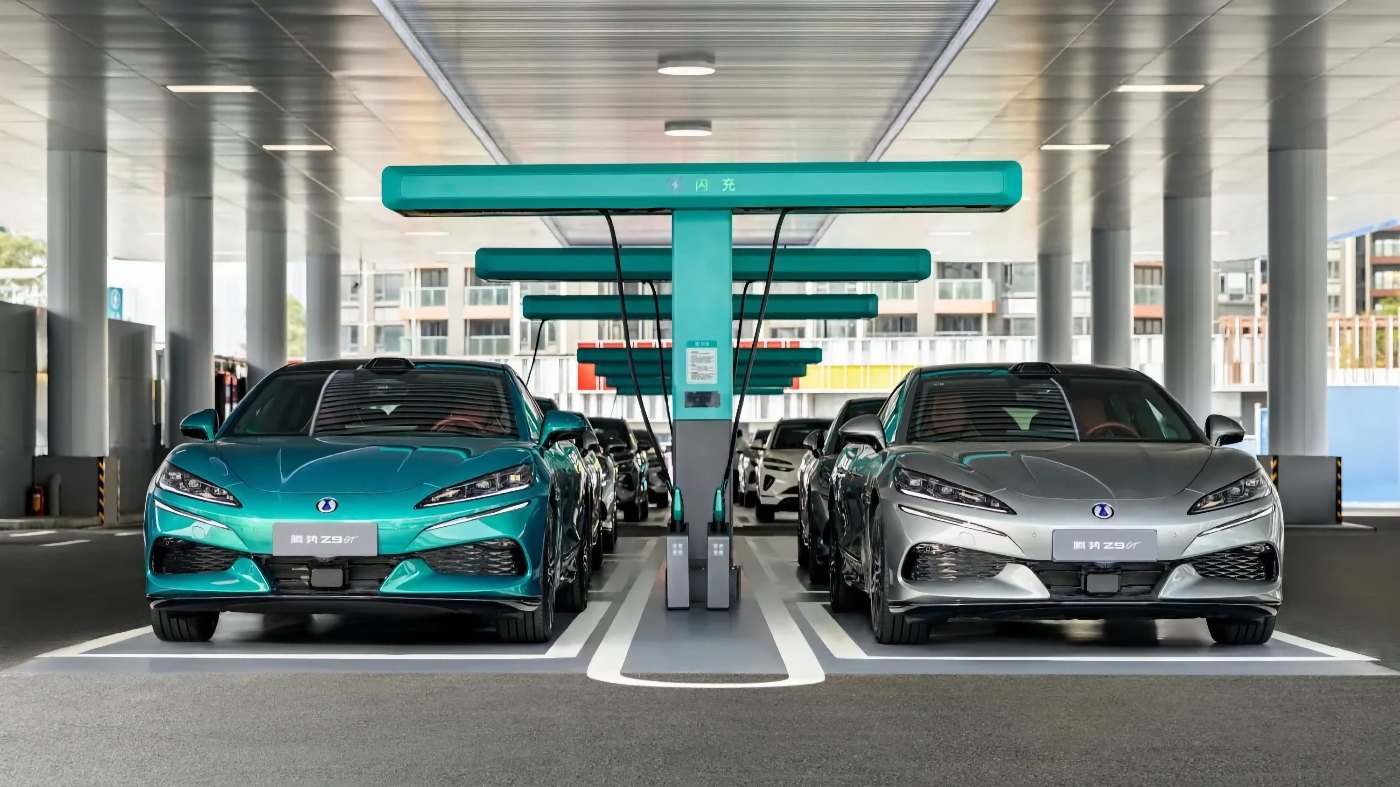
None of those targets answers the robot question. BYD hasn’t said when the robotic version becomes a commercial product, what the equipment costs, or how many of those stations will ever get an arm. The network figures describe conventional Flash Charging stations that drivers plug into themselves.
So the Abu Dhabi arm is a demonstration, not a product yet.
The network it’s attached to is already being built.